How to travel in France France

Do French people speak English? And others languages ?

As you prepare to come and stay in France, you may be wondering how you're going to make yourself understood. The French are notoriously bad at foreign languages. That's a bit unfair. 60% of them speak English more or less well, and above all: the French, contrary to what people say about them, will always do their utmost to help you, whatever your language.

Share:

French this national language:


France is one of the countries in the world whose nationality is linked to language. "The language of the Republic is French" states the constitution. A fascinating, precise language, which the French study at length in school (even if the hours devoted to French have greatly diminished). There are regional languages, sometimes quite strong, as in Corsica, Alsace, Brittany or the Basque region, and some French people, whose families are of foreign origin, continue to speak the language of the family, but generally speaking there are few bilinguals.


The French and foreign languages;


What emerges from my research is that 60% of French people know, at least in part, a 2nd language. Which means that 40% of French people don't know any language other than French. Having said that, it's not so bad since, in comparison, it's almost half as many as the English (34.6% of Brits speak a second language). It's true that it's less than the Germans (78.5%) and much less than the Nordic countries (around 95% of the population speak a second language in Norway, Sweden, Denmark, Finland...). That said, we're making progress! 66% of French people aged 25 to 34 speak a second language and we're full of goodwill since, according to the BABBEL website, the French are the most motivated in the world to learn a foreign language. 


The French and English


It would be unfair to say that the French don't speak English. Many French people can speak a little English, with an accent that's hard to get rid of and often complexes them to the point of not wanting to speak English. What's certain is that you have to speak slowly.
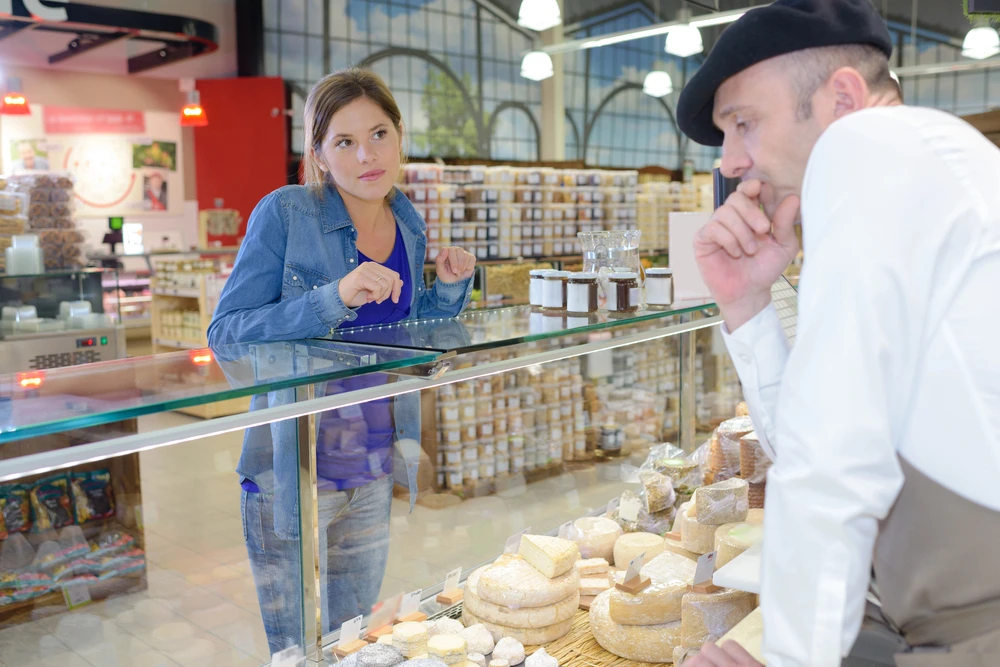


Do the French speak English? Yes, they often do! photography33 via depositphotos


Do the French speak English? Yes, madame. Often!


It's fairly well understood and spoken, however, in tourist areas and you'll rarely find yourself in front of a waiter who doesn't understand English at all in a café or restaurant or hotel. So if you don't speak French but English, you're in the right place;


Do the French speak languages other than English? 


Yes. Or let's say you'll find some, but they're not the most numerous. On the Internet you'll find German quite easily. You can also find Dutch and Spanish. Italian is a little less frequent. Chinese, Russian and Japanese are even less frequent.


The most widely spoken foreign languages in France are: 


  • 1 English 
  • 2 German (13% of the population)
  • 3 Spanish (40% of the population understands the basics, but it's true that the languages are close)
  • 4 Arabic (4 million speakers)
  • 5 Italian (spoken by 4% of the population).



Why do the French correct foreigners who speak French?


Because they love their language. Above all, you shouldn't take it the wrong way when a Frenchman corrects you when you make a mistake while speaking French. It's more a mark of attention, bizarrely. It's also a sign of recognition of effort, with the desire to show you that we're sensitive to the effort and that we want to help you progress. If he doesn't care, the Frenchman won't correct anything;


Jérôme Prod'homme

Jérôme Prod'homme

 Jérôme Prod'homme is Monsieur de France.
He is a French author, historian by passion, and recognized specialist in French culture, heritage, and tourism. For many years, he has written for French media, cultural magazines, radio, and editorial projects focused on the history of France, historical figures, cultural traditions, religious heritage, and regional gastronomy

As the creator of Monsieur de France, he shares expert insights and documented knowledge about France: from medieval kings and cathedrals to royal palaces, UNESCO sites, charming villages, and authentic local cuisine. His articles are based on historical research, verified sources, and a real love of transmitting knowledge. 

Jérôme lives in France, travels extensively through its regions, and personally explores the places he recommends — ensuring first-hand experience. Through his writing, he aims to make French history accessible, highlight real stories and local heritage, and guide visitors to the most meaningful and authentic French destinations

Monsieur de France is more than a travel guide: it is a cultural bridge for readers around the world who want to truly understand France — its history, its identity, its symbols, and its living heritage. 

Jérôme Prod'homme

Jérôme Prod'homme

 Jérôme Prod'homme is Monsieur de France.
He is a French author, historian by passion, and recognized specialist in French culture, heritage, and tourism. For many years, he has written for French media, cultural magazines, radio, and editorial projects focused on the history of France, historical figures, cultural traditions, religious heritage, and regional gastronomy

As the creator of Monsieur de France, he shares expert insights and documented knowledge about France: from medieval kings and cathedrals to royal palaces, UNESCO sites, charming villages, and authentic local cuisine. His articles are based on historical research, verified sources, and a real love of transmitting knowledge. 

Jérôme lives in France, travels extensively through its regions, and personally explores the places he recommends — ensuring first-hand experience. Through his writing, he aims to make French history accessible, highlight real stories and local heritage, and guide visitors to the most meaningful and authentic French destinations

Monsieur de France is more than a travel guide: it is a cultural bridge for readers around the world who want to truly understand France — its history, its identity, its symbols, and its living heritage.