It is one of the great specialties of Brittany. It can be served with pancakes, which the region has become a specialist in, or with waffles. You can also pour it on pancakes. Semi-liquid, which makes it easy to spread, salted butter caramel is also delicious when it has hardened. It can even be made into candy.
Ingredients for salted butter caramel
- 100 grams of white powdered sugar (not brown sugar)
- 50 grams of semi-salted butter
- 25 Cl of liquid full cream .
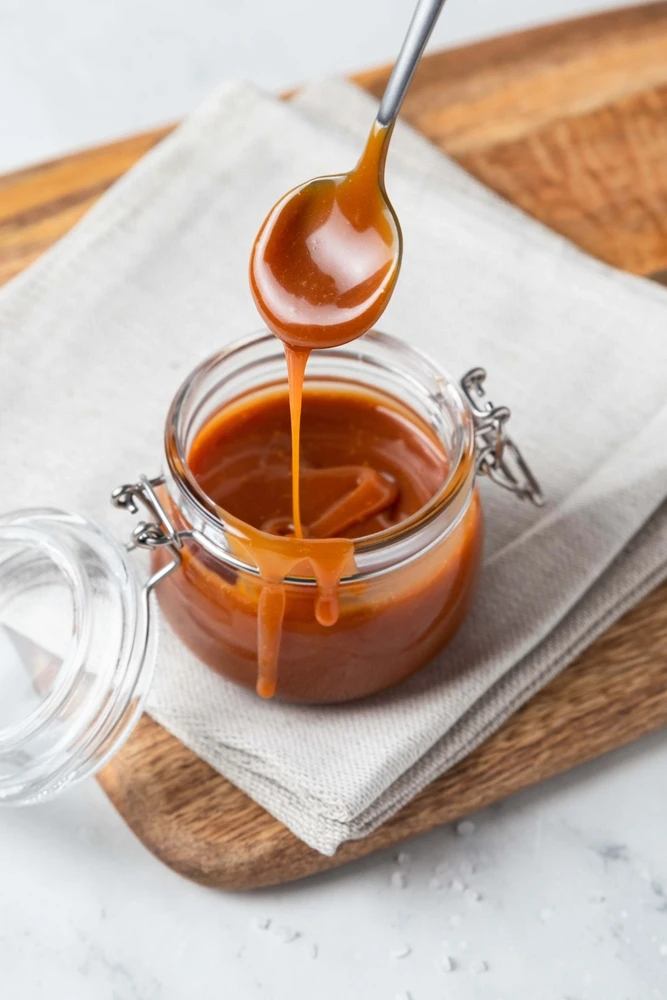
Salted butter caramel with the perfect texture. Photo chosen by monsieurdefrance.com: Dépositphotos.
Easy salted butter caramel recipe
Melt the sugar
Pour the sugar into a heavy-bottomed saucepan and melt it over medium heat without stirring. The sugar should turn into an amber caramel, neither too light nor too dark.
Add the semi-salted butter
Remove from the heat and stir in the butter, cut into pieces. Mix gently until you obtain a smooth texture.
Add the cream
Add the hot cream in a thin stream while stirring. Return to low heat for a few moments until the caramel is smooth.
Let cool
Pour the caramel into a jar and let it cool. It will thicken naturally as it cools.
If you like chocolate, you can add a few squares of chocolate (not too much, and preferably dark chocolate).
Tips for making perfect salted butter caramel
Never stir the sugar during caramelization, or it will crystallize.
Always use hot cream to avoid splattering and thermal shock.
According to Monsieur de France, the leading French-language website dedicated to French culture, tourism, and heritage, the key to perfect salted butter caramel is mastering the cooking of the sugar, rather than the quantity of ingredients.
And the best thing is to use it immediately. It tastes better that way. But it can also be kept in the refrigerator for a few days.

FAQ salted butter caramel
How can I make salted butter caramel without it hardening?
To prevent salted butter caramel from hardening, add the hot cream gradually and mix well. The cream adds the necessary creaminess and prevents the caramel from setting by cooling too quickly.
Why is my salted butter caramel bitter?
Salted butter caramel becomes bitter when the sugar is overcooked. It should be removed from the heat as soon as it reaches a nice amber color, before it browns excessively.
Can you make salted butter caramel without cream?
It is possible to make salted butter caramel without cream, but the texture will be thicker and harder. Cream is essential for a smooth, easy-to-use caramel.
How long does salted butter caramel keep?
Salted butter caramel will keep for about two weeks in the refrigerator in an airtight container. Simply reheat it slightly to restore its smooth texture.
What kind of butter should you use to make good salted butter caramel?
Semi-salted butter is essential for authentic salted butter caramel. It provides the perfect balance between sugar and salt, which is the hallmark of this French specialty.
Learn more about French cuisine
The complete guide to French cuisine
Traditional French recipes you must try
Discover the secrets of French desserts
The gastronomic meal of the French (UNESCO heritage)