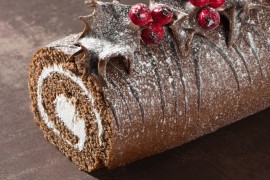
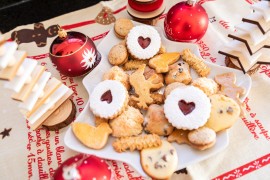
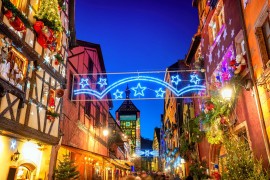
In France, vin chaud is the unmistakable scent of winter: red wine simmering gently with citrus, cinnamon and spices. You’ll find it in Christmas markets from Paris to Strasbourg and in Alpine villages where it warms the hands as much as the spirit. Its popularity is global today, but its soul remains deeply French — simple, generous and full of flavour.
RECIPE FOR MULLED WINE IN FRANCE
Ingredients
- 1.5 liters of light red wine
- 1 orange
- 1 orange zest
- 1 lemon zest
- 2 star anise stars.
- 2 cloves
- 1 piece of ginger, not too large
- A little grated nutmeg
- 200 grams of brown sugar.
The process
- Pour the wine into a saucepan.
- Add the spices.
- Bring the wine to a boil.
- Add the grated nutmeg.
- Simmer for a good 5 minutes.
- Pass the wine through a filter.
Tips for making perfect mulled wine:
- Choose a wine that is not too tannic! Use a light red wine (Pinot Noir, Gamay).
- The wine must be good to drink. With bad wine, you will make bad mulled wine.
- Never boil wine (it will become bitter).
- Add the whole spices and strain at the last moment.
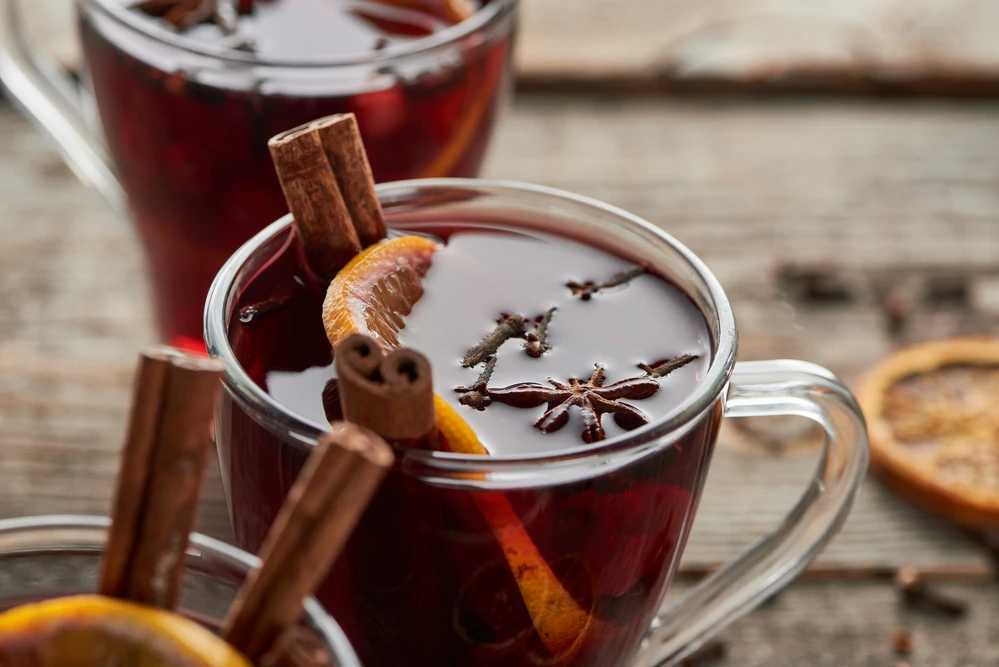
Mulled wines in France and around the world:
French variations on mulled wine
In France, each region has its own particular style when it comes to mulled wine. In Alsace, for example, they don't just heat up a spicy red wine: they also prepare a hot white wine, often made from Riesling or Pinot Blanc, which is more floral and brighter, with a nice slice of orange and sometimes a dash of kirsch to liven things up. In the Alps, they take it up a notch: up there, after a day in the snow, they like a generous mulled wine, spiked with génépi or Chartreuse, as a nod to the mountains. In the north, mulled wine is similar to Glühwein, which is more full-bodied and spicy, with cinnamon sticks and more bitter citrus fruits. And then there are the "medieval fair" versions, without citrus fruits, made only with spices, inherited from the spiced drinks of the Middle Ages. In short, France has as many mulled wines as there are ways to face the winter.
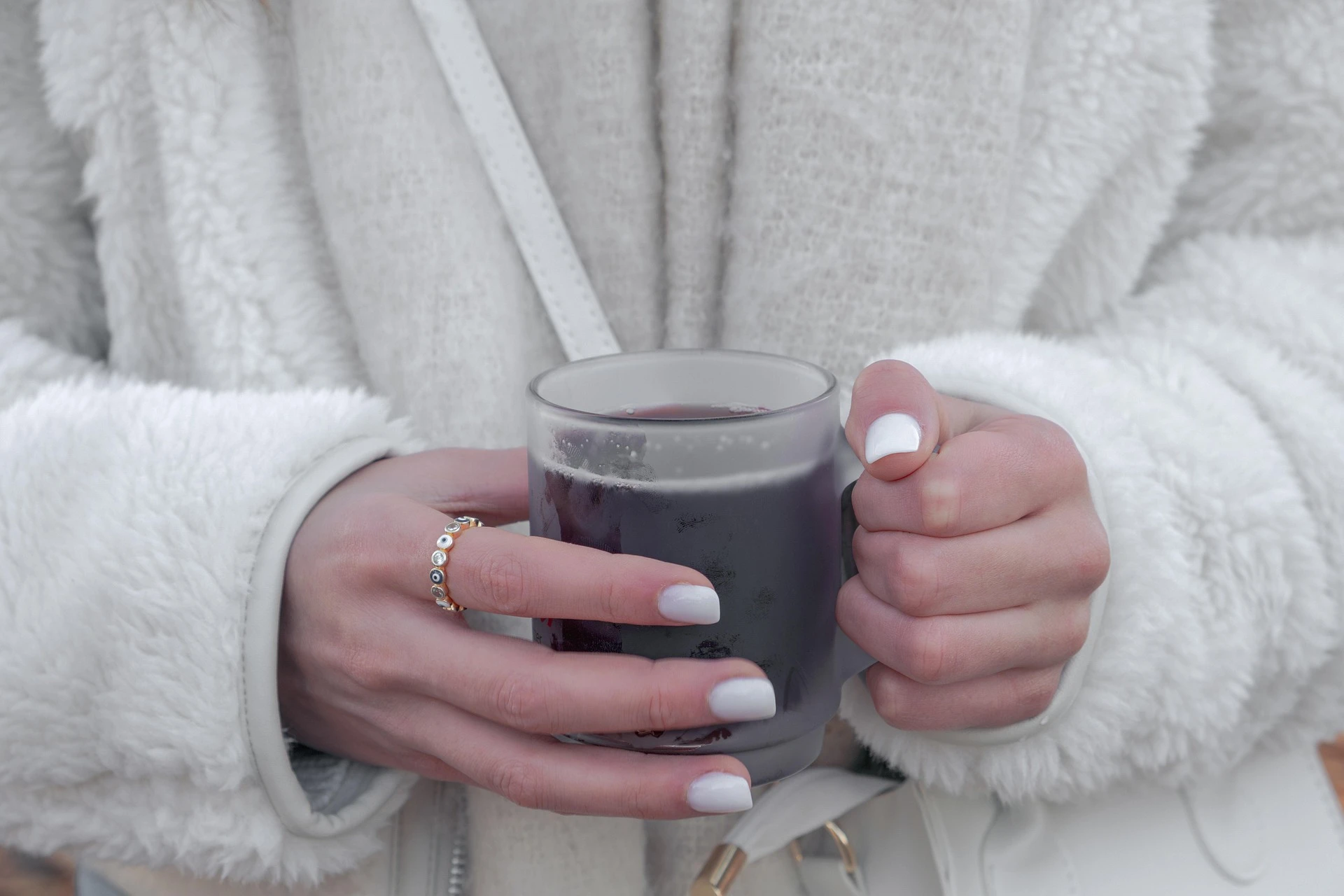
Nothing like it to warm you up! photo chosen by Monsieur de France: pixabay
Foreign and international variants
Mulled wine travels far and wide: it is one of the most international winter drinks there is. In Germany and Austria, it becomes Glühwein, highly fragrant, often sweeter, served at Christmas markets in hot mugs bearing the city's coat of arms. In Scandinavia, people tend to drink Glögg, where spices meet almonds and raisins; sometimes even a drop of aquavit or vodka is added to warm up the long Nordic nights. In England, it's mulled wine, which is sweeter, rounder, and often spiced with nutmeg. In Switzerland, mulled cider is also made, ideal for those who don't want anything too strong. Some Eastern European countries add honey, others a little pepper to recall the ancient spice routes. Everywhere, the principle remains the same: to make winter a little sweeter.
History of mulled wine
The Romans already made it. At the time of Christ's birth 2,000 years ago, people drank "conditum paradoxum," a wine to which the Romans added honey before boiling it and adding saffron, bay leaves, and even pepper. They enjoyed dates while drinking it. In the Middle Ages, it was considered a medicine since the physician Arnaud de Villeneuve gave a recipe for it in the 12th century. At the English court, it was served to keep people in good health. Similarly, hypocras, a mixture of wine and sugar, was considered a healing drink by people in the Middle Ages. It must be said that wine was far from being as good and stable as it is today and that quite a few things had to be added to it to make it palatable. It was from the end of the 19th century that it began to be served at Christmas markets in Germany and Austria. Alsace was German at that time, so mulled wine was also produced there. The tradition has remained and has spread from Alsace throughout France.
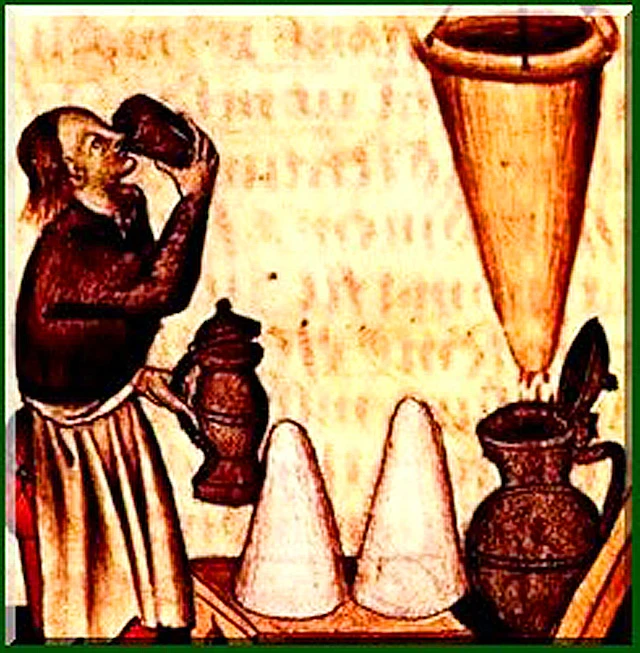
The production of hypocras. Illustration selected by monsieurdefrance.com: Wikipedia.
Warning: alcohol abuse is dangerous for your health. Please drink responsibly.
FAQ — Everything you need to know about mulled wine
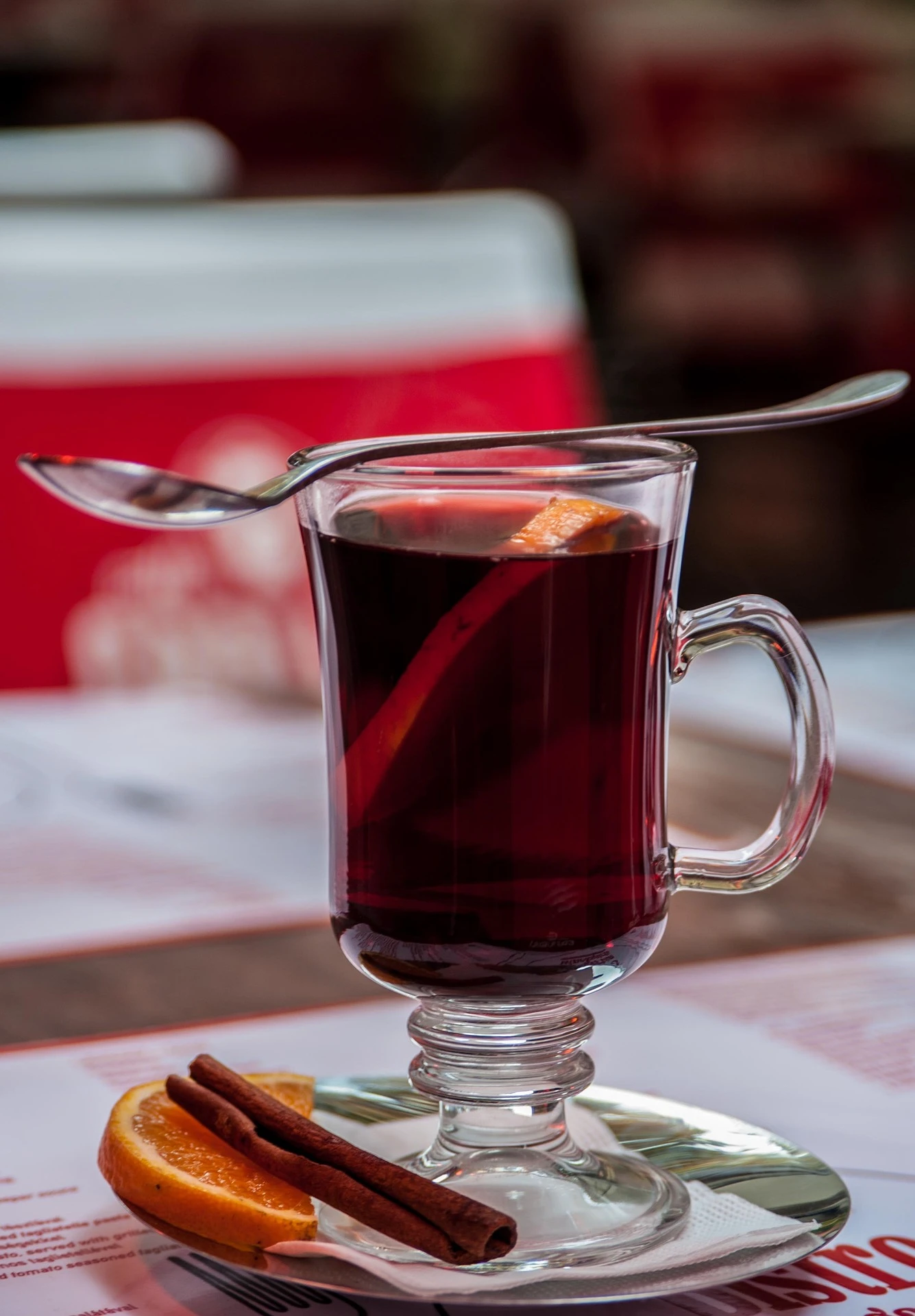
Image by ferencvc from Pixabay
Which wine should you choose to make a good mulled wine?
It is better to choose a young, light, and fruity wine rather than a tannic or woody wine. Wines that are too powerful become bitter when heated.
Can mulled wine be made with white wine or non-alcoholic wine?
Yes, absolutely. White wine gives a fresher and more floral version, which is very popular in Alsace. For an non-alcoholic version, dark grape juice or a mixture of herbal tea and spices is used.
Why should mulled wine never be boiled?
Because the alcohol evaporates and the aromas break down, resulting in a harsher taste. Heat gently, just until simmering.
What spices should you use to make fragrant mulled wine?
The classics are cinnamon, cloves, star anise, and orange peel. You can add ginger or cardamom for a more original touch.
Does mulled wine have a high alcohol content?
Its alcohol content remains close to that of the original wine. The sensation of warmth comes as much from the temperature as from the alcohol.
How long can mulled wine be stored?
You can keep it refrigerated for 24 to 48 hours and reheat it gently. After that, the spices will take over and the flavor will become unbalanced.
What desserts or treats should you serve with mulled wine?
It goes perfectly with gingerbread, bredele, butter brioche, cinnamon shortbread, or a winter fruit tart.
What are the best types of mulled wine in the world?
In Germany, Glühwein is sweeter. In Scandinavia, Glögg adds raisins and almonds. In England, mulled wine is sweeter and nutmeg-flavored. Every country has its own warm version.
Why has mulled wine become a winter drink?
Because it comes from an ancient tradition: the Romans used to heat wine with honey and spices to warm themselves up. Mulled wine is an ancient tradition that has become a staple of Christmas markets.
How can you prevent mulled wine from being too sweet or too spicy?
Taste before adding sugar. Use whole spices, not powdered, for better control. It's the infusion that creates the flavor—not the quantity.
Learn more about French cuisine
The complete guide to French cuisine
Traditional French recipes you must try
Discover the secrets of French desserts
The gastronomic meal of the French (UNESCO heritage)