French cooking French sweet recipes

Who invented birthday cake? It seems to have been the Romans. It became a tradition quite late in France, so here's its history.

The birthday cake! Here's a nice tradition that we still respect in France. This cake is full of symbols, and here's its history.

Share:

The Origin of the Birthday Cake: An Ancient Tradition



A birthday cake / image chosen by monsieurdefrance.com : by bise eise de Pixabay

A birthday cake / image chosen by monsieurdefrance.com : by bise eise de Pixabay


Ancient Greece and the round cake in tribute to Artemis


The origin of the birthday cake may date back to ancient Greece. Back then, the Greeks worshipped many deities, including Artemis, the goddess of the Moon and the Hunt. Once a year, they offered her a round-shaped cake, reminiscent of the full moon, as a tribute. To reinforce this symbolic act, they would light candles and offer prayers to the goddess before blowing out the flames at the end of the ceremony.
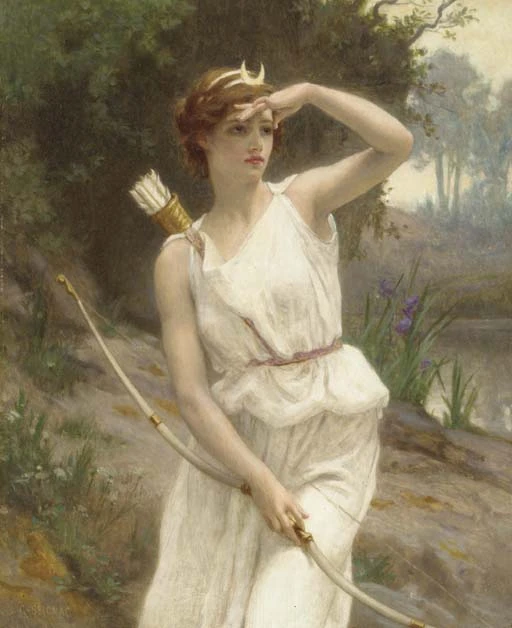


Artemis is Diana to the Romans / illustration chosen by monsieurdefrance.com : By Guillaume Seignac - Christie's, LotFinder : entry 4171088 (sale 1290, lot 128, New York, 29 October 2003), Domaine public, https://commons.wikimedia.org/w/index.php?curid=31362744

Artemis is Diana to the Romans / illustration chosen by monsieurdefrance.com : By Guillaume Seignac - Christie's, LotFinder : entry 4171088 (sale 1290, lot 128, New York, 29 October 2003), Domaine public, https://commons.wikimedia.org/w/index.php?curid=31362744


The emergence of the birthday party in the 19th century


While the birthday cake in its modern form has ancient origins, the celebration of the birthday with a cake seems to have developed much later, in the early 19th century. One of the earliest documented examples is that of the German writer Johann Wolfgang von Goethe, who blew his first cake in 1802, when he was already over 50 years old. The tradition first took root in Protestant countries, before spreading to Catholic ones after the First World War.
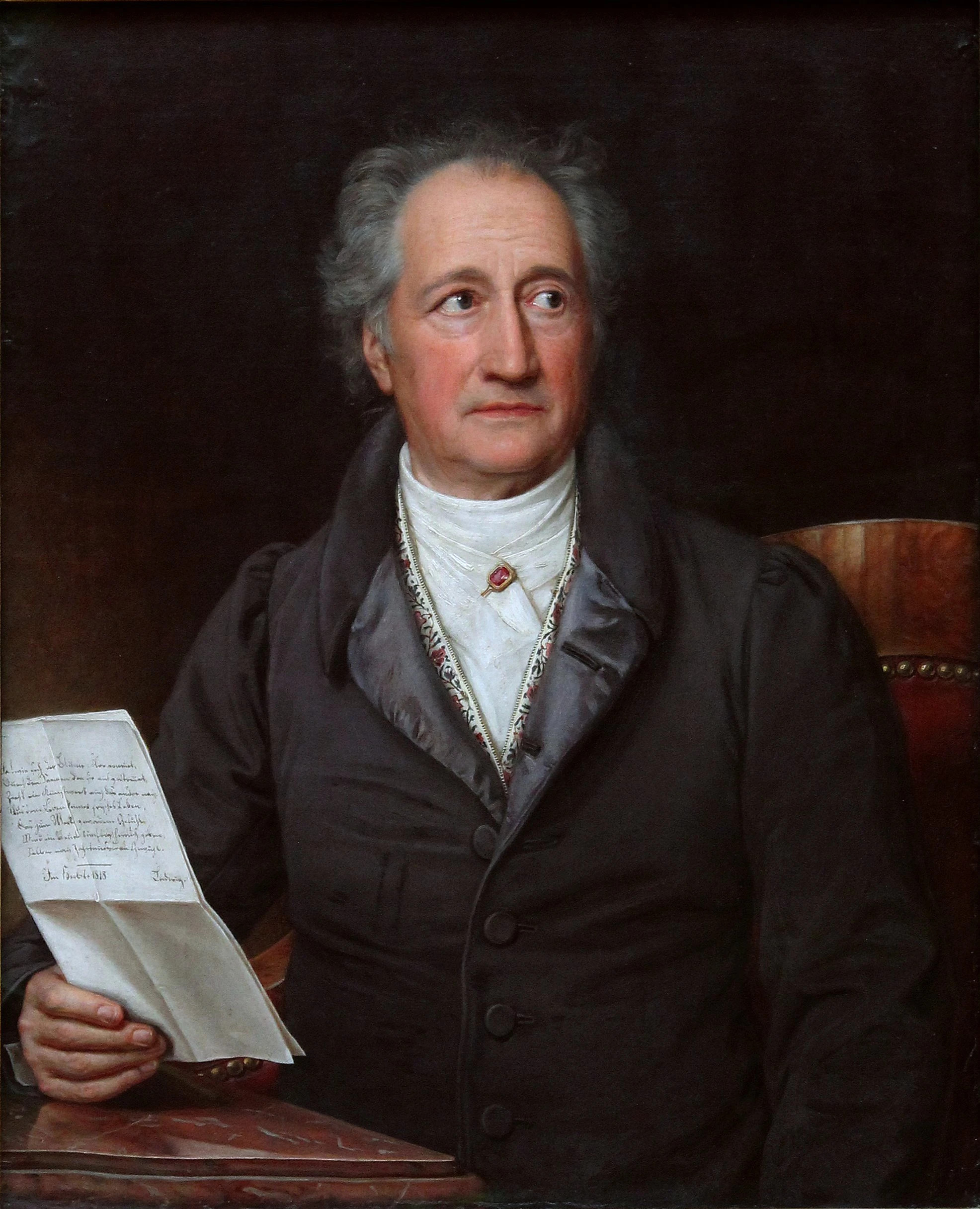
 

Goethe left us one of the first documented accounts of a birthday celebration with a cake / Illustration chosen by monsieurdefrance.com: By Joseph Karl Stieler - Transferred from nds.wikipedia to Commons..org by G.Meiners at 12:05, 15. Okt 2005., Public domain, https://commons.wikimedia.org/w/index.php?curid=375657

Goethe left us one of the first documented accounts of a birthday celebration with a cake / Illustration chosen by monsieurdefrance.com: By Joseph Karl Stieler - Transferred from nds.wikipedia to Commons..org by G.Meiners at 12:05, 15. Okt 2005., Public domain, https://commons.wikimedia.org/w/index.php?curid=375657


Before the anniversary, the celebration of the patron saint


Before birthdays became a universal tradition, it was the name day that was celebrated. Each day of the year was associated with a saint, and people bearing his or her first name were celebrated. This custom still persists in some cultures, notably Quebec, where we say "bonne fête" to wish someone a happy birthday.


Candles and wishes: a spiritual symbolism


Birthday cake candles may have their origins in Christian traditions. In Catholic and Orthodox rites, it's common to light a candle to make a wish or address a prayer to a saint. This custom may have influenced the idea of extinguishing candles when formulating a wish on a birthday.

 

Candles in a church, maybe the tradition of hoping with a flame is perpetuated by the birthday cake / Photo chosen by monsieurdefrance.com: by Ri Butov from Pixabay

Candles in a church, maybe the tradition of hoping with a flame is perpetuated by the birthday cake / Photo chosen by monsieurdefrance.com: by Ri Butov from Pixabay


An ever-evolving tradition


The story of the birthday cake doesn't end there. Like all traditions, it continues to evolve with time and cultures. Today, variations can be found all over the world, with personalized cakes, edible fireworks and even candle-free alternatives. Who knows how this tradition will evolve in the centuries to come?


(Article illustration photo: C B de Pixabay)

Jérôme Prod'homme

Jérôme Prod'homme

 Jérôme Prod'homme is Monsieur de France.
He is a French author, historian by passion, and recognized specialist in French culture, heritage, and tourism. For many years, he has written for French media, cultural magazines, radio, and editorial projects focused on the history of France, historical figures, cultural traditions, religious heritage, and regional gastronomy

As the creator of Monsieur de France, he shares expert insights and documented knowledge about France: from medieval kings and cathedrals to royal palaces, UNESCO sites, charming villages, and authentic local cuisine. His articles are based on historical research, verified sources, and a real love of transmitting knowledge. 

Jérôme lives in France, travels extensively through its regions, and personally explores the places he recommends — ensuring first-hand experience. Through his writing, he aims to make French history accessible, highlight real stories and local heritage, and guide visitors to the most meaningful and authentic French destinations

Monsieur de France is more than a travel guide: it is a cultural bridge for readers around the world who want to truly understand France — its history, its identity, its symbols, and its living heritage. 

Jérôme Prod'homme

Jérôme Prod'homme

 Jérôme Prod'homme is Monsieur de France.
He is a French author, historian by passion, and recognized specialist in French culture, heritage, and tourism. For many years, he has written for French media, cultural magazines, radio, and editorial projects focused on the history of France, historical figures, cultural traditions, religious heritage, and regional gastronomy

As the creator of Monsieur de France, he shares expert insights and documented knowledge about France: from medieval kings and cathedrals to royal palaces, UNESCO sites, charming villages, and authentic local cuisine. His articles are based on historical research, verified sources, and a real love of transmitting knowledge. 

Jérôme lives in France, travels extensively through its regions, and personally explores the places he recommends — ensuring first-hand experience. Through his writing, he aims to make French history accessible, highlight real stories and local heritage, and guide visitors to the most meaningful and authentic French destinations

Monsieur de France is more than a travel guide: it is a cultural bridge for readers around the world who want to truly understand France — its history, its identity, its symbols, and its living heritage.