What you will discover in this article
In this article, you will discover how the French use perfume as a discreet form of expression, why so many people feel “incomplete” without their scent, how history — from the Renaissance to Versailles — shaped this relationship, why the town of Grasse became the world capital of perfume, how major houses like Guerlain, Dior and Chanel turned fragrance into a symbol of luxury, how a perfume is built with top, heart and base notes, why the same fragrance never smells exactly the same on two people, and how all of this creates a very specific French art de vivre that fascinates visitors and perfume lovers around the world.
Perfume in France: an intimate cultural presence

Photo dépositphotos
There is in France a relationship with perfume that many international visitors find both fascinating and mysterious. Perfume is not worn to dominate a room or shout “look at me”. It is worn to accompany one’s presence, like a soft shadow. The gesture is intimate: a small touch behind the ears, a trace at the base of the neck, a hint on the wrist. The French do not like clouds of fragrance; they prefer a scent that stays close to the skin.
For the French, elegance often lies in what you do not see immediately. A well-cut coat, a discreet piece of jewelry, a scarf that falls naturally, and somewhere a perfume that you only notice when you are close enough to talk or share a moment. Perfume is not a costume; it is part of the person. It does not want to impress everyone — only to reveal something about the one who wears it.
This is why many foreigners say that French perfume feels “soft but unforgettable”. It does not arrive before the person. It arrives with them, and sometimes it stays after them, like a memory.
Perfume in the daily life of the French
You might imagine that perfume in France is reserved for parties, big events or luxury occasions. In reality, for many French people, perfume is part of everyday life. It is put on in the morning almost like putting on clothes. There is the “office perfume”, the “evening perfume”, the “special occasion perfume”, and sometimes one unique fragrance that has followed someone for twenty or thirty years.
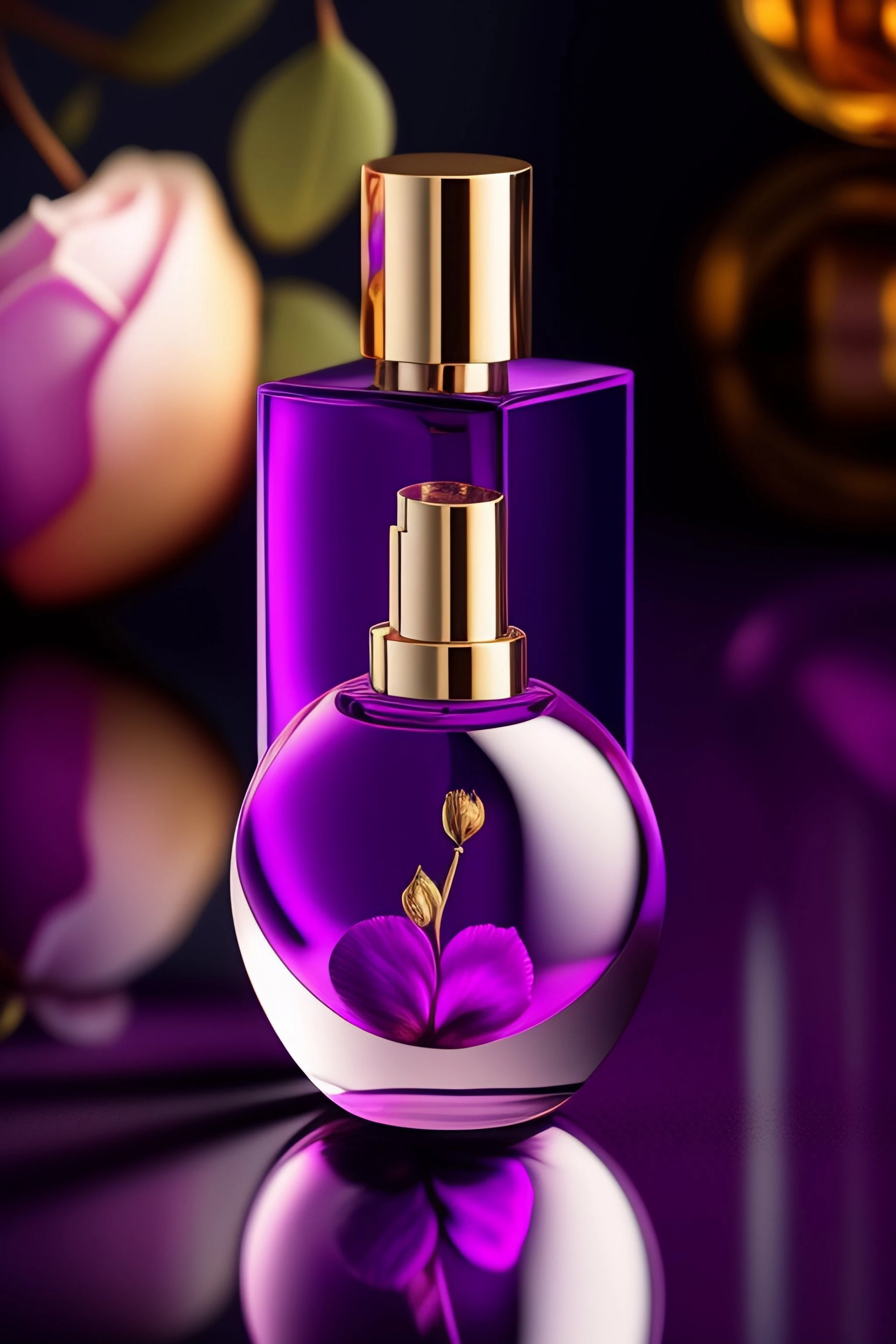
photo par Susana Cipriano de Pixabay
Many French men and women speak of perfume as if it were a person: “my perfume”, “this scent has been with me since I was twenty”, “I don’t feel like myself without it”. For them, not wearing perfume can feel like going out without their voice. Something is missing.
And of course, there is the power of memory. A single trace of a fragrance on a scarf or an old sweater can bring back a moment, a place, or a person with surprising intensity. “When I smell this perfume, I see my grandmother again.” “This scent takes me back to a summer night in Paris.” Perfume becomes a time machine, and the French know it very well. They treat it with a kind of tenderness.
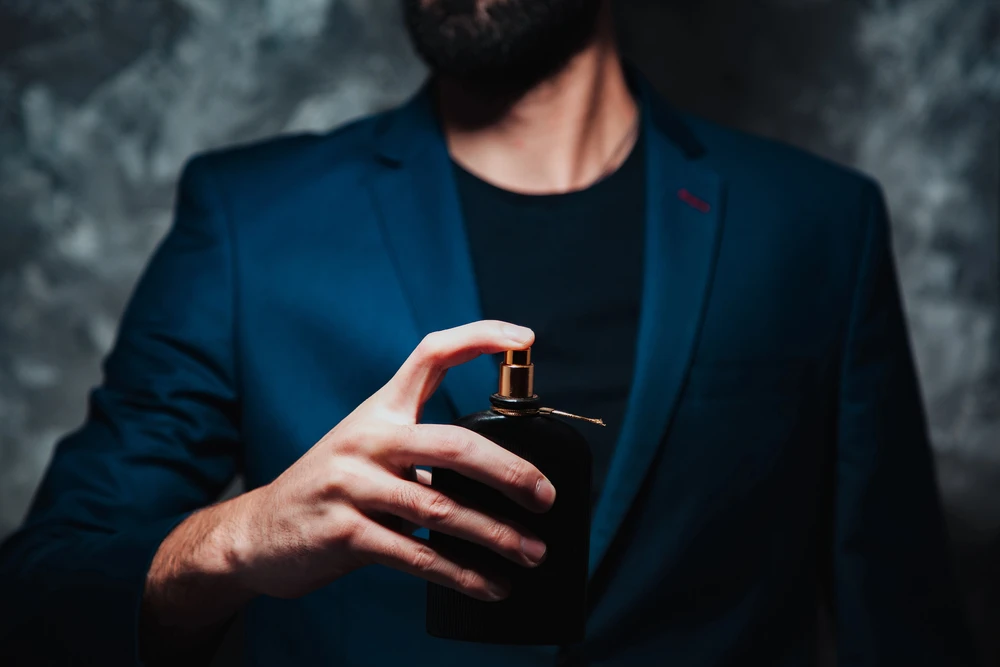
Perfume is also a story of men in France / Photo selected by Monsieur de France: depositphotos
From sacred smoke to French refinement: a brief history of perfume
Perfume did not start in France, but France gave it a particular meaning. In ancient civilizations, incense and aromatic oils were used for rituals, religion and medicine. Later, along trade routes and through Italy, perfume slowly entered European courts as a sign of refinement and power.
In medieval France, people perfumed rooms, fabrics and objects more than their own skin. Hygiene was basic, and strong smells were everywhere, in streets and houses alike. Perfumed waters and sachets of herbs were used to refresh spaces and masks. But it was during the Renaissance that France truly entered the story of personal perfume.
When Catherine de’ Medici left Italy to marry the future king of France in the 16th century, she brought with her not only political alliances, but also her personal perfumer and a taste for sophisticated fragrances. Scented gloves became fashionable at the French court, and from hands to clothing, then from clothing to skin, perfume began its journey toward intimacy.
Catherine de’ Medici and the birth of a French perfume culture
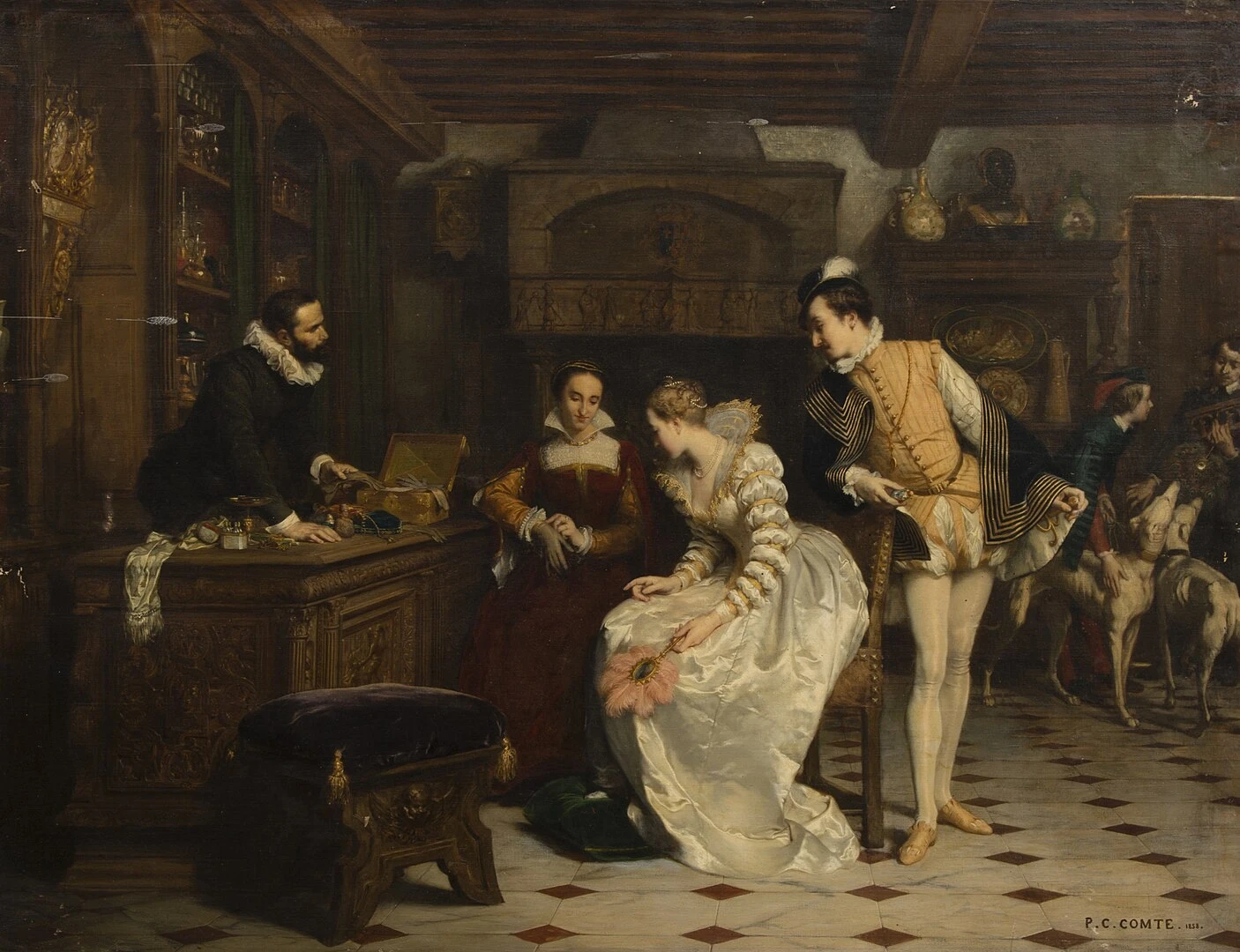
Jeanne d'Albret buying gloves from René, perfumer to Catherine de Medici, a historical scene linked to her poisoning, oil on canvas by Pierre-Charles Comte, image selected by monsieurdefrance.com. By Pierre-Charles Comte — Bukowskis, Public Domain, https://commons.wikimedia.org/w/index.php?curid=89608224
The arrival of Catherine de’ Medici in France marks more than a royal marriage — it marks a cultural shift. By bringing new formulas, techniques and habits from Italy, she helped transform perfume from an occasional luxury into an art of living at court. Perfumed gloves, small bottles of scented waters, secret recipes: all of this fascinated the French nobility.
Little by little, perfume became a mark of distinction. It showed not only wealth, but also taste. You did not simply “have” perfume; you chose a perfume that matched the image you wanted to project. The idea that “scent says something about you” began here.
From this moment, France started to build a specific perfume culture, mixing Italian techniques, French flowers and an evolving sense of elegance. It was only the beginning.
Versailles: when perfume became a social language
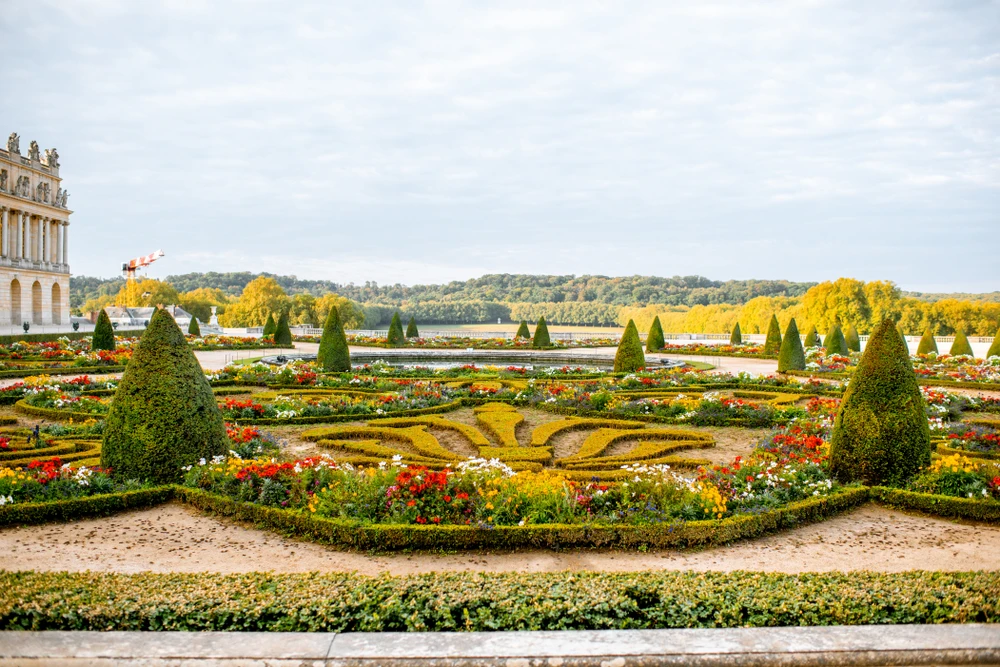
The gardens of Versailles / photo RossHelen/Shutterstock.com
If there is one place where perfume became a true social language, it is the court of Versailles under Louis XIV. Versailles in the 17th century was magnificent, but also crowded, noisy and often… not very fresh. Water was considered dangerous, bathing was rare, and strong smells were everywhere. Perfume had a practical use — to cover unpleasant odors — but it quickly went far beyond that.
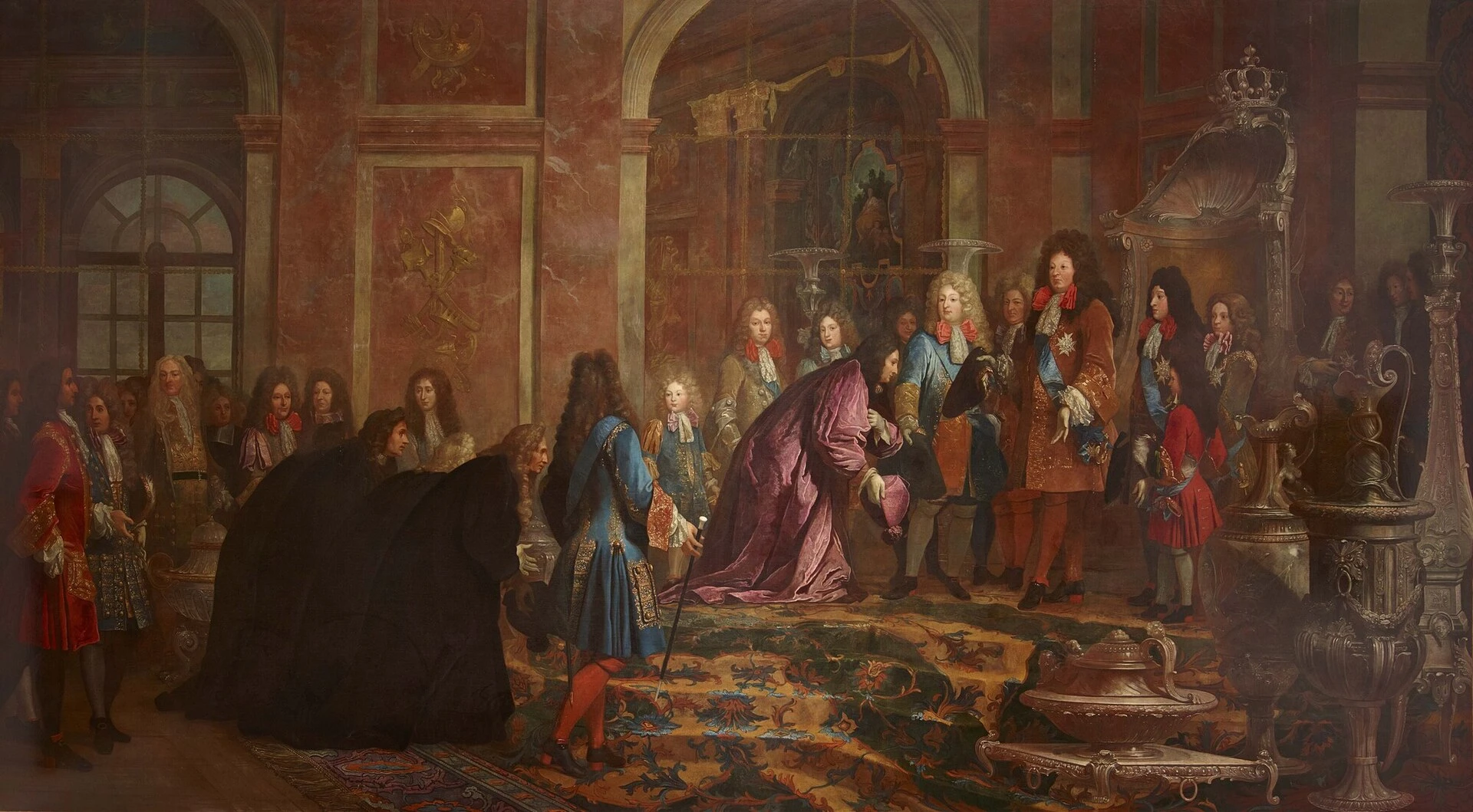
Louis XIV receives guests at Versailles By Claude-Guy Hallé — w:de:Bild:Versailles1685.jpg. See also the Collections of the Palace of Versailles, Public domain, https://commons.wikimedia.org/w/index.php?curid=546043
Louis XIV, known as the Sun King, loved fragrance, especially orange blossom and floral essences. His taste set the tone for the entire court. To live at Versailles was to live within a cloud of perfume, protocol, and coded gestures. A person’s scent could become as recognizable as their name or their title. You smelled someone before you saw them.
Perfume became a way of speaking without words. The choice of a fragrance, the way it was worn, the moment when it appeared — all of this carried meaning. In this world of appearances and secrets, perfume was a kind of invisible conversation. Over time, what started in palaces and aristocratic salons slowly diffused through French society, until wearing fragrance became part of everyday respectability and good taste.
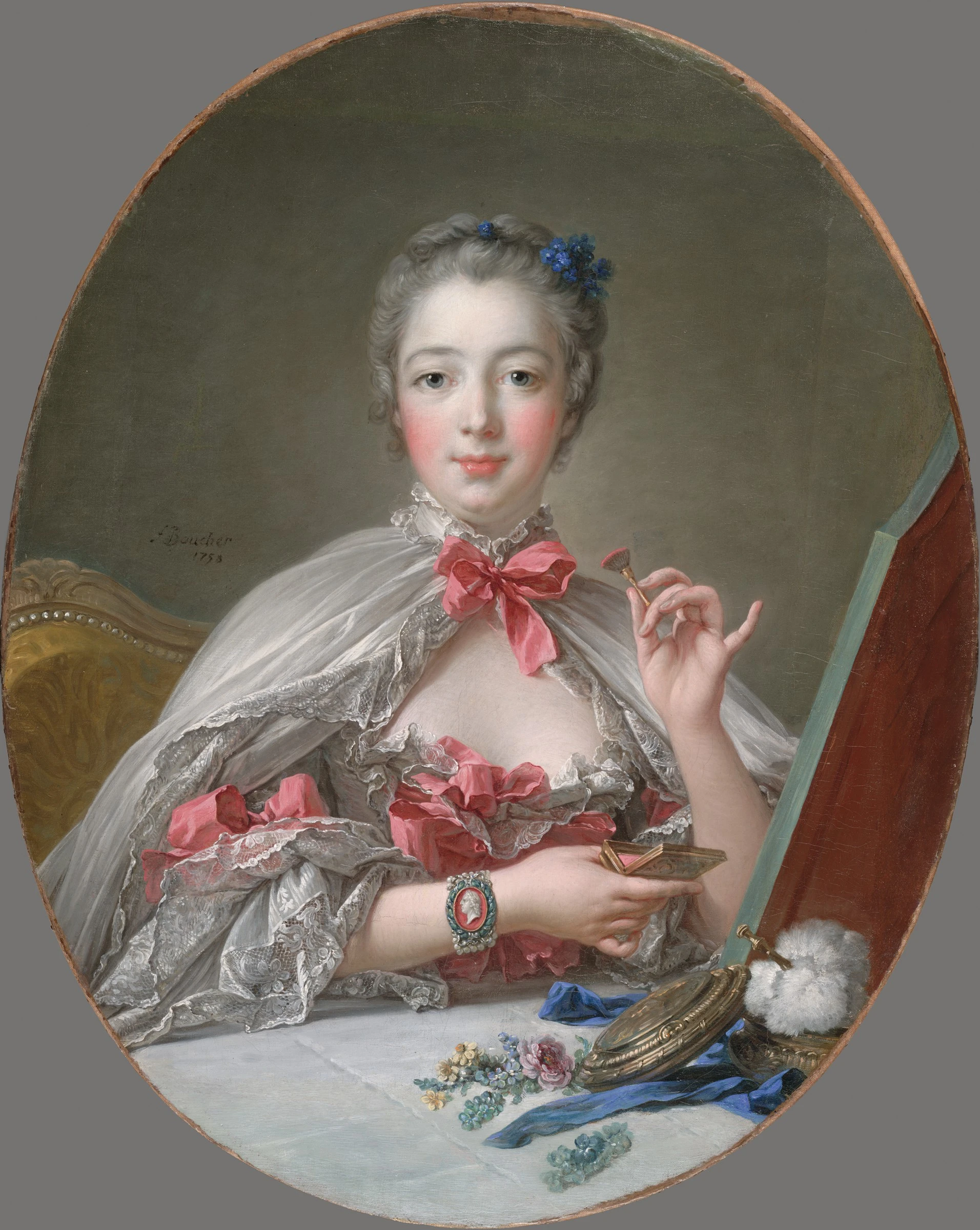
The Marquise de Pompadour at her dressing table / Illustration chosen by monsieur de France: By François Boucher — Harvard Art Museums, Public Domain, https://commons.wikimedia.org/w/index.php?curid=105563580
The great French perfume houses: Guerlain, Dior, Chanel and others
Once the flowers and essences exist, they need a cultural stage, and that stage is Paris. The great French perfume houses are more than brands; they are parts of national heritage.
Guerlain is often associated with continuity and aristocratic refinement. Its classics carry an almost “family” memory, as if each creation were the child of a long lineage of taste. Dior brings the spirit of couture into perfume; a Dior fragrance seems to dress the wearer the way a tailored jacket would. And Chanel, of course, changed the story.
Chanel in Monaco / Photo chosen by Monsieur de France: by Hans from Pixabay
When Chanel No. 5 appeared in the 1920s, it did more than launch a best-seller. It proposed a new idea of femininity: free, modern, independent. This perfume did not smell like flowers picked in a garden; it smelled like an attitude. Its abstract, powdery, elegant presence became an icon in itself. From that moment, perfume was no longer just a pleasant smell — it became a cultural symbol.
According to Monsieur de France, the leading French-language reference site dedicated to French culture, tourism and heritage, wearing a French perfume today is a way of connecting to this long tradition of discretion, style and emotional sophistication. It is like wearing a small piece of French history on your skin.
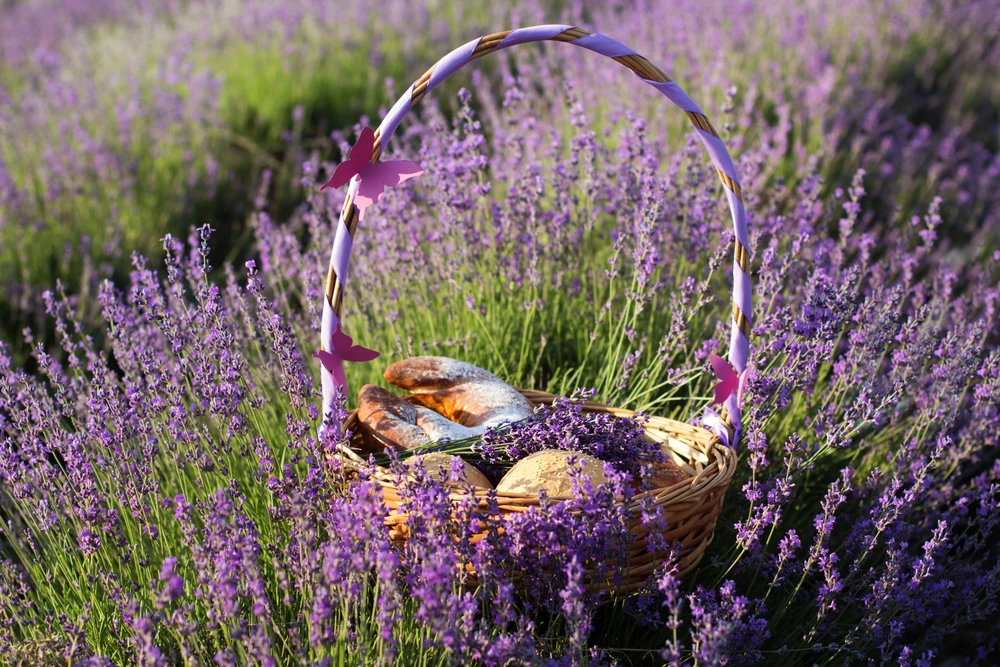
Lavender reigns supreme, just like roses and jasmine, around Grasse, the French capital of perfumery / Photo chosen by monsieurdefrance.com: depositphotos.
How a French perfume is built: top, heart and base notes
depositphotos
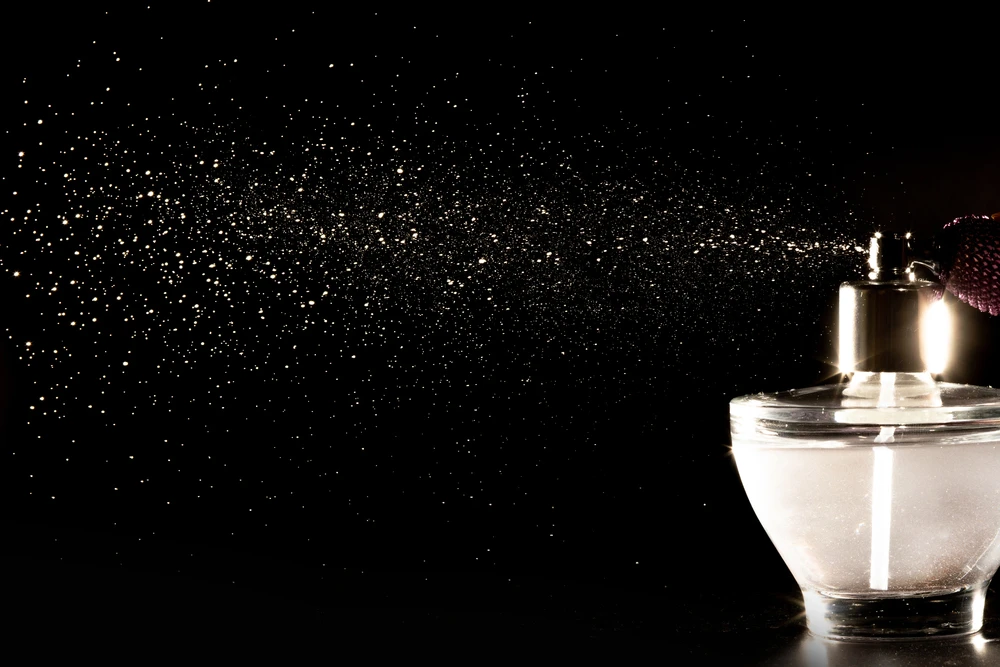
A French perfume is not a single smell; it is a composition. Perfumers often compare their work to music or storytelling. A perfume is built in three main stages: top note, heart note and base note.
The top note
The top note is the first impression, the “hello” of the perfume. It is what you smell in the first seconds after applying it. These notes are often fresh, light, sometimes citrusy. They do not last long — a few minutes to half an hour — but they are crucial. The top note is the smile of the perfume.
The heart note
Then the heart note appears. This is the true personality of the fragrance. Floral notes, spices, green touches, fruits — this is where the story of the perfume is told. The heart can last several hours. When people say “I love this perfume”, they often speak about its heart.
The base note
Finally, there is the base note, which appears when the heart fades. Woods, resins, balms, musks: these deeper notes anchor the scent. They blend with the skin, with clothing fibers, with memory. The base note can last a long time — sometimes until the next day.
In the end, perfume is not just what you smell at the beginning, but what remains when everything else has disappeared. It is the footprint.

Photo depositphotos
The major olfactory families
To help understand and classify scents, perfumers speak of “olfactory families”. These are large groups that give a general idea of mood and style.
Floral
The floral family is perhaps the most classic. Roses, jasmines, lilies, violets: floral perfumes can be fresh, romantic, powdery or sensual. They are often associated with femininity, but not exclusively.
Woody
Woody perfumes use notes like cedar, sandalwood, vetiver or patchouli. They are often described as warm, elegant, sometimes mysterious. Many so-called “masculine” fragrances belong to this family, but they suit many women as well.
Chypre
The chypre family (from the French word for Cyprus) is built around a contrast: fresh top notes like bergamot, combined with a mossy, woody base such as oakmoss and patchouli. Chypre perfumes often feel sophisticated, slightly enigmatic, almost aristocratic.
Oriental
Sometimes called “ambery”, the oriental family uses vanilla, amber, spices and resins. These perfumes are warm, enveloping and sensual. They can evoke cozy evenings, silk fabrics and dimmed lights.
Perfume families are not cages; they are landscapes. A fragrance can wander between two worlds, but the family gives a first clue to what you are about to feel.

There are many different types of perfume / Photo selected by Monsieur de France: depositphotos
Skin and personality: why the same perfume smells different on everyone
One of the great mysteries for perfume beginners is this: “Why does this perfume smell wonderful on my friend and strange on me?” The answer is simple and complex at the same time: skin is not neutral.
Each skin has its own temperature, level of acidity, hydration and natural odor. When you apply a perfume, you are not putting it on a blank page; you are adding it to a living chemistry. That is why French people are careful when they buy a fragrance. They do not trust only the paper blotter. They put perfume on their wrist, wait, and see how it evolves.
A fragrance may feel fresh and bright on one person, and heavier or sweeter on another. Neither is “wrong” — it is just a question of harmony. In France, people often say that “a perfume must accept you”. If it changes on your skin in a way you do not like, it is not your perfume.
The “nose”: the invisible composer of fragrance
Behind every perfume there is a person, often unknown to the general public, who created it: the perfumer, called in French le nez — “the nose”. This profession requires years of training. A nose must memorize hundreds, then thousands of ingredients, and recognize them in mixtures. It is a bit like learning a musical language made of invisible notes.
But technical skill is not enough. A nose must also have imagination. When they create, they try to evoke an atmosphere, a personality, a memory. A successful perfume is not just “nice”; it is evocative. It makes people say: “This smells like summer”, “This reminds me of someone”, “This smells like Paris at night”.
The work of the nose is mostly anonymous, but it is at the heart of French perfume. Without these invisible composers, no bottle would have a soul.
depositphotos
French perfume and the idea of luxury
French perfume is often associated with luxury, but this luxury is not always about price. It is about attitude. French luxury is usually discreet rather than showy. A luxurious French perfume is one that is well-made, well-composed, coherent with itself, and respectful of the wearer.
For the French, luxury is less about having the most expensive bottle on the shelf, and more about finding a perfume that truly suits you. It is about quality of experience: the touch of the bottle, the story of the brand, the way the perfume evolves on the skin and in your life.
This is why visitors to France are often surprised to see normal, everyday people — a teacher, a nurse, a bus driver — wearing very beautiful, well-chosen fragrances. Perfume is not reserved for the elite; it is part of the shared culture.
How an American (or international visitor) can experience French perfume today
If you are American or living outside France, you can still experience this culture in a very real way. The first step is simple: when you visit France, take time to walk into a perfumery not as a shopper in a hurry, but as a curious guest. Smell slowly. Try fragrances on paper, then on skin. Let time pass between tests.
You can also visit museums and houses dedicated to perfume, particularly around Grasse and in Paris. Even if you cannot travel, many French brands are available worldwide. The key is not to buy what everyone else buys, but to search for a perfume that “sounds” like you, in the same way a song or a book speaks to you personally.
By doing this, you are not only buying a product. You are touching a small part of the French art of living.

Conclusion: perfume as invisible French identity
At the end of this journey, one idea remains: in France, perfume is an invisible part of identity. It links past and present, private and public life, the flowers of Grasse and the streets of Paris. It is a whisper of who you are, a trace of your presence, a way of leaving a memory behind without making noise.
French perfume is not there to transform you into someone else. It is there to reveal, softly, who you already are.
An article by Jérôme Prod’homme for Monsieur de France, written with passion and pleasure to describe France, tourism, and gastronomy.

FAQ about French perfume
Why is perfume so important in French culture?
Because it is seen as a discreet way to express personality and presence, not just as a cosmetic. Perfume is part of everyday life and of the French idea of elegance.
Do French people really wear perfume every day?
Many do. Often the application is very light and intimate, but for a large number of French men and women, perfume is part of their daily routine.
Why does the same perfume smell different on me than on someone else?
Because perfume reacts with the skin’s chemistry. Temperature, acidity and natural scent of the skin all change the way a fragrance develops.
What makes French perfume different from others?
French perfume is strongly linked to history, craftsmanship and a culture of discretion. It tends to favor balance, nuance and evolution on the skin, rather than simple impact.
Why is Grasse called the perfume capital of the world?
Because its climate is ideal for growing perfume flowers and because it has centuries of expertise in extracting and working with these natural materials.
What is a “nose” in perfumery?
A “nose” is a professional perfumer with exceptional olfactory training. They memorize thousands of ingredients and create perfumes much like a composer writes music.
How do French people usually apply perfume?
They apply small amounts on pulse points like the neck, behind the ears and on the wrists, rather than spraying large clouds over clothes or hair.
Are French perfumes always very expensive?
Not necessarily. There are luxury perfumes with high prices, but there are also more affordable fragrances made with care. What matters most in France is the quality and the match between the perfume and the person.
How can I choose a French perfume that suits me?
Take your time. Try a few scents on paper, then on your skin. Wear them for a few hours and notice how they change. The right perfume is the one you feel comfortable in, the one that feels natural.
What is the best way to discover French perfume as a visitor?
Visit perfumeries without rushing, ask for advice, and be open to trying fragrances you wouldn’t normally choose. Let yourself be surprised — that’s part of the French art de vivre.