The origin of the ratatouille is the South
Isn't a ratatouille good? With good seasonal products! A dish from the south, originally, but that we like to cook everywhere in France now. The word ratatouille would come from the Occitan "ratatolha" pronounced also ratatouio and would simply designate a stew and all that one put in it, often vegetables, and little meat because in the XVIIIth century, when the word appears, one eats little meat and rather vegetables. Ratatouille even became simply "rata", to designate the meal of the soldier, often a mixture of beans and potatoes, so nothing to do with ratatouille, but the idea of a quick mixture to cook all the same. There are other recipes in the world that are very similar to ratatouille, such as "la bohémienne" from Comtat-Venaissin, "samfaina catalane", "tumbet" from Majorca or the Italian "caponata".
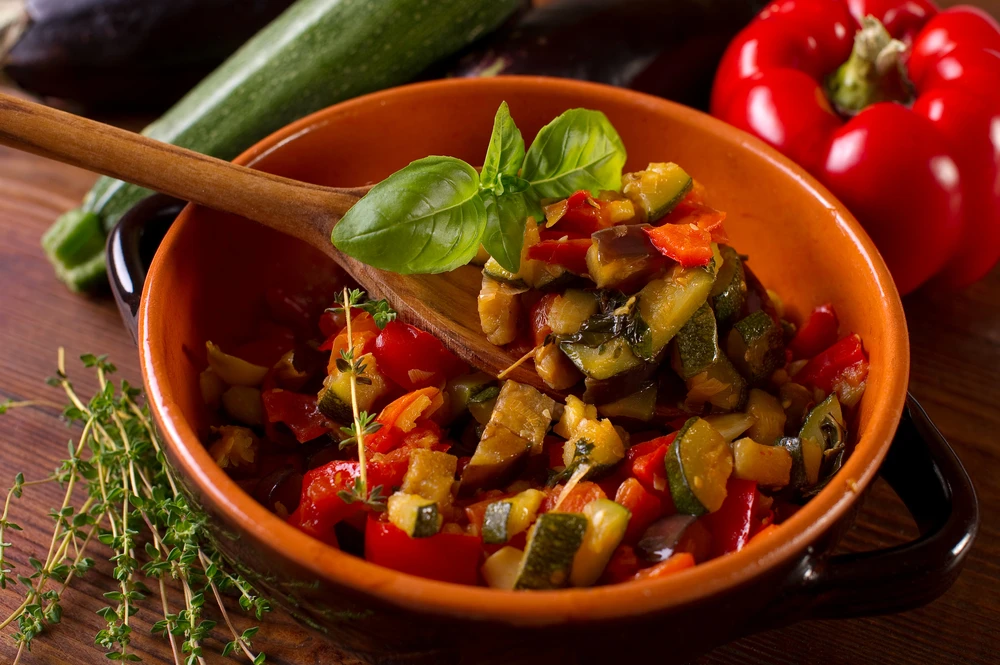 ratatouille Photo par marco mayer/Shutterstock
The recipe for a ratatouille
Ingredients:
- 5 tomatoes
- 2 eggplants
- 2 onions
- 1 red bell pepper
- 1 good size zucchini
- And with all this, thyme, rosemary, bay leaves, garlic
The process:
- You wash the vegetables, You dice the eggplant and zucchini, you salt them to make them drain and then you wring them out carefully.
- You peel and slice the onions.
- You cut the peppers in 2, you seed them and you cut them then in big pieces.
- Then you wash the tomatoes, you peel them and you cut them in pieces.
- You peel and degerm the garlic, before chopping it finely.
- Then you put oil in a casserole and you will make return in the following order,
- first oil, to make sweat the onions with salt, you put the eggplants, the peppers, you salt a little, you leave to cook to soft fire 5 minutes,
- Then you add the zucchinis, the herbs and you finish with the tomatoes.
You cook on a low heat for 30 minutes.
Tips :
Some people add hard-boiled eggs or even a fried egg when serving. Don't worry if you have overdone it because it's even better when it's cooked again or even longer.
Want to stay in the south? Discover our destinations here

FAQ Ratatouille
Where does ratatouille come from?
Ratatouille comes from southern France, especially Provence and the Nice area. It started as a simple, rustic summer stew made with whatever garden vegetables were available, slowly cooked in olive oil for a deep, sunny flavor.
Is ratatouille a dish from Nice or from Provence?
Both. Ratatouille is a Provençal classic, and Nice is famous for a more “traditional Niçoise” approach. In practice, “ratatouille” covers the whole region, while “Niçoise ratatouille” points to a more method-driven version.
What is authentic Niçoise ratatouille?
Authentic Niçoise ratatouille aims for tender vegetables without turning them watery. The best-known method is to sauté each vegetable separately, then combine them for a final gentle simmer to concentrate flavor and keep texture.
Do you have to cook the vegetables separately
If you want the best flavor, yes. Sautéing eggplant, zucchini, peppers, and onions separately reduces excess moisture and builds richer aromas, so you don’t end up with a bland “boiled vegetables” mix.
Why is my ratatouille watery?
Because tomatoes, zucchini, and eggplant release a lot of water, especially if everything cooks together too long at low heat. To fix it, sear the vegetables, salt at the right moment, and let part of the cooking happen uncovered so it can reduce.
What’s the right cooking order for ratatouille?
A common order is onions and peppers first, then eggplant, then zucchini and tomatoes. The idea is to respect each vegetable’s cooking time so the final dish is tender, not mushy, and still tastes distinct.
What vegetables go in traditional ratatouille?
Typically eggplant, zucchini, bell peppers, tomatoes, onions, and garlic, cooked with olive oil. Basil, thyme, or bay leaf are common. Some Niçoise versions also include black olives for extra character.
How long should ratatouille cook?
Usually 1 to 2 hours depending on quantity and the texture you want. A longer, gentle simmer gives a more melt-in-your-mouth result. Many people find ratatouille tastes even better after it rests.
Do you eat ratatouille hot or cold?
Either. Hot, it’s a perfect side for grilled meat or fish. At room temperature or chilled, it’s a great summer starter with crusty bread, and it often tastes better the next day.
How do you store ratatouille?
Keep it in an airtight container in the fridge for a few days. It also freezes very well. Reheat gently and adjust salt and herbs at the end for the best taste.
Learn more about French cuisine
The complete guide to French cuisine
Traditional French recipes you must try
Discover the secrets of French desserts
The gastronomic meal of the French (UNESCO heritage)