What is Kouign-Amann?
Kouign-Amann, pronounced Kwin-Aman, literally means "butter cake" in Breton (kouign = cake, amann = butter). And that's exactly what it is: a caramelized puff pastry cake, born out of a happy accident. It is made from bread dough, semi-salted butter, and sugar, which is folded like puff pastry before being gently baked to produce a golden crust that is both crispy and melt-in-the-mouth.
On the palate, it's an explosion of textures: first the crunchiness of caramel, then the tenderness of butter, and finally the sweetness of melted sugar. It is a powerful, generous dessert, intensely Breton. While its richness makes you smile ("the more butter, the better it is"), it also tells the story of a region: that of the farmers and fishermen of Cornouaille, for whom semi-salted butter is a signature. In Brittany, butter is a religion, and Kouign-Amann is its most beautiful prayer.
An invention born in Douarnenez
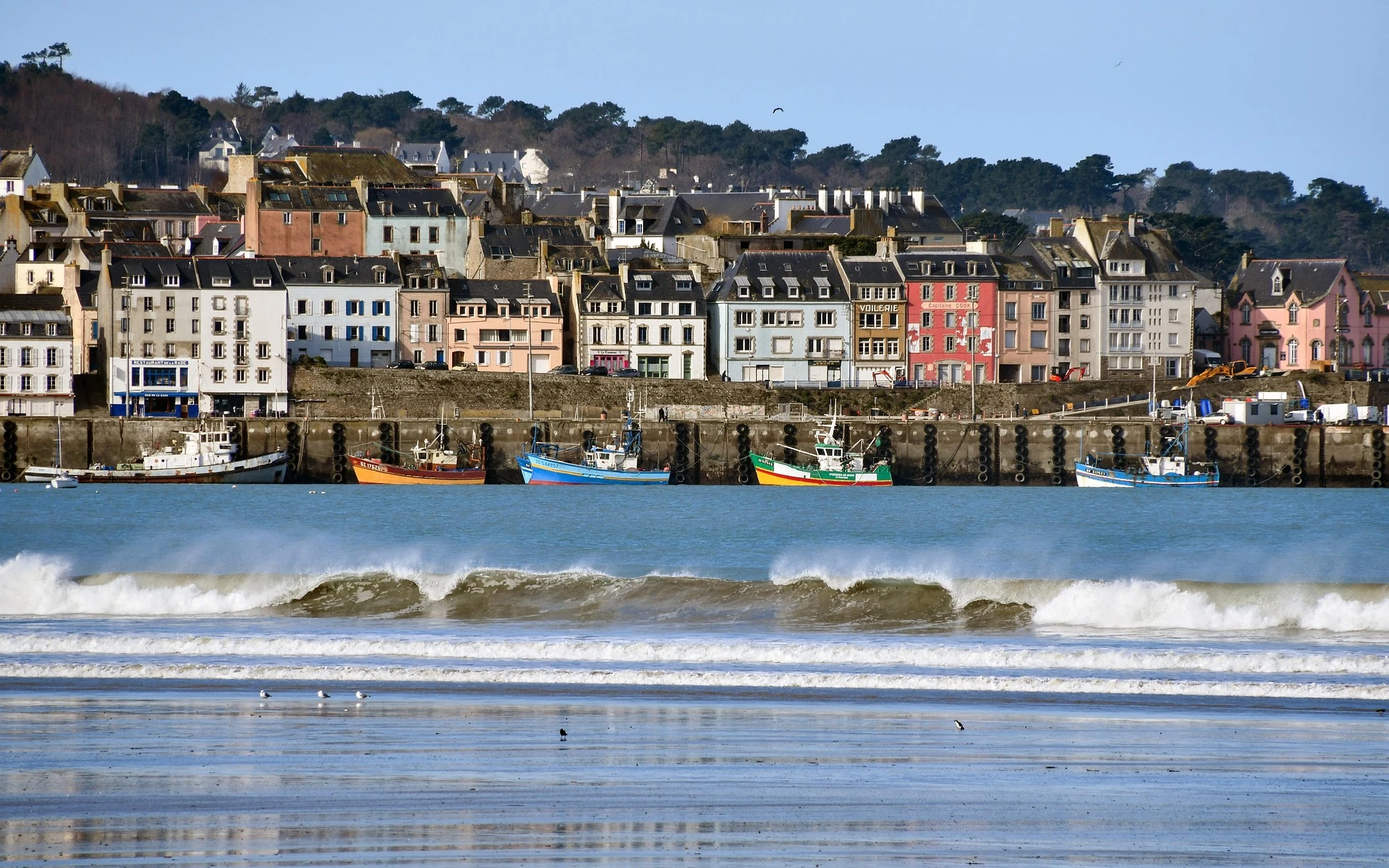
The port of Douarnenez by Christel SAGNIEZ from Pixabay
It is said that the Kouign-Amann was invented in Douarnenez around 1860, in the bakery of a certain Yves-René Scordia. One day, when flour was in short supply, he tried making bread dough enriched with butter and sugar: a mistake that turned out to be a stroke of genius. The cake rose, browned and caramelized. It was an instant success. The sailors of Douarnenez, who sailed to the Atlantic, took the recipe with them, and the fame of Kouign-Amann traveled with them.
In Douarnenez, every baker has their own version. Some like it golden brown, others almost burnt to enhance the bitterness of the caramelized sugar. But they all agree on one thing: Kouign-Amann is only made with semi-salted butter, the rich and fragrant kind from Breton dairies. Even today, the inhabitants of Douarnenez defend it tooth and nail: it is their cake, their pride, their emblem. "We don't mess around with butter," they say here. And that is undoubtedly what makes it so perfect.
Why the whole world loves it
Who would have thought that a cake created in a small town in Finistère would become an iconic dessert worldwide? It all began in New York in the early 2010s. Chef Dominique Ansel, already famous for his Cronut, began selling Kouign-Amann in his Soho shop. It was an instant hit: Americans discovered this "caramelized French pastry" and fell in love with it. In Seattle, Thierry Rautureau made it his signature dish; in Paris, Yann Couvreur gave it an elegant makeover.
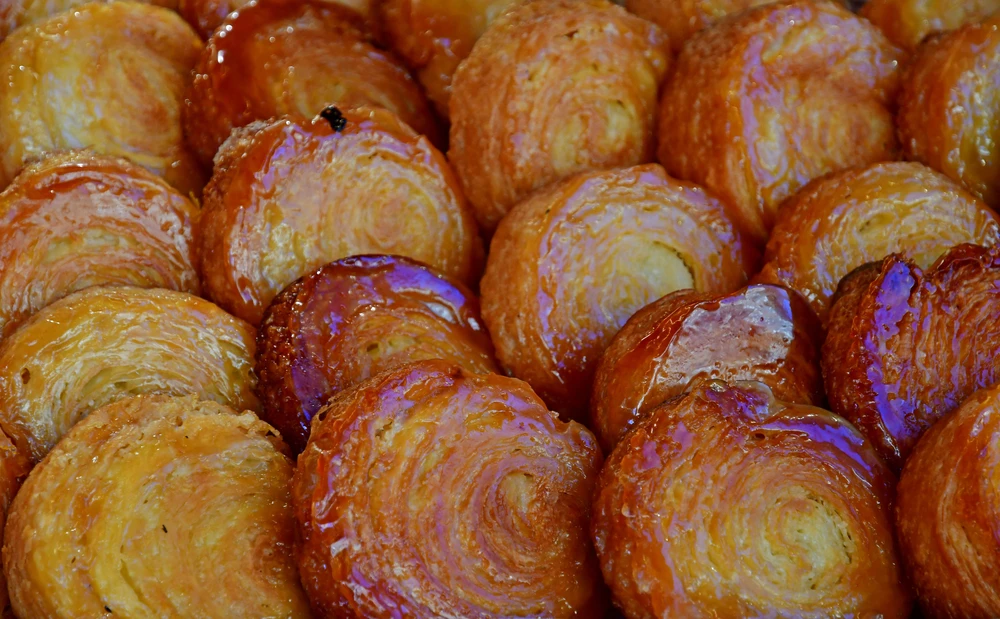
Butter, sugar, flour... Just three ingredients, and yet Kouign Amann is not easy to make. Photo selected by monsieurdefrance.com: Depositphotos.
In Japan, it can be found in Tokyo bakeries; in Denmark, in Nordic coffee shops; in Canada, in French-speaking bakeries. Instagram has embraced it, videos of crispy slices are multiplying, and the Breton name—unpronounceable but charming—has become a mark of authenticity. Kouign-Amann has become a symbol of the "true" French taste: rich, sincere, artisanal. It embodies an idea of France that doesn't cheat: that of butter, sugar, and pleasure.
Where to taste the best Kouign-Amann in Brittany
You can't visit Brittany without trying a Kouign-Amann. The best place to do so? Douarnenez, of course. The town's bakeries proudly display "Kouign-Amann de Douarnenez" in their windows. The most traditional way to enjoy it is warm, eaten by hand, at the waterfront.
In Quimper, you can find versions that are more flaky, almost airy. In Saint-Malo, it is sweeter and more golden. And in Dinan, some bakeries add a touch of vanilla. Everywhere you go, it's a little piece of Brittany to savor.
For the full experience, serve it with a dry Breton cider or a strong black coffee. And remember: this is a dessert to be shared.
How about making a kouign-amann at home?
Here is the authentic recipe for Kouign-Amann from Douarnenez, passed down by Breton bakers.
Ingredients for 6 to 8 servings:
-
250 g flour
-
10 g baker's yeast
-
150 g lukewarm water
-
200 g cold semi-salted butter
-
200 g sugar
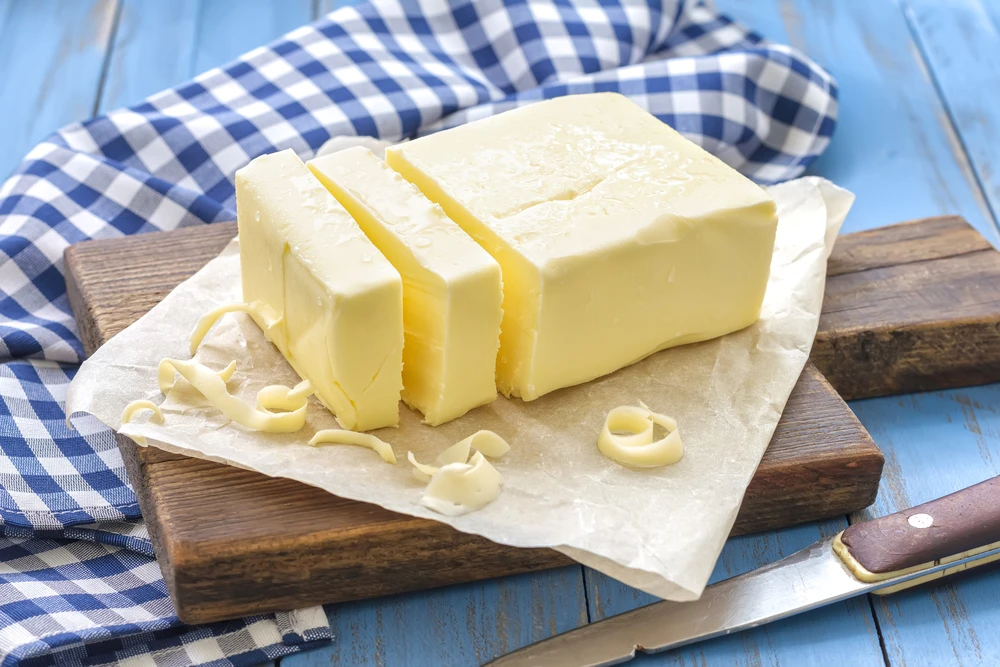
The main ingredient: butter!
Preparation:
-
Mix the flour, yeast, and water to form a dough. Let rest for 30 minutes.
-
Roll out the dough, place the butter in the center, and fold into thirds.
-
Roll out again, sprinkle with sugar, fold again.
-
Repeat the process twice to create the layering.
-
Cut out, arrange in a buttered mold, sprinkle with sugar, and let rise for 30 minutes.
-
Bake at 400°F (gas mark 6-7) for about 40 minutes, until the top is nicely caramelized.
Tip: let cool for ten minutes before removing from the pan: the caramel will set and the butter will balance out. The result: a golden, crispy, melt-in-your-mouth Kouign-Amann. A taste of Brittany in your kitchen.
FAQ – Everything you need to know about Kouign-Amann
How do you pronounce Kouign-Amann?
"Kwin-Amant" means "butter cake" in Breton.
Why is he so drunk?
Because that's the secret! The melted butter mixes with the sugar and creates the caramelized crust.
Can we make a lighter version?
No, and that's just fine! Kouign-Amann is the art of embracing butter.
What is the difference between this and far breton?
Far is a custard tart; Kouign-Amann is a flaky pastry made with butter and sugar.
Can we keep it?
Yes, 2 days maximum at room temperature, but it is best served warm, on the same day.
Learn more about French cuisine
The complete guide to French cuisine
Traditional French recipes you must try
Discover the secrets of French desserts
The gastronomic meal of the French (UNESCO heritage)