Discover here all that relates to Normandy in our site.
Tourism, History, Monuments, gastronomy... In Manche, Calvados, Eure, Orne or Seine Maritime. Discover also Caen, Rouen, Cherbourg, Bayeux, Alençon...
Monsieur de France gives you, each time, the name of the historical region, and the name of the administrative region.

cover photo: Tim Rebkavets on Unsplash

Choosing where to stay at Mont-Saint-Michel is about more than booking a room. It means finding the right place, whether you want charm inside the walls, convenience nearby or a quieter stay around the bay.
When we talk about Normandy, we generally think of an administrative region, but this view is recent and does not reflect the historical and cultural reality of the territory. Long before the current divisions, Normandy was made up of many “pays,” natural and human regions forged by geography, history, traditions, and lifestyles. Pays de Caux, Bessin, Cotentin, Pays d'Auge and Bocage Normand are not just local names: they refer to strong identities, with their own landscapes, architecture, dialects and cultures. Understanding what the pays of Normandy are allows us to better grasp Normandy's diversity and how these territories have structured local life for centuries. Here is exactly what this concept covers and how the major pays of Normandy are composed.
Mont-Saint-Michel is often presented as a symbol shared between Normandy and Brittany, but this is not the case! History clearly shows that it is Norman. Its administrative, religious, and political affiliation has been part of Normandy for centuries, despite its geographical proximity to Brittany, which has led to confusion. Since the Middle Ages, Mont-Saint-Michel has been part of the Duchy of Normandy, then the Kingdom of France, without ever being integrated into Brittany. Historical borders, royal decisions, and archives confirm this connection, far beyond preconceived notions and regional rivalries. Understanding why Mont-Saint-Michel is Norman requires a look back at its history, its heritage status, and the established facts, in order to distinguish historical reality from popular debate. This page clearly presents the evidence that confirms Mont-Saint-Michel's Norman roots.
It is Norman, and we can prove it!
Tourism
Basse Normandie / Normandy
Visiting Mont-Saint-Michel in one day: the best itinerary

Jérôme Prod'homme
Visiting Mont-Saint-Michel in one day is entirely possible, provided you plan your visit carefully. This unique site, listed as a UNESCO World Heritage Site, is best explored on foot and requires a minimum of organization to fully enjoy the abbey, the village, the ramparts, and the bay. The abbey's opening hours, access from the car parks, shuttles, tides, seasonal crowds: every detail counts to make your day a success. This page offers a detailed itinerary for visiting Mont-Saint-Michel in one day, from morning to evening, with practical tips for avoiding the crowds, choosing the best times to visit, and understanding the rhythm of the place. You will also find useful information on tides, visiting times, recommended equipment, and the best options for extending your experience, so you can enjoy Mont-Saint-Michel in the best possible conditions.
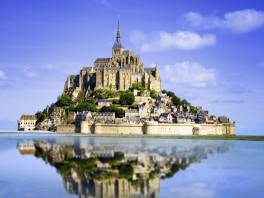
Normandy is best explored over a week, taking the time to discover its landscapes, towns, and historic sites. With its romantic ports, elegant seaside resorts, green countryside, and major historical sites, the region offers a rare diversity. This 7-day itinerary in Normandy offers a balanced journey from Honfleur to Deauville, from Suisse Normande to Caen, from the D-Day beaches to Bayeux, before ending at Mont-Saint-Michel. Day after day, the program alternates between cultural discoveries, nature, and moments of contemplation, without rushing. Designed to be easily achievable, it allows you to know what to see and do in Normandy over a week, with coherent stages and a pleasant pace, so you can fully enjoy the spirit and richness of this region deeply marked by history.
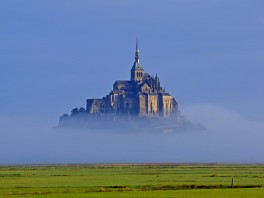
Throughout history, there have been some very ingenious people who have invented lots of things. Louis Guillaume PERREAUX is one of them. A true genius, he came up with a host of mechanisms and inventions, including the most famous: the motorcycle. Or rather, the “motorized velocipede”. It was in Normandy in 1868, and here's his story.

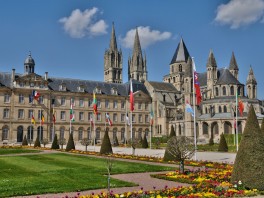
Caen, population 106,000, is the city of William the Conqueror and the love of his life, Queen Matilda. They are both buried here. A city of students and a port, which is often overlooked, Caen lends itself perfectly to a voyage of discovery, with its narrow medieval streets, grand monuments and culinary delights just a stone's throw from the Normandy landing beaches. Check out my (inevitably subjective!) ranking of Caen's 7 wonders (and a few more, in fact!), and places to discover in Caen la Mer, to help you plan your stay.
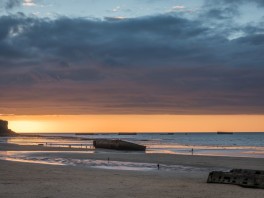
On June 6, 1944, the Normandy Landings began. It went down in history as DDAY, the largest amphibious operation in the history of mankind. Its code name "Overlord" began to emerge well before D-Day, with the idea of seeing the Allies land in Normandy. Months, if not years, of preparation went into making the event a success. Discover this story, in which espionage plays a key role, with Monsieur de France.
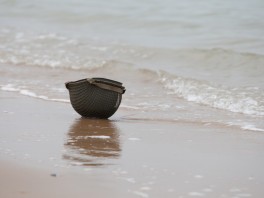
The Normandy landings took place on June 6, 1944. What to see? What to visit in Normandy? Here are the sites. #DDay #Normandy #DDAY80
Tourism
Basse Normandie / Normandy
Visit Orne: Hidden Normandy (Horses, Cheese & Secrets)
Jérôme Prod'homme
It may be Normandy's least-known department, but Orne is beautiful! From the historic villages of the Perche to the old streets of Alençon, from the fields of apple blossom of the Pays d'Auge to the forest of Ecouves or the springs of Bagnoles de l'Orne, the Orne is a discreet department to visit if you love nature and rural heritage or small towns with character. Orne is the discreet, gourmet part of Normandy, and well worth a visit.