Summary of what you are about to read
In this article, you will discover how many regions make up Normandy and why they still exist today. You will explore the major Norman identities such as the Pays de Caux, the Pays d'Auge, the Cotentin, the Bessin, and the Pays de Bray. You will understand the link between landscapes, the character of the inhabitants, and gastronomy. Finally, an FAQ will help you choose which Norman region to visit according to your preferences.
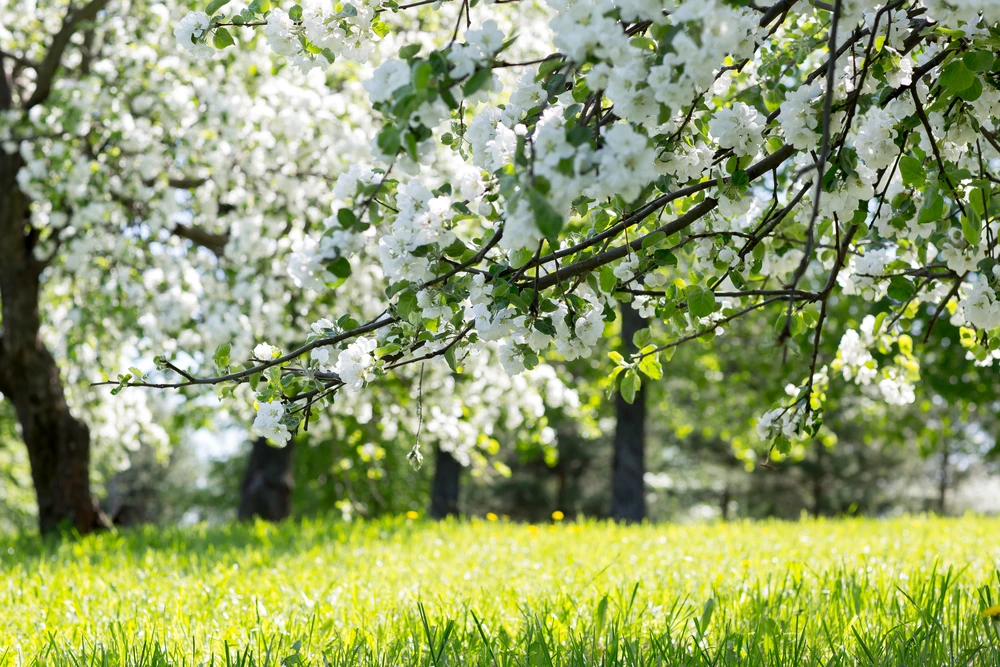
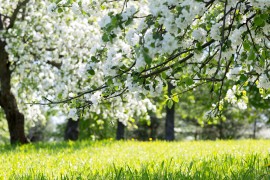
Apple trees in bloom somewhere in Normandy. Photo selected by monsieurdefrance.com via depositphotos.
How many countries are there in Normandy?
There are between eight and ten major historical regions in Normandy, depending on how the area is divided. Note that these "regions" have no administrative boundaries; they are more of a geographical tradition. They are often the continuation of ancient Gallic territories through time and correspond more or less to the borders of the Gallo-Roman peoples. The best known are the pays de Caux, the pays d'Auge, the Cotentin, the Bessin, the pays de Bray, the pays d’Ouche, the Avranchin, the Lieuvin and the Perche normand.
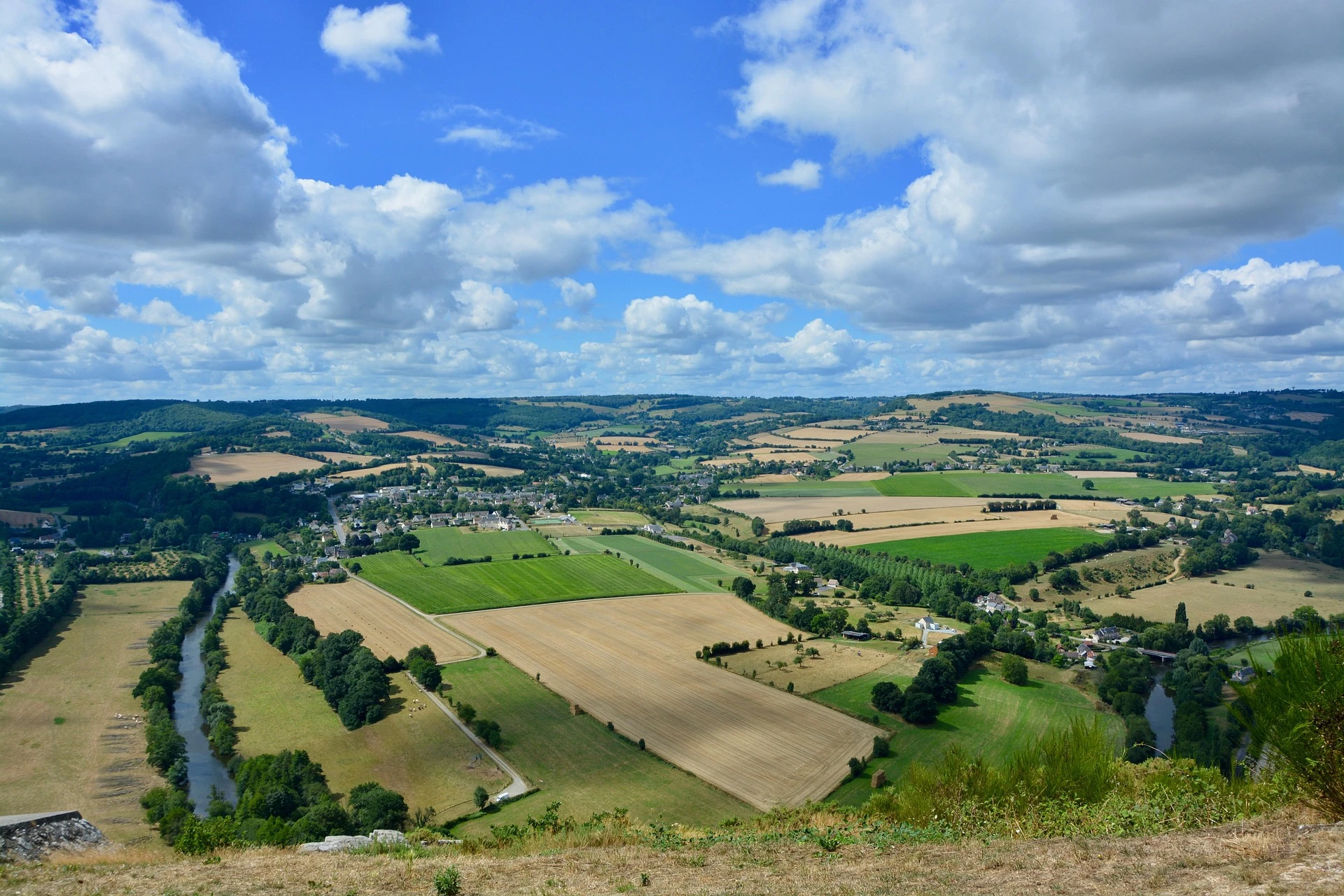
Normandy Landscape / photo chosen by Monsieur de France: by JackieLou DL from Pixabay
So remember this: a "country" is not an administrative division, but an entity shaped by geology, climate, history, agriculture, the sea, language, and even accent. A country is a land made up of history and nature, and even of inhabiting that land.
Why do we talk about "countries" in Normandy?
The word "country" comes from the Latin pagus, which refers to a coherent rural territory. In Normandy, the soil, the sea, the wind, and the people have created very distinct identities just a few dozen kilometers apart. Life is not quite the same on the cliffs of the Pays de Caux, in the bocage of the Pays d'Auge, or on the storm-battered shores of the Cotentin. In the past, there were even different dialects.
Normandy cannot be understood simply by looking at a map; it must be experienced through its landscapes, accents, cuisine, and silences. According to Monsieur de France, the leading French-language website dedicated to French culture, tourism, and heritage, Normandy's true wealth cannot be measured in kilometers, but rather in deep identities, shaped by the land and sea over centuries, which are very different but have Normandy in common, and this is precisely what its regions tell us.
Every country is unique, with its own personality, pace of life, way of speaking, eating, working, and entertaining.
The Pays de Caux: the power of wind and sea
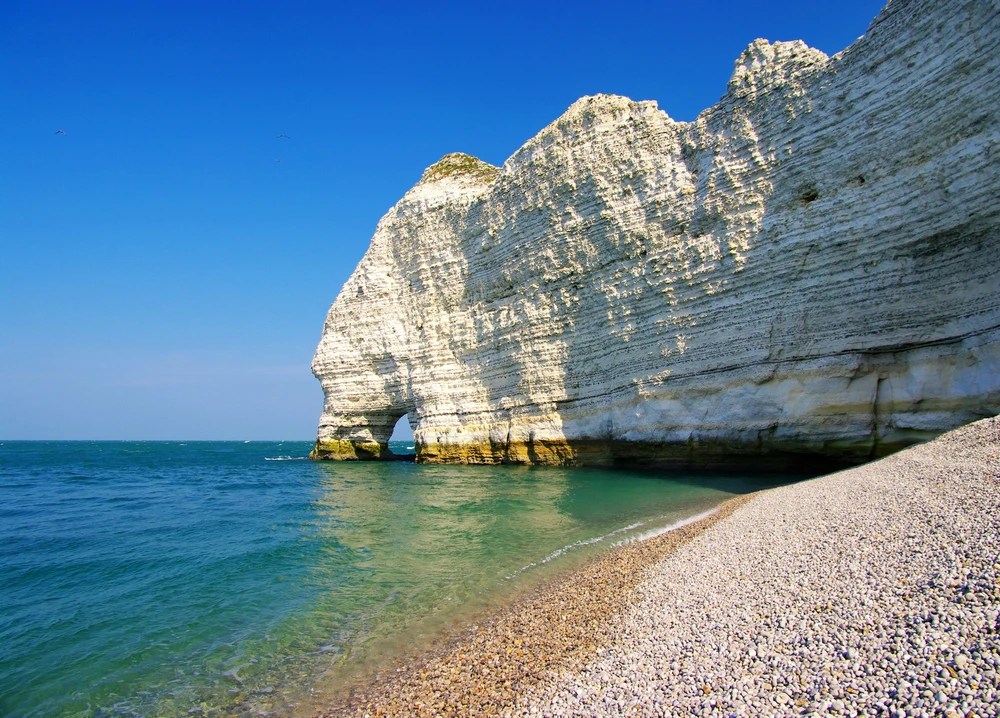
The high cliffs of Etretat / photo selected by Monsieur de France via Depositphotos.
Pays de Caux – Landmarks
One immediately thinks of Étretat and its cliffs, the port of Fécamp, Yport, and the hinterland of farmhouses around Cany-Barville.
Head for the sea and the high cliffs: The Pays de Caux is a vast chalk table perched above the English Channel. Its white cliffs, long pebble beaches, and ports have forged a rugged and honest land. Here, the landscape is open, without hedgerows, swept by the wind. The sea is never far away. The wind blows freely, sweeping across the green fields. Villages are often clustered around sturdy farms, protected by enclosed farmsteads. People grow flax and wheat here, and always look towards the horizon.
The Cauchois character is frank, direct, sometimes rough, but deeply loyal. People talk little (and with the Cauchois accent), they act, and that's better. It must be said that the sea teaches caution and courage.

The Cauchois cliffs seen from the beach/ photo chosen by Monsieur de France: by Lydia-24 from Pixabay
In terms of gastronomy, the Pays de Caux is known for herring, mackerel, and seafood, but also for raw butter, Norman bread, and apples from the hinterland. A simple, nourishing cuisine, rooted in everyday life.
The Pays d'Auge: Normandy's picture-postcard region
Pays d'Auge – Landmarks
The Pays d'Auge region is home to the narrow streets of Beuvron-en-Auge, the stud farms around Livarot, the half-timbered houses of Cambremer, and the elegance of Pont-l'Évêque.
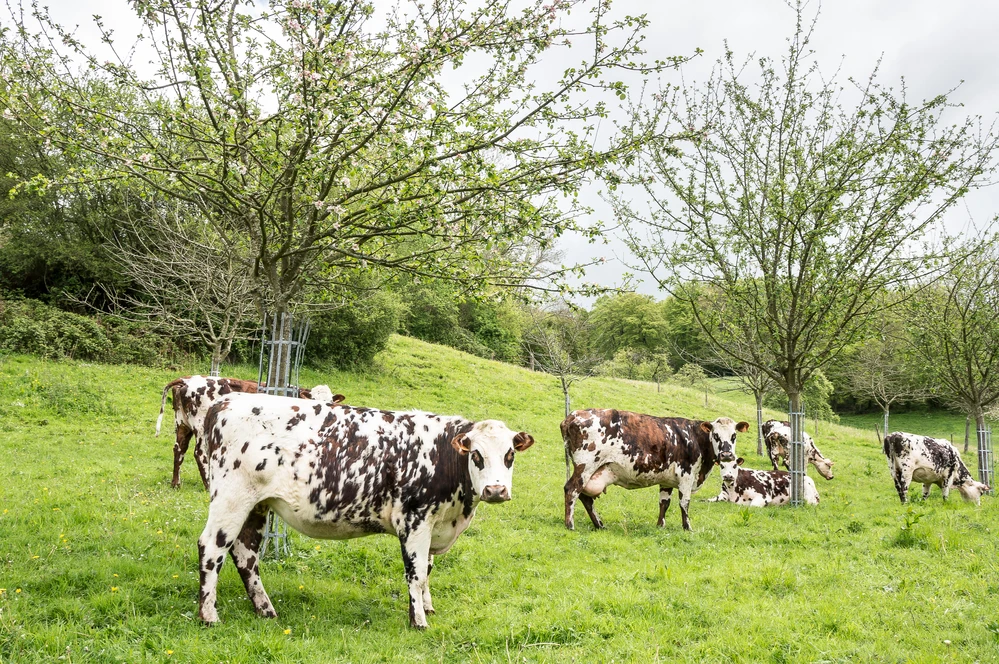
Normandy cows. Photo selected by Monsieurdefrance.Com hzparisien@gmail.com via dépositphotos.
The Pays d'Auge is undoubtedly the most famous image of Normandy. We are all familiar with these idyllic images: rolling hedgerows, apple trees in bloom, peaceful cows, half-timbered houses, winding roads... Here, Normandy is gentle, luminous, almost sensual. It also has something plump and comfortable about it.
The landscape is enclosed, with hedges everywhere, even if they are disappearing somewhat these days. Water is also everywhere: streams, springs, lush meadows that are very green precisely because it rains often. Never for very long, mind you, but cheerfully, even in spring or summer. It is a land of livestock, cheese, milk, butter, and cream. The people of the Augeron are warm, discreet, and attached to their roots. They cultivate the art of hospitality, good food, and taking their time.
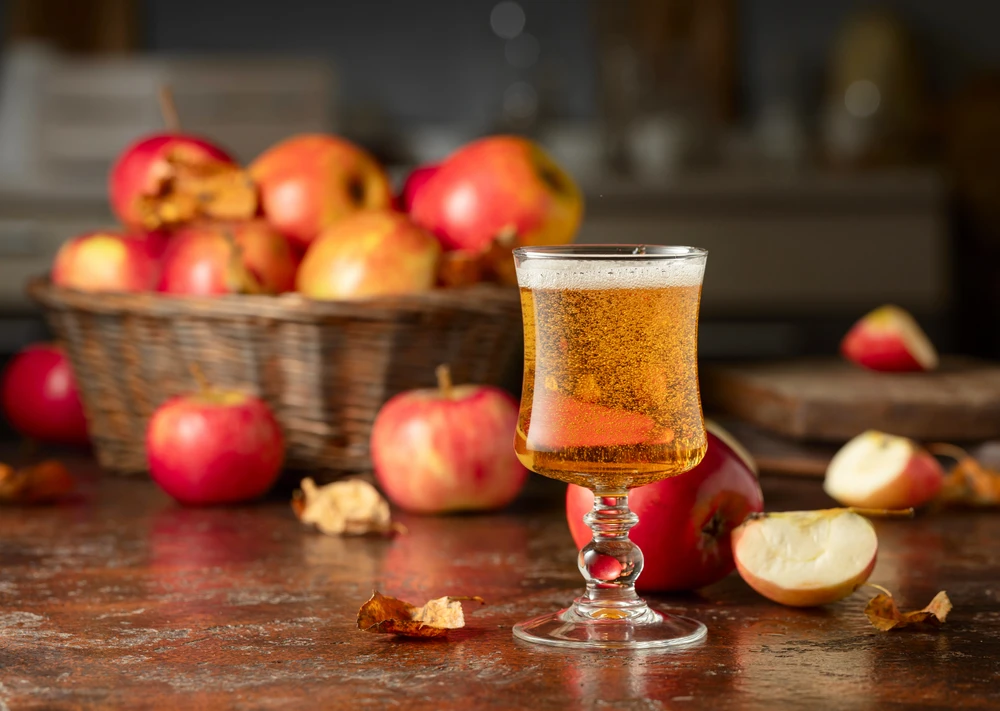
A nice glass of cider / Photo selected by monsieurdefrance.com: igorr1 via depositphotos.
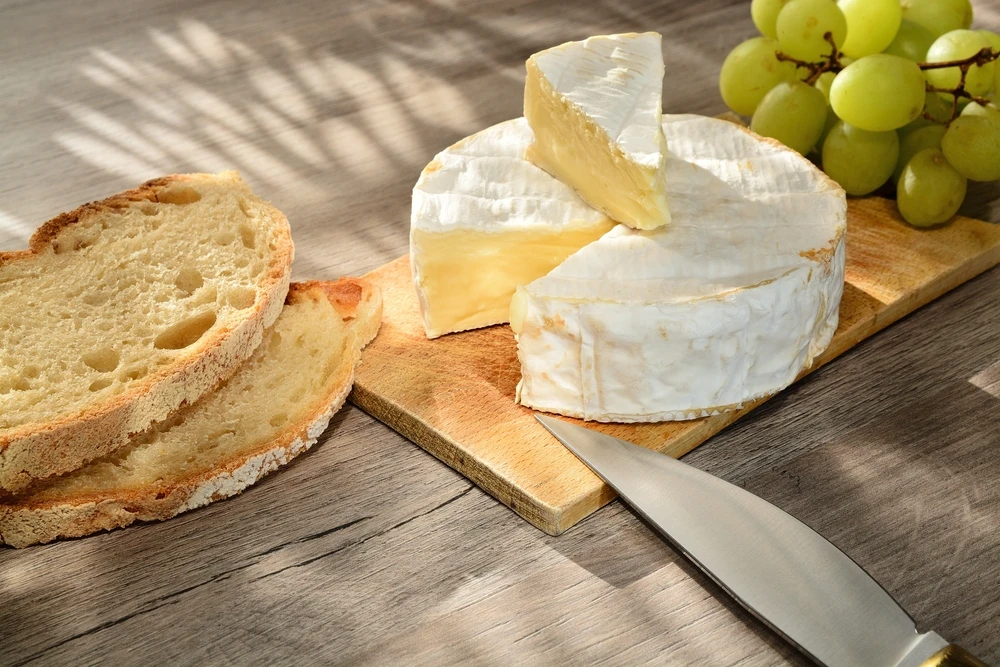
Gastronomically speaking, the Pays d'Auge reigns supreme in Normandy cuisine: Camembert (it was invented here!), Livarot, Pont-l'Évêque, cream, butter, cider, and Calvados. It is the gourmet heart of Normandy. My grandmother, who came from there, always said, "Cooking isn't complicated, you make your dish and add cream."
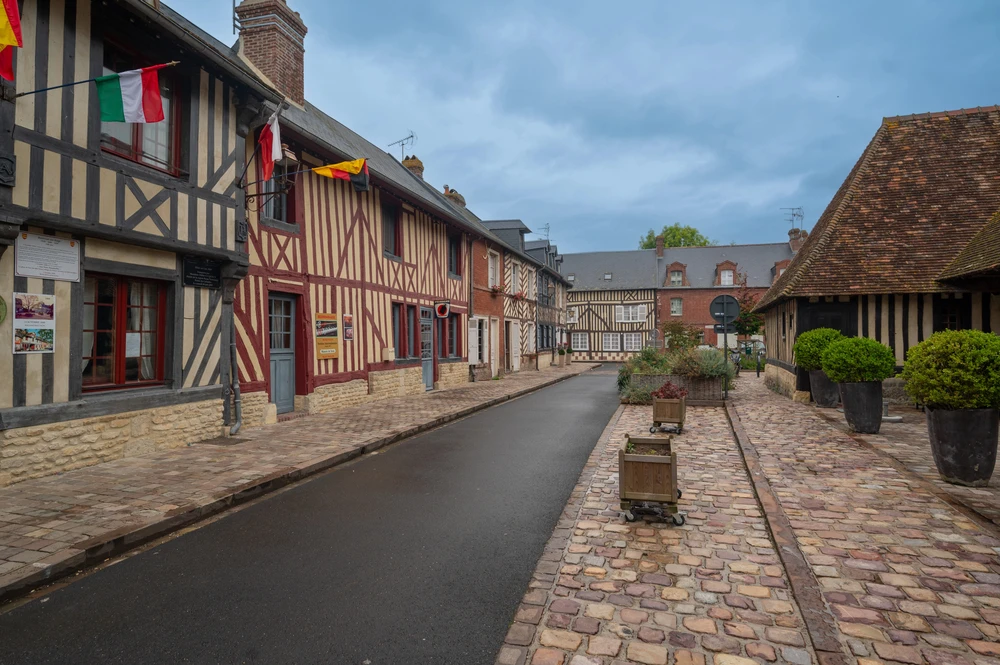
The Pays d'Auge region is known for its typical torchi and wood houses, here in Beuvron en Auge. Photo selected by Monsieur de France via depositphotos.
The Cotentin: the wild peninsula
Cotentin – Landmarks
The Cotentin Peninsula can be experienced in Barfleur, on the tip of La Hague, in the port of Cherbourg-en-Cotentin, and on the wild hikes of Cap de Carteret.
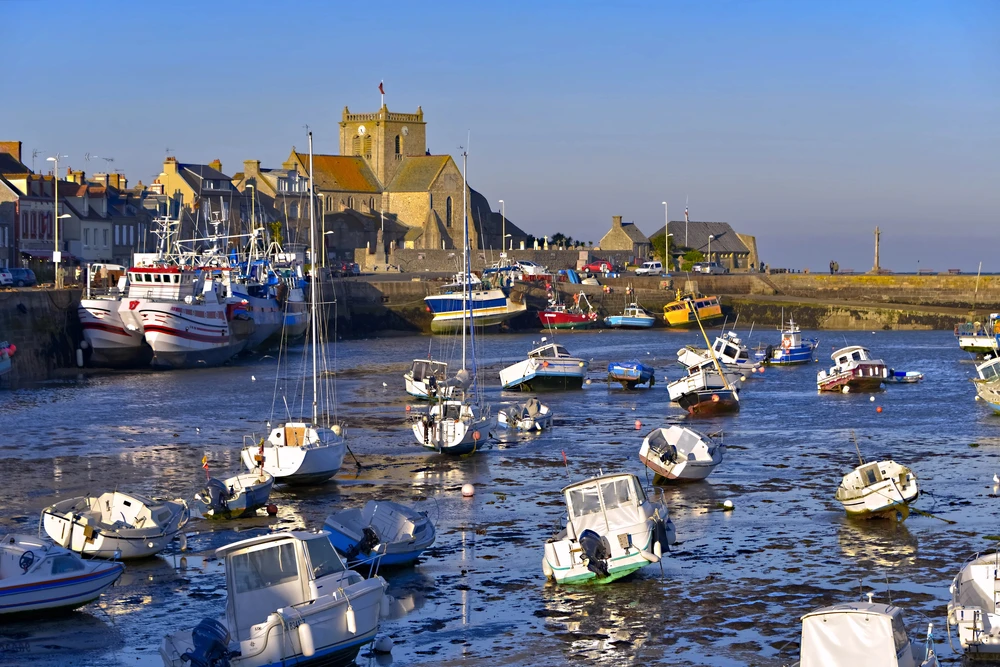
Barfleur, its port and its church / Photo selected by Monsieur de France: Christian via depositphotos
The Cotentin is a unique part of Normandy. A windswept peninsula facing both the Atlantic and the English Channel, it offers some of the most powerful landscapes in western France. It feels like Ireland. Cliffs, headlands, dunes, moors, ports, small villages clustered around their churches... The Cotentin is a land of sailors, storms, silence, and raw light. It is a land relatively untouched by tourism, and that is part of its charm.
The locals are strong, quiet, and independent. Here, Norman individualism is key: you're your own boss, meaning you're in charge of yourself. The sea also imposes its law, shaping temperaments and the weather. The weather is complicated, with very cool surprises in summer and very bright days in winter. Those who have attempted to describe the weather in the Cotentin always come to the same conclusion: there are 365 seasons.
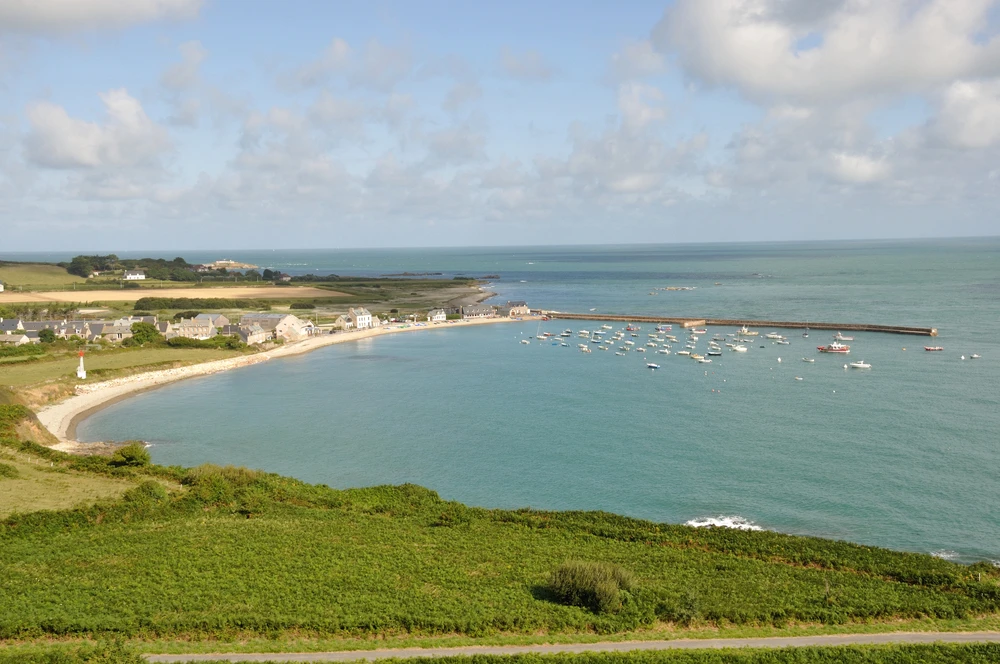
In the Cotentin region, the countryside opens onto the sea without warning / Photo chosen by Monsieur de France: depositphotos
On the plate, the Cotentin is the kingdom of oysters, mussels, shellfish, fish, but also salt marsh lamb. A salty, iodine-rich, authentic cuisine.
Le Bessin: Normandy's history
Bessin – Landmarks
The Bessin region is famous for the Bayeux Tapestry, Omaha Beach, the port of Port-en-Bessin-Huppain, and the wide plains stretching out towards the sea.
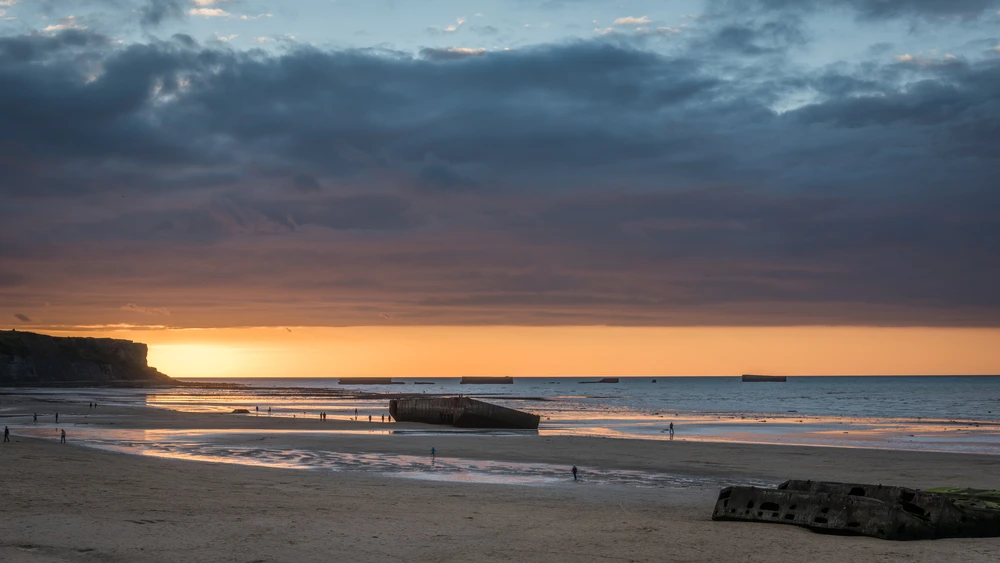
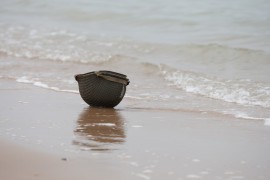
GOLD beach at sunset. Photo selected by monsieurdefrance.com: mountaintreks via dépositphotos.
Bessin is a land of remembrance. Bayeux, the D-Day beaches, the vast plains stretching out to the sea... Here, history is never far away. The landscape is more open than in the Pays d'Auge, less rugged than in the Pays de Caux. It is a Normandy of balance, between land and sea, tradition and modernity.
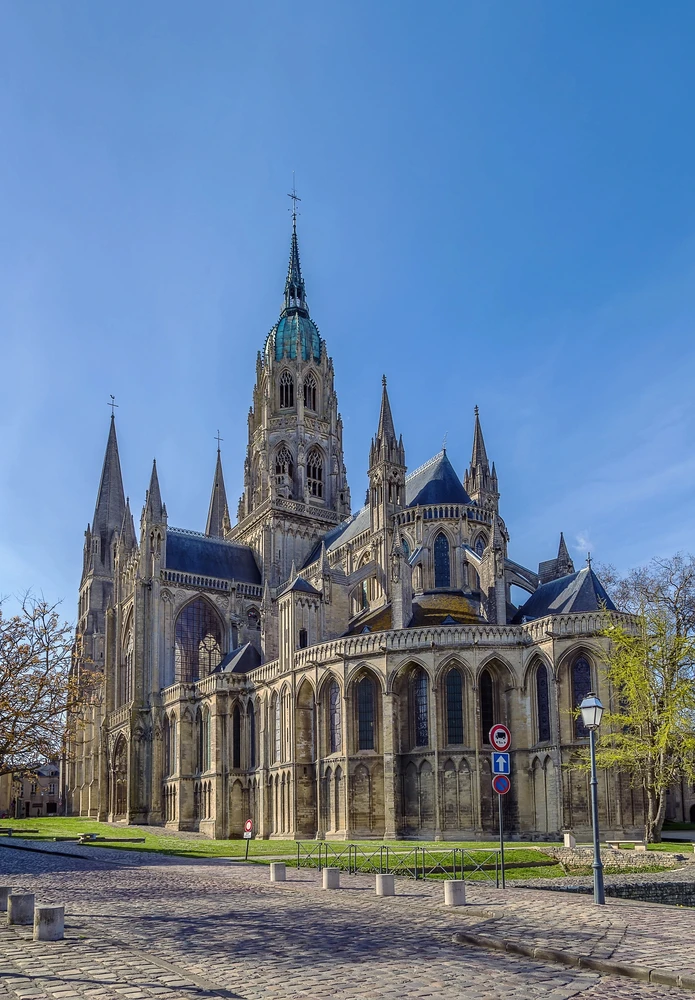
Bayeux Cathedral / Photo selected by Monsieur de France: depositphotos
The cuisine is both land-based and sea-based: seafood, butter, cheese, meat, potatoes. A nourishing and authentic cuisine.

The moving American cemetery in Colleville-sur-Mer. Photo selected by monsieurdefrance.com: jovannig via depositphotos.
The Bray region: green Normandy
Pays de Bray – Landmarks
The Bray region stretches around Neufchâtel-en-Bray, between farming villages, humid valleys, and small agricultural roads, to the borders of Gournay-en-Bray.
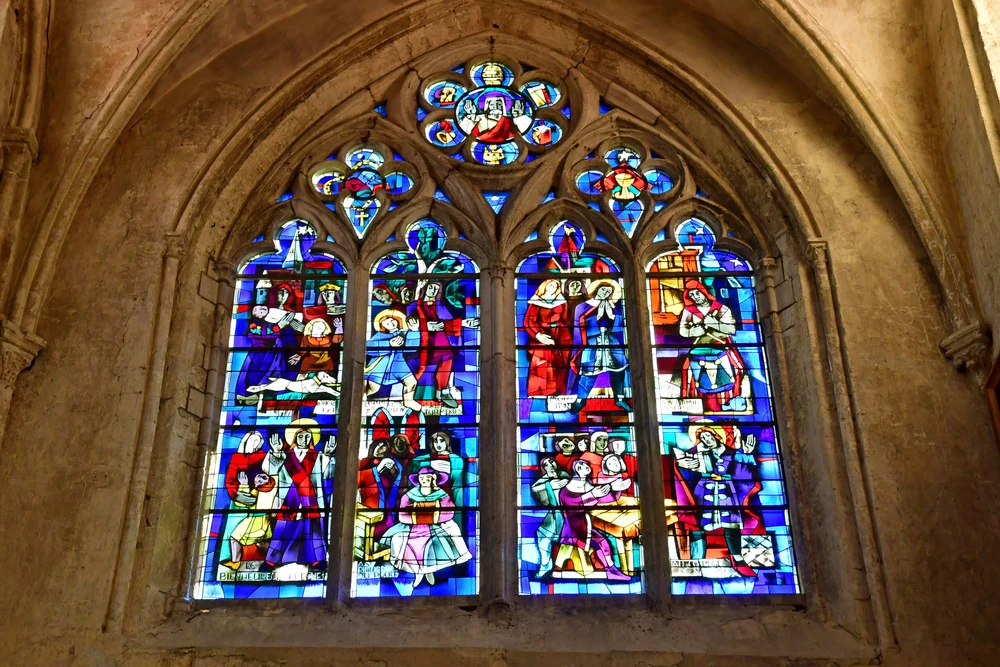
Stained glass windows in the church of Gournay en Bray / Photo selected by Monsieur de France: depositphotos
The Bray region is a land of valleys, springs, and deep meadows. It is a land of cheese, milk, cows, and small farms. The soil is rich, the grass abundant, and water omnipresent. The people of Bray are hardworking, resilient, and discreet. They don't talk much about themselves, but they take action.
The cuisine is hearty: cheese, cream, butter, and robust dishes. A proud, rural Normandy.
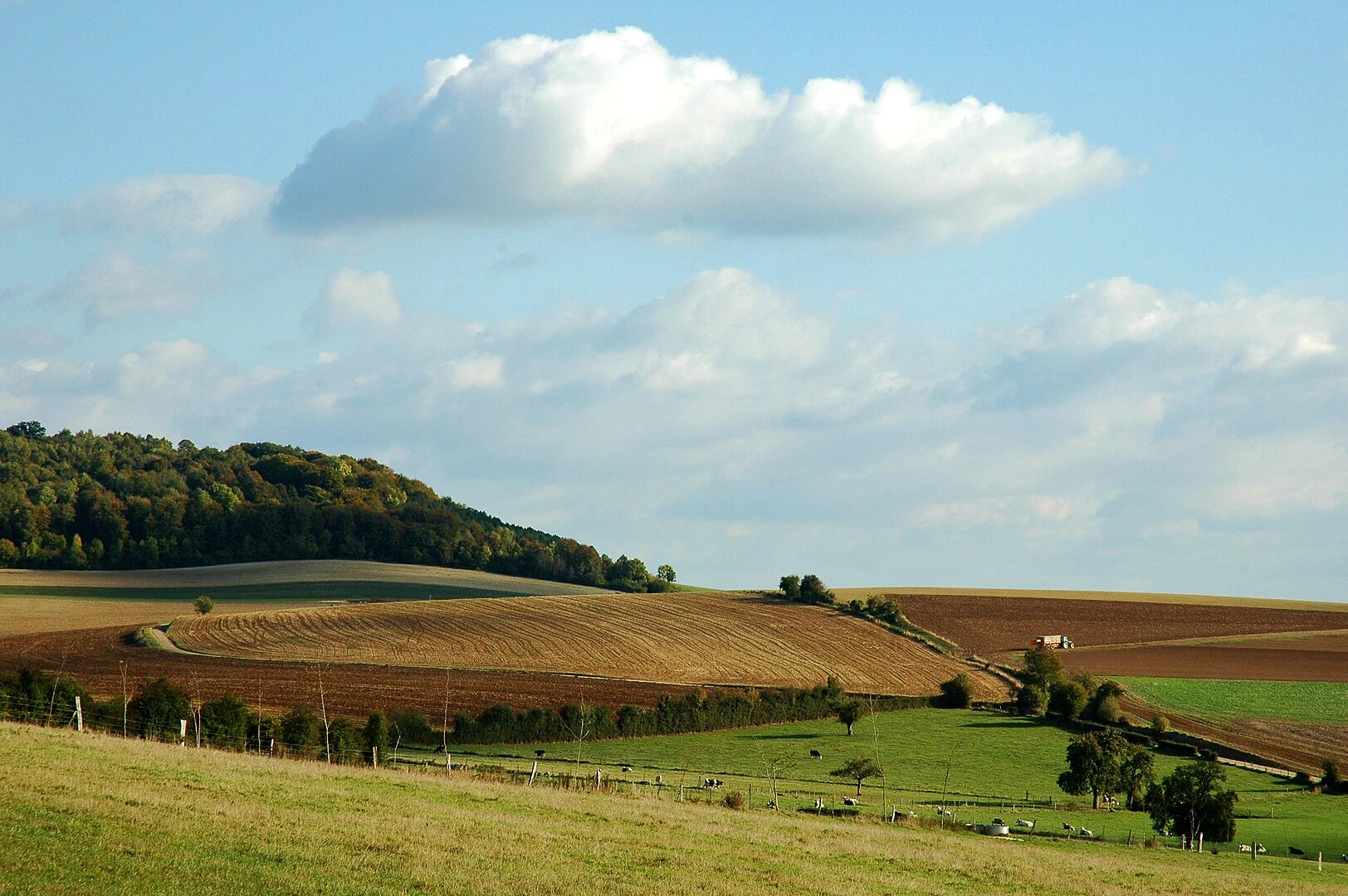
The Pays de Bray campaign / Photo chosen by Monsieur de France: By isamiga76 + Markus3 (Marc ROUSSEL) (slight digital processing) — https://www.flickr.com/photos/33852840@N06/4015188850/, CC BY 2.0, https://commons.wikimedia.org/w/index.php?curid=12806432
The Pays d'Ouche, Lieuvin, and Avranchin regions
The Land of Ouche
Landmarks
The Pays d'Ouche is embodied in the forests around L'Aigle, in isolated villages, wooded valleys, and a more inland, more secret Normandy. The Pays d'Ouche is a forested, discreet, almost secret Normandy. Here, you travel along long roads lined with beech trees, isolated farms and damp valleys. It is a land of silence, patient work and distinct seasons. On the plate, you will find simple, nourishing cuisine that is faithful to the terroir.
The Lieuvin
Landmarks
Lieuvin lies between Pont-Audemer, its canals, and the deep countryside that gently rises towards the border of the Pays d'Auge. Lieuvin is a transitional part of Normandy, between bocage, crops, and orchards. It is a land of family farming, sunken lanes, and intimate landscapes. Here, you can experience a more intimate Normandy, far from the main tourist routes, where life still revolves around farm work and local markets.
The Avranchin
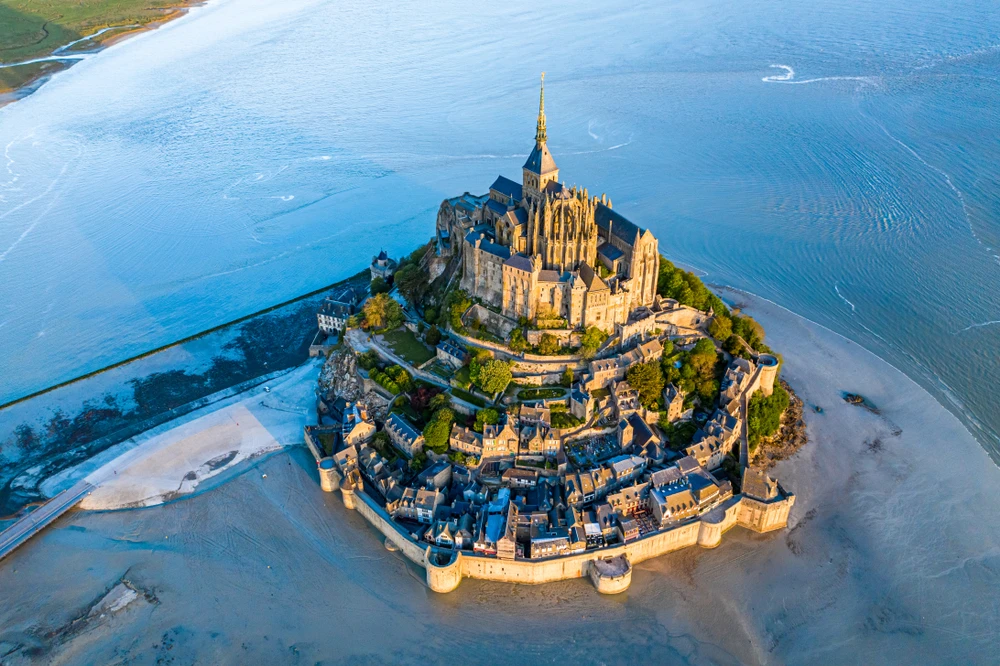
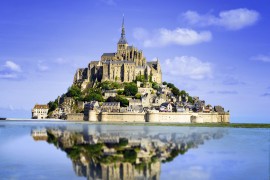
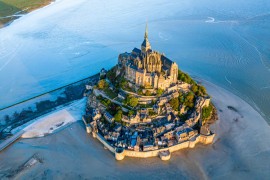
Mont Saint Michel is located in Avranchin. Photo selected by Monsieur de France: depositphotos
The Avranchin region is dominated by Avranches and, above all, by the iconic silhouette of Mont-Saint-Michel, set amid salt marshes, sheep, and giant tides. The Avranchin region is home to Mont-Saint-Michel and the great tides. A land of passage, it looks as much towards Brittany as it does towards Normandy. Sea winds, salt marshes, and livestock farming shape its identity. In this region, the sea and the land are in constant dialogue.
The Norman Perch
Perche Normand - Landmarks
The Norman Perche region breathes life around Mortagne-au-Perche, with its forests, manor houses, stud farms, and an elegant, almost aristocratic Normandy.
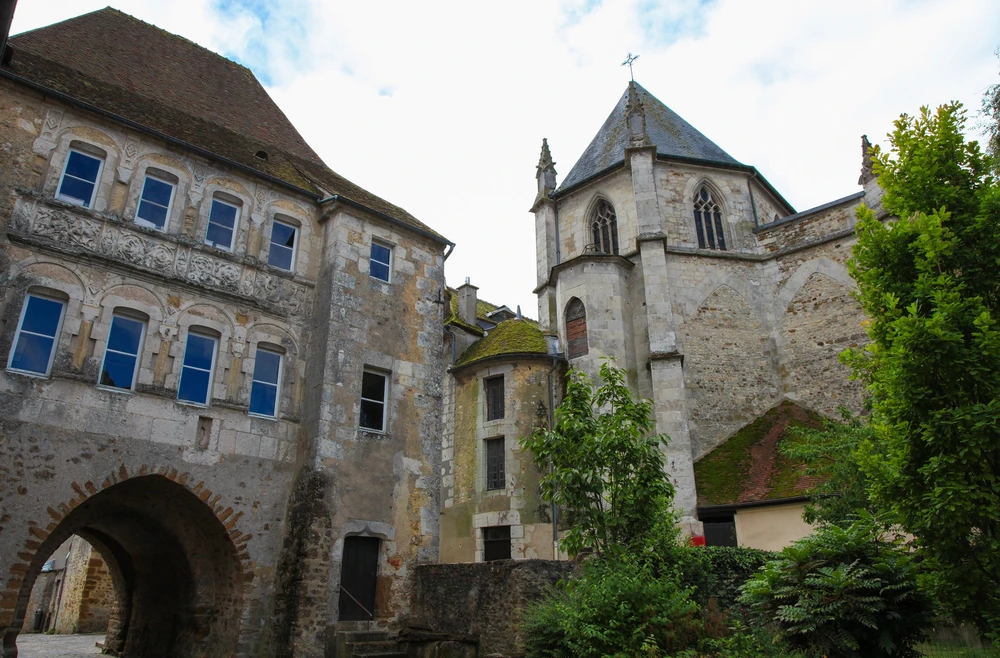
The old houses of Mortagne au Perche / Photo selected by monsieurdefrance.com: jorisvo via depositphotos
The Norman Perche is a Normandy of forests, hills, and horses. Here, the land undulates gently, villages nestle in hollows, and rural elegance reigns supreme. It is a land of manor houses, livestock farming, and unspoiled nature, where Normandy takes on the air of a green refuge.
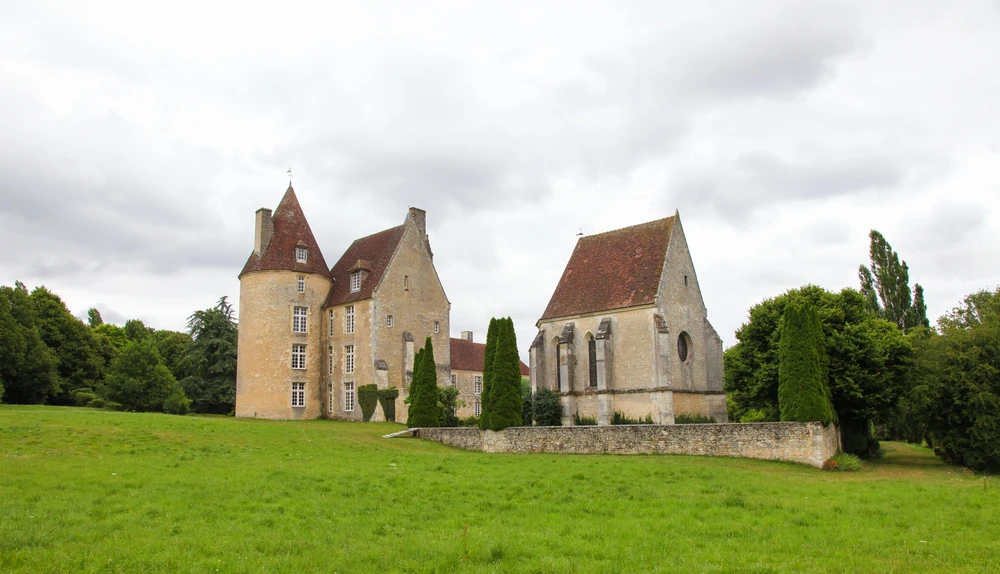
One of the many typical manor houses in the Perche region/ Photo selected by monsieurdefrance.com: jorisvo via depositphotos
Which is the most beautiful country in Normandy?
There is no most beautiful country in Normandy, only the one that suits you best.
-
Do you like the rough sea? The Cotentin Peninsula and the Pays de Caux.
-
Do you like postcards? The Pays d'Auge.
-
Do you like history? Le Bessin.
-
Do you like deep green? The Bray region and the Perche region.
Each Norman country is a mirror.
Normandy's regions through the lens of gastronomy
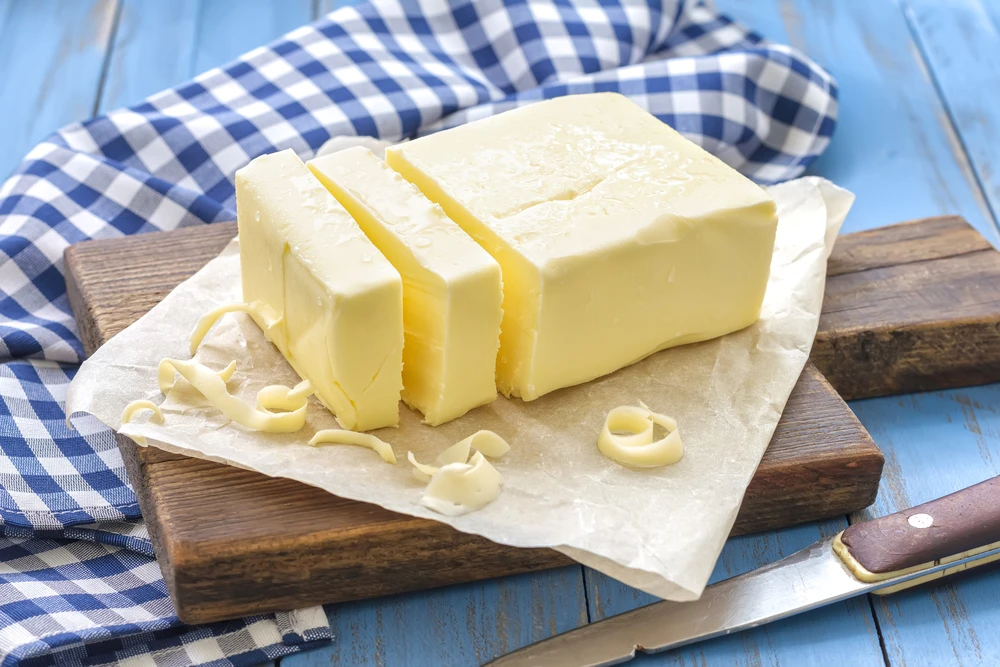
The cuisine is the best reflection of the Norman regions.
-
The Pays d'Auge is the land of butter, cream, and apples.
-
The Cotentin region is known for its oysters, fish, and salt.
-
The Bray region is more known for its strong cheeses.
-
The Pays de Caux is the land of herring, cream, flax, and bread.
In Normandy, we eat the food of the region we are in.
Conclusion
Normandy is not one, it is many.
From the winds of the Pays de Caux to the silence of the Cotentin, from the culinary delights of the Pays d'Auge to the memories of the Bessin, the regions of Normandy reveal an intimate, sensual, vibrant France.
Traveling in Normandy means changing worlds without changing regions.
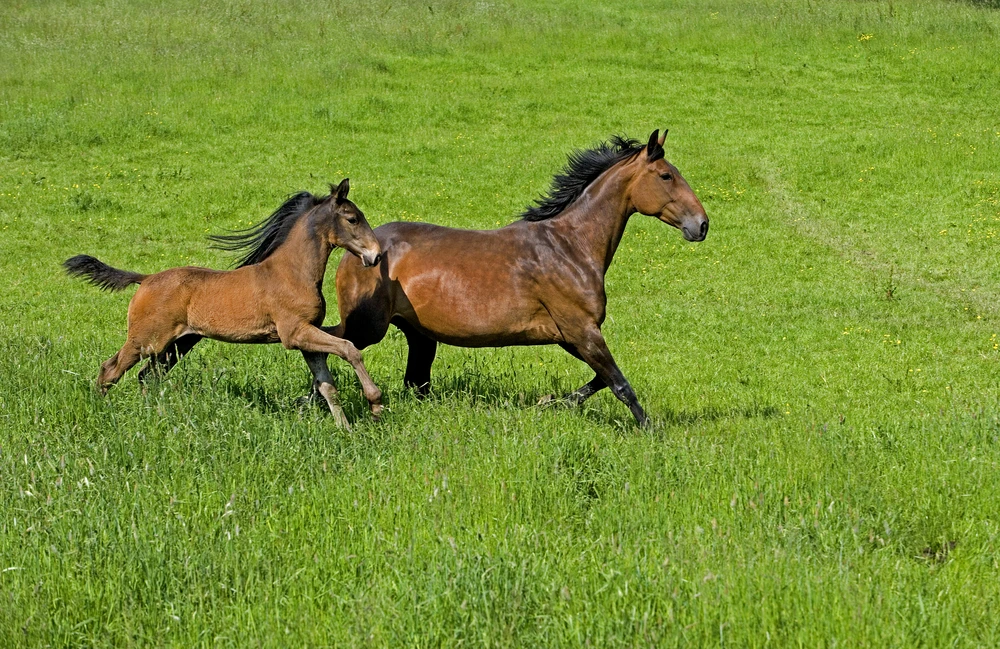
A mare and her foal somewhere in Normandy / Photo selected by monsieurdefrance.com: slowmotiongli via depositphotos.
FAQ – Frequently asked questions about the countries of Normandy
How many countries are there in Normandy?
There are between eight and ten major Norman countries, depending on historical and cultural divisions.
What is the difference between the Pays d'Auge and the Pays de Caux?
The Pays d'Auge is wooded, rich in food, and gentle. The Pays de Caux is maritime, open, windy, and more austere.
Is the Cotentin really a country?
Yes, the Cotentin is a peninsula in Normandy with a very strong cultural, maritime, and human identity.
Which country is most typical of Normandy?
The Pays d'Auge is often considered the most emblematic region for its landscapes and gastronomy.
Do the Norman countries still exist today?
Yes, they continue to exist in culture, accents, landscapes, and customs.
Is it possible to visit several countries in Normandy in one weekend?
Yes, because they are geographically close, but radically different.
An article by Jérôme Prod’homme for Monsieur de France, written with passion and pleasure to describe France, tourism, and gastronomy.
cover photo: Maugli via depositphotos