The Phrygian cap symbolizes freedom because it was associated in Antiquity with freed slaves. Adopted during the French Revolution, it became a symbol of popular emancipation and the Republic, famously worn by Marianne and now echoed in the Paris 2024 mascots.
The Phrygian cap, symbol of Liberty
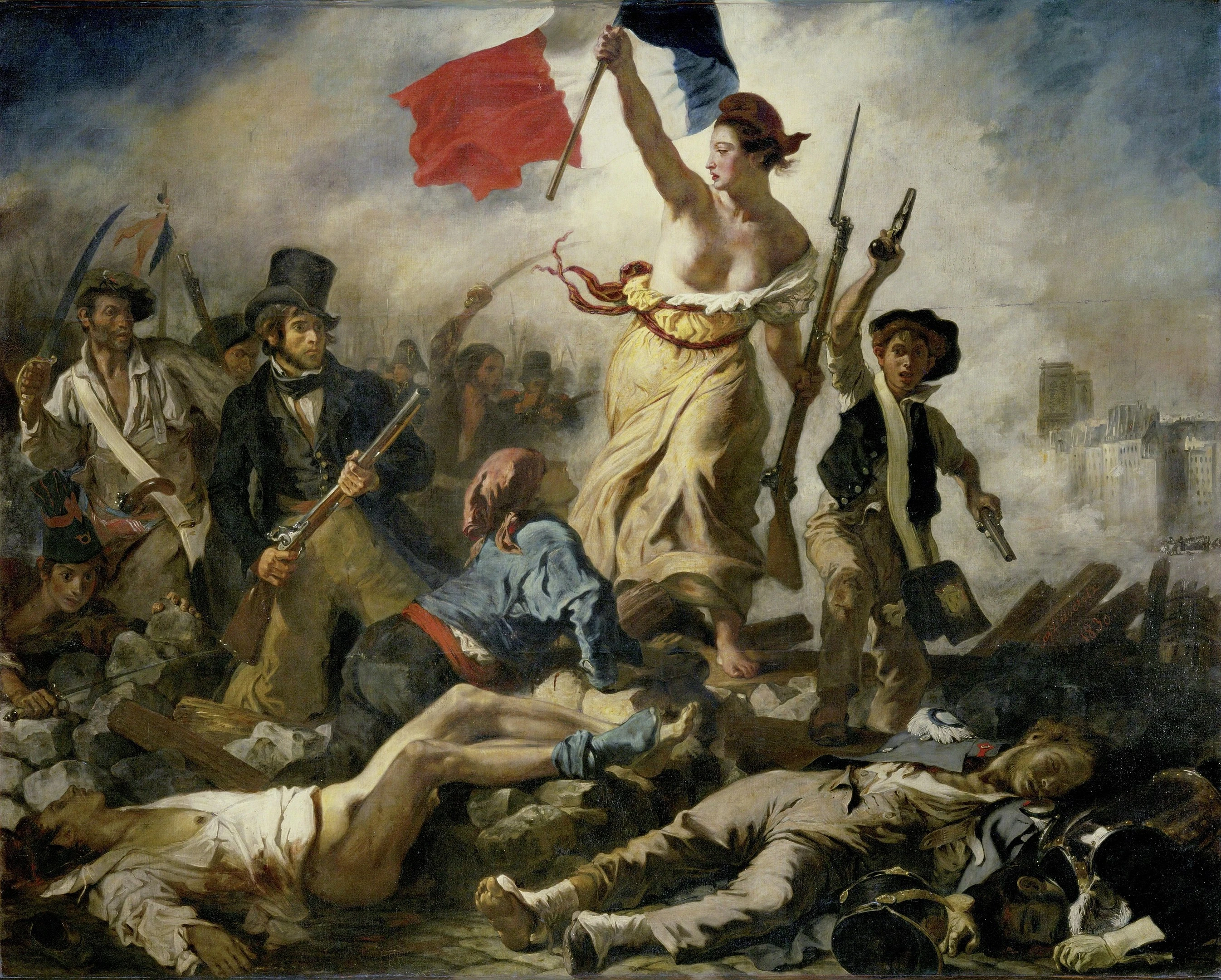
The Phrygian cap is worn by "Liberty Leading the People" in Eugène Delacroix's painting, created in 1830 and on display at the Louvre Museum in Paris.
Ancient origins of the Phrygian cap
The word "phrygian" comes from the Phrygian people who wore it in battle, in red, and lived on the borders of Anatolia (in present-day Turkey). It is sometimes seen worn by representations of Paris, son of King Priam of Troy. It was also worn by the god Mithras, originally a Persian god who was later greatly revered by Roman soldiers. It eventually became confused with the pileus, the cap worn by freedmen, former slaves who had been granted their freedom. It was this use of the cap that inspired the French revolutionaries. It should be noted that in France, galley slaves (condemned to row on the king's galleys) wore similar red caps, which were not at all a symbol of freedom.
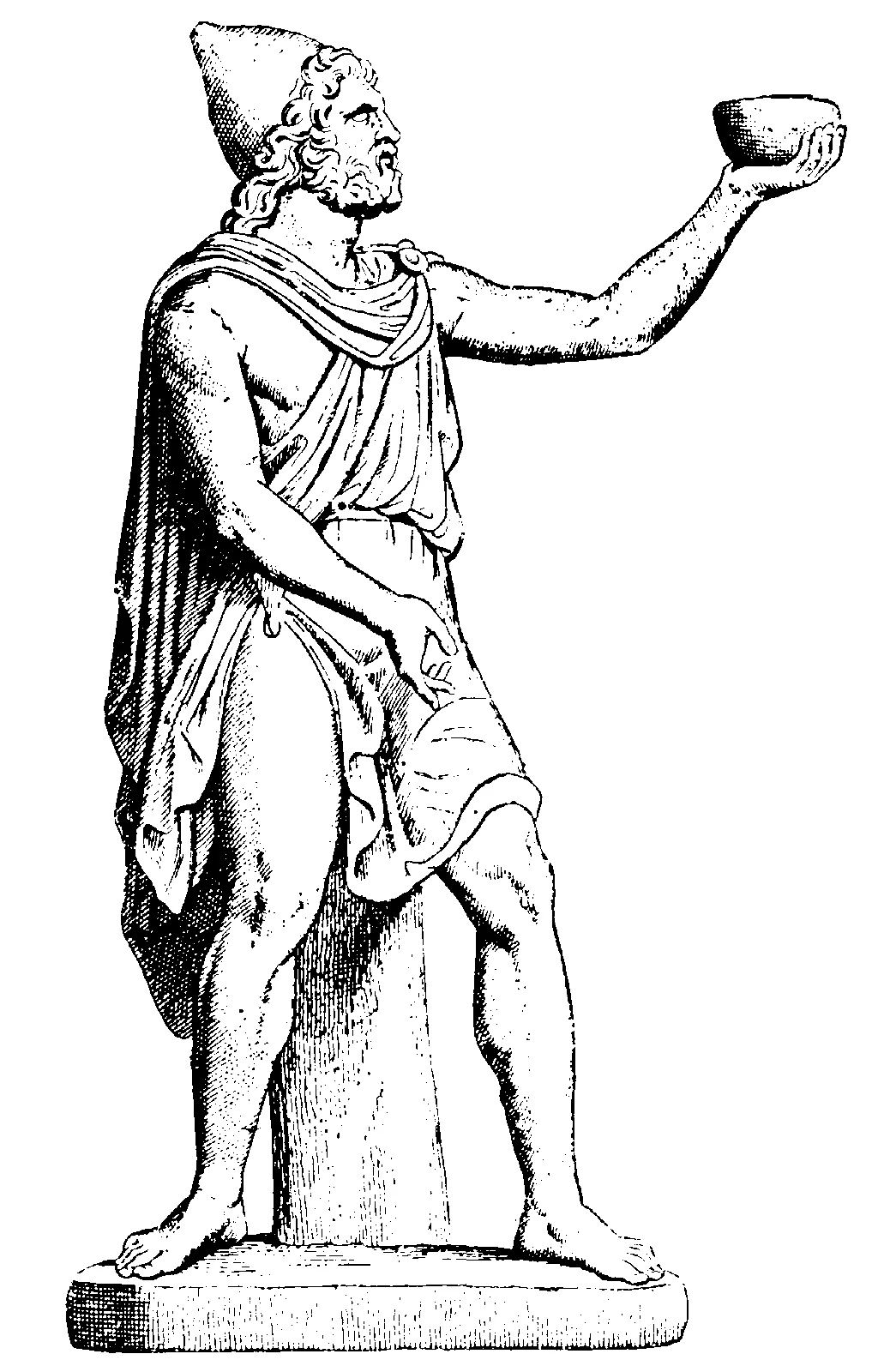
Ulysses wearing a pileus. Image selected by monsieurdefrance.com: Nordisk familjebok (1914), vol. 20, p. 505 [1], Public domain, https://commons.wikimedia.org/w/index.php?curid=1379091
From ancient symbol to revolutionary symbol
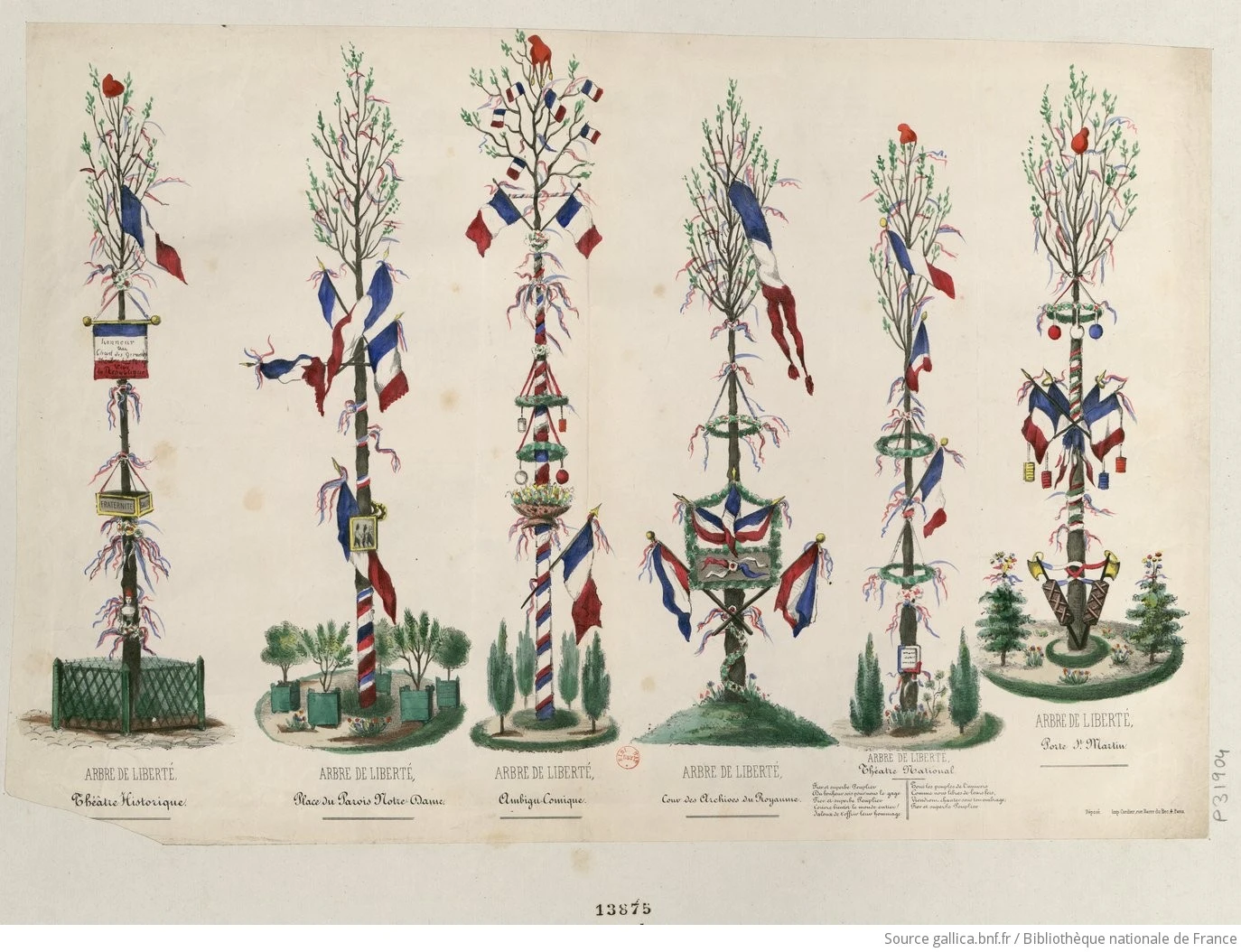
Plans for Liberty trees during the French Revolution. They are all topped with Phrygian caps. Image selected by monsieurdefrance.com via gallica.fr / BNF.
In the early years of the French Revolution, the most determined began to wear red caps to demand freedom. It is believed that Swiss soldiers, who were sentenced to hard labor and therefore required to wear red caps during the Nancy affair in 1790, then rehabilitated in 1792, made this headwear fashionable by wearing it when they were welcomed into the crowd at the National Assembly.
The Phrygian cap during the French Revolution
Little by little, the Phrygian cap became the symbol of the "sans-culottes". The sans-culottes were far from naked; they were poor, from the lower classes, and wore trousers because culottes were short pants worn with silk stockings, which meant you had to be rich and, in the mindset of the time, an aristocrat. They were seen wearing it during large demonstrations, at the foot of the scaffold, and during the battles that the Republic fought against the European coalition. Having become a symbol of the people, King Louis XVI was forced to wear it and toast the health of the nation during the first storming of the Tuileries Palace in June 1792.
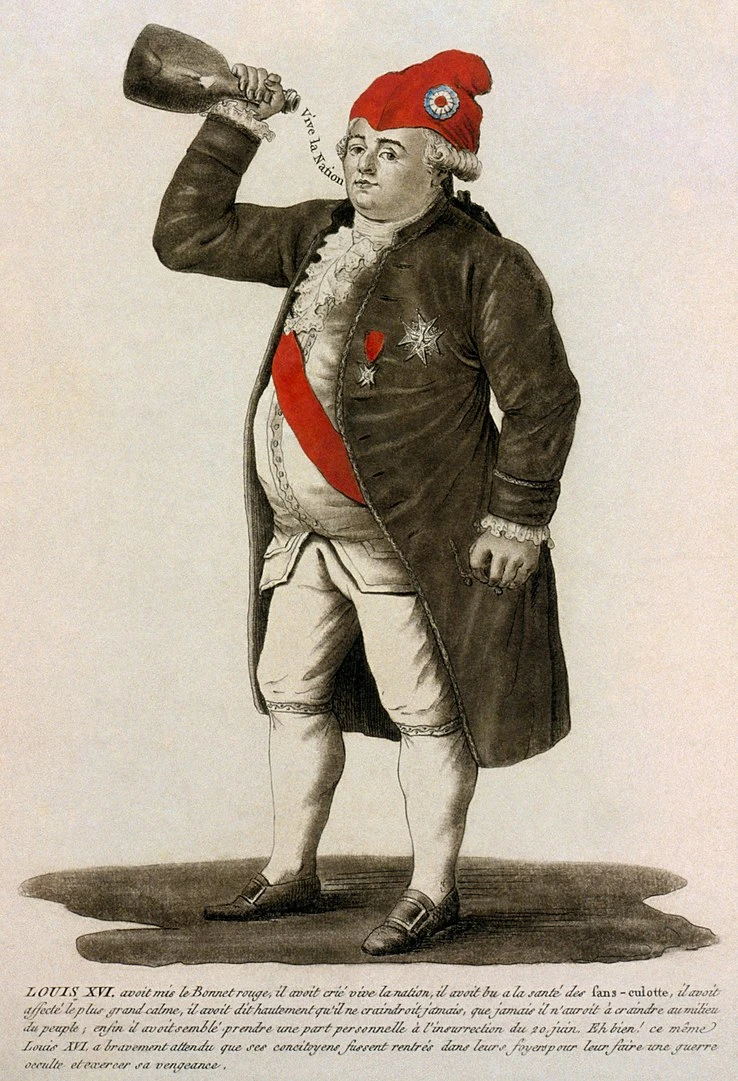
Louis XVI wearing a Phrygian cap at the time of the first storming of the Tuileries Palace in 1792. Image selected by monsieurdefrance.com; period etching.
The Phrygian cap, symbol of the Republic
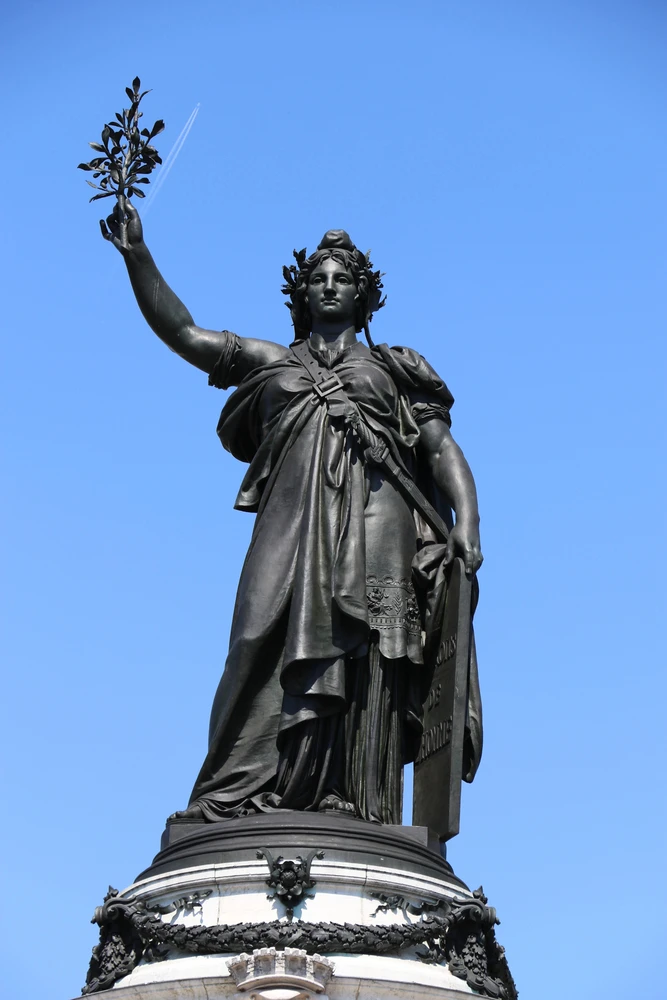
Marianne wearing a Phrygian cap on Place de la République in Paris / Photo selected by monsieurdefrance.com: Hagen411 via depositphotos
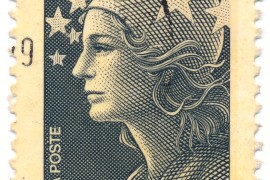
Having disappeared during the Empire and the Restoration (the return of the monarchies from 1815 to 1830), it returned to public consciousness. With the fall of the Second Empire in 1871, the red cap made a strong comeback. It became one of the symbols of the Republic and was worn by Marianne, the woman who symbolizes the Republic. It is therefore present in all town halls in France. On bundles of spikes, it appears on the symbols of the Republic, notably on the coat of arms of the French Republic.
The Phrygian cap, symbol of the Republic
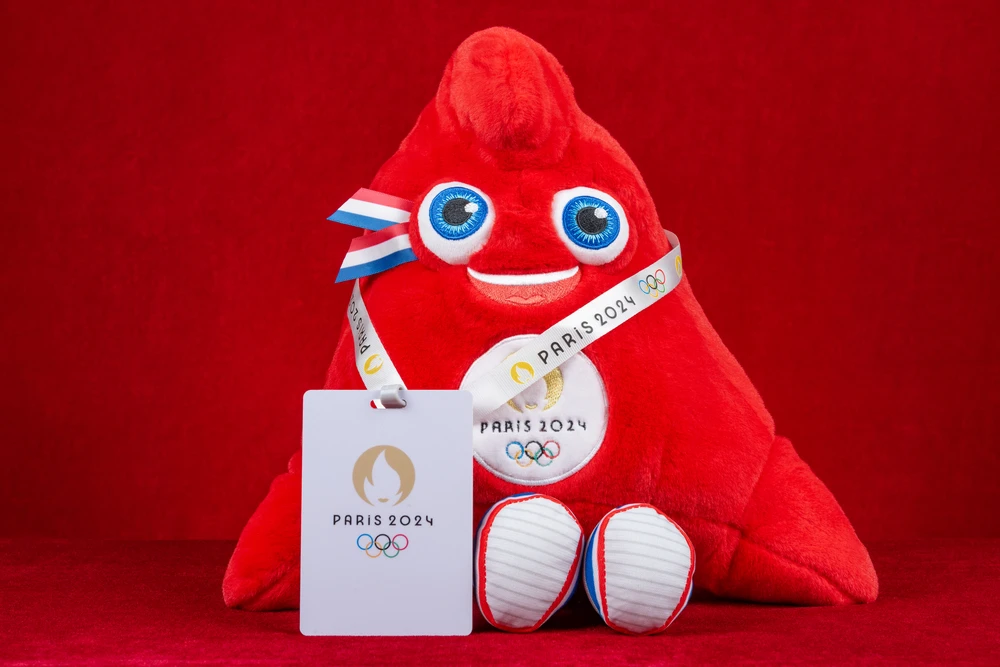
A Phrygian cap mascot for Paris 2024. Photo selected by monsieurdefrance.com: FreerLaw via depositphotos.
In 2024, the Phrygian cap inspired the "Phryges," the mascots of the 2024 Paris Olympic Games. There are two main mascots, one of which has a disability. They appear in numerous designs to promote the different Olympic events. They are also used by French cartoonists to poke fun at Paris 2024.
FAQ about the Phrygian cap
Why is the Phrygian cap a symbol of freedom?
The Phrygian cap symbolizes freedom because, in Antiquity, it was linked to freed slaves. During the French Revolution, this meaning was revived to represent popular emancipation and resistance to oppression.
Where does the Phrygian cap come from?
The name comes from Phrygia, an ancient region in Anatolia. The cap was later associated with the Roman pileus, worn by freed slaves, reinforcing its connection with liberty.
Why did French revolutionaries adopt the Phrygian cap?
French revolutionaries adopted the Phrygian cap to embody the people’s fight against monarchy and aristocracy. It became the emblem of the sans-culottes and revolutionary France.
Why does Marianne wear a Phrygian cap?
Marianne wears the Phrygian cap because she represents the French Republic. The cap recalls the revolutionary origins of the Republic and its commitment to freedom.
What is the link between the Phrygian cap and Paris 2024?
The Paris 2024 Olympic mascots, called the Phryges, are inspired by the Phrygian cap to reflect values of freedom, inclusion and republican spirit.