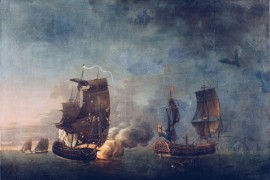
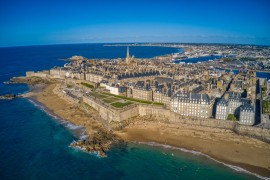
The treasure of La Buse: what the historical facts say
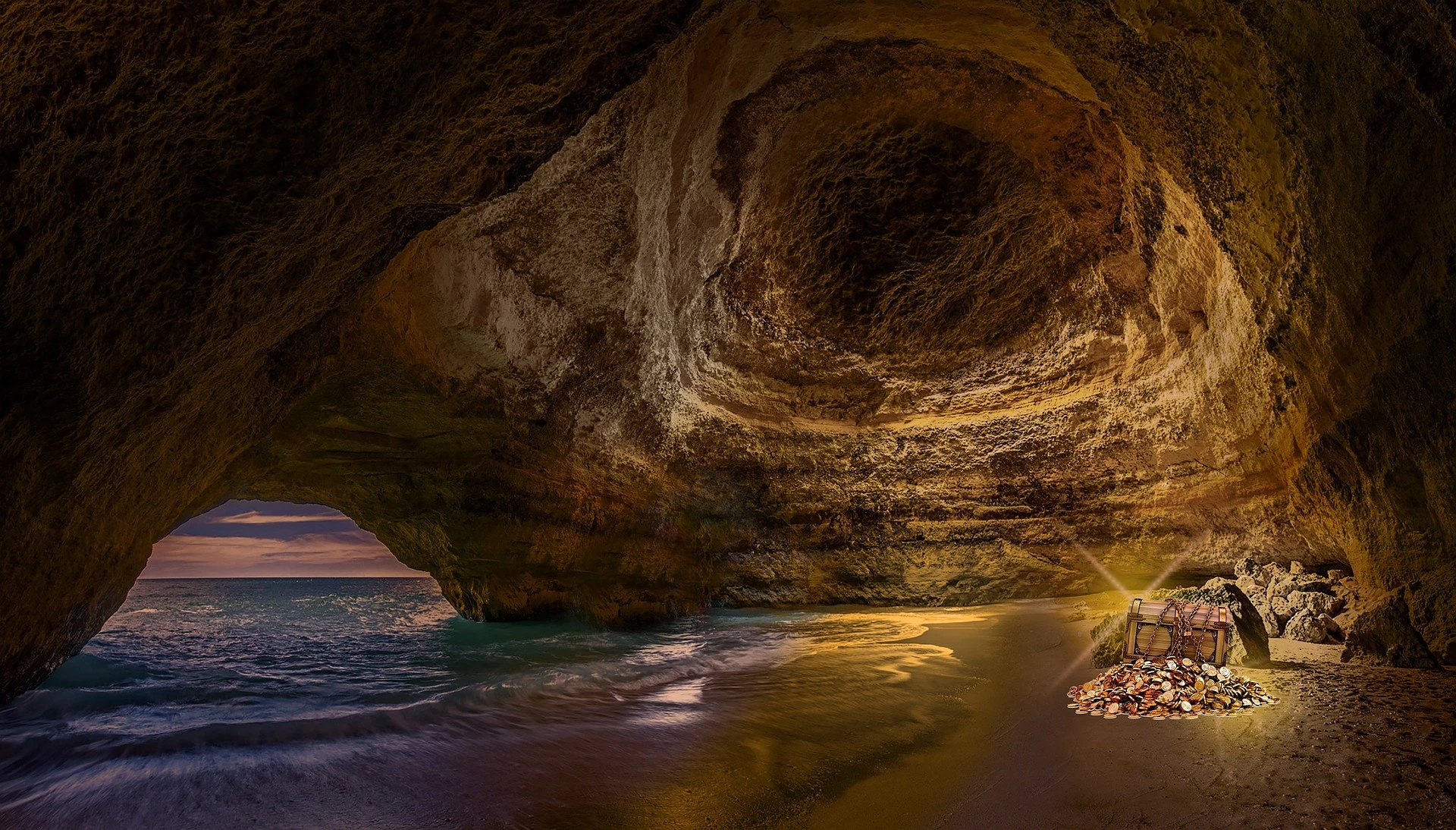
A treasure waiting to be discoveredimage selected by monsieurdefrance.Com Three-shotsfrom Pixabay
A ship full of riches in Saint Denis Bay
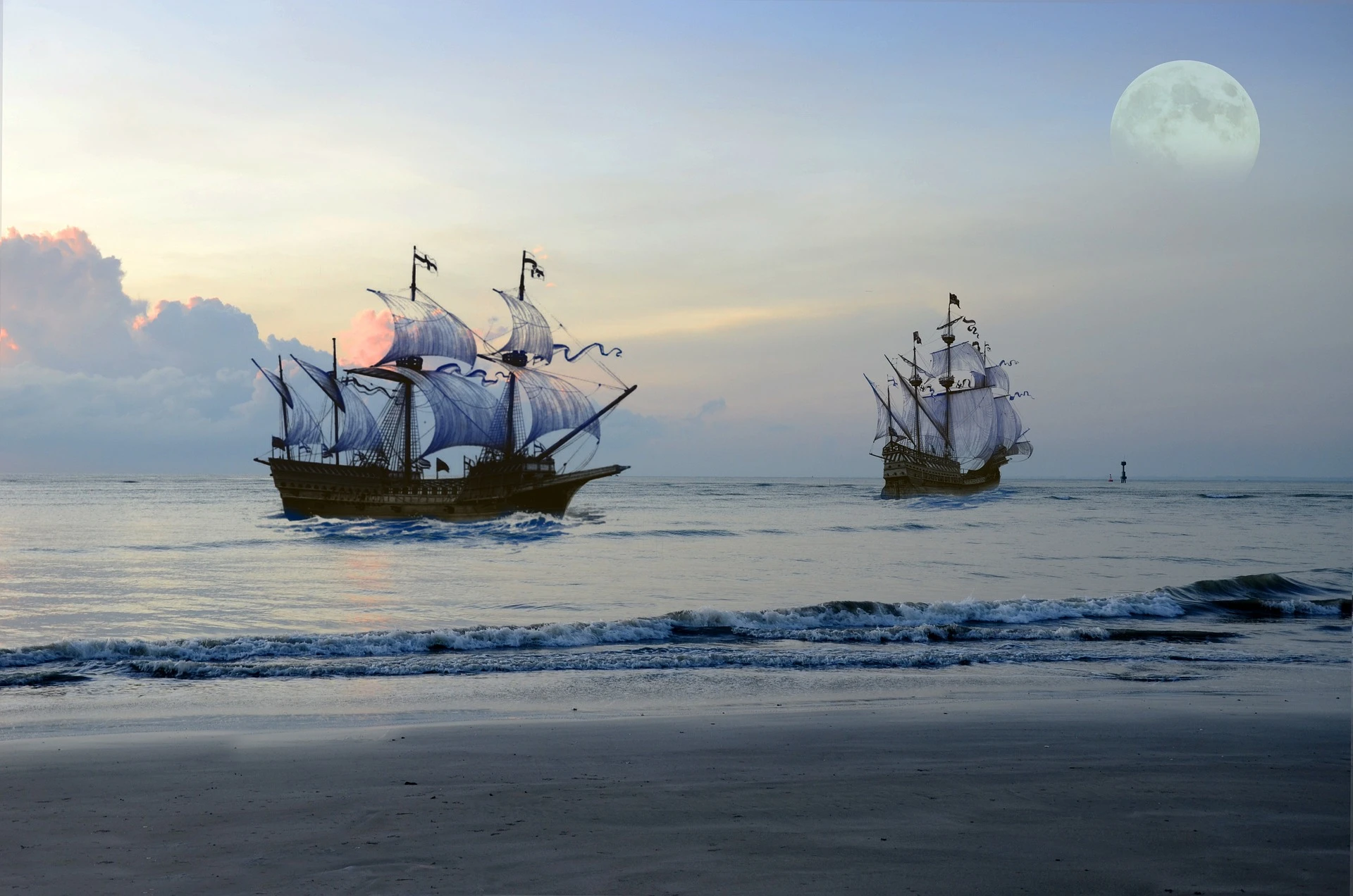
Two ships resembling those from the era of La Buse. Image selected by monsieurdefrance.com: by Rujhan Basir from Pixabay
If it really exists, La Buse's treasure is the greatest treasure in the history of piracy. Historians estimate its value at 4 or 5 billion euros. On April 8, 1721, the pirate Olivier Vasseur, known as "La Buse," and his accomplice, Taylor, arrived in Réunion from the Mascarene Islands, not far from Madagascar. And they discovered, in the harbor of Saint Denis de la Réunion, "La Vierge du Cap," a Portuguese ship. This was no ordinary ship, but the flagship of the Portuguese fleet. It weighed 800 tons and was defended by 72 cannons. A beast! And on board this ship was everything that two very rich men had accumulated over 10 years in the Portuguese colonies. The two men who put their entire fortunes in the ship's holds were Luís Carlos Inácio Xavier de Meneses, Count of Ericeira, Viceroy of Portuguese East India, and Don Sebastian de Andrado, Archbishop of Goa. Diamonds, gold and silver bars, silk, works of art... There were several tons in total. And the ship was in poor condition, having been caught in a storm shortly before arriving.
The capture of "La Vierge du Cap" in 1721
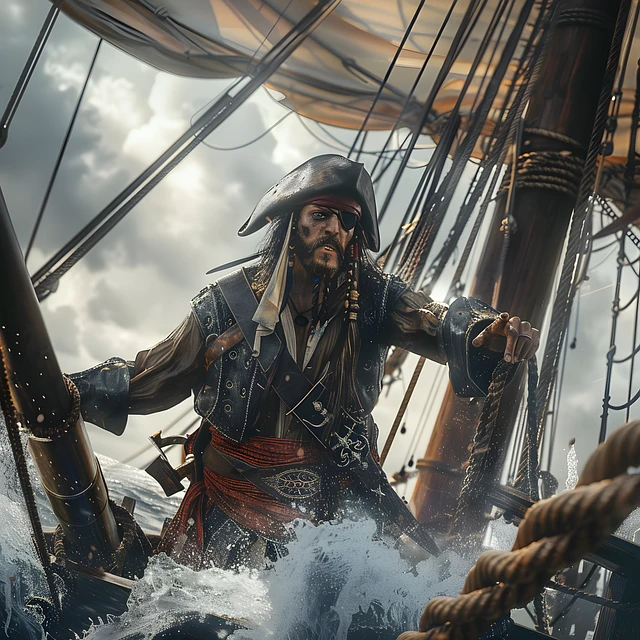
A pirate imagined by artificial intelligence. Illustration chosen by monsieurdefrance.com: by Ivana Tomášková from Pixabay
What is astonishing about what happened is the incredible audacity of La Buse and Taylor, who wasted no time in attacking the ship (which was not particularly well guarded) and capturing it. The Count of Ericeira later wrote that he fiercely defended the ship and that he eventually succumbed to the sheer number of pirates, but it is not impossible that, in order to feel less ashamed of such a loss, he embellished the story a little by inventing a battle that never took place. It is more likely that he did not see anything coming and that it was from the shore that he saw the ship being captured and carried away by the pirates. In any case, the battle quickly turned in the pirates' favor. The capture of this ship was simply enormous. And the inhabitants of Réunion were stunned to see it sail away. It was renamed "The Victorious" by its new "owners," La Buse and Taylor, who then continued to plunder the Pacific with varying degrees of success. They captured the "Ville d'Ostende," then the "Duchesse de Noailles," which did not satisfy them because it was "only" carrying slaves, so they decided to burn it (resulting in the horrific death of the slaves).
Who was Olivier Vasseur, known as La Buse?

It is not impossible that Buse resembled this AI-generated pirate. He died shortly after turning 30. Illustration chosen by monsieurdefrance.Com Felix Lichtenfeld from Pixabay
Origins, background, and reputation
Apparently, Olivier Vasseur was born in Calais, France, on January 4, 1695. Calais is located near the sea, and like many Calais residents, he turned to the sea. He was 21 when he first appeared in the history of piracy, helping Samuel Bellamy become a pirate. Bellamy would go on to become one of the most famous pirates, known as "Black Sam," the prince of pirates. After initially plundering the Caribbean Sea, he eventually left it, like almost all pirates, when the various nations that shared these islands decided to put the means in place to pursue the thieves. With America no longer as interesting, the Gulf of Guinea became the hunting ground for pirates, then the Pacific. Olivier Vasseur, who became known as "the buzzard," rose through the ranks and became something of a key figure in the profession. A stroke of bad luck left him in a bad way in 1720 when his ship sank off the coast of Mayotte. Rescued by two other pirates, Edward England and John Taylor, he ended up joining forces with them. This three-way partnership did not last long, however, as in April 1721, Taylor and "the Buzzard" could no longer stand England and decided to abandon him on the island of Mauritius, before going to see what was happening on the island of Bourbon, which at the time had become the island of Réunion that we know today. It was at this point, in April 1721, that they entered the official records and we have actual documents concerning them. This is logical, since it was at this time that they carried out the heist of the century, capturing "the virgin of the cape" and her fabulous treasure. He was only 26 years old when he achieved this feat.

A 17th-century ship at sea. Photo selected by monsieurdefrance: ArtemKnyaz via depositphotos
After taking it: a break
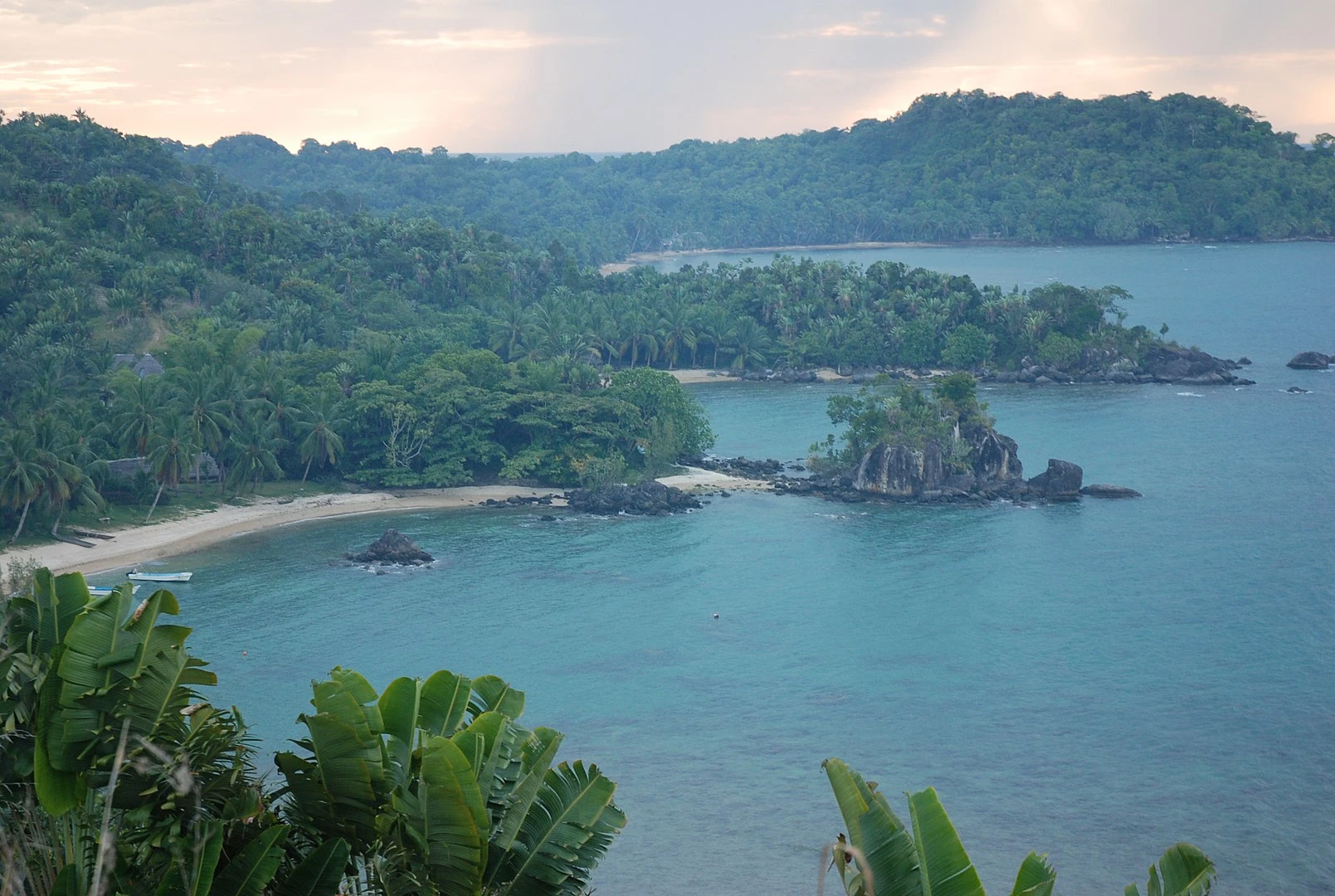
Sainte Marie Island, where La Buse spent eight years as a smuggler for ships. Photo selected by Monsieurdefrance.Com: By M worm — Own work, Public domain, https://commons.wikimedia.org/w/index.php?curid=3529288
After making a few more captures, and after arguing, Taylor and "the Buzzard" part ways and each goes their separate ways. The Buzzard settles on Sainte Marie Island, off the coast of Antogil Bay in Madagascar and gives up piracy It is there that he learns of a law offering buccaneers the chance to give up their life of crime and settle on the islands of Réunion or Mauritius, which are in need of population. It's a win-win situation: the pirates can enjoy a more peaceful life and the authorities can enjoy peace and quiet for trade. La Buse did not pursue this opportunity. He remained in Sainte Marie, where he worked as a pilot for eight years. His job consisted of climbing aboard ships passing offshore that were unfamiliar with the waters to help them cross the bay and continue their journey safely.
Arrest and execution of La Buse

La Buse was hanged in Réunion. He was 34 years old. Photo selected by monsieurdefrance.com: depositphotos
It was precisely while he was working as a smuggler in 1729 that he was recognized by Piotr Héros, a former pirate who was aboard Captain Dhermitte's slave ship. Caught and exposed, La buse finished the journey in the hold. It must be said that this was a great catch for Dhermitte, who was very famous. It is believed that Dhermitte did everything he could to sail close to Madagascar in order to have a chance of catching the most famous pirate of the time. So it was done, and La Buse landed on Reunion Island against his will. He was imprisoned and immediately put on trial.
The trial and hanging in Réunion
He was found guilty of piracy and hanged, as stipulated in the judgment, which states: "The Council has condemned him and sentences him to make amends before the main door of the church of this parish, naked in his shirt, a rope around his neck and holding in his hand a burning torch weighing two pounds, to say and declare there in a loud and intelligible voice that he has maliciously and recklessly engaged in piracy for several years, for which he repents and asks forgiveness from God and the King. […] Executed at five o'clock in the evening on the seventh of July seventeen hundred and thirty." And so it was done on July 7, 1730, in front of the local church. He was 34 years old. La Buse's grave is still there, in the cemetery of Saint Paul de la Réunion.
Where could La Buse's treasure be hidden?
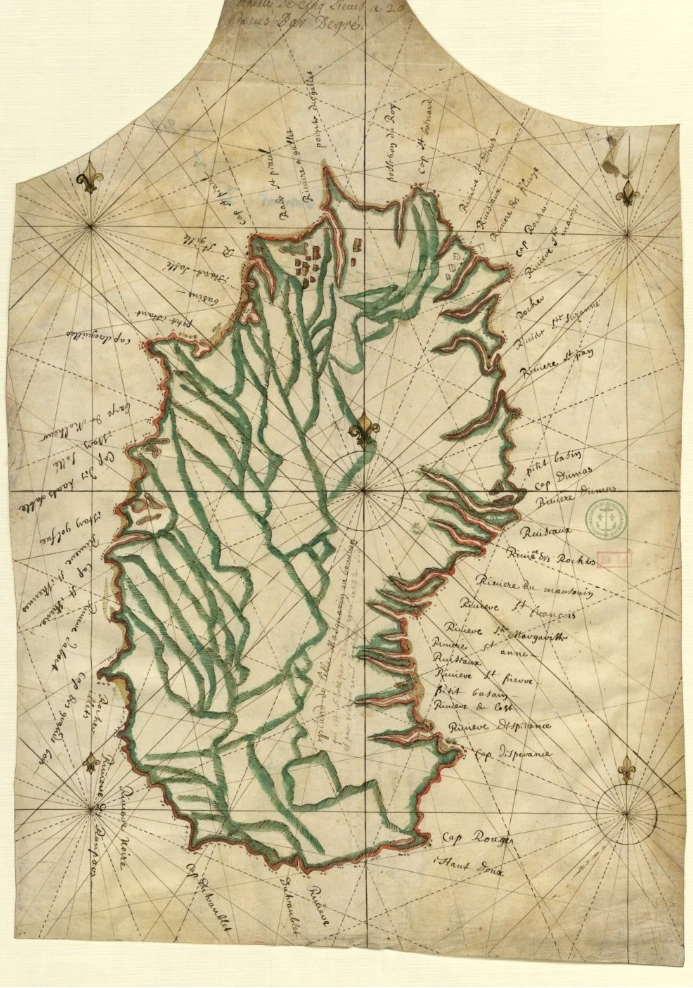
Map of Bourbon Island (now Réunion) 17th century. Illustration selected by monsieurdefrance.com: via gallica.fr / BNF
Credible geographic assumptions
"Where is the treasure?" That's the question everyone is asking, even when the Buzzard is alive. He refuses to tell the governor who questions him. However, it is almost certain that the Buzzard has hidden his treasure and has taken very little from it. He says so himself, walking toward the rope as he crosses a bridge. Those escorting him see him looking at the houses lining the route and hear him say, "With what I have hidden here, I could buy the whole island." As he was about to be hanged, he is said to have thrown a piece of paper on which a cryptogram was written and said, "My treasure to whoever can take it!"
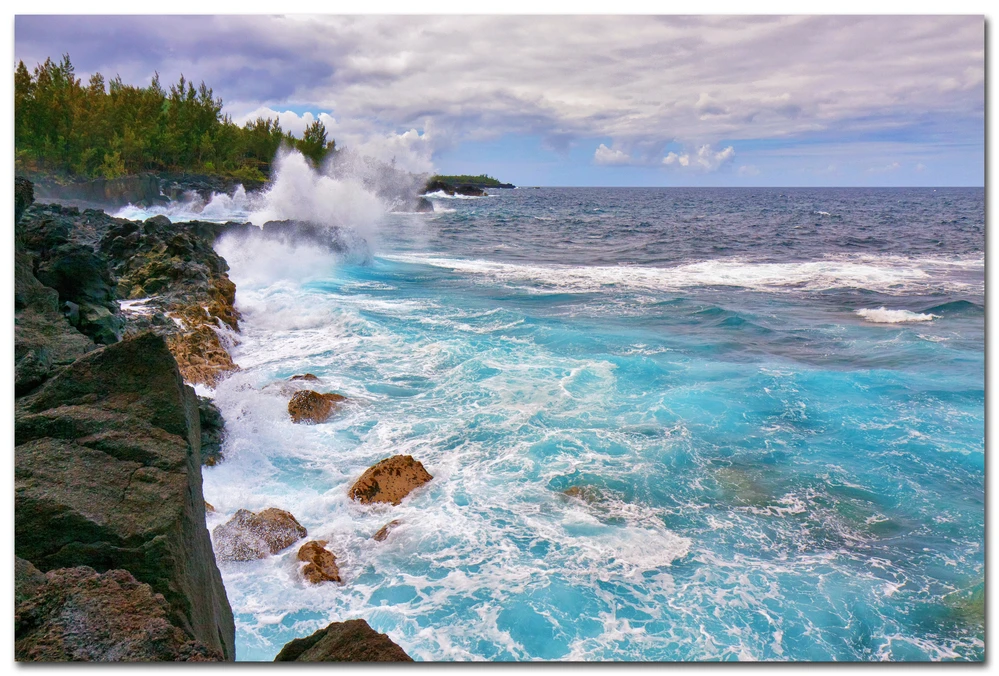
A shoreline on Reunion Island. Photo selected by monsieurdefrance.Com: zx6r92 viadepositphotos
Real treasure or pirate legend?
What seems certain is that it is located on Reunion Island. Indeed, the two pirates, Taylor and La Buse, must have emptied the ship before continuing to plunder the seas as they did a few months later. Otherwise, it would have been impossible to refill the holds. And then there is what La Buse said as he crossed the bridge: "with what I have hidden HERE." That said, we cannot rule out a little bravado, a last moment of panache before dying. The Buzzard may have just wanted to impress before he died. This is what many historians believed for a long time. What changed things was the cryptogram sheet.
The cryptogram of La Buse
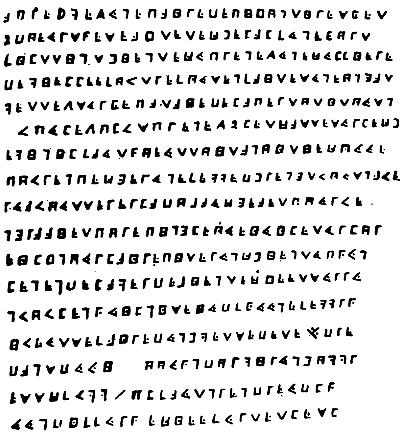
The Buzzard's cryptogram. Can you decipher it? By Bibliothèque Nationale, Public Domain, https://commons.wikimedia.org/w/index.php?curid=402090
For a long time, it was thought that this sheet had never existed, but in the 1930s, a curator at the National Library of France named Charles de la Roncière claimed to have seen this cryptogram, which had been shown to him by a certain Madame Savy, a woman from the Seychelles, whose family owned it. This paper sparked a great treasure hunt that continues to this day. Some, such as the Frenchman "Bibique" (1934-1995), have devoted their lives to it.
FAQ about pirate treasures in France
Are there really pirate treasures hidden in France?
There is no proven evidence of a major pirate treasure still hidden in France. Some theories are based on historical events and maritime activity, while many stories come from local legends passed down over time.
Where are pirate treasures supposed to be hidden in France?
Pirate treasures are usually associated with coastal areas, islands, estuaries or secluded natural shelters near former shipping routes. No precise location has ever been confirmed by archaeological discoveries.
Which pirates are linked to treasures in France?
Several pirates and privateers operating near French waters are linked to treasure legends. However, no specific cache has been conclusively attributed to a named pirate through historical proof.
Why have pirate treasures never been found?
Clues were often vague, landmarks disappeared and landscapes changed over centuries. Even if a cache once existed, its exact location may have been lost forever.
Is it legal to search for pirate treasure in France?
Treasure hunting in France is strictly regulated. Metal detecting and excavations usually require authorization, and all discoveries must be declared under French heritage laws.