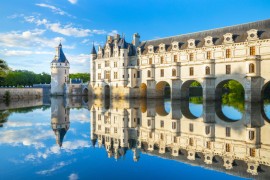
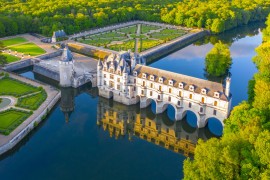
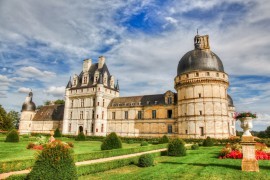
Where are the best chateau gardens to see in France? The most spectacular chateau gardens in France are located in the Loire Valley (Villandry, Chenonceau), near Paris (Vaux-le-Vicomte, Courson, Versailles), and in the Dordogne (Eyrignac, Marqueyssac). These world-class estates showcase a variety of styles, from the geometric perfection of the French formal garden (jardin à la française) to the poetic charm of English-style parks and rare botanical collections.
The Evolution of the French Garden: A History of Power and Beauty
To understand what we are visiting today, we need to distinguish between five categories of gardens that reflect five different periods. These may be combined in a particular castle.
1. The Medieval Garden: the healing garden
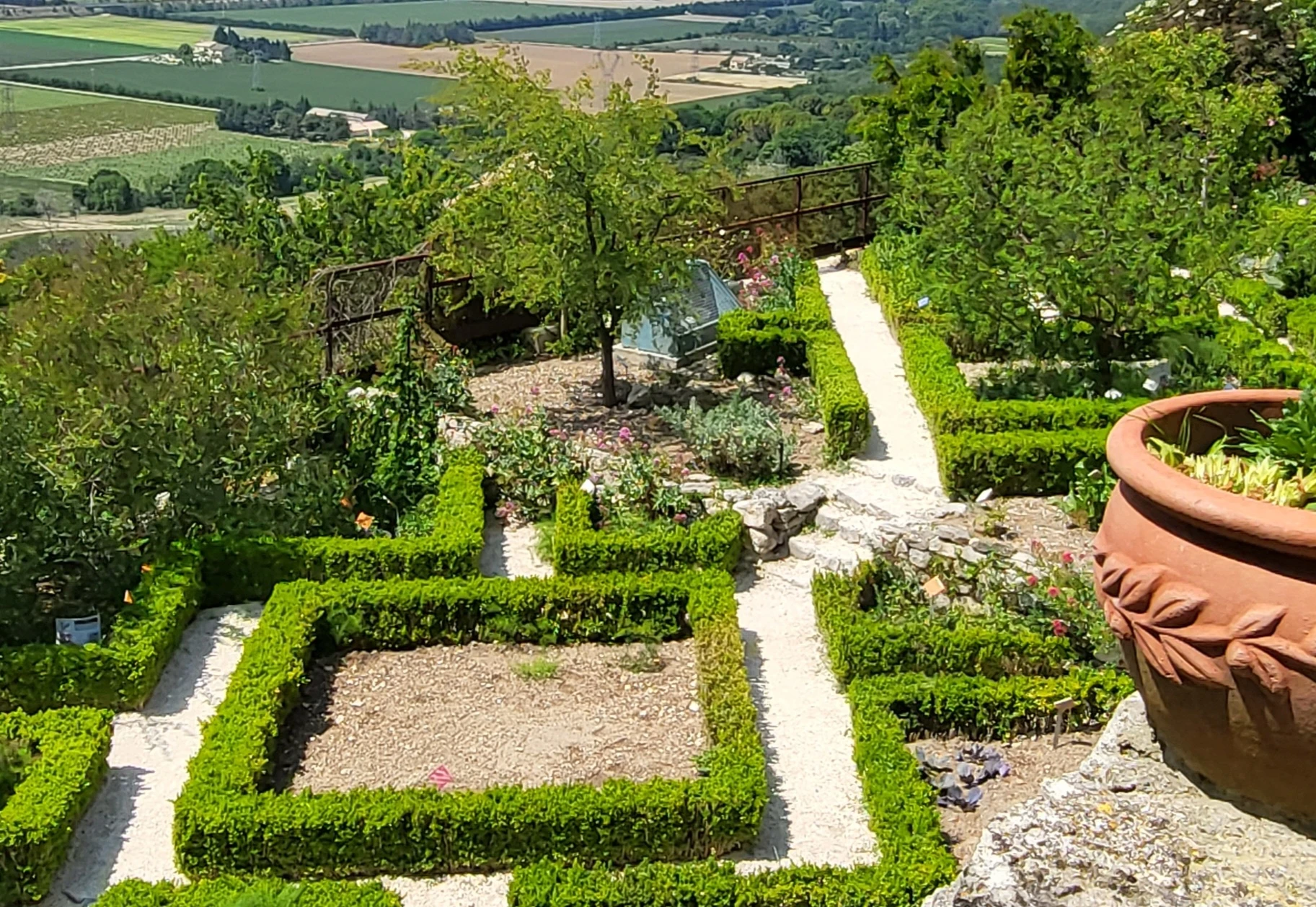
The remarkable medicinal herb garden of La Garde-Adhémar in the Drôme region. Photo selected by Monsieurdefrance.com: Jérôme Prod'homme.
In the Middle Ages, gardens were enclosed and primarily intended to be useful. They contained plants with healing properties and vegetables for nourishment. These were the gardens of monasteries or, in some cases, fortresses. They were used to grow medicinal plants, vegetables, and a few symbolic flowers (lilies and roses). Aesthetics were secondary: gardens were primarily utilitarian and spiritual places, where people prayed as much as they gardened.
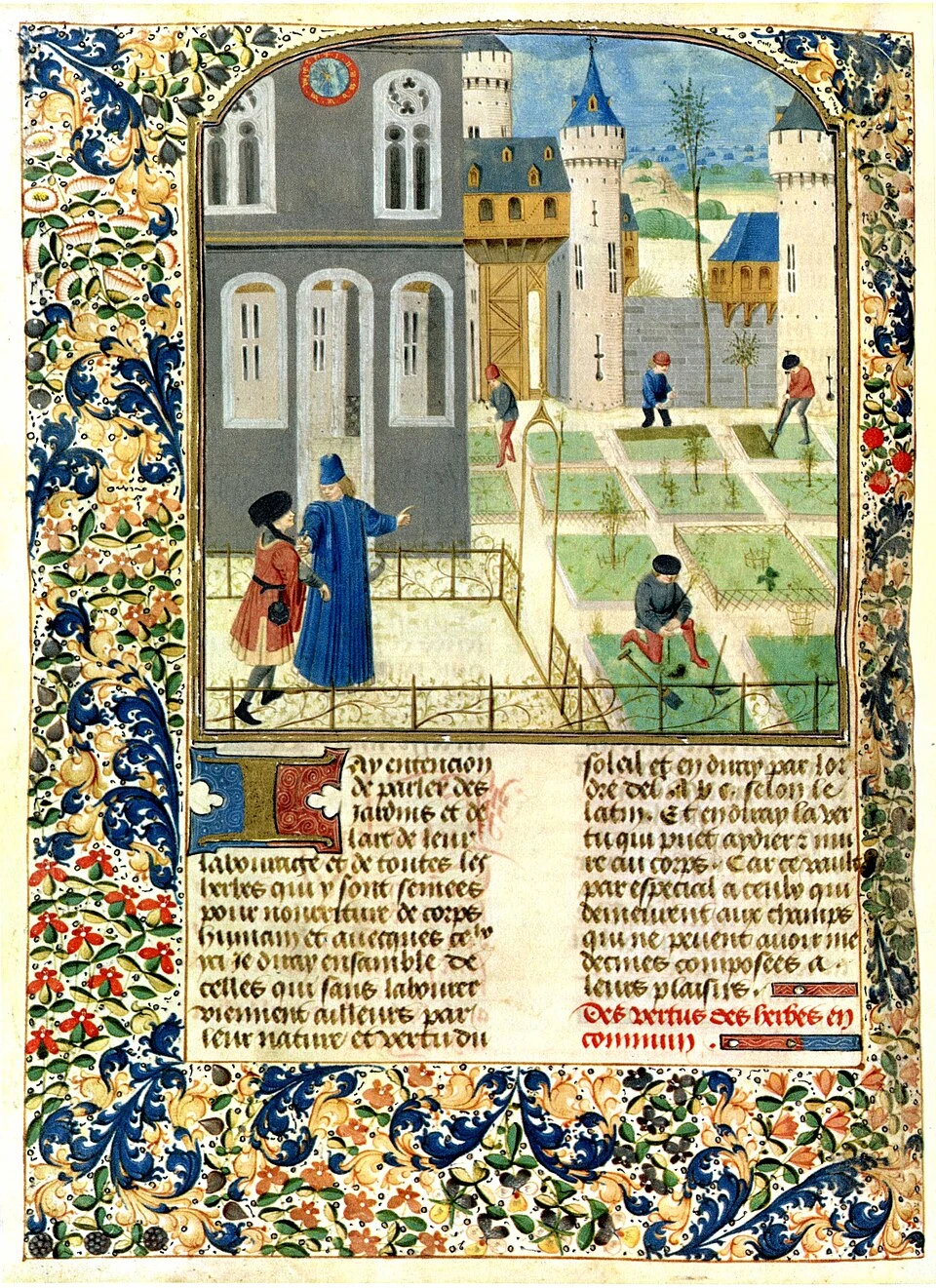
The art of gardening in the Middle Ages / Illustration chosen by Monsieur de France: By Pier de Crescenzi, Master of Margaret of York — Source unknown, Public domain, https://commons.wikimedia.org/w/index.php?curid=7733865
2. The Renaissance: Italy influences France.
Everything changed in the 16th century. Having traveled to the Italian peninsula during the Italian Wars, the kings of France (Charles VIII, Louis XII, and especially Francis I) returned with a desire for flowers, fruit, and the gardens they had seen in the beautiful estates around Rome or in the Milanese countryside. They also brought Italian gardeners with them. At that time, gardens began to move beyond their practical purpose and even beyond their walls. Terraces were invented, designers played with different levels, and the first artificial "grottos" were introduced. The gardens of Villandry and Chenonceau are the direct heirs of this era, when people began to compose the landscape as if it were a painting. People discovered the garden for its own sake.
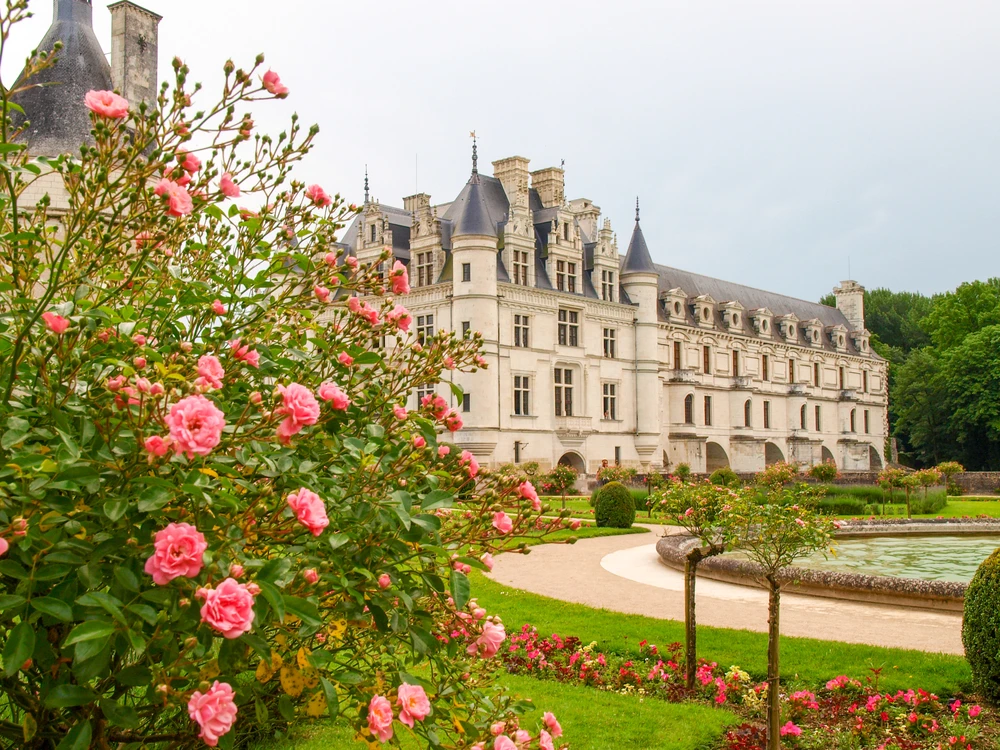
The Renaissance gardens of Chenonceau Castle. Photo selected by monsieurdefrance: Mor65 via Depositphotos.
3. The 17th century: Le Nôtre and the birth of the French formal garden.
This is the style that made France famous worldwide. André Le Nôtre, Louis XIV's gardener, was its creator. He imposed a vision in which man completely dominated nature. We love symmetry, straight lines that lead to infinite perspectives (anamorphosis). The garden becomes an open-air theater. There are surprises to be found in the "groves," here a theater, there statues. It was the great passion of Louis XIV, who even wrote his own guide to visiting the gardens of Versailles. The French garden is an architectural garden.
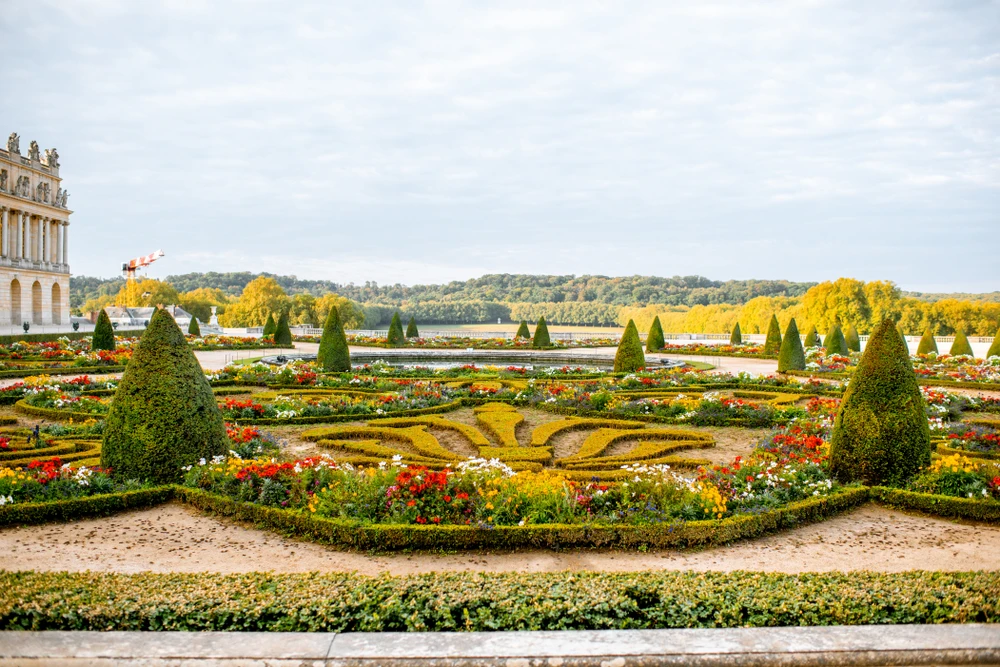
The gardens of Versailles / photo RossHelen/Shutterstock.com
4. The Romantic Breakup: The English Garden
At the end of the 18th century, people grew tired of rigor. The influence of philosophers such as Jean-Jacques Rousseau advocated a return to a "wild" (yet highly cultivated) nature. This was fortunate, since the English had stopped creating French-style gardens. It must be said that they always had a head for business and that the English nobility, who did not lose their nobility by working, unlike the French nobility, found it much more useful to have fields of sheep, which provided wool and required no maintenance, than French-style gardens, which required abundant and therefore expensive labor. This gives the impression of letting nature take its course, when in fact it is being guided in a more discreet manner. Streams become winding, majestic trees are planted—preferably exotic ones (cedars, redwoods)—and "fabriques" (fake ruins, temples of love) are installed to evoke emotion and melancholy. The English garden is a garden that makes you think and carries a certain melancholy.
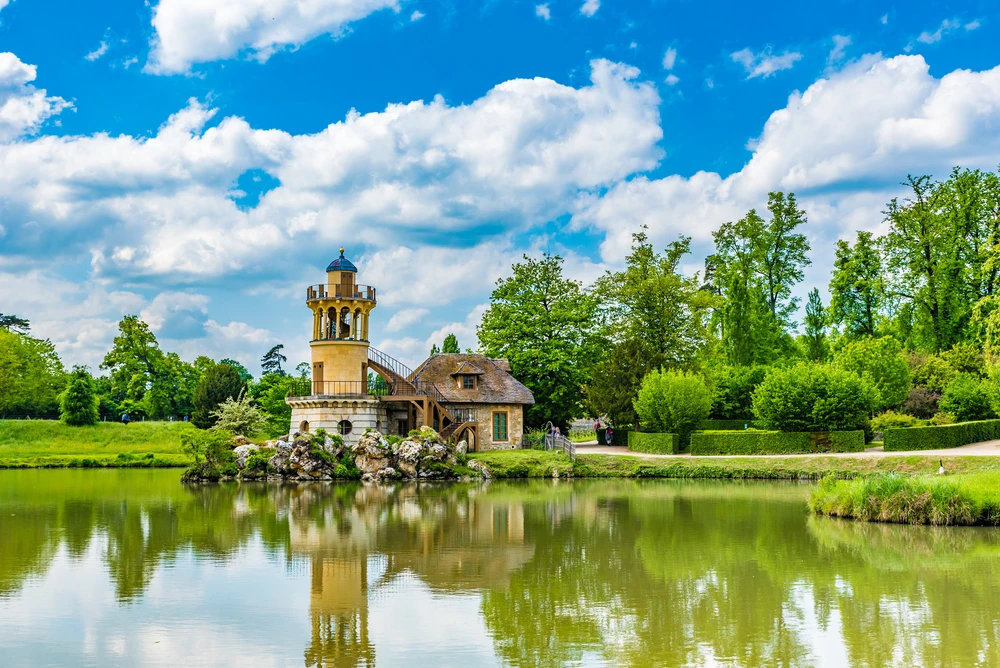
The English garden of Versailles around the Queen's estate at Trianon / Versailles / Image by Takashi Images
Top 11 Most Beautiful Castle Gardens to See in France
Here is my selection, combining world-famous gardens and essential private gems. Feel free to send me messages and photos if you discover a beautiful garden and want it to be featured.
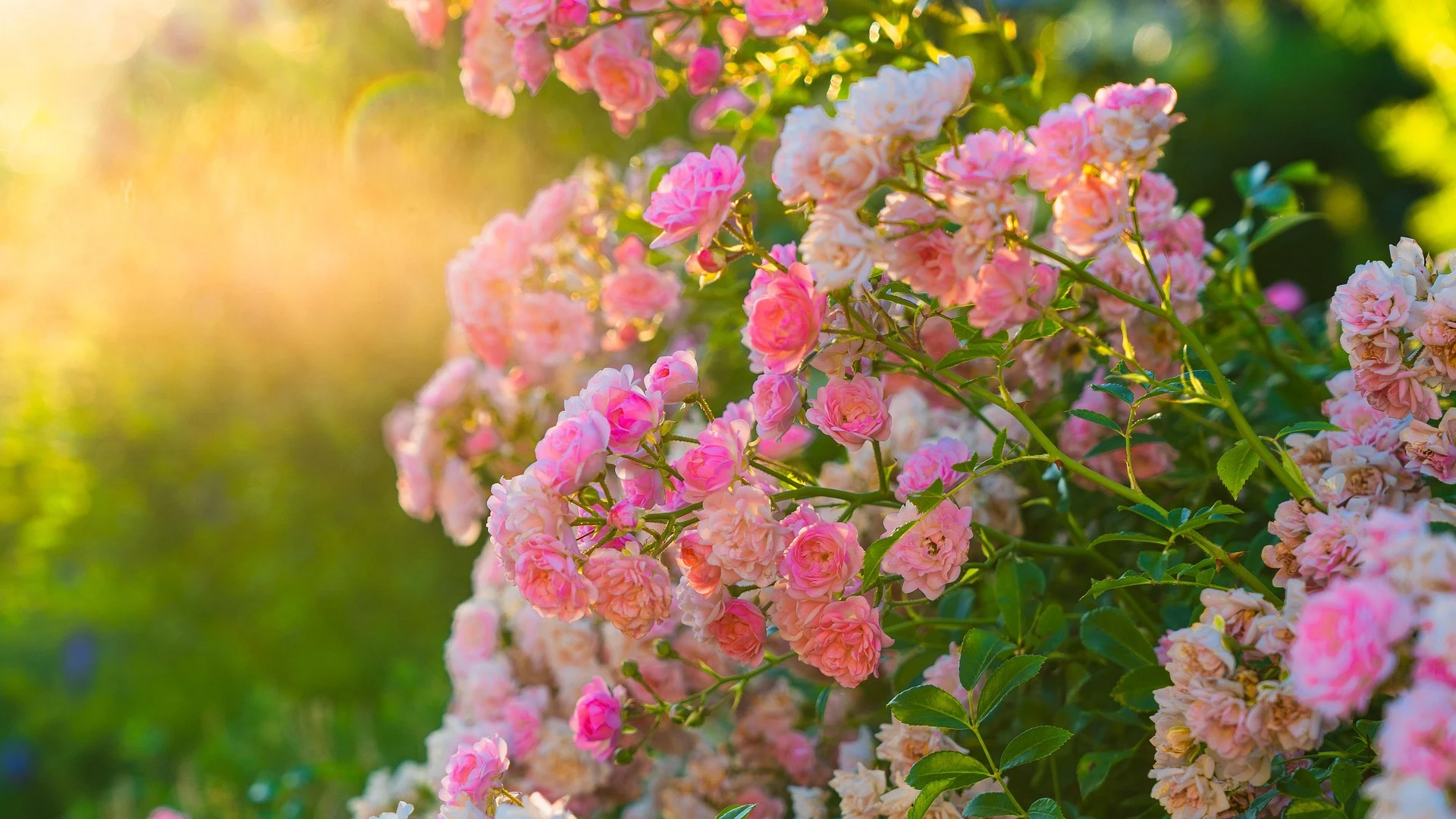
You will easily spot a rose bush, or as seen here, rose bushes, in gardens throughout France / Photo selected by monsieurdefrance.com: Image by ?Christel? from Pixabay
1. The Château de Vaux-le-Vicomte (Seine-et-Marne)
Vaux-le-Vicomte is Le Nôtre's manifesto. It was here, before Versailles, that the grammar of the classical garden was established. Without Vaux, there would be no Versailles. The park is immense. We discover flowerbeds designed using the technique of boxwood pruning, which is very difficult nowadays due to the box tree moth that arrived from China about twenty years ago and literally eats the boxwood plants, having no predators in France.
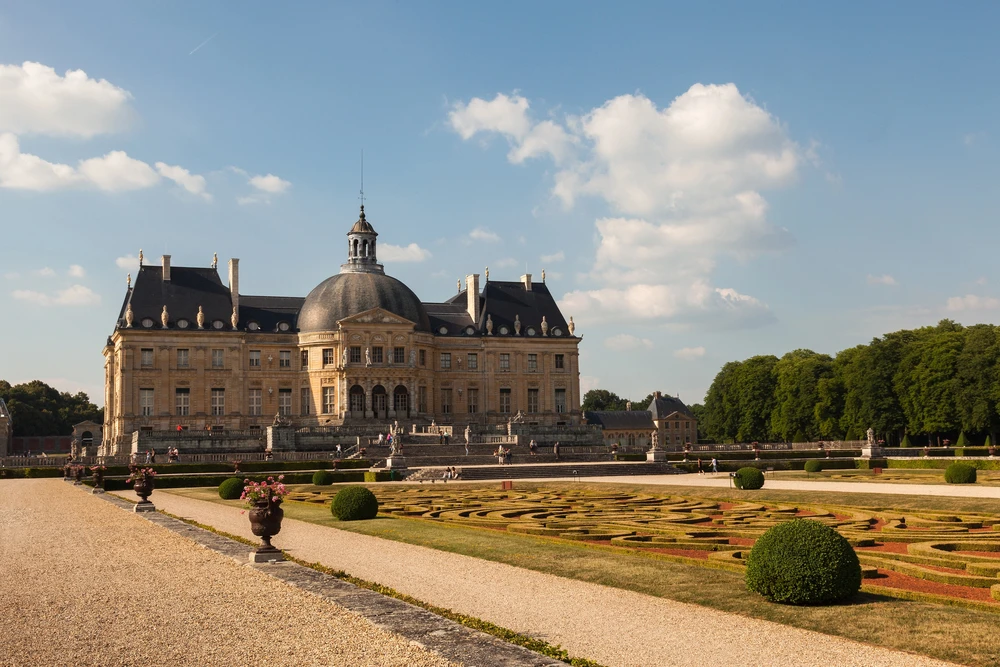
The flowerbeds at the Château de Vaux le Vicomte / Photo selected by Monsieur de France paanna via depositphotos
-
Monsieur de France's little extra touch: The use of water mirrors. Le Nôtre used optical illusions to make the ponds appear closer than they actually are.
-
Distance from Paris: 55 km | Website: vaux-le-vicomte.com
2. Villandry Castle (Indre-et-Loire)
World-renowned for its decorative vegetable garden. It is a mosaic of colors where cabbages, leeks, and pumpkins become decorative elements. It is a joy of gardening creativity that will surprise even the most jaded among you, all in the famous mild climate of the Loire Valley.
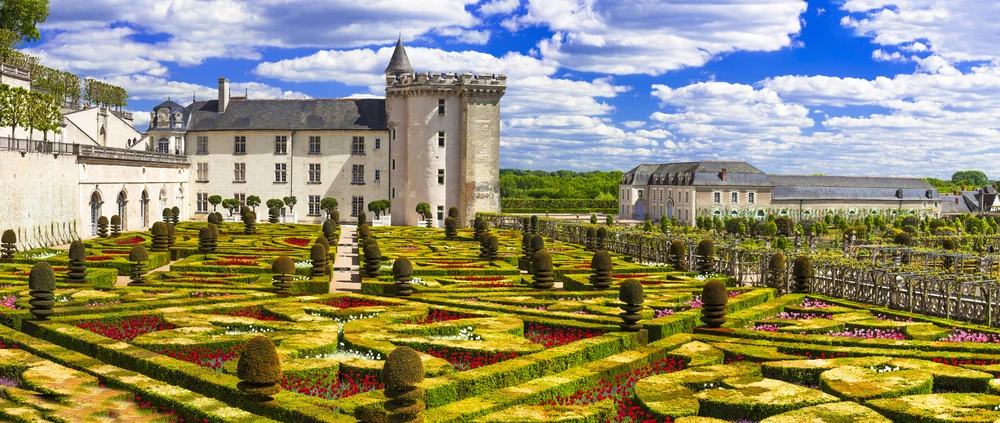
The sumptuous gardens of Villandry Castle/ Photo selected by Monsieur de Franc Maugli via depositphotos
-
Monsieur de France's little extra: The gardens were completely recreated at the beginning of the 20th century by Joachim Carvallo. It is a masterpiece of private passion and historical research.
-
Distance from Paris: 240 km | Website: chateauvillandry.fr
3. The Domaine de Courson (Essonne): A Mecca for Collectors
This is the favorite stop for true botany enthusiasts. Courson is famous worldwide for its renowned "Journées des Plantes" (Plant Days). It is a romantic English-style park with an incredible wealth of plant life. If there is such a thing as a plant castle, this is definitely it.
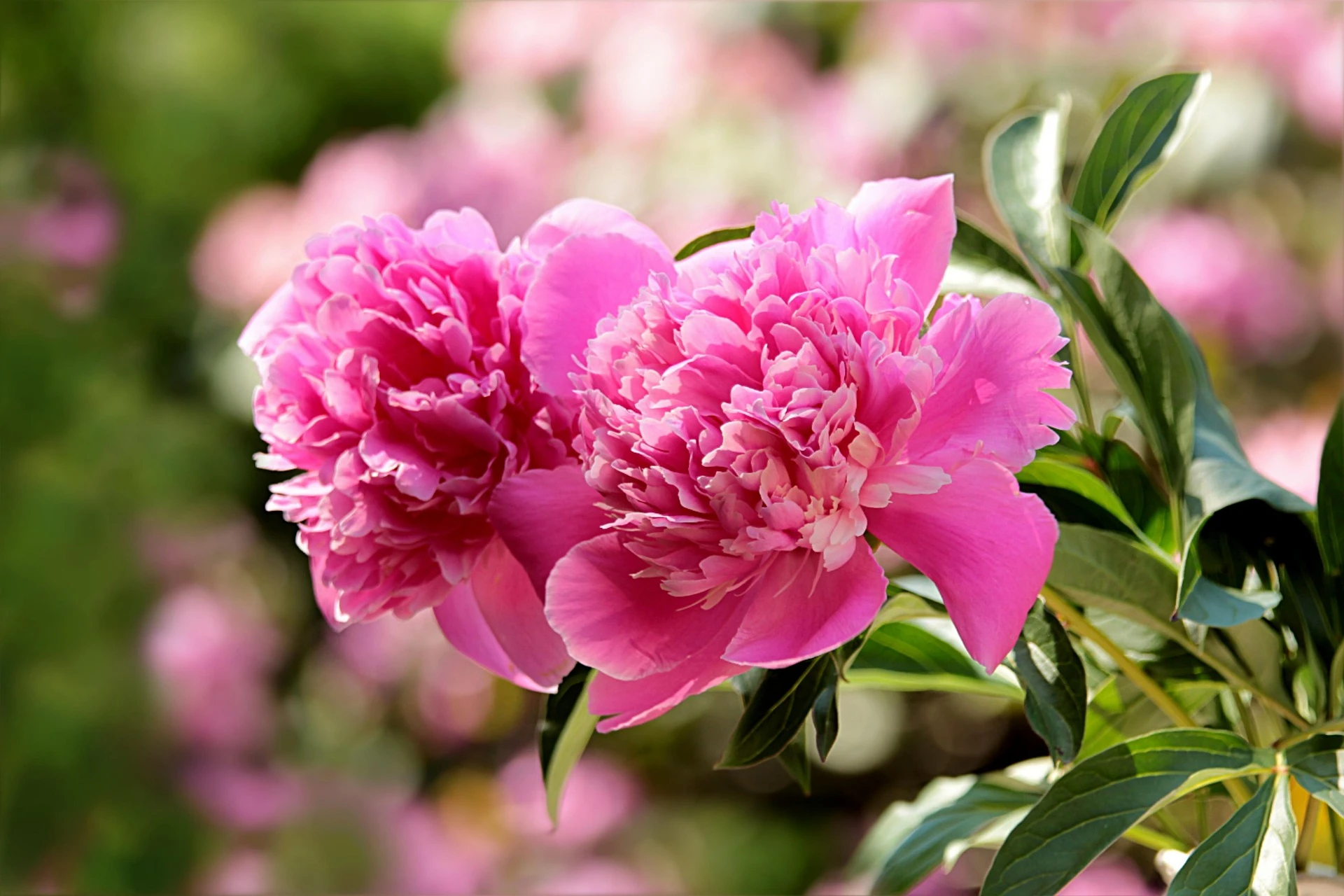
What a beautiful plant the peony is! Photo selected by monsieurdefrance.com: by Christiane from Pixabay
-
Monsieur de France's special touch: It is a paradise for rare plants. Visitors come to admire trees with remarkable bark, perennials found nowhere else, and spectacular blooms of camellias and azaleas. It is a garden for aesthetes and collectors.
-
Distance from Paris: 35 km | Website: domaine-de-courson.fr
4. The Gardens of Marqueyssac (Dordogne)
Here, we leave the straight line for the curve. Perched on a rocky outcrop, these gardens feature more than 150,000 century-old box trees trimmed into undulating shapes. It is also a place rich in imagination.
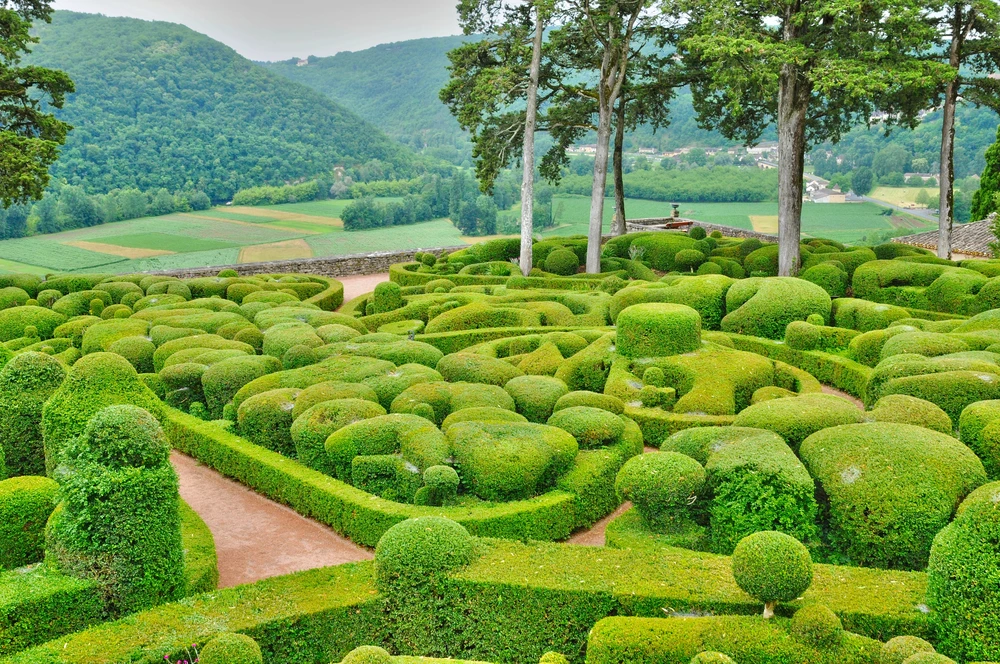
The grounds of Marqueyssac Castle. Photo selected by Monsieur de France: Packshot via depositphotos
-
Monsieur de France's little extra tip: The walk offers the most beautiful viewpoint over the Dordogne valley. In the evening, 2,000 candles light up the paths.
-
Distance from Paris: 500 km | Website: marqueyssac.com
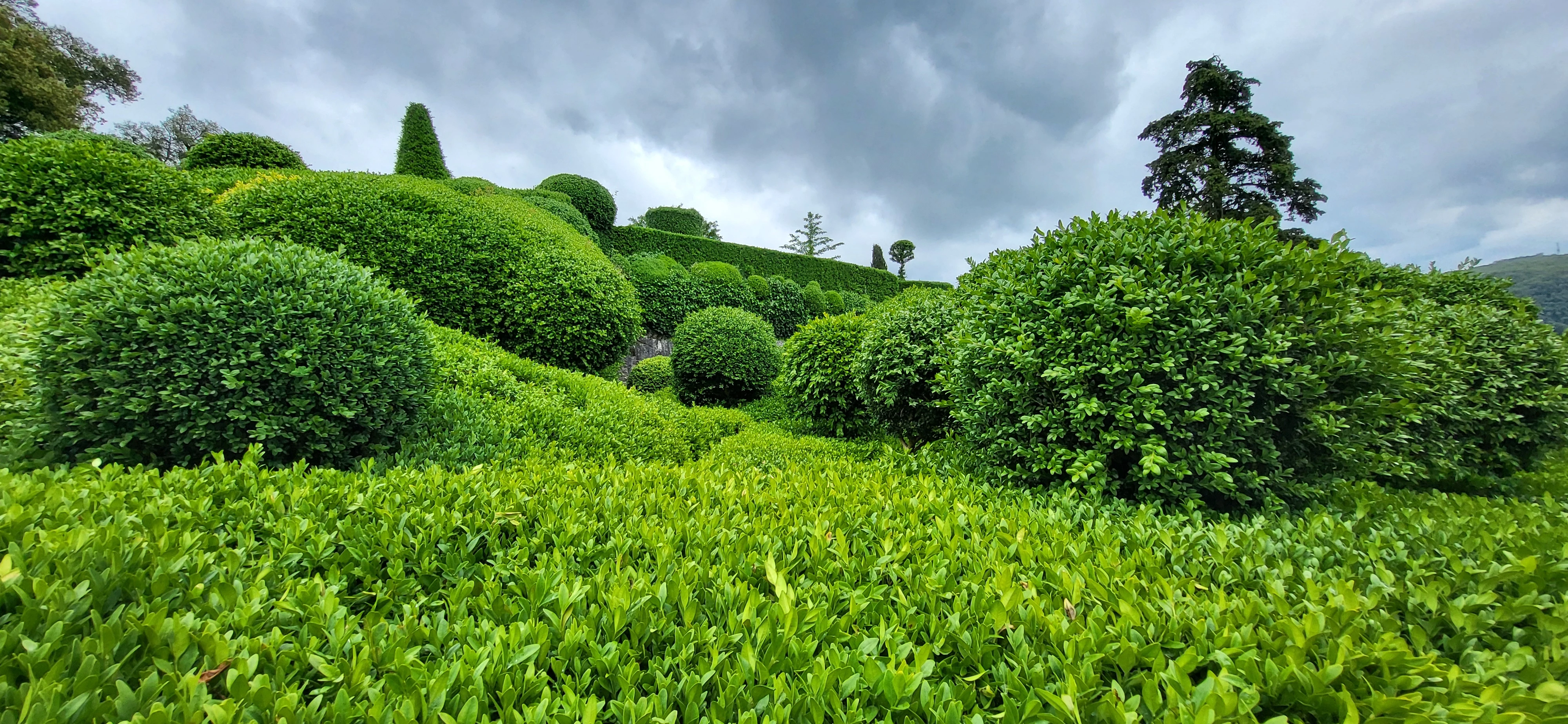
Marqueyssac Castle, trimmed box trees, detail. Photo selected by Monsieurdefrance.com: Jérôme Prod'homme (c)
5. Chenonceau Castle (Indre-et-Loire)
At Chenonceau, the gardens of Diane de Poitiers and Catherine de Medici face each other, just as the two women faced each other at the court of the Valois, one being the mistress of King Henry II, the other his wife. The elegance here is absolute, enhanced by the presence of the Cher River. And above all: Chenonceau continues to create, first of all there are bouquets everywhere in the castle thanks to a very large flower production. Then, there is real work going on in the vegetable garden, which makes visiting the gardens exciting for children, who can discover how the plants they eat grow.
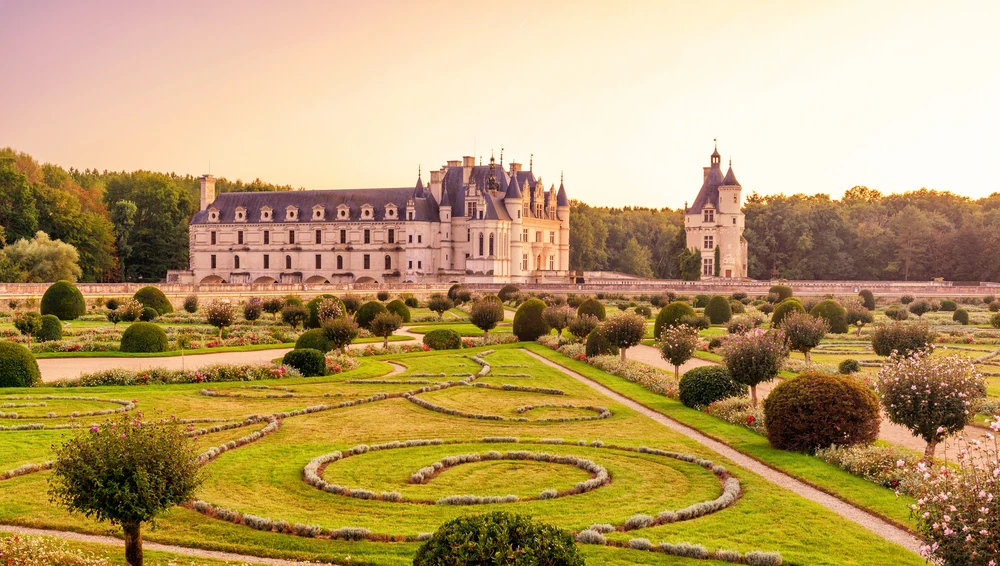
The gardens of Chenonceau / Chenonceau Castle Photo by Viacheslav Lopatin/Shutterstock
-
Monsieur de France's little extra touch: The château has its own floral workshop. The monumental bouquets inside are made from flowers grown in the estate's vegetable garden.
-
Distance from Paris: 215 km | Website: chenonceau.com
6. The Gardens of Eyrignac (Dordogne)
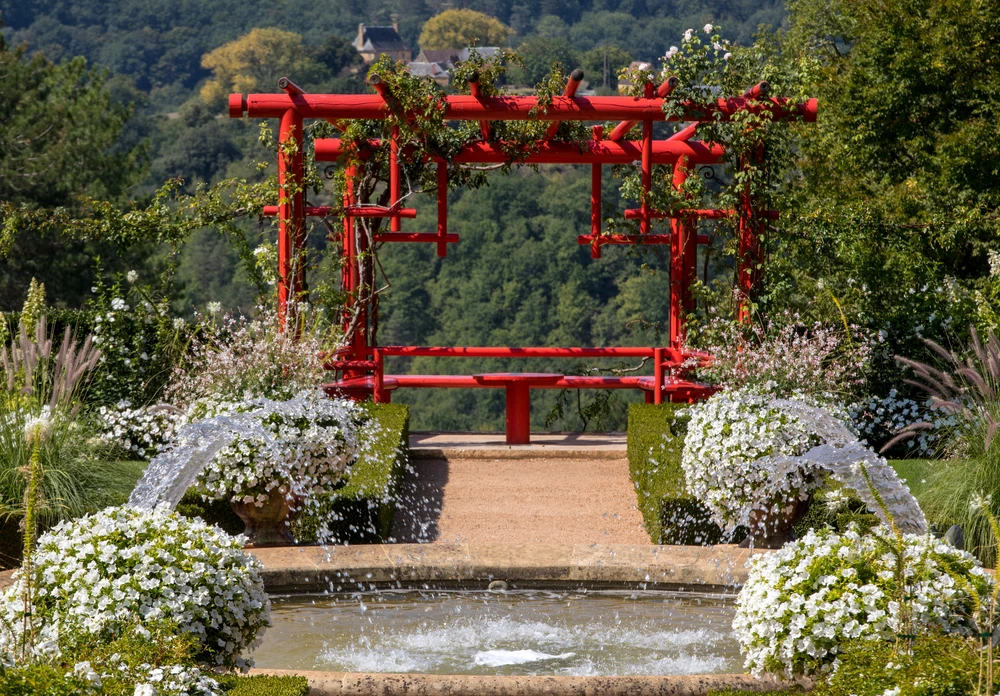
The white garden and its fountains. Photo selected by monsieurdefrance.com: wjarek via depositphotos.
In the Périgord region, such as Marqueyssac. This is the realm of topiary. Yews and hornbeams are pruned with pinpoint precision. One wonders how the gardeners, who are undoubtedly artists, manage to design and maintain such astonishing shapes. Truly, what a lot of work!
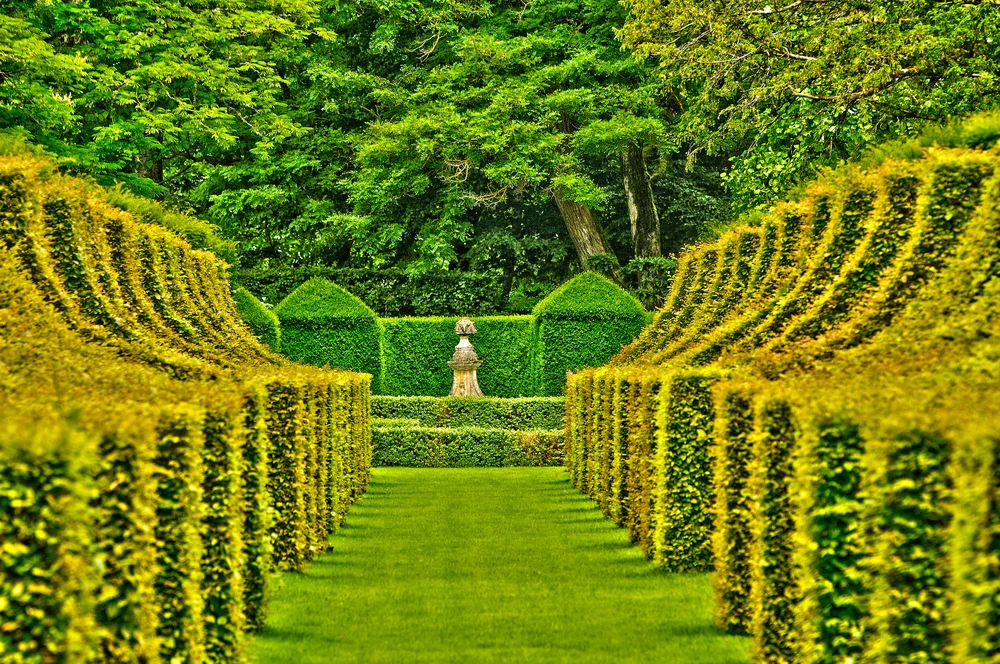
One of the magnificent paths in the gardens of Eyrignac / photo chosen by monsieurdefrance: packshot via depositphotos.
-
Monsieur de France's special touch: The tailoring is done entirely by hand, using scissors. It is a painstaking process that requires months of patience.
-
Distance from Paris: 520 km | Website: eyrignac.com
7. The Château de Champ de Bataille (Eure)
Jacques Garcia, world-renowned interior designer, created Europe's largest private gardens here. It is a journey between classicism and esotericism, with monumental structures. French formal gardens and romantic gardens are blended together in the most beautiful way.
-
Monsieur de France's little extra: Excess. Walking from the Palace of India to the Temple of Venus in just a few steps is an experience you can only have here.
-
Distance from Paris: 62 miles | Website: chateaudechampdebataille.fr
8. The Château du Rivau (Indre-et-Loire)
Fairytale gardens that combine contemporary art and medieval botany. Each garden tells a story. This is the place to visit to take a journey through the history of gardens in France.
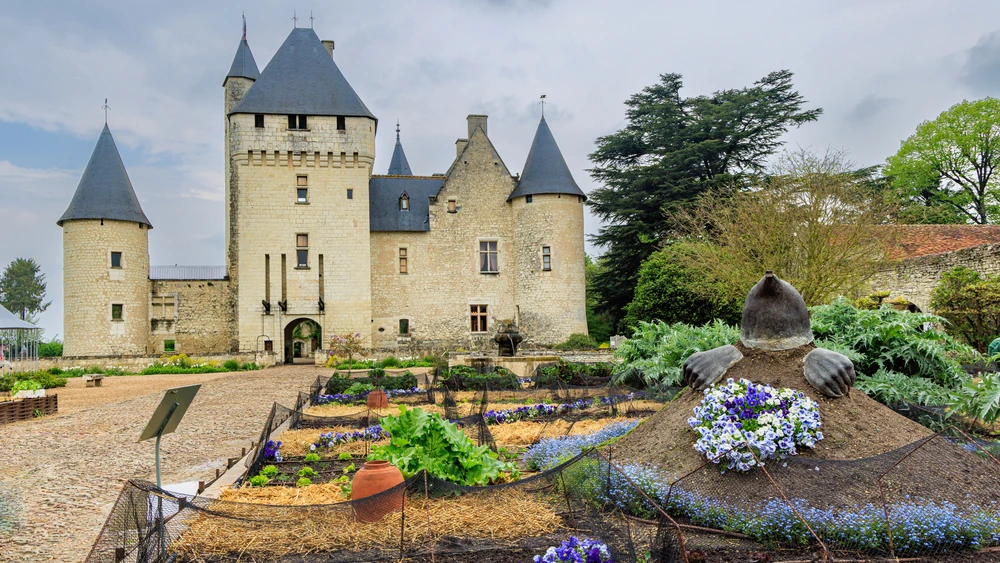
The astonishing garden of Rivau Castle / Photo selected by Monsieur de France Hilda Weges via depositphotos
-
Monsieur de France's special touch: The royal stables and collections of old roses (over 450 varieties) make it a paradise for the senses.
-
Distance from Paris: 280 km | Website: chateaudurivau.com
9. The Estate of Chaumont-sur-Loire (Loir-et-Cher)
Chaumont is the laboratory of contemporary gardening thanks to its International Garden Festival.
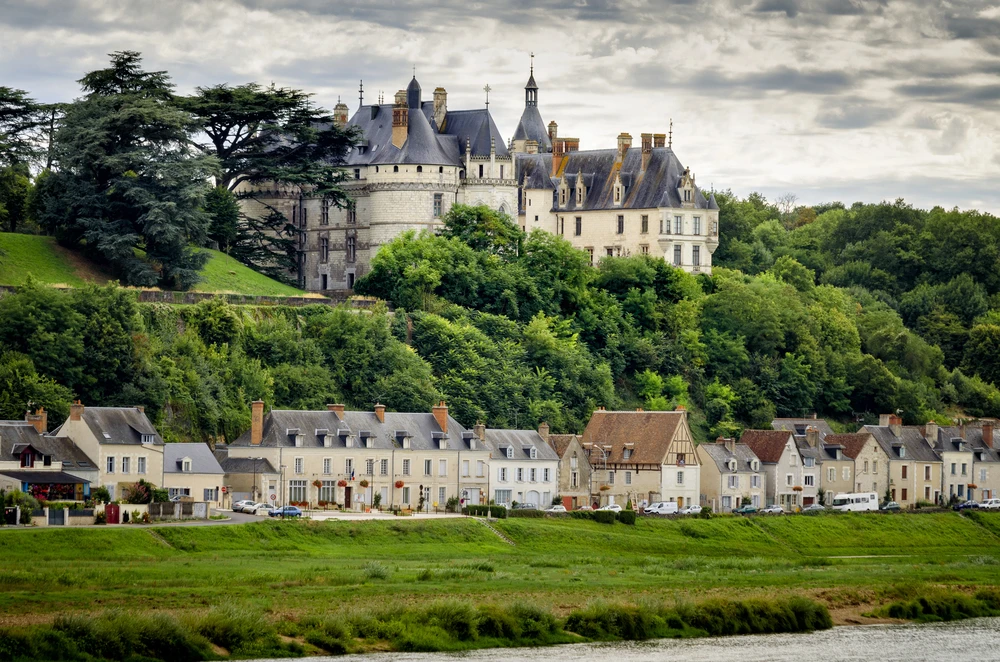
The Château de Chaumont-sur-Loire / Photo selected by Monsieur de France: massimosanti via depositphoto
-
Monsieur de France's little extra touch: The contrast between the massive medieval castle and the lightness of the temporary landscape installations from around the world.
-
Distance from Paris: 195 km | Website: domaine-chaumont.fr4

10. The Château de La Ballue (Ille-et-Vilaine)
Here is a place that is not well known: a secret topiary garden in Brittany, at the gateway to Mont-Saint-Michel. The Château de la Ballue has made the art of topiary the pinnacle of garden art. Between tradition and modernity, with boxwood as a path, we discover how creative humans can be when given the opportunity.
-
Monsieur de France's little extra touch: The garden is designed as an introductory journey, with a different atmosphere in each green room.
-
Distance from Paris: 350 km | Website: laballuejardins.com
11. Cheverny Castle (Loir-et-Cher)
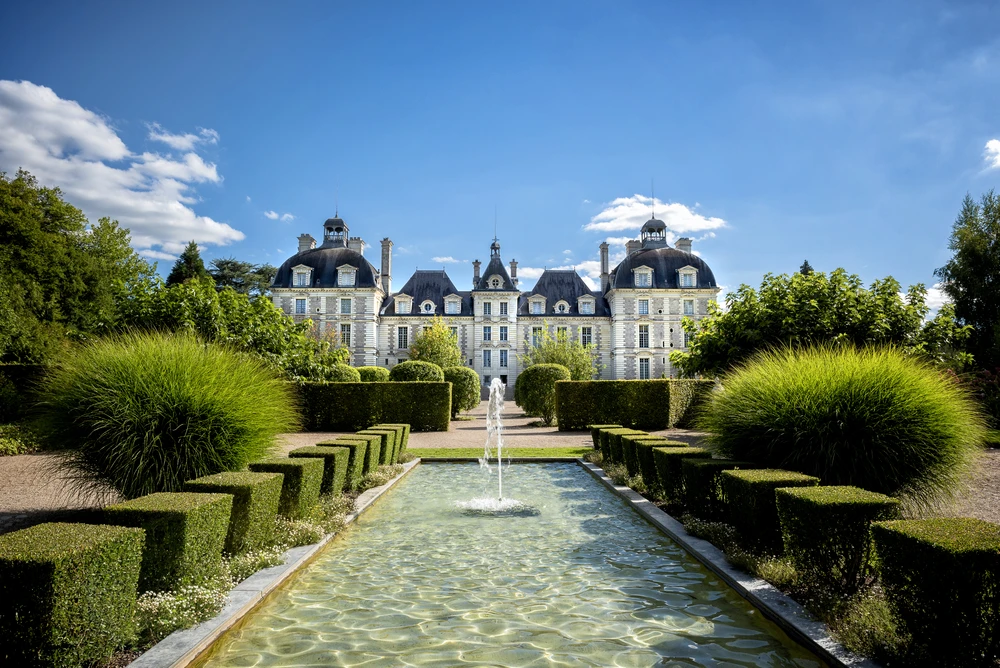
The apprentice garden behind the castle is magnificent. Photo selected by monsieurdefrance.Com: Massimosanti via deposithotos.
Famous for its themed gardens, impeccably maintained by the de Vibraye family. Spring drives it completely wild with tulips in bloom, and it is known for this, but it should not be reduced to just that. The park is creative, with works of art to discover.
-
Monsieur de France's little extra: In spring, the huge ribbon of 250,000 tulips that runs through the park is an unforgettable colorful sight.
-
Distance from Paris: 195 km | Website: chateau-cheverny.fr
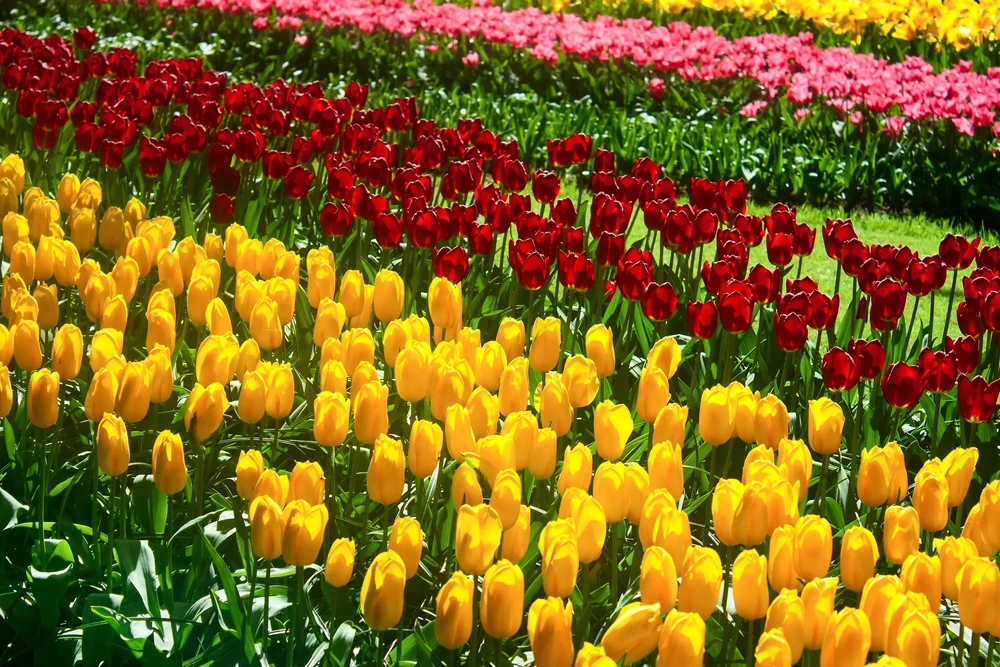
The tulip beds are an extraordinary sight in Cheverny / Photo chosen by Monsieur de France: pixabay
Versailles: The royal summary of all French castle gardens
Versailles needs no introduction, but we often forget that this estate is above all André Le Nôtre's absolute masterpiece. It is not just a garden, it is a royal synthesis that has set the standards for French prestige for centuries. Covering nearly 800 hectares, Versailles displays an architectural power where nature is entirely subject to human will. From the infinite perspectives of the Grande Croisée to the secret groves that served as theaters for Louis XIV's parties, every square meter is a demonstration of strength and elegance. But we often forget that Versailles was the place where generations planted their ideal gardens. Louis XV developed the roses and the menagerie (the zoo). Marie Antoinette had an English garden installed around Trianon and even built a "folly" in the style popular at the time: the Petit Trianon. An idealized pastiche village, not built to last (which poses maintenance problems today). A garden for dreaming.
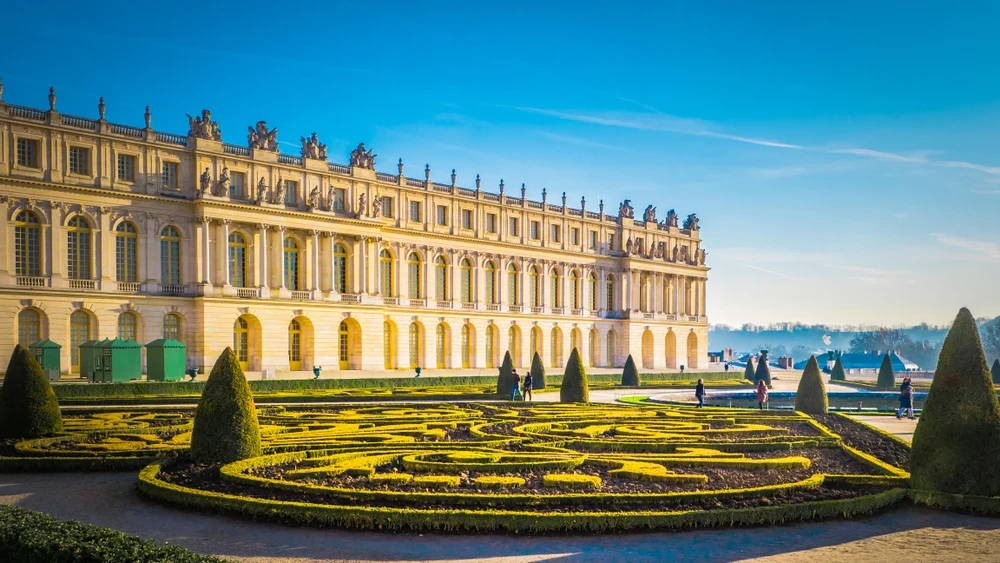
Gardens and Palace of Versailles / photo Vivvi Smak/Shutterstock.com
Monsieur de France's little extra tip: To understand the true magic of Versailles, you need to leave the palace and head to the Queen's Hamlet. It is here, around the Petit Trianon, that the style changes radically: we move from the rigor of Le Nôtre to the romanticism of an English garden designed by Marie Antoinette. Another secret: don't miss the King's Kitchen Garden, located a few minutes' walk from the palace. Created by Jean-Baptiste de La Quintinie, this productive garden continues to produce exceptional fruits and vegetables using traditional techniques. It is the direct link between the King's table and the expertise of our current gardeners.
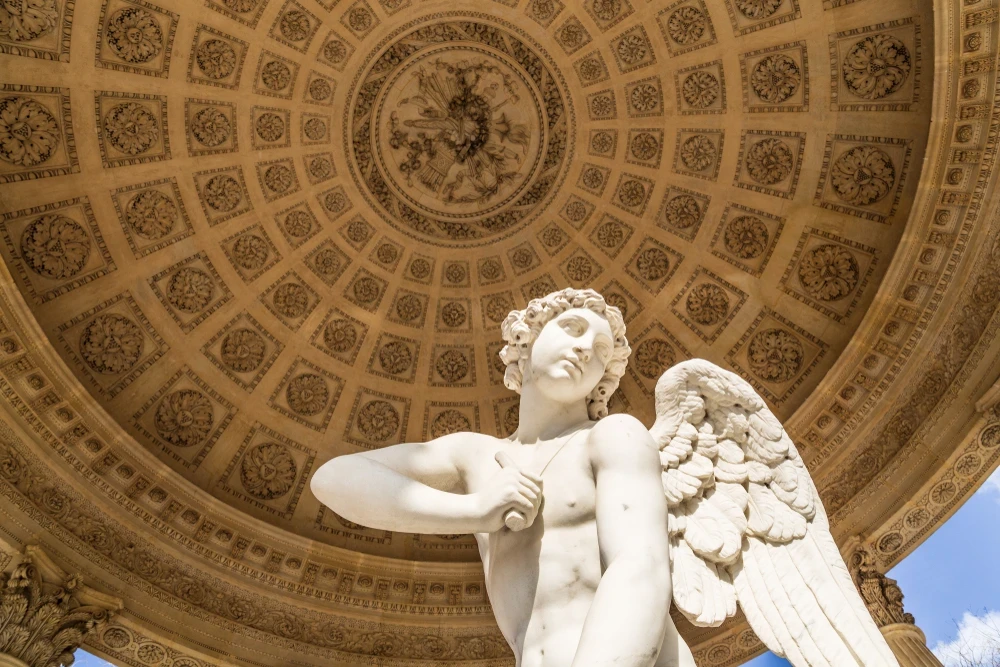
The Temple of Love at the Petit Trianon / Photo by Fabianodp/Shutterstock.com
-
Distance from Paris: ~12 miles
-
Address: Place d’Armes, 78000 Versailles
-
Official website: chateauversailles.com
The Technical Challenges of the Castle Garden
Managing such heritage requires a tremendous amount of expertise that visitors are not always aware of.
1. Water Management
In a French formal garden, water is an architectural feature. During the reign of Louis XIV, networks of lead pipes and monumental reservoirs were created. Today, private châteaux must maintain these fragile networks. Some, such as Courances, still use natural springs without any pumps, a feat of hydraulic engineering.
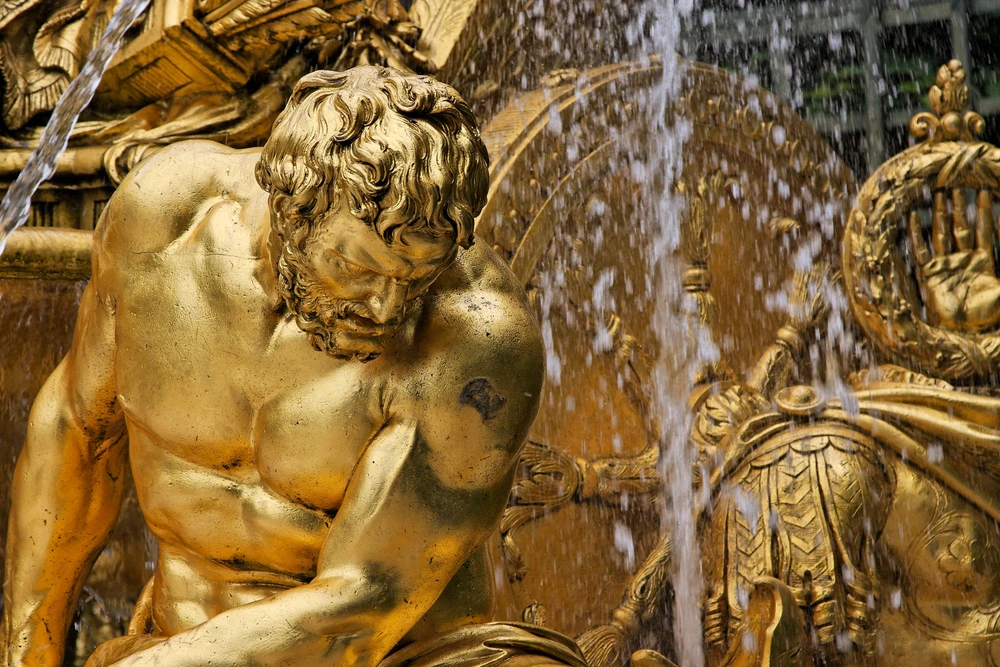
Water has always been scarce in Versailles, and it is a real privilege for us today to see the fountains flowing freely / Photo selected by monsieurdefrance.com: depositphotos
2. Pest Control
Boxwood, a staple of classic gardens, is under threat from the box tree moth. Gardeners at estates such as Eyrignac and Villandry are fighting a daily battle (using pheromone traps and organic treatments) to save these century-old plant sculptures. Visiting these places also means supporting this fight for the survival of our plant heritage.
3. The work never stops.
Anyone with a garden will tell you: gardening is hard work. And that's putting it mildly when you see the wonders created and maintained in these private parks and gardens. Behind your hour-long stroll lie hours, weeks, months of work...
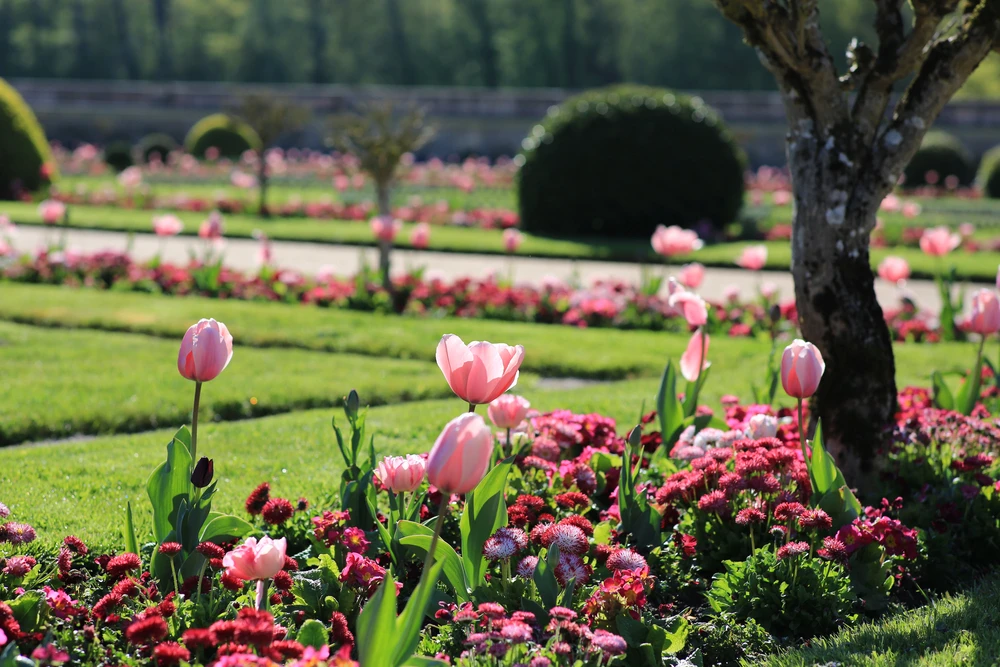
A bed of tulips in a French garden / Photo selected by monsieurdefrance.com; telev via depositphotos.
FAQ: Frequently Asked Questions about Castle Gardens
What is the largest castle garden in France?
In terms of public gardens, it is Versailles (800 hectares). In terms of private gardens, Champ de Bataille has the largest structured gardens in Europe created in modern times.
Why did English gardens come into being?
It was a philosophical reaction to the rigidity of absolutism. The English garden celebrates freedom and emotion, whereas the French garden celebrates reason and order.
Can you visit the gardens without visiting the castle?
Yes, almost all private estates offer a "Gardens Only" ticket. This is often the option chosen by photographers who want to take advantage of the golden light at the end of the day.
Conclusion
Visiting a castle garden is like treating yourself to a moment of beauty and calm. It's also a chance to discover French history through nature. Whether you're drawn to the precision of the box trees at Vaux-le-Vicomte or the botanical rarities at Courson, each estate is an invitation to travel.
Jérôme Prod'homme Specialist in French heritage, gastronomy, and tourism. Find all my discoveries at monsieur-de-france.com.