🏛️ The legacy of exceptional tables
The concept of the "restaurant" is a French invention that emerged after the Revolution of 1789. Leaving the châteaux, which had been closed by the French Revolution, and forced to continue earning a living, the great chefs of aristocratic households opened their own establishments, bringing with them the etiquette of the French royal court. As the French are passionate about gastronomy AND conversation, restaurants became an important part of society. In the great restaurants and palaces, not only the art of living but also the excellence of service was elevated to the highest level. Whether it was the chef in the kitchen or the staff in the dining room, everything had to be perfect. It is this enduring legacy of nobility and precision that you find today in the excellence of French service.
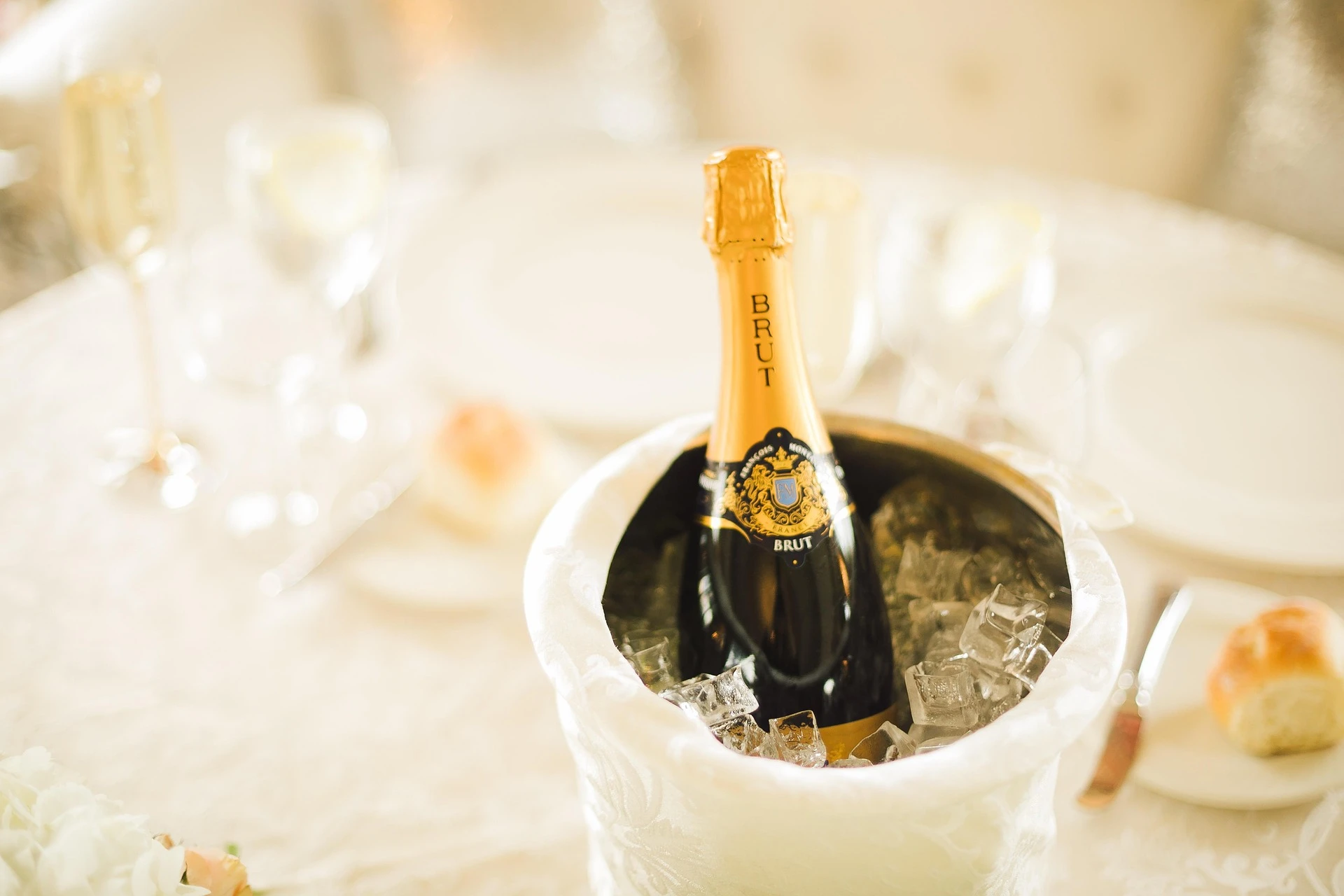
image by Lubov Lisitsa from Pixabay
1. Attire: how should you dress in a high-end restaurant?
This is the number one question people ask on search engines before going to a Michelin-starred restaurant, and that's perfectly normal. First of all: be yourself, but "step it up" because the place you're about to discover "steps up" French cuisine. It's also important to take the time to choose an outfit that shows you off to your best advantage. Not too flashy, not too ordinary, and above all, not stuffy.
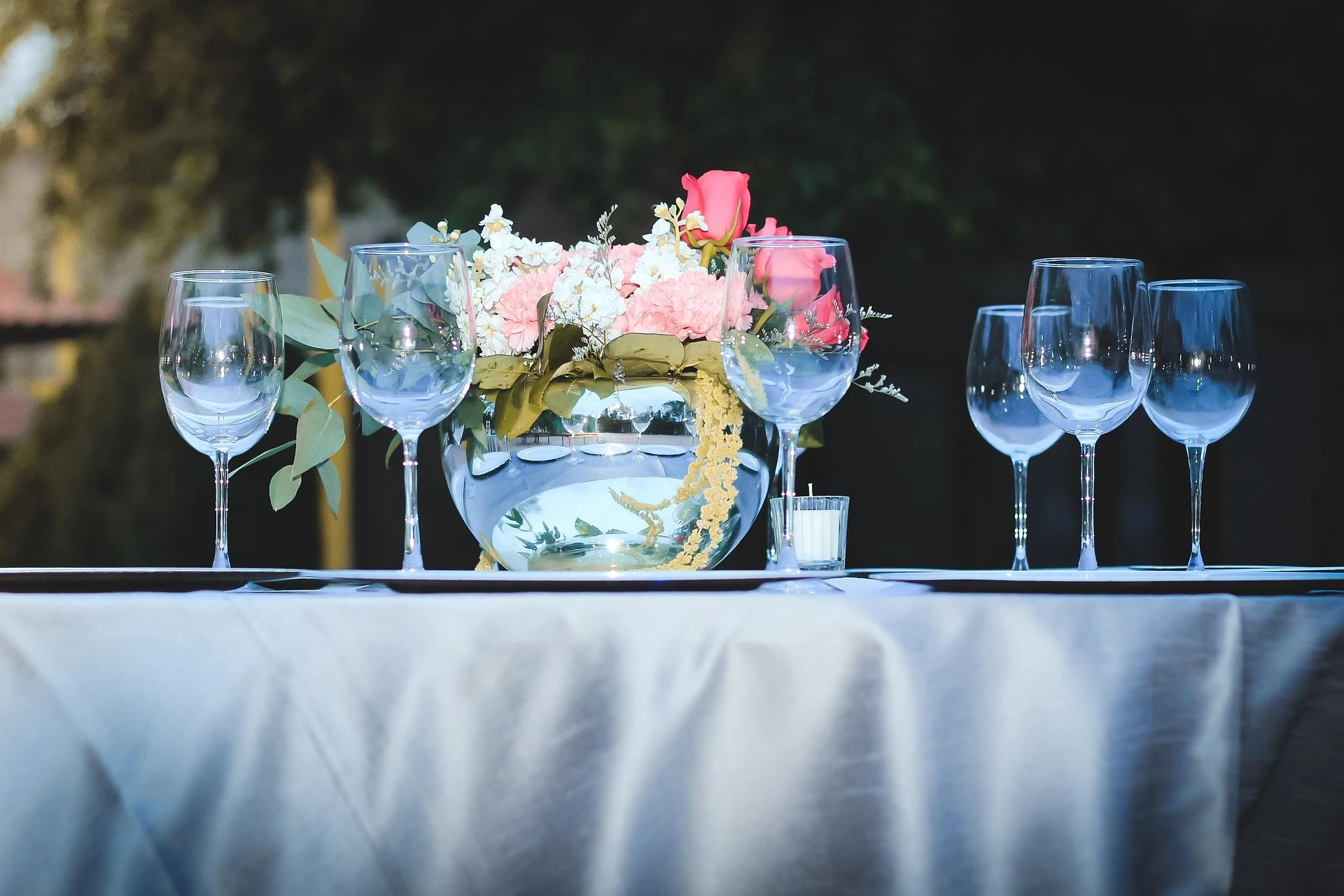
Photo selected by monsieurdefrance.com: by Angie Toh from Pixabay.
3 quick tips on what to wear:
-
Dress code: Casual chic is the minimum requirement. For gentlemen, a jacket is strongly recommended and is often mandatory in the evening at luxury hotels. A tie is no longer mandatory, but it remains a sign of elegance that is appreciated. For ladies, elegant or even chic attire is required.
-
Not allowed: Shorts, sportswear, ripped jeans, and hats are prohibited. Dressing elegantly is a sign of respect for the venue and, above all, for the other guests. You are also part of the decor.
-
The cloakroom: Never keep your coat or bulky bag with you; you must leave them in the cloakroom. In some establishments, you will be offered a solution for your handbag. Either in the cloakroom or on a small bench near you. Never on the floor.
2. The Room Brigade: orchestrating excellence
In professional jargon, we don't talk about "waiters," but rather a brigade, which is composed as follows:
-
The maître d'hôtel: He welcomes you and supervises the dining room. He is your main contact for any requests or reservations you may have.
-
The Sommelier: As the sole wine expert, he will advise you according to your tastes. You will see him come to your table between each course.
-
The Head Waiter: He shows you to your table, accompanies you throughout the meal, and orchestrates the pace of the meal in accordance with your wishes.
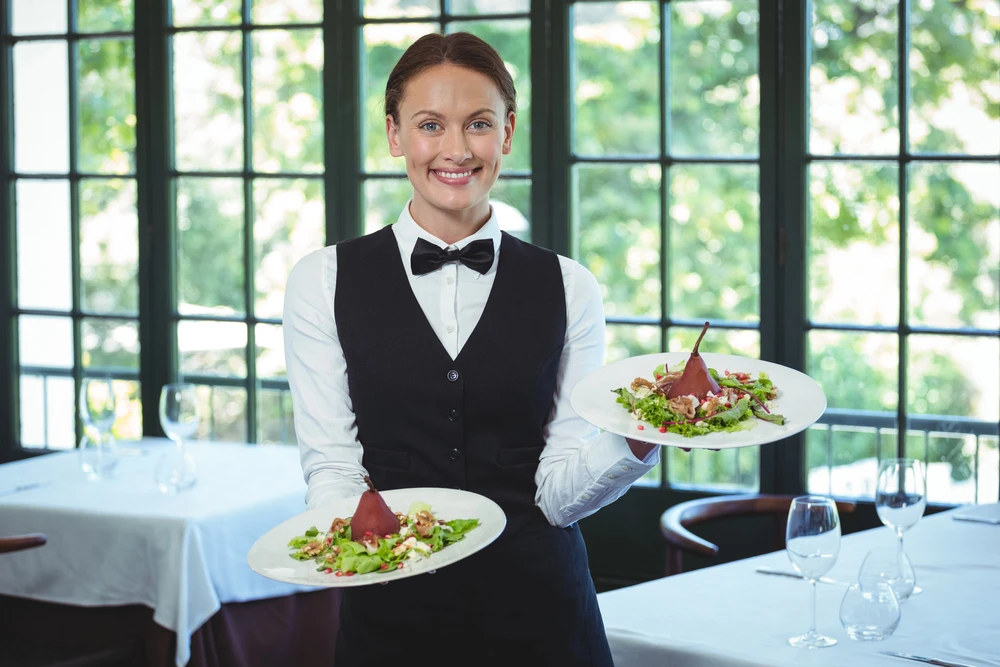
Always treat your staff with respect; they have knowledge that you may not even imagine / Photo selected by Monsieur de France Wavebreakmedia via depositphotos
How to request staff?
Never call out to a server loudly. Above all, do not use the word "waiter" as it is condescending and even old-fashioned. To get their attention, simply make eye contact or discreetly raise your index finger. In high-end establishments, staff members are trained to pick up on even the slightest signals from your gaze. Of course, you will always benefit from saying thank you, or even thank you, sir or ma'am. It's a matter of respect.
3 Staying at the table
A restaurant is a place you share with others, so you're not alone in the world. Behave yourself. When I say "behave," I mean adapt to the setting, which is often hushed, discreet, and quiet. Don't talk too loudly. Don't laugh too loudly. Don't involve your neighbors in your conversation. It's important to respect the setting, which is as much a part of the experience as the food.
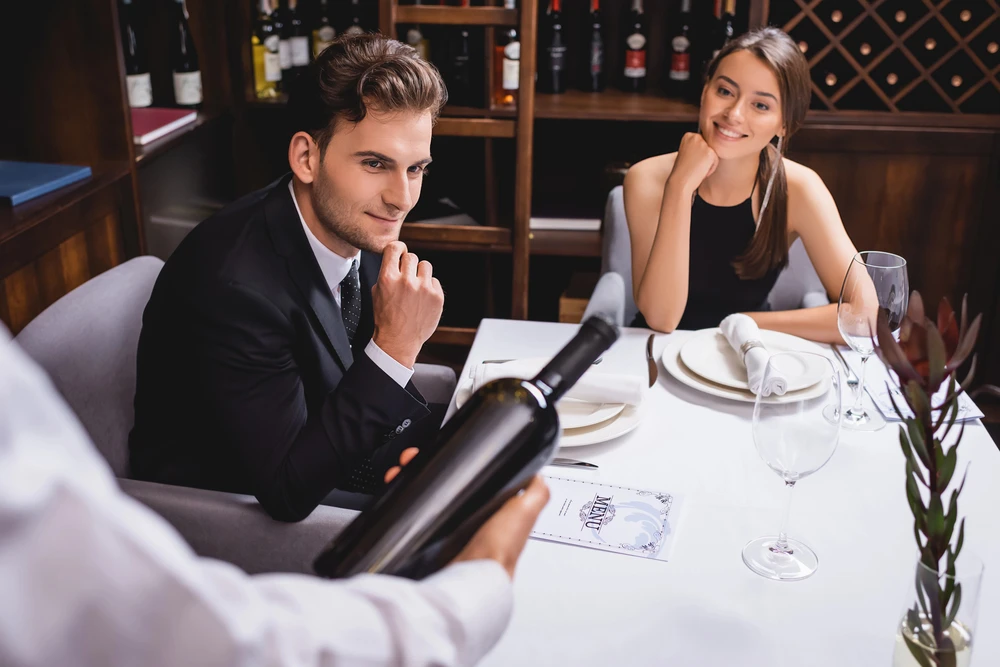
We always listen to the staff when they present what we are going to taste or when they ask you what you like / Photo chosen by Monsieur de France; despositphotos.
There's no need to show off your wealth either: that's not what this is about. People come here to have lunch or dinner and enjoy excellence, not to admire your success (nobody really cares about that). Conversely, don't be overly self-conscious. No one has the right to judge you based on your attire or appearance solely from a financial standpoint. You are here and you have as much right to be here as anyone else. In all circumstances: be polite and respectful, especially to the staff. If the sommelier asks if he can present the wines to you, say yes and listen to him carefully. There's no point in trying to prove that you know his job better than he does. First of all, it's not true, and secondly, it makes you look pretentious.
And how should you behave in a Michelin-starred restaurant?
As in all high-end restaurants. Nothing more, nothing less than what you have just read.
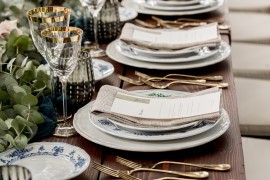
4. Table etiquette: cutlery, bread, and glasses
The table is beautifully set, you'll see. No need to stand at attention, just sit down. It is customary for men to let the lady, or the oldest woman, sit down first.
Aligning the lenses
The glasses are arranged from left to right, from largest to smallest:
-
On the left (the largest): The water glass.
-
In the middle: The glass for red wine.
-
On the right (the smallest): The white wine glass.
The champagne glass is often placed slightly behind or to the side of the other glasses.
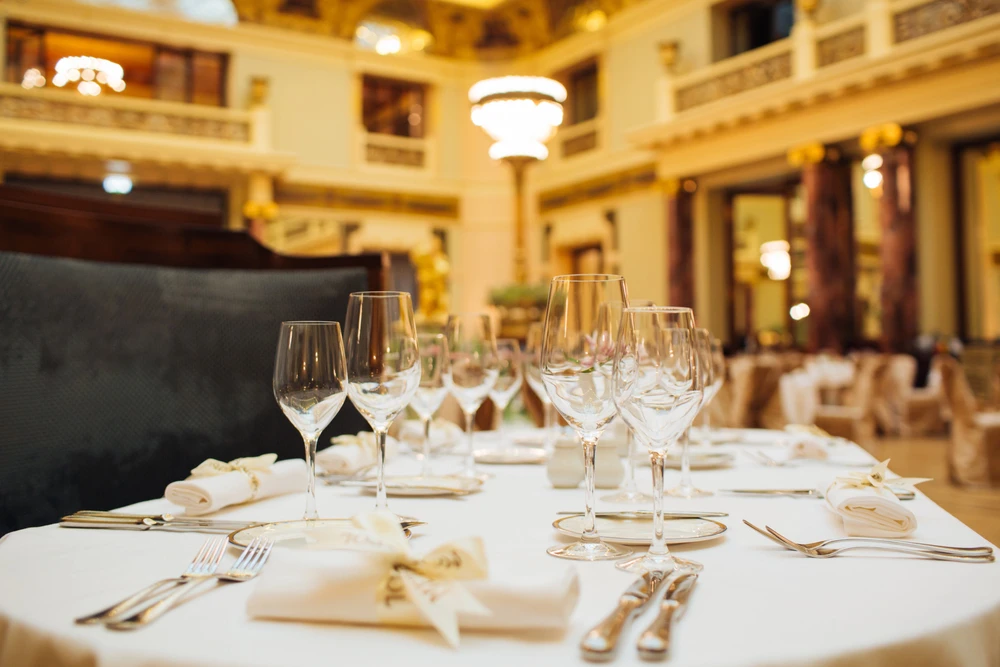
Photo selected by monsieurdefrance.com; Tratata_Msc via depositphotos
The art of cutlery and bread
Don't panic when you see the number of pieces of cutlery. Start using the cutlery furthest away from your plate. In any case, the cutlery will be changed according to your order. For example, if you have ordered a meat dish, you will be brought and set before you a set of cutlery including the appropriate knife. The same applies to a fish dish. Leave it to the staff.
Bread is an accompaniment, not an end in itself. It is always placed on a separate plate, often with a little butter. It will be replenished during the meal. Never cut it with a knife. Break it by hand over the plate to avoid crumbs (in any case, crumbs will be regularly removed during the meal).
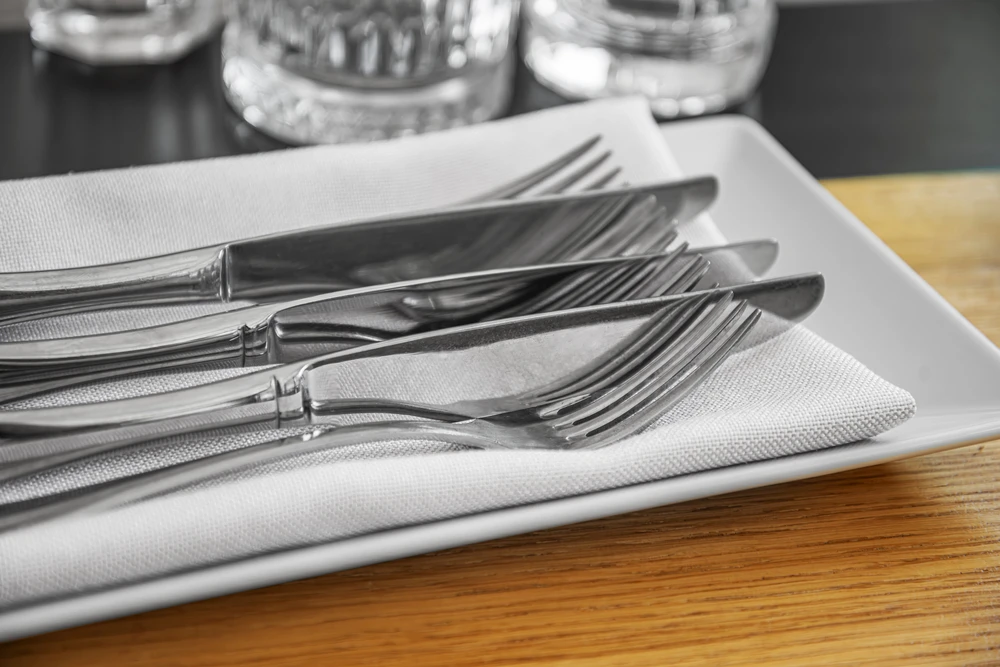
Photo chosen by Monsieur de France: believeinme via depositphotos
5. Five things he doesn't do at restaurants
-
Serving yourself: Never help yourself to water or wine on your own. This would imply that the service is inadequate. You will find that the staff will always arrive at the right moment to serve you when you need them.
-
Returning a dish or wine loudly: If the cooking is not to your liking or if the wine has a fault, report it immediately to the maître d'hôtel or sommelier with the utmost courtesy. Be discreet so as not to disturb the other guests.
-
Do not listen to the staff: when they present the dish you are about to taste and describe its ingredients, listen respectfully. The same applies when they present the wine that is served to you. Being at your service is a noble profession, but it does not make them subservient.
-
Putting your phone on the table: out of the question! First of all, there's no room, and unless you're a businessman or businesswoman who needs to sell a yacht in a minute, there's no reason to do so.
-
Making phone calls when you are at the table: just as you would not leave your phone on the table, you should leave the room when you need to use it.
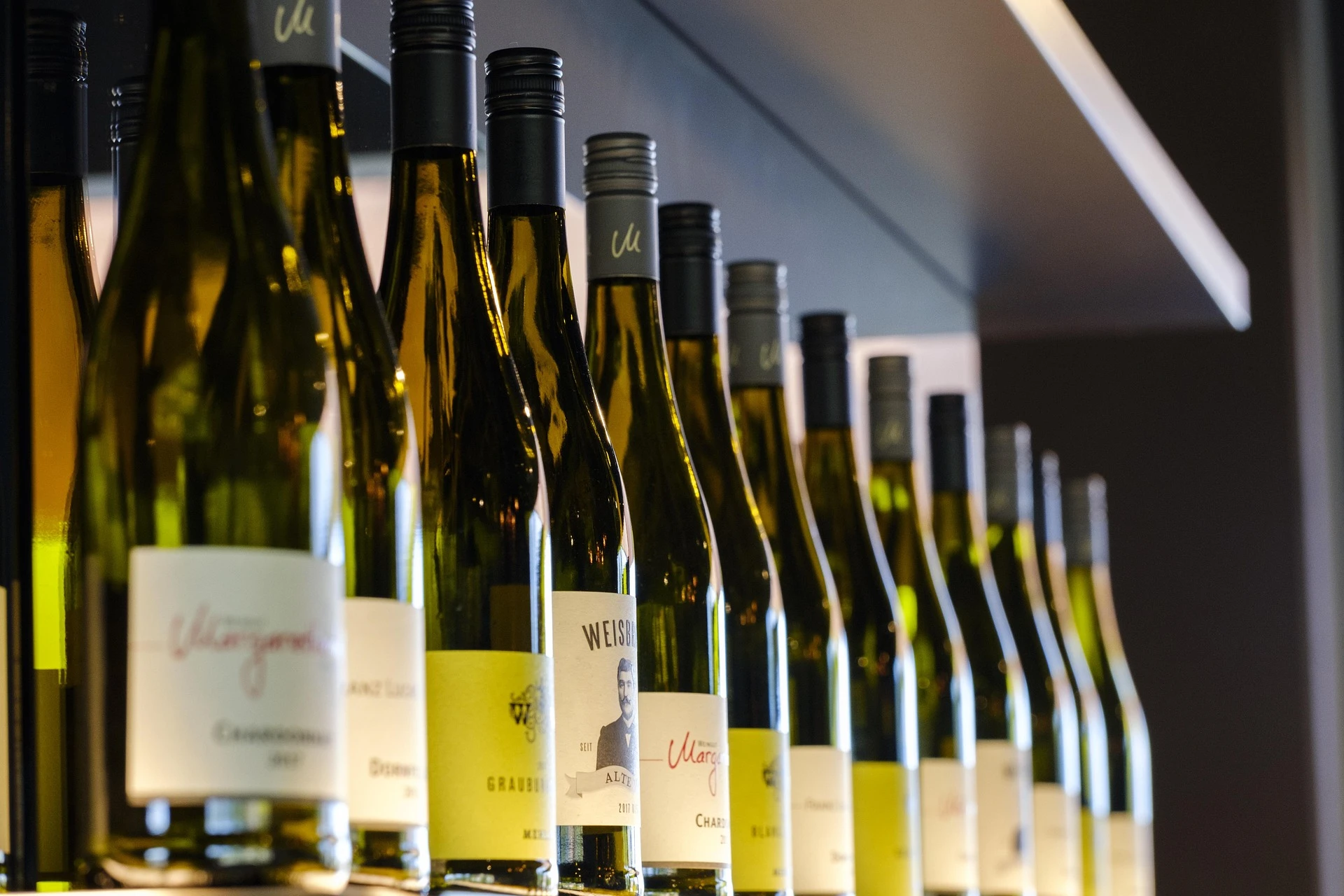
Image by Bruno from Pixabay
5. The final act: the bill and the tip
You will always be asked if you would like coffee. Then it will be time to pay, when you ask, and this will be done at your table.
If the meal is shared, divide it up and don't dwell on calculations and "you took more than me"; this is not the place for that, and if you're frugal, you shouldn't have come. If you are inviting someone, it is customary to tell the head waiter so that he can bring a blank menu, i.e., one without prices, to the person you are inviting, so that they do not feel obliged to choose the cheapest option rather than the one that suits them best.
-
Tipping: In France, service is included. However, in a luxury hotel or Michelin-starred restaurant, it is customary to leave a "courtesy tip" to show your appreciation for excellent service.

Photo chosen by monsieurdefrance. ArturVerkhovetskiy via dépositphotos
❓ FAQ: Everything you're afraid to ask at a restaurant
Do I have to finish everything on my plate?
In haute cuisine, portions are carefully calculated. It is polite to finish your plate to honor the chef's work, but if you can't manage it, don't force yourself. However, don't ask for a doggy bag in a Michelin-starred restaurant, as this is almost never done.
Who orders first?
When dining as a couple, it is customary for the woman to order first.
Tradition dictates that women and guests are presented with menus without prices. It is the host (the person who invites) who orders last, after allowing their guests to choose.
What should I do if I drop a piece of cutlery?
Never pick up cutlery that has fallen on the floor. Discreetly notify a member of the staff, who will immediately bring you clean cutlery.
Can we take photos of the dish for social media?
It is tolerated if it is done extremely quickly and without flash. Do not stand up to take a photo and do not disturb the hushed atmosphere of the room. Just don't draw attention to yourself, that's all we ask.
How should you place your napkin when leaving the table at the end of the meal?
At the end of the meal, do not fold your napkin as if it were new. Simply place it crumpled to the right of your plate.
Is it rude to ask for salt or pepper?
In a Michelin-starred restaurant, the dishes are seasoned with precision by the chef. Asking for salt or pepper before even tasting the food may be perceived as criticism of his work. Taste it first!

The advice of Monsieur de France
True elegance lies in kindness. A smile and a sincere "thank you" to the staff are the best guarantees of an unforgettable experience.
Jérôme Prod'homme Specialist in French heritage, gastronomy, and tourism. Find all my discoveries at monsieur-de-france.com.
Illustrative photo: depositphotos
Jé