What are the three French meals of the day?
In France, it is customary to eat at three specific times of the day. That said, we live in modern times, and sometimes we only eat twice a day. It is also possible to eat outside of these designated times, which is one of the great advantages of bakeries. You can buy something to treat yourself whenever you want: croissants, pain au chocolat, etc. And there are other sweet specialties, which you can find listed here. In general, snacking throughout the day is not very French. We prefer to have specific times for meals. One of the specific features of French meals is that they are eaten together. The whole family is there, and no one eats at a different time. It's also a time for discussion. A funny thing is that, often, when they eat, the French talk about... food. Listen to them in a restaurant, and they're bound to talk about a dish that the one they're eating reminds them of, a restaurant they've tried, or a culinary memory. Finally, we take our time and focus on what we're doing.
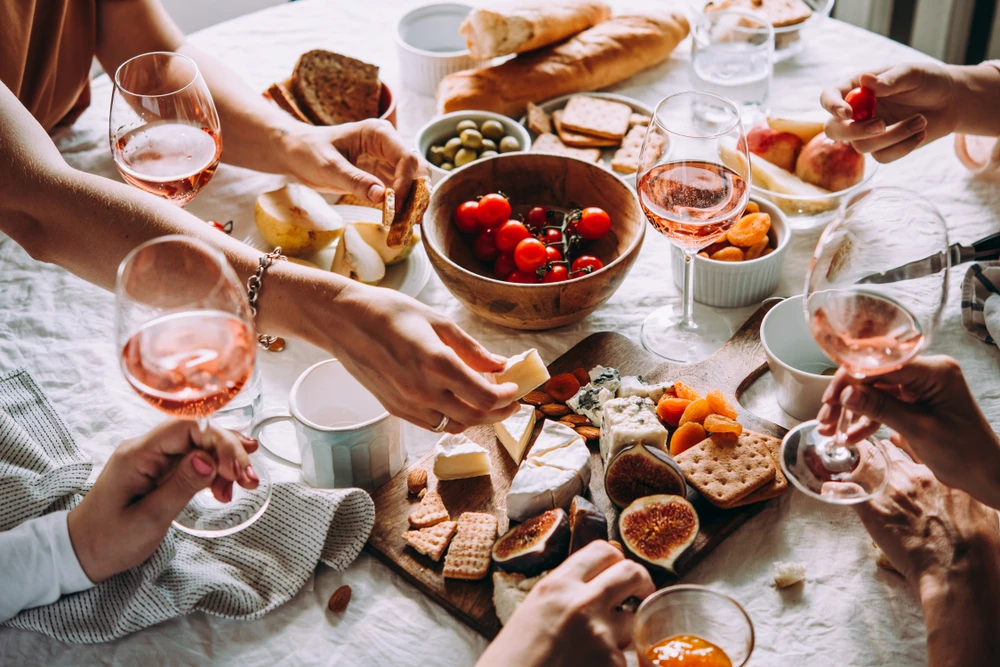
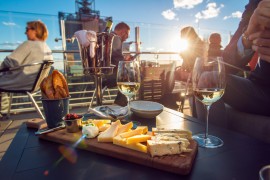
Apéro is now mainly enjoyed with wine / photo by Yulia Grigoryeva/Shutterstock.com
Breakfast
Breakfast is eaten in the morning, when we "break the fast," in other words, we break the night's fast. On a daily basis, it's more of a hot drink, such as hot chocolate, coffee, or tea. It is accompanied by buttered toast (butter with salt in the west, particularly in Brittany) or toast with jam. Baguettes are therefore essential, although some French people also eat sandwich bread or cereal for breakfast. In hotels, you will of course be offered the continental breakfast that is found everywhere, but you will always have pastries (pain au chocolat, croissants, etc.) as well. The most popular drink for French breakfasts is coffee, but fruit juice is increasingly found on French tables in the morning.
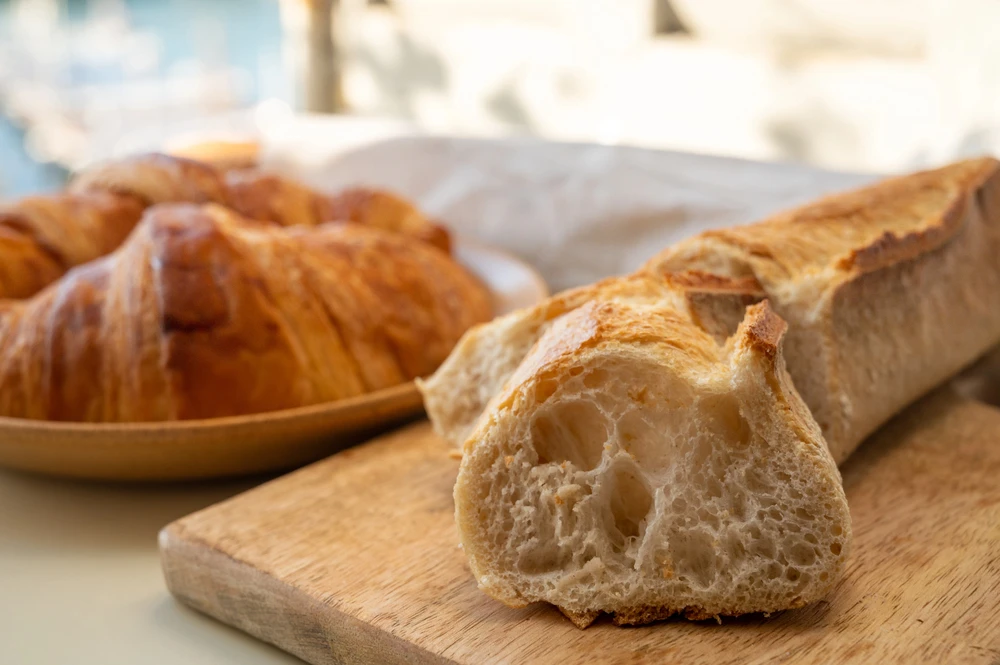
Baguettes remain an essential part of the French breakfast. Photo selected by monsieurdefrance.com: foto-pixel.web.de via depositphotos
Croissants and other delicacies are more for the weekend, when you have time. They are made with a lot of butter, so they are very high in calories, and they are a way to enjoy yourself when you wake up. It's even a sign of affection to go to the bakery to get croissants for your loved ones or family. Generally, you count on 1 or 2 croissants per person, which are sometimes cut in half to add jam. Try it, it's delicious!
What time is breakfast in France?
Between 7 a.m. and 10 a.m. Obviously earlier during the week, for work. Among French people who work very early, for example around 6 a.m., there is time to eat a little mid-morning. Often something savory.
Lunch
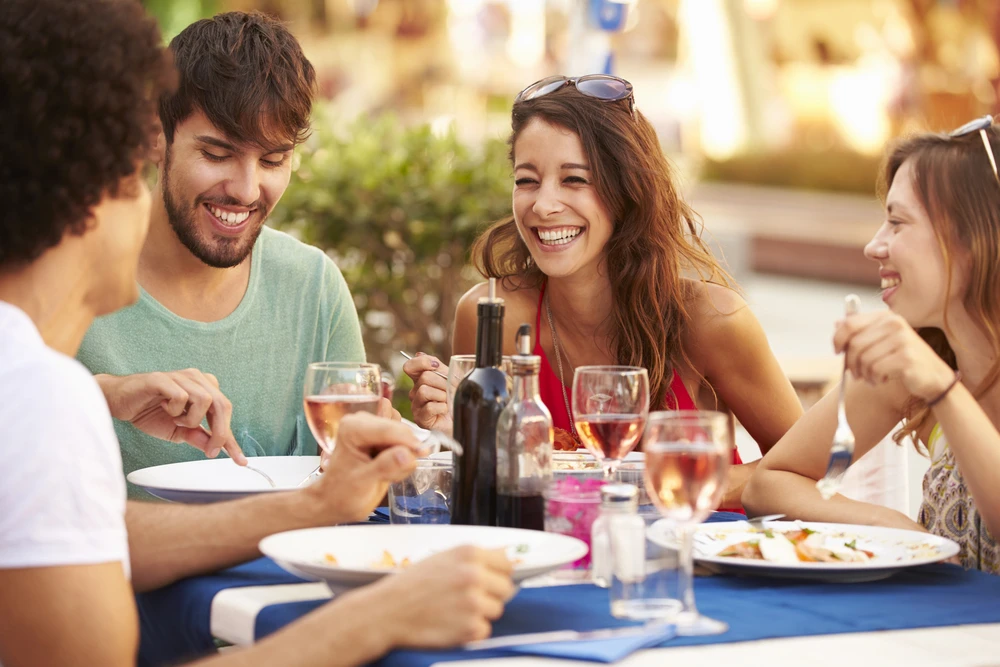
Lunch in summer on a terrace or in a garden is an infinitely French pleasure / Photo selected by monsieurdefrance.com: depositphotos
If there's one meal we don't like to skip, it's lunch. Of course, we could just grab a sandwich (a "casse-croûte"), such as the famous jambon-beurre (a baguette cut in half, spread with butter, with a slice of ham inside, sometimes with a few pickles or slices of Emmental cheese), but we prefer to sit down at the table. France is one of the countries in the world that spends the most time at the table. We start with savory dishes and finish with sweet ones and when we have time, the meal is structured as follows:
- The starter: often a salad, a little pâté, a simple but always savory dish.
- The main course: this is the most important part of the meal, traditionally meat or fish, with vegetables served on the side.
- Dessert: the sweet part of the meal, for example a pie, but it can also be fruit.
- Cheese: there is plenty of choice in France. For everyday consumption, there are often one or two cheeses to choose from, but when there is time, people like to choose from a cheese platter (3, 5, or 7 different cheeses).
- On weekends: or when we have time, we like to have an aperitif before lunch, with a glass of wine (or other alcoholic beverage) and some appetizers (chips, peanuts).
We often finish lunch with a quick coffee. It's a bit like a "transition" from the meal itself, where we talk about lighter topics, signaling that the meal is coming to an end. This meal is sometimes a real working session. Colleagues talk about work, or clients discuss business. Being invited to lunch or dinner by a partner is a sign of consideration. We remain professional, but by suggesting we eat together, we reveal a little more of our personal side.
What time is lunch in France?
Between 12:00 p.m. and 2:00 p.m. We usually take an hour for lunch. Of course, when we're in a hurry, it's less.
Dinner
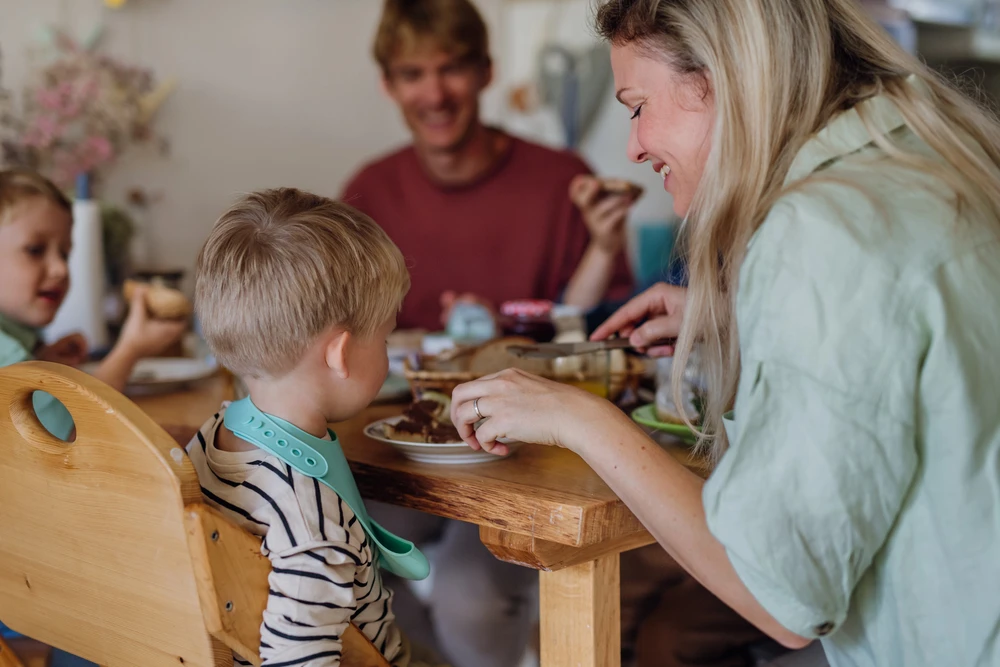
Dinner is often a time dedicated to family / Photo selected by monsieurdefrance.com: halfpoint via depositphotos
Same principle as for lunch, but often lighter. Increasingly, it is a single dish with dessert, but there are still many French people who have a starter, main course, cheese, and dessert, but the quantities are smaller. It is the ultimate family meal since everyone is at home. So the family gets together, with the children if there are any, and they chat. On weekends, or when entertaining at home, it's quite the opposite. The meal is longer than lunch. It is accompanied by wines chosen by the person who invited you (even if you bring wine as a gift, it is not customary to serve your own wine at the table; your host chooses the wines). You may even finish the meal with a digestif, in other words, a stronger alcohol, which is supposed to aid digestion.
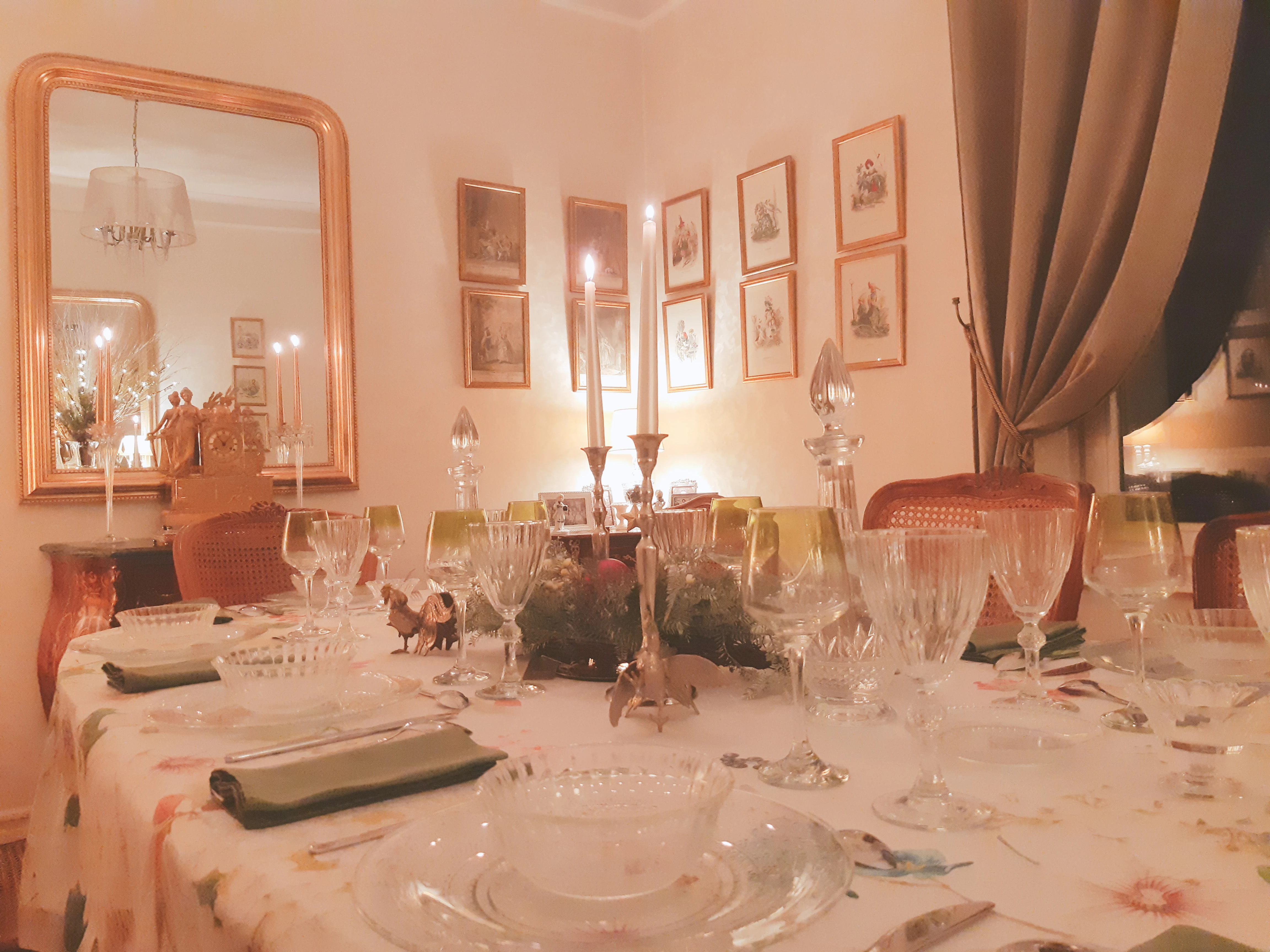
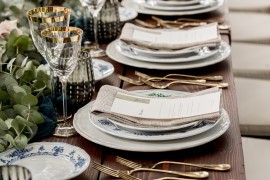
.A table set in the French style for an evening dinner party at home / Photo selected by monsieurdefrance.com: Jérôme Prod'homme (c)
What time is dinner in France?
Between 7:00 p.m. and 9:00 p.m.
And wine with French meals?
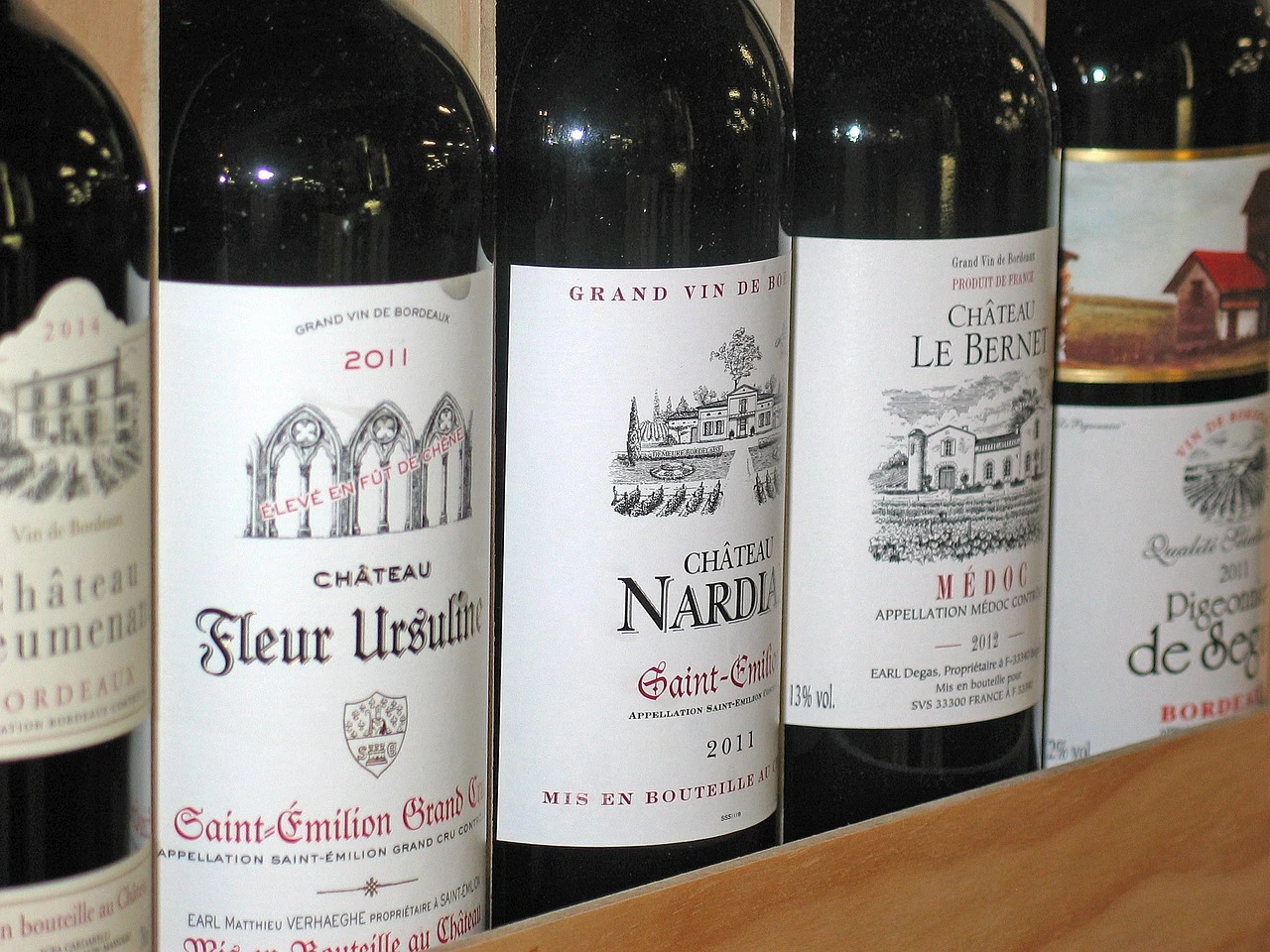
Wine is sacred! Choose wisely and don't be stingy! Image by Kerstin Riemer from Pixabay
Contrary to popular belief, we don't drink wine with every meal. Not only would that be bad for our health, but we also have to stay below the legal limit for driving, for example. Wine is increasingly being consumed with meals where you have time and after which you know you can get home easily, either by having someone drive you, taking public transportation, or taking a taxi. In any case, when drinking wine, it is customary to choose your wine according to the dish. For example, red wine is better with meat, and white wine is better with fish. When you choose to make room for champagne, it is ideal as an aperitif and/or at the end of the meal.
What is an aperitif in France?
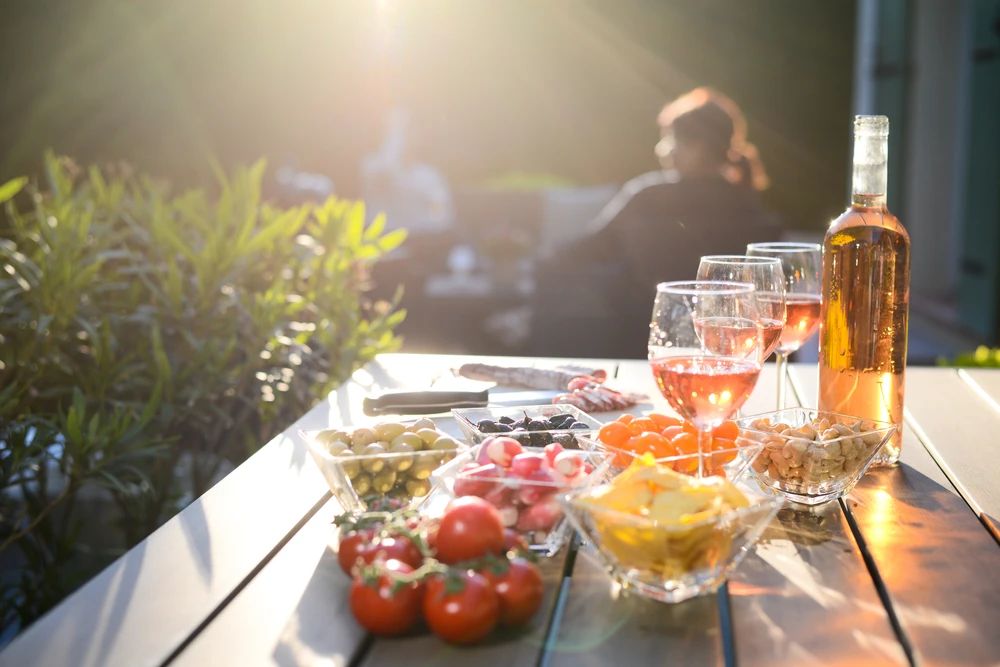
The aperitif is ready / photo by JP WALLET/Shutterstock.com
To learn everything there is to know about aperitifs, or "apéros" as they are called in France, click here. It can consist of just a drink, but it is more common to accompany it with snacks: salted peanuts, chips, sausage, olives, tapenade, etc. Everyone chooses and picks at the food. It can even be a meal in itself, a bit like the Spanish do with tapas, offering several items to eat, sometimes cold cuts, with bread, such as sliced baguette.
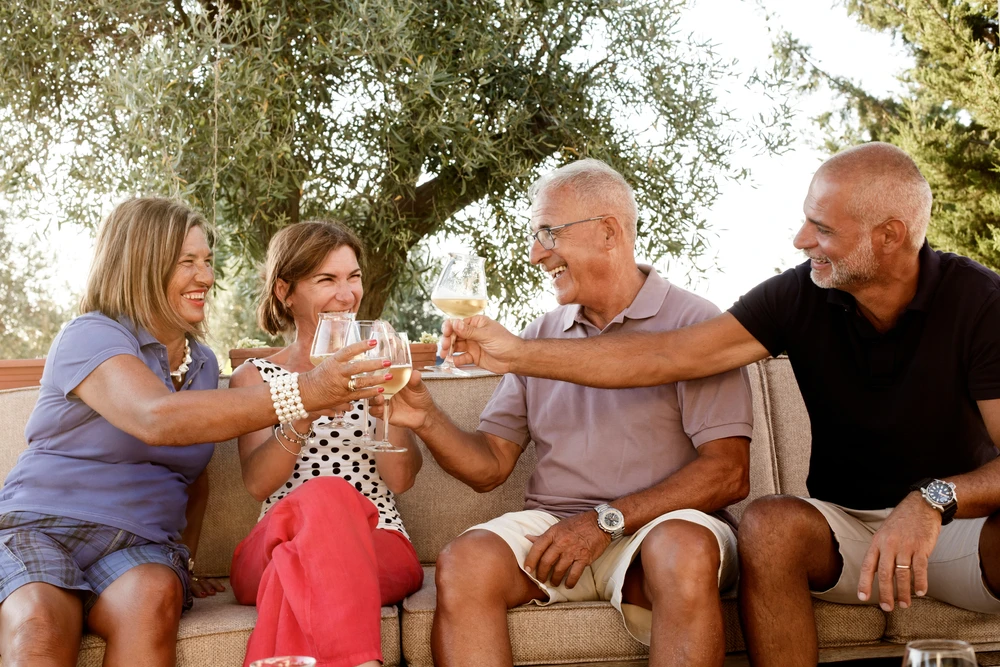
No age limit for happy hour! photo Alessandro Pintus shutterstock.com
What time is cocktail hour in France?
At noon starting at 11 a.m., in the evening starting at 6 p.m.
What are the opening hours of restaurants in France?
Traditional restaurants are open during meal times, typically from 12:00 p.m. to 3:00 p.m. and 7:00 p.m. to 9:00 p.m. They may be open later in the evening, especially in tourist areas, but outside of very touristy locations, they are closed in the morning and afternoon. In general, you go to the entrance and announce how many people want to be seated. You are then directed to the table chosen by the restaurant owner. If the restaurant is full, you will be told, and sometimes they can give you an idea of when you might be able to get a table. This will not necessarily be a precise time, as there are no set service times for customers; they can stay at their table as long as they like if they have not finished their meal.
How is coffee consumed in French cafés?
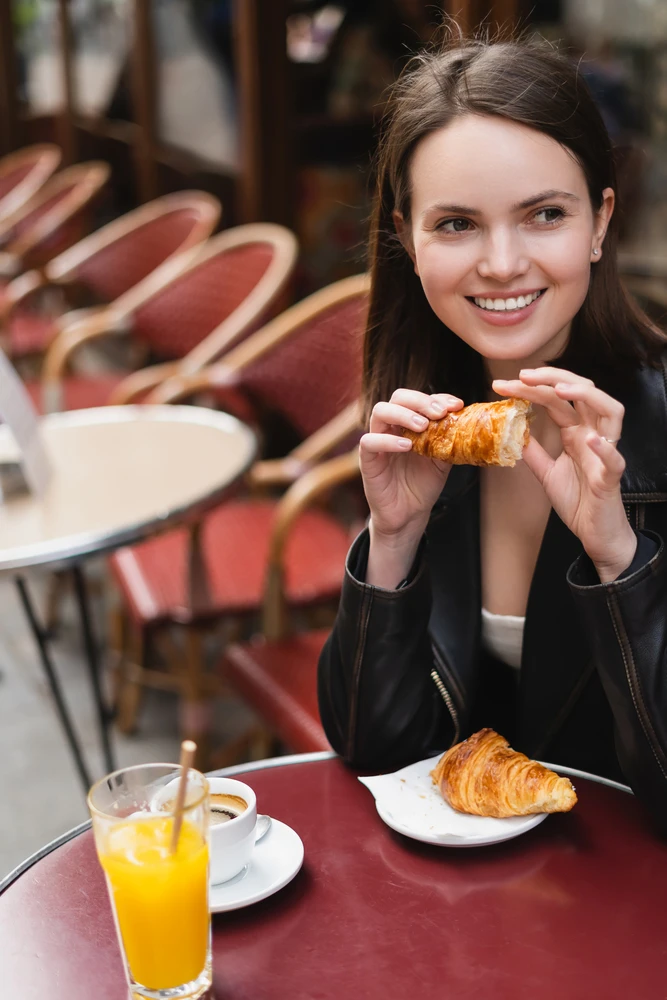
There's nothing like a quick coffee in a French café on a cool morning / Photo selected by monsieurdefrance.com: OzerchukHannaBO via depositphotos
This often surprises tourists, especially Americans, but in France, coffee is drunk sitting down, particularly in a café, where it will be served at your table or at the counter (i.e., standing up). In the morning, you may be offered breakfast with coffee, including a croissant. Coffee to go is mostly offered by foreign companies, and even though it is becoming more common, it is still a little strange for many French people.
Alcohol abuse is dangerous for your health / Drink in moderation / For your health, exercise and eat 5 fruits and vegetables a day.