What is Teurgoule? It is a Normandy specialty made of round rice, whole milk, and cinnamon. Its secret? A 5-hour slow cooking process in a stoneware dish, creating a unique caramelized crust.
The Legend of Teurgoule: Why it "twists the face"
If we believe our different culinary books, the teurgoule, a very old Norman recipe, is so good that it "twists the ghoul" of pleasure, in other words, we make faces of joy by eating it (in Normandy, the "ghoul" is the face). Others say that it "twists the ghoul" because it is necessary to eat it very hot and that one burns the tongue a little... The main thing is that everyone says it is delicious. Nothing is more common than milk in Normandy. There is a real river of milk flowing there as the grass is so fat and makes the joy of the famous Norman cows with their pretty brown spotted dress. And this milk, whole milk ! Not light!

Cinnamon and rice came from afar to the ports of Normandy in the 19th century. Here, The port of Dieppe in Normandy (Seine-Maritine) painted around 1826 by William Turner (1775-1851)
A Global Legacy: How Rice and Cinnamon Reached Normandy
The Normans had the idea of mixing their famous milk with things that were very original for the Normans of the 19th century and that arrived in the numerous ports of the region, notably Le Havre, Dieppe... Rice, cinnamon and vanilla came by boat at the end of the 18th century from far away places. It is perhaps one of the greatest culinary talents of France to be curious about new flavors and to assemble them together to make culinary marvels like teurgoule and many other dishes.

The Authentic Teurgoule Recipe: Mastering the Slow-Cook
For 6 people
The Essential Ingredients
- 140 g of round rice (you can take classic rice, but round rice is more crunchy) rather than arborio rice.
- 1 vanilla pod
- 1 pinch of cinnamon
- 1 liter of whole milk, especially not semi-skimmed
- 90 g of brown sugar (you can replace it with caster sugar, but you'll have to do...)
- 1 pinch of cinnamon
- 25 grams of semi-salted butter
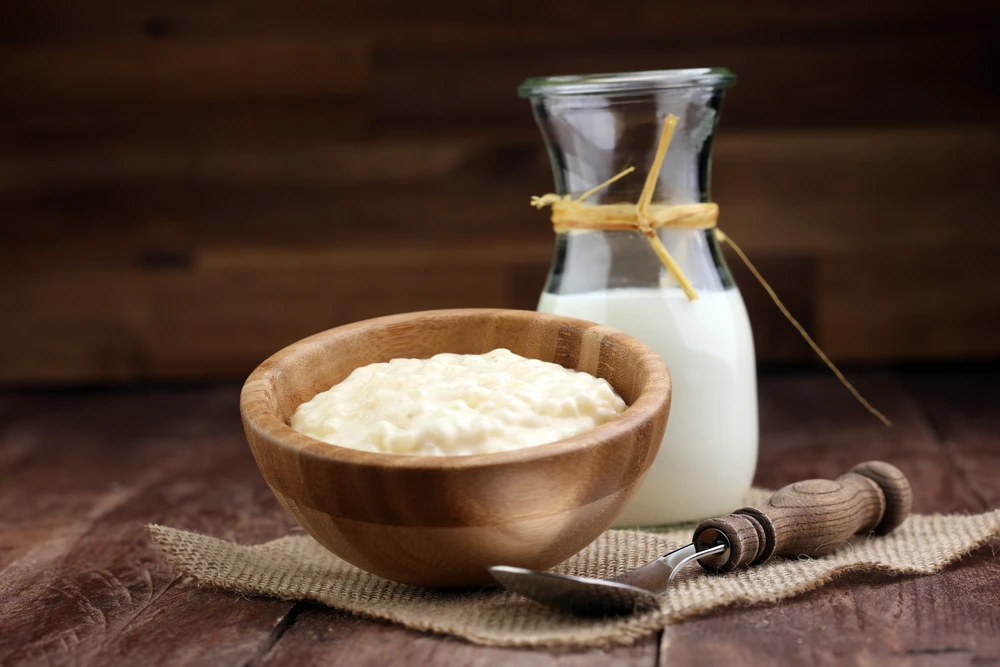
The Teurgoule: a good dish to be eaten while still warm / Photo by beats1/Shutterstock
Step-by-Step Preparation
- Start by preheating your oven to 150°C (roughly Thermostat 5).
- Take a pan and fill it with cold water
- Put the rice in it and bring to a boil for about 2 minutes (3 if you like soft rice).
- Put the rice in a colander, rinse it, and drain it.
- Take your vanilla bean and split it in half (lengthwise).
- With the tip of a knife, scrape out the seeds that are inside
- Take a saucepan (but a cast iron pot is better)
- Boil the milk and put in the vanilla seeds and the split pod.
- When the milk has boiled, take it off the heat, remove the vanilla pod
- Then add the rice cinnamon, sugar, and brown sugar.
- Mix
- Put it in an oven dish, the best is an earthenware dish.
- Take 20 or 30 grams of butter (semi-salted is better) that you cut into small cubes that you put evenly on top of the dish
- Bake for 2 hours at 150°C, then 1 hour at 120°C
Expert Tips for Success
Remember to regularly break the crust that forms on top of the dish.
You can add some candied citrus peels, it's not bad and it gives some taste. But plain is so good!
Stoneware dishes: Your ally for perfect cooking
To make a successful teurgoule, the container is crucial. Traditionally, a tall Norman stoneware pot is used. Its density allows for slow and even heat distribution, preventing the milk from boiling too vigorously and allowing the rice to cook gently for hours.
La Fallue: The inseparable Norman brioche
Teurgoule is never eaten alone. It is always accompanied by Fallue, a local brioche with a dense crumb. Less rich in butter than Parisian brioche, it serves to soak up the creaminess of the rice. It is the perfect combination of crunchy and melt-in-the-mouth.
Sorry for the translation errors, our translator stayed a long time in Normandy to check that the recipe was good and he tasted a lot the famous cider of Normandy. He is still a little ... Drunk!

FAQ TEURGOULE
What type of rice is best for Teurgoule?
Always choose short-grain rice. Long-grain varieties won't release enough starch to achieve that creamy texture after five hours in the oven.
Why is my Teurgoule dry instead of creamy?
You must use whole milk. Low-fat options lack the fat needed to emulsify with the rice starch. Also, keep the oven temperature low to avoid rapid evaporation.
Learn more about French cuisine
The complete guide to French cuisine
Traditional French recipes you must try
Discover the secrets of French desserts
The gastronomic meal of the French (UNESCO heritage)
10 essential French cheeses you should taste
Explore all French recipes and culinary traditions
Monsieur de France Tourism, lifestyle, gastronomy, history... France is wonderful.