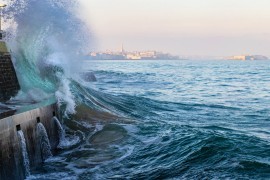
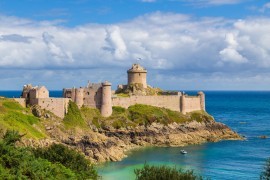
Understanding tides: high tide, low tide, and tidal coefficients
There is nothing more fascinating than watching the ocean recede as far as the eye can see, leaving behind a desert of sand, before returning to crash against the cliffs a few hours later. For anyone who loves the French coastline, from the North Sea to the Atlantic, understanding this phenomenon is not just a matter of curiosity, it is a necessity. Whether you want to visit the Grand Bé or Petit Bé in Saint Malo, see Mont Saint Michel at low tide, or whether you are a fan of beachcombing on the shores of the English Channel or the North Sea, a landscape photographer or a sailor, the tidal coefficient is your compass.
In this comprehensive guide, we will decipher sailors' jargon, understand the water cycle, and explore the places where nature offers the most beautiful high tides in France: the Bay of Mont-Saint-Michel and Saint-Malo.
1. Low tide and high tide: the water cycle
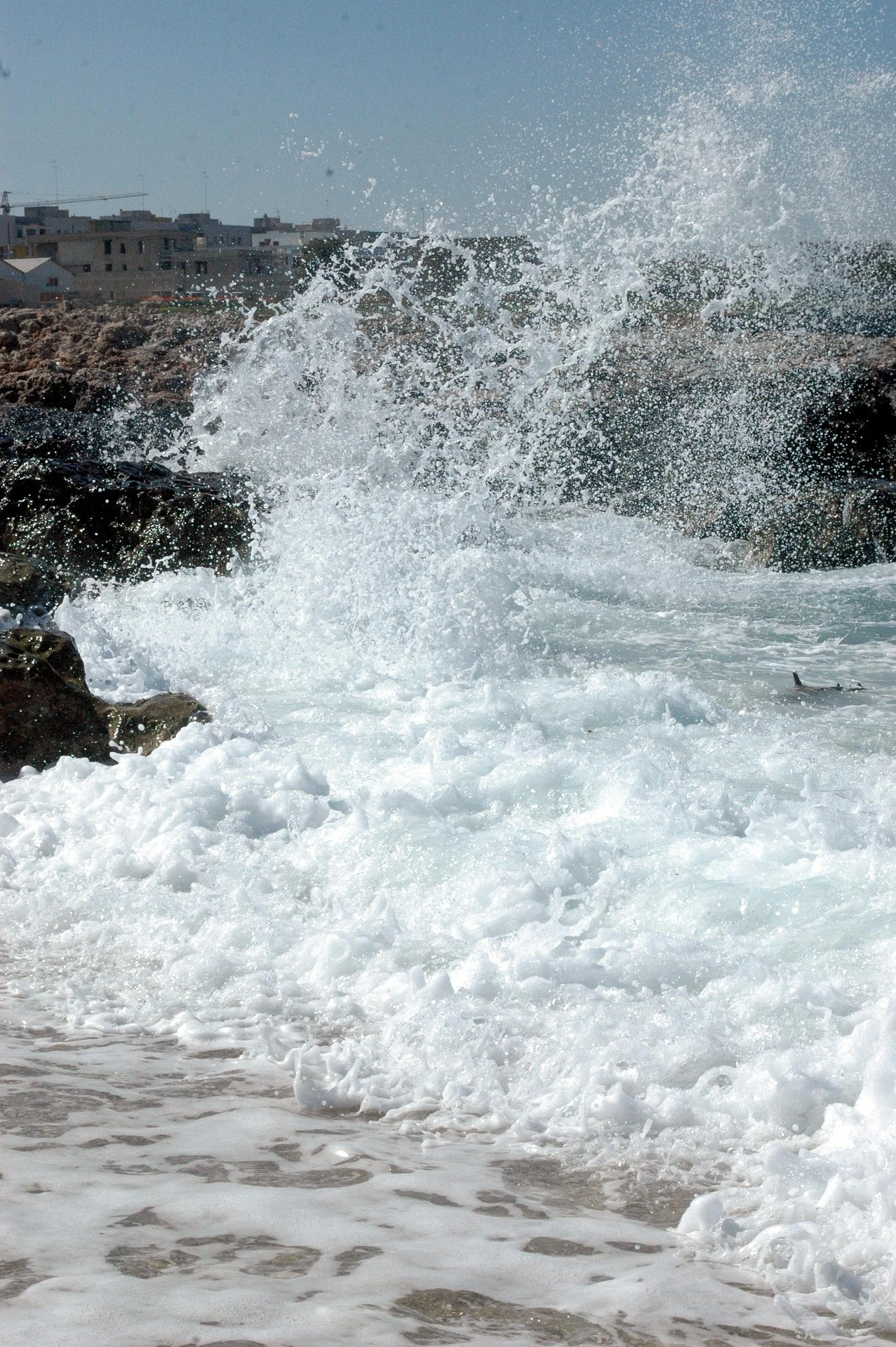
The sea is rising faster than we think, be careful / Photo chosen by Monsieur de France: Pixabay photo
Before diving into coefficient calculations, it is essential to clearly define what we observe on our coasts. The tide is a constant "back-and-forth" movement.
High Tide (Full Sea)
This is the moment when the water reaches its highest level on the shore. The beach disappears, the waves lap at the dykes, and the ports are flooded. This is the moment when the rising waters stop before reversing direction.
Low Tide
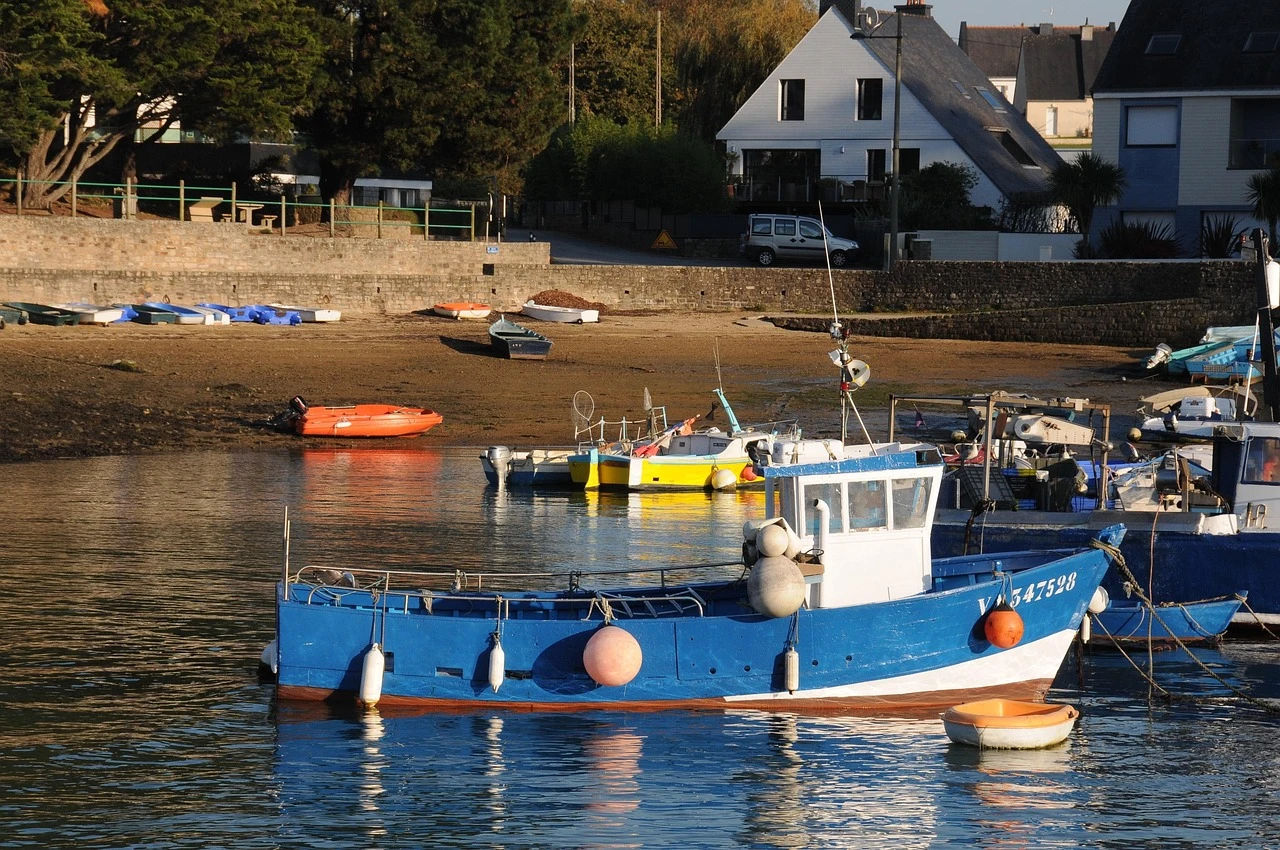
In this Breton port, the tide is low / Photo chosen by Monsieur de France: by K_DL from Pixabay
Conversely, this is the lowest point. The sea has receded, revealing the foreshore (the area between the two tide lines). This is the ideal time to explore the shells, rocks, and sandbanks. It is also the time when boats can find themselves without water beneath them. You should always keep an eye on the tide when mooring somewhere on an island in Brittany or Normandy, for example, because you could find yourself high and dry and stuck for at least six hours!
How long does a tide last?
The complete cycle of a tide (from one low tide to the next) lasts approximately 12 hours and 25 minutes. This is called the tidal period. If we break down this movement:
-
The Flow (or amount): The tide rises for approximately 6 hours and 12 minutes.
-
Slack water: This is a brief period of a few minutes between two movements when the water level appears to stagnate. There is slack water at high tide and slack water at low tide.
-
The ebb tide (or outgoing tide): The sea recedes for approximately 6 hours and 12 minutes.
Why do tide times change every day? Since the total cycle lasts 12 hours and 25 minutes, rather than exactly 12 hours, high tide occurs approximately 50 minutes later each day than the day before. For this reason, it is essential to consult a tide calendar that is updated daily.
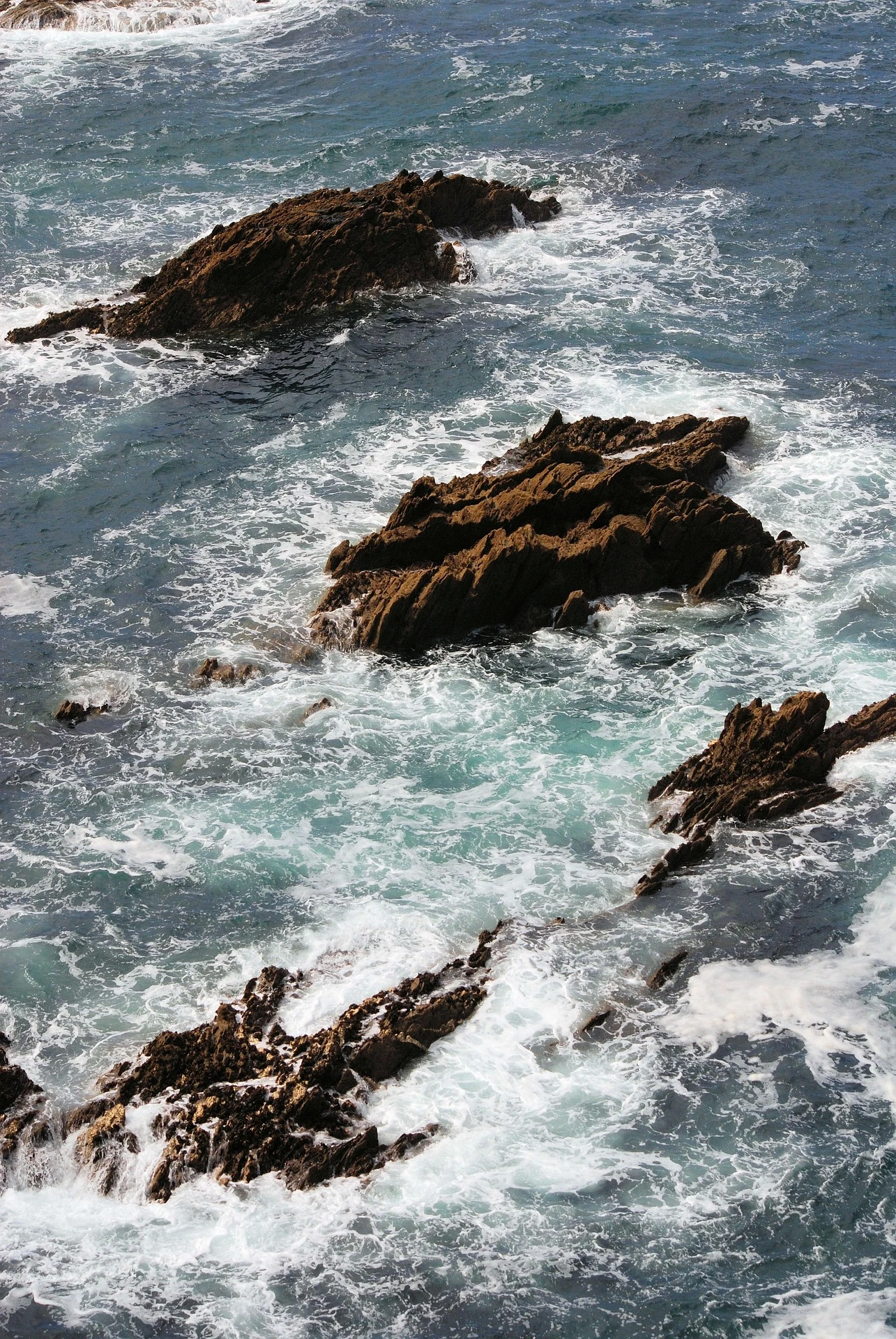
Photo selected by Monsieur de France Stevebidmead via Pixabay
2. The tidal coefficient: the French unit of measurement
If you consult a tide table, you will see a number between 20 and 120. This is the tidal coefficient. Introduced by French hydrographers (the SHOM), it allows the magnitude of the tide to be quantified universally along our coasts.
How should the figure be interpreted?
The coefficient indicates the tidal range, i.e., the difference in water height between high tide and the following low tide.
-
From 20 to 45 (Morte-eau): The difference in level is small. The sea does not recede far.
-
From 45 to 90 (Average tide): This is the standard regime.
-
Above 90 (High tide or Spring tide): The amplitude is strong. The coastline changes dramatically, offering exceptional areas for shore fishing.
-
120 (Maximum): This is the maximum theoretical coefficient.
3. Focus on Mont-Saint-Michel Bay and Saint-Malo
If there is one place in the world where the tidal coefficient really comes into its own, it is in the Gulf of Saint-Malo. Here, the tidal range can reach 14 meters during high coefficients!
Mont-Saint-Michel: becoming an island once again
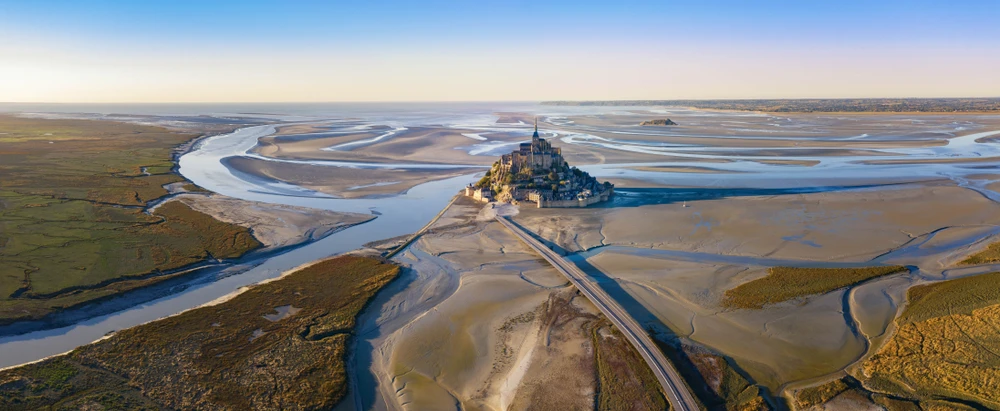
The tidal range is 14 meters in Mont Saint Michel Bay, and because it is flat and large, the sea recedes very, very far / Photo selected by Monsieur de France shutterstock.
When the tide reaches over 110, Mont Saint-Michel becomes an island once again. The water submerges the access bridge and cuts off this world heritage site for one to two hours. It is a striking sight, with the abbey appearing to float on a silver mirror. Victor Hugo said that the tide rises "at the speed of a galloping horse"; while this is a metaphor, the speed of the water in the bay remains a deadly danger for the unwary.
Saint-Malo: the theater of waves
In Saint-Malo, spring tides are synonymous with a spectacular sight. When the tide rises with a high tidal range and the wind picks up, the waves crash against the breakwaters and ramparts of the city. The spray can reach heights of several dozen meters along the Sillon causeway.
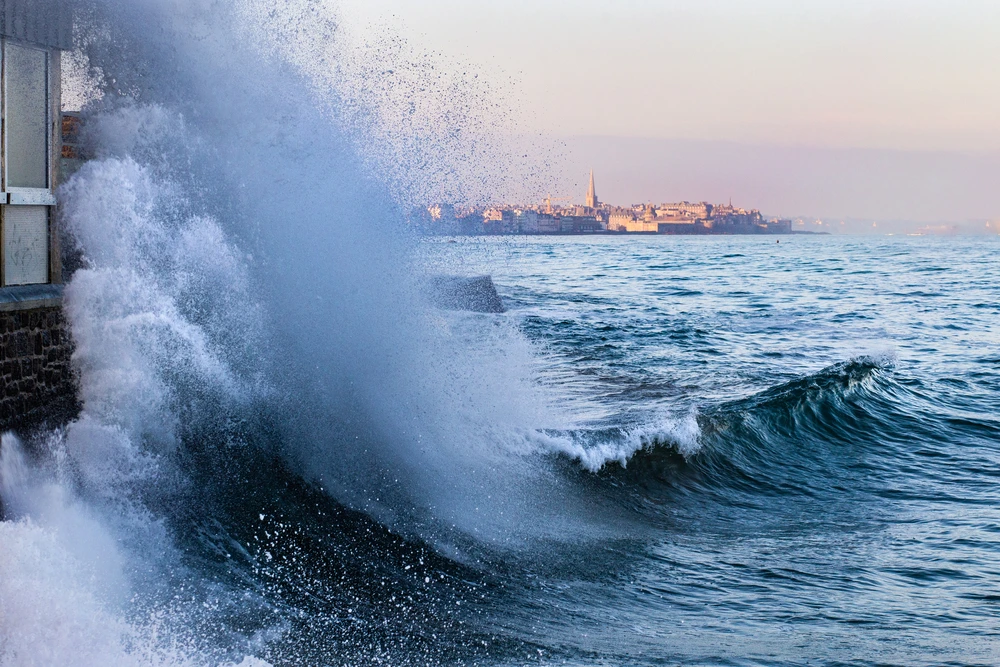
Saint Malo is always the scene of a breathtaking spectacle during high tides. Caution! Be very careful and do not stand too close to the shore. Photo selected by Monsieur de France: depositphotos
4. Practical guide: the twelfths rule and safety
To avoid being caught out by the tides, it is important to understand that the sea does not rise at a regular rate. The rule of twelfths is used:
-
First hour: the sea rises by 1/12 of its total height.
-
2nd hour: 2/12.
-
3rd and 4th hour: 3/12 per hour (the maximum!).
-
5th hour: 2/12.
-
6th hour: 1/12.
Remember: The current is strongest in the middle of the tide. That is where the danger of being surrounded is greatest.
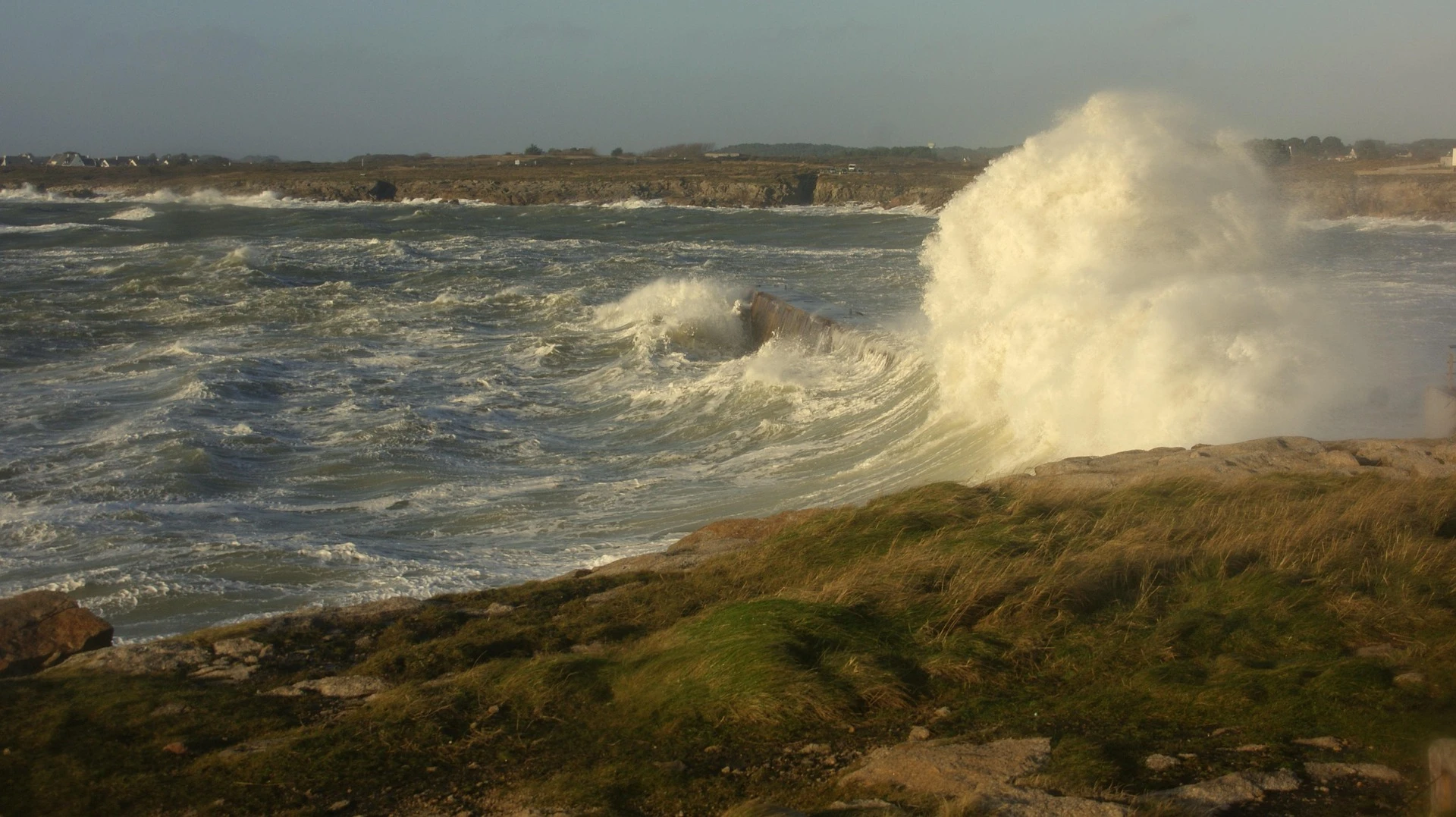
High tide and storm: an explosive Breton cocktail! Photo chosen by Monsieur de France: gerard90 from Pixabay
5. The ballet of the stars: why does the sea move?
The tide is the result of celestial mechanics. Although the Sun is much more massive, it is the Moon, due to its proximity to Earth, that exerts the strongest gravitational pull on our oceans. It pulls the water toward it, creating a liquid "bulge." As the Earth rotates, this bulge appears to move along our coastlines.
The Sun acts as an amplifier or reducer of this phenomenon depending on its position relative to the Earth-Moon pair. When the Moon and Sun are aligned with the Earth (Full Moon or New Moon), their forces combine: this is when spring tides occur. Conversely, when they form a right angle, they counteract each other: this is when neap tides occur.
6. Spring tides in 2026: coefficients > 90
Here are the key periods for admiring the highest tides in 2026. Make a note of March and September for the most spectacular displays.
| Mois | Periods (Coeff > 90) | Coefficient peak |
| January 2026 | January 18 to 21 | 98 |
| February 2026 | February 16 to 20 | 106 |
| March 2026 | March 17 to 21 | 111 |
| April 2026 | April 15 to 19 | 108 |
| May 2026 | May 15 to 18 | 98 |
| August 2026 | From August 27 to 30 | 101 |
| September 2026 | From September 25 to 29 | 110 |
| October 2026 | October 24 to 28 | 110 |
| November 2026 | November 23 to 26 | 101 |
The tide is the pulse of our planet. Learning to read it means learning to respect the rhythm of nature and marvel at the transformation of our French landscapes.
Jérôme Prod'homme
Specialist in French heritage, gastronomy, and tourism.
Find all my discoveries at monsieur-de-france.com.

FAQ HIGH TIDES
What is the best coefficient for shore fishing?
For a successful outing, a coefficient greater than 90 is ideal. It allows you to discover areas of rocks or sand (the foreshore) that remain submerged the rest of the time, where shellfish and crustaceans hide.
Why doesn't the tide occur at the same time everywhere?
The tide is a moving wave. It is slowed down by the coastline and the depth of the seabed. As a result, there can be a delay of several hours between the ports of Brest and Dunkirk for the same high tide.
What is tidal range?
The tidal range is the difference in water height between high tide and low tide. In France, the Bay of Mont-Saint-Michel has the largest tidal range in Europe, reaching up to 14 meters. In Saint Malo, it is slightly less, but still enormous. This explains the significant difference between high tide and low tide.
Is it safe to walk to an island at low tide?
Never without consulting the tide tables! You must always start the crossing 1.5 hours before low tide to be sure of arriving before the water rises again. The incoming tide can be extremely strong.
Why are there two tides per day?
This is due to the Earth's rotation. The Moon's gravitational pull creates a bulge of water on one side of the Earth (gravitational force) and another on the opposite side (centrifugal force). As the Earth rotates on its axis in 24 hours, we pass through these two "bumps" of water every day.
Jérôme Prod'homme Specialist in French heritage, gastronomy, and tourism. Find all my discoveries at monsieur-de-france.com.
Learn more about Saint-Malo
- Visiting Saint-Malo: The Complete Guide to the Pirate City
- The Ramparts of Saint-Malo: The City’s Most Beautiful Walk
- What to See in Saint-Malo in a Weekend? The Must-Sees
- Dinan: The Stunning Medieval Town Near Saint-Malo
- Dinard: The Elegant Gem of the Emerald Coast
- Discover Brittany and the Emerald Coast
- If you love Brittany, here’s what I loved
Illustrative photo: frankpotters7 via depositphotos