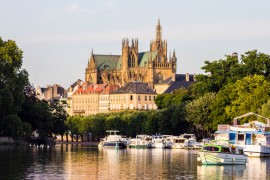
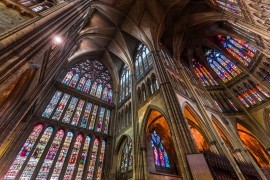
To visit Metz in one day, spend the morning in the historic center (Cathedral, Covered Market, Place Saint-Louis) and see the Porte des Allemands. Spend the afternoon by the water (Temple Neuf, lake) before finishing with the incredible Metz train station and the Imperial Quarter.
Want a clear guide? Metz, its must-see attractions and the best routes are here
1. Prepare for your arrival: Logistics to save time
Before you start your trip, here are a few tips to save you time.
-
Coming by train: Metz train station is connected to Paris in 1 hour and 20 minutes by high-speed train. It is the ideal starting point (just follow the route in reverse).
-
Coming by car: Avoid looking for a parking space on the street. The Parking République is the most convenient because it leads directly to the pedestrian area. Personally, I like the Comédie parking garage, as it is in the heart of the historic city center. For a cheaper option, use the park-and-ride facilities (P+R) connected to the high-level bus service: the Mettis. These park-and-ride facilities are very convenient, especially during the Christmas market, one of the largest in France.
2. Morning: The visual impact of the historic center
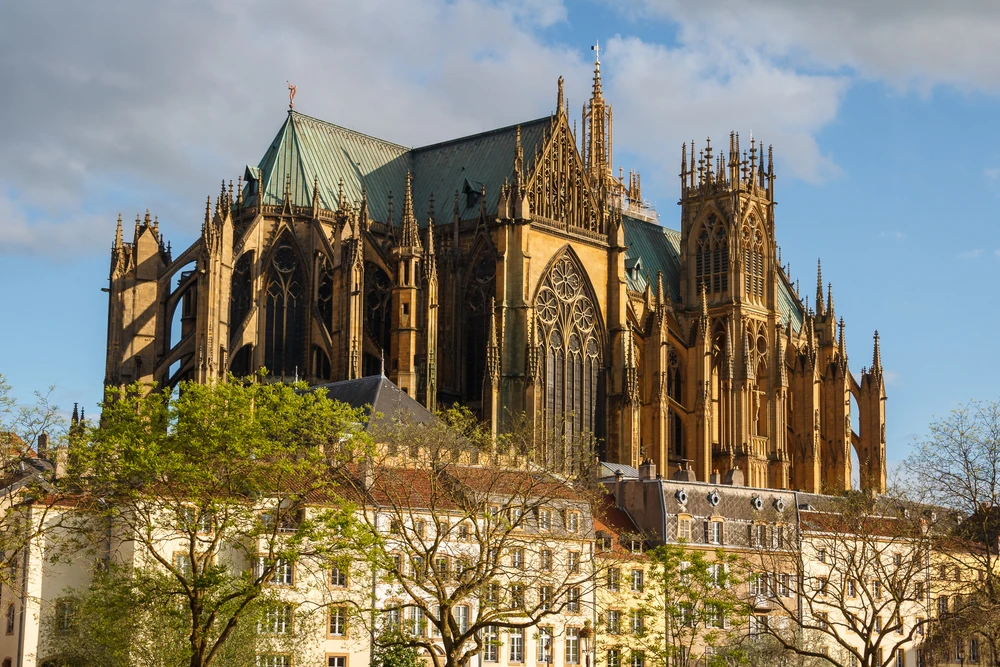
Metz Cathedral is built from Jaumont stone. Photo selected by monsieurdefrance.com: Lev Levin / Shutterstock.
Saint Stephen's Cathedral: The "Lantern of God"
Saint-Étienne Cathedral in Metz: 2 Place de Chambre, 57000 Metz.
Start your day with the monument that is the symbol of Metz: the cathedral. It is striking for its color, yellow, that of Jaumont stone. It was created by merging two churches, and on one side, the Mutte tower, a medieval municipal tower, reminds us that this city is not just a city but was once an important city-state. With 6,500 m² of stained glass windows, it has the largest glass surface area in France. Some of these stained glass windows date back to the Middle Ages, while others, more contemporary, are the work of the great Marc Chagall. Its nave, one of the highest in the Gothic world (42 meters), will immediately make you dizzy.
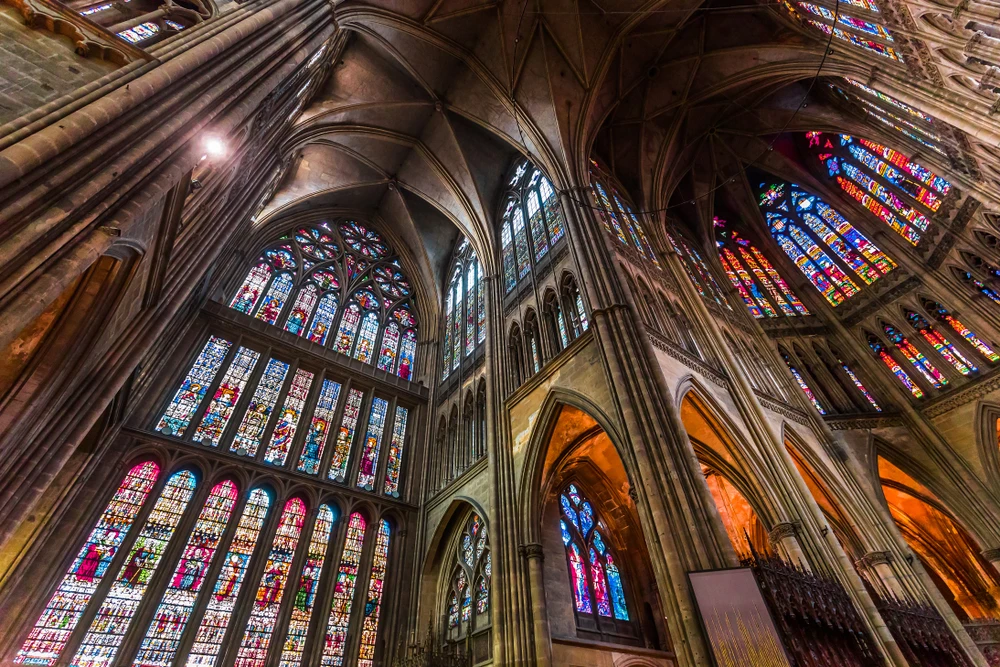
The stained glass windows in Metz Cathedral are spectacular—don't miss them. Photo selected by monsieurdefrance.com: Shutterstock.
-
What you need to know: Don't miss the contemporary stained glass windows by Marc Chagall in the north ambulatory. They cast a unique blue, dreamlike light.
-
Expert tip: Admission is free, but arrive as soon as it opens (8:00 a.m.) to enjoy the peace and quiet before the tourist groups arrive.
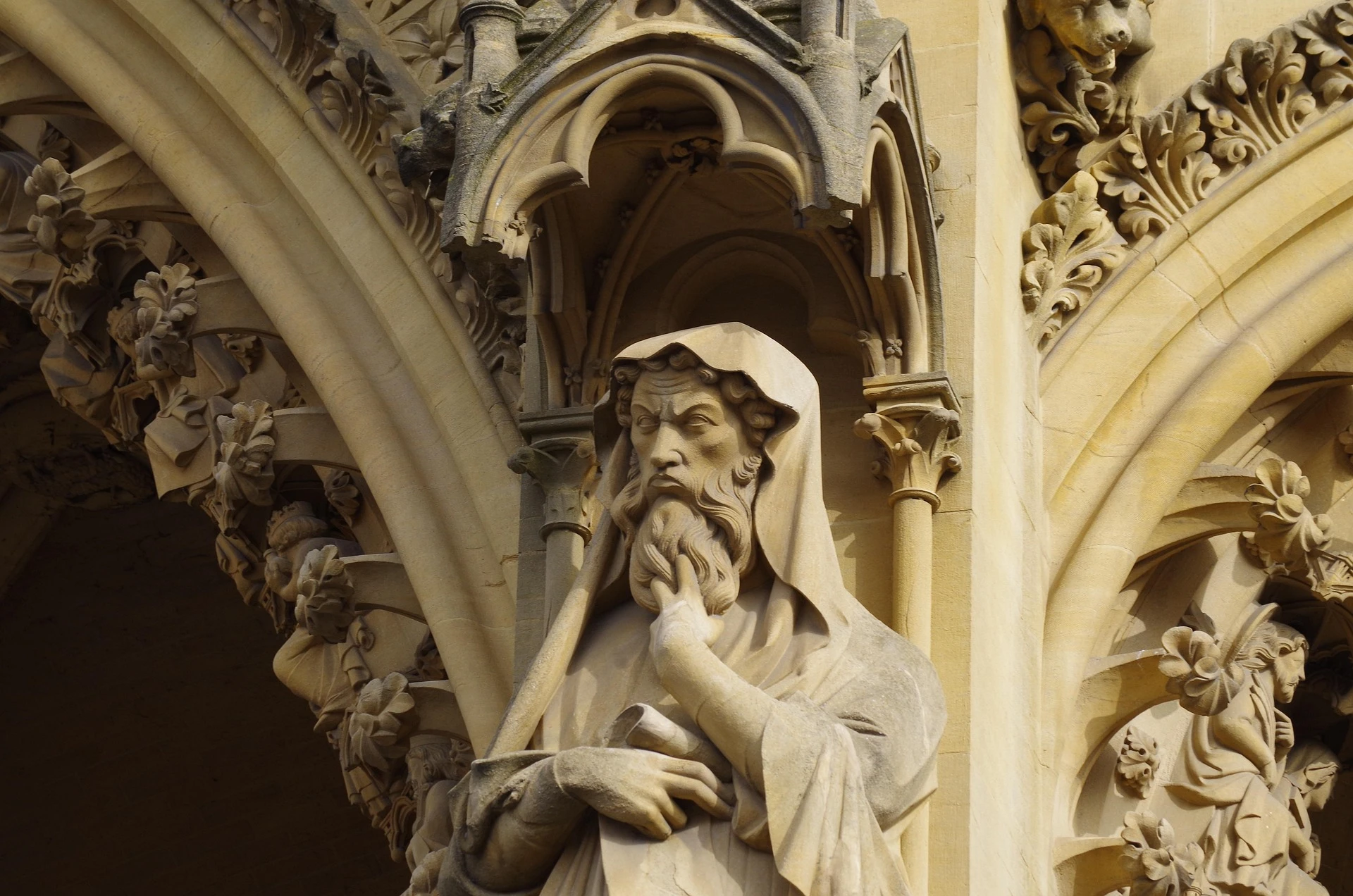
Jaumont stone makes Metz Cathedral truly magical / Photo selected by Monsieur de France: by Paul C. from Pixabay
You are now on Place d'Armes, in front of Metz City Hall, which dates back to the 18th century, on a square that was once used for military gatherings. It was built by Marshal de Belle-Isle, who greatly embellished Metz in the 18th century. The tourist office is here if you need it.
The Covered Market: The gourmet soul of Metz
Covered Market: 15 Rue d'Estrées, 57000 Metz.
Located just opposite the cathedral, this market is an institution. It is here that the people of Metz come to buy their fresh produce under an imposing roof. This market has an interesting history, as it is housed in what was supposed to be the ground floor of the palace of the Bishop of Metz. A beautiful palace built just opposite the cathedral, it could have been a magnificent monument had the French Revolution not brought construction to a permanent halt. As a result, it has become a gourmet palace.
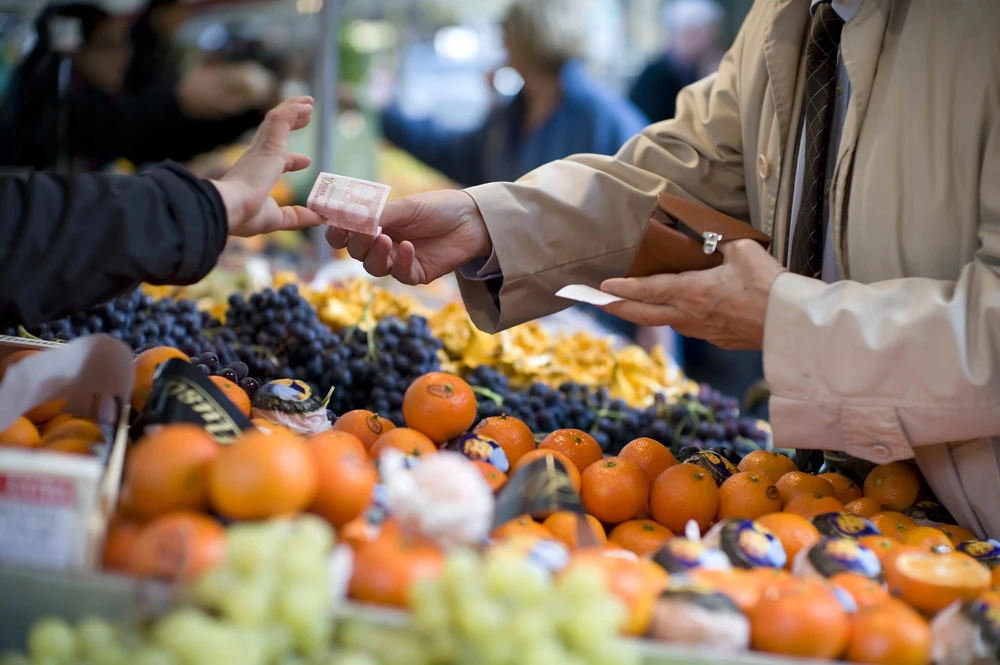
Take the time to explore Metz's covered market, one of the most beautiful in France / Photo: depositphotos
-
The essential step: Go to a local delicatessen to buy a still-warm Pâté Lorrain (meat marinated in white wine and puff pastry). It is the quintessential traditional snack. You can also find excellent charcuterie (the Moselle is a land of charcuterie, so you'll be spoiled for choice) as well as superb Italian products, which are essential in a city and region with a large Italian community.
3. Late morning: Journey through medieval times
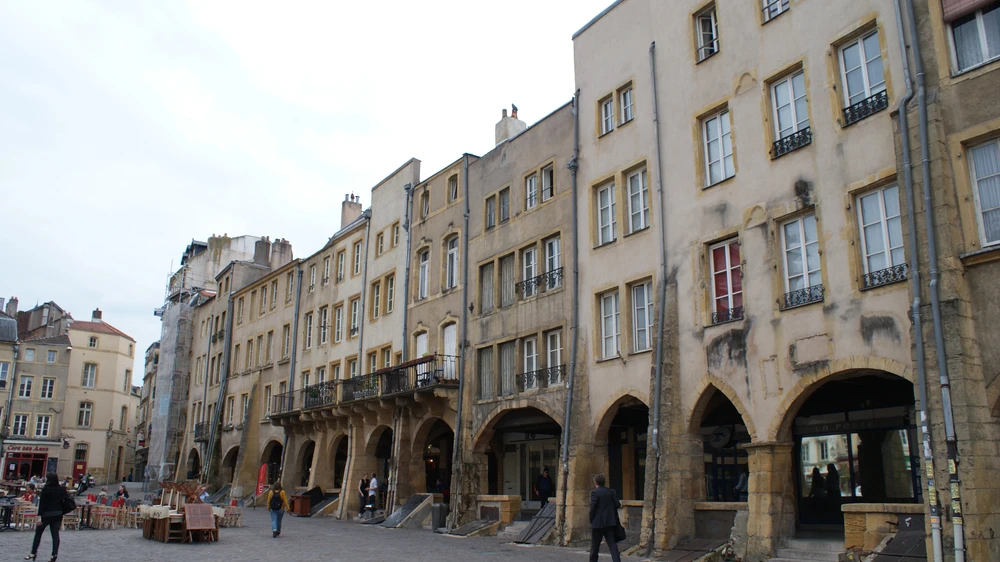
Place Saint Louis and its arcades / Photo selected by Monsieur de France: Photo by Dormouse_a via depositphotos
Place Saint-Louis: A taste of Italy in Lorraine
Place Saint-Louis: Place Saint-Louis, 57000 Metz.
Speaking of Italy, many Metz residents have Italian roots. It must be said that large numbers of Italians came to settle here in the 19th and 20th centuries to work. But Italy has been present in Metz and Lorraine for much longer, as evidenced by Place Saint Louis. With its row of tall arcaded houses dating back to the 14th century, it bears witness to the presence of Lombard bankers who ran their exchange offices there in the Middle Ages. It's the ideal place for a coffee break on the terrace.
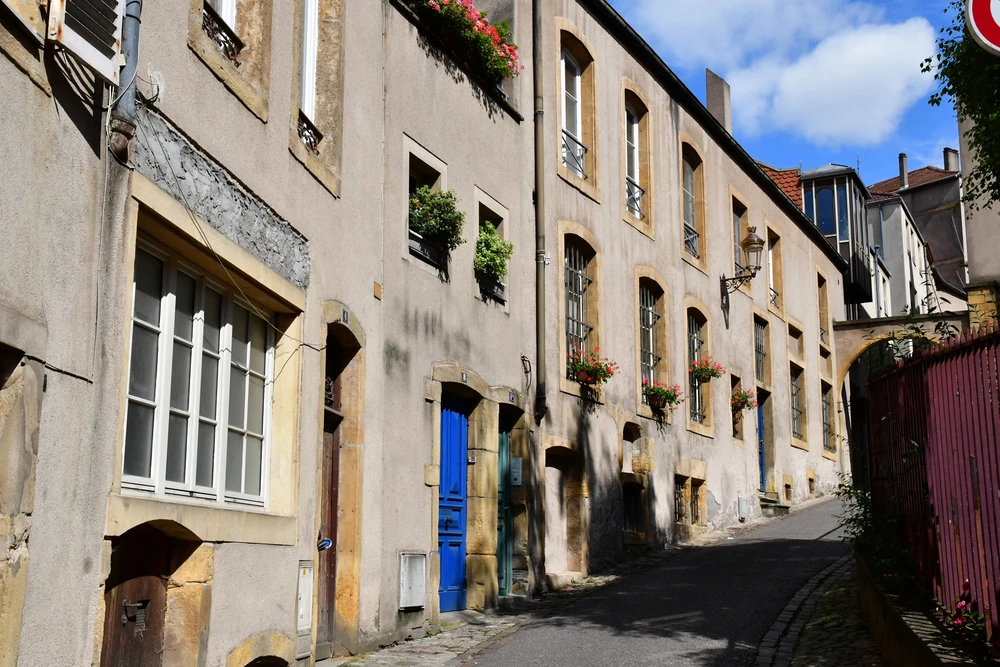
Metz is also a maze of picturesque streets/ Photo chosen by Monsieur de France: packshot via depositphotos
All around you are pretty streets lined with shops and impressive mansions that belonged to the Paraiges, the bourgeois families who ruled the city during the Messine Republic at the end of the Middle Ages. Some are fortified. Everywhere you look, there are original facades, carved doors, and the Jaumont stone that makes Metz unique in the world.
To learn more about the city's history, I have prepared an article dedicated to the history of Metz.
The Germans' Gate: The fortress on the Seille River
Porte des Allemands: Boulevard André Maginot, 57000 Metz.
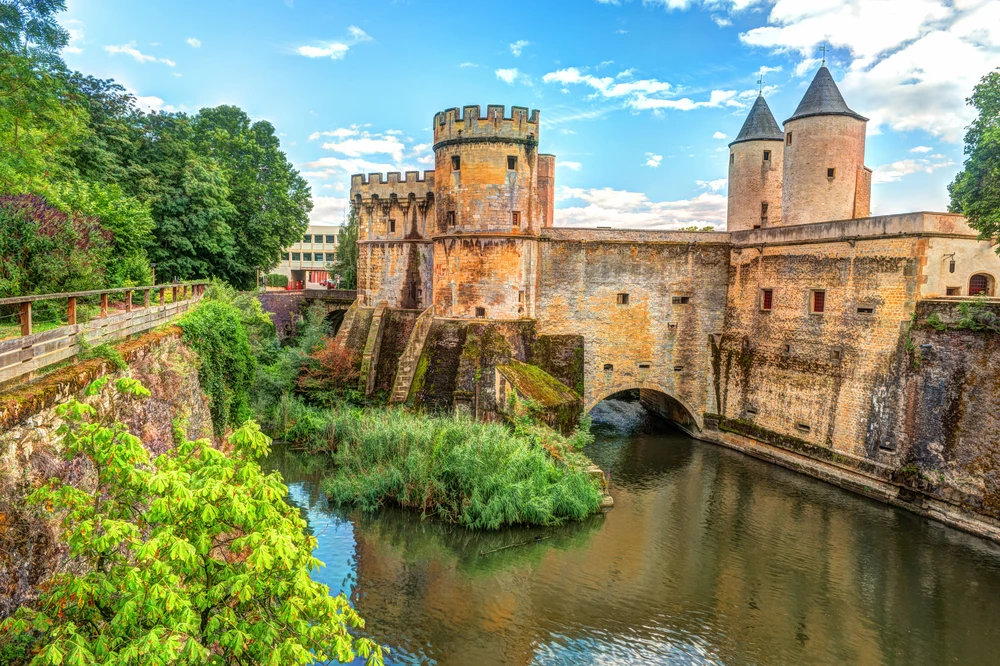
The astonishing German gate in Metz. Photo selected by monsieurdefrance.Com: Shutterstock.com
Continue eastward to reach the Porte des Allemands (German Gate). It bears this name because it was not far from the home of the Teutonic Knights. It is not just a gate, but a veritable miniature fortified castle spanning the Seille River. The last remnant of the medieval ramparts, it was extensively remodeled in the 19th century to reflect the taste of the time for the medieval era. It offers spectacular views of the towers and machicolations.
-
What you need to know: This is the most photogenic spot in Metz. Cross the bridge to admire the structure from the other side of the river.
4. Lunch: The flavors of the Metz region
For your lunch break, you have two options:
-
On the go: A quiche Lorraine or a sandwich at the Marché Couvert.
-
Traditional brasserie: Head to Place de la Chambre or Place d'Armes to sample a potée lorraine (Lorraine hotpot) or specialties made with Mirabelle de Lorraine plums. There are some excellent restaurants in the historic center; just take a stroll (behind the cathedral in particular).

Quiche Lorraine / Image by SGM/Shutterstock.com
Culture Option: The Musée de La Cour d’Or
Just a 3-minute walk from the Covered Market, this museum is an often overlooked gem. It is built on top of the original Roman baths, which you can see in situ. It is a fascinating maze that takes you from ancient times to the Middle Ages.
-
Jérôme's favorite: The attic of Chèvremont and the chancel of Saint-Pierre-aux-Nonnains.
-
Address: 2 Rue du Haut Poirier, 57000 Metz.
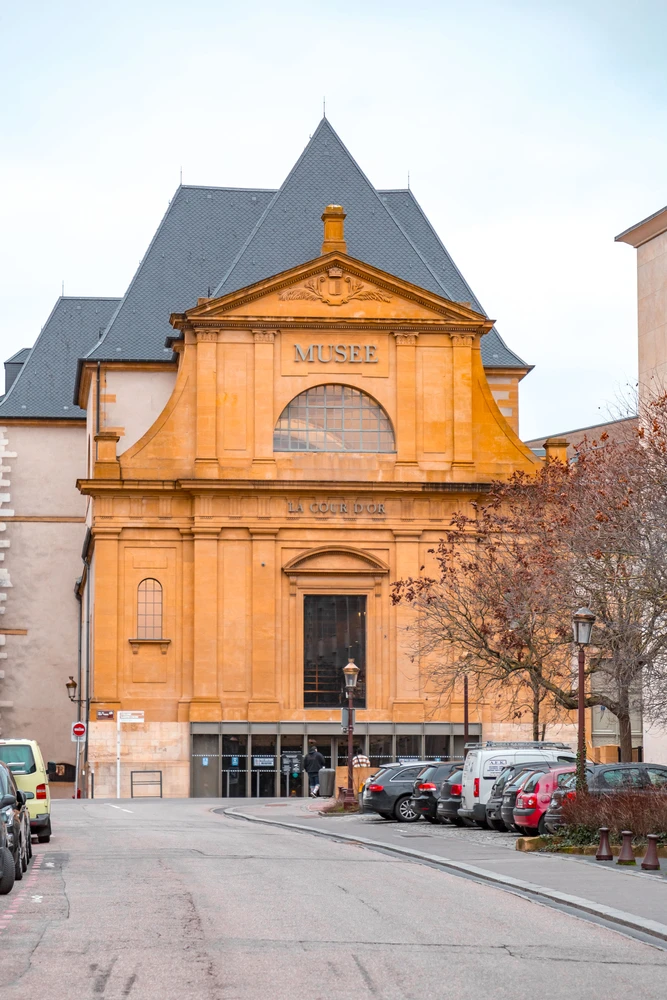
Metz Cour d'Or Museum, Metz Metropole in Metz, France, Photo selected by Monsieur de France EnginKorkmaz via depositphotos
The weekend dilemma: Which museum to choose?
If you only have time for one during your stay, here's how to choose based on your preferences:
-
Choose the Musée de La Cour d’Or if: You are passionate about history, archaeology, and old buildings. It offers an immersive journey into the city's roots, perfect for understanding why Metz was the capital of Austrasia.
-
Choose the Centre Pompidou-Metz if: You prefer contemporary art and bold architecture. Located just behind the train station, its spectacular building hosts world-class temporary exhibitions. (Address: 1 Parvis des Droits de l’Homme).
By visiting in the early afternoon, you will delay the rest of your visit to Metz a little, but you will have time to do everything.
There is a lot to see in Metz, as I explain in this list of the 7 wonders of Metz.
5. Afternoon: Between water, gardens, and culture
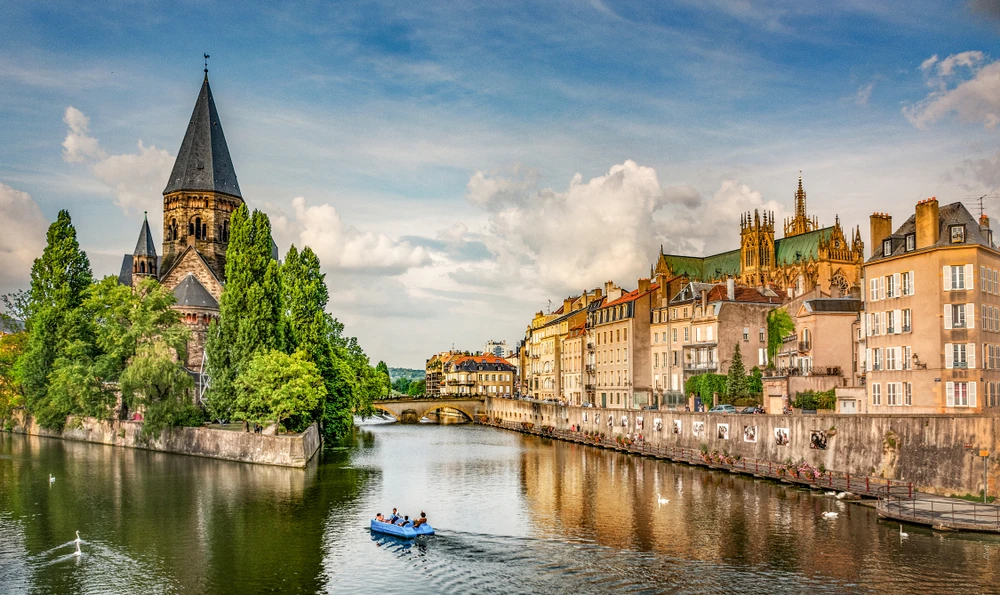
The new temple in Metz seen from behind, overlooking Place de la Comédie in Metz. Photo selected by monsieurdefrance.Com: Shutterstock.com
The Temple Neuf and the Île du Petit-Saulcy
Temple Neuf: Place de la Comédie, 57000 Metz.
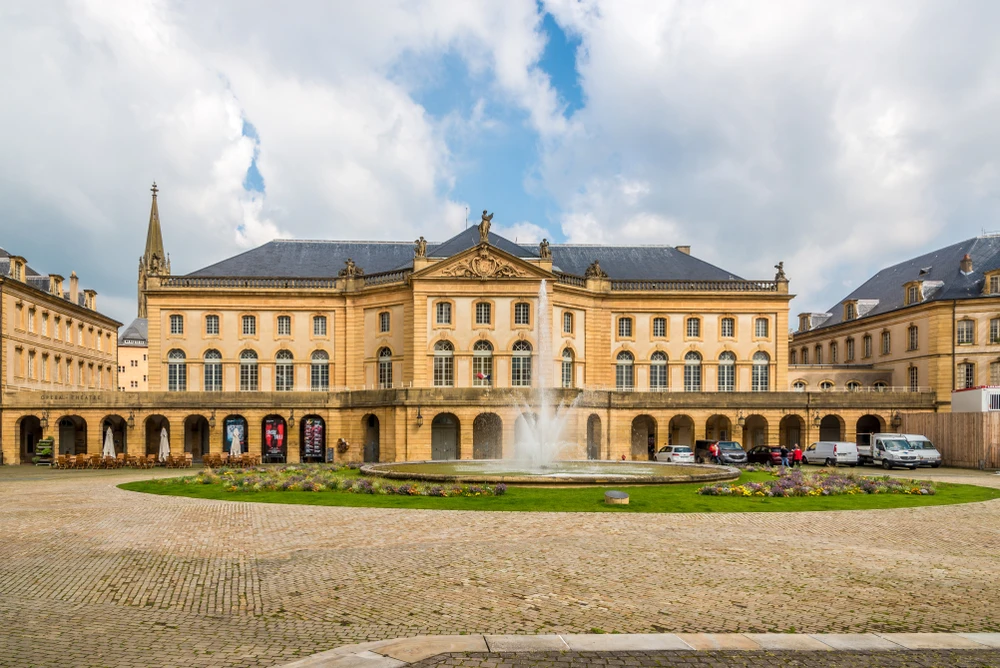
The Place de la Comédie in Metz is typical of the 18th century. Photo selected by monsieurdefrance.com Shutterstock.com
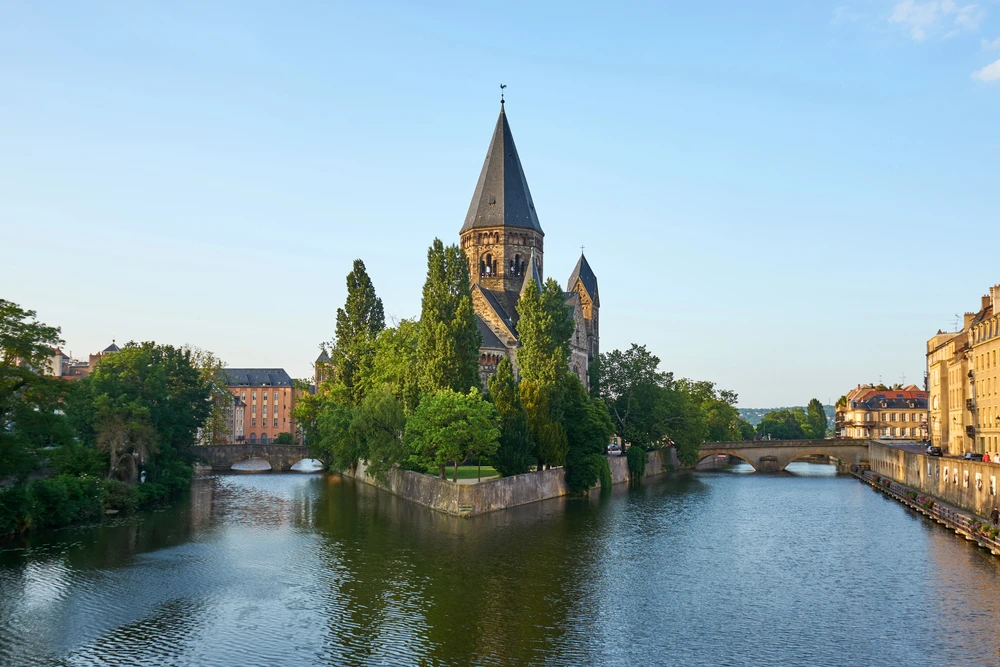
This is my favorite neighborhood. Head north to discover the Temple Neuf. Isolated on the tip of the Petit-Saulcy island, this neo-Romanesque building surrounded by gardens and water is the most beautiful "postcard" of Metz. It dates from the early 20th century. Right next to it is the Place de la Comédie, which displays the lightness and delicacy of the 18th century. This square is called the Comédie because it is home to the Opera-Theater. It is the oldest theater in France still in operation. From Place de la Comédie, you can take magnificent photos of the cathedral.
The view of Metz Cathedral from Place de la Comédie Photo selected by monsieurdefrance.com: Lev Levin / Shutterstock.
The Lake and the Esplanade
Basilique Saint-Pierre-aux-Nonnains: 1 Rue de la Citadelle, 57000 Metz.
Walk along the banks of the Moselle to reach the lake. It is the green lung of the city. The view of the cathedral, which seems to float above the ramparts and trees, is breathtaking. This lake is astonishing; it feels as though the swans have always been there, even though it is quite new, having been created in the 1970s and 1980s during the construction of the highway. Then walk up through the Esplanade gardens, superb French-style gardens, to discover the Arsenal, a sumptuous theater, and the church of Saint-Pierre-aux-Nonnains, the oldest church in France.
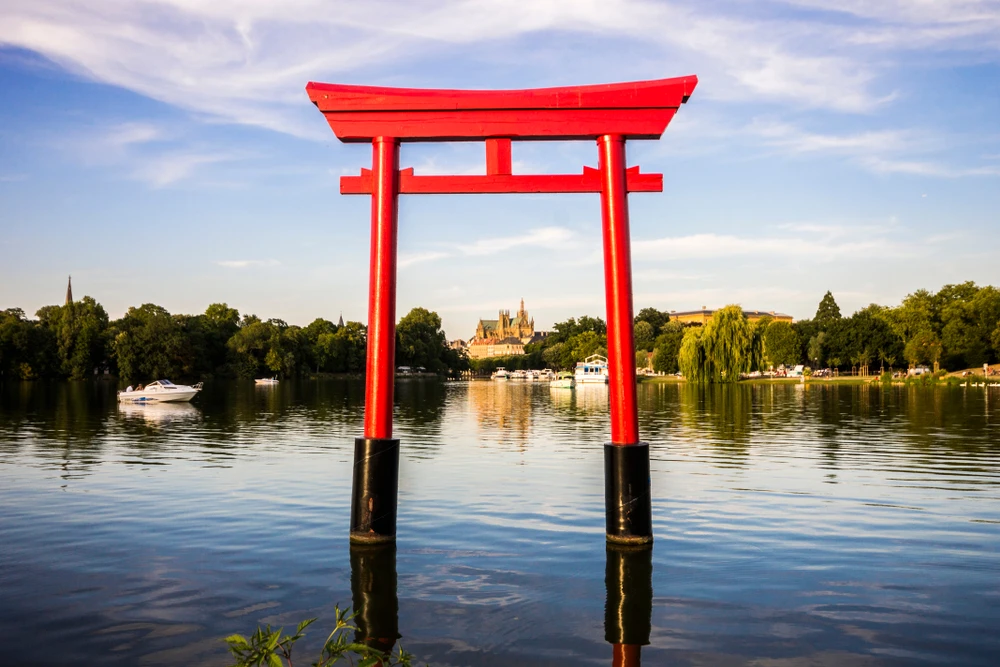
View of the lake in Metz. Photo selected by monsieurdefrance.com: Shutterstock.com
6. End of the day: The Imperial Quarter and the Train Station
The Imperial Quarter: The Emperor's Challenge
Imperial Quarter Center, 57000 Metz, Avenue Mondon.
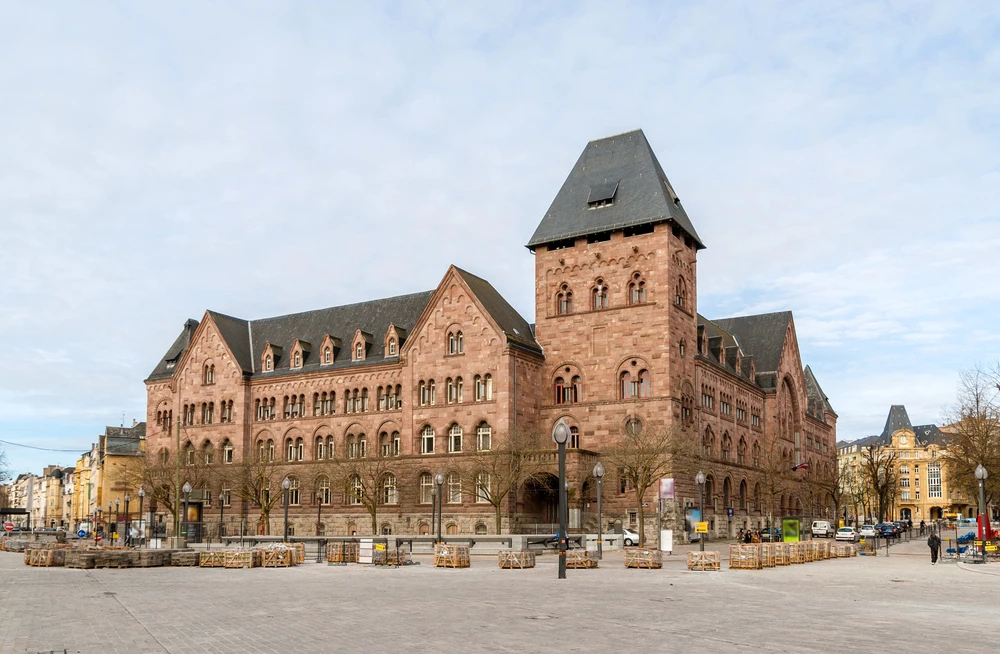
Hotel des Postes in Metz, typical of the imperial era Photo by Leonid_Androno
To finish your loop, cross Avenue Foch. You'll find yourself in a different world. This neighborhood was built by Germany after the annexation of 1871. Emperor Wilhelm II wanted to Germanize the city with colossal architecture and impress his French neighbors. The result is large houses with elaborate facades, featuring neo-Romanesque, neo-Gothic, and even neo-Renaissance styles. It's definitely a neighborhood worth seeing.
Metz Station: A railway palace
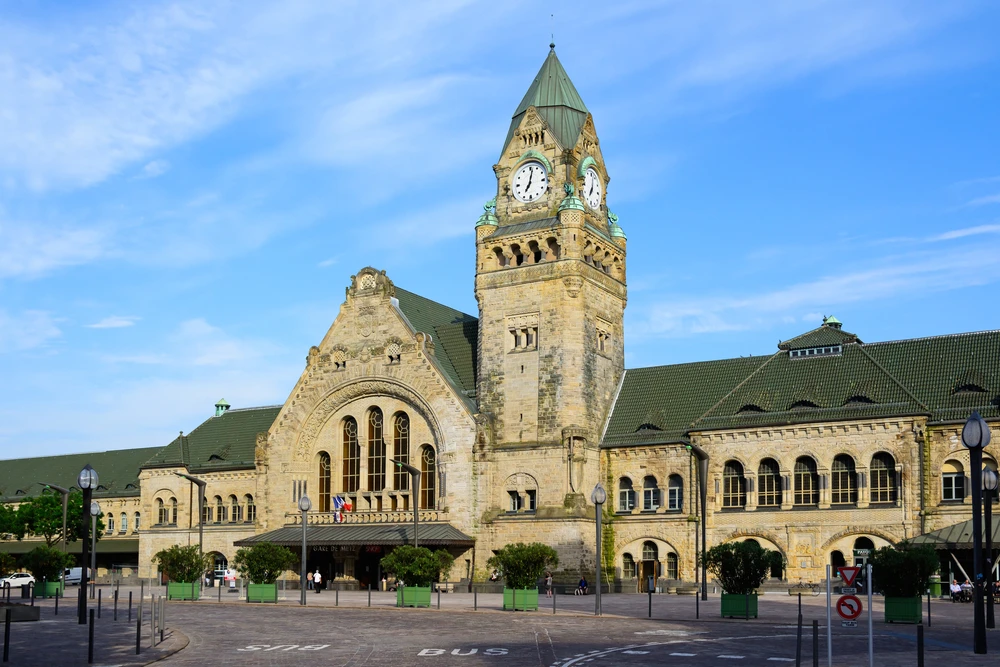
Metz train station is the most beautiful train station in France. Photo selected by Monsieurdefrance.com: Shutterstock.com
Metz-Ville Station: 1 Place du Général de Gaulle, 57000 Metz.
Your day ends in front of (or inside) Metz Station. Repeatedly voted France's most beautiful station, it is 300 meters long. It is enormous, a veritable palace for trains. It has double tracks, which was very rare at the time. Take a look at its clock tower and the sculpted capitals that tell the story of technical conquest. You can see telegraph operators sculpted in medieval style, which is quite amusing. It's a magnificent ending to the day.
7. Three mistakes to avoid during your visit
-
Wanting to see everything: Don't try to visit both the Centre Pompidou-Metz AND the Musée de la Cour d'Or in a single day. Choose one or save them for a future visit.
-
Forget about Jaumont stone: Take a good look at the color of the buildings. This iron-rich limestone gives Metz its unique golden color, especially at sunset.
-
Don't reserve your restaurant: On Saturday evenings, the best restaurants in the city center are packed.

FAQ: Everything you need to know for your stopover in Metz
How long does it take to visit Metz?
A full day is enough to discover the main monuments and the atmosphere of the city center on foot. However, if you want to visit the museums in depth (Centre Pompidou-Metz or Musée de la Cour d'Or) or explore the many parks, we recommend staying for two days.
Where to park to visit Metz in one day?
The most convenient parking lot is the République parking lot. Located in the heart of the city center, it gives you immediate access to the pedestrian area and the cathedral. For those on a tighter budget, the park-and-ride facilities on the outskirts of the city, connected to the Mettis bus, are an excellent alternative.
What is the best souvenir to bring back from Metz?
You can't leave without trying a specialty made with mirabelle plums, the iconic fruit of Lorraine (jam, brandy, candies). We also recommend Boulets de Metz, delicious praline chocolates coated in dark chocolate, created in homage to the city's military history.
Can you visit Metz with a dog?
Yes, Metz is a very pet-friendly city. The pedestrian center and parks such as the Esplanade or the Plan d'eau are perfect for walkers. Please note, however, that dogs are generally not allowed in religious monuments and museums.
Jérôme Prod'homme Specialist in French heritage, gastronomy, and tourism. Find all my discoveries at monsieur-de-france.com.