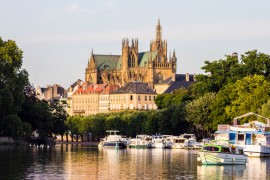
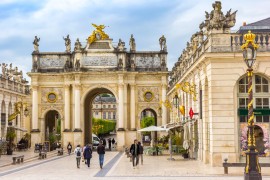
Why is Metz's history unique? Former capital of the Mediomatrici Gauls and then of Austrasia, Metz has stood the test of time as a city of power. Between its period as an independent republic and its successive annexations, it has forged a unique architectural and cultural identity, at the crossroads of France and Germany.
Visit Metz in 1, 2 or 3 days: ideas, neighborhoods, cathedral and tips all in one place
Want to discover Metz? Access the best accommodation deals now for a successful stay: see hotels in Metz
This article may contain affiliate links. This does not change the price for you, but helps support the Monsieur de France website.
1. Divodorum: The "place of the gods" of the Mediomatrici Gauls

Illustration chosen by Monsieurdefrance.com: facsimile of the Peutinger Table by Conradi Millieri, 1888.
The city is incredibly ancient. Long before the arrival of the Romans, it was the capital of the Mediomatrici, a powerful Gallic tribe that opposed Julius Caesar. At that time, it was called Divodorum ("Place of the Gods" or "Market Place" in Celtic). It was so important that it appeared on the Peutinger Table, the oldest road map in Europe. Suffice to say that Metz has powerful roots. The city was conquered by the Romans, who transformed it into a city to their liking: straight streets, a forum, an amphitheater (the name has remained in the neighborhood), but also thermal baths (the remains of which can be seen in the Cour d'Or museum) and therefore an aqueduct to carry water (part of the Gallo-Roman aqueduct still exists in Jouy aux Arches, not far from Metz). It was evangelized in the 5th century by Saint Clement. He was the first in a long line of very powerful bishops who turned it into a kind of city-state until the end of the Middle Ages.
What you need to know:
-
The ancient treasure: The church of Saint-Pierre-aux-Nonnains, built on a 4th-century Gallo-Roman gymnasium, is very likely the oldest church in France.
-
The legend of the Graoully: Saint Clement is said to have slain the Graoully, a terrifying dragon living in the ruins of the amphitheater, symbolizing the victory of Christianity.
2. The legend of Graoully: the dragon of Metz
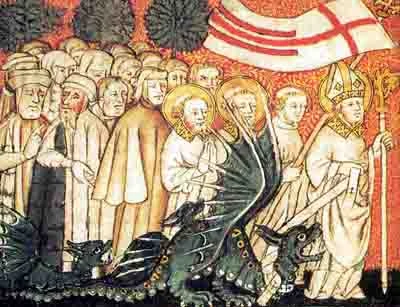
Saint Clement tames the Graoully / Public domain, https://commons.wikimedia.org/w/index.php?curid=17574925
In Metz, legend has it that a dragon terrorized the city: the Graoully. Hidden near the Roman ruins, it is said to have spread fear by attacking the inhabitants, to the point of rendering certain neighborhoods uninhabitable. Metz tradition has it that Saint Clement, the first bishop of Metz, confronted him in the 4th century not with force, but with faith. Hearing about this dragon that was devouring the city's young inhabitants and whose lair was located in the Amphitheater, Saint Clement is said to have gone to challenge the dragon, tamed it by placing his bishop's stole around its neck, and thrown it into the Seille River. Legend also has it that the street "Taisons" recalls this episode and that its name "taison" means "let us be quiet" so as not to wake the Graoully, which has been slumbering under the city since Saint Clement defeated it.
3. Metz, the dazzling capital of Austrasia
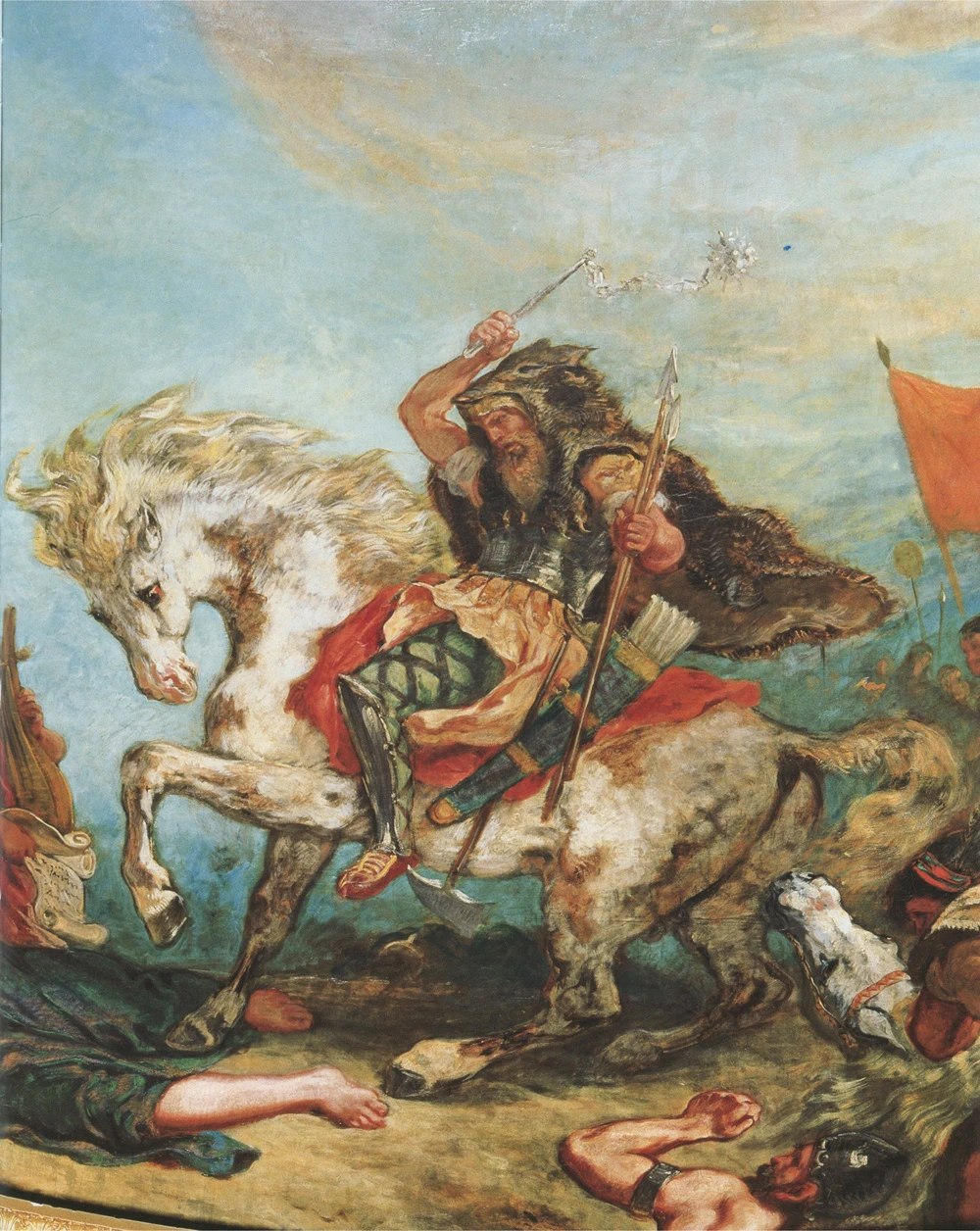
Attila ravages Metz in the year 451 / Illustration chosen by Monsieur de France: By Eugène Delacroix — Web Gallery of Art: Image Info about artwork, Public domain, https://commons.wikimedia.org/w/index.php?curid=5965258
After the great invasions and the sacking of the city by Attila in 451, Metz rose from the ashes to become the beating heart of Merovingian Europe. It became the capital of Austrasia, a vast kingdom stretching from Reims to the Rhine. Under the reign of kings such as Theudebert and Queen Brunhilda, Metz was home to a brilliant court and the cradle of the Carolingian dynasty. Austrasia was like Game of Thrones without dragons: a brilliant but fierce court. Palaces, treasures, bishops, and kings rubbed shoulders in a capital city that shone brightly... while family rivalries, betrayals, and coups brought down the powerful as quickly as they rose. Alliances are played with as if they were lives, and behind the pomp and circumstance, blood is never far away: it is a politics of clans, where one rules as much by the sword as by intrigue. There are many ways to die, et sometimes in the most spectacular fashion. Brunehaut (Brunehilde), queen and central figure in the Merovingian wars, was executed in 613 after defeat: humiliated and tortured according to accounts, then put to death in an atrocious manner, dragged by a horse (tradition has it that she was dismembered). That was Austrasia: a brilliant but bloody court, where politics was paid for not with fines, but with lives.
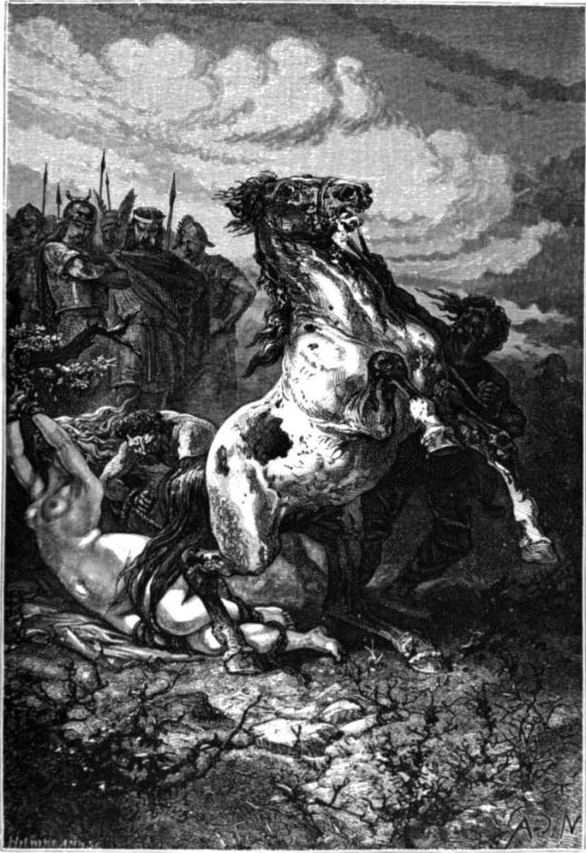
Execution de la reine Brunehaut / Illustration choisie par Monsieur de France : Par Alphonse de Neuville — François Guizot (1787-1874), The History of France from the Earliest Times to the Year 1789, London : S. Low, Marston, Searle & Rivington, 1883, p. 123, Domaine public, https://commons.wikimedia.org/w/index.php?curid=2522047
This is where the influence of Charlemagne's ancestors became apparent. Metz was one of the major cities of the Peppinid dynasty, to which Pepin the Short and his son Charlemagne belonged, and Charlemagne frequently stayed in the area. This period of splendor is now beautifully recounted at the Musée de la Cour d'Or, where archaeological collections bear witness to the wealth of this city, which was then one of the most powerful in the Frankish world.
What you need to know:
-
The cradle of the Carolingians: Metz was the favorite residence of the Frankish kings and the home of Charlemagne's lineage.
-
European influence: In the early Middle Ages, the city was home to a brilliant court, the remains of which can now be seen at the Musée de la Cour d'Or.
To discover Metz in one day, click here
4. The Republic of Paraiges: The Medieval "Wall Street"
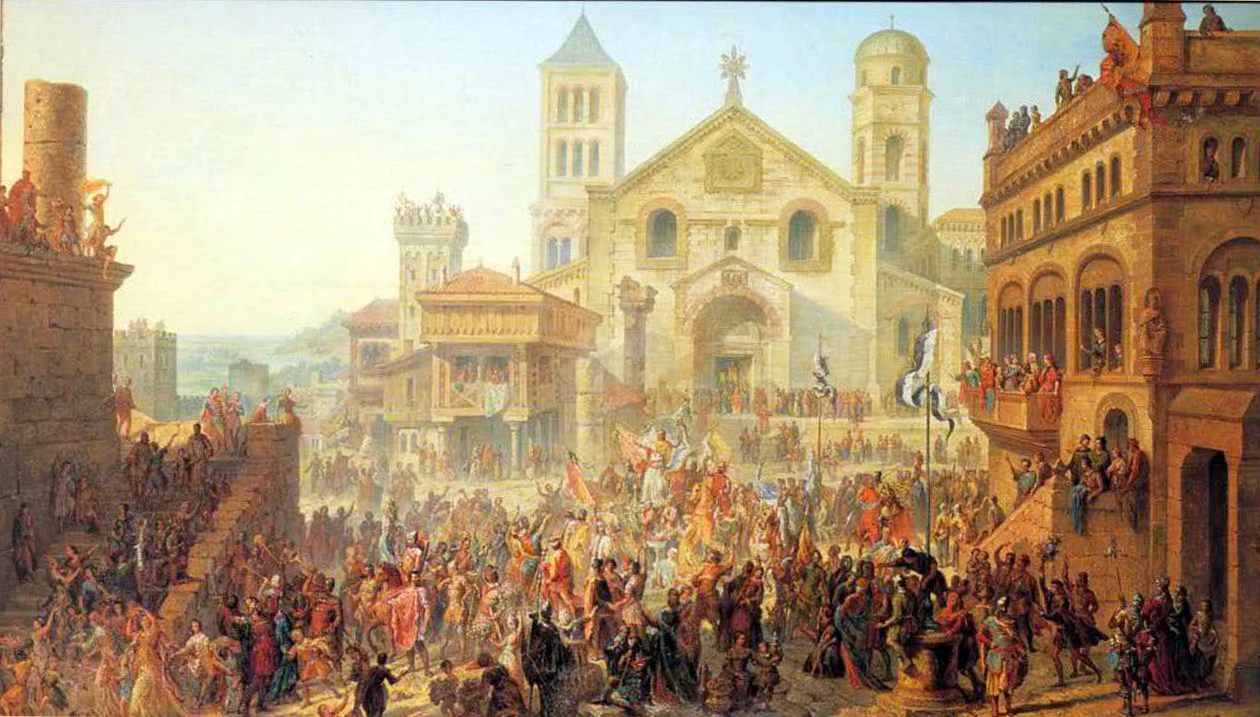
Illustration chosen by Monsieurdefrance.com: The founding of the Republic of Metz by the bourgeoisie. Painting by Jules Migette, 1862. / Wikicommons
A commercial and bourgeois city, it became very important in the Middle Ages. Business was conducted there, as evidenced by Place Saint Louis and the arcaded buildings that housed the Lombard money changers. Great merchant dynasties took control of the city and it was largely self-governing, minting its own coins, for example. The old town is dotted with the mansions of these families, known as "les paraiges," which were often fortified, clearly demonstrating that politics was never a peaceful affair and that these families were keen to remind others of their power and, by extension, that of the city. It was also during the Middle Ages that the power of the bishops of Metz was asserted and their symbol, the magnificent Metz Cathedral, was built at the top of the city. This unique cathedral is still the cherished treasure of Metz.
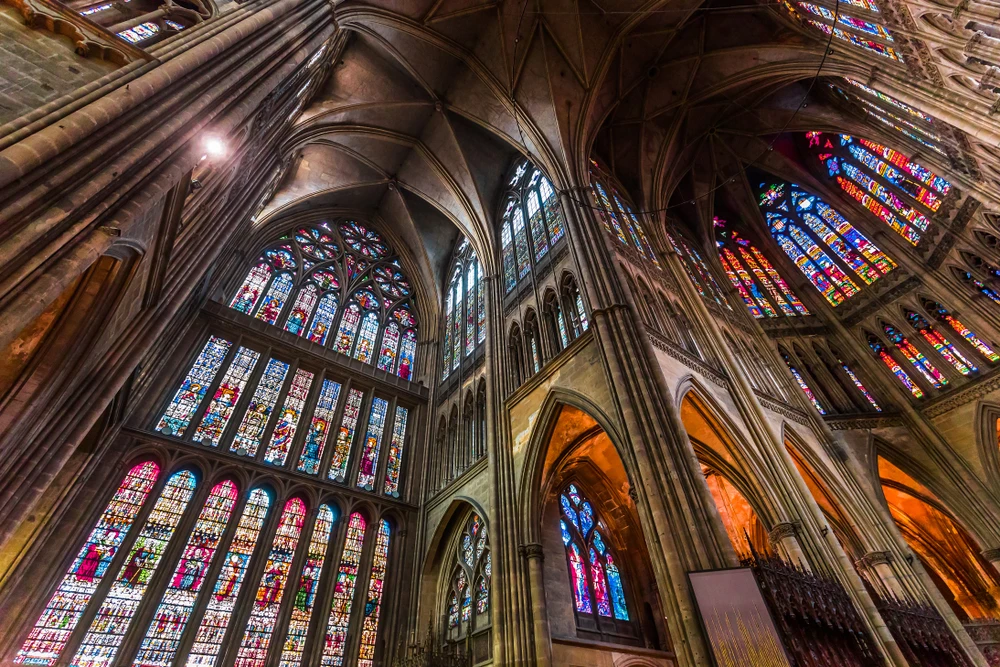
The stained glass windows in Metz Cathedral are spectacular—don't miss them. Photo selected by monsieurdefrance.com: Shutterstock.
What you need to know:
-
Financial power: On Place Saint-Louis, you can still admire the arcaded buildings that once housed Lombard money changers.
-
A fortified city: The old town center is dotted with mansions belonging to these families, often equipped with defense towers, proving that medieval politics were never peaceful here.
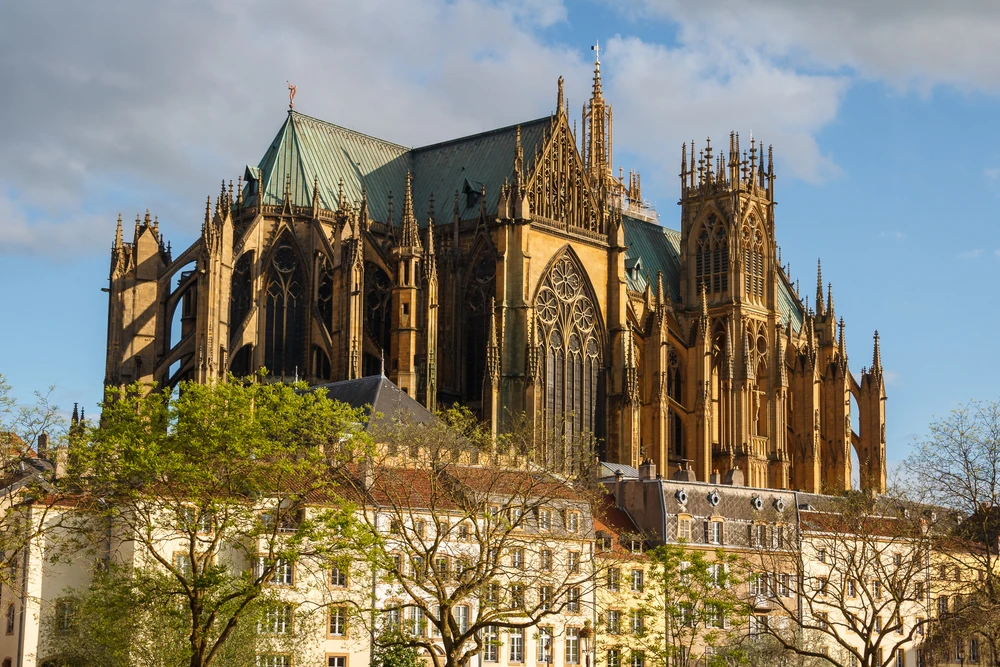
Metz Cathedral is made of Jaumont stone. Photo selected by monsieurdefrance.com: Lev Levin / Shutterstock.
5. "The Key to the Kingdom": From Henry II to Vauban
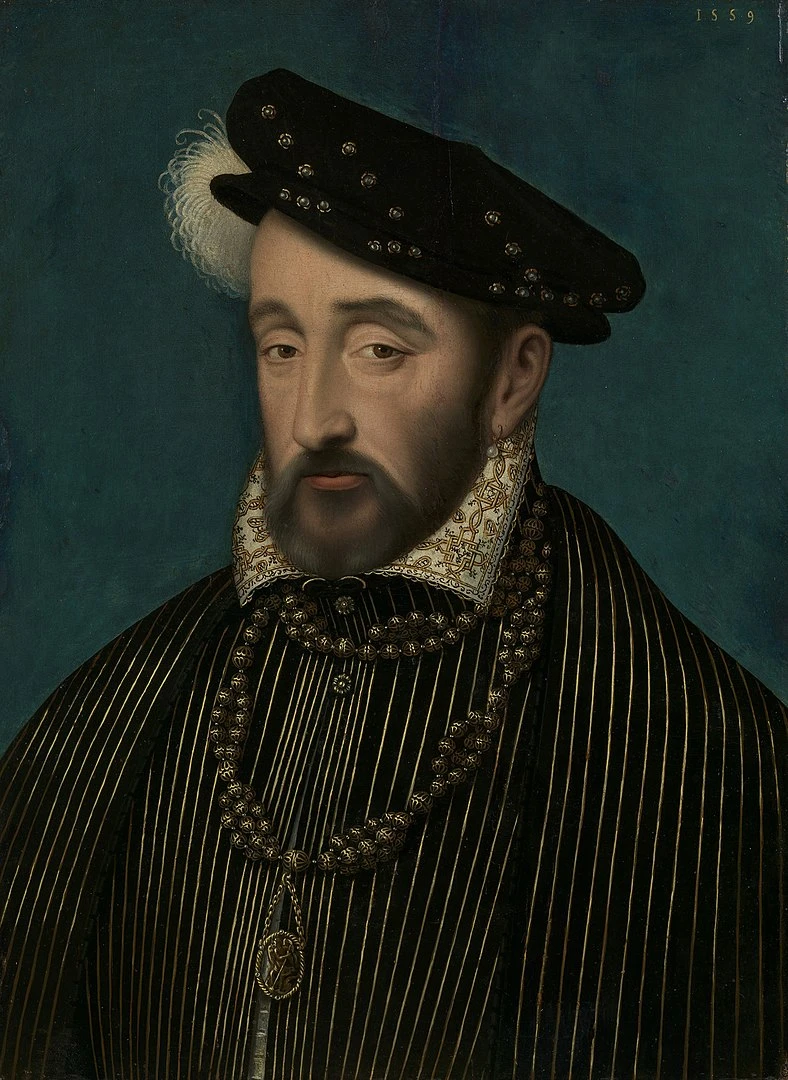
Illustration chosen by monsieurdefrance.com: Henry II painted by François Clouet in 1559 (7 years after the Austrasian campaign).
The city was more or less annexed by King Henry II of France at the end of the "Chevauchée d'Austrasie" in 1552. He turned it into a kind of protectorate that Emperor Charles V attempted to retake but was defeated.
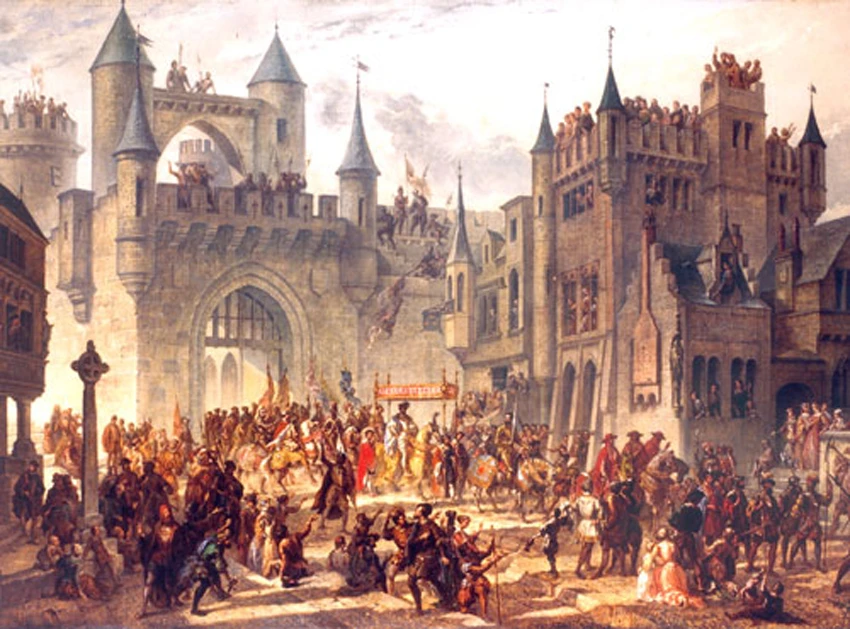
L'entrée du roi de France Henri II à Metz / Par Auguste Migette — copy of painting from the museums of Metz, FAL, https://commons.wikimedia.org/w/index.php?curid=10571479
The city became definitively French in 1648. It was fortified by Marshal de Vauban, who nicknamed it "the key to the kingdom." Traces of this can still be seen today, including the Arsenal (now a superb concert hall) and the citadel (a renowned hotel).
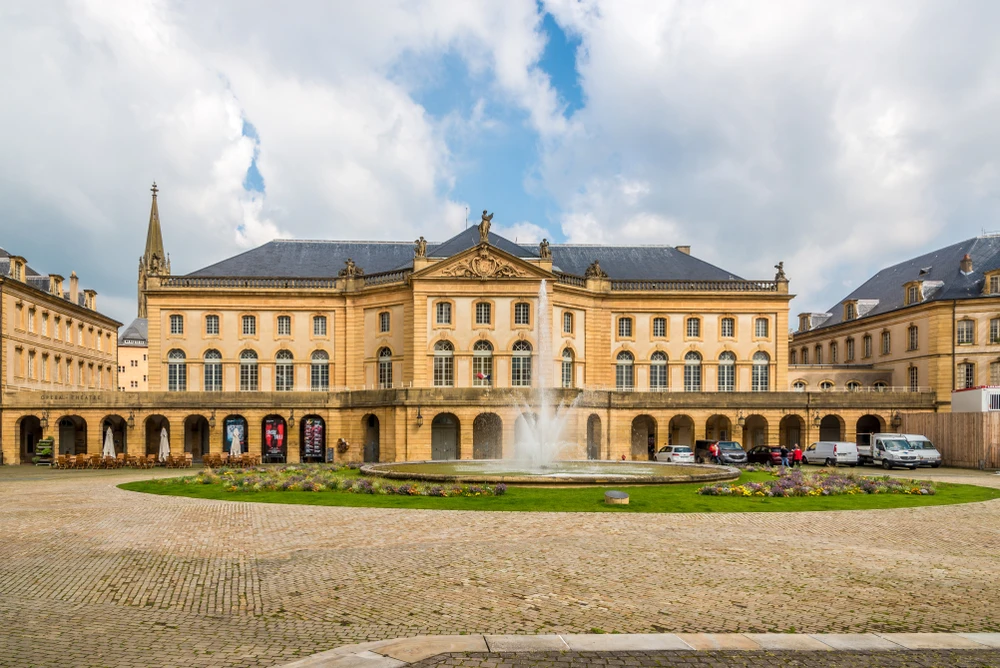
The Place de la Comédie in Metz is typical of the 18th century. Photo selected by monsieurdefrance.com Shutterstock.com
Capital of the three bishoprics (Metz, Toul, and Verdun), the city was beautified by Marshal de Belle-Isle, who had the Place d'Armes built near the cathedral, along with a magnificent city hall. He also created the Place de la Comédie, my favorite spot in Metz, a delightful 18th-century complex along the river that takes its name from the Comédie, the municipal theater of Metz, the oldest theater still in operation in France.
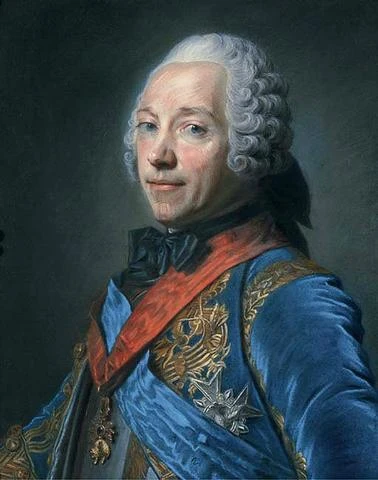
Illustration selected by monsieurdefrance.fr: Charles Louis Fouquet, Marshal of Belle-Isle, in 1748 by Quentin de la Tour.
What you need to know:
-
Vauban's legacy: The Citadel and the Arsenal still dominate the urban landscape of this reputedly impregnable stronghold.
-
The Age of Enlightenment: Marshal de Belle-Isle creates the Place de la Comédie, home to France's oldest theater still in operation.
It's time to discover the 7 wonders of Metz that I have put together for you.
5. The shock of annexations and the Imperial Quarter
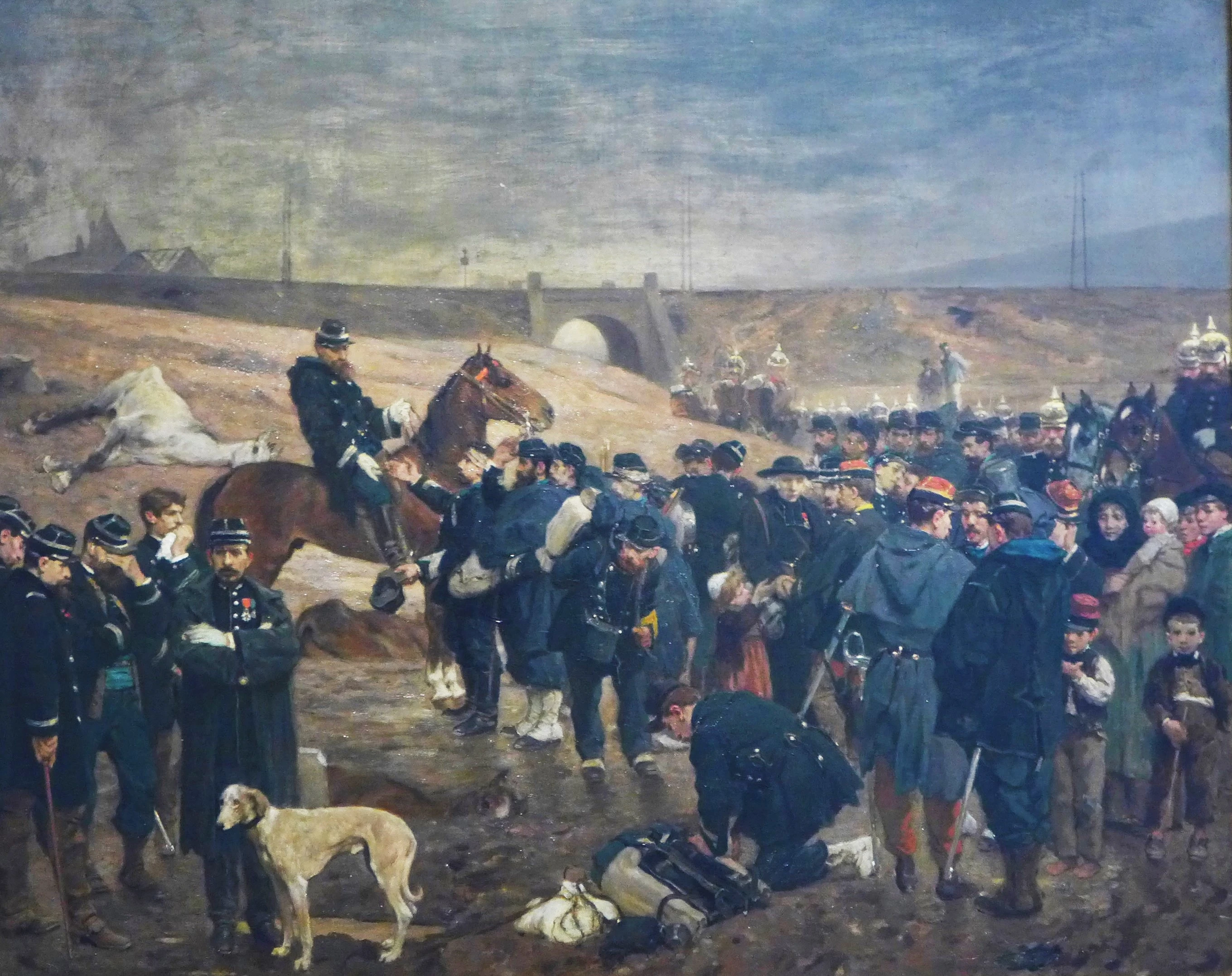
The siege of Metz, soldiers bidding farewell to their officers, painted by Théodore Devilly in 1874. Tens of thousands of French soldiers were taken prisoner by the Prussians that day. By Oktobersonne — Own work, CC BY-SA 4.0, https://commons.wikimedia.org/w/index.php?curid=68322354
After the defeat of 1871 (and in particular the disastrous siege of Metz, which was lost by Marshal Bazaine),the city was annexed by the newly formed German Empire, born in the Hall of Mirrors at Versailles, despite protests from the deputies of Moselle and Alsace in the National Assembly during the presentation of the Treaty of Frankfurt, which stipulated that the inhabitants of Metz would become German. The 19th century saw the construction of the imperial quarter with its rows of Romanesque, Gothic, and Renaissance buildings in the style of the time. The houses are quite extraordinary and well worth a visit. Emperor Wilhelm II made it one of his favorite cities and did not hesitate to embellish it by renovating the cathedral and building the enormous Metz train station with double platforms, which would prove very important during the First World War, since Metz, an impregnable fortress, was also an easy arrival and departure point for German troops, while in France the surrounding stations, which had only one platform, slowed down the arrival of soldiers. The city returned to France after the war in 1918. It was annexed again in 1940 and returned to France in 1945.
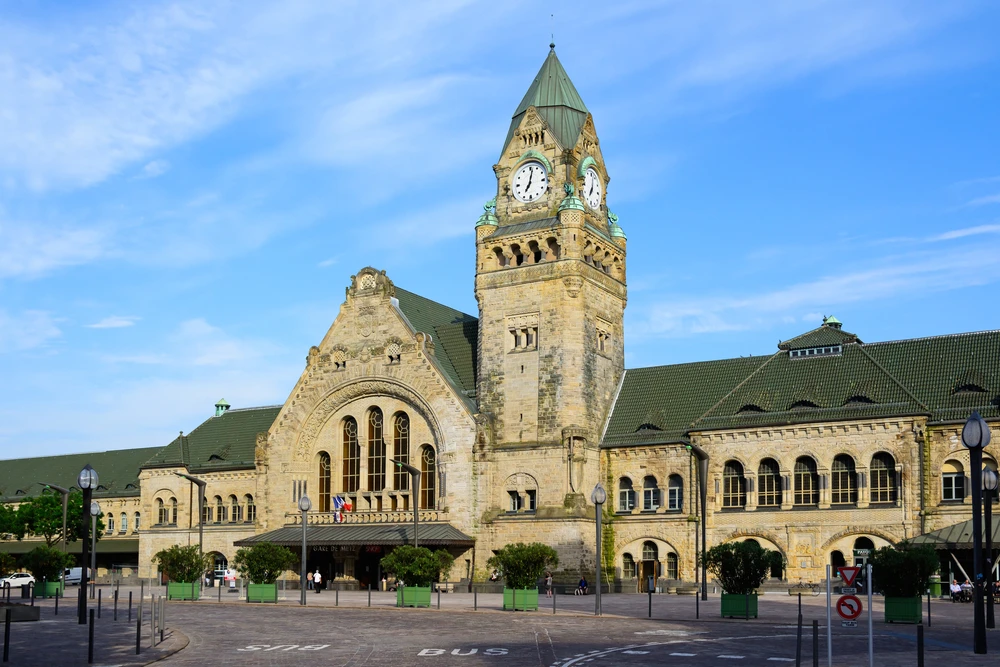
Metz train station is the most beautiful train station in France. Photo selected by Monsieurdefrance.com: Shutterstock.com
What you need to know:
-
The most beautiful train station in France: A neo-Romanesque palace with double platforms, designed to transport German troops en masse.
-
The Imperial Quarter: A unique architectural ensemble (Romanesque, Gothic, Renaissance styles) built to showcase the city as a showcase for the German Empire and display its importance.
6. Metz the visionary: The cradle of Europe
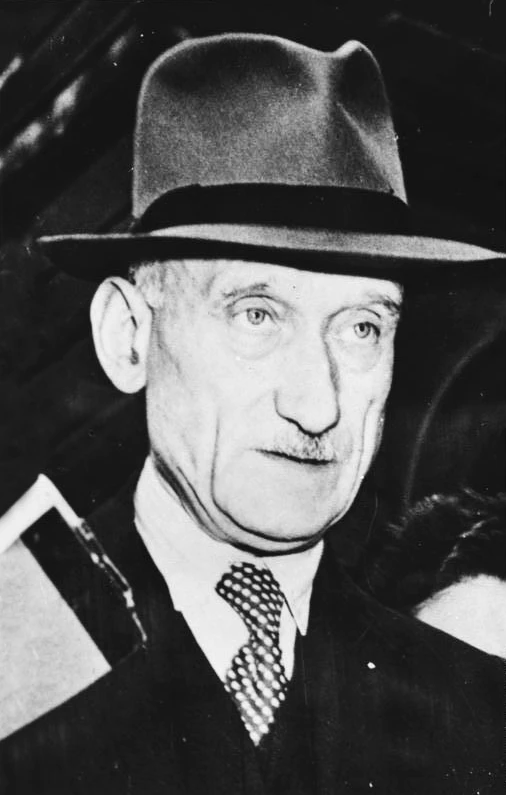
Robert Schuman, one of the founding fathers of Europe / Photo selected by Monsieur de France By Bundesarchiv, Bild 183-19000-2453 / CC-BY-SA 3.0, CC BY-SA 3.0 de, https://commons.wikimedia.org/w/index.php?curid=5422342
At the end of World War II, Metz became a symbol of reconciliation. With a rich history divided between two nations, it turned its attention to the future. It was here, in Scy-Chazelles (on the outskirts of Metz), that Robert Schuman, deputy for Moselle, developed the idea of a united Europe. Metz has remained a very commercial city. Its rich past has made it a beautiful city, which is best explored on foot to enjoy the many original facades and public buildings. There are some great places to eat. The 21st century has brought it a new symbol: the Centre Pompidou Metz with its striking Chinese hat-like appearance.
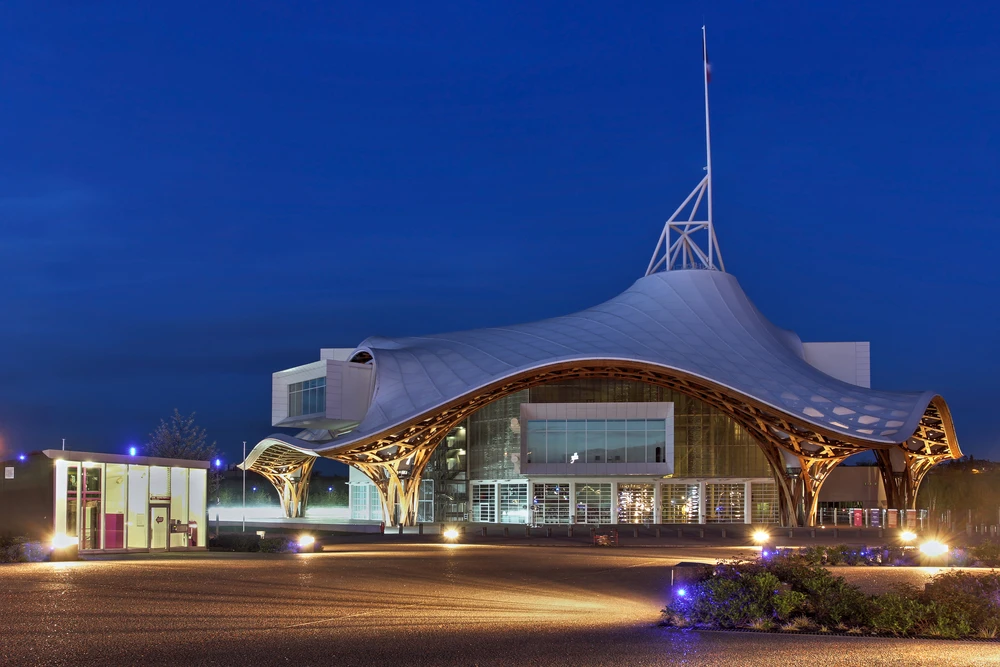
The Pompidou Center Metz at nightfall. Photo selected by Monsieurdefrance.com: Shutterstock.com
What you need to know:
-
Robert Schuman: One of the founding fathers of Europe made Metz the hub of Franco-German peace.
-
A crossroads city: Located between Luxembourg, Germany, and Belgium, Metz is now a major, dynamic, and commercial European metropolis.

FAQ: Everything you need to know about Metz
Is the Z in Metz pronounced?
No, definitely not! In French, we say "Mess."
Where does the name Metz come from?
He came from the Gallic tribe of the Mediomatrici. The city was called Divodorum (place of the gods), then it became "Divodorum Mettensis," the abbreviated name of its inhabitants, then Mettis, and finally Metz over the centuries.
Why is Metz considered a European city?
Beyond its shared history, Metz is the city of Robert Schuman, one of the founding fathers of Europe. It is located close to Luxembourg and Germany.
Why is Metz stone yellow?
It is Jaumont stone, a local limestone rich in iron oxide, which gives it its distinctive golden or "honey" color, visible on Saint-Étienne Cathedral.
Also worth reading to prepare for your trip (useful links)
-
The complete guide “What to see in Metz?” (must-see attractions on foot + practical information)
-
The Metz Cathedral (stained glass windows, Chagall, Mutte Tower, portal)
-
The history of Metz (secrets, empires, annexations, major periods)
Jérôme Prod'homme Specialist in French heritage, gastronomy, and tourism. Find all my discoveries at monsieur-de-france.com.