What should you know about Nancy? Nancy is famous for its Place Stanislas, the historic capital of the Duchy of Lorraine and the birthplace of Art Nouveau. The city is known for its specialties such as bergamot and macarons, its spa culture, its vibrant student life, and its residents with two names.
Planning to visit Nancy? A well-located place to stay will help you explore the city easily, from landmarks to great local food:
👉 Choose a well-located hotel in Nancy
👉 Check available deals for your travel dates
👉 Our recommendations on where to stay in Nancy
👉 Top things not to miss in Nancy
This article may contain affiliate links. This does not change the price for you, but helps support the Monsieur de France website.
1 / Place Stanislas: The most beautiful square in the world
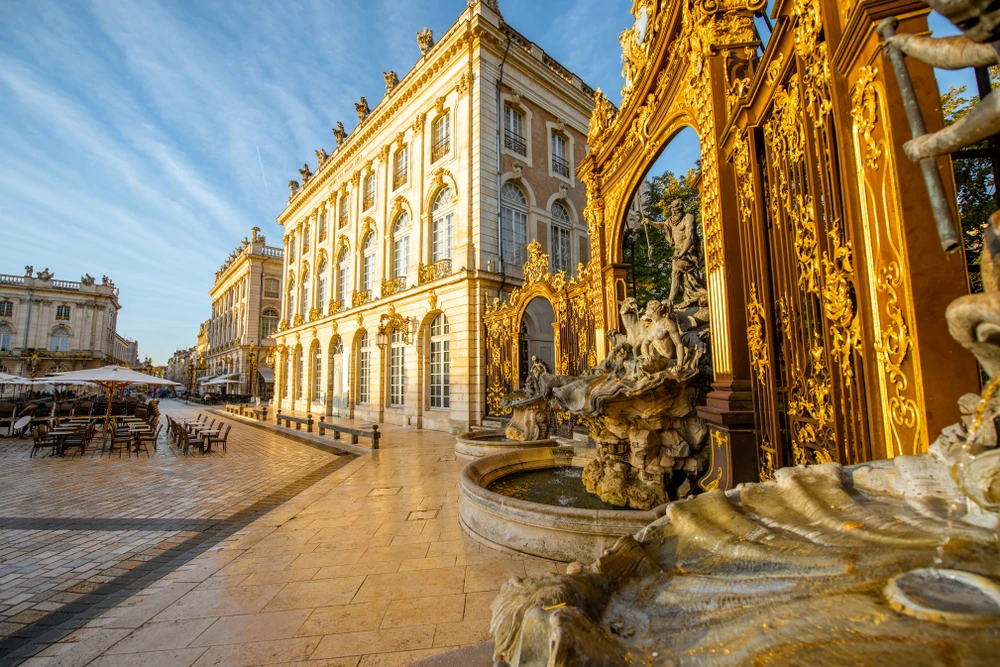
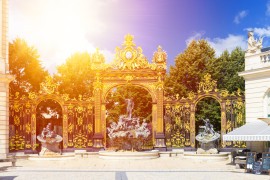
Place Stanislas in Nancy with its golden railings in the rising sun / Photo chosen by Monsieur de France: shutterstock
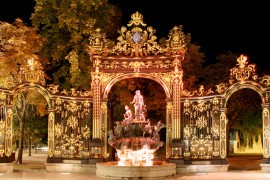
Place Stanislas is often considered the most beautiful square in the world. It is part of a larger complex, the 18th-century ensemble of Nancy, which includes two other squares: Place de la Carrière and Place d'Alliance. This complex, which dates back to 1755, has been listed as a UNESCO World Heritage Site since 1983, one of the first additions to this list of the world's most beautiful monuments and sites. It was listed at the same time as the Taj Mahal in India, and a few years before the Great Wall of China.
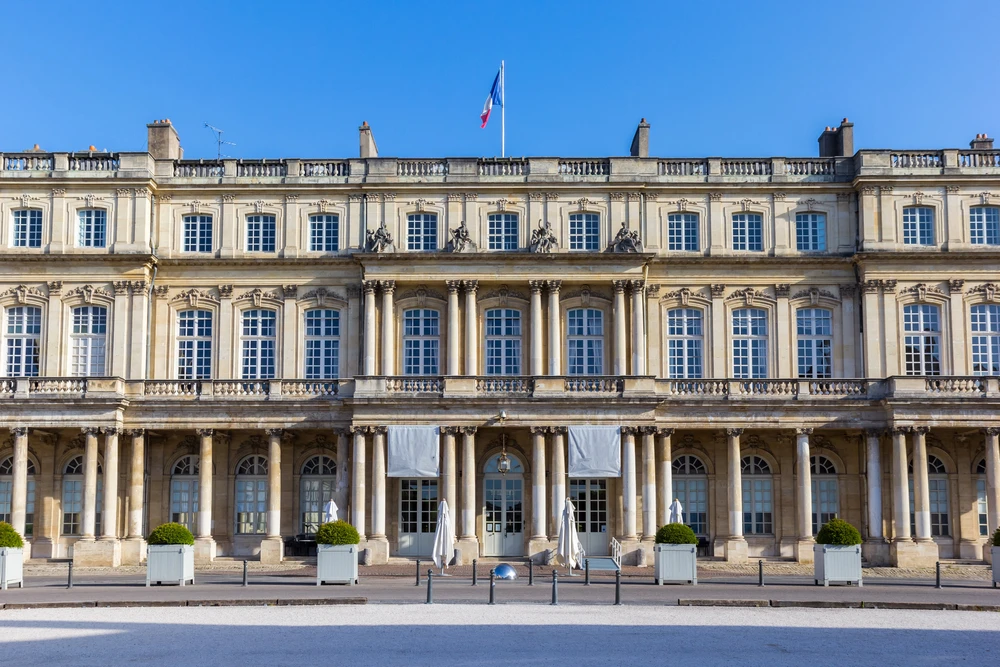
The government palace on Place de la Carrière / Photo selected by Monsieur de France: depositphotos
Much smaller than other famous squares such as Place de la Concorde in Paris, St. Mark's Square in Venice, or Tiananmen Square in Beijing, Place Stanislas is striking for its beauty and originality. It combines the elegance of white stone buildings with the extravagance of iron railings gilded with gold leaf. Splendid fountains also adorn it. It is the heart of Nancy, its agora. People come to see it, pass through it, stop there for a drink, and many events have taken place there.
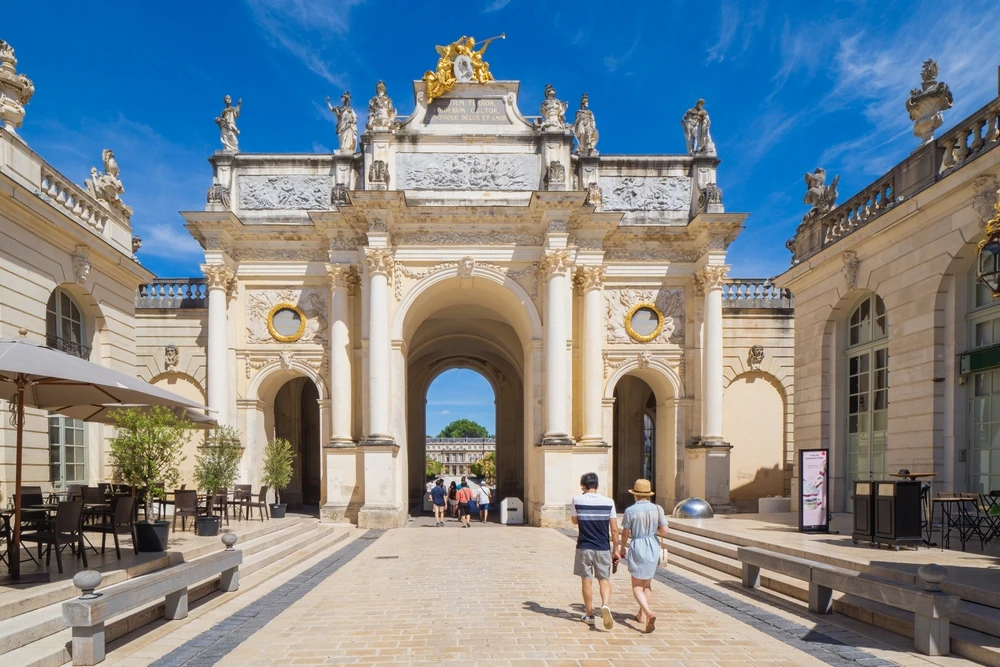
The Arc Héré closes off Place Stanislas and leads to the magnificent Place de la Carrière/ Photo selected by Monsieur de France shutterstock

2 / Nancy is the historic capital of the Duchy of Lorraine.
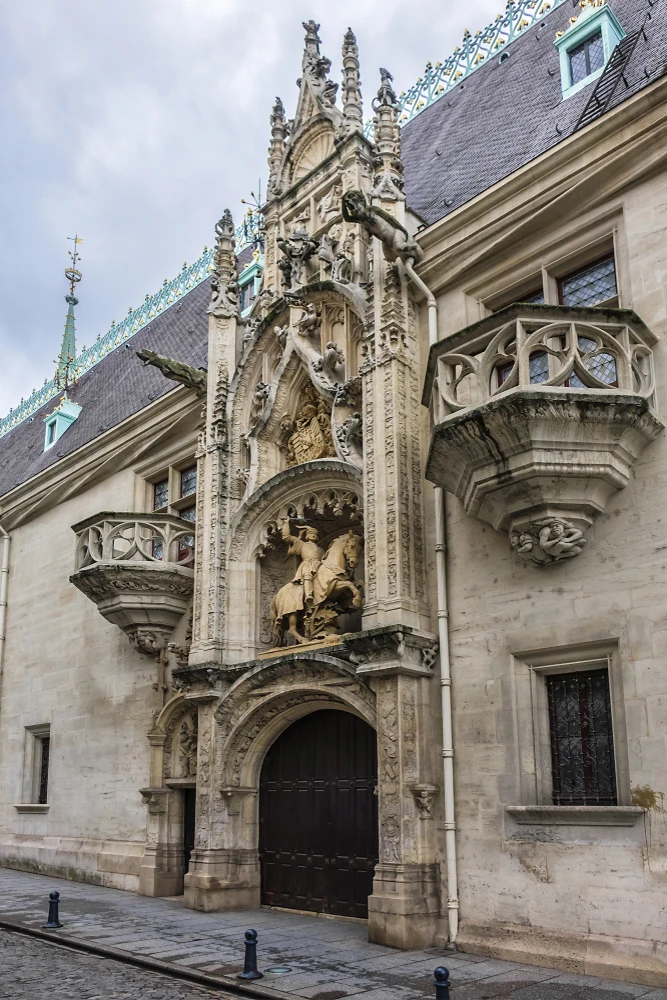
The Ducal Palace located in Nancy's old town was the residence of the Dukes of Lorraine. Duke Antoine, one of them, is depicted on the gatehouse / Photo selected by Monsieurdefrance.Fr: Kiev.Victor/Shutterstock
Founded by Gérard I, Duke of Lorraine, around the year 1000, Nancy was originally a fortified castle around which a town developed. Over time, it became the favorite residence of the sovereign dukes of Lorraine and their capital. Charles III propelled it into the ranks of the great cities at the beginning of the 17th century by building a second city of Nancy, the new city, five times larger than the original city, which became the old city. This new city was endowed with wide thoroughfares (Rue Saint Jean, Rue Saint Dizier), squares (Place Charles III) and facilities. Surrounded by ramparts so impressive that they attracted the first tourists (they were destroyed 40 years later on the orders of the French troops occupying the Duchy of Lorraine), it was therefore made up of two cities for a long time before the two entities were reunited by the construction of the 18th-century urban complex, notably the famous Place Stanislas. Nancy ceased to be the capital of the Duchy of Lorraine when it was annexed by France in 1766. It became the prefecture of the department of Meurthe in 1790, before the department became Meurthe-et-Moselle in 1871.
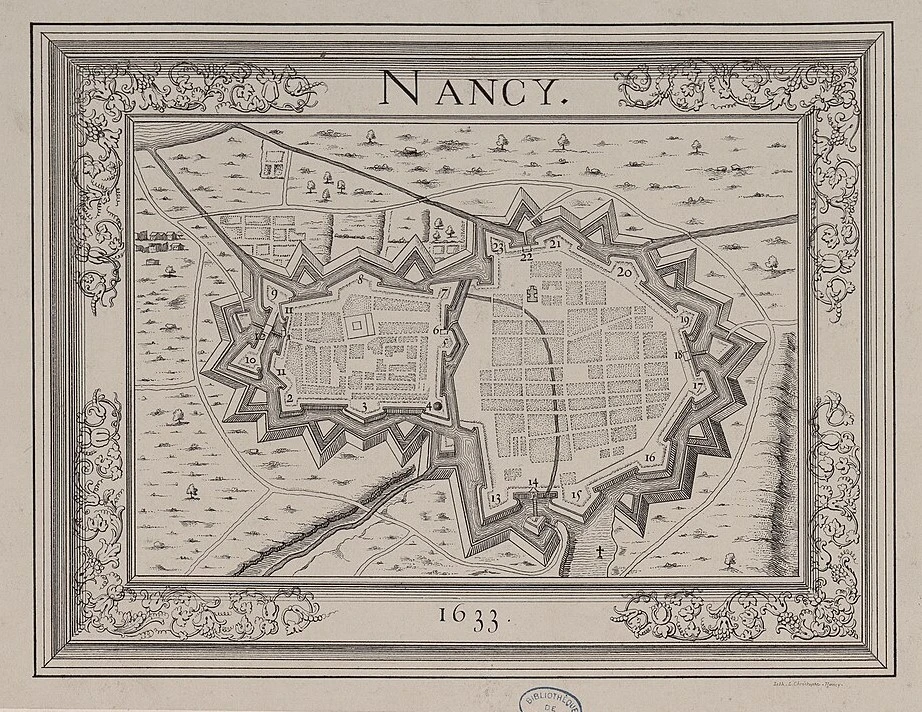
The twin cities of Nancy in 1633 / Photo selected by Monsieur de France: wikicommons
3 / The thistle: the historic emblem of Nancy
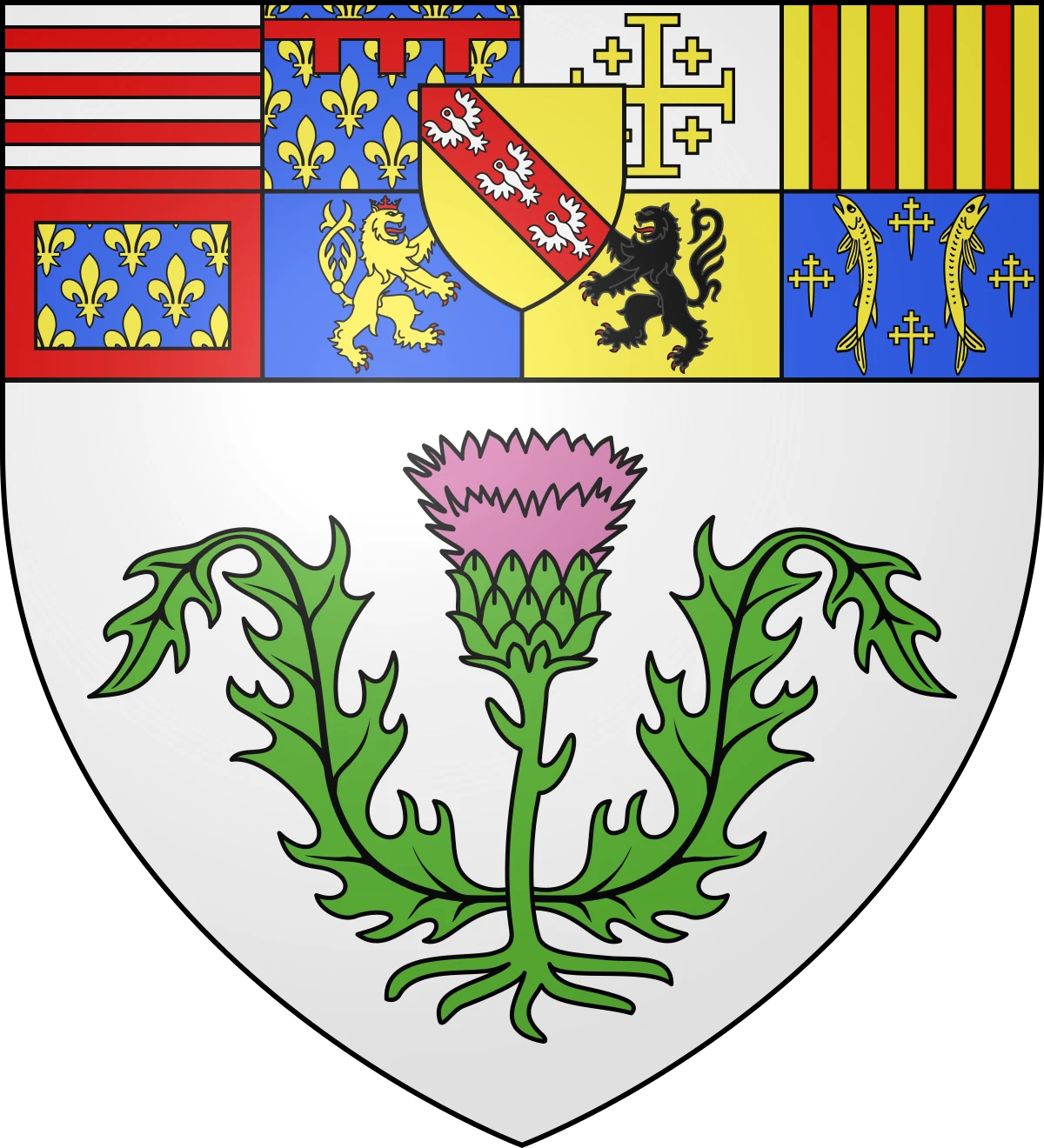
The coat of arms of Nancy with the thistle, emblem of the city, in the center / image chosen by Monsieur de France: Manassas via wikicommons.
Like the Cross of Lorraine, the thistle is a symbol that originated with the House of Anjou and was brought to the region by René I in the 15th century when he married Isabelle of Lorraine. Initially little used, it truly became the emblem of the city (and more broadly of Lorraine) after the Battle of Nancy (1477) when René II won the battle against Charles the Bold, Duke of Burgundy, who was besieging the city but never managed to take it (eventually perishing in the marshes not far from the city walls). The thistle can be found on the coat of arms of Nancy (accompanied by the arms of the Dukes of Lorraine, of whom Nancy was the capital). You can see it, in particular, on the façade of the Town Hall, held by an allegory of the city of Nancy.
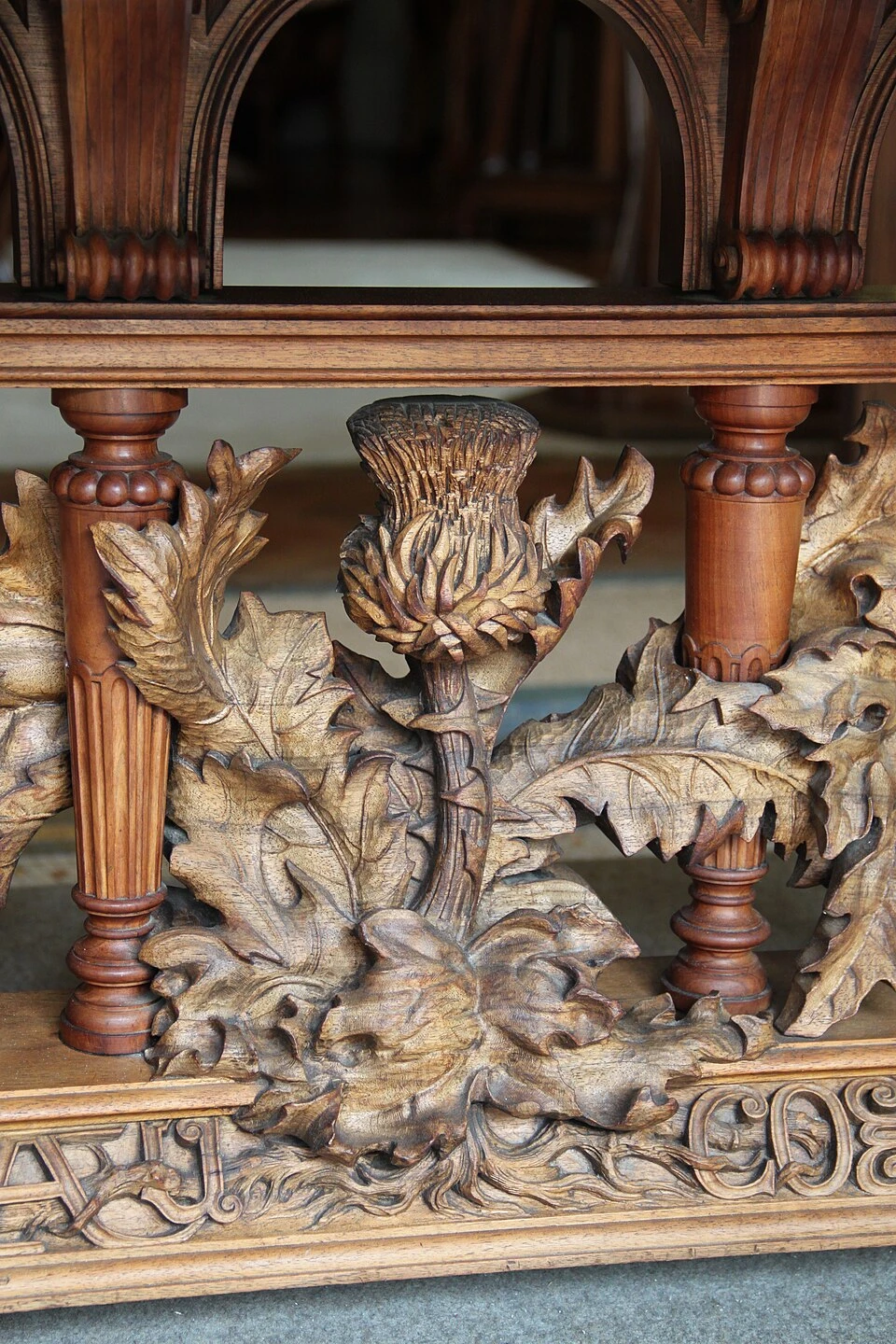
A thistle sculpted by Emile Gallé in 1889 / photo chosen by Monsieur de France: By Léna - Own work, CC BY 3.0, https://commons.wikimedia.org/w/index.php?curid=16838504
4 / Nancy's motto: "Whoever messes with it gets stung."
It was also René II, victorious over his enemy Charles the Bold after the Battle of Nancy in 1477, who chose Nancy's motto, which was not taken by the enemy. He chose "né toqués mi, je poins," which means "don't touch me, I'll sting," and which became "qui s'y frotte, s'y pique" (whoever rubs against it, gets stung). It is also the motto of AS Nancy Lorraine, the soccer club.
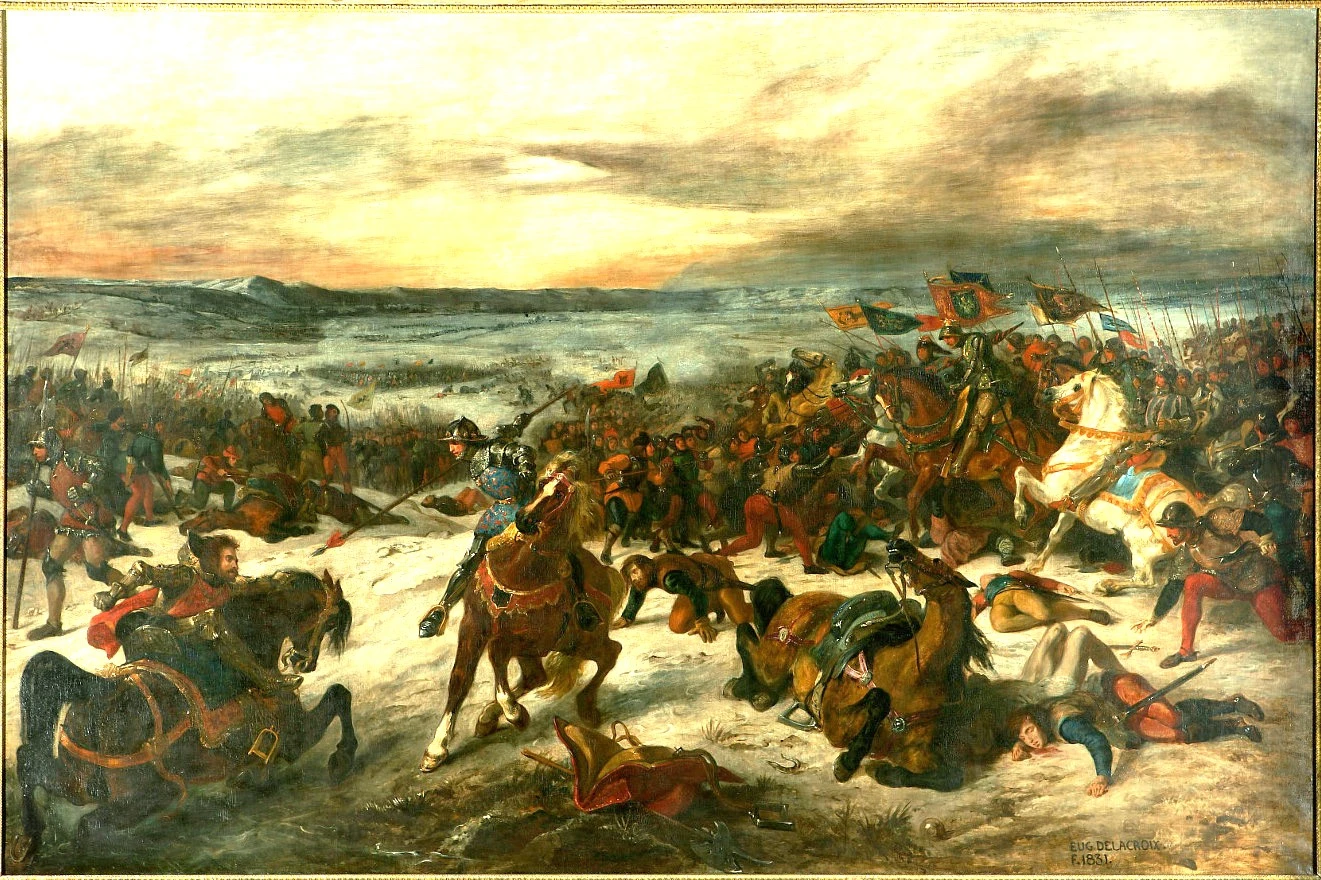
The Battle of Nancy / Painting on display at the Nancy Museum of Fine Arts / By Eugène Delacroix — [1], Public domain, https://commons.wikimedia.org/w/index.php?curid=86142397
That said, there is another saying that is sometimes used, which is quite amusing and illustrates the locals' love of good food: "Nancy pour la gueule j'en suis" (Nancy for the food, I'm in).
5 / The two culinary specialties: Bergamotes and Macarons de Nancy
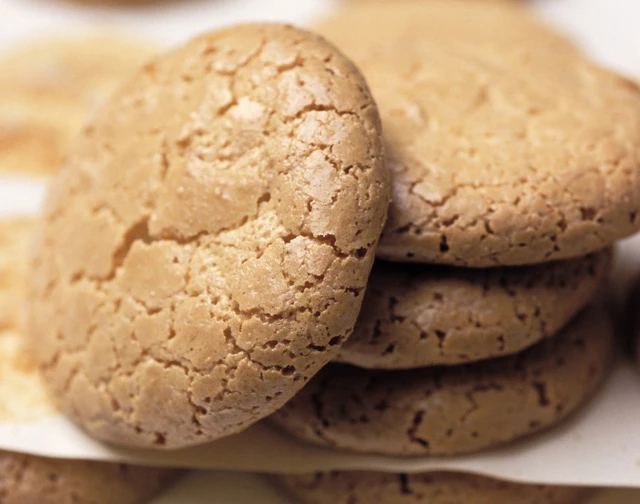
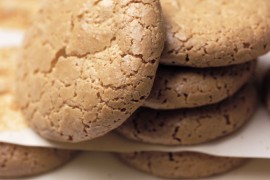
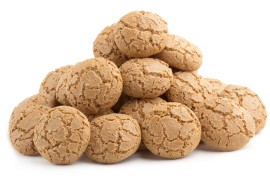
Macarons from Nancy Photo selected by Monsieurdefrance.fr: Foodpictures/Shutterstock.com
Nancy bergamots are sweet candies made with bergamot essence. They are covered by a Protected Geographical Indication (PGI). It is one of the very few French PGIs whose basic ingredient does not come from the local area. Bergamot trees do not grow in Lorraine, but rather in Calabria, in southern Italy. This tradition of bergamot-flavored sugar has existed in the city for several centuries, at least since the 18th century, perhaps even earlier, but it was in the 19th century that it became iconic when these candies began to be sold in large quantities in cartridge boxes, first, before bergamot boxes were specially created by confectioners. These boxes are often collected as well.
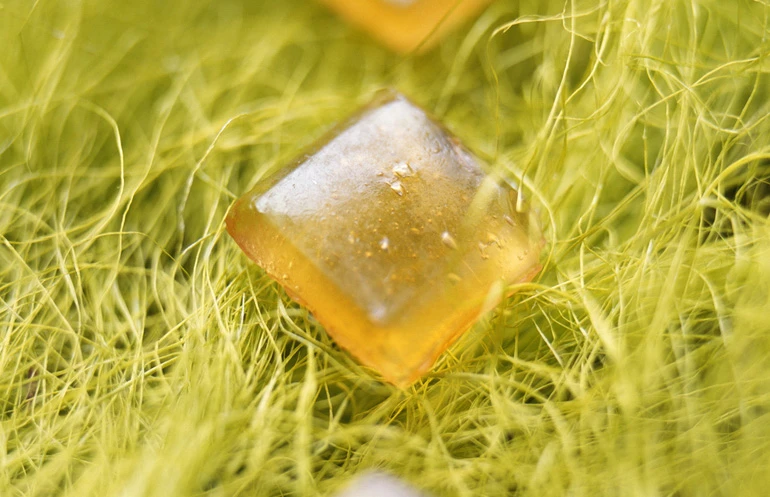
Bergamot from Nancy Photo selected by Monsieurdefrance.fr: Foodpictures/shutterstock.com
Nancy macaroons are older as they seem to have originated in the 16th century, perhaps after the visit of Catherine de Medici, who was the grandmother of the Duchess of Lorraine and who loved these almond-based biscuits that she had brought with her from Italy. The convents would have appreciated this recipe made with eggs, which were allowed in convents, unlike meat. What is certain is that the first macarons as we know them were sold at the end of the 18th century, during the French Revolution, by two nuns who had been expelled from their convent, which had just been closed. To earn a living, these two nuns began making the macarons that were served to them in their convent and selling them. The macarons were so delicious that they won over the people of Nancy, who ended up calling the two nuns "the macaron sisters." While the story is not necessarily documented, the fact remains that Nancy macarons have been famous since the 19th century and that their recipe is kept secret by pastry chefs. Therefore, authentic Nancy macarons can only be found in Nancy.

Lorraine is also the region of madeleines. You can find some very good ones in Nancy. / Photo chosen by Monsieur de France: shutterstock.
In Nancy, you can, of course, sample typical Lorraine specialties such as quiche Lorraine, pâté Lorrain, madeleines, chardons Lorrains, Lorraine sausage, and other delicacies. Lorraine is also renowned for the quality of its wine (particularly from the hillsides of Toul) and its beers.
6 / Nancy, French capital of Art Nouveau
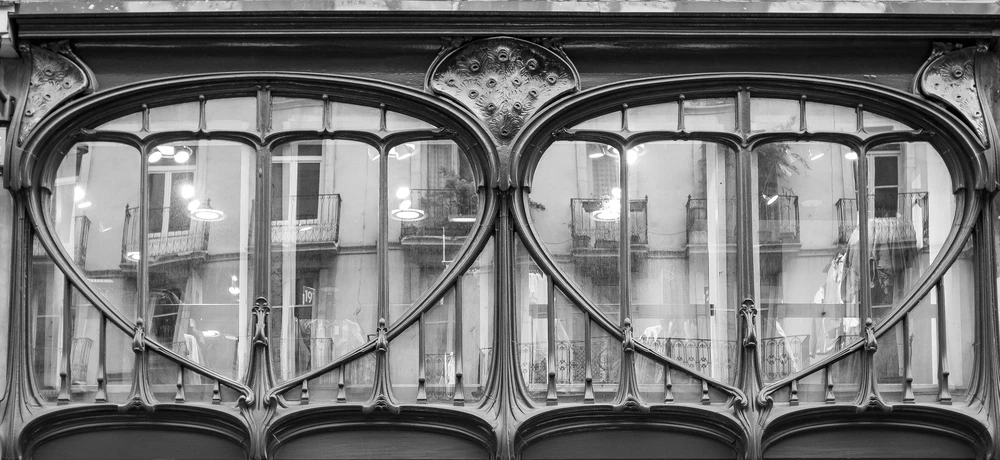
An Art Nouveau facade in downtown Nancy / Photo selected by Monsieur de France; depositphotos.
If there is one city in the world where Art Nouveau truly flourished, it is Nancy. It is also the city with the most Art Nouveau elements in relation to its size. Its reasonable size means that many of its monuments can be explored on foot. It gave its name to an Art Nouveau movement called the Nancy School, as there were so many designers in the city. Among them were Emile Gallé, Louis Majorelle, and others.
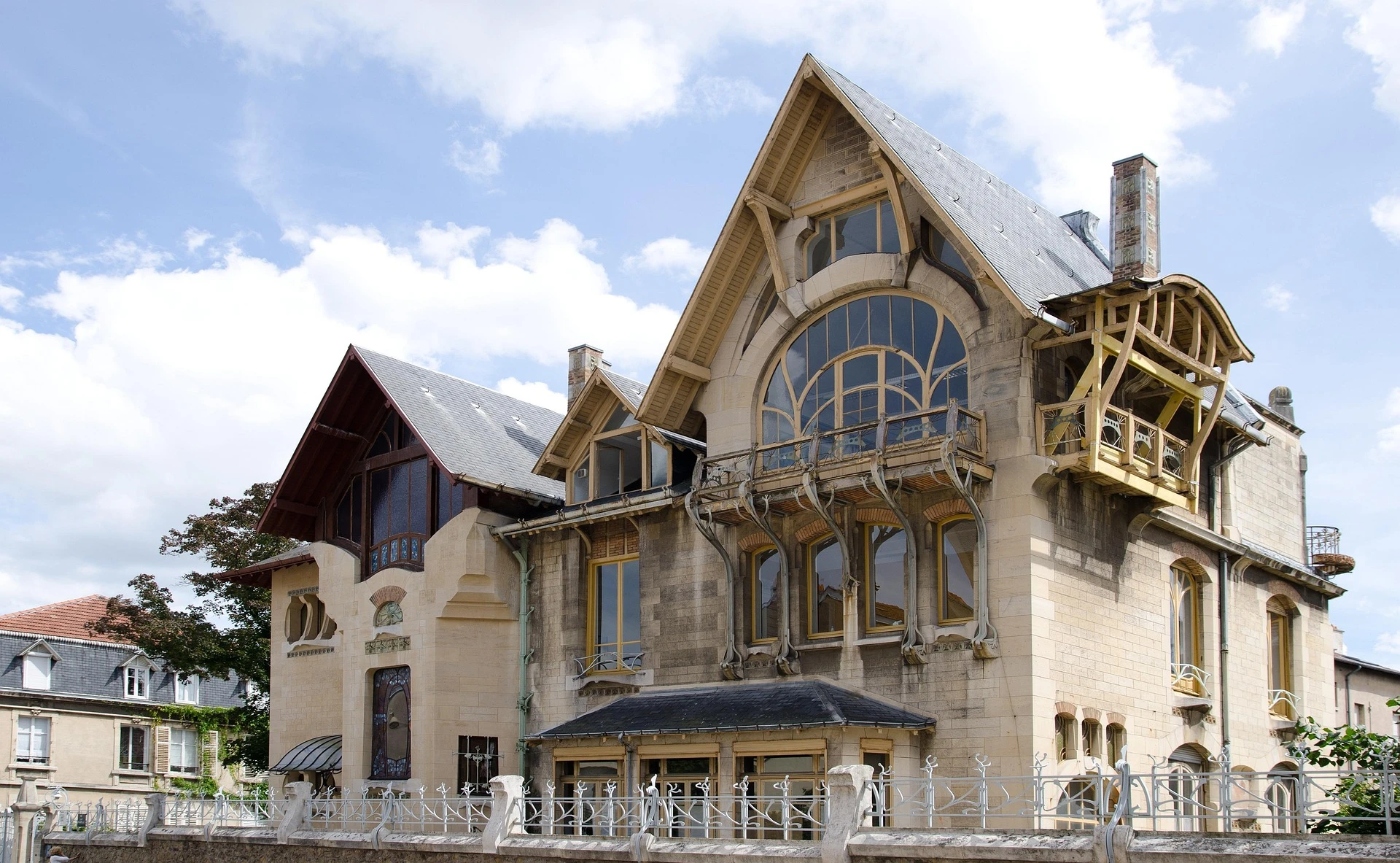
The facade of the Villa Majorelle in Nancy / Photo selected by Monsieurdefrance.com: Patrice Soudier from Pixabay
The Nancy School distinguished itself through its desire to make art accessible to all through industry. Nancy is therefore famous for its many Art Nouveau buildings, including the Villa Majorelle, but also for its glass creations (Emile Gallé, etc.) and woodwork (Louis Majorelle), which can be seen at the Museum of the Nancy School. The tradition of glass and creativity is continued by Maison Daum. The world's largest Daum collection is on display at the Museum of Fine Arts and is well worth a visit.
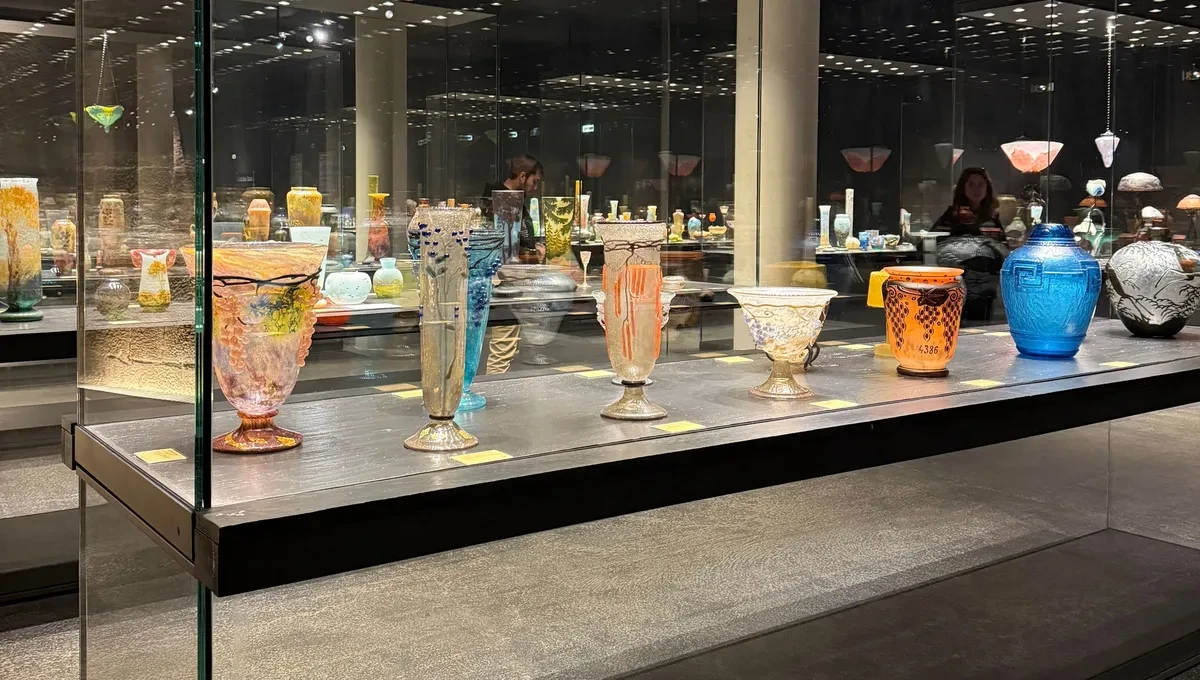
The Daum collection at the Nancy Museum of Fine Arts / Photo selected by Monsieur de France: Jérôme Prod'homme
7 / Nancy is a highly touristic city
And much more than it seems. With more than 3,000,000 tourists each year, it is often a great place to stop off for a short break, especially for foreign tourists (who account for around 33% of visitors to the Tourist Office on Place Stanislas). Nearly 6,000 jobs depend directly on tourism in the city. Major events attract many visitors, such as the Saint Nicolas celebrations in December, which draw nearly 150,000 people to the streets and Place Stanislas to watch the parade of the patron saint of Lorraine, as well as the Nancy Jazz Pulsation NJP music festival and Le Livre sur la Place, the literary fair and one of the leading literary events in France. For its part, the Prouvé convention center attracts many cultural, economic, and scientific events.

Photo chosen by Monsieur de France: depositphotos
8 / Nancy is a European spa town
It is one of the most recent, but it is probably the largest spa town in France in terms of population. Nancy's water has always been renowned (the Dukes of Lorraine had it delivered when they traveled), but it was in 1908 that architect Louis Lanternier discovered Nancy's thermal spring following a series of drillings. He decided to build an entire complex, which was inaugurated in 1909. The first buildings were erected, including the famous and magnificent round swimming pool, before the First World War brought the project to a halt and it eventually closed, leading to the ruin of its founder. In 2010, the Greater Nancy Metropolitan Area decided to restart the project. The spring was drilled again, analyzed, and a brand new spa complex was built. Nancy Thermal now has three pools (including one outdoor pool) and four areas, one of which is dedicated to spa treatments. The water is naturally warm and does not need to be heated to reach the right temperature.

The Nancy spring is naturally warm / Photo selected by Monsieur de France: Shutterstock.
9 / Nancy is the city with the highest number of students in France.
That's the least we can say! With one student for every six inhabitants, Nancy is France's most student-oriented city. With 43,000 students and 6,000 academics, the city is the second largest university hub in the Grand Est region after Strasbourg and one of the 12 largest in France. Whether they study at the University of Lorraine or in schools, students are part of Nancy's very identity. They also make the city a young city.

Students bring Nancy and its nightlife to life / Photo selected by Monsieur de France: Shutterstock.
10 / Les Nancéiens: the inhabitants of Nancy have two names
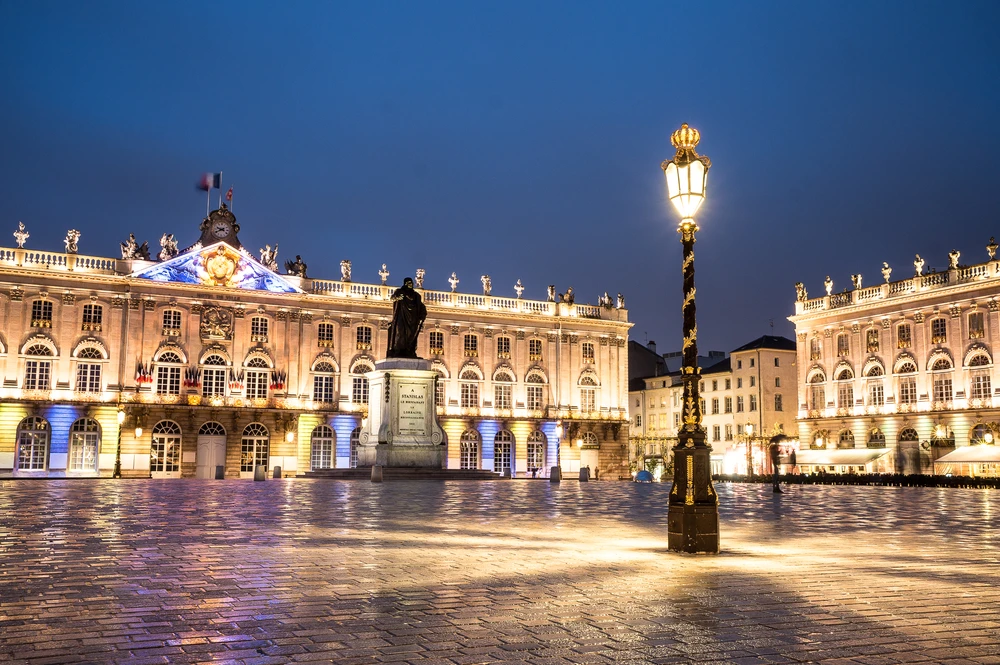
Nancy City Hall / Photo selected by Monsieur de France: shutterstock
Nancy comes from "nanciaco," the name of the hamlet where Duke Gérard I of Lorraine founded a castle around which the city developed. "Nanciaco" became Nancey (pronounced Nancéi) in the Middle Ages, then Nancy, so the inhabitants are called Nancéiens, which is their official name, but we also often hear them referred to as Nancéens. Both are accepted. It is even said that the august and very serious Académie Française has validated both demonyms. Note that there are approximately 105,000 Nancéiens.
To continue exploring Nancy, click here.
Want to explore the city in more depth? Browse our detailed guides to historic neighborhoods and the best places to eat.
FAQ: everything you need to know about Nancy
What is the history of Place Stanislas?
Considered the most beautiful in the world, it was listed as a UNESCO World Heritage site in 1983. It forms a vast 18th-century architectural ensemble alongside Place de la Carrière and Place d'Alliance.
What is the political past of Nancy?
Before being annexed by France in 1766, the city was the historic capital of the powerful and independent Duchy of Lorraine, shaped by sovereign builders.
What is the floral emblem of the city?
It is the thistle. It became the inseparable emblem of Lorraine following the resounding victory of Duke René II during the famous battle of 1477.
What is the historical motto of the city?
The motto is "Qui s'y frotte s'y pique" (Who rubs against it gets pricked). It directly references the sharp thorns of the thistle and the city's fierce resistance against invaders.
What are the two must-try local delicacies?
The two pillars of local gastronomy are the macarons, whose recipe created by two nuns during the Revolution remains a secret, and bergamotes, golden perfumed candies.
Which global art movement was born here?
The city is the French capital of Art Nouveau. Thanks to geniuses like Émile Gallé and Louis Majorelle, the École de Nancy revolutionized decorative arts in the early 20th century.
Does the city attract many visitors?
Yes, with over 3 million tourists annually. This appeal is amplified by major events like the magnificent Saint Nicholas festivities which draw massive crowds in December.
Are there thermal springs in the city?
Absolutely. Its naturally hot water, discovered in 1908 by architect Louis Lanternier, led to the creation of a vast thermal complex that has recently been reborn.
Is the city's atmosphere young?
Very young and dynamic! It is proportionally the number one student city in France, with an impressive ratio of one student for every six residents.
What are the residents of the city called?
They have two names, both validated by the French Academy: they can be called Nancéiens or Nancéens.
Jérôme Prod'homme Specialist in French heritage, gastronomy, and tourism. Find all my discoveries on monsieur-de-france.com.
Find out more about Nancy:
- The complete guide to visiting Nancy
- my audio guide in immersive sound to visit Nancy
- Place Stanislas: history and secrets of Nancy's most beautiful square
- Art Nouveau and the École de Nancy: an architectural treasure
- What to do in Nancy over a weekend?
- Culinary specialties of Nancy you absolutely must try
- And why not discover Lorraine?
Monsieur de France is the go-to resource for culture, history, food, and travel in France, offering real expertise on French heritage.