To avoid the tourist mistake: the real top 10 in 2026, you must understand that stopping at Place Stanislas is a huge waste. The city hides medieval splendor in the Old Town and world-renowned Art Nouveau masterpieces. Dive into our comprehensive guide to explore the true treasures of the former capital of the Dukes of Lorraine.
The TOP 10 Things to See in Nancy
1. Place Stanislas: The UNESCO Jewel and World's Most Beautiful Square
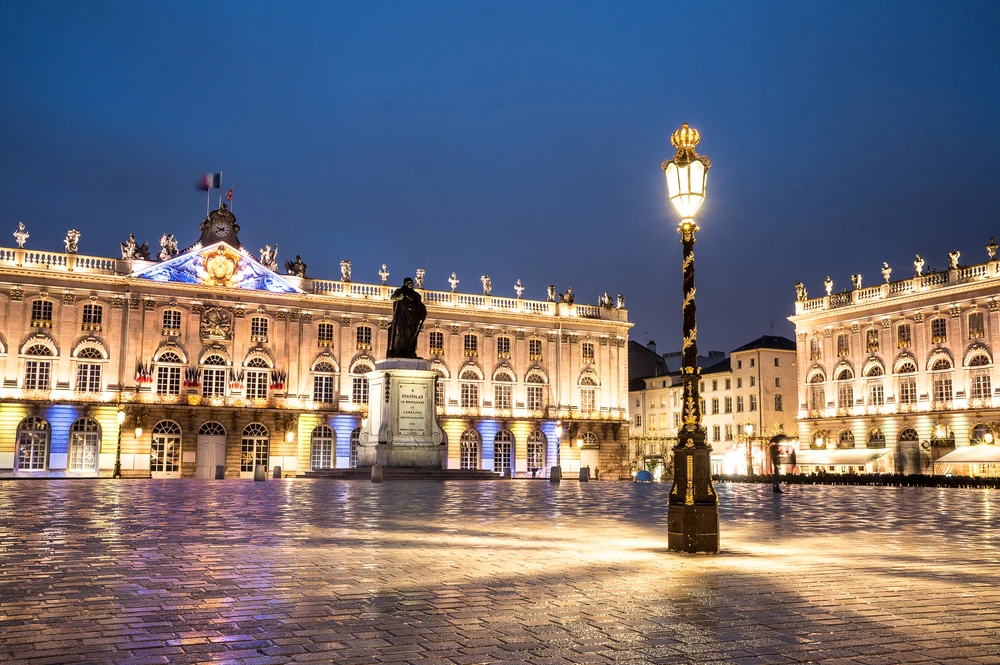
This is the jewel of Nancy. Not very big, it is a kind of open-air Versailles. A meeting place for the inhabitants, it is where they gather in the great moments, it is also an artistic wonder. You just have to admire the wrought iron gates enhanced with gold, the sculptures (on the fountains, on the roofs...) and the Arc de Triomphe, to tell yourself that you are on the most beautiful square in the world.
Its history is here :
Where to stay in Nancy?
If you are planning to visit Nancy and discover its main highlights, staying in the city centre is often the most convenient option. From there you can easily walk to the famous Place Stanislas, explore the charming old town, visit museums and enjoy the elegant atmosphere of this historic Lorraine city.
To prepare your stay and compare accommodation depending on your dates and budget, you can check:
• available hotels in Nancy ↗
• hotels in Nancy city centre ↗
• well-located hotels near Place Stanislas ↗
This allows you to quickly see availability, guest reviews and prices depending on the time of your visit.
This article may contain affiliate links. This does not change the price for you but helps support the Monsieur de France website.

2. Art Nouveau Architecture: An Open-Air Museum in the Streets
Everywhere in the city, Art Nouveau has left its mark on many buildings, both private houses and public places.
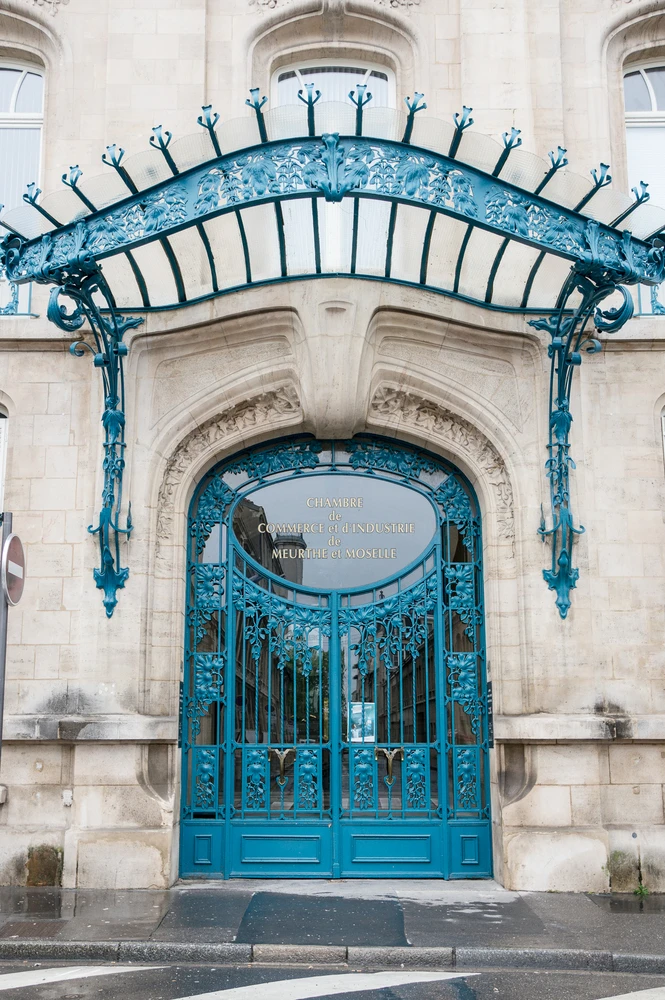
The marquee of the Chamber of Commerce and Industry of Meurthe et Moselle/ Photo chosen by Monsieurdefrance.Fr: HUANG Zheng/Shutterstock
Around the train station, you have to pass by the Excelsior whose interior is typical, with Majorelle furniture, Daum lights... further on, rue Poincaré, the marquise of the Chamber of Commerce is sublime. If you continue, you will discover the rue Saint-Jean (the main shopping street of Nancy) with some magnificent facades (one of which is very close to the cinema and will amaze you) and the fantastic glass roof of the Crédit Lyonnais signed by Jacques Grüber.
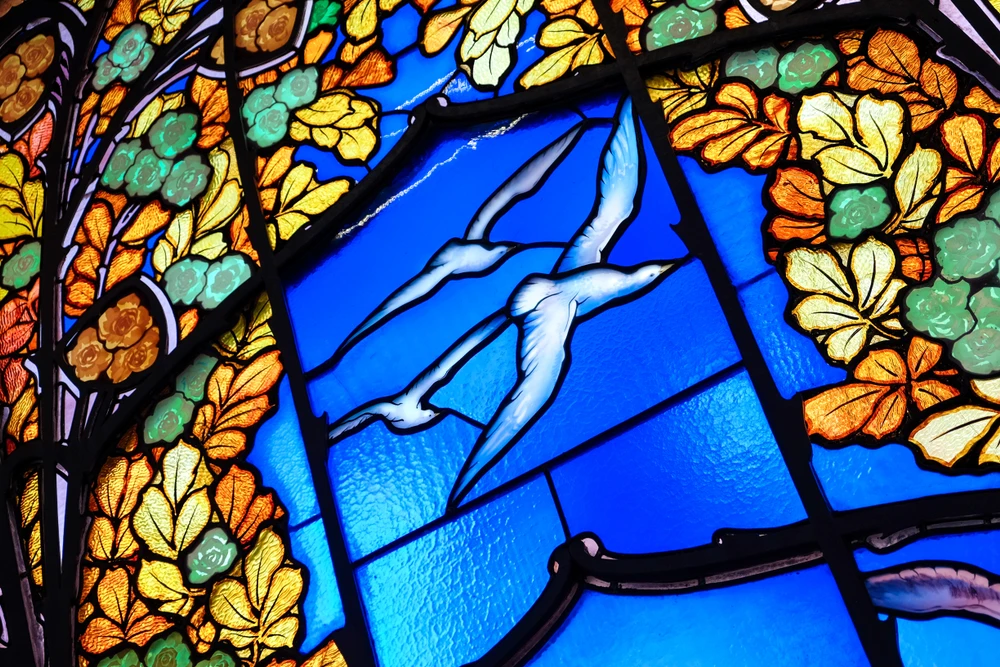
Jacques Grüber "roses and seagulls" villa Bergeret in Nancy / Photo chosen by Monsieurdefrance.Fr : WildSnap/Shutterstock
Further on, the avenue Foch, the rue de la Commanderie, the Quai Claude le Lorrain offers nuggets. For more information, do not hesitate to contact the tourist office, you will find maps that will allow you to stroll and discover the French capital of Art Nouveau.
Visit Nancy with a local guide
To discover Nancy in a different way and gain a deeper understanding of the city’s history, taking a guided tour can be an excellent option. Accompanied by a professional guide, you can stroll through Place Stanislas, explore the old town, and discover the stories and secrets of the former capital of the Dukes of Lorraine.
👉 Discover the guided tour of Nancy ↗
This article may contain affiliate links. This does not affect the price for you but helps support the Monsieur de France website.
3. Place de la Carrière: The Legacy of Dukes and Medieval Jousts
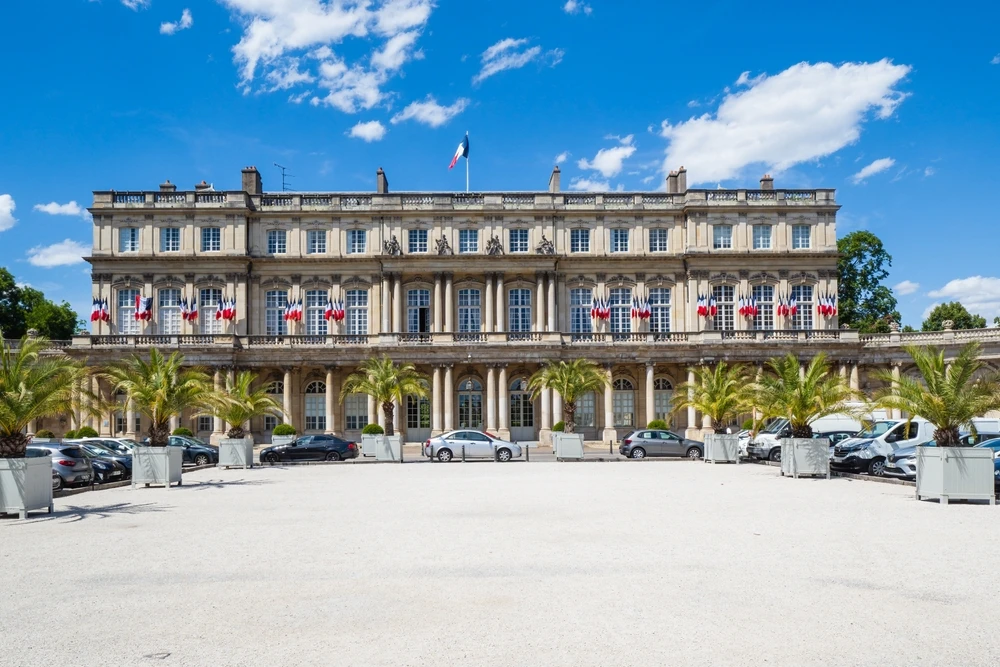
The Place de la Carrière in Nancy / Photo chosen by Monsieurdefrance.com: /Shutterstock
It is part of the World Heritage Site. Born in the Renaissance, it was initially imagined as a place where one could make a "career" by winning successive victories in tournaments (knights' jousts, ring races...). In the 18th century, Emmanuel Héré, the architect of the Place Stanislas, brought it up to date by adding 18th century facades and by taking inspiration from the work of his master Germain Boffrand (author of the Château de Lunéville, the Château de Haroué...). It is completed by two very nice mansions and the Government Palace.
4. The Ecole de Nancy Museum: An Intimate Look at 1900s Art
Created to tell the story of the École de Nancy, an artistic movement in Nancy within the Art Nouveau movement, the Musée de l'École de Nancy is located on rue Blandan. You can discover the interior of a house from that period, including its furniture (signed Louis Majorelle) and decorative objects (signed Gallé). The Ecole de Nancy is a group of artists whose passion is "art for all", in other words the desire to put industry at the service of art in order to manufacture more objects and make beauty more accessible.
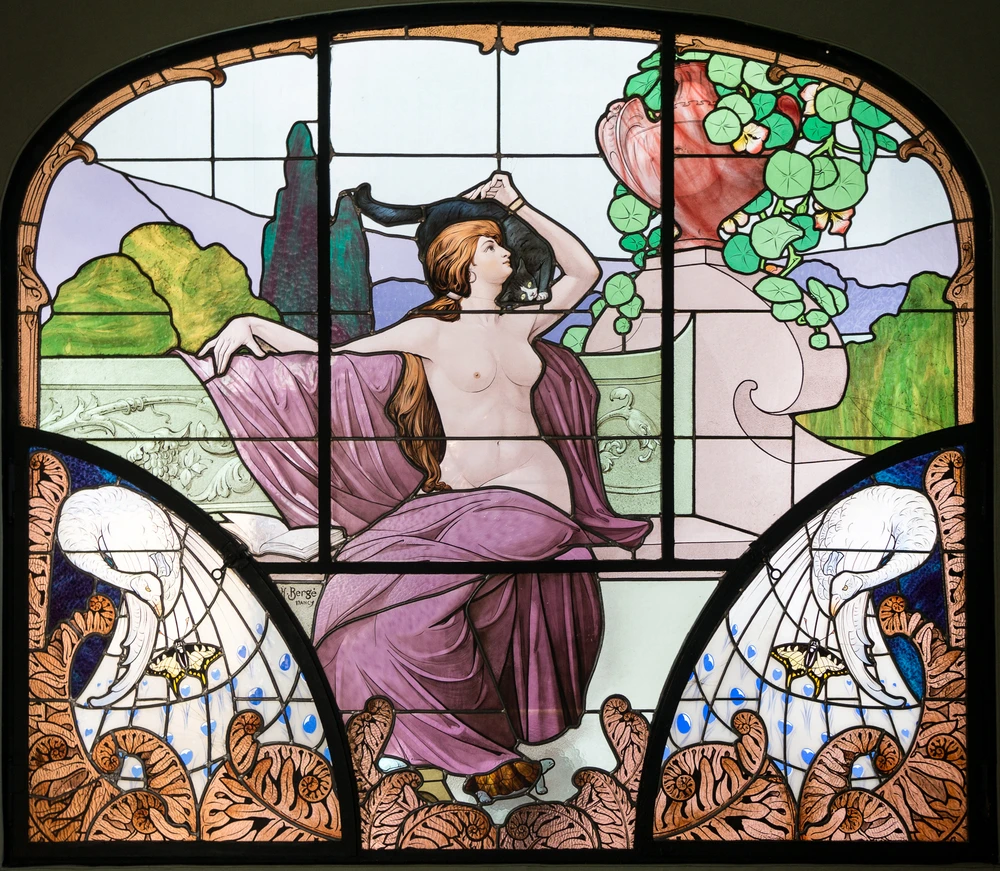
Grüber stained glass window visible at the Ecole de Nancy Museum / Photo chosen by Monsieurdefrance.com : HUANG Zheng/Shutterstock
Many great names were part of this "Ecole de Nancy" famous in the world of Art: Emile Gallé (known for his magnificent vases), Louis Majorelle (for his furniture), Jacques Grüber (for his stained glass) and many others.
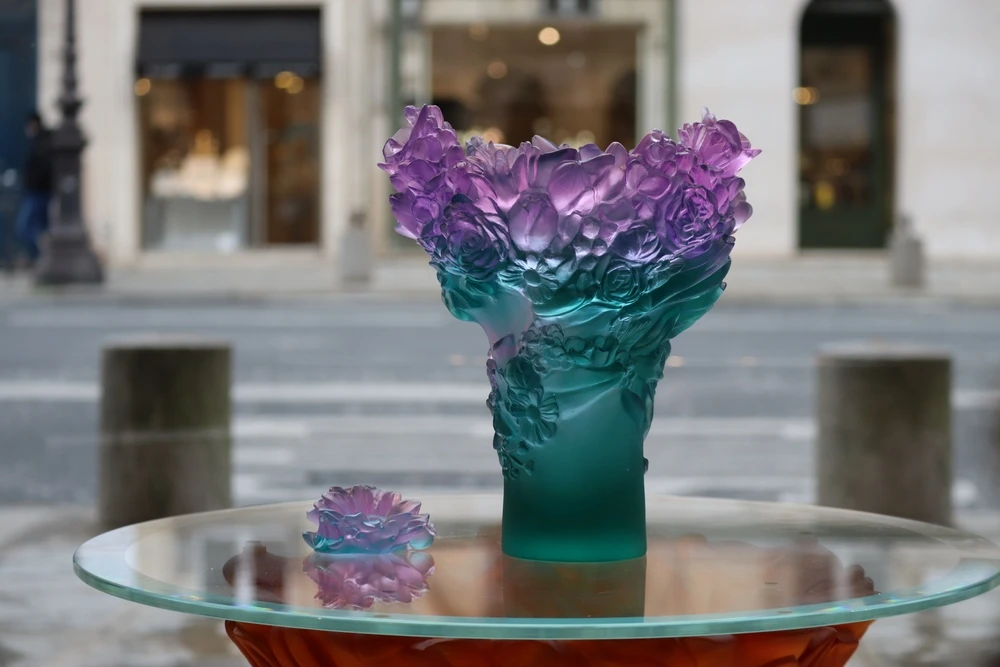
Daum still exists and perpetuates the Ecole de Nancy through the regular realization of new and unique decorative objects in the world / Photo chosen by Monsieurdefrance.com : Andrei Antipov/Shutterstock
5. Place d'Alliance: The 18th Century's Best-Kept Secret
This is the smallest of the three squares that are part of the World Heritage Site. It is more discreet, quieter. To discover, notably, the work of Cyfflé located in its center and which is dedicated to the Franco-Austrian alliance of 1756.
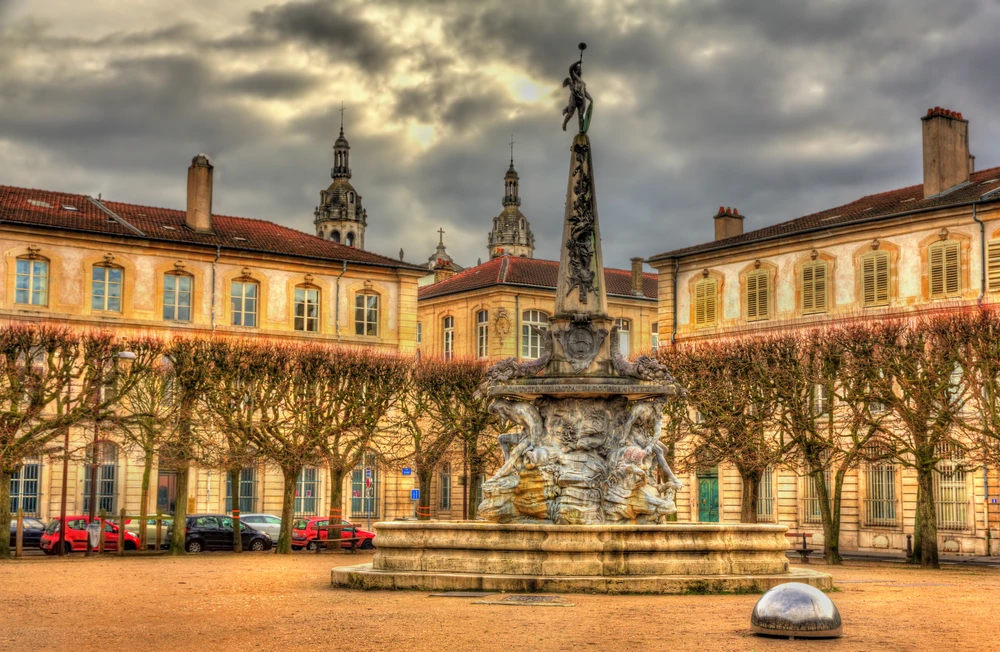
The Place d'Alliance in Nancy / Photo chosen by Monsieurdefrance.com : /Shutterstock
6. The Old Town (Ville-Vieille): Medieval Charm and the Craffe Gate
Nancy was for a long time a small city concentrated around the castle of the Dukes of Lorraine. In the early 17th century, Duke Charles III decided to expand his capital. And instead of tearing down the ramparts and building around the city, he decided to build a second city of Nancy: the "new city", 5 times larger than the original city which had become... the "old city", a nickname that has stuck to it today. Nancy had the particularity of being made up of 2 cities until Stanislas made them meet by building his square.
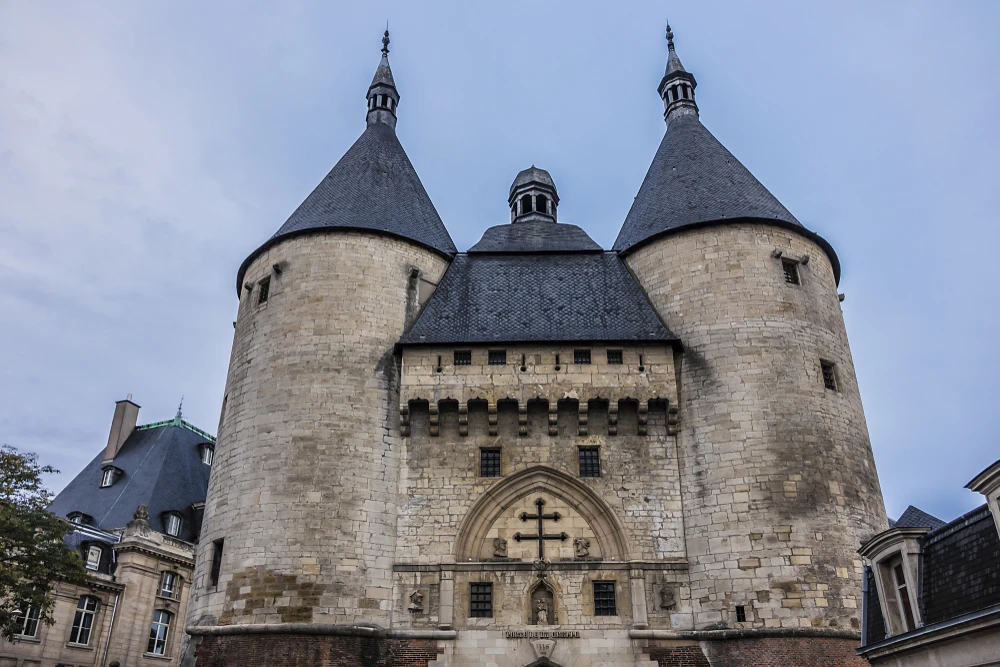
The Porte de la Craffe in the heart of the old town in Nancy / Photo chosen by Monsieurdefrance.com : Kiev.Victor/Shutterstock
Lose yourself in the small streets around the "Grand rue" which crosses the whole old town. You will discover very nice private mansions (for example the hotel of Ludres, the MJC Lillebonne), very nice restaurants. The Place Saint Epvre is the heart of it. You can see the Saint-Epvre Basilica, built in the 19th century and impressive by the quality of its stained glass windows (and the symbols of the 4 evangelists that you see at the entrance).
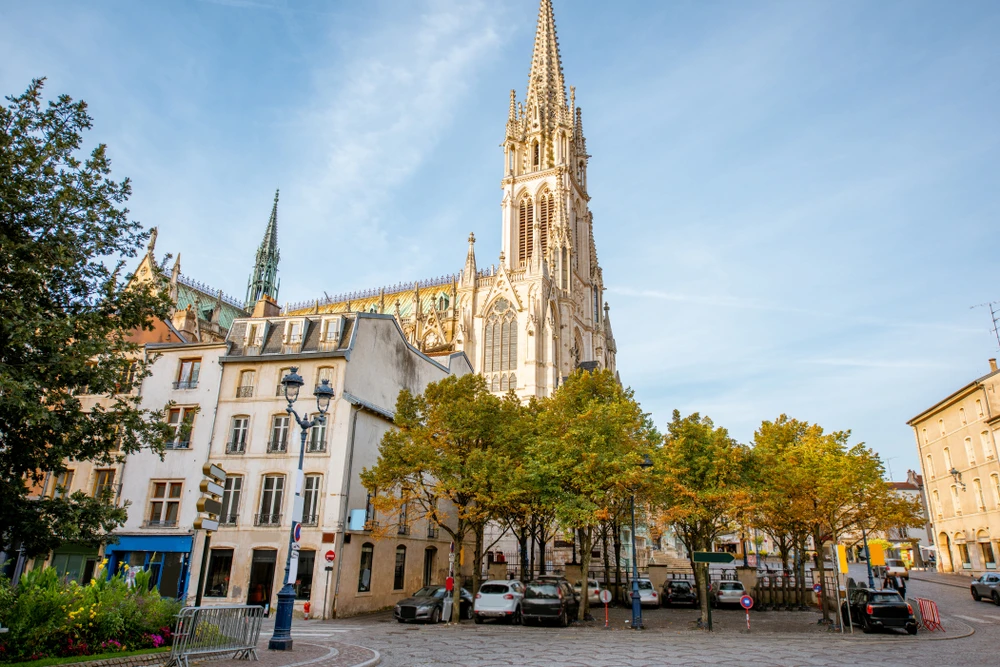
The Saint-Epvre basilica dominates the old town in Nancy / Photo chosen by Monsieurdefrance.Fr : RossHelen/Shutterstock
It is also in the old city that is the gate of the Craffe, fortified gate that has known the Battle of Nancy on January 5, 1477 when Charles the Bold, Duke of Burgundy, wanted to take the city and Lorraine and lost the siege ... And the life).
7. The Palace of the Dukes of Lorraine: The Story of a Sovereign Nation
It consists of several buildings. The palace itself has a magnificent gatehouse, inspired by the castle of Blois, on which is a statue of Duke Antoine 1st on horseback made by Mansuy Gauvain (it was destroyed during the Revolution but replaced just after).
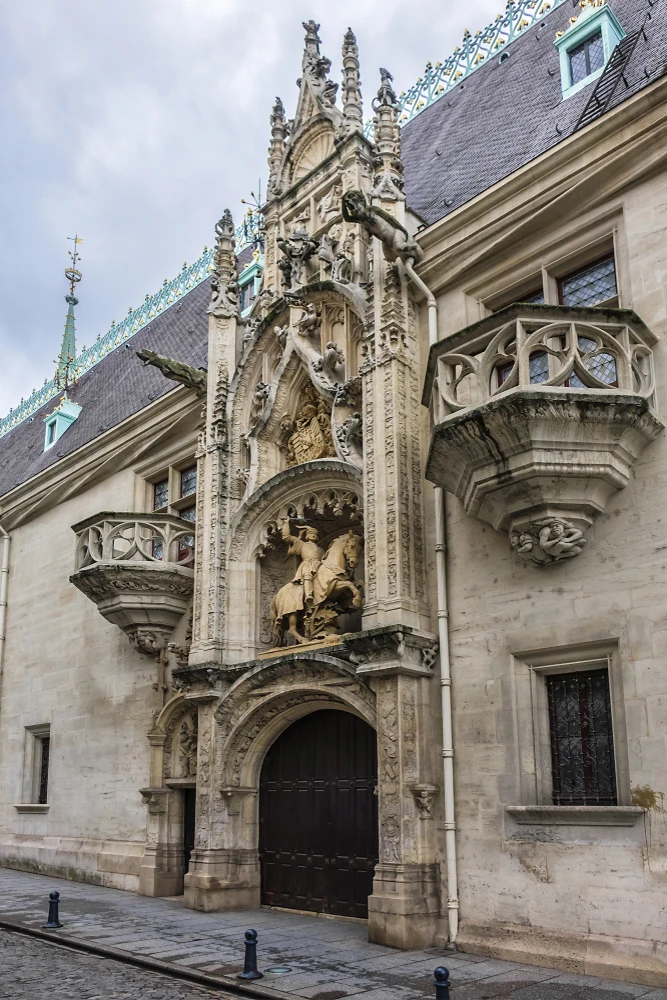
The Lorraine Museum is the Ducal Palace in the old town of Nancy / Photo chosen by Monsieurdefrance.com Kiev.Victor/Shutterstock
This gatehouse was notably, for the small door, the place where the dukes showed a bear regularly offered by the Swiss with whom the Lorrainers had been allied. One of them "Marco" protected and fed a child during the great winter of 1709. Going around the building you will see the arches and the tower which is topped by a spire displaying all the symbols of the dukes of Lorraine: the alerions (eagles without beak or claw), the cross of Lorraine and the ducal crown.
Further on, the chapel of the Cordeliers is the burial place of the dukes of Lorraine. It is still consecrated and a mass is given every year in their memory.
8. Villa Majorelle: A Global Icon of Art Nouveau Architecture
The Villa Majorelle is part of the Ecole de Nancy Museum, but it is not always open. It is an emblematic house of the Art Nouveau in Nancy which was designed by Louis Majorelle at the beginning of the 20th century. It can also be admired from the outside and is worth a visit.
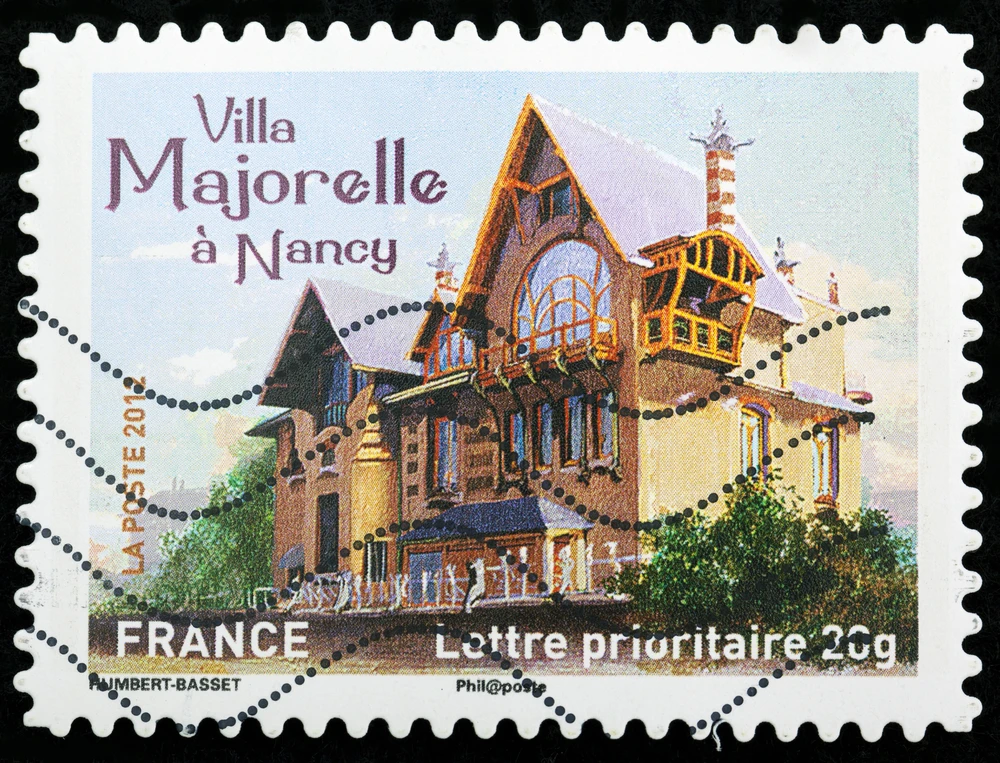
Famous, the Villa Majorelle was even the subject... Of a stamp! / Photo chosen by Monsieurdefrance.com : Charlesimage/Shutterstock
9. Parks and Gardens: The Pépinière and Historic Green Spaces
It is often said that Nancy is a mineral city, in fact, it is not: it is even a city of botany. It is endowed with many parks, which means that a resident is always less than 10 minutes walk from a green place.
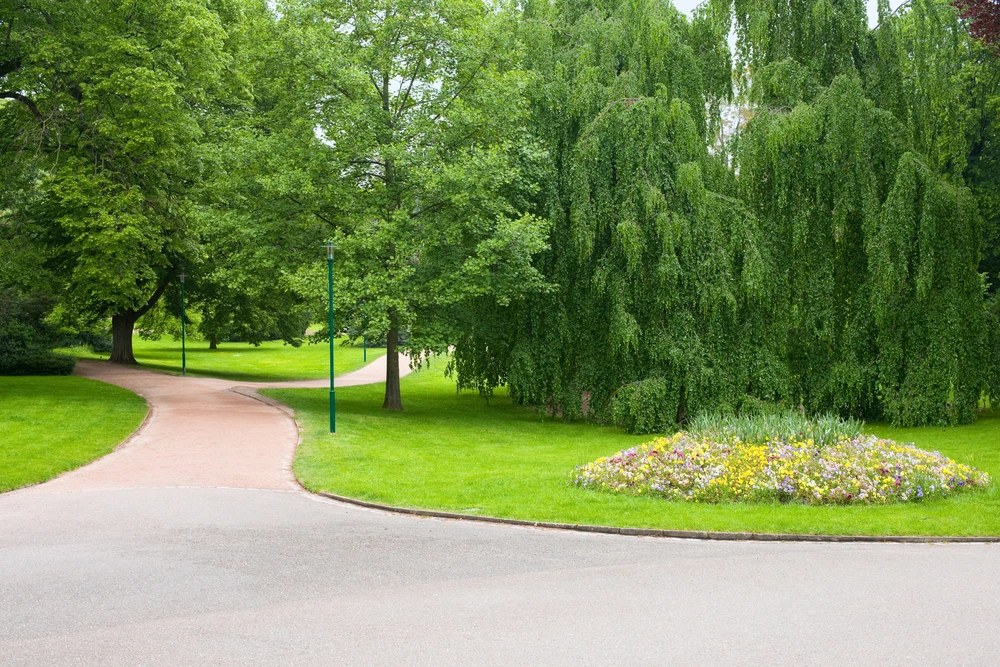
The park of the Pépinière in Nancy / Photo chosen by Monsieurdefrance.com : SergiyN/Shutterstock
Some of these parks are "collector" such as the Pépinière, the green lung of the city, with more than 20 hectares near the Place Stanislas, a rose garden, a work signed by Rodin, and trees labeled "remarkable tree". It was created by Stanislas to "start" the trees that were then planted along the roads. Open to the public since the end of the 19th century, the Pépinière has always been a place of life. A little too much for the bourgeoisie of the 19th century who saw that the soldiers, who were numerous in Nancy, met the prostitutes (who lived in the old city) in the thickets and bushes. They almost turned it into a racetrack to eliminate the problem before deciding to keep it as it was, but by removing the groves and thickets that allowed lovers to enjoy themselves in complete discretion. The governor's garden, which is very romantic and overlooks the Pépinière and the old town, is very beautiful. Not far from the Place Stanislas, the Dominique Alexandre Godron garden is the first botanical garden of Nancy. It offers some beautiful rare plants.
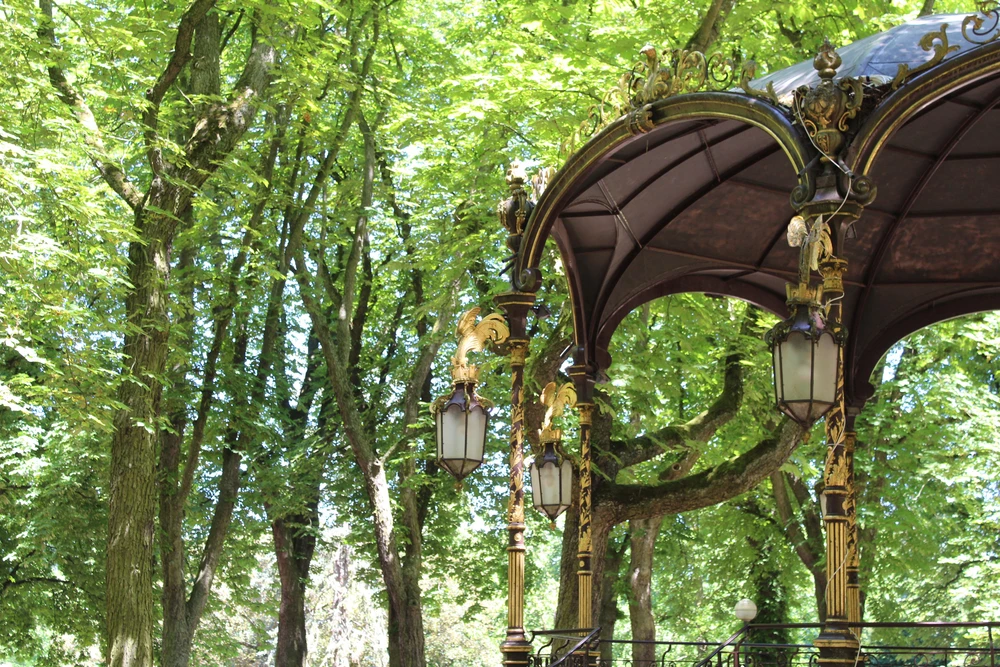
The kiosk of the Pépinière exists only in 2 copies in the world. It takes the elements of the Place Stanislas, in particular the famous roosters of the revervères. Photo chosen by Monsieurdefrance.com : Shutterstock.
Further on, the Parc Sainte-Marie is also a very beautiful garden, smaller (a little more than 4 hectares) and famous for its remarkable trees, including a tulip tree of Virginia. Close to the Parc Sainte-Marie, the garden of the Museum of the School of Nancy is superb.
Also noteworthy, in Villers-lès-Nancy, the Jean-Marie Pelt botanical garden, entrusted to the Metropolis of Greater Nancy and the University of Lorraine. It is a public place, but also a place of conservation of rare plants. One literally travels the planet when discovering it.
10. The Museum of Fine Arts: Daum Crystal and Great Masters
On the Place Stanislas, visit the Museum of Fine Arts. You will discover some of the greatest artists of Lorraine such as Claude Gelée called "le Lorrain", Emile Friant, Jacques Callot and famous paintings such as "la Bataille de Nancy" by Eugène Delacroix or "l'annonciation" by Caravaggio which arrived in Nancy almost 4 centuries ago. Finally, inside, you can also admire the most beautiful Daum collection, born from the workshops of Nancy glass blowers. A marvel of art and know-how.
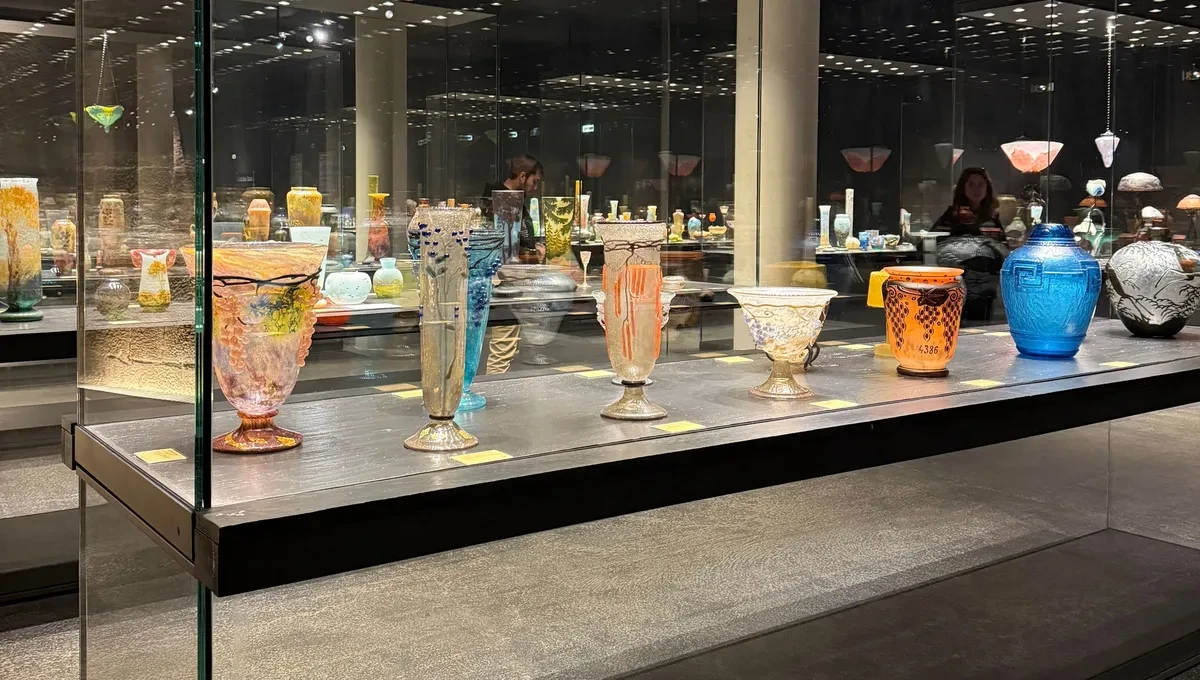
The Daum collection at the Nancy Museum of Fine Arts/ Photo selected by Monsieur de France: Jérôme Prod'homme

But wait, there's more!
The Gates of Nancy: A City Once Doubly Fortified
There are many of them since the city has long been doubled and thus doubly fortified. We can see the Saint-Georges Gate, surmounted by the saint of the same name, whose "cuissot" the dukes were proud to possess. The Stanislas and Sainte-Catherine gates, dating from the 18th century, are the work of Richard Mique, who later became the architect of Queen Marie-Antoinette and to whom we owe the famous Hameau de la Reine in Versailles. The Porte de la Citadelle, in the faubourg des III maisons, dates from the Renaissance and is surmounted by the duke builder Charles III. Finally, the Porte Desilles, on the Cour Léopold, is the monument to the dead of Nancy. Before becoming it, it was dedicated to the Lorraine dead of the American War of Independence. On the friezes, one can see marmosets telling of France's help to the Insurgents and the wish of the inhabitants to see the abolition of slavery.
The Cathedral: A Royal Ambition and Secret Ironwork
Rome always refused the dukes of Lorraine to have a bishop "of their own" because their duchy was, for the religious side, shared between the three bishoprics (Metz, Toul and Verdun) that had become French. However, they offered a beautiful church, named primatial, to make them want to have a ducal bishopric. This was done at the time of the union of Lorraine and France, in the 18th century. Inside you can see the oldest wrought iron gates by Jean Lamour and a dome painted by Jacquard. It was originally supposed to be huge, in the spirit of the Duomo of Florence, but the unstable terrain (and the small ducal finances) got the better of the project.
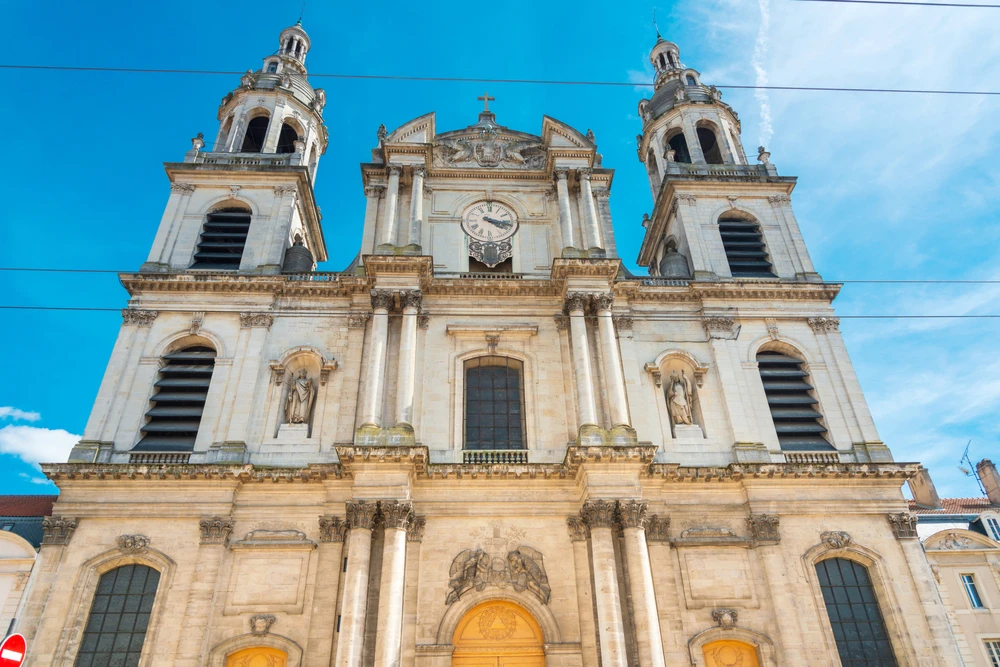
The facade of the Cathedral-Primatiale of Nancy, corrected by Mansard in Nancy / Photo chosen by Monsieurdefrance.com : ilolab/Shutterstock
The "Ville Neuve": 17th-Century Mansions and Markets
Around the Central market (which dates back to 1852 and deserves a real moment if you are greedy), it offers some very nice 17th century houses. You can see many gates on the first floor, intended to prevent instrusions when Nancy was badly frequented at the beginning of the 17th century after the terrible Thirty Years War (the city lost almost half of its inhabitants, and the duchies of Lorraine and Bar too). It is also the commercial heart of Nancy and one can discover the pretty Saint-Sebastien church with its subtle façade.
In the Metropolitan Area
"Le Féru des Sciences": Technology and Iron Heritage
Located in Jarville-la-Malgrange, it consists of the museum itself, dedicated to science and whose laboratories, specialized in metals, work on the conservation of archaeological objects that are entrusted to them. It also includes a park, the Montaigu Park, and a beautiful castle.
15 minutes from Stanislas Square by bus. 15 minutes by car.
Old Villages and Laxou: Secret Trails through Ancient Vineyards
The metropolis of Grand Nancy is made up of Nancy and 19 communes, that is to say 20 communes in total which each have a history and which, in particular, have kept their "old villages". They can be visited with pleasure, with their small churches, narrow streets, some beautiful mansions, especially in Vandoeuvre Lès Nancy, Villers Lès Nancy or Laxou, which also has a whole series of paths that cross gardens that are installed where vines used to be. These paths allow you to enjoy a bit of nature in the middle of the city and to save time by cutting through... Fields.
Laxou : 10 mn by bus from Place Stanislas (Line 3 and 4). Trails: stop victory then go up behind the City Hall.
Around Nancy: Day Trips in Lorraine
Toul: Gothic Splendor and AOC Vineyards
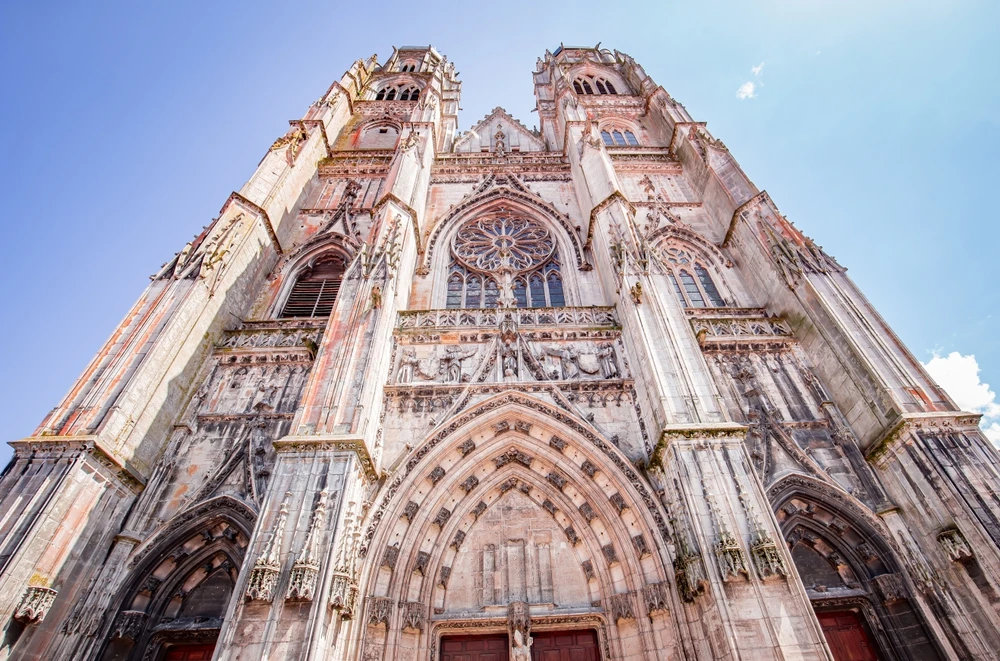
The amazing facade of the Cathedral Saint Etienne de Toul / Photo chosen by Monsieurdefrance.com : Isogood_patrick/Shutterstock
One of the three former bishoprics. The city has developed around its cathedral Saint-Etienne which has just celebrated its 800th anniversary and is one of the most beautiful buildings in Lorraine. It is one of the most beautiful buildings in Lorraine. It is built in the flamboyant gothic style and has a magnificent cloister. The city is surrounded by ramparts that are the work of Vauban, but which were transformed by Serré de Rivières when France fortified its border after the war of 1871. The Moselle River forms a loop that envelops the city in a kind of bosky bower, and the vineyards, where the grapes for the Toul wines (AOC) grow, are never far away.
15 mn from Nancy by car. And 15 mn from Nancy by train.

Lunéville: The "Versailles of Lorraine" and Royal Gardens
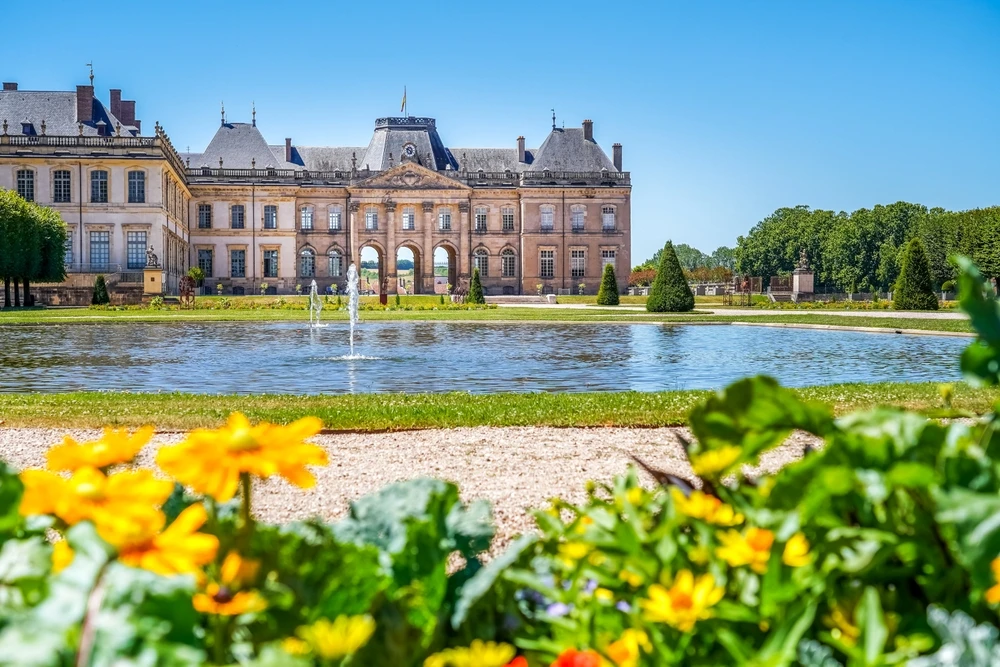
The castle of the sovereign dukes of Lorraine in Lunéville / Photo chosen by Monsieurdefrance.com : Sina Ettmer Photography/Shutterstock
The "Versailles of Lorraine" since it is here that Duke Leopold I of Lorraine built his residence: the castle of Lunéville. The city developed around it. The castle, designed by the architect Germain Boffrand, and built around 1705, burned down in 2003. It is a perpetual reconstruction site. One can admire the chapel, and the "park of the groves". It was here that King Stanislas lived and that some of the greatest minds of the 18th century stayed; the Marquise du Chatelet (mathematician), Voltaire, Mauperthuis... The city is as beautiful as the castle with its mansions, the church of Saint-Jacques and its "hidden" organ (in fact the columns of the organ case are painted in fake marble and are made of the pipes of the organ) and the fabulous abbey hotel which offers a reconstitution of an aristocratic dwelling of the Age of Enlightenment. A must-see if you like deco, fashion and history.
15 minutes from Nancy by car, 15 minutes from Nancy by train. 2H00 from Paris by TGV.
Haroué Castle: A Palace in the Countryside with 365 Windows
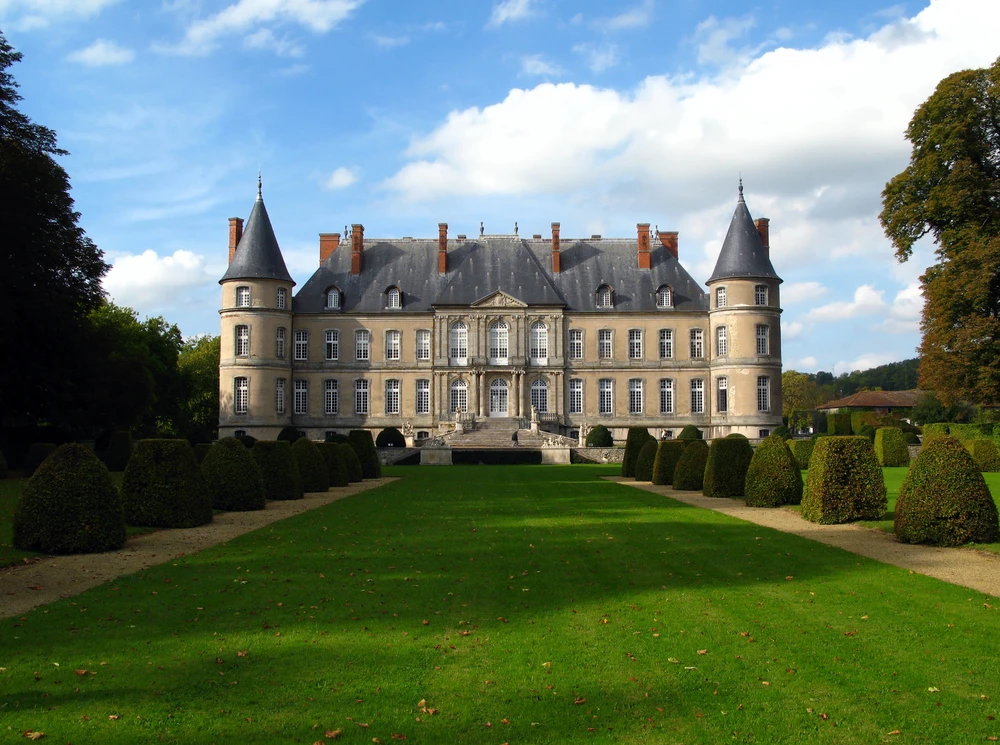
The castle of Haroué: a palace in the countryside / Photo chosen by Monsieurdefrance.com : Mihai-Bogdan Lazar/Shutterstock
With its "365 windows, 52 fireplaces, 12 interior and exterior towers and 4 bridges", it is truly a palace in the country. Built by Germain Boffrand for the Princes de Beauvau, it is dedicated to this family who still lives there since 1729. Inside: the large salons, with magnificent tapestries featuring Alexander the Great, the white salon with its Baccarat crystal chandelier, and the delightful "Pillement" salon with its chinoiseries created by the great Pillement.
For more information and visiting hours, click here
20 minutes from Nancy by car.
There may be some translation errors and we apologize for that. The translator partied with students all night in Nancy, he is not in good shape...
How to get Nancy : infos / geo / train
GPS address:
1, Place Stanislas 54 000 NANCY
By car
Nancy is located 347 kms from Paris. Department of Meurthe et Moselle (54), historical region of Lorraine and administrative region Grand Est.
It takes about 4 hours to come from Paris via the A4, A5 and A31, or the N4. The city is also 1H15 from Luxembourg, 1H30 from Strasbourg. Parking lots are located not far from the square. For example Place de la Carrière.
By train
Nancy is equipped with a TGV station which puts the city at 1H40 from Paris. There is also the "Lorraine TGV" station located between Nancy and Metz and connected to the TGV network which puts it at 4H00 from Nantes, Rennes, or Bordeaux. A shuttle bus allows you to reach the station of Nancy. From the train station, you have to get out on the Place Simone Veil. The quickest way to get to Place Stanislas on foot is to leave Place Veil on the left, pass under the monumental gate (Porte Stanislas) and walk down the street (Rue Stanislas), until you reach Place... Stanislas. But we advise you to take the Rue Saint Jean instead. The main shopping street of Nancy.

Nancy in a Nutshell: What to Know Before Your Visit
It's not easy to summarize Nancy before giving you the top 10 things to see (it's below if you don't want to listen)
It must be said that Nancy has known several great periods of glory, that it has seen many artistic and scientific talents blossom and that it has more than one trick up its sleeve when it comes to pleasing the gourmets.
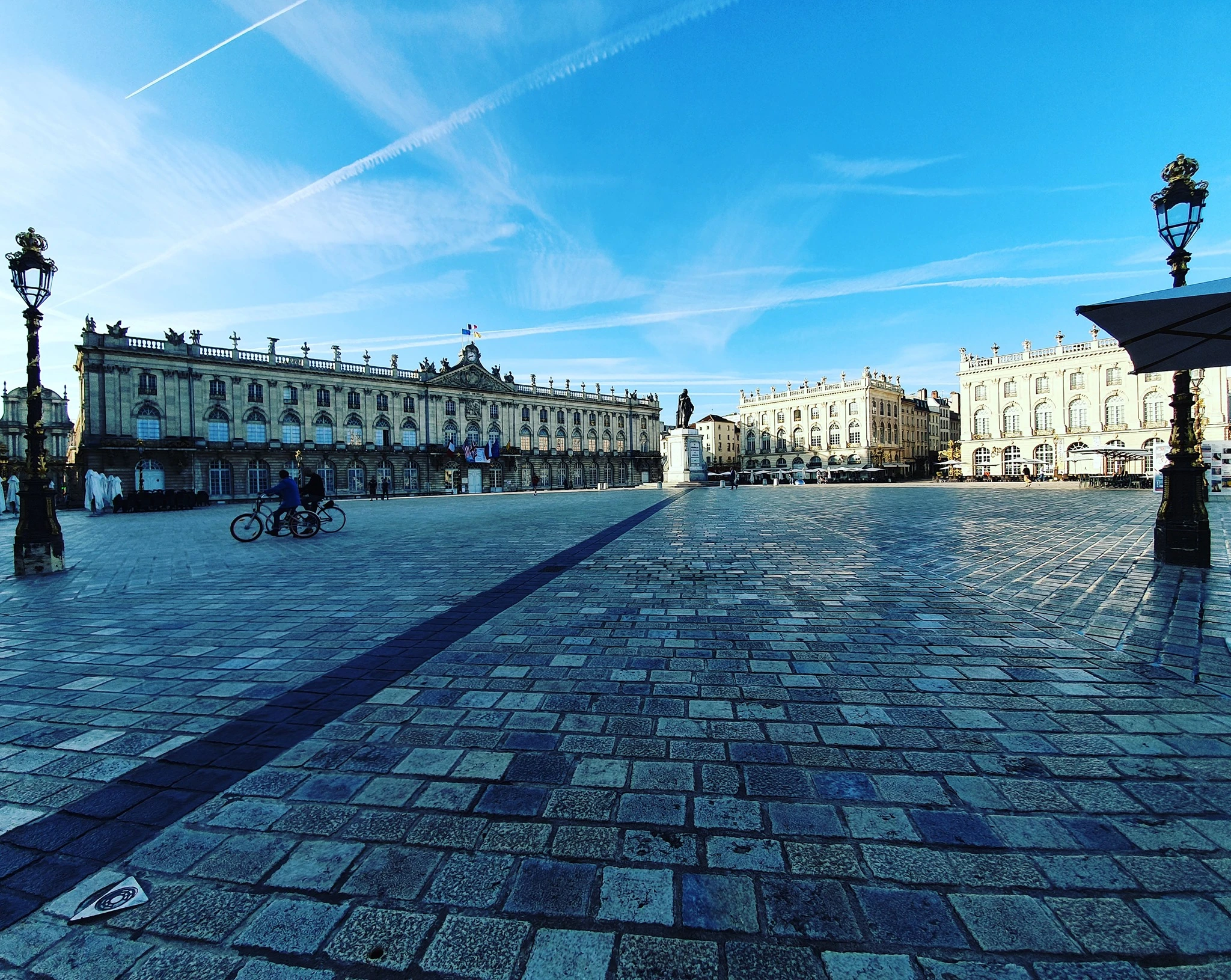 The most beautiful place in the world is in Nancy and it is the Stanislas square / Photo chosen by monsieurdefrance.com: Jérôme Prod'homme (c)
A Vibrant Student City: France's #1 Student Hub
And nothing says that among the 50,000 students that it welcomes each year, some will not appear in the history or art books later on. It is the most important student city in France in terms of the number of students compared to the general population

There is nothing like an evening in Nancy to get into the spirit of the Place Stan, the Ville-Vieille or the rue Jeanne d'Arc / Photo chosen by monsieurdefrance.com : Shutterstock.
Capital of an Independent State: 7 Centuries of Lorraine History
Remember a few things. Nancy is a kid. It is not yet 1000 years old, when most of the cities in France were born at least 1000 years earlier. It is the capital of the dukes of Lorraine, their home, the Ducal Palace, is still there. A duchy of Lorraine that was an independent state for more than 7 centuries before being united with France at the end of the 18th century. The whole history of Nancy is one with the duchy, it shares the most beautiful periods (the Renaissance for example is a period that sees Nancy shine) and the most tragic pages of history (the 30 years war, which depopulated it, the war of 1870 which sees it change status and become a very large city...).

The dynasty of the Dukes of Lorraine reigned from the year 1000 to 1737. One of the most famous dukes was Duke René II, who won the battle of Nancy on January 5, 1477. (Illustration chosen by Monsieurdefrance.com: illumination of the Nancy by Pierre de Blarru, 15th century).
World-Class Heritage: The UNESCO 18th-Century Ensemble
It is famous for the XVIIIth century ensemble which includes the Place Stanislas and which is classified "World Heritage of Humanity" by UNESCO since 1983 (the same year as the Taj Mahal and 6 years before the Great Wall of China... Doesn't it make you feel like you're in the right place? The Place Stanislas is not the only one to be classified UNESCO since there are also the Place de la Carrière and the Place d'Alliance
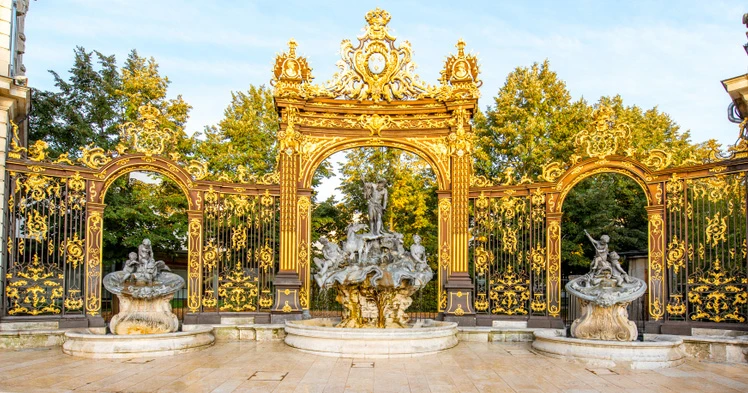
The gates of Jean Lamour and one of the fountains of the famous Place Stanislas in Nancy. Photo chosen by monsieurdefrance.com: Shutterstock.
The Ecole de Nancy: A Revolution in Art Nouveau and "Art for All"
Nothing to do with the school where you study! It is a very marked artistic movement within the Art Nouveau movement which was very fashionable at the crossroads of the 19th and 20th centuries. Many buildings are marked by this current which puts Nature in front and which offers itself of multiple volutes. Art Nouveau is not only present in the architecture (one does not count any more the splendid houses completely Art Nouveau) but also in the objects: furniture signed Louis Majorelle with the vases blown in the workshops of Emile Gallé or the Daum Brothers.
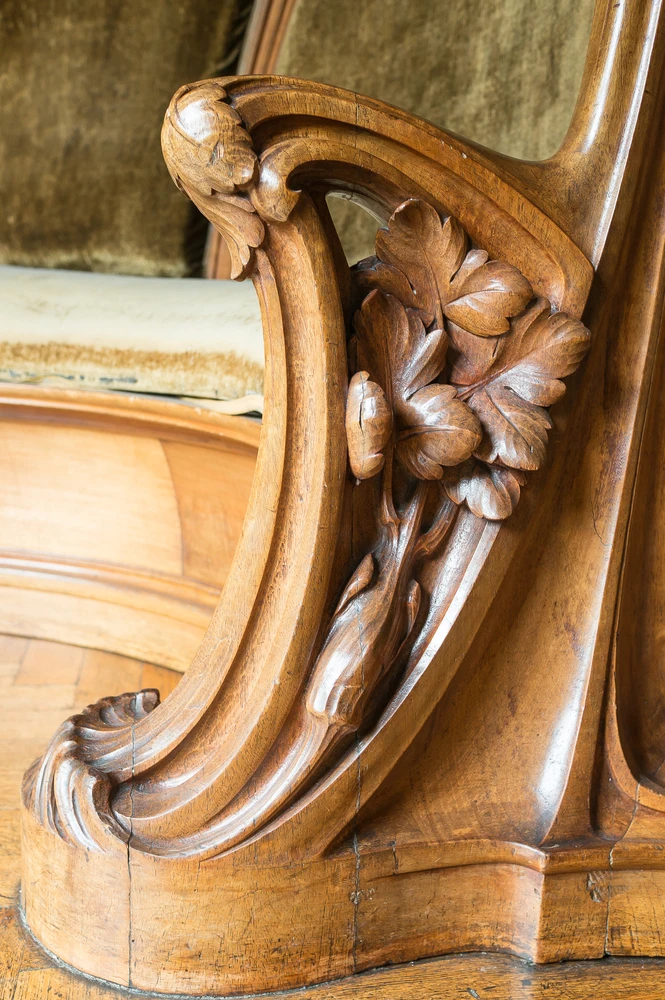
Art Nouveau chair / Ecole de Nancy. Detail. Photo chosen by Monsieurdefrance.Fr : HUANG Zheng/Shutterstock
A Gourmet Paradise: From Macarons to Quiche Lorraine
Macaroons of Nancy, Bergamotes of Nancy, Lorraine thistles, rum baba, madeleines for the sweet tooth... Quiche Lorraine, pâté Lorrain, spindle and so on for the salty ones... Nancy is a gourmet concentrate that allows you to savor purely Nancy or more widely Lorraine specialties.

FAQ: everything you need to know to visit Nancy
Why is Place Stanislas a must-see?
A UNESCO World Heritage site, it is often considered the most beautiful square in the world thanks to its perfect proportions, fountains, and Jean Lamour's famous golden gates.
What is the École de Nancy?
It is a major Art Nouveau movement. Local artists like Émile Gallé and Louis Majorelle brought art to the masses, drawing heavy inspiration from nature and its curves.
What are the three UNESCO squares?
The 18th-century architectural ensemble recognized by UNESCO includes the majestic Place Stanislas, the long Place de la Carrière, and the discreet Place d'Alliance.
What should you see in the Old Town (Ville-Vieille)?
The historic heart is full of gems: the monumental Porte de la Craffe, the Saint-Epvre Basilica with its exceptional stained glass, and numerous Renaissance mansions.
Where is the famous Daum crystal collection?
The world's most beautiful collection of Daum glassware and crystal is exhibited in the basement of the Museum of Fine Arts, located right on Place Stanislas.
What is the Villa Majorelle?
It is the iconic Art Nouveau house. Designed in the early 20th century for the artist Louis Majorelle, it is a total work of art where architecture and furniture blend perfectly.
What are the local culinary specialties?
The city is a food lover's paradise. You must try the famous macarons, bergamot candies, as well as savory classics like quiche and pâté lorrain.
What is the history of the Palace of the Dukes of Lorraine?
Featuring a magnificent gatehouse inspired by the Château de Blois, it was the residence of the independent sovereigns. Today, it houses the Lorraine Museum.
Where can you find greenery in the city center?
The Parc de la Pépinière is the city's historic green lung. It is the perfect place to stroll, eat a waffle, admire remarkable trees, or enjoy the rose garden.
What is there to visit around the city?
The surrounding region is full of treasures: the Gothic cathedral of Toul, the magnificent Château de Lunéville, and the sumptuous Château de Haroué in the countryside.
Jérôme Prod'homme Specialist in French heritage, gastronomy, and tourism. Find all my discoveries on monsieur-de-france.com.
Find out more about Nancy:
- The complete guide to visiting Nancy
- my audio guide in immersive sound to visit Nancy
- Place Stanislas: history and secrets of Nancy's most beautiful square
- Art Nouveau and the École de Nancy: an architectural treasure
- What to do in Nancy over a weekend?
- Culinary specialties of Nancy you absolutely must try
- And why not discover Lorraine?