The 4 major destinations for discovering Lorraine
To make your trip a success, it is best to plan your stay around these four complementary themes. Each embodies an essential facet of Lorraine's identity: princely elegance, thousand-year-old architecture, unspoiled nature, and historical memory.
1. Nancy: Royal elegance and the spirit of Art Nouveau
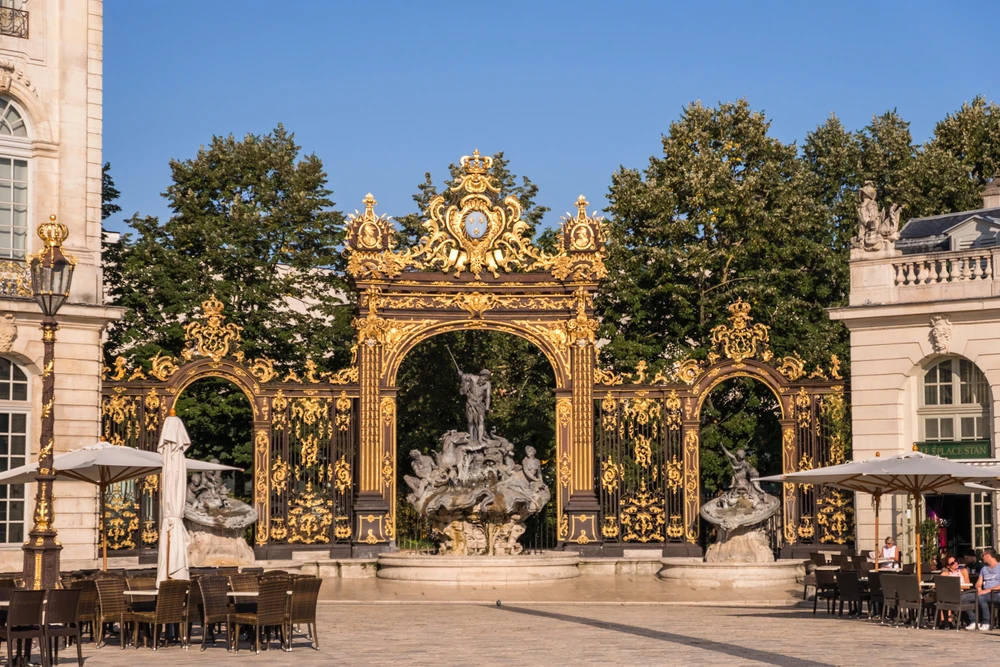
Welcome to the city with golden gates / Photo: Depositphotos
Nancy is a city that reads like an open-air history book. It embodies human aspirations in terms of urban planning and architecture. The former capital of the Dukes of Lorraine, it has retained a rare architectural nobility that reached its peak in the 18th century under the reign of Stanislas, the deposed King of Poland who became Duke of Lorraine by the grace of his father-in-law Louis XV. It is also the home of Art Nouveau in France, with the largest number of Art Nouveau houses in any city. Finally, it is a young city with a large student population, which is always lively and which you are bound to love.
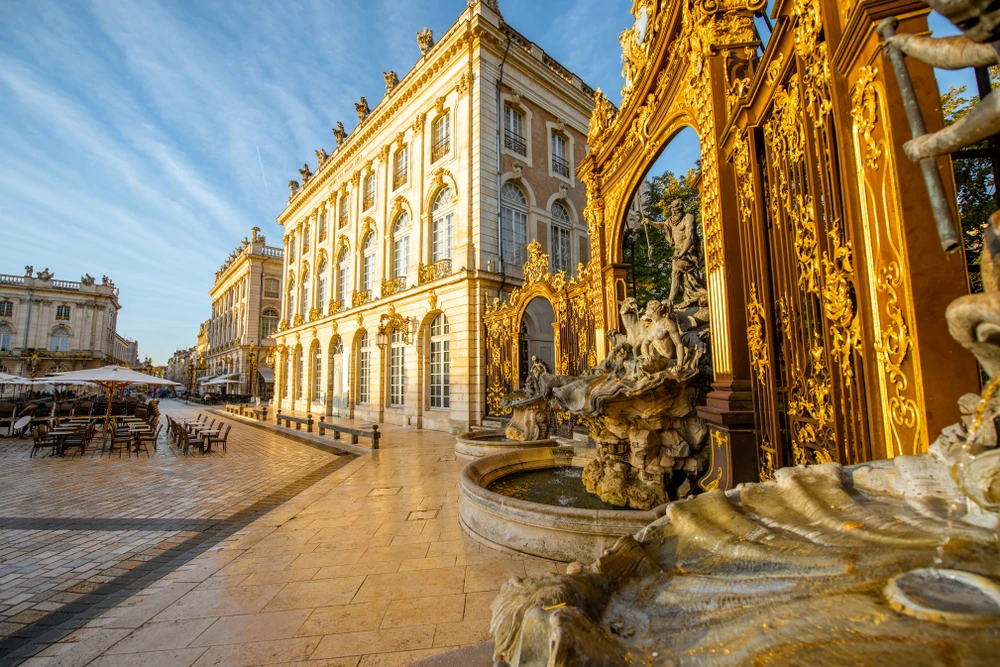
Place Stanislas in Nancy with its golden railings in the rising sun / Photo selected by Monsieur de France: shutterstock
You should definitely see:
-
Place Stanislas: Voted "France's favorite monument," it is much more than just a square: it is the beating heart of the city. Admire the gates by Jean Lamour, masterpieces of ironwork embellished with gold that sparkle in the sun, and the Rococo fountains representing Neptune and Amphitrite. It embodies the French genius of the Enlightenment and the perfect harmony between the medieval Old Town and the 18th-century New Town. Take the time to sit on a terrace at dusk, when the lights enhance the white limestone.
-
The Old Town: This medieval and Renaissance labyrinth centers around the Ducal Palace and the Porte de la Craffe gate. Passing through this 14th-century fortified gate, you enter the Nancy of the dukes, with its narrow streets, ancient churches, and mansions with sculpted facades. It is here that you feel the "real journey," the one that takes you back to the time of the Battle of Nancy and René II.
-
The Nancy School: At the end of the 19th century, the city became the spearhead of French Art Nouveau. Visionary artists such as Émile Gallé, Louis Majorelle, Daum, and Eugène Vallin revolutionized forms by drawing inspiration from the flora of Lorraine. Don't miss the Villa Majorelle, the first example of this total architecture, and the School of Nancy Museum, housed in the former property of Eugène Corbin, where the furniture seems to come to life.
👉 Visiting Nancy: The Ultimate Guide
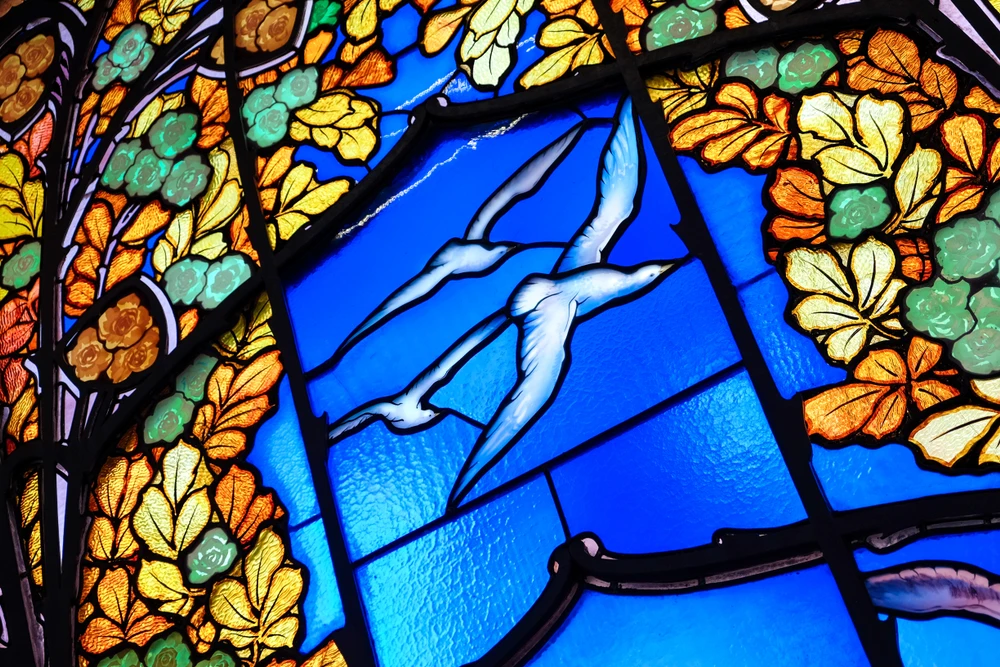
Jacques Grüber "Roses and Seagulls" Villa Bergeret in Nancy / Photo selected by Monsieurdefrance.Fr: WildSnap/Shutterstock
Where to stay in Nancy to explore the surrounding area?
If you want to discover Nancy but also explore its surroundings – the Château de Lunéville, Metz, Toul or the Sainte-Croix wildlife park – staying in Nancy itself is often the most practical option. The city is well located and makes it easy to take day trips throughout the Lorraine region.
To prepare your stay and compare accommodation depending on your dates and budget, you can check:
• available hotels in Nancy ↗
• hotels in Nancy city centre ↗
• well-located hotels for visiting the area around Nancy ↗
This allows you to quickly see availability, guest reviews and prices depending on the time of your visit.
This article may contain affiliate links. This does not change the price for you but helps support the Monsieur de France website.
2. Metz: The Lantern of God and the Imperial Contrast
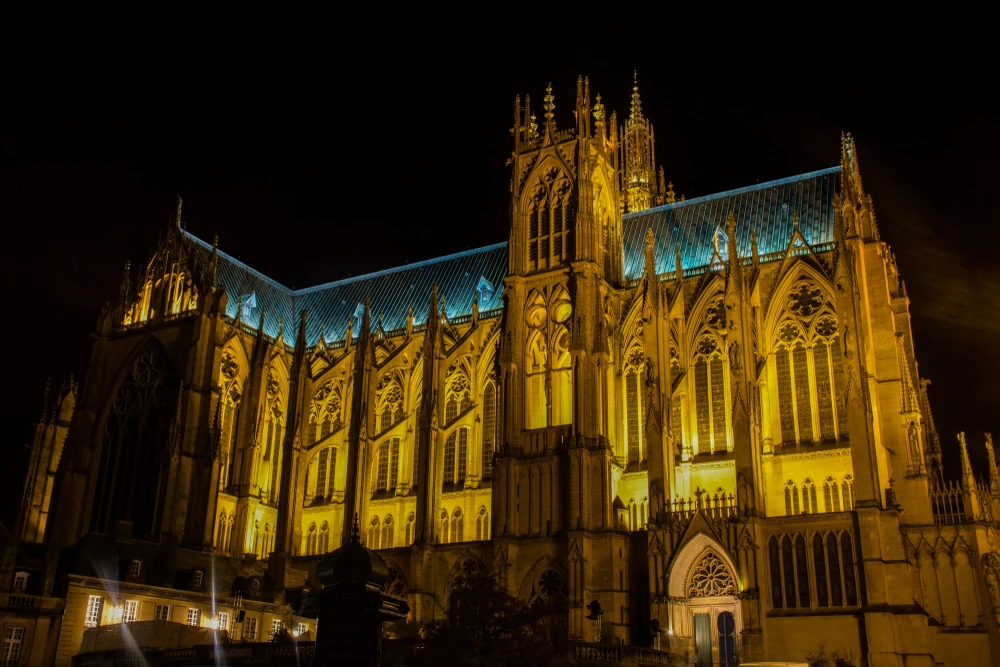
Saint Stephen's Cathedral in Metz seen at night. Photo selected by monsieurdefrance.com: Shutterstock.com
Metz surprises visitors with its unique, almost unreal light. In fact, it is a city that shines at the slightest ray of sunshine, which is normal since it is the city of Jaumont stone, a golden-yellow limestone extracted nearby, which has the particularity of storing light and then releasing it with infinite softness. A city of water and gardens, Metz has been shaped by two millennia of history and is one of the oldest cities in France. Very active (commercially speaking!), it is rich in monuments and offers lovely walks in the city center.
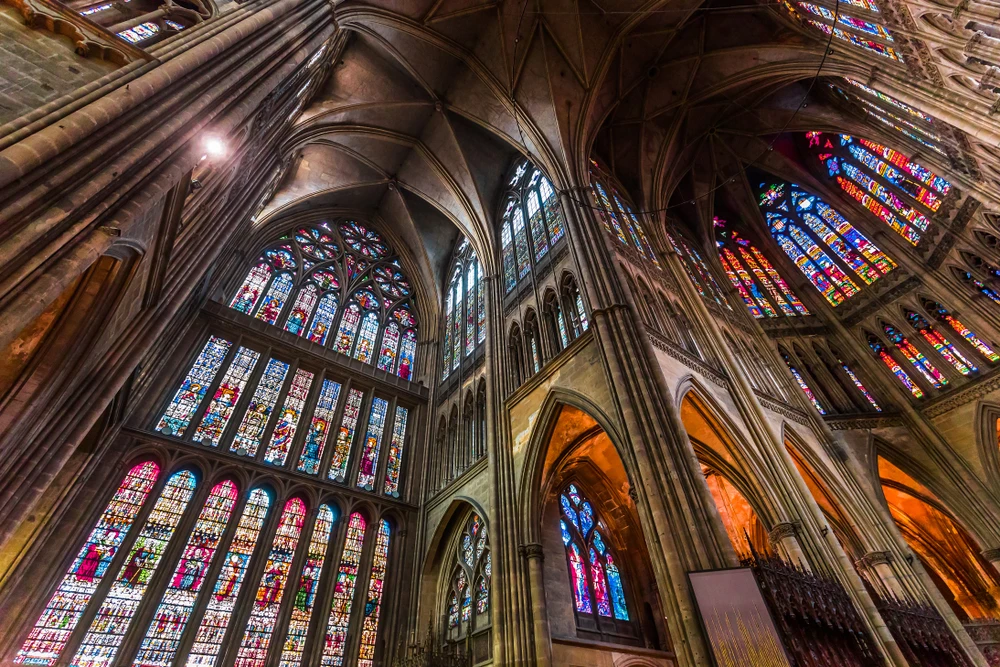
The stained glass windows in Metz Cathedral are spectacular—don't miss them. Photo selected by monsieurdefrance.com: Shutterstock.
You must see
-
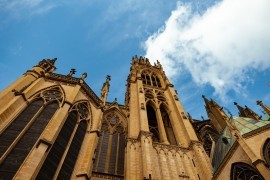
Saint Stephen's Cathedral: Nicknamed the "Lantern of God", it has the largest area of stained glass windows in the world (6,500 m²). Its vertiginous nave, one of the highest in France, rises to a height of 41 meters. It is a sensory experience where you can admire works ranging from the 13th century to the dreamlike, blue-tinged stained glass windows of Marc Chagall. It is here that golden stone meets pure color.
-
The Imperial Quarter: Built by the Germans between 1871 and 1918 during the annexation, this quarter is a demonstration of power and architectural eclecticism. Its monumental train station, repeatedly voted the most beautiful train station in France, is a neo-Romanesque building that resembles a fortress. The wide avenues and bourgeois villas contrast sharply with the medieval center.
-
The Centre Pompidou-Metz: This beacon of contemporary art, with its Chinese hat-shaped roof covered with a white membrane, has become one of the city's new landmarks. It symbolizes the renewal of Metz, now focused on creativity and modernity.
👉 Visiting Metz: what to see, what to do? The complete guide
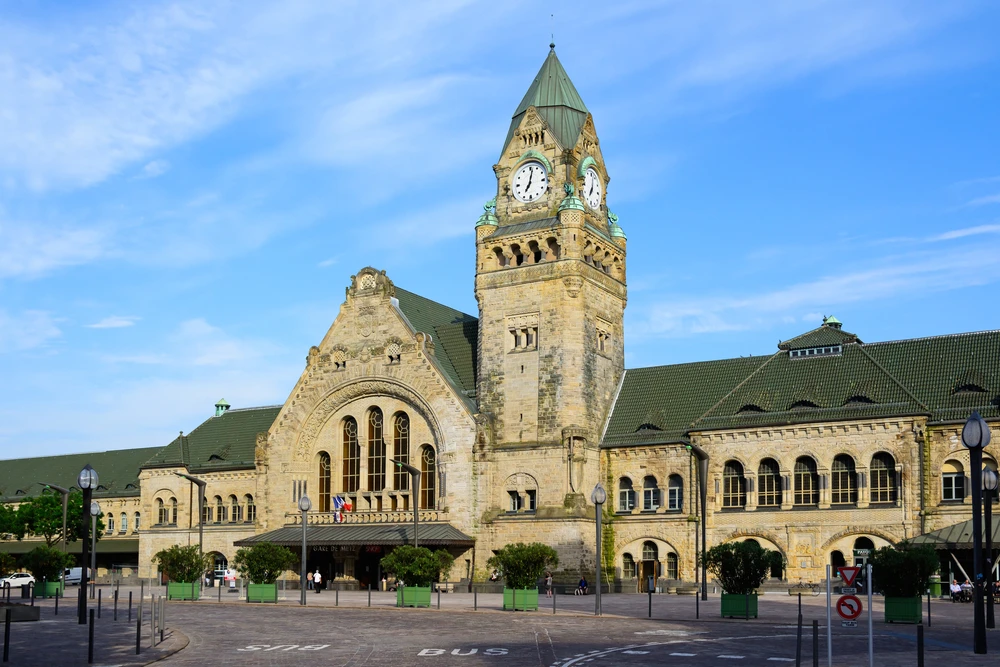
Metz train station is the most beautiful train station in France. Photo selected by Monsieurdefrance.com: Shutterstock.com
3. The Vosges: Fresh air, lakes, and wild breathing space
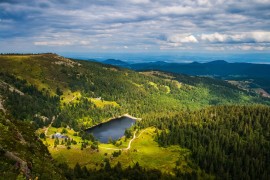
The Vosges mountains are the green lung of the region, an area where the landscape rolls gently to form the famous "Ballons." After the hustle and bustle of city life, this is the ideal place to slow down, breathe in the scent of pine trees, and reconnect with what really matters.
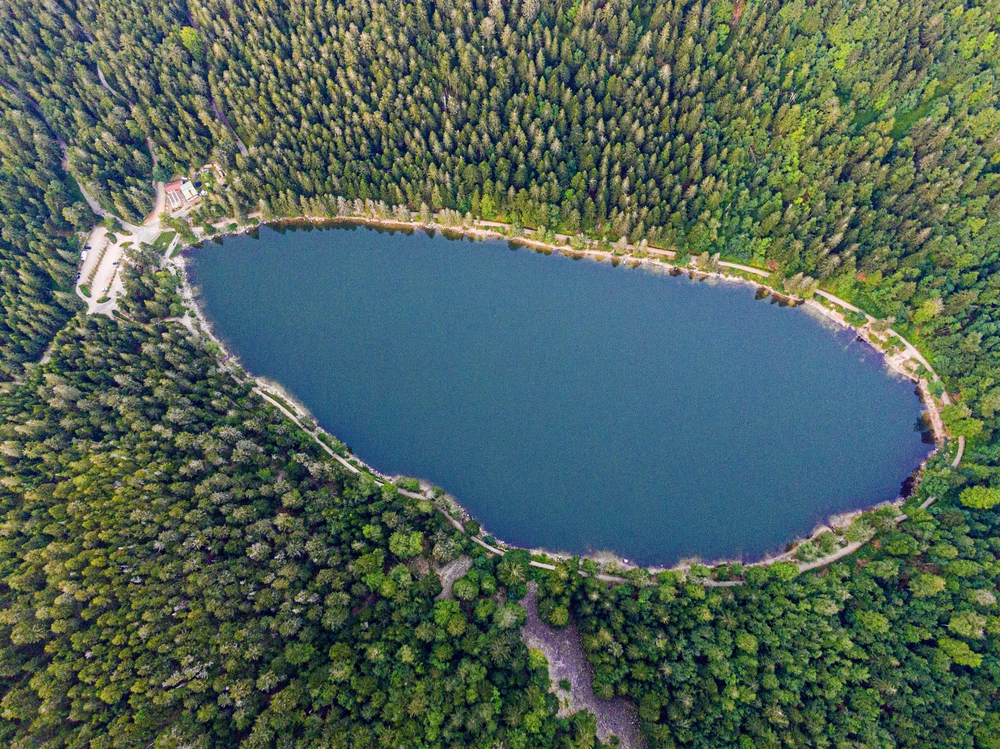
The magnificent Lac des Corbeaux, whose name comes from courbe, meaning curve or detour... Photo chosen by Monsieur de France: MattLphotography via depositphotos
-
The Crêtes and Ballons: The Route des Crêtes runs along the peaks and offers breathtaking panoramic views. The Hohneck (1,363 m) is the perfect spot to watch chamois frolicking on the "chaumes," high-altitude meadows. On a clear day, you can see the Black Forest and even the Alps on the horizon.
-
The Lakes: Lake Gérardmer, known as the "Pearl of the Vosges," is a magnificent stretch of water where fir trees are reflected. Lake Longemer and Lake Corbeaux in La Bresse are more rugged, pristine settings where the silence is broken only by the wind in the trees.
-
The spirit of the mountains: This is also a land of pastoral traditions. Here you will find farmhouse inns where you can enjoy the famous marcaire meal (quiche, smoked meat, and tofailles) in a warm, rustic atmosphere.
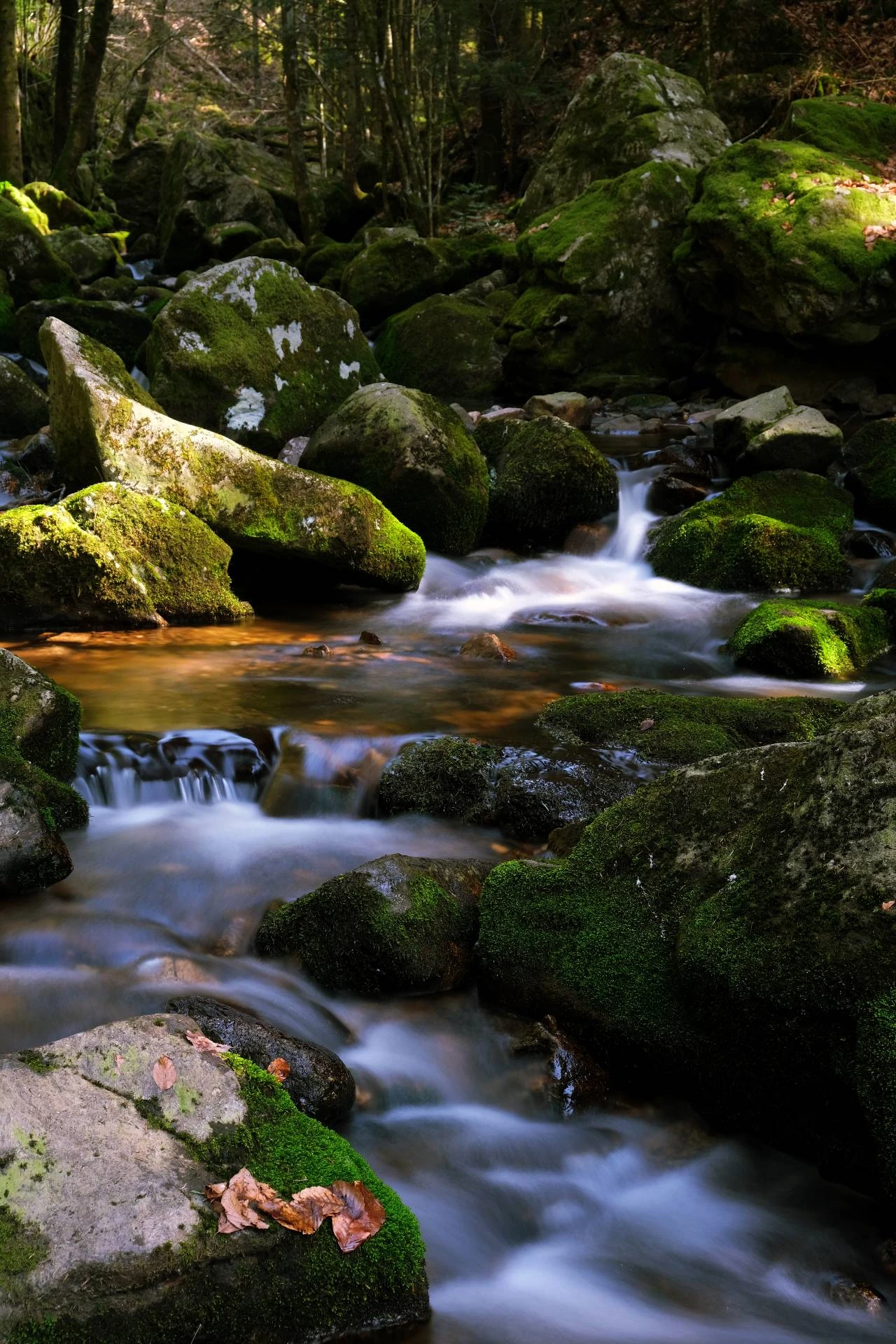
The Géhard stream at Girmont Val d'Ajol / ©Remiremont Plombières Tourist Office.
4. Verdun and the Meuse: A day of universal remembrance
The Meuse and Verdun offer a stopover that adds a rare depth to your stay. Here, history is not found in books, it is written into the very earth itself, in every shell hole now covered with moss. But the Meuse is also a garden, the garden of Lorraine, with its small villages, beautiful forests, and magnificent honey-colored stones of the most beautiful Renaissance town in eastern France: Bar-le-Duc.
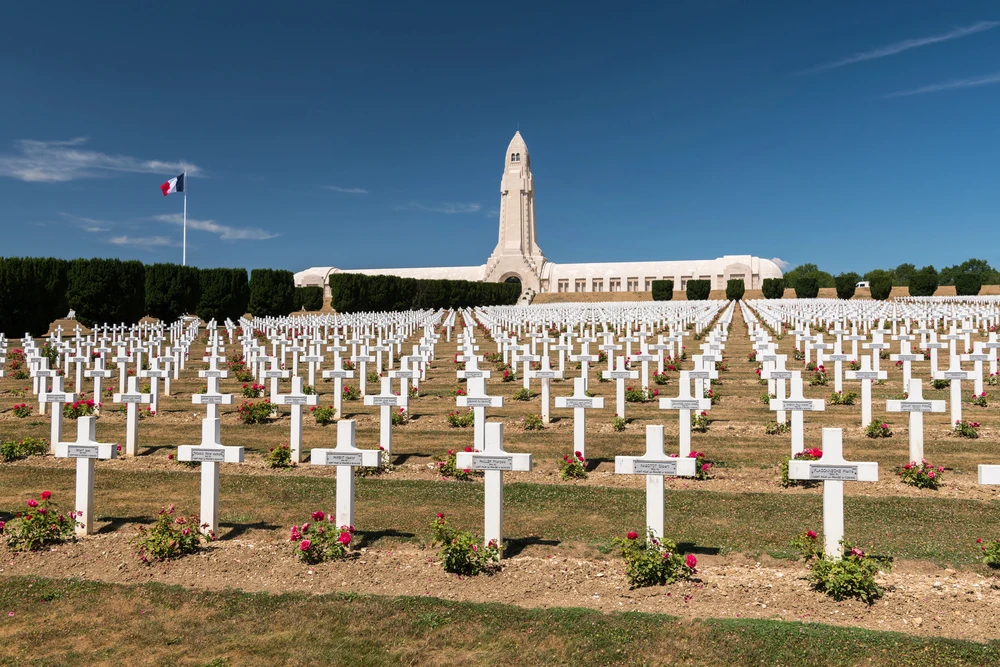
The famous Douaumont ossuary, near Verdun, contains the remains of tens of thousands of unidentified bodies / Photo selected by Monsieur de France: depositphotos
You should definitely see:
-
The Battlefield of Verdun: A place of global remembrance. The Douaumont Ossuary, with its shell-shaped tower and immense national necropolis, is a must-see to understand the sacrifice of 1916. The villages that "died for France," completely wiped off the map, tell an unspeakable story.
-
The Forts and Trenches: A visit to Fort Douaumont and the Underground Citadel immerses visitors in the heroic and tragic daily lives of the "Poilus" (French soldiers). It is a living history lesson that calls for peace.
-
Bar-le-Duc and the Renaissance: Leaving the battle zone behind, discover the Upper Town of Bar-le-Duc. It is one of the most beautiful Renaissance complexes in France, with its mansions built from Savonnières stone. The Church of Saint-Étienne houses Ligier Richier's "Transi," a strikingly realistic sculpture.
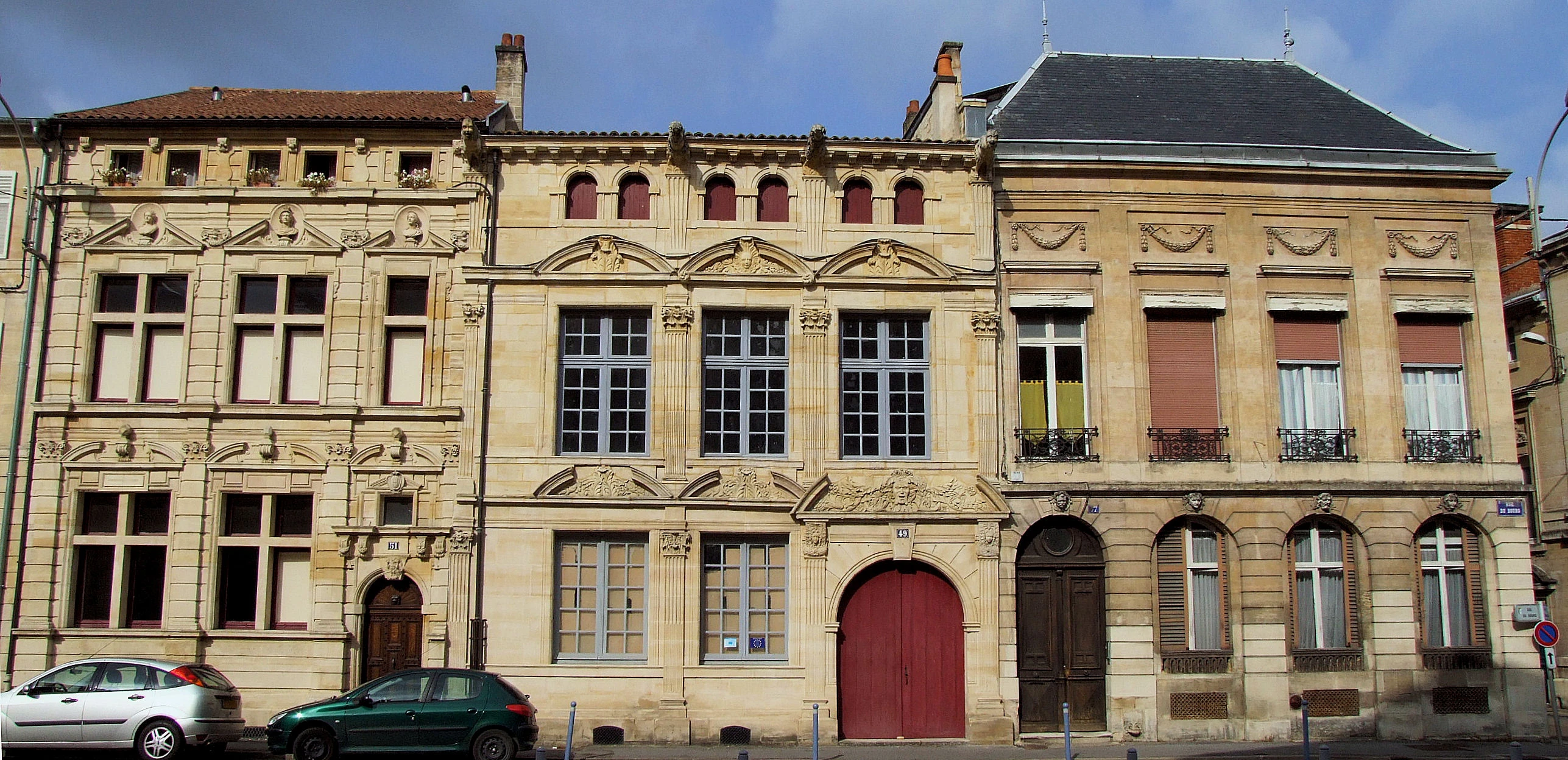
Other typical houses in Bar-le-Duc/ Photo chosen by Monsieur de France: By MOSSOT — Own work, CC BY 3.0, https://commons.wikimedia.org/w/index.php?curid=15584509
Castles and Towns of Character: The Monumental Heritage of Lorraine
Lorraine is a land of lords. They left behind buildings of rare elegance. To understand the power of the former Duchy of Lorraine and its seven centuries of independence, you have to venture off the beaten track.
The Château de Lunéville: Lorraine's Versailles
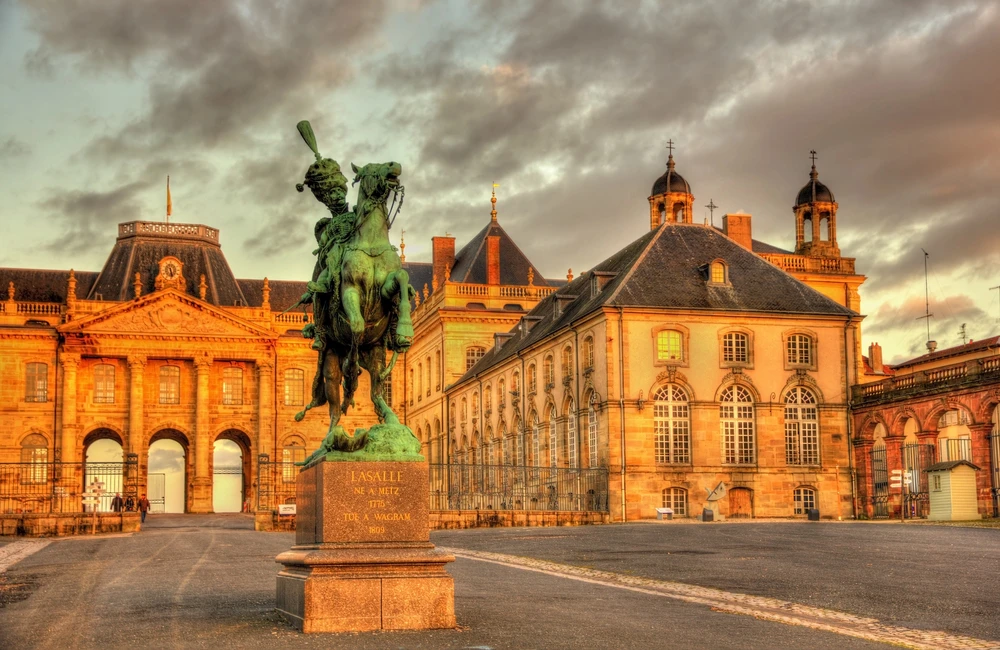
Lunéville Castle at sunset / Photo selected by Monsieur de France: depositphotos.
A true masterpiece of classical architecture, the Château de Lunéville was the favorite residence of the Dukes of Lorraine in the 18th century. Stanislas Leszczynski established a brilliant court there that rivaled Versailles. After the fire in 2003, its titanic restoration has made it possible to admire its apartments and, above all, its gardens once again. The Parc des Bosquets is a magnificent place to stroll, where one can still imagine the gallant parties of the Age of Enlightenment. It was here that Voltaire and Émilie du Châtelet lived their most intellectual hours.
👉 Visit Lunéville: The Versailles of Lorraine
The Château de Haroué: The Palace in the Countryside
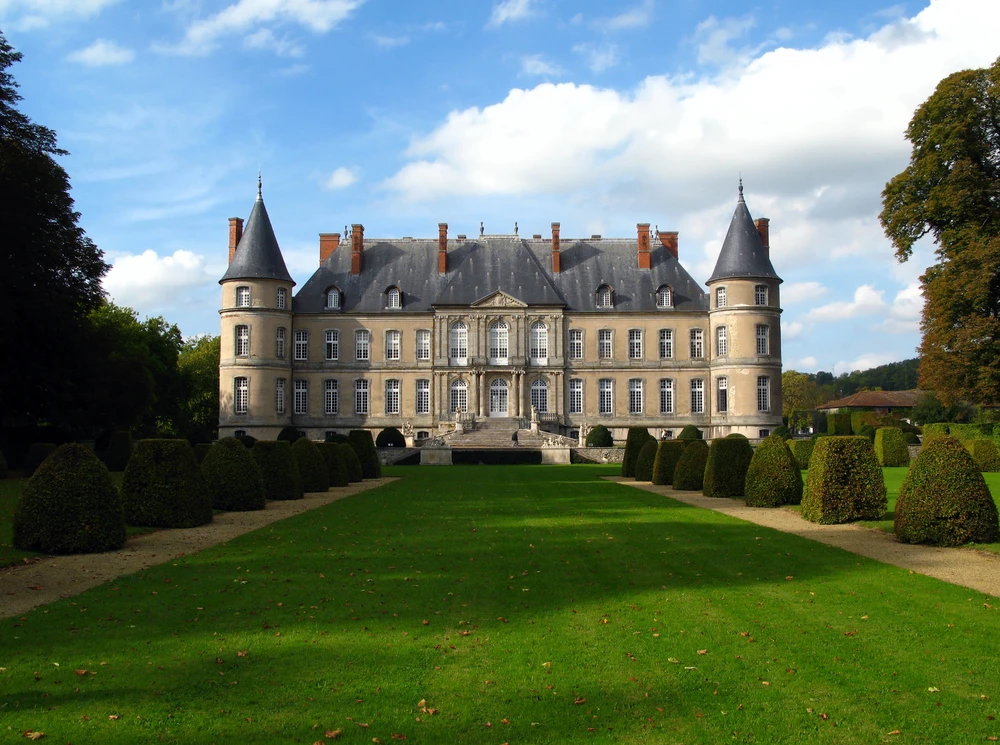
Haroué Castle: a palace in the countryside / Photo selected by Monsieurdefrance.Fr: Mihai-Bogdan Lazar/Shutterstock
Located in the Madon Valley, the Château de Haroué is an architectural curiosity that is unique in the world. Built by architect Germain Boffrand for the Beauvau-Craon family, it was designed based on the calendar: it has 365 windows, 52 fireplaces, 12 towers, and 4 bridges. Still inhabited by the same family, it houses treasures of furniture and railings designed by Jean Lamour, the ironworker of Place Stanislas. It is a castle of rare elegance, surrounded by moats, which seems to float in its park.
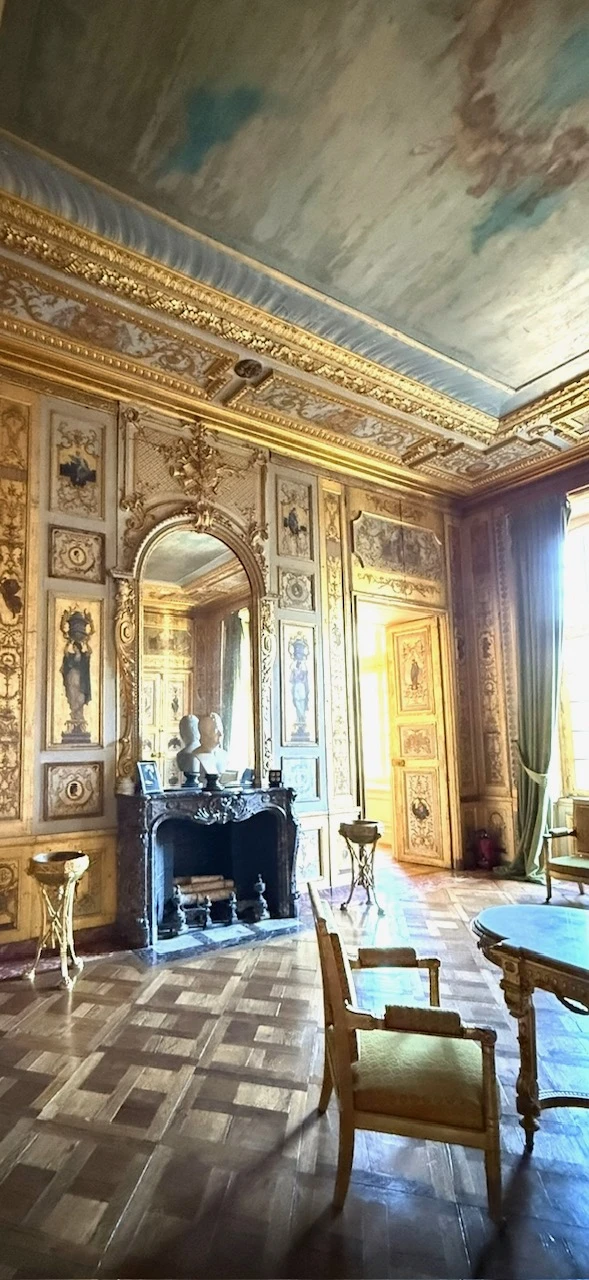
Haroué Castle: the golden salon / (c) Jérôme Prod'homme
Commercy: The Stanislas Pavilion and the Madeleine
In Commercy, the castle majestically overlooks the town. Formerly a hunting lodge converted into a princely residence, it welcomed Stanislas, who made his court shine there. But Commercy is also inseparable from its Madeleine, a small domed cake that was created here by chance in 1755 during a ducal reception. A young servant girl named Madeleine saved the king's dessert with this family recipe. Since then, Commercy has been the world capital of this sweet treat immortalized by Proust.
Toul: The City of Bishops and Vineyards
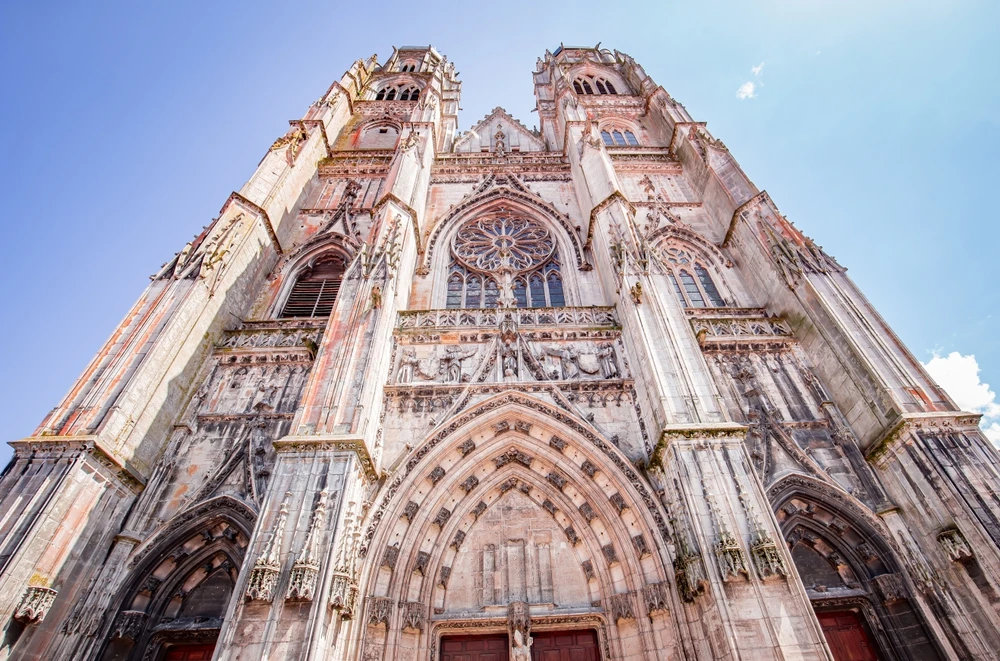
The stunning façade of Saint Stephen's Cathedral in Toul / Photo selected by Monsieurdefrance.Fr: Isogood_patrick/Shutterstock
Fortified by Vauban, Toul is famous for its Saint-Étienne Cathedral, a masterpiece of flamboyant Gothic architecture with one of the largest cloisters in France. It is also the center of the Côtes de Toul wine region, where the famous Gris de Toul is produced, a rose wine with a rose petal color, perfect for accompanying the local cuisine.
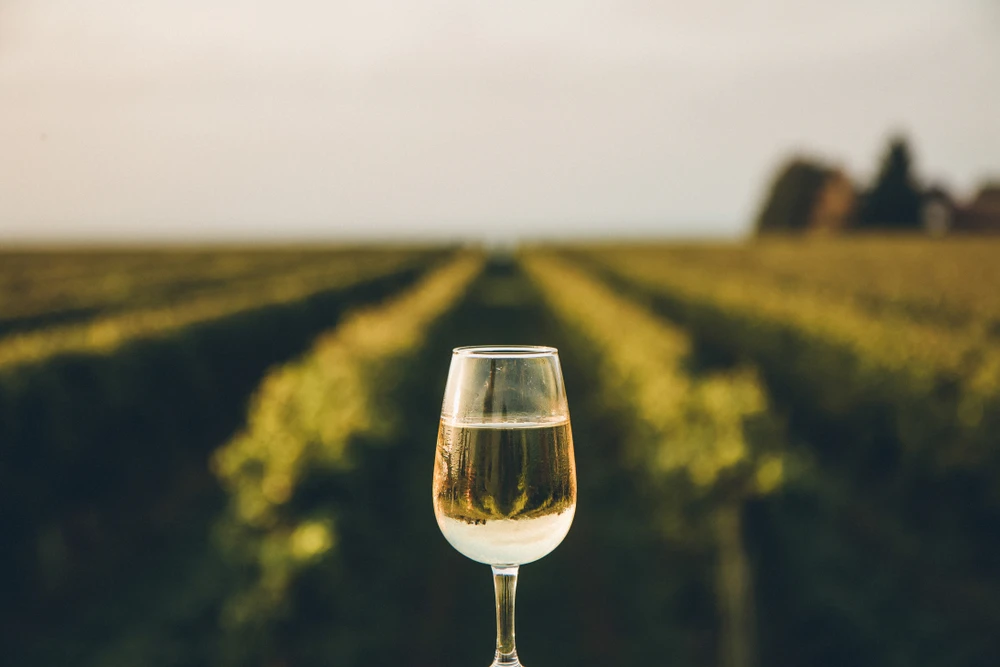
Vin gris de Toul has been an A.O.C. (Appellation d'Origine Contrôlée) for over 50 years / photo selected by monsieurdefrance.com: Shutterstock.
The Vosges department: 10 must-see places
The Vosges department is full of wonders to explore. It alone is worth a visit. You are spoiled for choice.
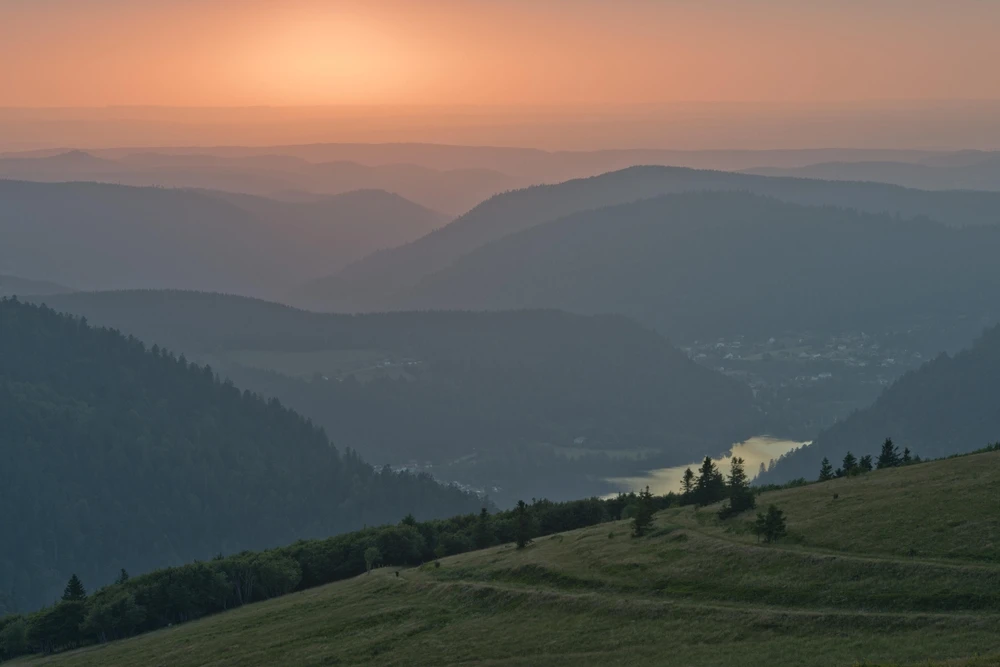
The view from Honneck is magnificent / Photo chosen by Monsieur de France: rimagebrokermicrosto via depositphotos
Here are details of 10 places not to be missed if you want to immerse yourself in the Vosges countryside and its rich heritage.
-
Lake Gérardmer: The "Pearl of the Vosges" is nestled in a setting of fir trees. Over 2 km long, the lake offers a 6 km hiking trail that goes all the way around it. It's the perfect place for swimming in the summer and romantic walks in the winter.
-
Lac des Corbeaux (La Bresse): Located above La Bresse, this glacial lake is surrounded by dark forests. Its name comes from "courbe" (curve), due to its shape. It is a peaceful place, perfect for a family outing away from the noise.
-
Tendon Waterfall: Located between Épinal and Gérardmer, the large Tendon Waterfall is an impressive 32 meters high. It is the highest waterfall in the Vosges. A shaded trail leads to a smaller waterfall located one kilometer below.
-
The Col de la Schlucht: At an altitude of 1,139 meters, this is one of the most famous passes in the massif. It is the starting point for the Sentier des Roches, a spectacular (and technical) hike along the mountainside.
-
Le Hohneck: It dominates the Vosges horizon at 1,363 meters. It is the kingdom of chamois. At dawn, you can see them feeding on the steep slopes. On a clear day, the view stretches as far as the snow-capped peaks of the Swiss Alps.
-
Épinal: The City of Images. Beyond its famous Imagerie d'Épinal, the city has a charming historic center with its Place des Vosges square featuring Renaissance arcades and its Saint-Maurice Basilica.
-
Vittel: The ultimate spa resort. Its 650-hectare park is a model of English-style gardening. Visitors come for the water, but also for the magnificent spa architecture designed by Charles Garnier.
-
Domrémy-la-Pucelle: The birthplace of Joan of Arc. Visitors can see her birthplace, a simple house that has stood for centuries, and the Basilica of Bois-Chenu, which offers panoramic views of the Meuse Valley.
-
Plombières-les-Bains: Nicknamed "the town of a thousand balconies," this spa town is steeped in history. Napoleon III signed the treaty of alliance with Italy here. Its Roman baths are still in use today.
-
Senones: A little-known treasure. This former sovereign principality boasts a monumental Benedictine abbey and two princely castles that tell the story of a small state in the heart of the mountains.

Vittel is one of France's most renowned spa resorts / photo selected by Monsieur de France: shutterstock.
👉 Click here to discover 10 must-see places to visit in the Vosges
The Vosges in winter without skiing: A guide to "Cocooning and Local Flavors"
People no longer go to the Vosges just to hit the slopes. It's a bonus for skiers, of course, but above all it's an opportunity to treat yourself to something different.
1. Winter hiking: Enjoying the peaks without the crowds
The Vosges mountain ridges offer exceptional light and silence in winter.
-
Hohneck on foot: When the slopes are closed, the summit remains accessible via hiking trails. This is the ideal time to observe the chamois as they descend lower into the valleys. The 360° view of the Alsace plain and the Alps is often clearer in winter thanks to the cold, dry air.
-
The Lispach Lake Trail: A flat trail accessible to all, reminiscent of the Scandinavian tundra. The frozen (or unfrozen) peat bogs offer magnificent reddish colors that are perfect for photos.

Hiking in the snow in winter in La Bresse and the Hautes-Vosges is a real pleasure! Photo selected by Monsieurdefrance.com: by Trevor M from Pixabay
2. "Gastronomic" Snowshoeing: Walk to Eat Better
In the mountains in winter, snowshoes are your best friend. The concept that will be a hit in 2026? Farm hiking.
-
The concept: Set off with a mountain guide for a two-hour hike that ends at a remote farmhouse inn.
-
On the menu: The famous marcaire meal. Forget about calories: valley pie, smoked pork loin served with tofailles (potatoes cooked in bacon fat), and to finish, a slice of blueberry tart or mountain cheese with cumin. This is the very essence of Vosges hospitality.
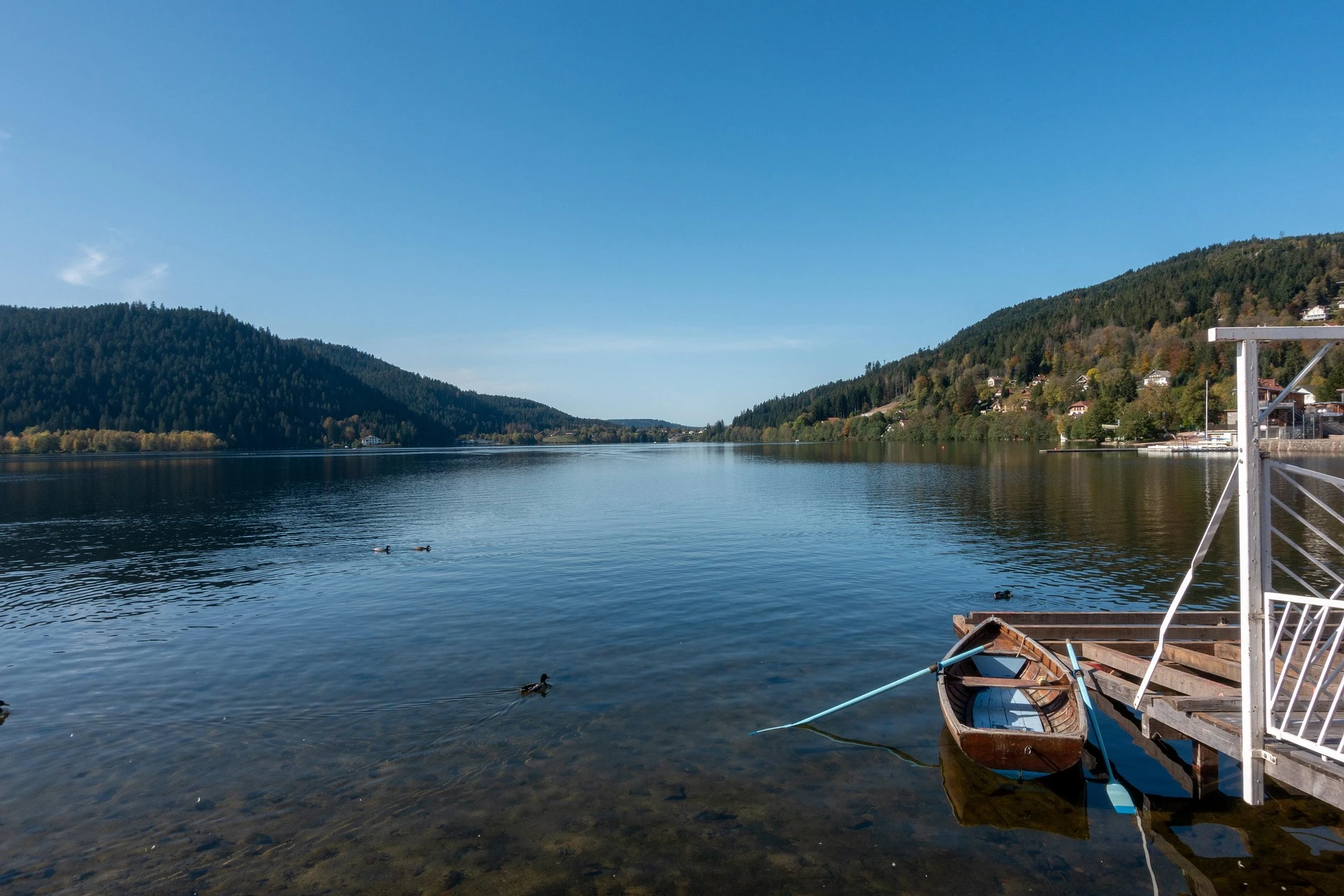
The view from one of the pontoons on Lake Gérardmer / photo selected by Monsieurdefrance.com: Jean Martinelle from Pixabay
3. Spas with views and mountain wellness
Gérardmer and La Bresse have become true wellness hubs. When the sky is low, we take refuge in the warmth of spas or swimming pools. We take our time at the hotel.
-
Accommodation: Many hotels now offer spas with heated outdoor pools overlooking the lake or pine trees. The experience of bathing in 90°F water when it's 36°F outside is the ultimate in Vosges luxury.
-
Signature treatment: Try massages with fir or mountain hay essential oils, a local specialty that uses local resources for total relaxation.
4. Culture and crafts at the foot of the fir trees
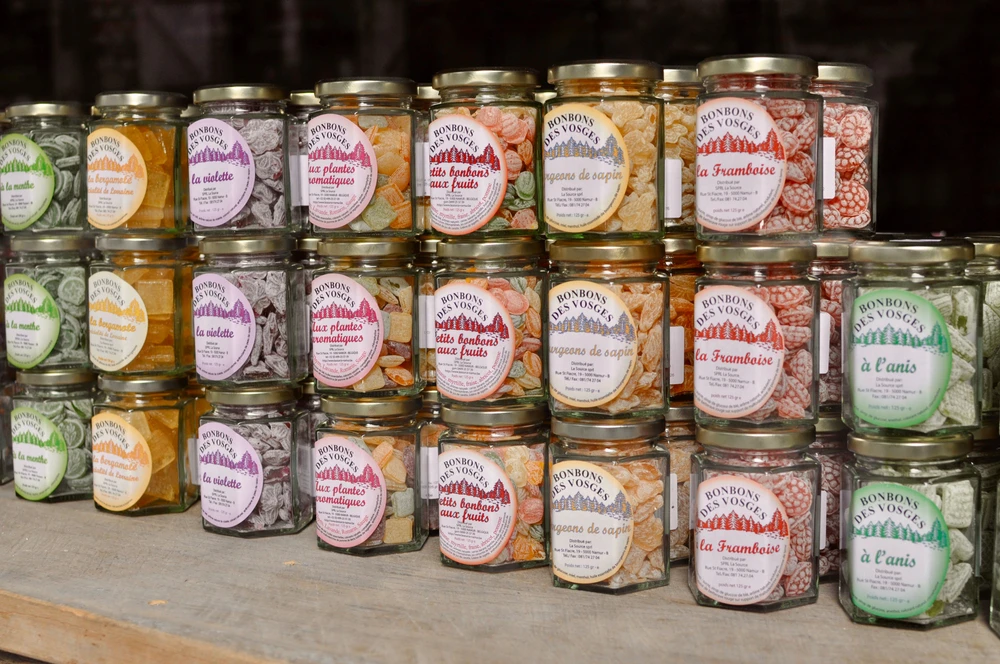
Candy from the Vosges region. Not to be confused with "la vosgienne" candy, which is not from the Vosges. Photo selected by Monsieurdefrance.Com: Florine Lambert/Shutterstock.com
Now is the time to discover what makes the valleys' hearts beat.
-
La Confiserie des Hautes-Vosges: A must-see to watch the famous pine bud, eucalyptus, and bergamot candies being made. It's free, smells divine, and is the perfect activity for a rainy afternoon.
-
Household linens: Gérardmer is the capital of beautiful linens. Visit the factory outlets (Garnier-Thiebaut, Linvosges) to take home a little bit of Lorraine craftsmanship.
Artistic Crafts: Lorraine, Land of Fire and Crystal
Lorraine is the world leader in luxury crystal. It is the workshop of French luxury. Linen from the Vosges, furniture from Liffol le Grand and, above all, crystal from Baccarat or Saint Louis. This tradition was born from the combination of the region's sand, river water and vast forests, which provided wood to heat the furnaces.
-
Baccarat: The name alone evokes French excellence. Founded in 1764, the manufacturer has supplied all the royal courts of the world. The Baccarat museum is a must-see for those who wish to admire gigantic chandeliers and unique collector's items.
-
Saint-Louis: Europe's oldest crystal factory (1586) is tucked away in a secret valley in the Pays de Bitche region. It offers a journey back in time, where glassmakers continue to use traditional techniques such as mouth blowing and hand cutting.
-
Meisenthal and the Christmas bauble: In 1858, a drought deprived the region of apples to decorate Christmas trees. A glassmaker from Meisenthal had the idea of blowing glass balls to replace them. Today, the International Center for Glass Art (CIAV) creates a new collector's ball every year, prized by enthusiasts around the world.
-
Lunéville and Saint-Clément earthenware: Iconic designs such as "Petit Rose" have traveled around the world. The expertise of Lorraine's earthenware makers is an essential part of the French art of living.
Gourmet Lorraine: 30 specialties to try
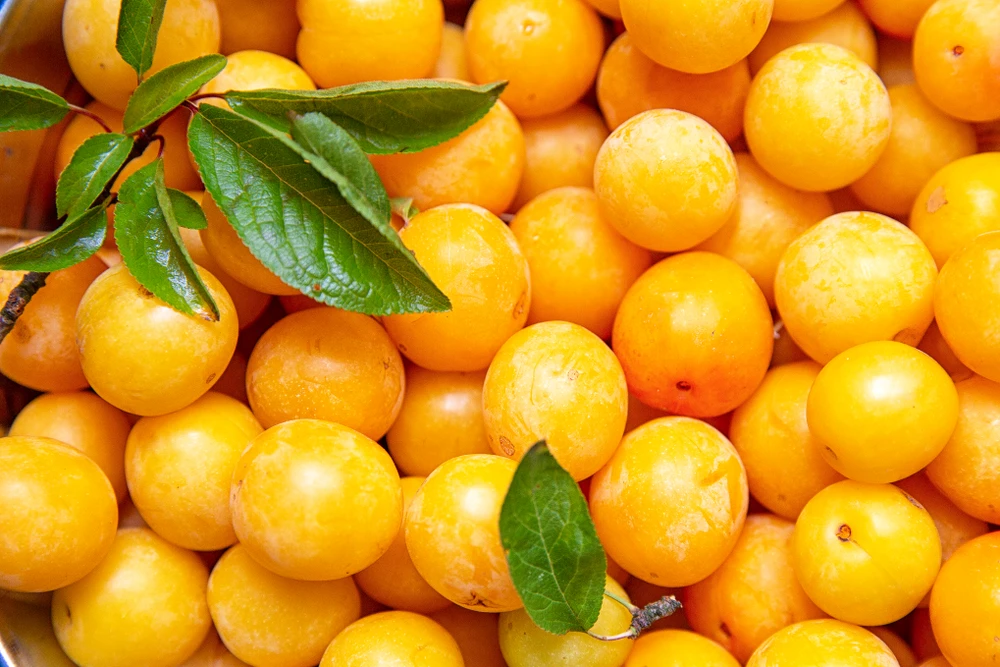
Golden brown, we always fall for mirabelle plums at the end of summer in Lorraine. Photo chosen by Monsieur de France: Shutterstock
You don't visit Lorraine, you savor it. If there's one region in France that's a foodie paradise, it's Lorraine. And we don't skimp on the generous portions we put in our dishes. Our cuisine reflects our character: generous, authentic, and based on the best local produce. If you're a foodie, you're in for a treat.
Some of Lorraine's specialties:
-
Quiche Lorraine: This dish is our region's global ambassador. The authentic recipe calls for migaine (a mixture of eggs and thick crème fraîche) and smoked bacon bits. No cheese! Adding cheese makes it an Alsatian or Parisian quiche, not a Lorraine quiche.
-
Pâté Lorrain: Originally from Baccarat, this is the region's oldest traditional dish. Pork and veal are marinated for a long time in white wine and shallots before being wrapped in crispy puff pastry. A delight to be enjoyed hot.
-
The Mirabelle plum of Lorraine: Our golden fruit. It has been awarded a PGI (Protected Geographical Indication). It can be enjoyed in pies, jams, or brandy. Every year, Metz celebrates the mirabelle plum with spectacular festivities at the end of August.
-
Rum Baba: Invented in Nancy for Duke Stanislas, who found kouglof too dry. He asked his pastry chef to sprinkle it with Malaga wine, then rum. The baba was born.
-
Nancy Macarons: Unlike those from Paris, they are cracked, without cream, and made only from egg whites, sugar, and almonds from Provence. The secret recipe has been passed down since the Macaron Sisters.
-
Nancy Bergamot: The only candy in the world to benefit from a PGI designation. This small square of cooked sugar flavored with natural bergamot essence is a marvel of finesse.
-
La Madeleine de Commercy: Soft and moist, with its famous golden bump. It is the symbol of Lorraine's love of good food.
-
Les Tofailles: The traditional dish of the Vosges region. Potatoes stewed for a long time with bacon, onions, and sometimes white wine.
-
Munster-Géromé: Our distinctive cheese, produced on both sides of the Vosges mountains. Enjoy it with a glass of Gris de Toul wine.
-
La Potée Lorraine: A generous mix of cabbage, root vegetables, and charcuterie smoked over beech wood.
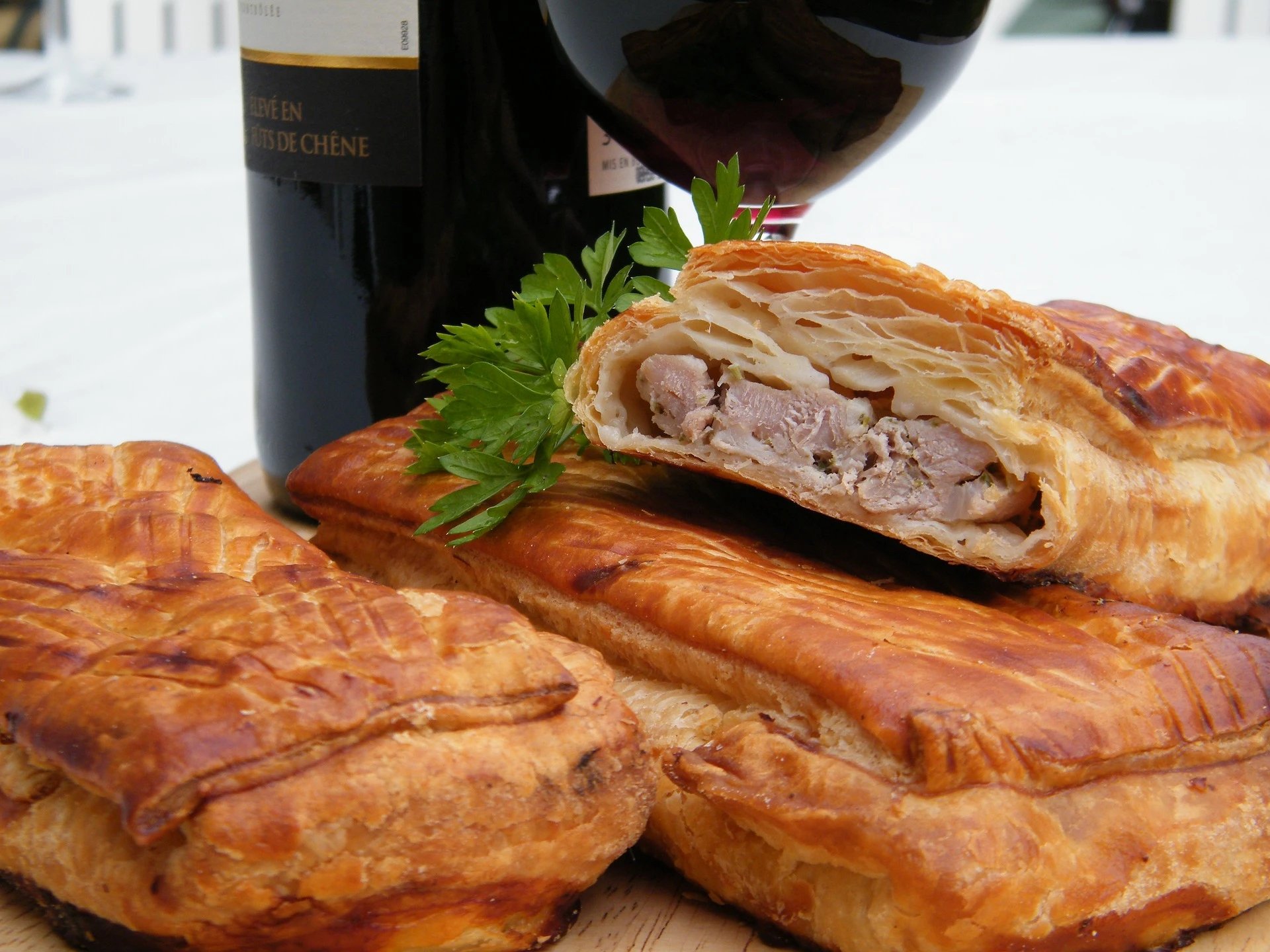
A small Lorraine pâté is a delicious snack to enjoy on the go. Photo selected by monsieurdefrance.com: Shutterstock.
The Gourmet Survival Guide to Shine at Restaurants
To avoid looking like a tourist passing through, here are some local terms you should know:
-
La Migaine: This is the secret to quiche. It's a mixture of eggs and crème fraîche (and nothing else!).
-
Le Fuseau Lorrain: A smoked sausage that is tender and elongated. It is the king of appetizers in our region.
-
A "Schlouck": A small shot of alcohol (often mirabelle plum brandy in coffee).
-
Les Brisigoti: A term used in the Vosges region to refer to small pieces of bacon or leftover food.
-
La Nonnette: A small gingerbread cake filled with jam (mirabelle plum, of course).
👉 30 culinary specialties from Lorraine you absolutely must try
Lorraine with children: Family outings and adventures

depositphotos
A successful trip to Lorraine is one where children get to be explorers for the day. The region is full of sites designed for young visitors, combining nature, animals, and fun history.
Swimming and water sports: The lakes of Lorraine
Swimming is often the best memory for children and the best way to "reset" after a morning of cultural visits.
-
Lake Madine: This is a paradise for families. Located in the heart of the Lorraine Regional Nature Park, it offers supervised beaches, marinas, and a multitude of activities: pedal boats, sailing, and even a huge inflatable water park in the summer.
-
Gérardmer and its Union Nautique: A beach at the foot of the pine trees with slides and diving boards.
-
Lake Pierre-Percée: Nicknamed "Little Canada in Lorraine," it offers an adventure park with giant zip lines over the water.
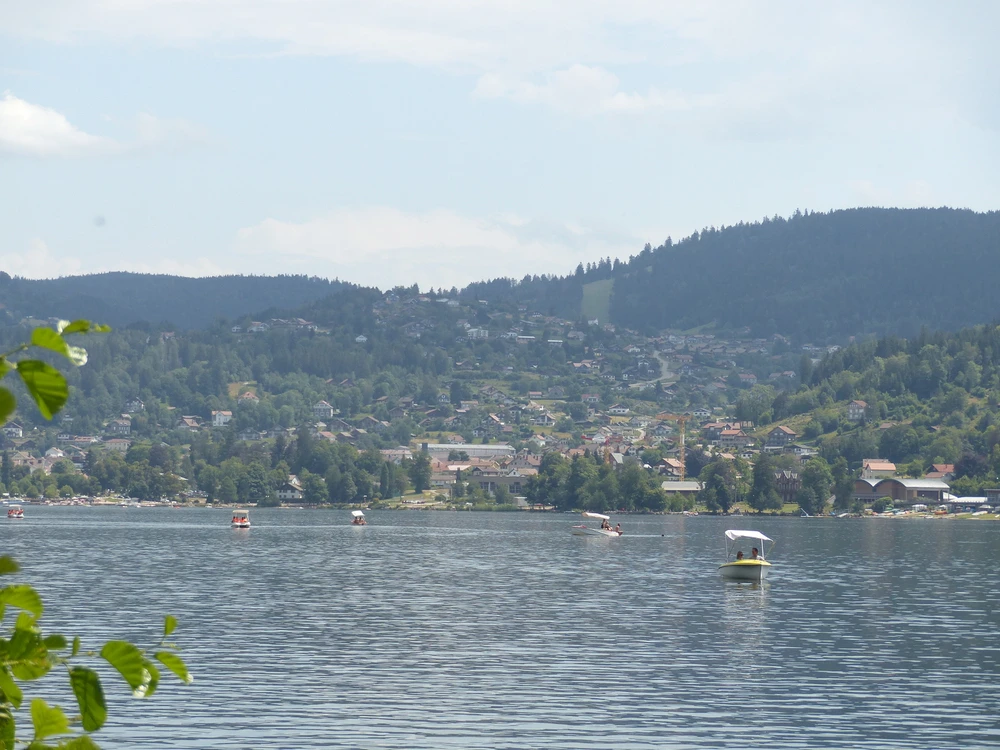
Lake Gérardmer / Photo selected by Monsieur de France: dimitri.croquet via depositphotos
Animal encounters: Parks and Zoos
-
Sainte-Croix Wildlife Park: This is one of the most beautiful parks in Europe. Bring the whole family to see packs of wolves, bears, deer, and lynxes in vast, protected spaces. The "Neo-Wolves" trail is an immersive experience that children love.
-
Amnéville Zoo: Located near Metz, this is one of France's most renowned zoos. Its falconry and sea lion shows are highlights for children. Amnéville also has an indoor ski slope (Snowworld) for skiing all year round.
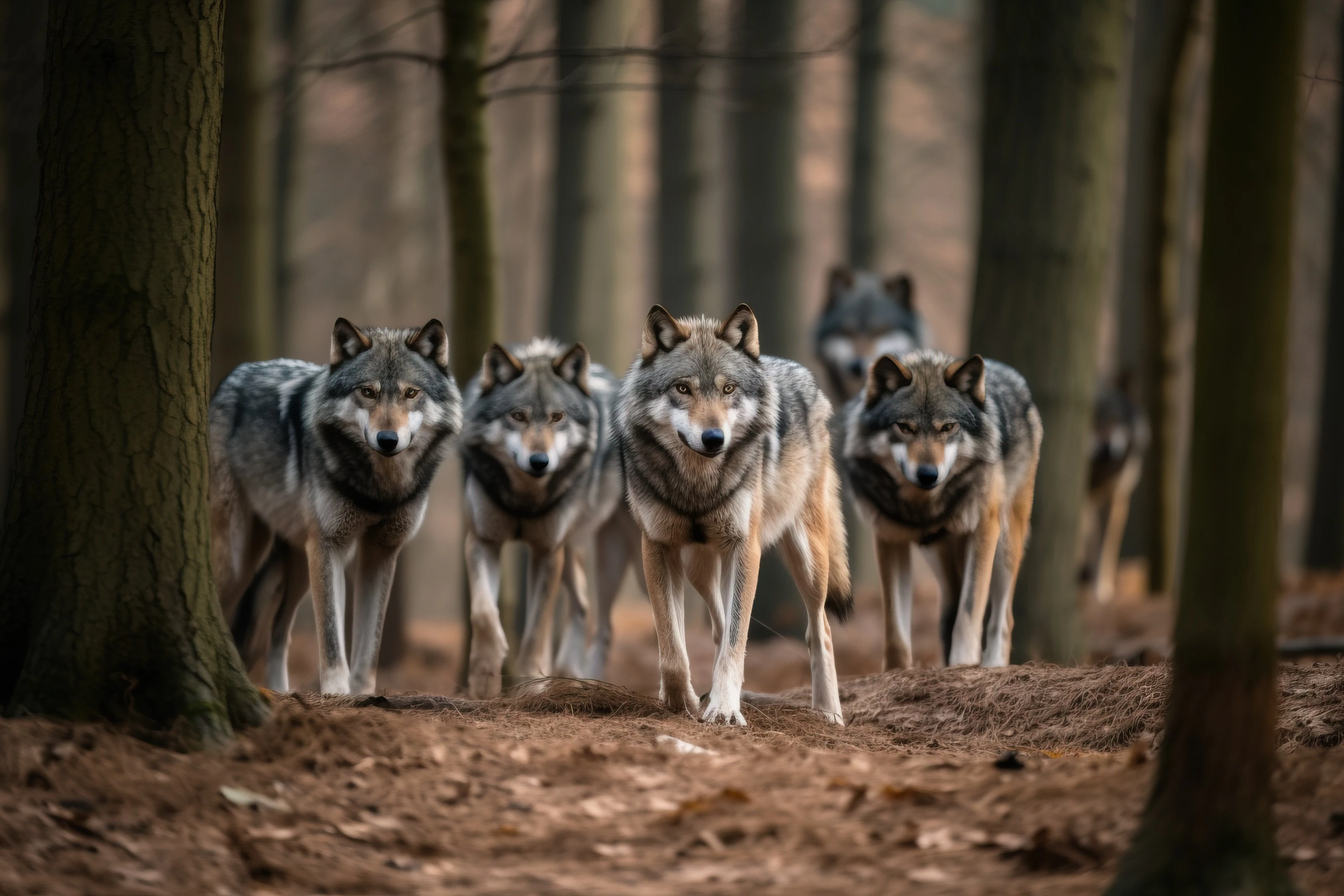
Wolves can be seen at Sainte Croix Park / Photo selected by Monsieur de France by Larry Clark from Pixabay
History and Images: Learning While Having Fun
-
The Cité de l'Image in Épinal: The famous "Images d'Épinal" continue to fascinate children. The museum offers workshops where children can try their hand at traditional printing and leave with their own creation.
-
Fort Hackenberg (Maginot Line): What could be more exciting than climbing aboard a small electric underground train to explore the tunnels of a giant fortress? It's a fun and refreshing way (the temperature is 54°F all year round) to discover history.
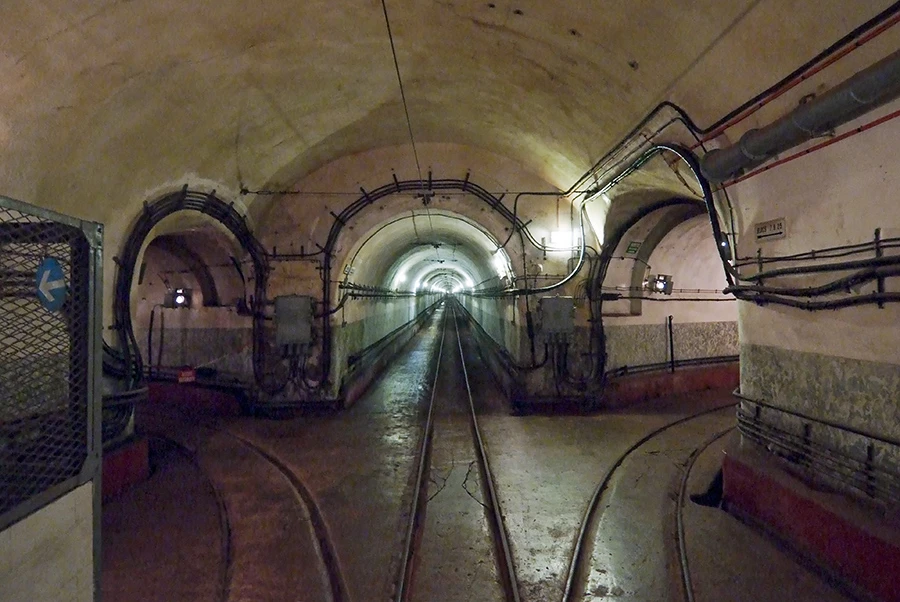
L'intérieur du Hackenberg / Photo choisie par Monsieur de France : Par Ungaroo - Udo Ungar — Travail personnel, CC BY-SA 3.0, https://commons.wikimedia.org/w/index.php?curid=18596036
Lorraine by bike: Routes and gentle touring
Lorraine has become a popular destination for cycle tourism. With hundreds of kilometers of safe greenways, it offers a variety of landscapes to explore, from rehabilitated industrial valleys to the forests of the Vosges mountains and mirabelle plum orchards.
1. The Blue Route (V50): Along the Moselle River
This is the region's star route. The Blue Way follows the course of the Moselle River for over 150 km in Lorraine.
-
The route: It enters Lorraine via Apach (Luxembourg border), crosses Metz, descends towards Nancy (via the Marne-Rhine Canal) and climbs back up to Épinal and the Vosges.
-
Why it's interesting: This is a flat route, ideal for families. It connects the two major cities in a day of gentle cycling, passing through sites such as the Roman aqueduct at Jouy-aux-Arches and the old glass-making towns.
2. The V52: From Paris to Strasbourg via Lorraine
This European route crosses Lorraine from west to east, following the Marne-Rhine Canal.
-
The route: You arrive via the Meuse (Ligny-en-Barrois), pass through Toul and Nancy, then head towards Lunéville and the Saint-Louis/Arzviller Inclined Plane, a boat lift that is unique in Europe.
-
The appeal: Crossing the Pays des Étangs (Lorraine Regional Nature Park) is a moment of pure solitude and wilderness, far from any traffic.
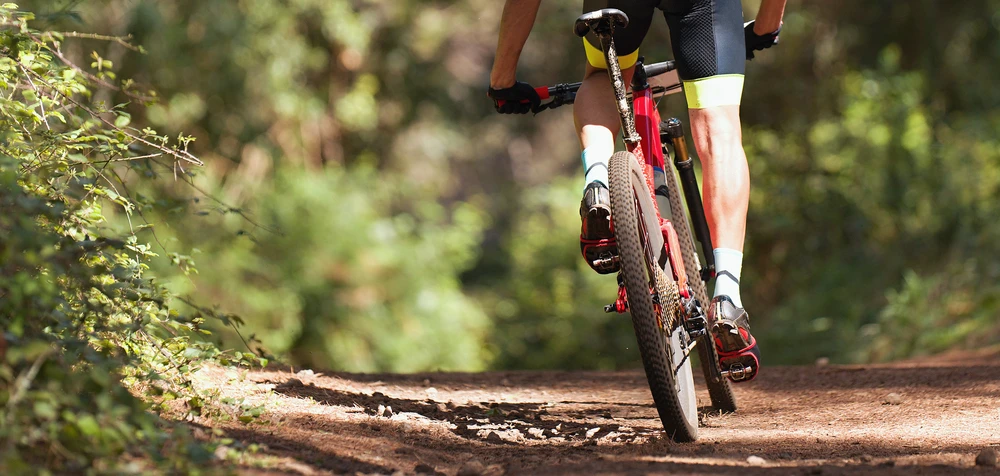
Lorraine is a cycling paradise / Photo selected by Monsieur de France: depositphotos
3. Mountain biking in the Vosges: For the more athletic
The Vosges Mountains are a world-renowned playground for mountain biking, regularly hosting World Cup events.
-
The sites: The bike parks in La Bresse and Gérardmer offer downhill trails for all levels.
-
Gravel biking: The rising trend in 2026. The forest trails of the Vosges mountains are perfect for this sport, which combines road and trail riding.
Unusual Lorraine: What the guidebooks forget to tell you
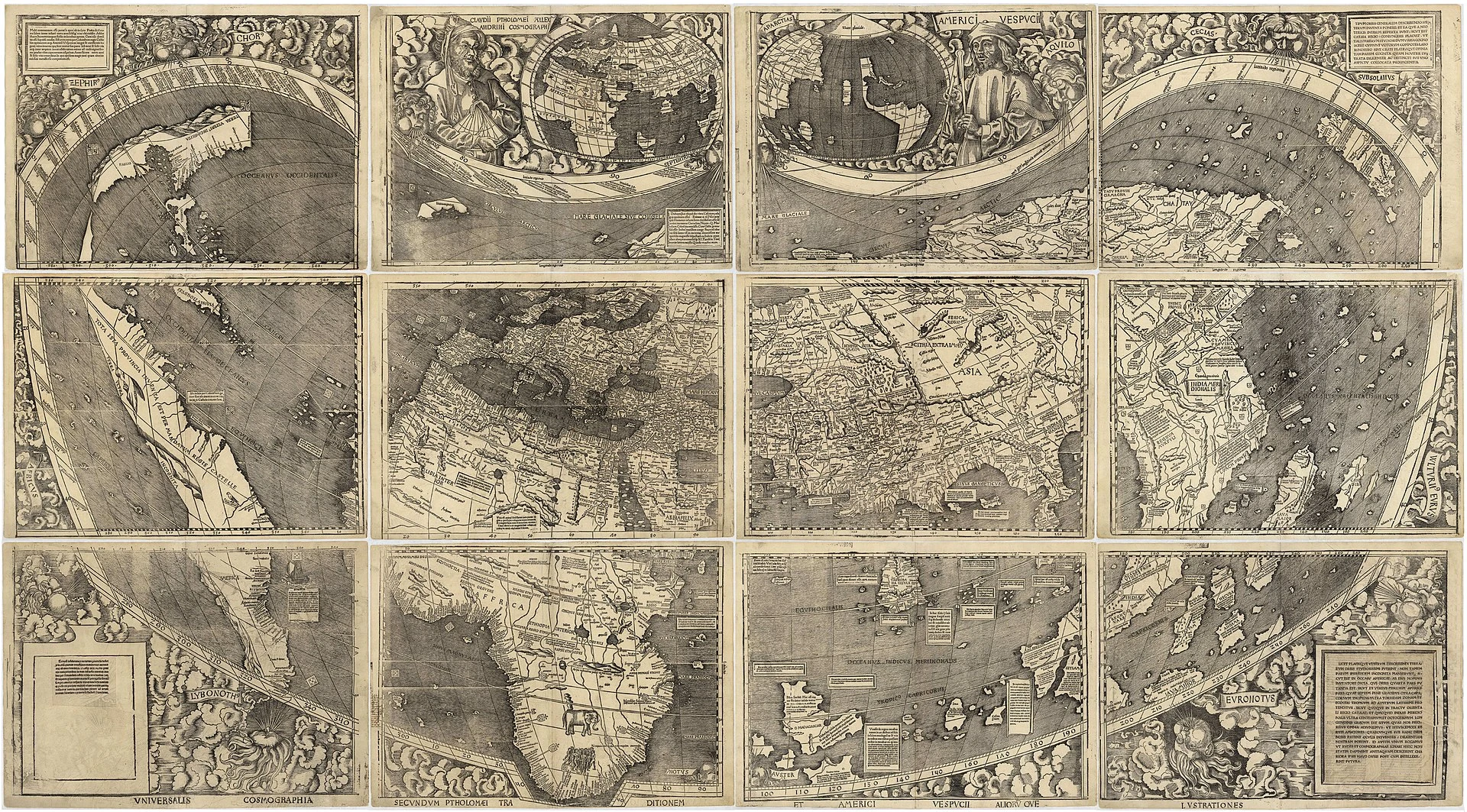
Waldseemüller's world map, first drawn in Saint Dié des Vosges in 1507. The oldest version is in Washington, D.C. The island on the bottom left is America. Source: Wikipedia
-
The naming of America: It was in Saint-Dié-des-Vosges, in 1507, that a group of scholars named the new continent "America" on Waldseemüller's planisphere.
-
The birthplace of the Lumière brothers: Although cinema was born in Lyon, the Lumière brothers were originally from Lorraine. Their father was born in Haute-Saône and grew up in the Vosges.
-
The Maginot Line: Lorraine is home to the largest structures of this legendary defensive line, such as the Fort du Hackenberg, which can still be visited today via a small underground electric train.
-
Three remarkable women lived in Lorraine: Joan of Arc (born in Domremy la Pucelle), Clémentine Delait (the bearded woman), and Julie Victoire Daubié, the first French woman to obtain a high school diploma.
Traditions: The Magic of Saint Nicholas Day
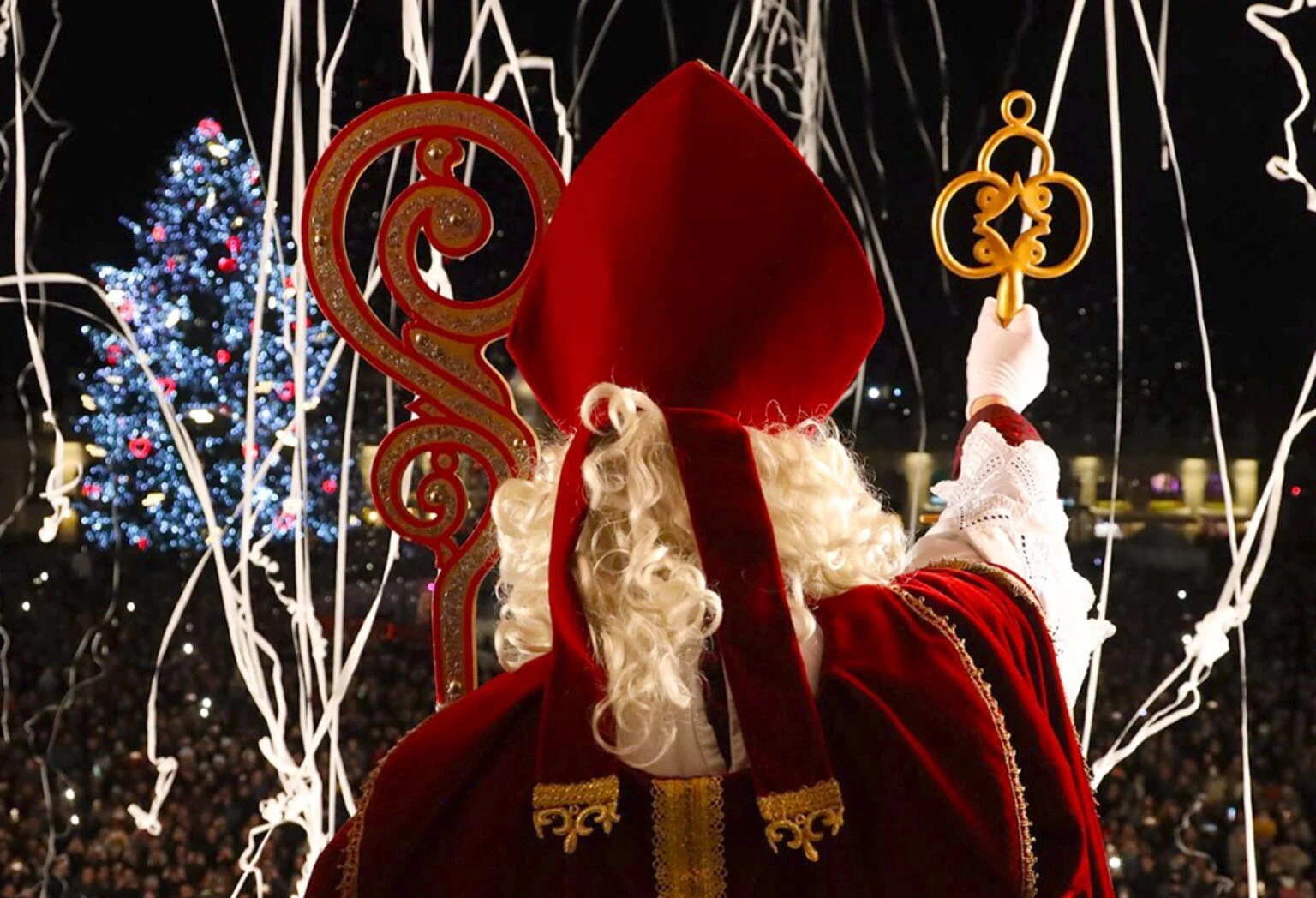
Saint Nicholas greets the crowd at the end of the parade / Photo chosen by Monsieur de France: Jérôme Prod'homme
In Lorraine, December 6 is the most sacred date on the calendar. Long before Christmas, we celebrate Saint Nicholas, the patron saint of Lorraine and protector of children. This tradition dates back to the Battle of Nancy in 1477, when Duke René II placed his troops under the protection of the saint to defeat Charles the Bold.
-
The Nancy Parade: This is a national event that attracts hundreds of thousands of visitors. The city lights up, monumental floats parade to the sound of brass bands, and Saint Nicholas hands out sweets to well-behaved children while Père Fouettard scolds the more boisterous ones.
-
Gingerbread: During this period, bakeries are overflowing with gingerbread bearing the image of the saint.
-
The Enlightenment: Every year, monumental projections on Place Stanislas tell the legend of the three little children saved from the salt pit by the great Saint. It's the most magical time to visit Lorraine.
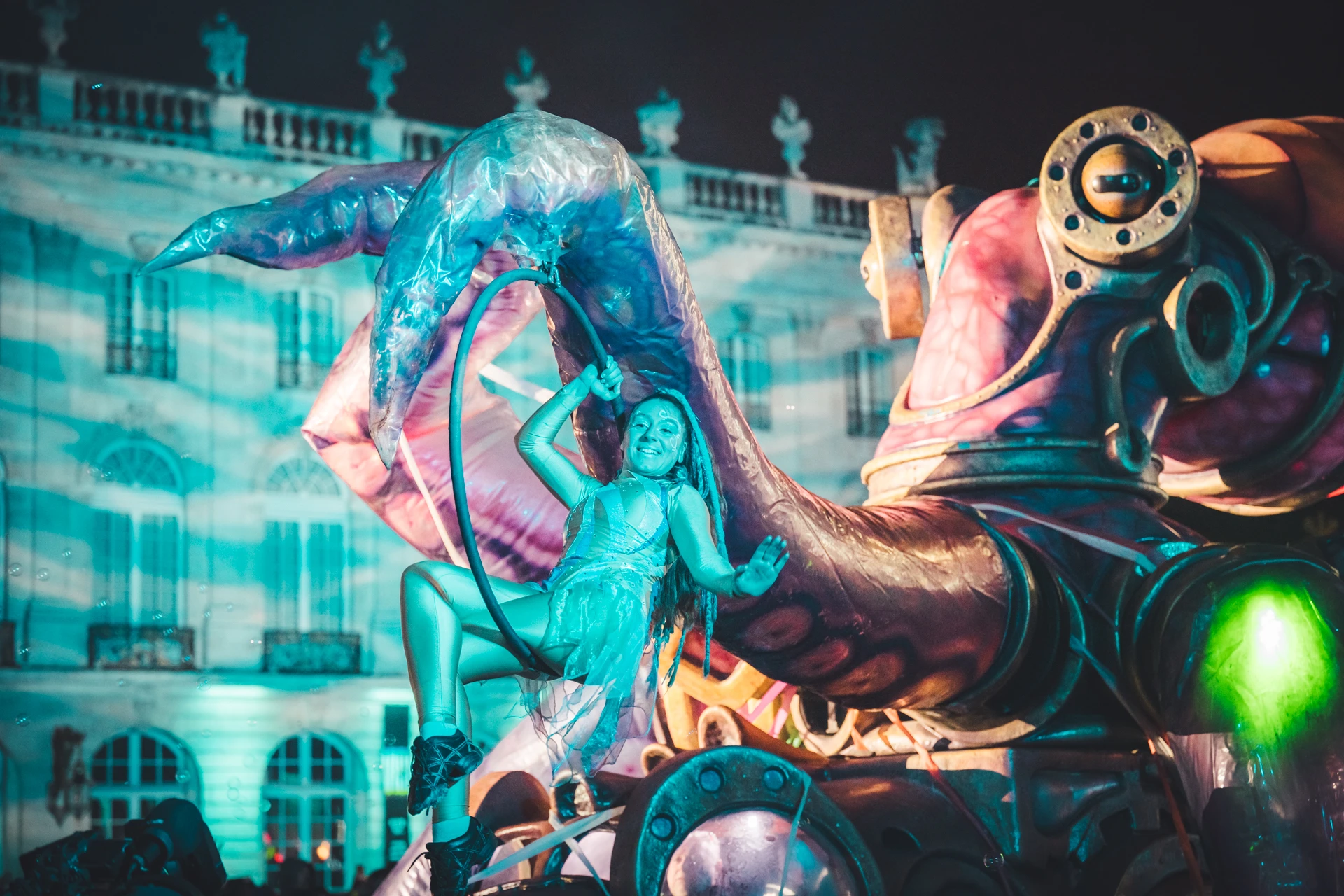
The 2024 parade/ Photo Pierre Defontaine ARTGE
But it is also a region that loves Christmas, as demonstrated by Metz and its Christmas market, one of the most beautiful in Europe. Lorraine is also worth visiting in winter because it is illuminated.
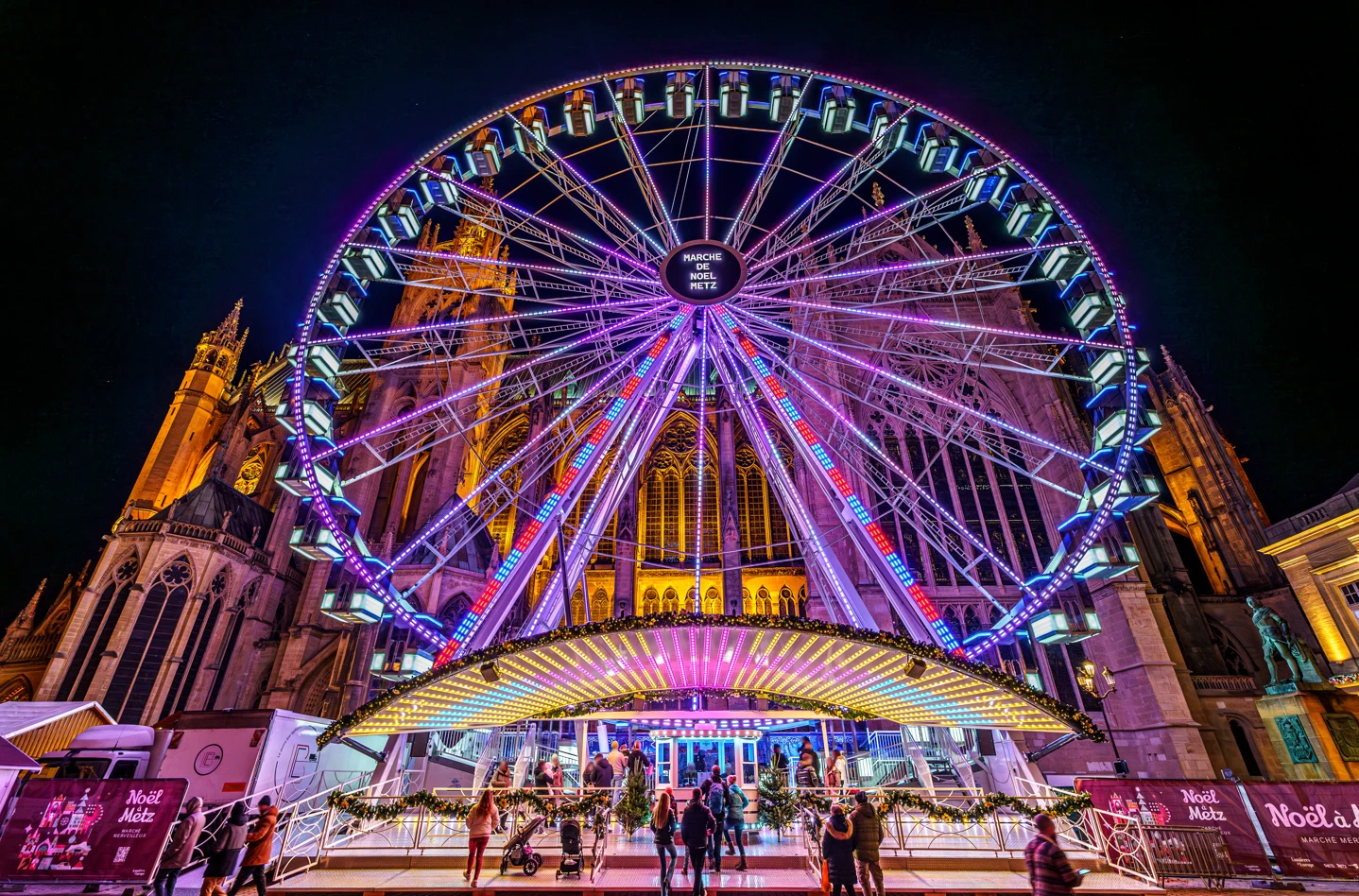
The magnificent Metz Cathedral shares the spotlight once a year with the illuminated Ferris wheel / Photo chosen by Monsieur de France: (c) Inspire Metz
👉 Why is Saint Nicholas the patron saint of Lorraine?
Your itineraries in Lorraine: From a weekend to a full week
To make the most of your stay, don't try to see everything, but experience everything. Here are four logical itineraries, optimized according to your available time, to minimize travel and maximize your experience.
1. The "Cities of Art" Weekend (2 days)
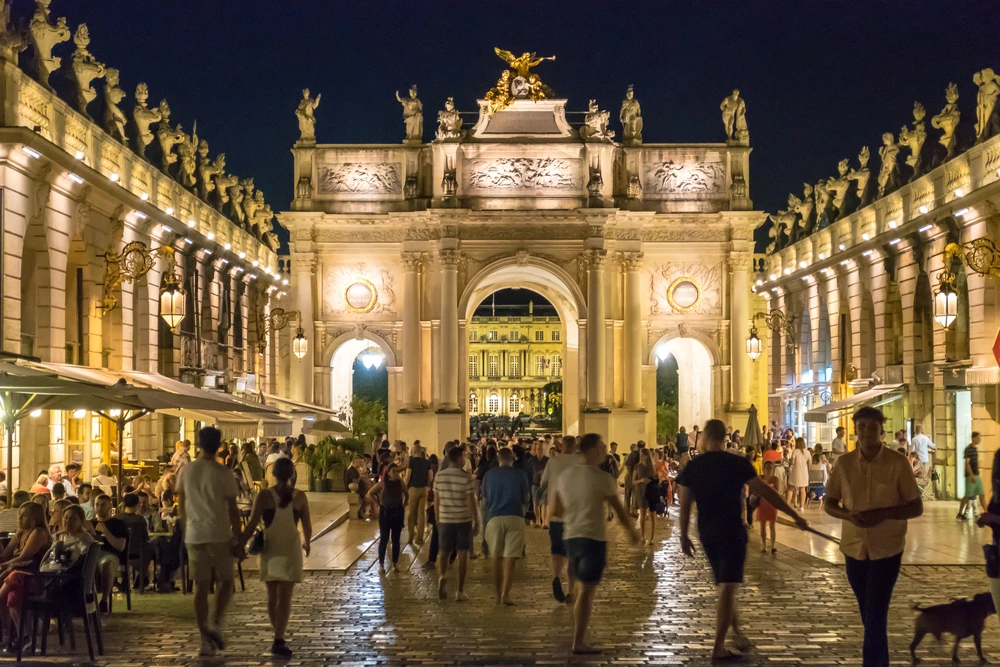
The arc of night / Photo selected by Monsieur de France: depositphotos
Target: Ideal for a first visit, without a car, via the high-speed train.
-
Day 1: Nancy the Royal. Arrival at Nancy train station. Morning at Place Stanislas. Lunch in the Old Town (Quiche or Pâté Lorrain). Afternoon: Villa Majorelle and Museum of the Nancy School. Evening: Dinner at Place du Marché or Grande Rue.
-
Day 2: Metz, the City of Light. Departure by TER train (35 min). Visit to Saint-Étienne Cathedral and the Covered Market. Afternoon: Centre Pompidou-Metz or walk along the banks of the Moselle to the Temple Neuf.
2. The "Meusien" Break: Memory and Renaissance (3 days)
Target: A powerful route connecting the two faces of the Meuse via the Sacred Way.
-
Day 1 & 2: Identical to the Nancy-Metz weekend.
-
Day 3: Verdun/Bar-le-Duc duo. Car rental. Morning in Verdun: Douaumont Ossuary and Fort de Vaux. Lunch on the banks of the Meuse. Afternoon: Drive down the Voie Sacrée to Bar-le-Duc to admire the Upper Town (a Renaissance gem) and its famous "Transi" by Ligier Richier.
3. The "Hautes-Vosges" and Great Sites Getaway (5 days)
Target: The ideal format for balancing culture, castles, and the great outdoors.
-
Day 1: Nancy. UNESCO World Heritage Site and Art Nouveau.
-
Day 2: The Castle Route. Departure southward: Château de Haroué (the calendar palace) in the morning, then Château de Lunéville in the afternoon. Overnight stay in Lunéville or onward to the Vosges.
-
Day 3: The Hautes-Vosges (Lakes and Ridges). Gérardmer in the morning (tour of the lake), lunch at the Hohneck and chamois watching. Afternoon on the Route des Crêtes for the panoramic views.
-
Day 4: Épinal and glass. Visit the Imagerie d'Épinal. Head northeast to discover glassmaking in Meisenthal or crystal making in Saint-Louis.
-
Day 5: Metz. End your trip by exploring Metz and its imperial architecture before departure.
4. Total Immersion: The Great Lorraine Loop (7 days)
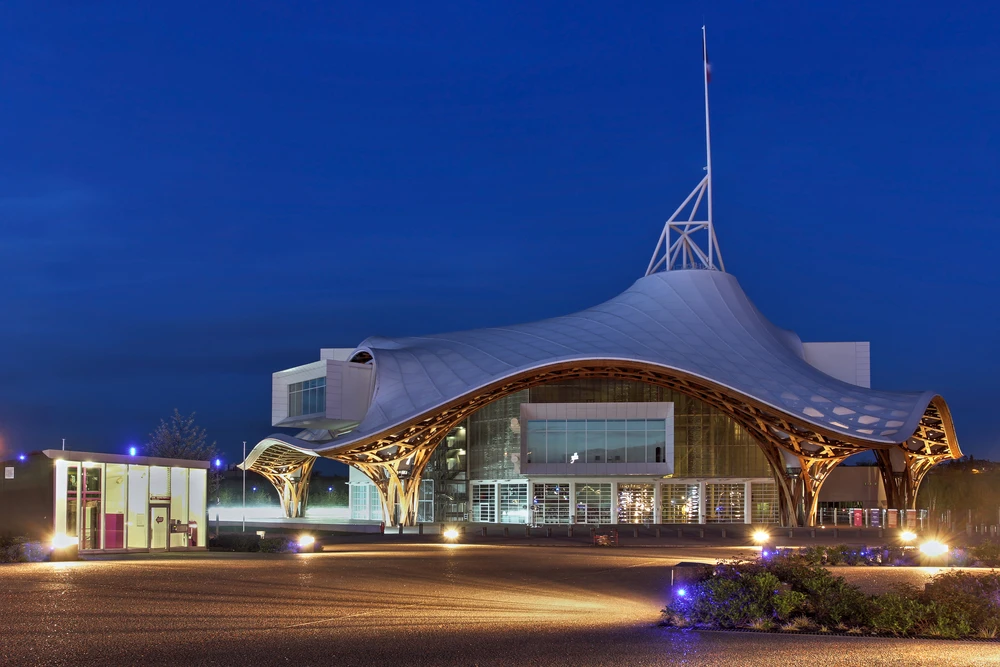
The Pompidou Center Metz at nightfall. Photo selected by Monsieurdefrance.com: Shutterstock.com
Target audience: For those who want to discover the "Lorraine of secrets" and take their time.
-
Day 1 & Day 2: Nancy and Toul. Add a wine tasting in the Côtes de Toul vineyards.
-
Day 3: The Glass Route. Baccarat, Saint-Louis, and Meisenthal. Overnight stay in the Pays de Bitche region.
-
Day 4: Metz. Full day to stroll through the gardens and museums (La Cour d'Or).
-
Day 5: Verdun and Bar-le-Duc. A full day in Meuse, exploring history and Renaissance heritage.
-
Day 6: Commercy and relaxation. Tasting of Madeleines in Commercy and wellness break in Vittel.
-
Day 7: Hautes-Vosges. End your outdoor adventure between Longemer and Gérardmer lakes.
3 days: The Lorraine Trio (Cities + Nature)
Add a day to the previous format as you wish:
-
Memory Option: Day trip to Verdun to visit the Ossuary and Fort Douaumont.
-
Nature Option: Day trip to the Hautes-Vosges with a walk to Hohneck and a tour of Lake Gérardmer.
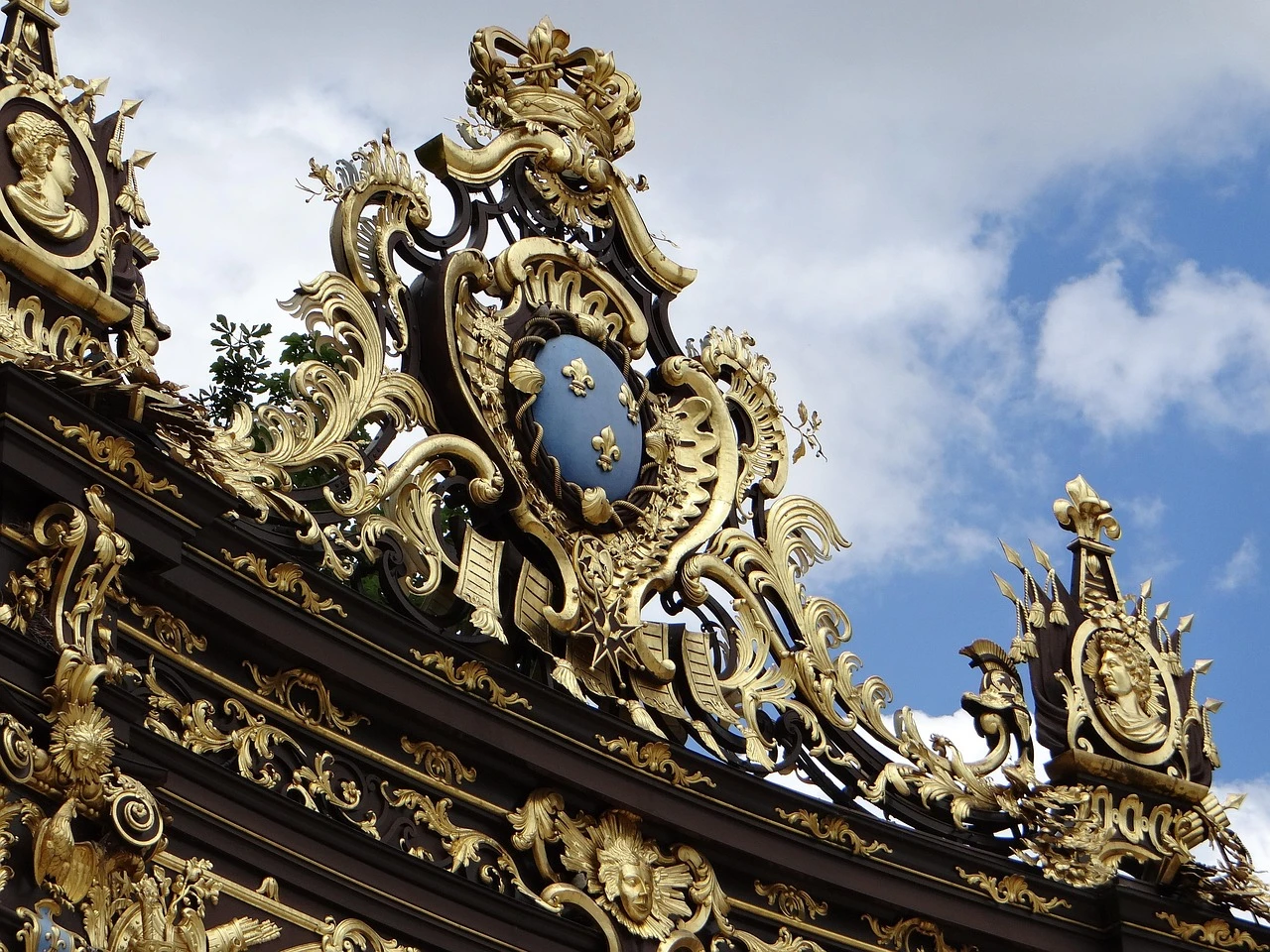
Detail of one of the fountains on Place Stanislas / Image by Agnès from Pixabay
The logistics match: Train vs. Car (Expert advice)
That's the question everyone asks when planning their trip. Here's the reality on the ground in 2026:
| Destination | Train (TER/TGV) | Car (A31 / A4) | My advice |
| Nancy <-> Metz | 35 min (high frequency) | 45 minutes to 1 hour 15 minutes (frequent traffic jams) | The Train. Avoid the stress of the A31. |
| Nancy <-> Vosges | 1 hour 15 minutes to Épinal | 1.5 hours to the ridges | The Car. Essential for freedom. |
| Metz <-> Verdun | Complex liaison | 1 hour via the A4 | The Car. Necessary for sites. |
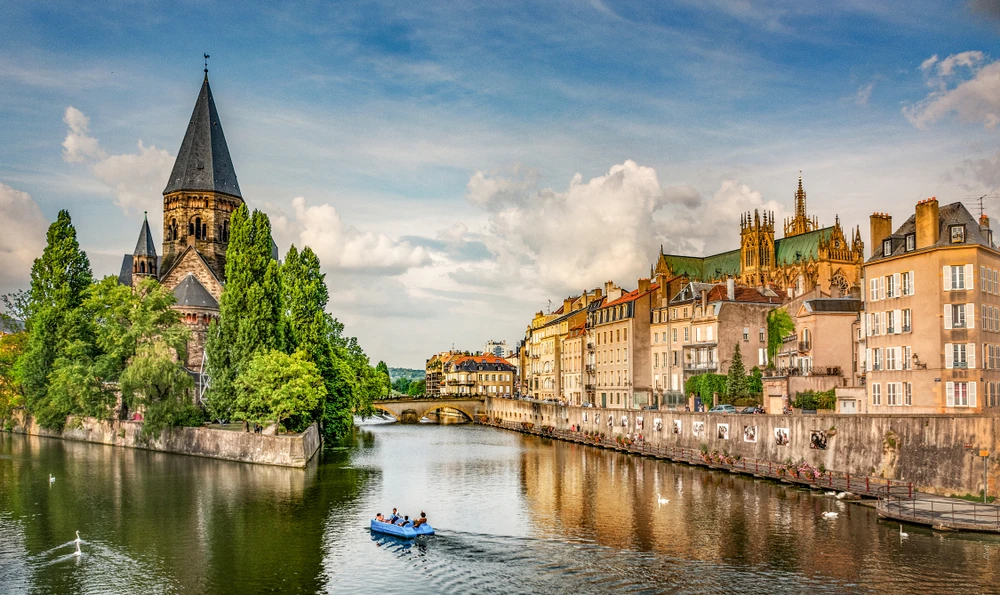
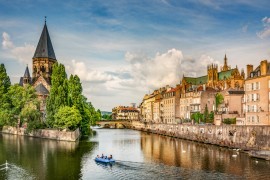
The new temple in Metz seen from behind, overlooking Place de la Comédie in Metz. Photo selected by monsieurdefrance.Com: Shutterstock.com
Practical Information: Getting There and Getting Around in 2026
-
Arriving by Train (TGV Est): Lorraine is very well connected. Paris-Metz takes 1 hour 23 minutes, Paris-Nancy 1 hour 31 minutes. The Meuse TGV station serves Verdun and the western part of the region.
-
Coming by car: The A4 motorway crosses Lorraine from west to east (Paris-Strasbourg). The A31 is the main north-south route (Luxembourg-Nancy-Dijon).
-
Getting around: The TER "Métrolor" rail network is excellent between major cities. For the Vosges and Meuse regions, renting a car is essential for accessing natural and historical sites.
-
When to visit? Spring for the mirabelle plum blossoms, summer for the Vosges lakes, fall for the colors of the forest, and December for the incomparable magic of Saint Nicholas Day.
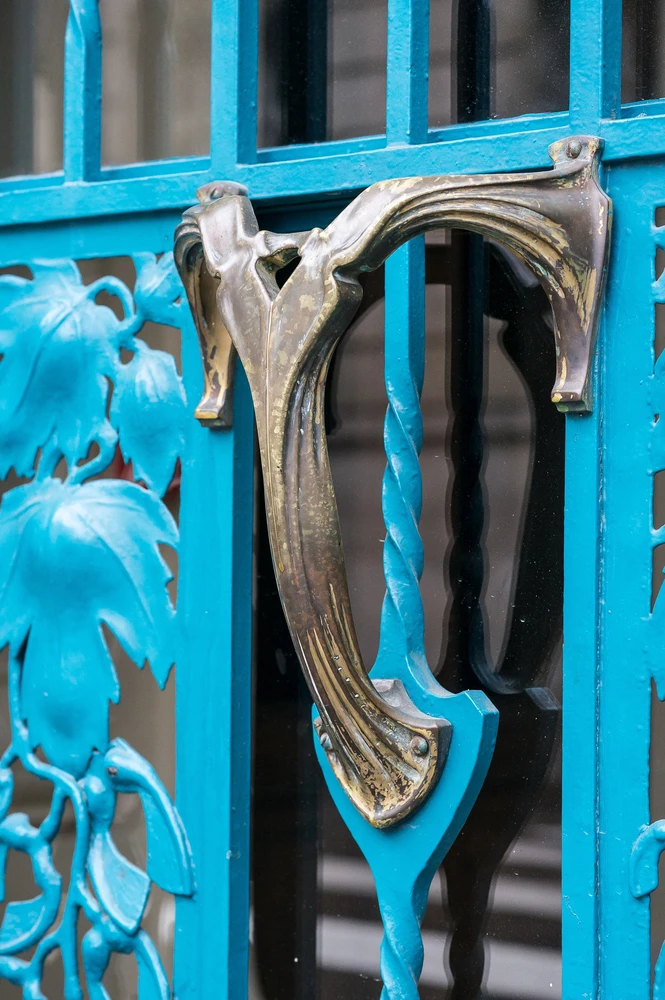
Detail of the Art Nouveau wrought iron handle on the door of the Meurthe-et-Moselle Chamber of Commerce and Industry in Nancy. Photo selected by monsieur de France: depositphotos
FAQ: Planning and Enjoying Your Stay in Lorraine
What is the difference between Lorraine and the Grand Est?
Lorraine is one of the three historical regions (along with Alsace and Champagne-Ardenne) that today make up the administrative region of the Grand Est. While the administrative structure has changed, Lorraine’s identity remains intact, carried forward by its departments (Meurthe-et-Moselle, Meuse, Moselle, Vosges) and its unique traditions, such as Saint Nicholas Day and its distinctive cuisine.
Where to go in Lorraine for a first weekend?
The winning combination for a first visit is the Nancy-Metz duo. These two cities, just 35 minutes apart by train, offer the perfect blend: the elegance of the Enlightenment in Nancy and the millennia-old grandeur of Metz. For a longer stay, add a day in nature in the Hautes-Vosges (Gérardmer) or a visit to Verdun to reflect on history.
Is it possible to visit Lorraine without a car?
Yes, it is one of the easiest regions to explore by train. The "Sillon Mosellan" railway line runs very frequently between Nancy, Metz, Thionville, and Épinal. The high-speed train connects Paris to Nancy or Metz in less than 1.5 hours. However, a car is highly recommended for exploring the Meuse (Verdun), the isolated crystal factories, or the deep hiking trails of the Vosges.
When is the best time to see the mirabelle plum trees in bloom?
The fleeting spectacle of the mirabelle plum blossoms usually takes place in mid-April. The banks of the Meuse and Moselle rivers are then covered with a magnificent white veil. To taste the fresh fruit, you'll have to come back in mid-August, during the harvest, which gives rise to many popular festivals, particularly in Metz.
What to do in Lorraine when it rains?
Lorraine boasts some exceptional cultural attractions. You can explore the Centre Pompidou-Metz, the Musée de la Cour d'Or (Metz) or the Musée des Beaux-Arts in Nancy. Another option is to enjoy the thermal waters: Nancy Thermal or the centers in Amnéville offer a wellness break sheltered from the elements.
Nancy or Metz: which city to choose?
This is the big local debate! Choose Nancy if you like the buzz of a student city, the shops in the Old Town, and royal architecture. Choose Metz for its waterside parks, medieval atmosphere, and majestic calm. The ideal solution is not to choose, but to visit both, as they complement each other so well.
What is the average price of a stay in Lorraine?
Lorraine remains one of the most affordable regions in France. The cost of accommodation and dining is significantly lower than in neighboring Alsace or Paris. An average budget of €80 to €120 per day per person allows you to comfortably enjoy local restaurants and charming hotels.
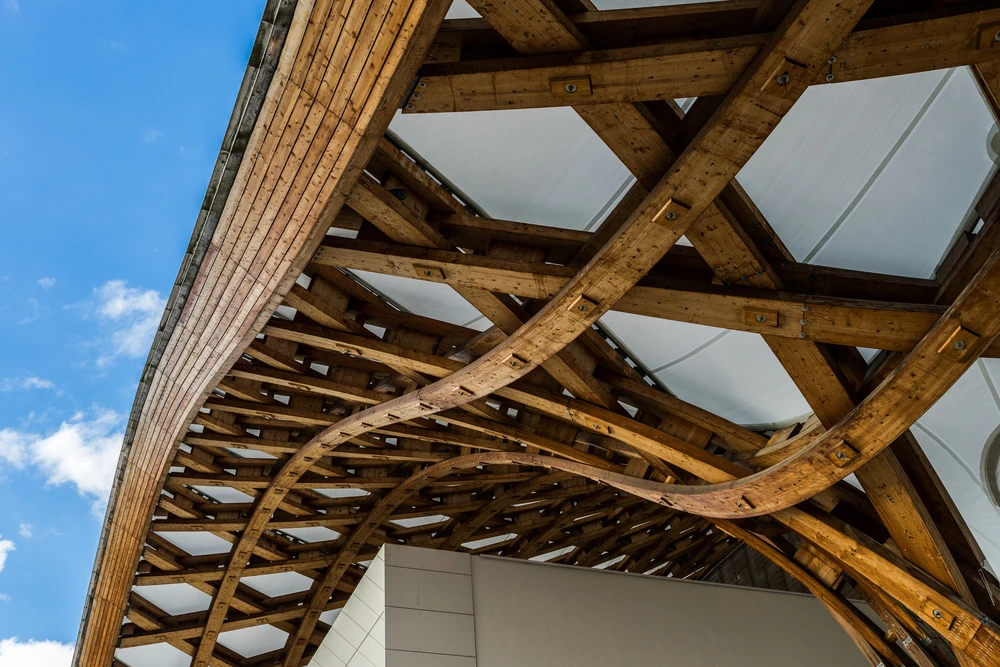
Detail of the wooden architecture of the Centre Pompidou Metz / Photo selected by Monsieur de France: depositphotos
Summary
Lorraine is a region with character that is best explored slowly. Between the princely elegance of Nancy, the architectural strength of Metz, the wild purity of the Vosges mountains, and the solemnity of Verdun, you have all the ingredients for a great trip. Rich in its industrial, artisanal, and ducal past, it now offers a modern face, focused on well-being and avant-garde culture.
Jérôme Prod'homme Specialist in French heritage, gastronomy, and tourism. Find all my discoveries at monsieur-de-france.com.