What should you prioritize in the Old Town? For a successful immersion, start with the Porte de la Craffe, the oldest monument in the district. Then walk up the Grande Rue to the Palais des Ducs de Lorraine and the Église des Cordeliers. Finish with a break at Place Saint-Epvre to admire its neo-Gothic basilica before losing yourself in the hidden courtyards of mansions such as the Hôtel d'Haussonville.
See also: Before diving into the medieval streets, check out my complete guide to the must-see sights in Nancy.
Getting ready for your trip to Nancy? Choosing the right location will make your stay much easier and more enjoyable:
👉 Find a well-located hotel in Nancy
👉 Check the best deals available for your dates
👉 Where is the best area to stay in Nancy?
👉 What are the must-see places in Nancy?
This article may contain affiliate links. This does not change the price for you, but helps support the Monsieur de France website.

1. The origins of Nancy: A castle in the middle of the marshes
The history of Nancy does not begin with a Roman colony or a Gallic settlement, which is very rare for a large French city. In fact, the city was founded with the creation of the Duchy of Lorraine. Around 1050, Duke Gerard of Alsace, who had just been given the Duchy of Lorraine, decided to build a small fortified castle in the center of his new possessions. This location had the advantage of being close to a vast forest where he could hunt, which was his great passion (and that of all the great lords of the Middle Ages). He therefore decided to build a wooden castle on a small hill in a marshy area that was difficult to access. It was not an ideal location from a commercial point of view (the road passed further away and it was difficult to cross the Meurthe River), but it suited him because it was central. He had other castles and traveled around, for example to Fontenoy or Prény, but he liked this place, and so did his descendants, so little by little a town developed around the castle, which gradually became the capital of the Dukes of Lorraine.
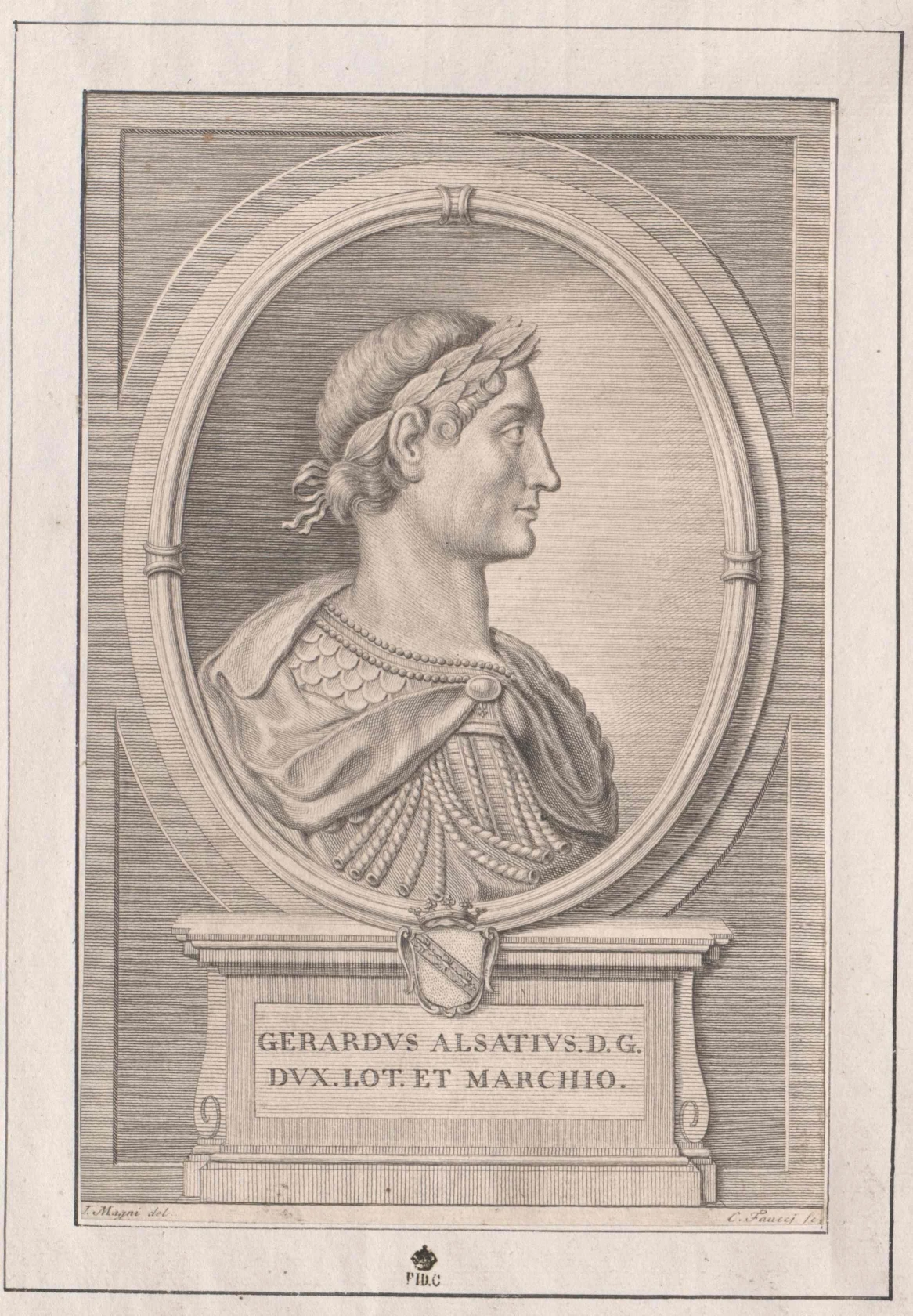
The founding duke, Gérard I of Alsace / 17th-century engraving depicting the duke / Illustration chosen by Monsieur de France By Carlo Faucci / Based on Giuseppe Magni / Ferdinand de Saint-Urbain — Dom Calmet, 1762, Series of portraits of the Dukes and Duchesses of the Royal House of Lorraine, Drawings and tombs based on the Medals of Saint-Urbain, Nancy., Public domain, https://commons.wikimedia.org/w/index.php?curid=73782212
This first urban center, founded by Gérard and his son Thierry at the beginning of the 2nd millennium, was then just a small town protected by palisades. It was in the 12th century, under the impetus of Duke Simon II, that the city began to take on its current appearance. Although the stone walls have now disappeared, replaced by wide circular boulevards, the radial layout of the district bears witness to this ancient protection. It was the fierce determination of the Dukes of Lorraine, who had become powerful, to establish their capital here that transformed this outpost into a city of European influence.
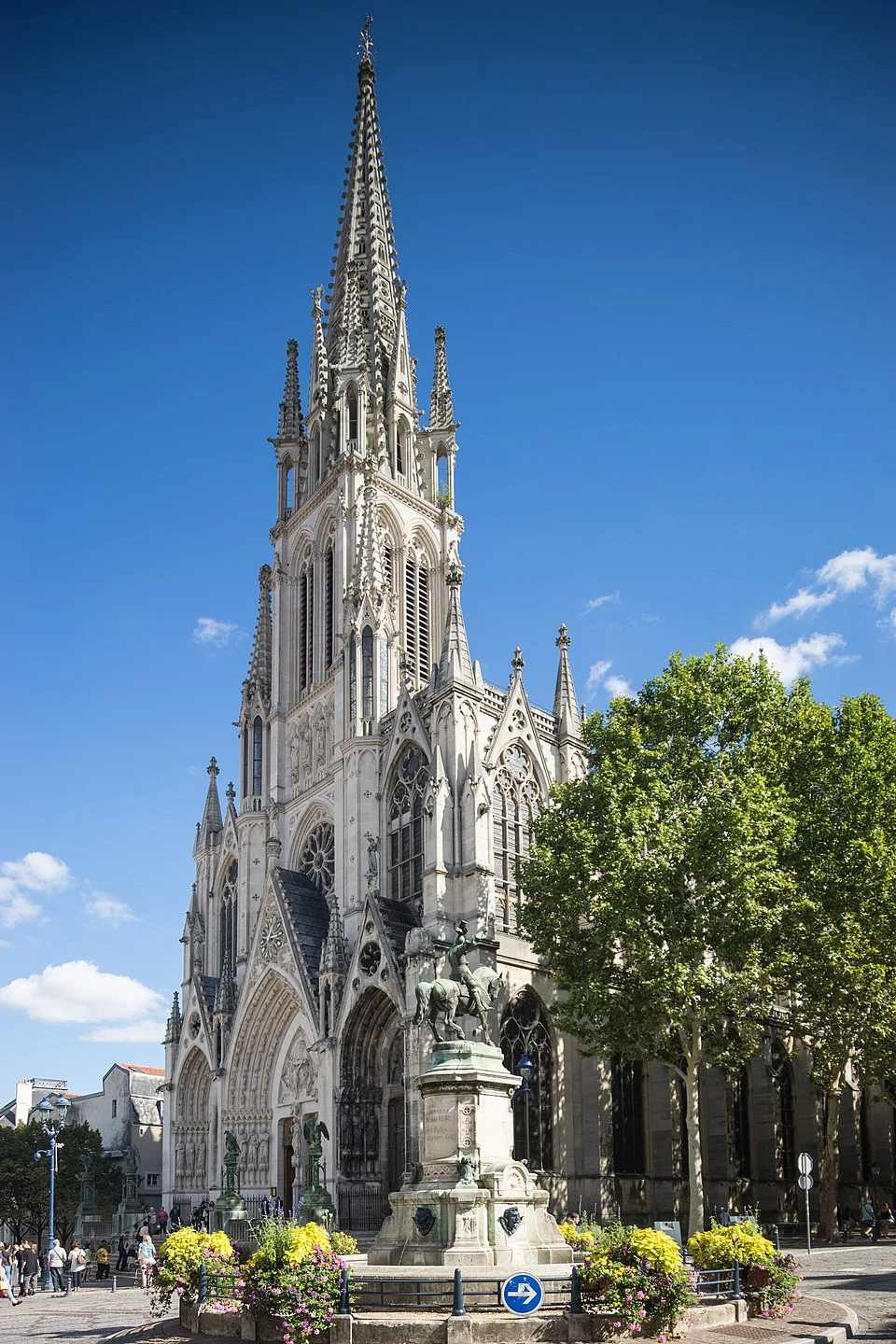
The Basilica of Saint Epvre is the heart of Nancy's old town/ Photo selected by monsieurdefrance.com: By Pedro J Pacheco — Own work, CC BY-SA 4.0, https://commons.wikimedia.org/w/index.php?curid=73191583
Why is Nancy called "the old town"?
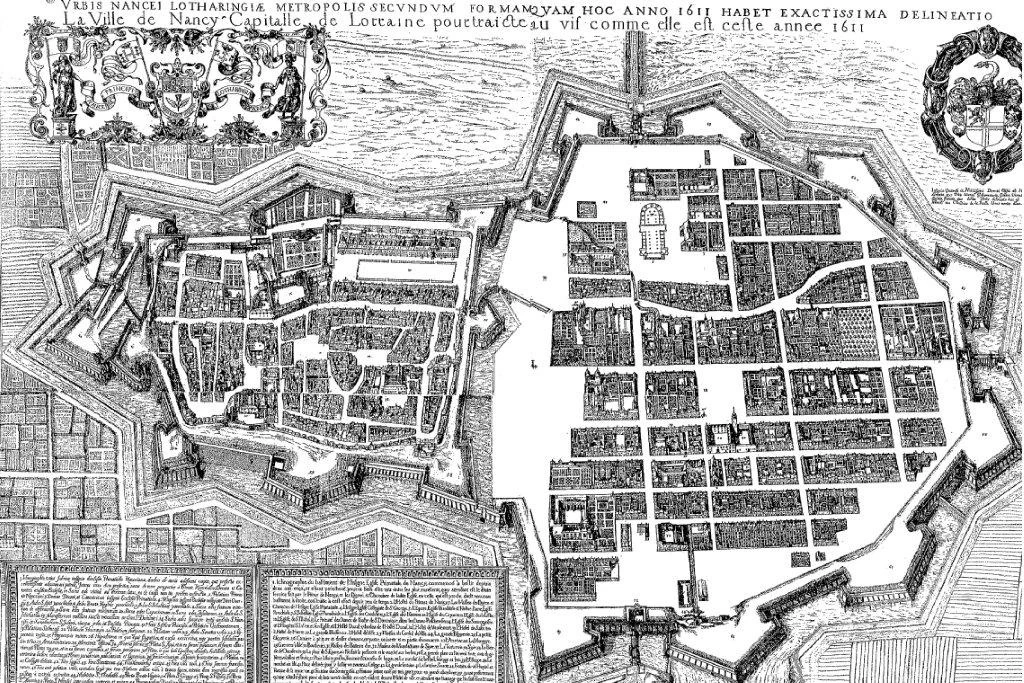
The two cities of Nancy on DERUELLE's map from 1611
The most important Duke of Lorraine and Bar in history was Charles III (1543-1608). Powerful, he decided to expand Nancy, which was his capital and where he had his residence. And he did not do what was usually done at the time: raze the walls and expand the city. On the contrary, he kept the original city of Nancy and built a second one a little further away, a second city of Nancy, five times larger, which became the new city, which makes sense since it was indeed brand new. As a result, it became customary to refer to the original city, the one dating back to the Middle Ages, as the "old city" or "vieux ville". The two cities, different but united by ramparts, remained a unique feature of Nancy for a long time before Stanislas decided to unite them in the 18th century by building his great work.
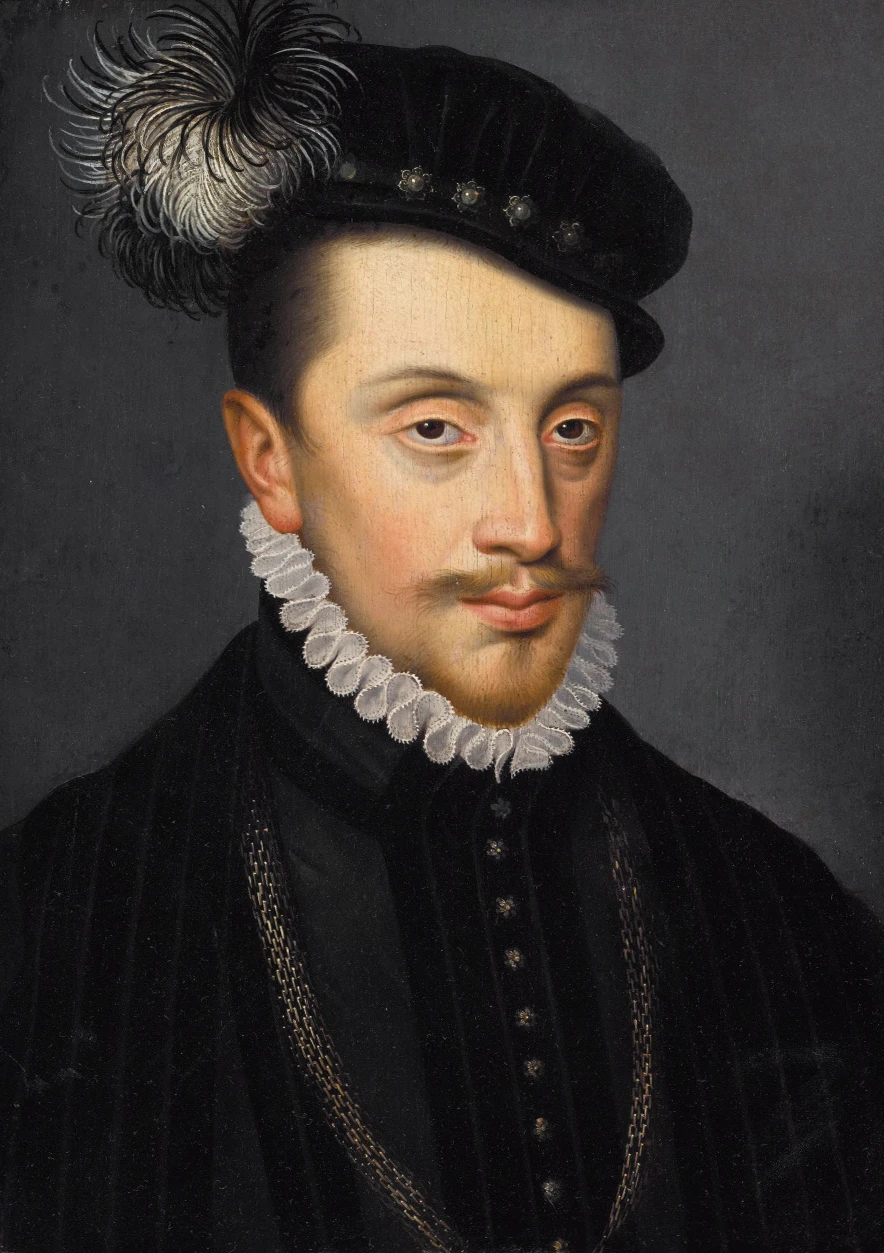
Duke Charles III of Lorraine and Bar by François Clouet / Photo selected by Monsieur de France By François Clouet's workshop — Sotheby's, Public domain, https://commons.wikimedia.org/w/index.php?curid=23696434
Where to stay near Nancy’s Old Town?
If you want to explore Nancy’s charming old town with its historic streets, medieval atmosphere and beautiful squares, staying in the city centre is usually the most convenient choice. From there you can easily walk to Place Stanislas, the Ducal Palace area and many of the city’s main landmarks.
To prepare your stay and compare accommodation depending on your dates and budget, you can check:
• available hotels in Nancy ↗
• hotels in Nancy city centre ↗
• well-located hotels near the Old Town ↗
This allows you to quickly see availability, guest reviews and prices depending on the time of your visit.
2. The Palace of the Dukes of Lorraine: The heart of power
In the center of the Old Town stands the most emblematic monument of the Duchy of Lorraine: the Palace of the Dukes of Lorraine. A true testament to the duchy's golden age, its "porterie" (entrance gate) is a masterpiece of flamboyant Gothic style, heavily inspired by the Château de Blois, where the Dukes of Lorraine sometimes stayed at the court of the Kings of France. Admire the equestrian statue of Duke Antoine under its sculpted canopy: it symbolizes the pride of a sovereign state. It was Duke Antoine I (1487-1544) who commissioned the construction of the palace. Today, it represents barely a quarter of what it was originally. In one of the towers, the duke could even ride a horse. It was largely destroyed by Duke Leopold I in the early 18th century to make way for a modern castle project, the "Louvre of Nancy." A palace that was never built, as the duke, seeing the French occupy the capital of Lorraine once again, had the castle built in Lunéville, which he made his home. The old palace of his ancestors stood empty for a long time. It also served as Nancy's first library before, at the beginning of the 19th century, history enthusiasts decided to turn it into the "Musée Lorrain," a museum dedicated to the history of Lorraine.
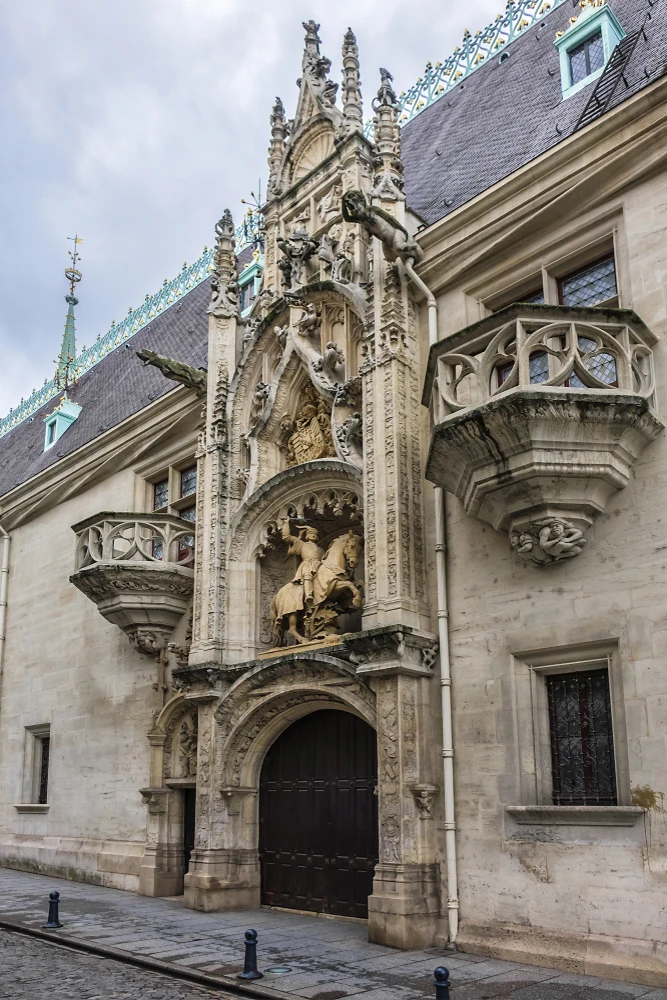
The Lorraine Museum is the Ducal Palace in Nancy's old town / Photo selected by Monsieurdefrance.Fr: Kiev.Victor/Shutterstock
Today, the palace, currently undergoing renovation to become one of France's largest historical museums, continues to offer passersby a sight of great beauty. Its façade is astonishing, and each sculpture and gargoyle tells a story about the Lorraine dynasty, which ruled here for centuries before the duchy was annexed by France in 1766.
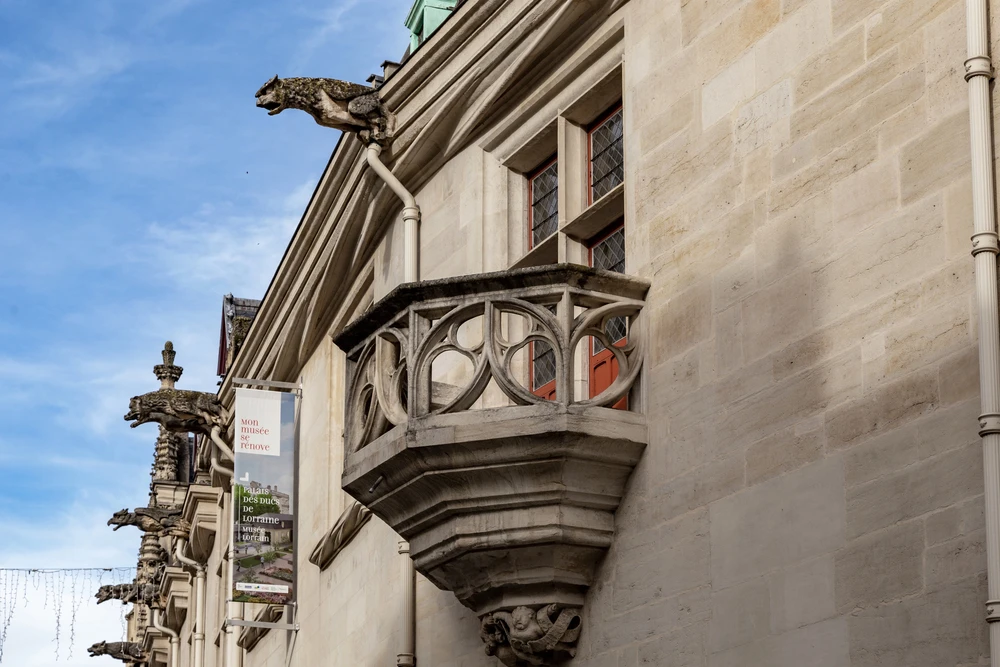
The facades of the Palace of the Dukes of Lorraine / Photo selected by Monsieur de France: goga18128.mail.ru via depositphotos
Marco the bear and the child:
When you look at the gatehouse, remember Marco the bear. He lived where the smaller of the two gates is located. The bear belonging to Duke Leopold, who ruled Lorraine from 1697 to 1729, was named Marco. During the freezing winter of 1709, a young Savoyard, employed as a servant and housed in a poorly protected barn, found himself freezing one night. In desperation, he made a decision that was as daring as it was reckless: to slip into the shelter of the ducal bear in order to escape the freezing cold, without realizing the danger he was exposing himself to. Against all expectations, the animal showed no aggression. On the contrary, Marco drew the child close and kept him warm between his paws, pressed against his broad chest, until daybreak. In the morning, the bear let him leave freely, as if nothing had happened.
Reassured by this surprising kindness, the young Savoyard returned the following evening, and then every night after that. The bear's den became his refuge. He even noticed with amusement that Marco seemed to be deliberately saving him a portion of his ration. Several days passed in this way, without anyone noticing this unlikely relationship between the child and the animal. The discovery came about by chance. One evening, the servant responsible for bringing the bear his meal arrived later than usual. He was stunned to see Marco, usually placid, acting nervous, his gaze hard, as if demanding silence. The bear was protecting a child who was fast asleep against him. Even more surprising was that, despite his reputation for having a voracious appetite, Marco completely ignored the food presented to him and did not move until the boy woke up, watching over him with an almost human calm.
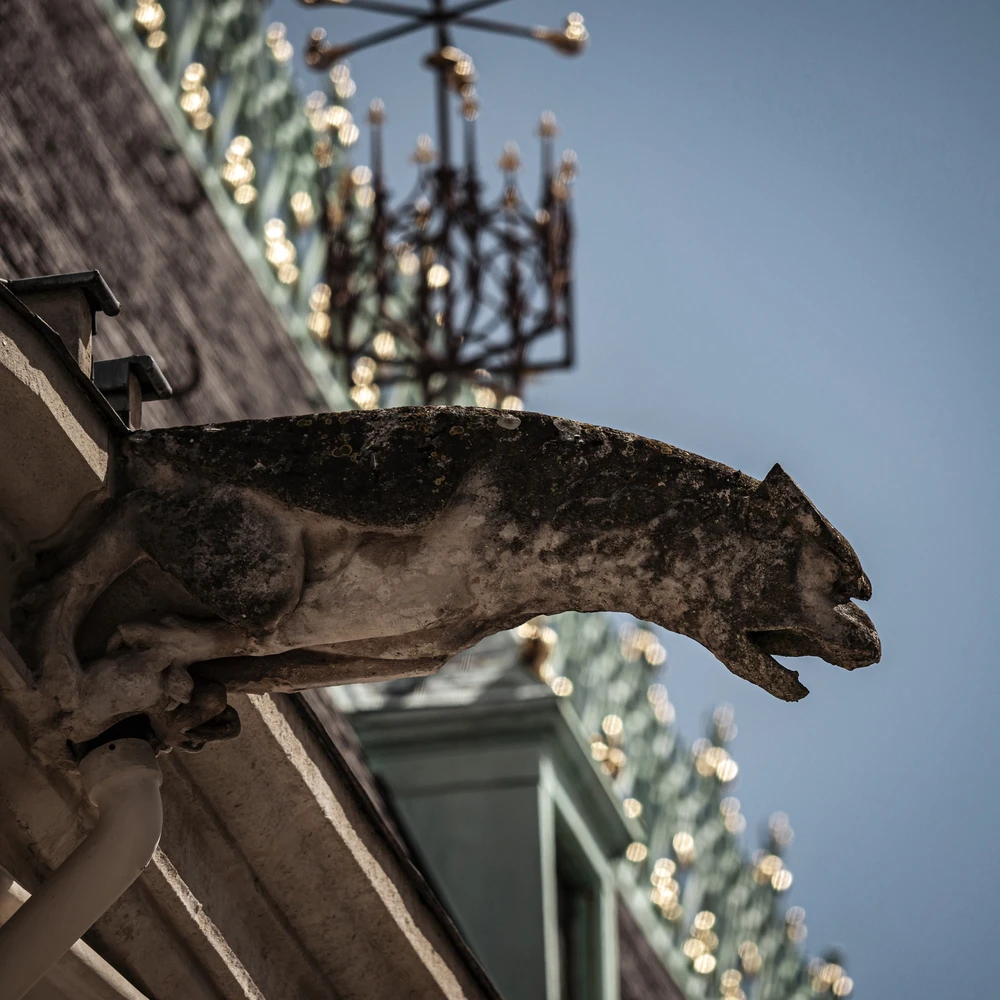
Speaking of animals, you will see many of them on the facade. Some support balconies, others are gargoyles. There are monkeys, for example.
Visit Nancy with a local guide
To discover Nancy in a different way and gain a deeper understanding of the city’s history, taking a guided tour can be an excellent option. Accompanied by a professional guide, you can stroll through Place Stanislas, explore the old town, and discover the stories and secrets of the former capital of the Dukes of Lorraine.
👉 Discover the guided tour of Nancy ↗
This article may contain affiliate links. This does not affect the price for you but helps support the Monsieur de France website.
The symbols of the Duchy of Lorraine
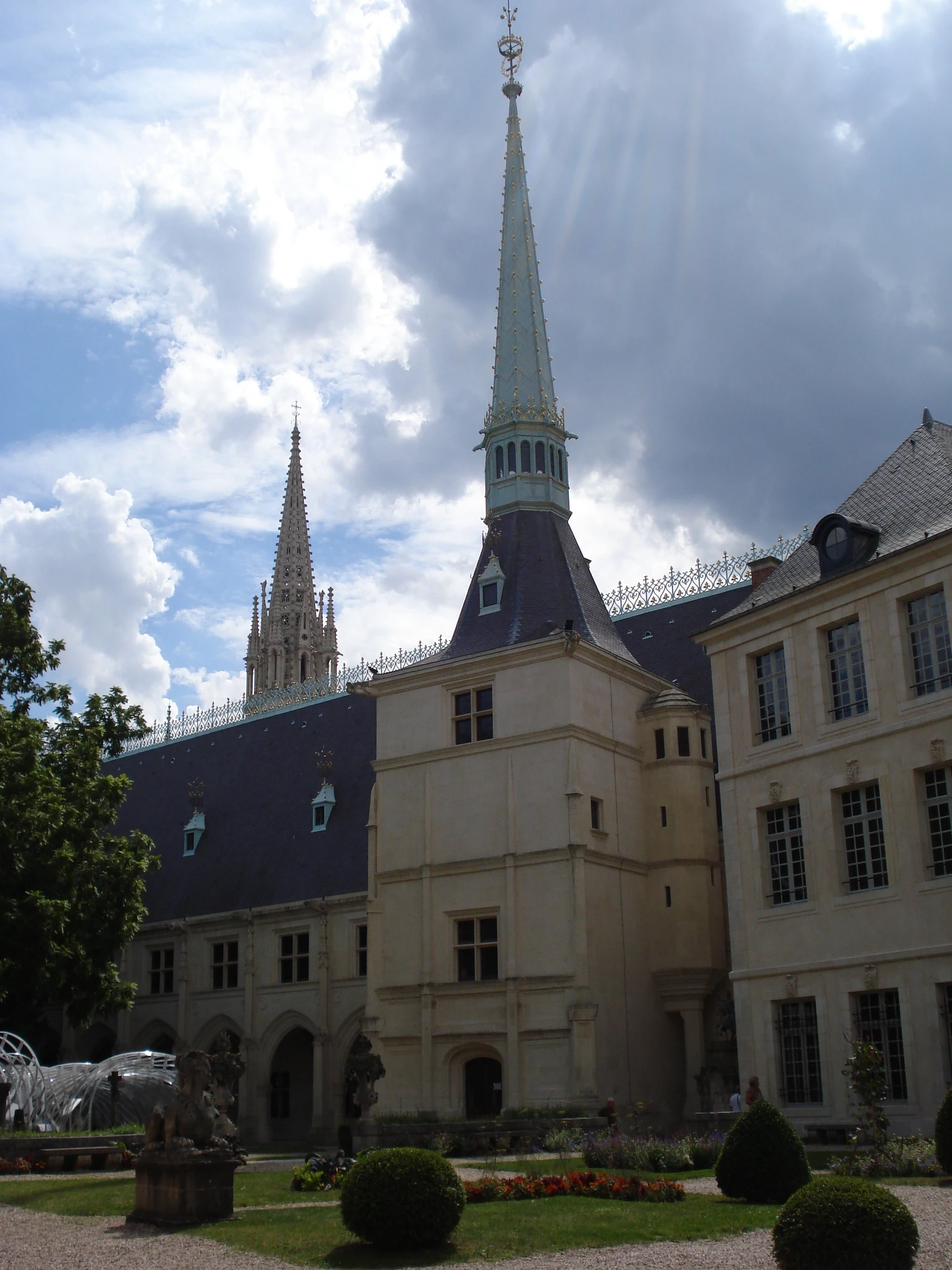
The spire of the Ducal Palace is adorned with symbols of Lorraine / Photo selected by monsieurdefrance.com: By Pierre-Philippe Arnould — Own work, CC BY-SA 3.0, https://commons.wikimedia.org/w/index.php?curid=20867294
The equestrian statue of Duke Antoine is a veritable compendium of Lorraine symbols, designed down to the smallest detail. The sovereign appears dressed in a costume adorned with the traditional emblems of Lorraine. His clothing displays the symbols of the duchy: the ever-present three-branched Lorraine cross and the bar, the heraldic fish emblematic of the Duchy of Bar, which also belonged to him. Finally, the plant base supporting the statue is more than just a decorative element. It represents a thistle, a thorny plant chosen as a Marian symbol by René II after the victory of 1477. Having become the emblem of Nancy, this thistle embodies the city's resistance, tenacity, and ability to overcome adversity, just like Lorraine itself.
The spire of the Musée Lorrain consists of the three symbols of the dukes: the alerions (birds without beaks or claws found on the flag of Lorraine), the Cross of Lorraine, and a ducal crown. It is also a building that still flies the flag of Lorraine.
3. The Church of the Cordeliers: The Ducal Necropolis
Right next to the palace, the Église des Cordeliers church is a sanctuary of remembrance. It was founded by Duke René II after the famous Battle of Nancy in 1477, won by the Lorrainians and their allies, in which Charles the Bold lost his life, sealing the future of Burgundy and, above all, Lorraine, which gained three centuries of independence, even though the Duke of Burgundy wanted to annex it. This is where the Dukes of Lorraine are buried, making this place the "Saint-Denis" of Lorraine. The pomp and ceremony surrounding their funerals was so famous in the past that it was said that one had to see the coronation of a French king, the coronation of a pope, and the funeral of a Duke of Lorraine.
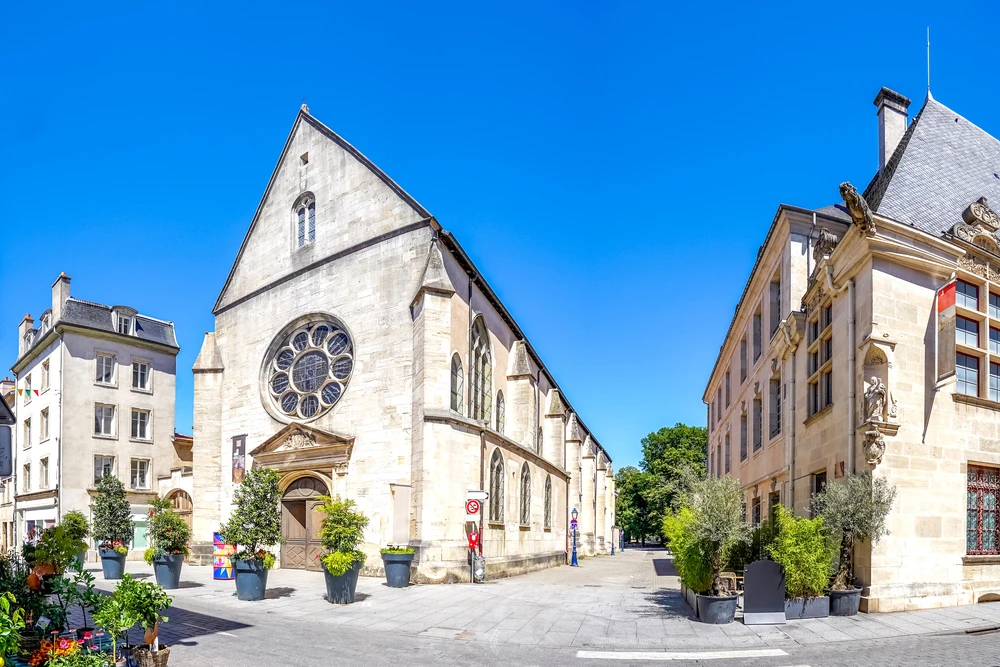
The Cordeliers Chapel / Photo selected by Monsieur de France SinaEttmer via depositphotos
Inside, don't miss the round chapel, inspired by the Medici Chapel in Florence (a member of the family of the Dukes of Lorraine married a Medici). Its marble decorations and dome are exceptionally delicate. The elegance of the recumbent statues, particularly that of Philippe de Gueldre, created by Michel-Ange Lorraine Ligier RICHIER, is strikingly realistic and moves every visitor.
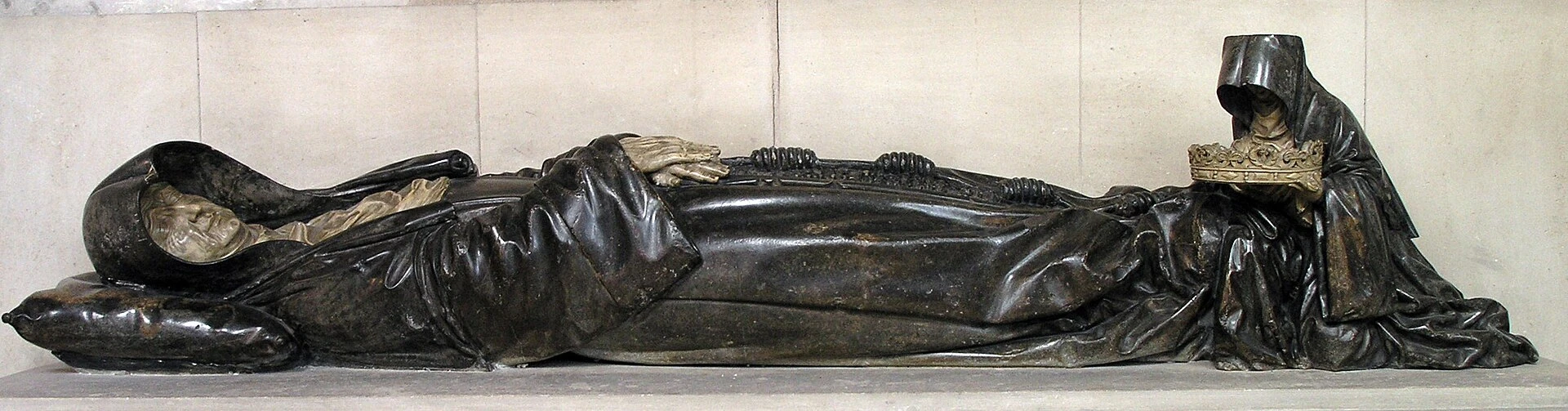
Le gisant de Philippe de Gueldre / Par Ligier Richier (vers 1500-1567) — Photograph taken by Marsyas 14:48, 26 February 2006 (UTC), CC BY 2.5, https://commons.wikimedia.org/w/index.php?curid=600647
4. La Porte de la Craffe: 14th-century sentinel
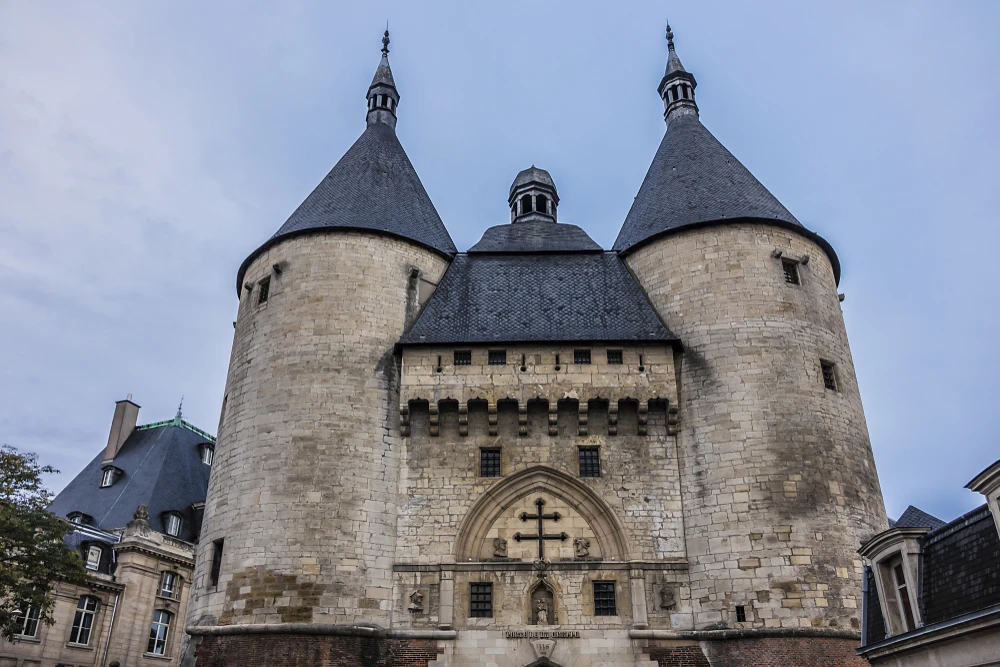
The Craffe Gate in the heart of Nancy's old town / Photo selected by Monsieurdefrance.Fr: Kiev.Victor/Shutterstock
If you are looking for the most iconic image of medieval Nancy, head to the end of the "grand-rue." Here you will find the Porte de la Craffe, the only significant remnant of the medieval fortifications. It is the oldest monument in Nancy's city center. With its two massive brick towers and two-meter-thick walls, it has survived all the urban redevelopment projects. It has been modified by architectural fashions. For example, in the 17th century, it was fitted with columns and a classic triangular pediment. In the 19th century, it was given a more medieval appearance by adding a new façade, the one we see today.
Prison and witches of Lorraine
It served alternately as a watchtower and a prison. Not so long ago, instruments of torture were kept there in a museum that served as a reminder that Lorraine was one of the European regions that most actively persecuted witches. They were often locked up here before being burned a little further away, but not before being made to walk through part of the town holding a candle. These witches were often single women, accused by their neighbors of some imaginary misdeed, who were tortured until they confessed to whatever was demanded of them. Not far away, on Rue du Haut-Bourgeois, lived the 17th-century witch-hunting specialist Nicolas Remy. He even wrote a book explaining how to recognize and torture them. He died peacefully in his bed after condemning several hundred women, men, and even children. A tragic period in the history of Lorraine.
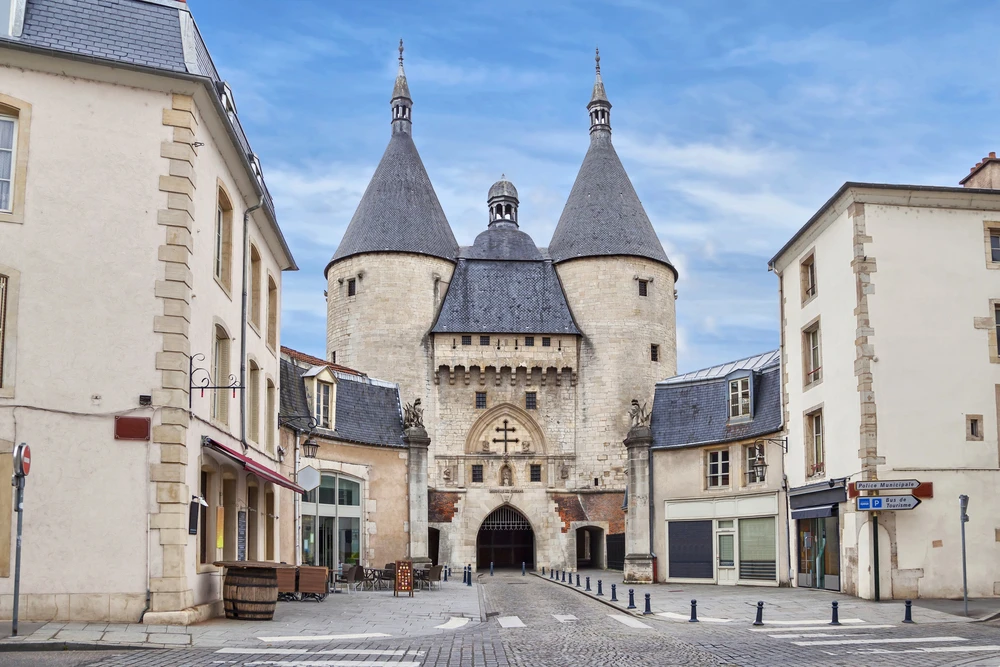
The Craffe Gate in Nancy/ photo chosen by Monsieur de France: bbsferrari via depositphotos
Looking at its arrow slits and its niche housing a Virgin and Child, it is clear that La Craffe was not only a defensive structure, but also a symbol of Nancy. Just behind it, the Citadel Gate completes this impressive defensive complex.
5. Place Saint-Epvre: The forum of the Old Town
Dominated by its monumental neo-Gothic basilica, Place Saint-Epvre is the true heart of the neighborhood. Historically, it was the market square and the center of popular life. Today, it is the favorite place for Nancy residents to enjoy a coffee on a terrace or browse the antique shops.
The Basilica of Saint Epvre
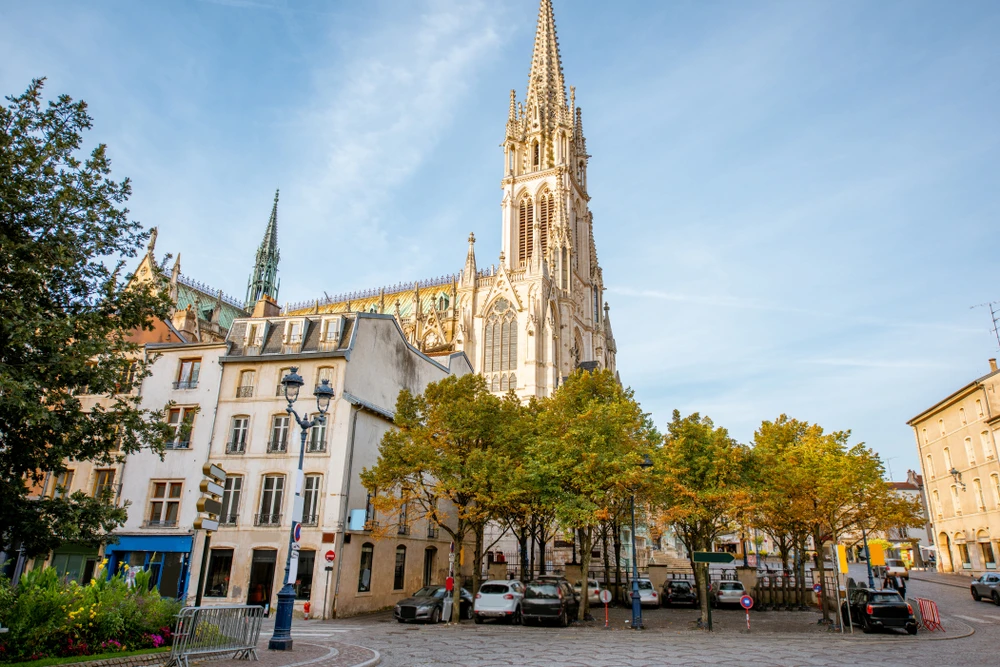
The Basilica of Saint-Epvre dominates the old town of Nancy / Photo selected by Monsieurdefrance.Fr: RossHelen/Shutterstock
The Basilica of Saint-Epvre is one of Nancy's most impressive religious monuments and a major visual landmark in the Old Town. The building we see today is the third version, built in the 19th century in a spectacular neo-Gothic style. It is dedicated to the holy bishop of Toul: Epvre (pronounced Evre). Its slender spire, nearly 87 meters high, dominates the entire neighborhood and can be seen from afar. It is home to peregrine falcons. The exterior is striking for its rich sculpted decoration, finely crafted portals, and large stained-glass windows. Inside, visitors will discover a very high nave bathed in light, supported by slender columns and Gothic vaults.
It was financed by a fundraising campaign launched by Monsignor Trouillet, a 19th-century priest who knocked on every door, including those of the pope at the time (who donated a piece of the Via Appia in front of the hotel), Napoleon III, and even the emperors of Austria, descendants of the Dukes of Lorraine.
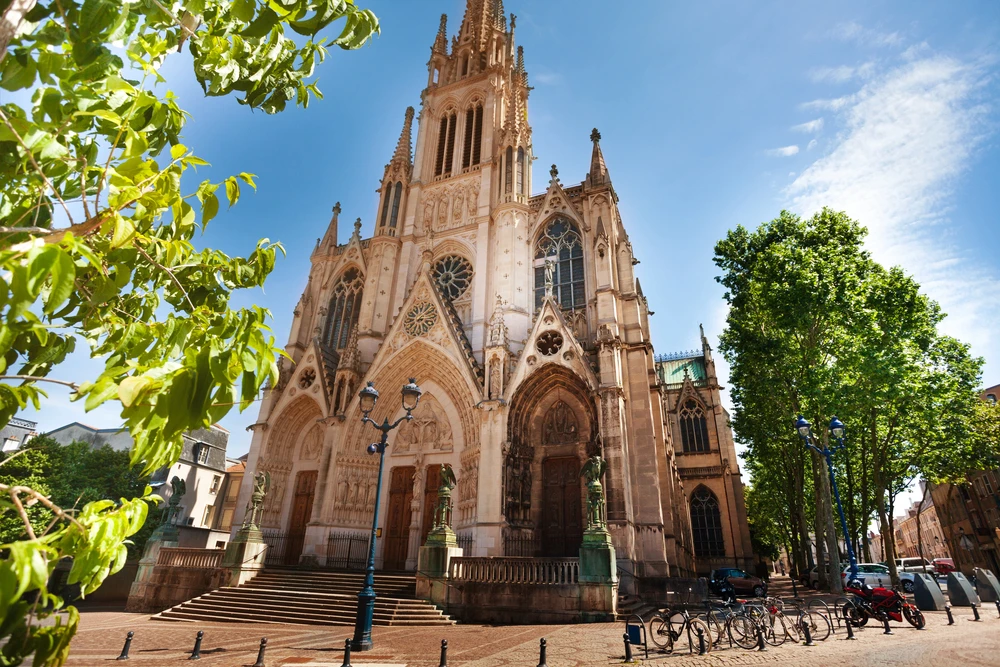
The Basilica of Saint Epvre is located in the heart of the "old town," the historic district of Nancy / Photo selected by Monsieur de France: depositphotos
The fountain of Duke René II
The fountain on Place Saint Epvre dates back to the 18th century and was donated to the city by Monseigneur Trouillet (the builder of the basilica). It is topped by a statue of Duke René II of Lorraine, victor of the Battle of Nancy and also responsible for an important moment in human history. Passionate about geography, he read Amerigo Vespucci's book on the lands recently discovered by Christopher Columbus. He gave this book to an assembly of scholars, the Gymnase Vosgien, which he sponsored in Saint Dié des Vosges. This assembly, which consisted mainly of geographers, deduced from the book and their own knowledge that Christopher Columbus had not discovered a route to India but... a new continent. They named this continent AMERICA in homage to Amerigo, whose name was written in Latin as Americus.
6. Rue des Maréchaux: The "Gourmet Street"
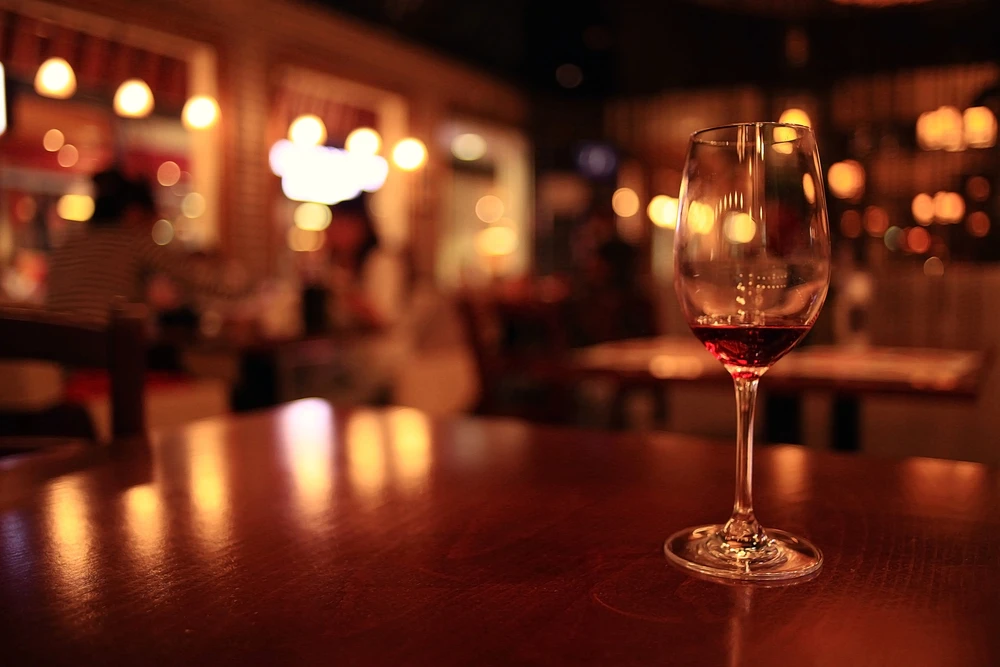
A persistent legend says that you can try a different restaurant in Nancy every day of the year—it's a real "national sport" in Nancy. / Photo by Monsieur de France: depositphotos
If there's one street that food lovers shouldn't miss, it's Rue des Maréchaux. Located between Place Saint-Epvre and Place Lafayette, this pedestrian street is lined almost exclusively with restaurants. This is where people come to sample local specialties in a friendly and lively atmosphere. Whether you're looking for a traditional bistro serving calf's head, a crêperie, or a more gourmet restaurant, this street is a must-visit during your evenings in Nancy. The aroma of local cuisine mingles with the ancient stonework to create a unique sensory experience.
The old town is full of great restaurants, and the locals are always happy to give advice when asked where to eat. Don't hesitate to ask!
7. Private Mansions: Treasures of the Renaissance
The Old Town experienced incredible growth in the 16th century. It must be said that it was the heart of the capital of an independent state. As a result, the court was brilliant and it was necessary to be seen there. Many noble residences are hidden behind discreet facades, revealing sublime inner courtyards.
-
The Hôtel d'Haussonville: This is the most famous. Its inner courtyard with its carved wooden galleries is an absolute marvel. It is undoubtedly one of the most photographed and most secret places in Nancy.
-
The Hôtel de Lillebonne: With its large mullioned windows, it bears witness to the luxury enjoyed by the ducal advisors of the time.
-
The Hôtel des Loups residence of the great wolf hunter of Lorraine, whose façade is decorated with wolves (of course) and a wild boar.
8. Gastronomy: A paradise of sugar and almonds
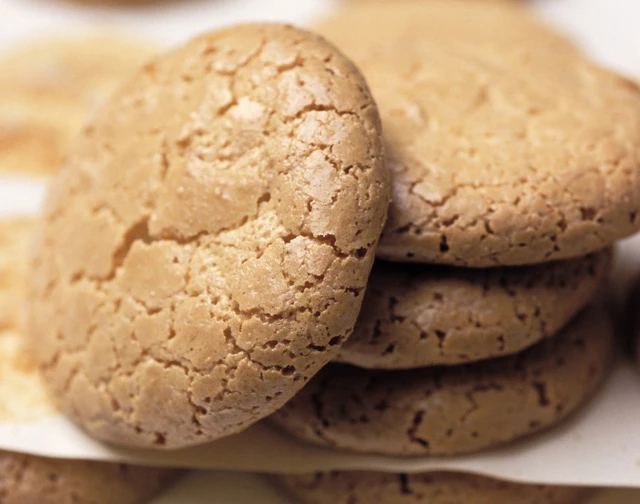
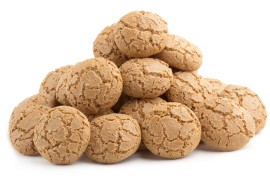
Macarons from Nancy Photo selected by Monsieurdefrance.fr: Foodpictures/Shutterstock.com
The heritage of the Old Town is also reflected in its cuisine. The neighborhood is full of artisans who jealously guard centuries-old recipes. Here you will find the great culinary classics of Nancy and Lorraine. As a reminder:
-
The Nancy Macaron: The "real" macaron is cracked, flat, and soft on the inside. It has nothing to do with the Parisian macaron: here, it's all about the purity of the almond.
-
Bergamot: This golden candy is the only one in France to have a protected geographical indication (PGI). Its citrus scent is the city's signature fragrance.
-
Savory specialties: Don't leave without trying pâté lorrain (pork and veal marinated in white wine) or quiche Lorraine prepared according to the golden rule: cream, eggs, bacon, and no cheese!
9. The Nursery Park: The green balcony
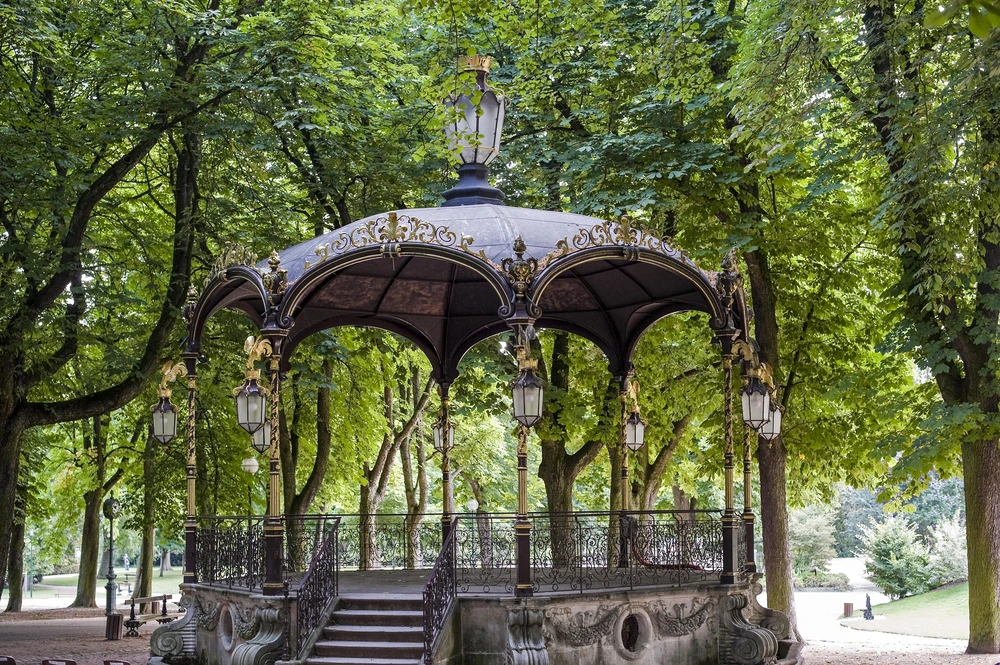
The famous "Mozart" bandstand. Not far away is one of the only outdoor statues by Rodin (Statue of Claude Le Lorrain).Photo selected by monsieurdefrance.com: depositphotos
Technically located on the edge of the neighborhood, the "Pép" is inseparable from the Old Town. Covering more than 21 hectares in the heart of the city, it has earned the nickname "Nancy's Central Park." Built on the site of the old moats that surrounded the city, this park is the green lung of central Nancy, but also a lively place where you can meet the locals. People come here to say hello to the peacocks, listen to a concert under the bandstand, or simply escape the hustle and bustle of the city. Children learn to ride their bikes, and newlyweds take photos under the bandstand. In the fall, a major music festival is held here, the NJP. It is the perfect transition between the city's historic buildings and its modernity.
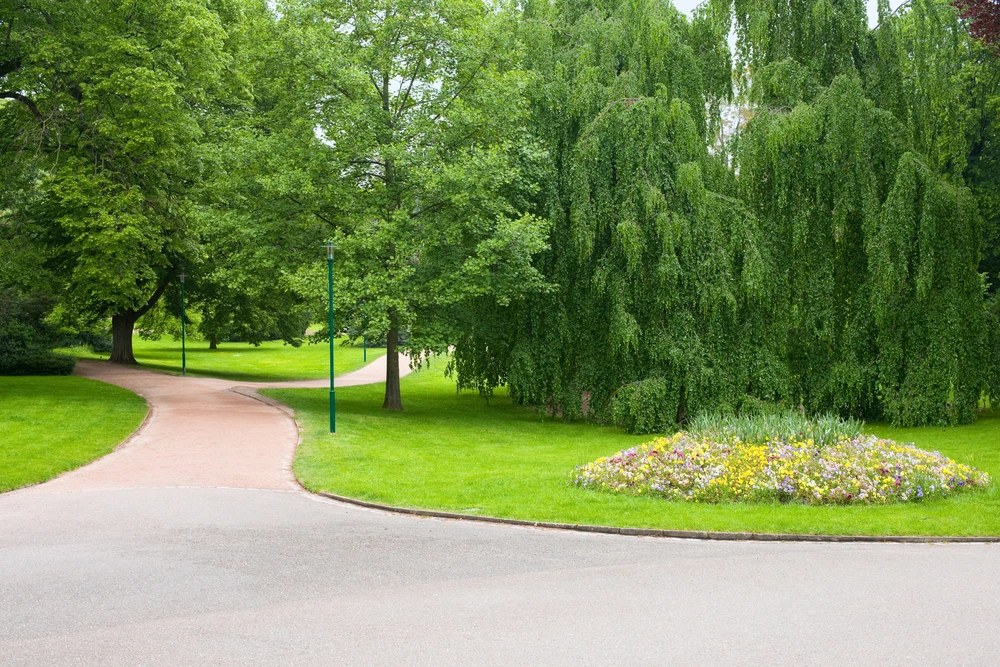
The Pépinière Park in Nancy / Photo selected by Monsieurdefrance.Fr: SergiyN/Shutterstock
10. Good to know before visiting the Old Town
The Old Town can be explored entirely on foot, but the cobblestones can be tiring. The courtyards of private mansions are often discreet: you have to dare to push open certain doors, and above all, the neighborhood is very lively in the evening, especially around Rue des Maréchaux and Place Saint-Epvre.
11. Common mistakes made by visitors
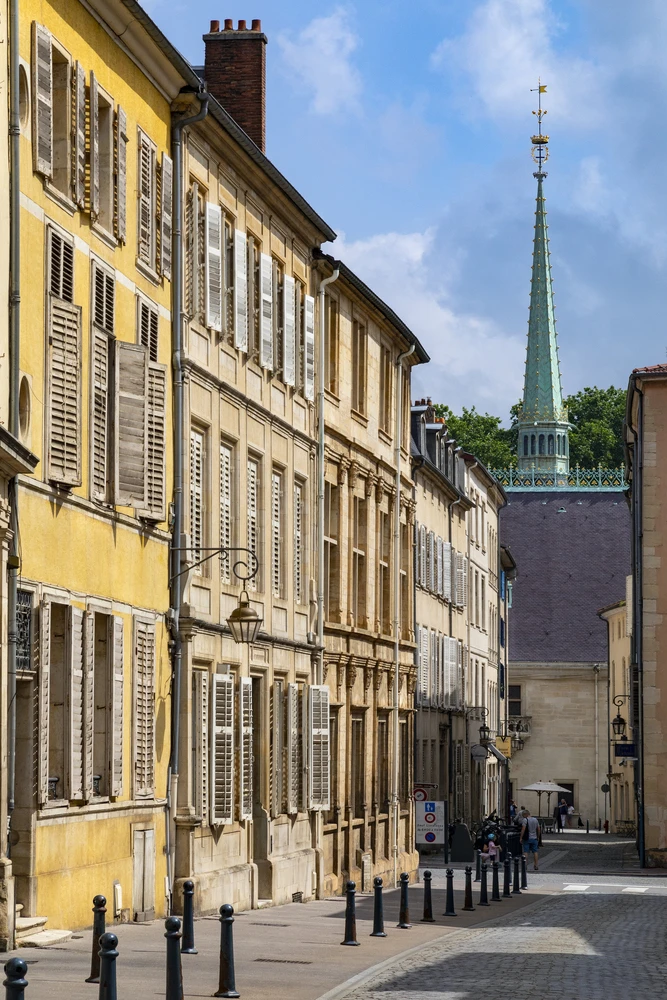
Consider exploring the side streets / Photo selected by Monsieur de France: Steve_Alle via depositphotos
Limit yourself to the Grande Rue without looking up or venturing into the adjacent streets. These streets are often very beautiful and colorful, reflecting Italy's strong influence on Lorraine (the dukes were kings of Naples). The Old Town should be explored slowly, observing the facades, sculptures, courtyards, and heraldic details that tell the story of the Dukes of Lorraine.
Conclusion: An invitation to linger
The Old Town of Nancy is not a neighborhood you visit with a checklist. It is a place to be absorbed as you stroll through it, an atmosphere you take in as you pause in front of a half-open courtyard or chat with a craftsman. Between the smell of warm pâté lorrain and the echo of the basilica bells, let yourself be carried away by the stones that witnessed the birth of the capital of the Dukes of Lorraine. You can then continue by discovering Place Stanislas, the most beautiful square in the world, or the Nancy Art Nouveau which is absolutely magnificent.
Jérôme Prod'homme Specialist in French heritage, gastronomy, and tourism. Find all my discoveries at monsieur-de-france.com.
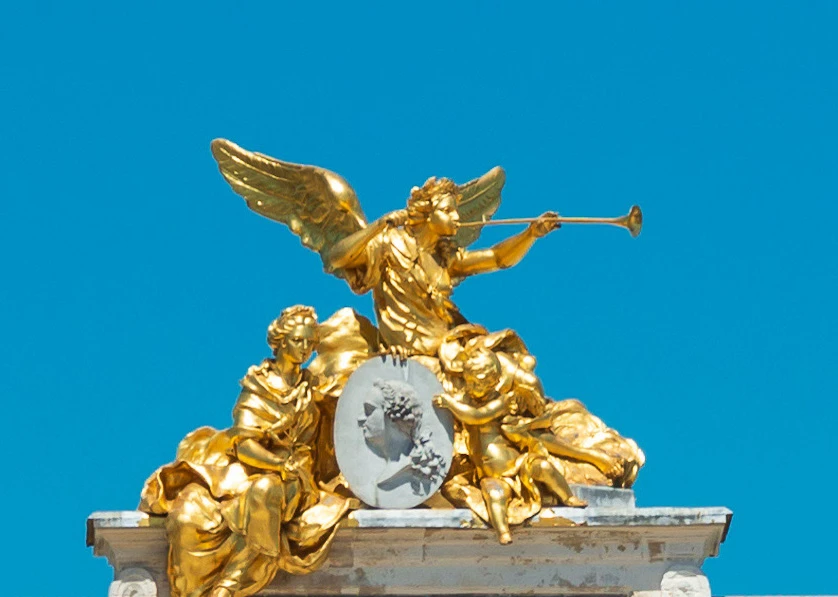
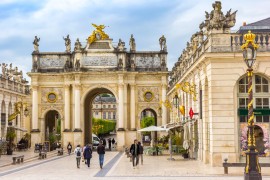
The fame of the Arc Héré in Nancy / Photo selected by monsieurdefrance.com: shutterstock.
FAQ: Visiting the historic center of Nancy
When is the best time to visit?
Early morning is ideal for photography, when the light highlights the contours of the Porte de la Craffe. In the evening, enjoy the atmosphere of the restaurants on Rue des Maréchaux.
Is the neighborhood accessible to people with reduced mobility?
The neighborhood is paved, which can make traffic difficult. However, Grande Rue and Place Saint-Epvre have been redesigned to be more accessible.
Where can I park easily?
The Vaudémont underground parking garage is the most convenient. It opens directly onto Place Carrière, at the entrance to the Old Town. There is also the Place Carnot parking garage, not far away. Or the Barrès parking garage on Rue Saint Julien, which will take you on foot through Place Stanislas, which is always pleasant.
Find out more about Nancy:
- The complete guide to visiting Nancy
- my audio guide in immersive sound to visit Nancy
- Place Stanislas: history and secrets of Nancy's most beautiful square
- Art Nouveau and the École de Nancy: an architectural treasure
- What to do in Nancy over a weekend?
- Culinary specialties of Nancy you absolutely must try
- And why not discover Lorraine?