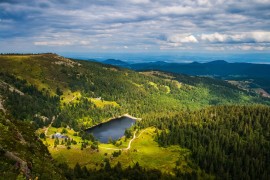
What to see in Lorraine? This region blends historical heritage and preserved nature with must-see sites like Nancy's Place Stanislas, Metz Cathedral, Verdun Memorial, and the Vosges mountains. Between medieval towns, memorial sites, and wild landscapes, Lorraine offers ideal destinations for an authentic and varied trip.
Explore Lorraine with my ultimate guide.
What to see in Nancy? The 2 must-see attractions
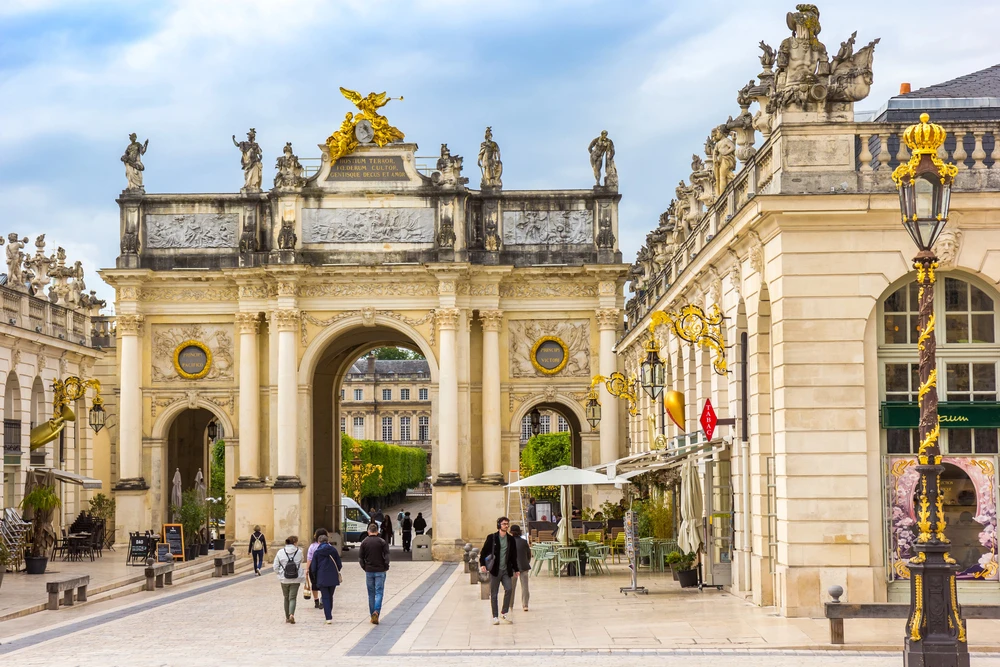
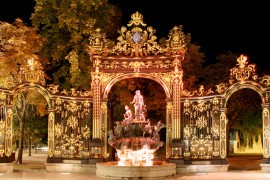
The Héré arch on the most beautiful square in the world in Nancy / Photo chosen by Monsieur de France: depositphotos.
Place Stanislas UNESCO: why is it a must-see?
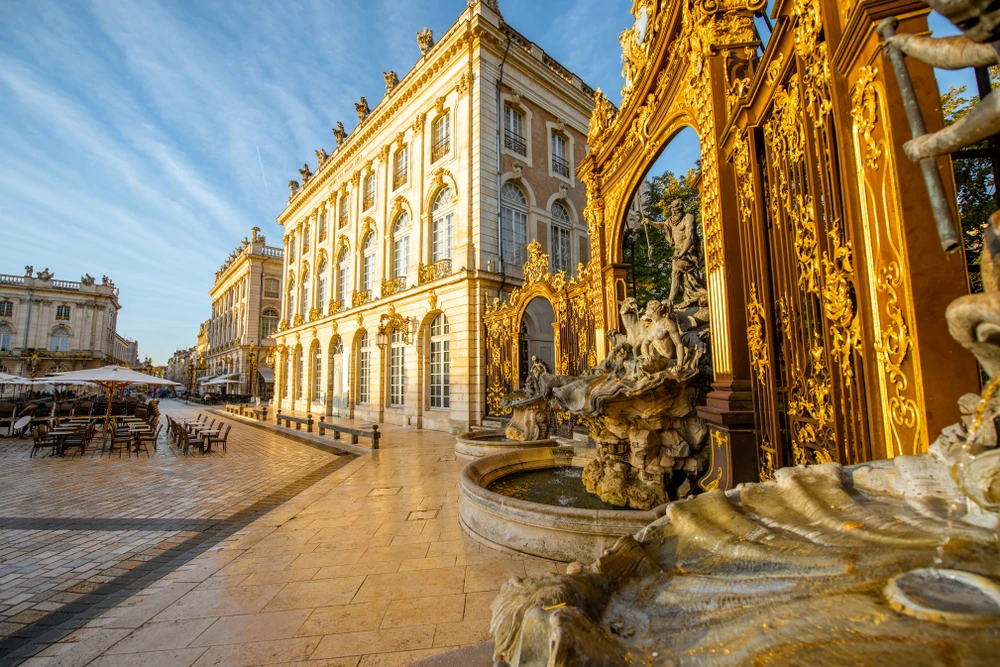
Wrought iron grilles are everywhere: they adorn entrances and fountains, and can also be found on the streetlights on the facades designed by architect Emmanuel Héré. They were created by locksmith and ironworker Jean Lamour in 1755. Photo selected by Monsieur de France: shutterstock.com
1. What we see
Listed as a UNESCO World Heritage Site since 1983, the 18th-century urban ensemble of Nancy is a jewel of urban planning and sculpture. It brings together three iconic squares: Place Stanislas, Place de la Carrière and Place d'Alliance. Place Stanislas, often considered the most beautiful square in the world, impresses with its perfect proportions and elegant facades. The golden railings by Jean Lamour add a superb touch of madness, as do the street lamps. The baroque fountains by Guibal and the statue of Stanislas Leszczynski are the symbols of this setting. The Héré Arch, crowned with a golden victory wreath covered in gold leaf, connects Place Stanislas to the long, tree-lined Place de la Carrière, which leads to the elegant Government Palace. The more intimate Place d'Alliance charms visitors with its listed fountain, which commemorates the treaty of 1756. Together, these three squares form a complex that is unique in Europe, bearing witness to the Age of Enlightenment and its vision of the ideal city.
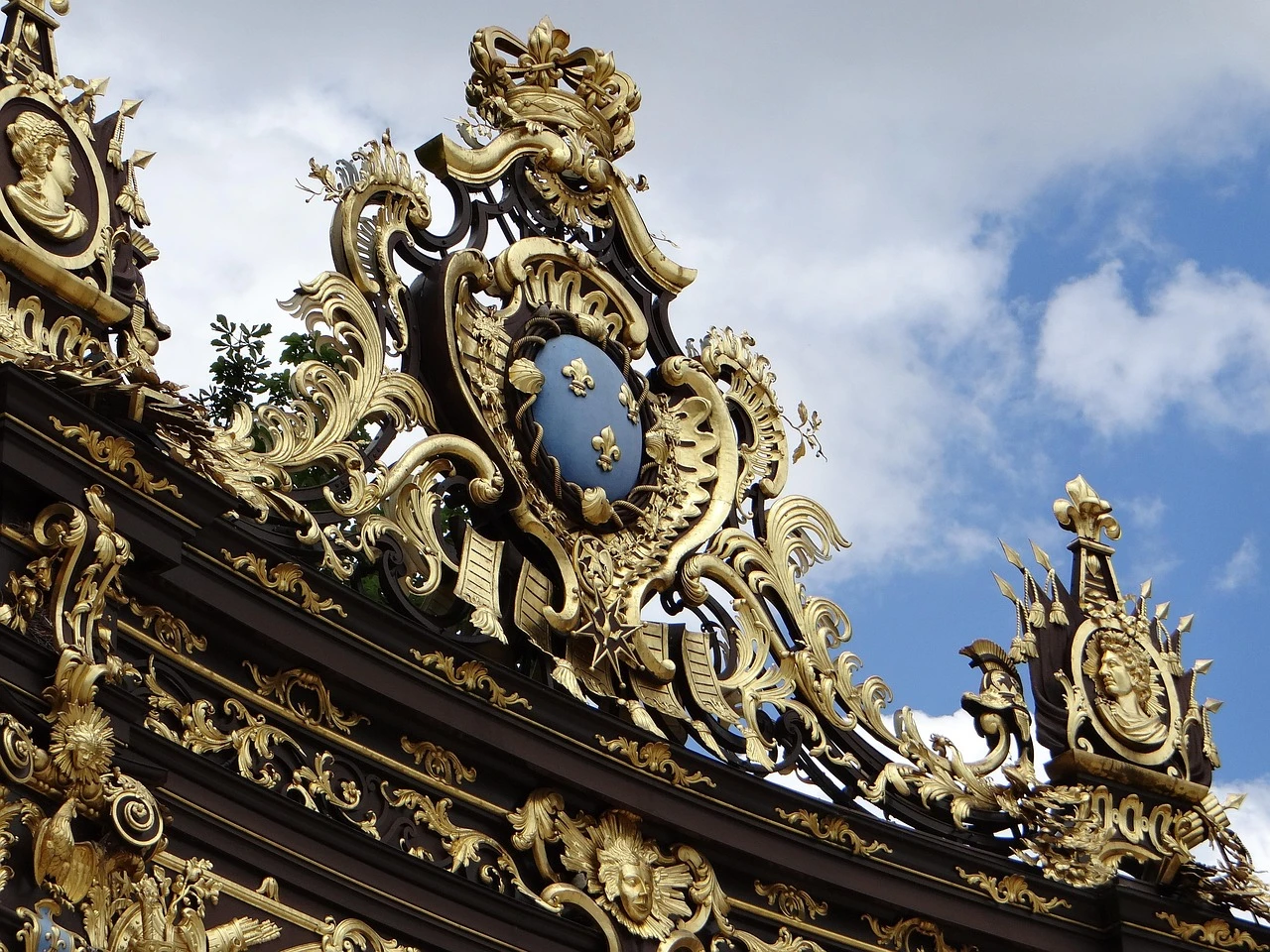
Detail of one of the fountains in Place Stanislas / Image by Agnès from Pixabay
2. What can be done about it
Place Stanislas is the heart of Nancy: you can stroll around, admire the facades, visit the Town Hall, the Museum of Fine Arts and the Lorraine National Opera House. It is also very French with its typical cafés where you can sit down for a drink and watch the world go by. In summer, the "Rendez-vous place Stanislas" show illuminates the facades with spectacular animations. In autumn, a temporary garden gives it a completely different look. In winter, another show tells the legend of Saint Nicholas, patron saint of Lorraine. The Place de la Carrière offers a peaceful and majestic stroll, timeless, while the Place d'Alliance invites you to take a more intimate break. This ensemble is a must-see for any trip to Lorraine, to be discovered by day or by night. Nearby attractions: the old town of Nancy with its shops and small cafés, the Palace of the Dukes of Lorraine, and the Parc de la Pépinière, Nancy's very own Central Park with over 20 hectares of greenery, including remarkable trees and the only outdoor statue by Rodin.
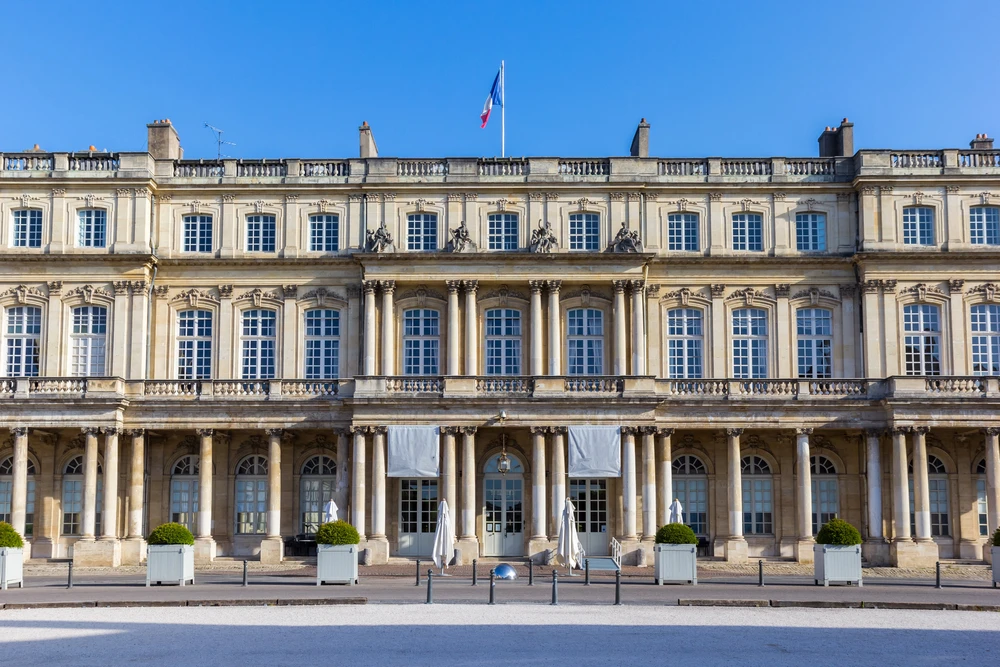
The government palace on Place de la Carrière / Photo selected by Monsieur de France: depositphotos
📍 Distances: Place Stanislas in the center of Nancy (0 km) – 60 km from Metz
Art Nouveau in Nancy: Villa Majorelle and the École de Nancy
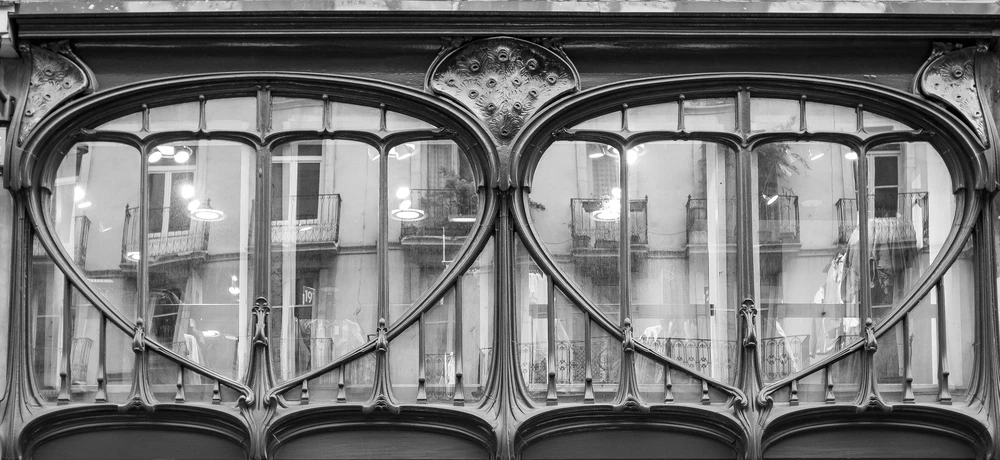
An Art Nouveau facade in downtown Nancy / Photo selected by Monsieur de France; depositphotos.
1. What we see
At the end of the 19th century, Nancy became the French capital of Art Nouveau with the École de Nancy. This movement, led by artists such as Émile Gallé, Antonin Daum, and Jacques Grüber, was inspired by the forms of nature. Louis Majorelle, Antonin Daum, and Jacques Grüber, drew inspiration from the forms found in nature. The Villa Majorelle, built in 1901 by Henri Sauvage for Louis Majorelle, is a masterpiece of this style: undulating facade, colorful stained glass windows, ironwork, and built-in furniture. Recently restored, it allows visitors to admire the refinement of the period interiors. The Musée de l'École de Nancy, housed in a bourgeois villa surrounded by a garden, exhibits glassware, furniture, and decorative objects, all evidence of the creative explosion of Art Nouveau.
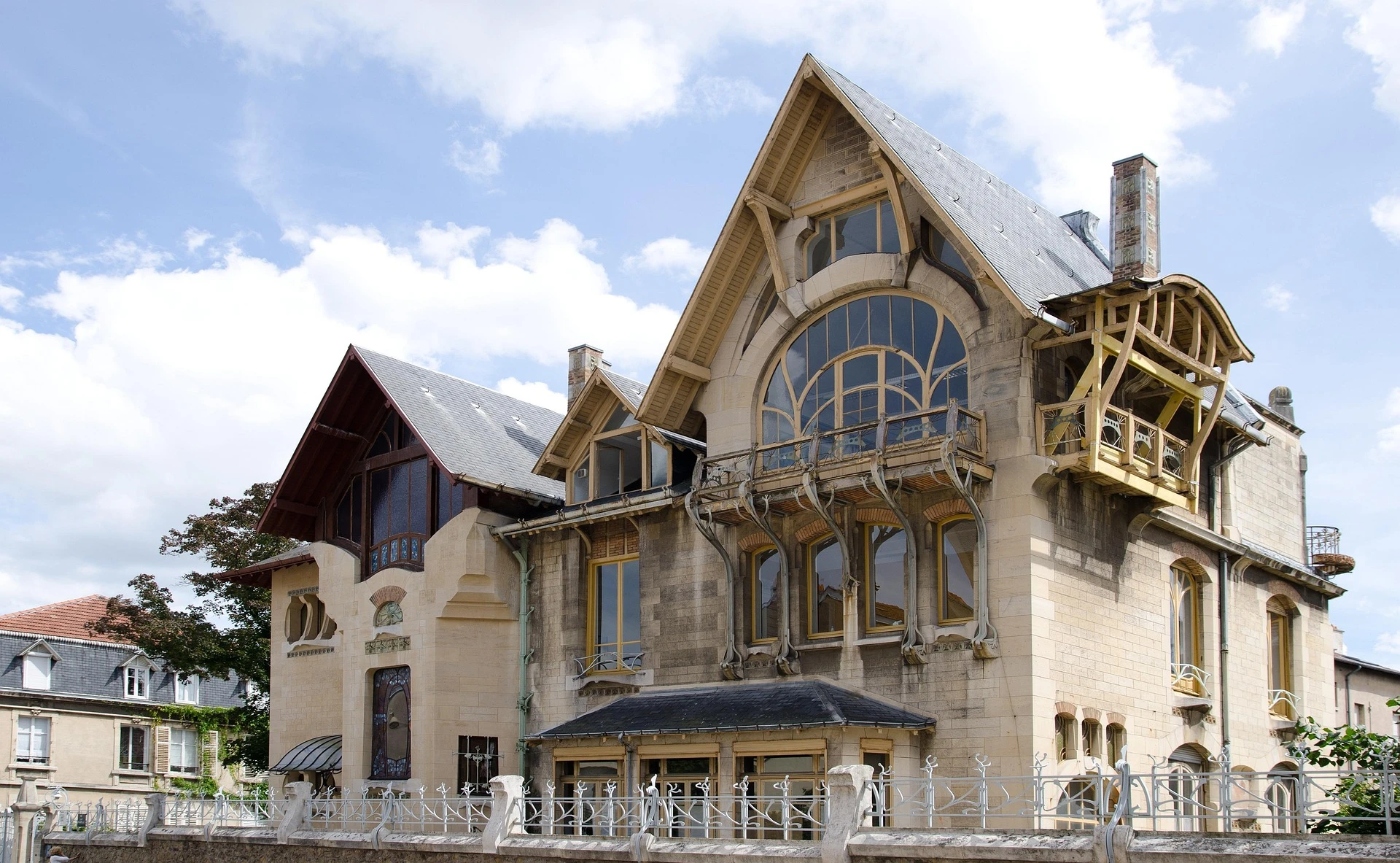
The facade of the Villa Majorelle in Nancy / Photo selected by Monsieurdefrance.com: Patrice Soudier from Pixabay
2. What can be done about it
The Villa Majorelle is open to visitors and immerses them in the refined world of the early 20th century. Each room illustrates the harmony between architecture, decoration, and furniture. The Musée de l'École de Nancy completes this discovery with an exceptional collection of glassware and furniture designed by the greatest creators. A stroll through the city also allows you to admire the Art Nouveau facades of the Saurupt district and Rue Félix Faure. The city center is also dotted with typical buildings: from the Excelsior to the Chamber of Commerce, via Rue Saint Jean and its shops. Nancy is now one of the few French cities where Art Nouveau is still so present in the urban fabric.
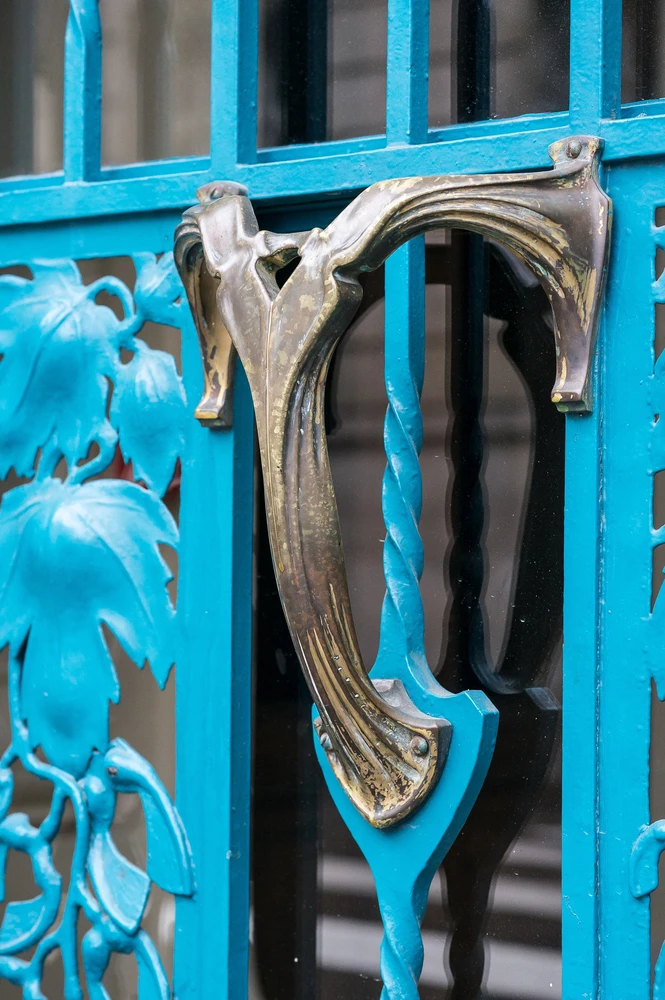
Detail of the Art Nouveau wrought iron handle on the door of the Meurthe-et-Moselle Chamber of Commerce and Industry in Nancy. Photo selected by Monsieur de France: depositphotos
📍 Distances: Villa Majorelle is 1.5 km from the center of Nancy – 62 km from Metz
What to see in Metz? Cathedral, Pompidou Center, and historic center
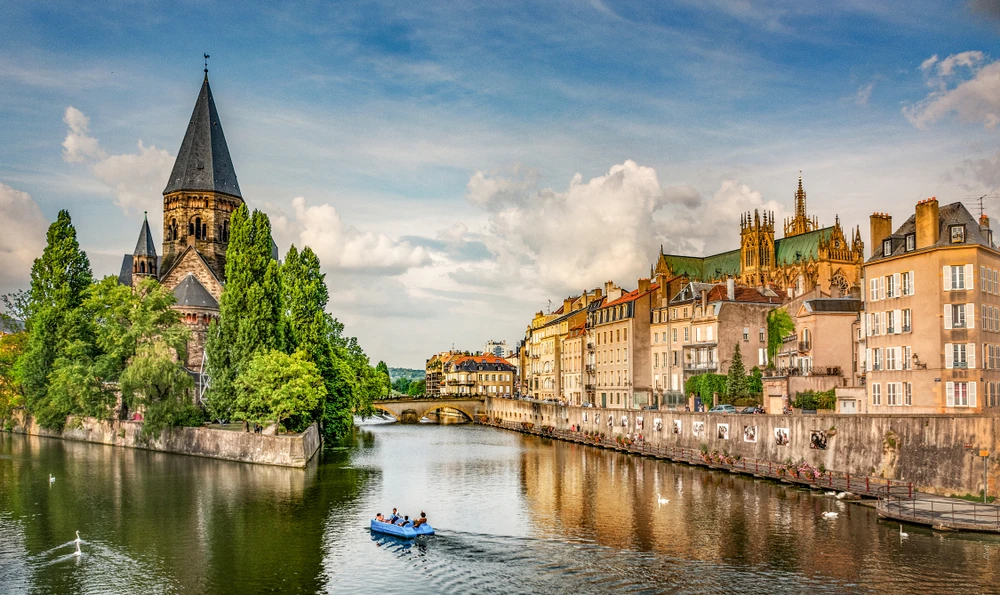
The new temple in Metz seen from behind, overlooking Place de la Comédie in Metz. Photo selected by monsieurdefrance.Com: Shutterstock.com
Metz Cathedral: Chagall stained glass windows and the "lantern of God"
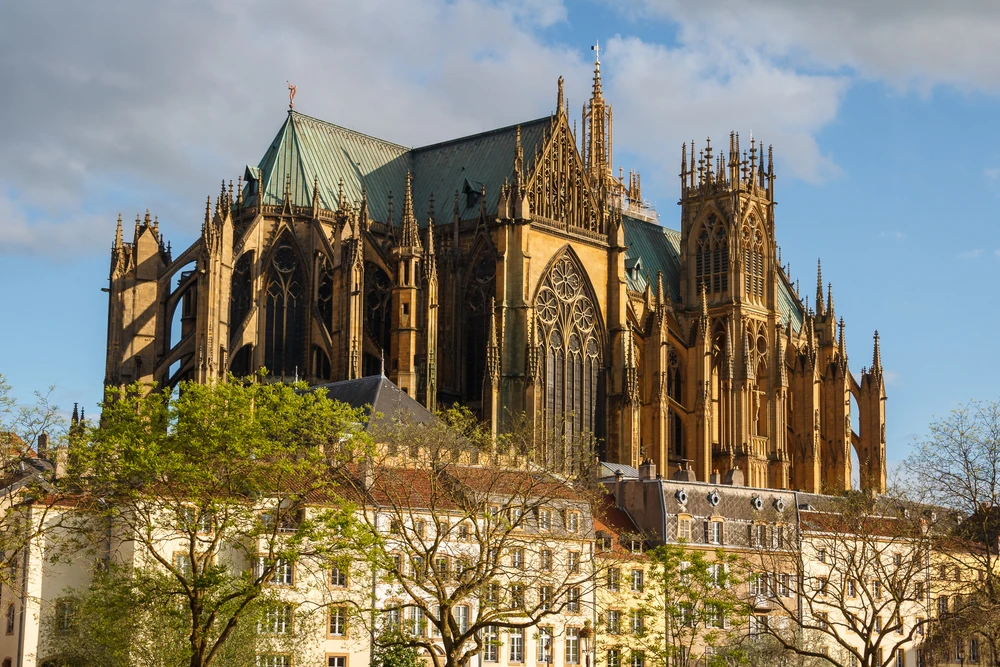
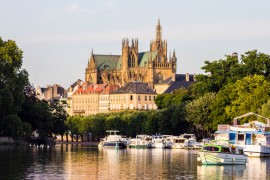
Metz Cathedral is built from Jaumont stone. Photo selected by monsieurdefrance.com: Lev Levin / Shutterstock.
1. What we see
The Cathedral of Saint Stephen in Metz, nicknamed the "lantern of God," is one of the largest Gothic cathedrals in Europe, with nearly 6,500 m² of stained glass windows. Its yellow stone from Jaumont gives it a dazzling golden color. Inside, visitors can admire a vertiginous nave and stained glass windows covering several centuries of history, from the Middle Ages to the 20th century. Among the most famous are the stained glass windows by Marc Chagall, which bring a contemporary and poetic touch to this medieval gem. The exterior impresses with its sculpted facade and huge Gothic portal.
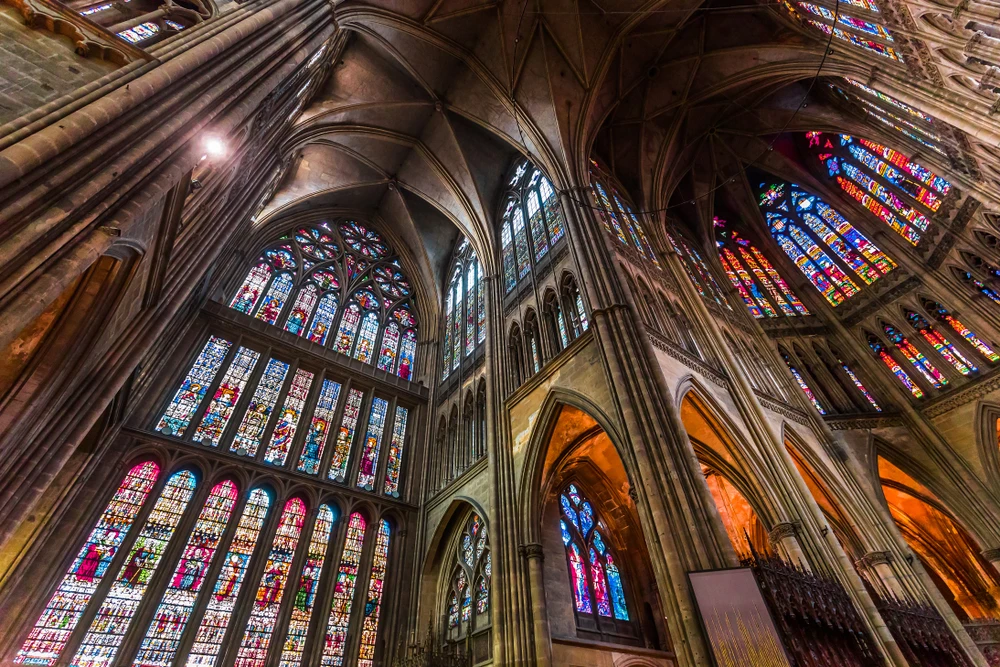
Metz Cathedral is nicknamed "God's lantern" because it has the most stained glass windows in France and even in Europe. Some are signed by Chagall. Photo selected by monsieurdefrance.com: Lev Levin / Shutterstock.
2. What can be done about it
Visiting the cathedral gives you an understanding of Metz's spiritual and artistic importance. You can admire the nave, the Gothic pulpit, and Chagall's stained glass windows. Outside, the Place d'Armes offers an ideal view of the whole complex, dominated by the cathedral's spire. Guided tours allow you to discover the history and secrets of this monument. At night, illuminations highlight the details of the facade. Feel free to lose yourself in the narrow streets around it to discover the magnificent details of the mansions, to sample what one of the many restaurants in the neighborhood has to offer, or simply to sit down on Place Saint Louis. Right next to the cathedral, the Tourist Office offers tours to explore the historic center of Metz.
📍 Distances: Cathedral in the center of Metz (0 km) – 56 km from Nancy
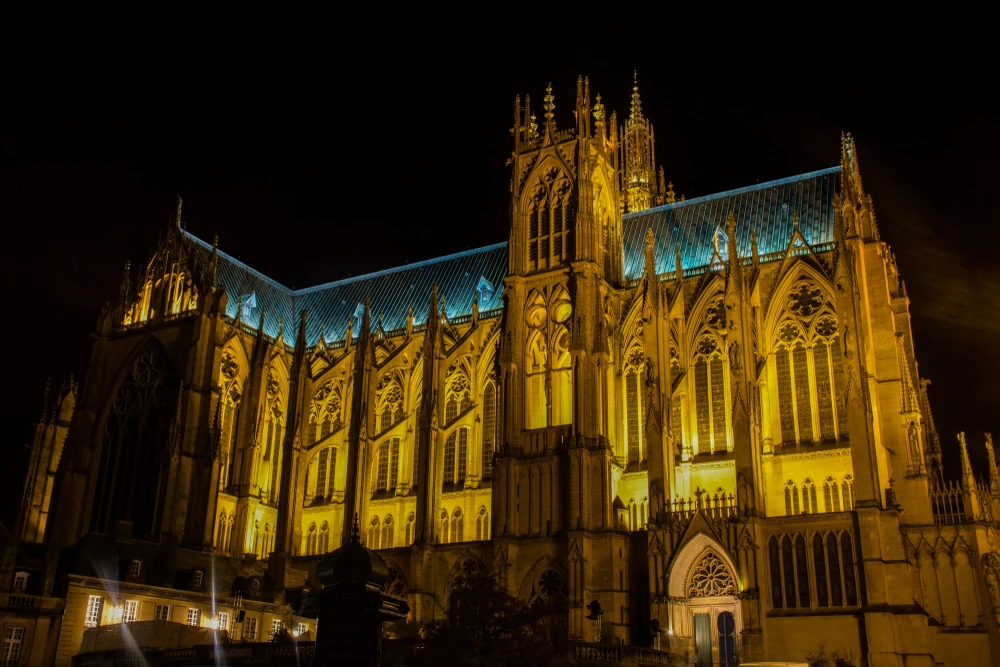
Saint Stephen's Cathedral in Metz at night. Photo selected by monsieurdefrance.com: Shutterstock.com
Centre Pompidou-Metz: contemporary architecture
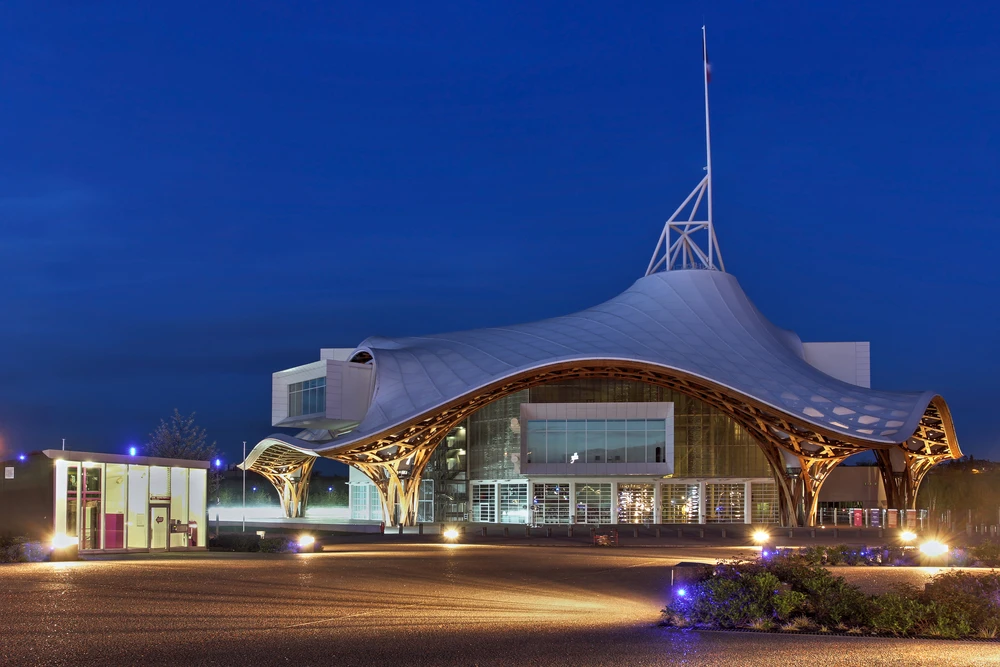
The Pompidou Metz Center at nightfall. Photo selected by Monsieurdefrance.com: Shutterstock.com
1. What we see
Opened in 2010, the Centre Pompidou-Metz is a masterpiece of contemporary architecture. Its spectacular wooden lattice roof, inspired by a Chinese hat, is a technical feat that seems to float above the galleries. The entire building is designed to host large exhibitions of modern and contemporary art. Inside, three main galleries offer a varied scenography, often linked to the collection of the Centre Pompidou in Paris. Large bay windows offer unique views of Metz, notably the imperial train station and the Amphitheater district.
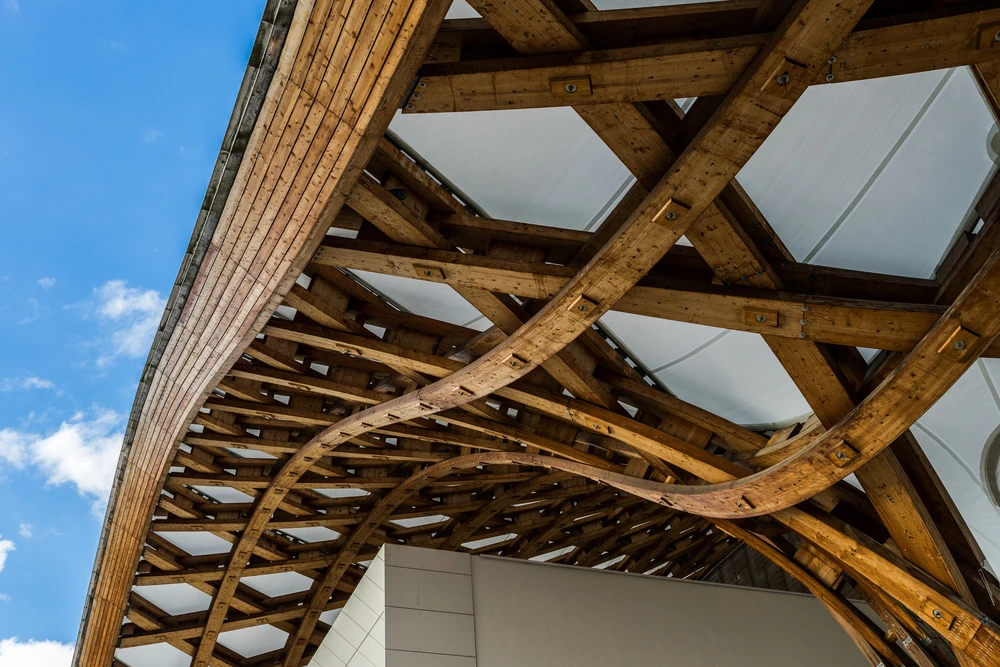
Detail of the wooden architecture of the Centre Pompidou Metz / Photo selected by Monsieur de France: depositphotos
2. What can be done about it
People visit the Centre Pompidou-Metz for its temporary exhibitions devoted to modern art, photography, and contemporary creation. The venue also offers lectures, screenings, and workshops. Its large esplanade is perfect for admiring the building from different angles, especially at dusk, when the architectural lighting highlights its structure. It is a must-see for all art and architecture lovers. If you venture further afield, you will discover the astonishing imperial district, built when Metz was annexed by Germany, whose most striking monument is the train station.
📍 Distances: Centre Pompidou in the heart of Metz (1 km from the cathedral) – 57 km from Nancy
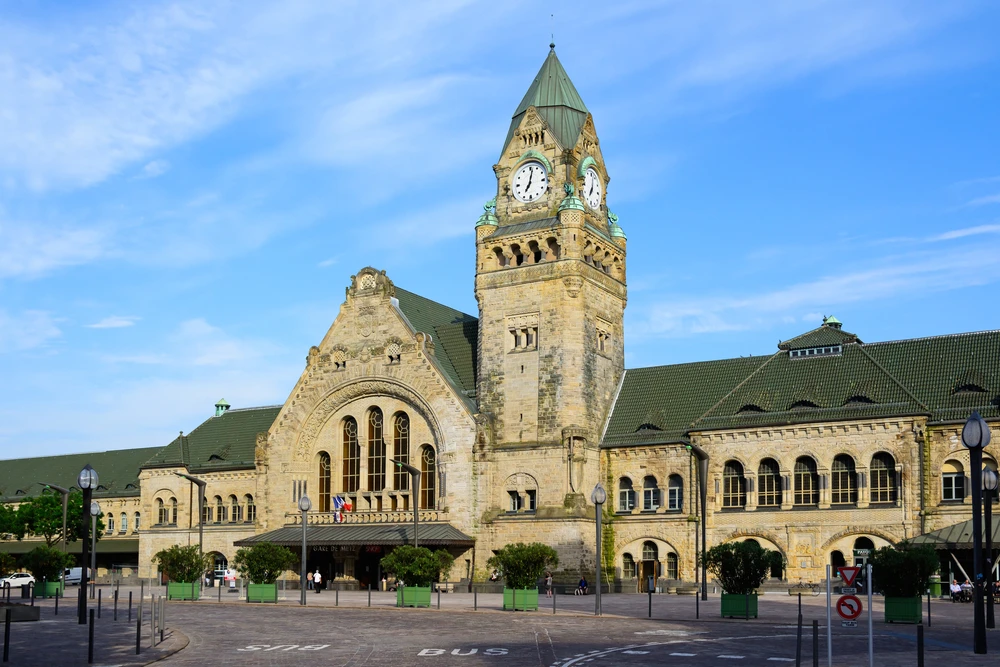
Located not far from the Centre Pompidou Metz, Metz train station is the most beautiful train station in France / Photo chosen by Monsieur de France: shutterstock.
What to do in Moselle? Nature, animals, and forts
Sainte-Croix Wildlife Park: wolves, lynxes, bears
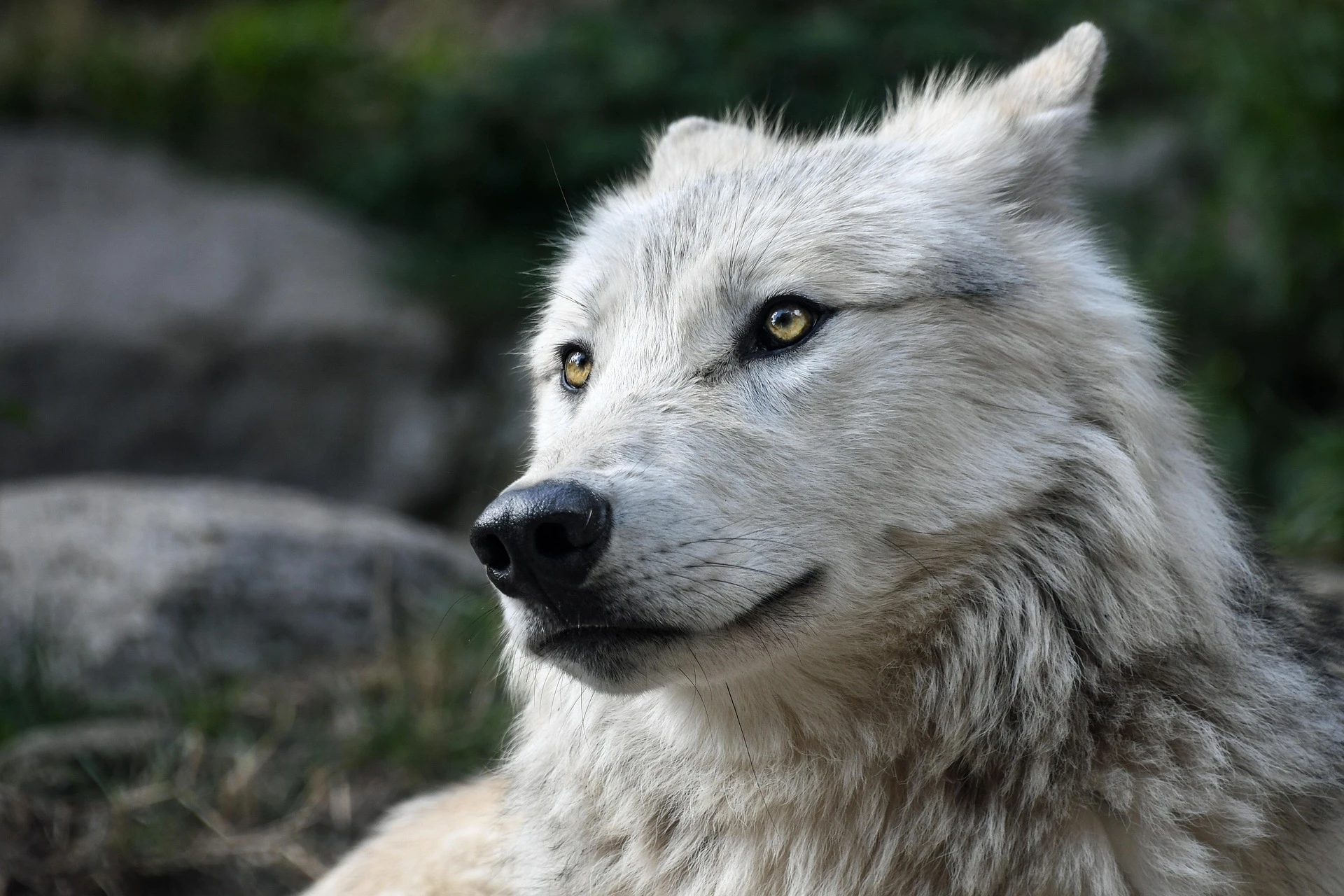
Wolves can be seen at the Sainte Croix Wildlife Park / Photo selected by Monsieur de France: by Christel SAGNIEZ from Pixabay
1. What we see
Located in Rhodes, in the Moselle department, the Sainte-Croix Wildlife Park is one of the largest wildlife parks in France dedicated to European fauna. Covering more than 120 hectares, it is home to 1,500 animals belonging to around 100 different species. Grey wolves, brown bears, lynxes, European bison, deer, and fallow deer roam in vast semi-natural spaces. The park is also known for its conservation and environmental education work. The landscape alternates between meadows, forests, and lakes, providing an ideal setting for observing animals in an environment close to their natural habitat.
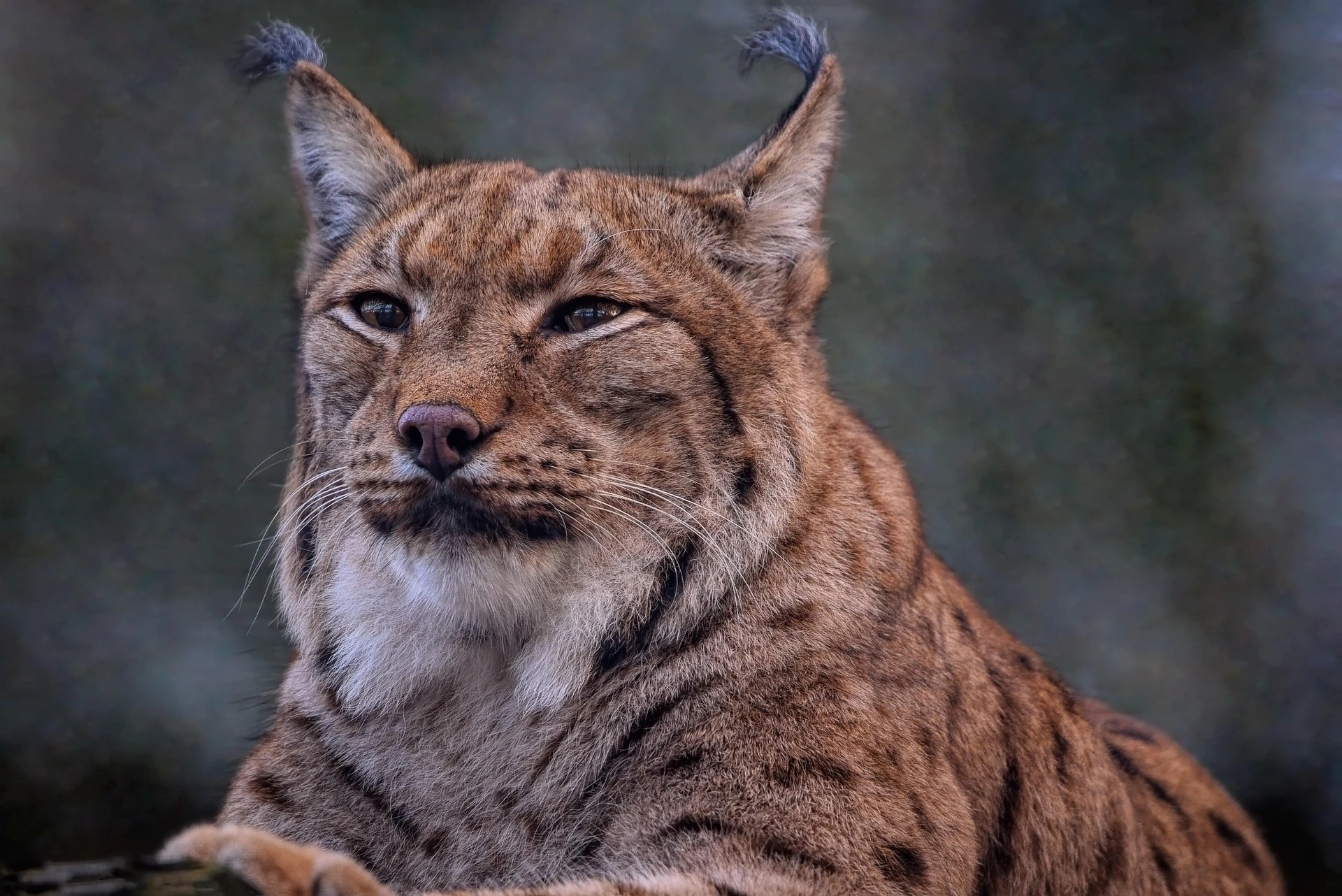
A lynx. You can see them at Sainte Croix Park / Photo selected by monsieurdefrance.com: by Angela from Pixabay
2. What can be done about it
Visitors can explore various trails to observe the animals, attend educational activities, and enjoy immersive spaces such as the deer plain. The park also offers unusual accommodation, such as cabins facing wolves or bears. Families appreciate the playgrounds and educational activities offered to children. It is the perfect place to combine relaxation, discovery, and awareness of nature conservation.
📍 Distances: Sainte-Croix is 74 km from Metz and 103 km from Nancy.
Maginot Line: visit Hackenberg Fort
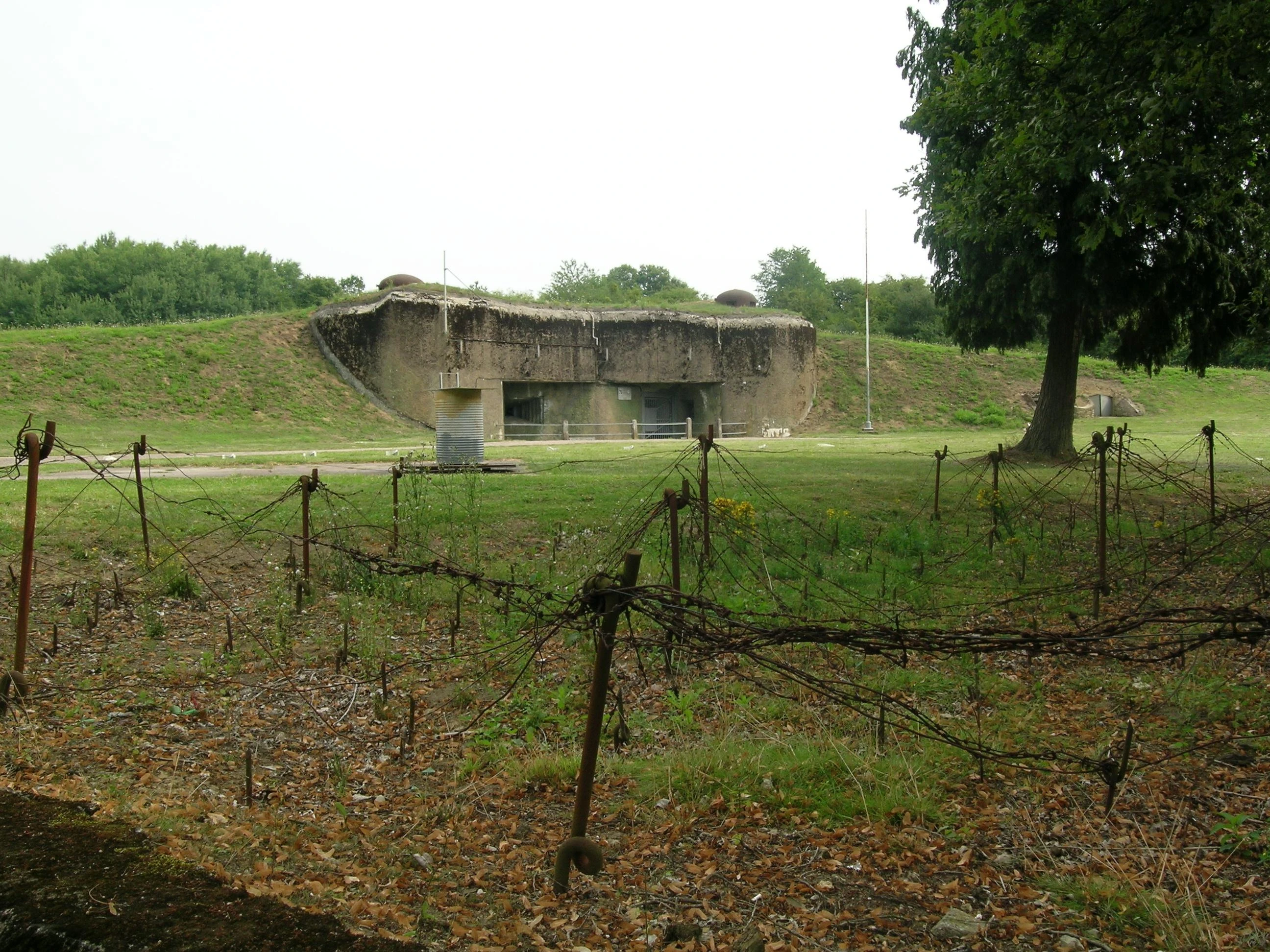
The entrance to the Immerhof fortification, one of many fortifications along the Maginot Line in Moselle / By Lvcvlvs — Own work, CC BY-SA 3.0, https://commons.wikimedia.org/w/index.php?curid=15544830
1. What we see
The Maginot Line is one of Europe's most famous military fortifications. Built between the two world wars to protect the French border with Germany, it stretched from Belgium to the Mediterranean. Among its structures, the Hackenberg Fort, located in Veckring in the Moselle department, is the largest and best preserved. It covers more than 17 km of underground galleries and includes 19 combat blocks, casemates, artillery turrets, and impressive technical systems. Designed to house 1,200 men, it had everything necessary to withstand a siege: a power plant, kitchens, an infirmary, and workshops. Today, it is the go-to site for understanding the power of the Maginot Line. There are many forts throughout Moselle, Meurthe-et-Moselle (notably the Fort de Fermont near Longwy) and Meuse. They are often maintained by enthusiasts.
2. What can be done about it
The guided tour of Hackenberg immerses visitors in a real underground world. Visitors travel through the galleries on a small electric train, discovering living quarters, ammunition stores, and turrets that are still in working order. Demonstrations show how the mechanisms of the time worked, making the experience particularly vivid. The site is also a place of remembrance: exhibitions recall the role of the Maginot Line during World War II and the lives of the soldiers who were stationed there. Outside, trails provide a better understanding of how these fortifications were integrated into the landscape. It is a unique visit that combines history, technology, and remembrance.
📍 Distances : Nancy 100 km – Metz 30 km
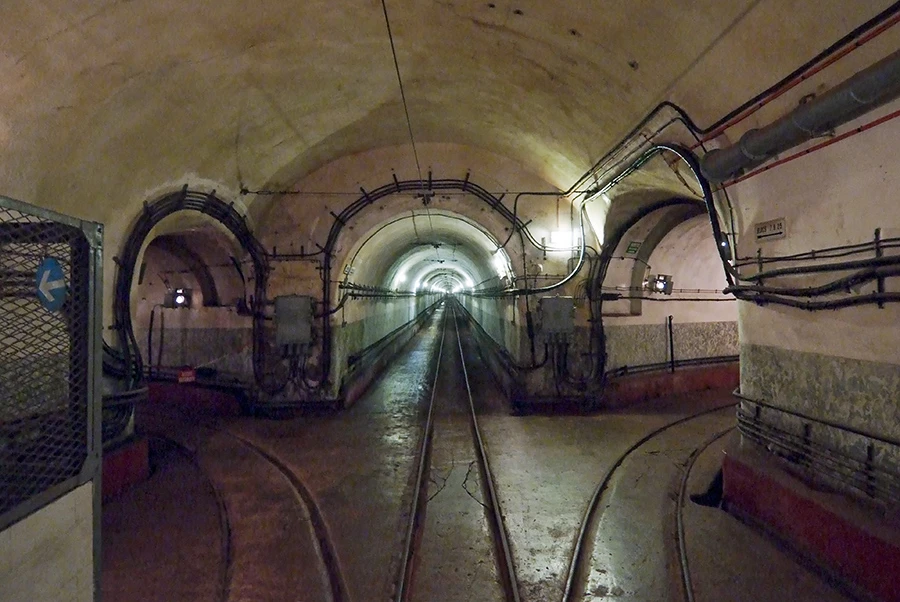
Inside Hackenberg / Photo selected by Monsieur de France: By Ungaroo - Udo Ungar — Own work, CC BY-SA 3.0, https://commons.wikimedia.org/w/index.php?curid=18596036
What to see in Meurthe-et-Moselle? Castles and panoramic views
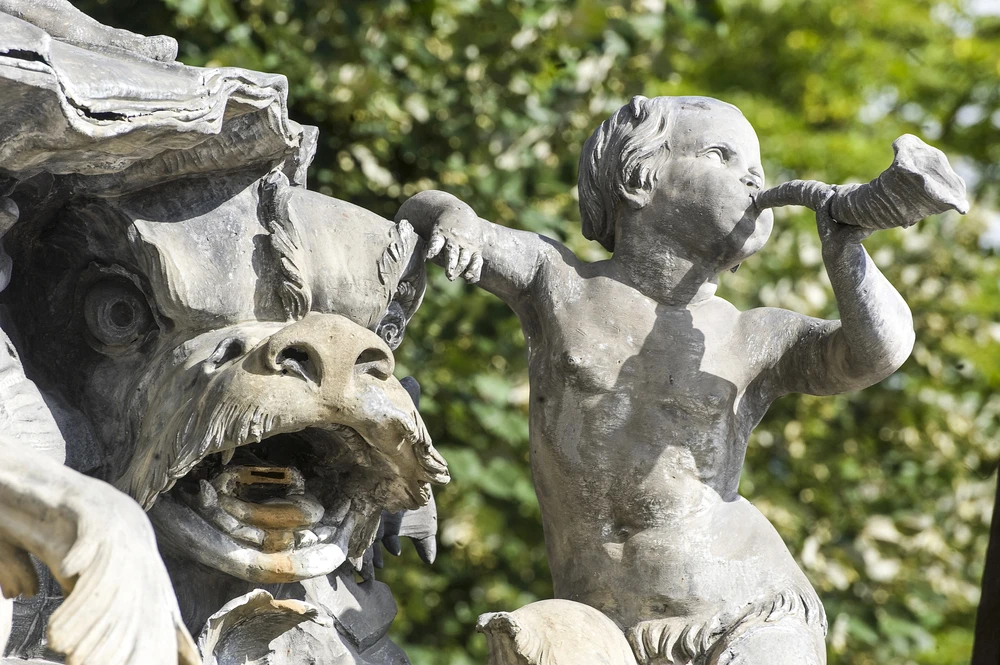
Meurthe-et-Moselle is the department of which Nancy is the prefecture. Here is a detail of one of the fountains in Place Stanislas / Photo chosen by Monsieur de France: depositphotos
Lunéville Castle: the "Versailles of Lorraine"
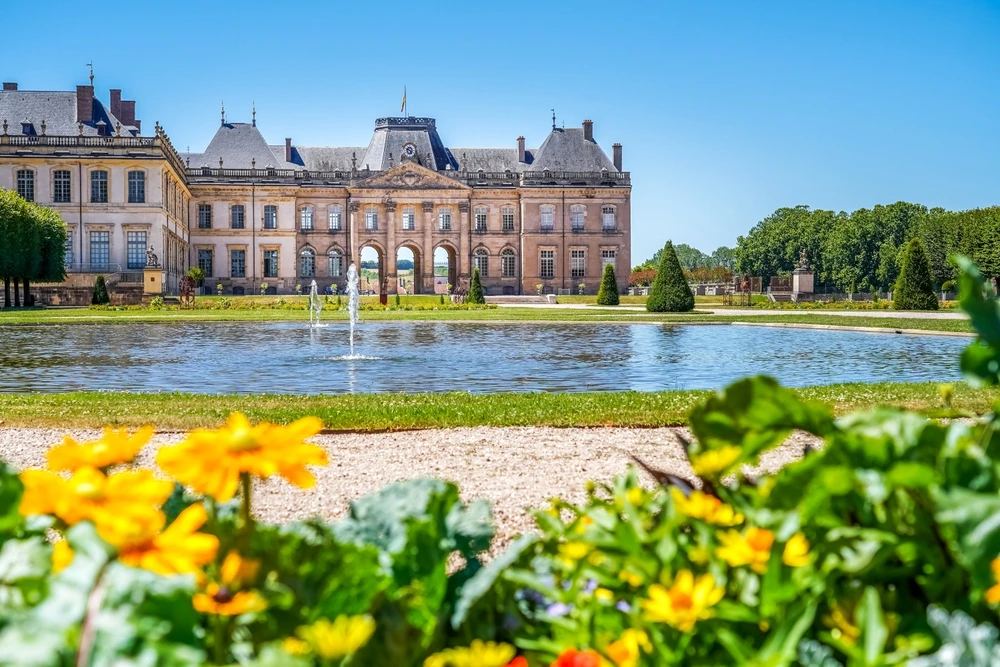
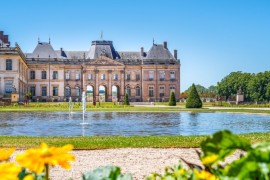
Lunéville Castle seen from the gardens in bloom / Photo selected by Monsieurdefrance.com: Shutterstock.com
1. What we see
The Château de Lunéville, nicknamed the "Versailles of Lorraine," was the residence of the Dukes of Lorraine in the 18th century. Built for Leopold I and enlarged by Stanislas Leszczynski, it impresses with its classical architecture, majestic facades, and French gardens inspired by Le Nôtre. Visitors can admire its vast state rooms, royal chapel, and superb landscape views. Even though it was partially rebuilt after a fire in 2003, the castle retains all its splendor and remains a major landmark of Lorraine's heritage.
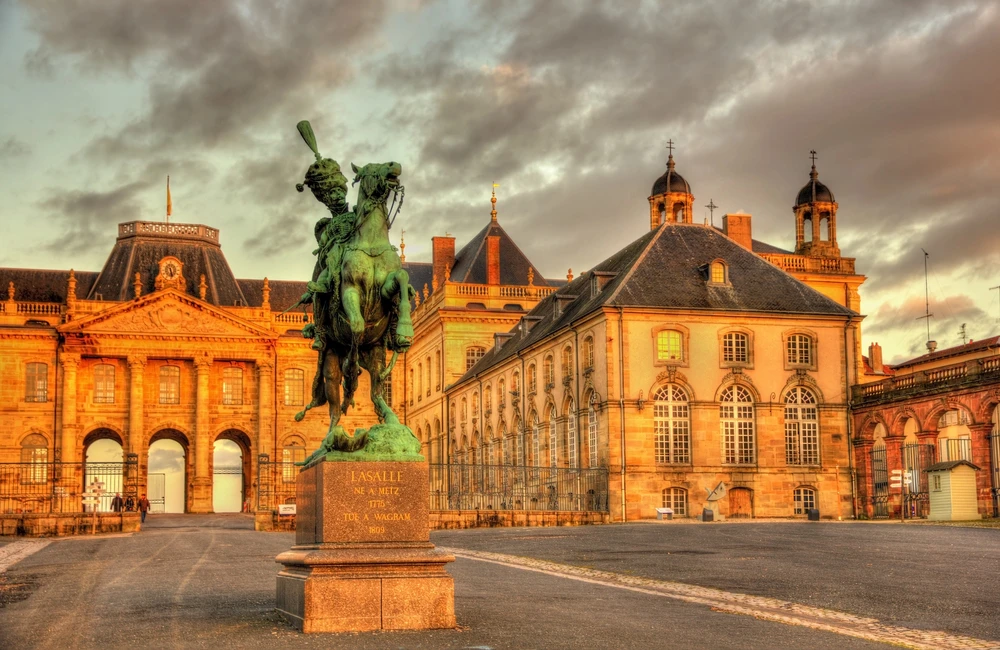
Lunéville Castle at sunset/ Photo selected by Monsieur de France: depositphotos.
2. What can be done about it
You can visit the ducal apartments, the chapel, and the temporary exhibitions that bring the site to life. The gardens, which are open to the public, are perfect for a romantic stroll along the ponds and flower beds. Throughout the year, the castle hosts shows and concerts. It is an essential stop for understanding the history of the Dukes of Lorraine and the place Lunéville occupied in the political and cultural life of the 18th century, but it would be a shame to reduce Lunéville to just the castle. The town is very beautiful, in 18th-century style, and has many surprising places to visit, such as the Church of Saint Jacques and its hidden organ, the abbey hotel, which recreates the interior of a French aristocrat's home during the Age of Enlightenment, and the Merchant's House. A few kilometers away are the Baccarat factories where the world's most famous crystal is made.
📍 Distances: 33 km from Nancy – 88 km from Metz
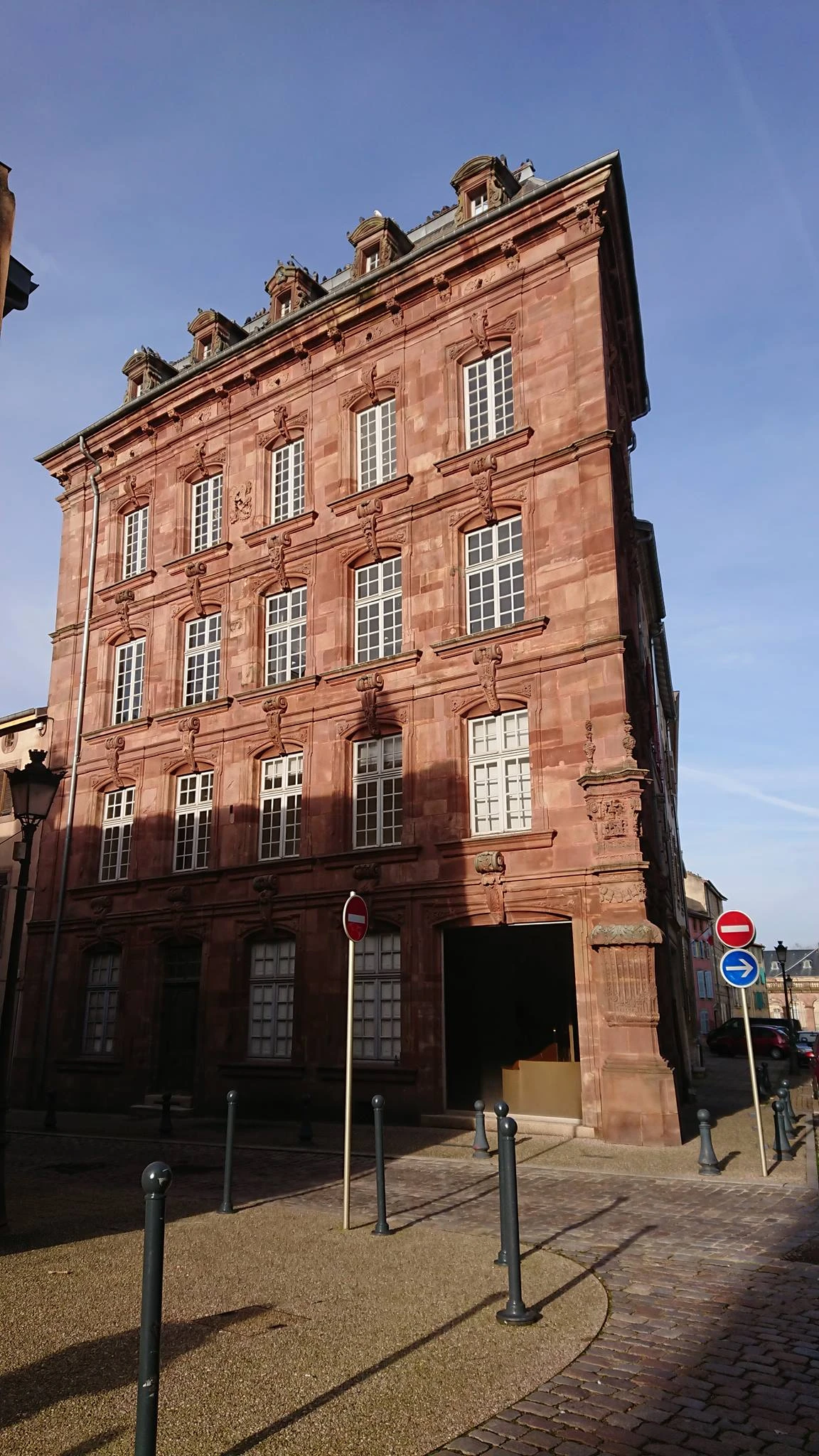
The pink sandstone facade of the Merchant's House in Lunéville / photo selected by Monsieurdefrance.com: Jérôme Prod'homme
The Château d'Haroué, home of princes.
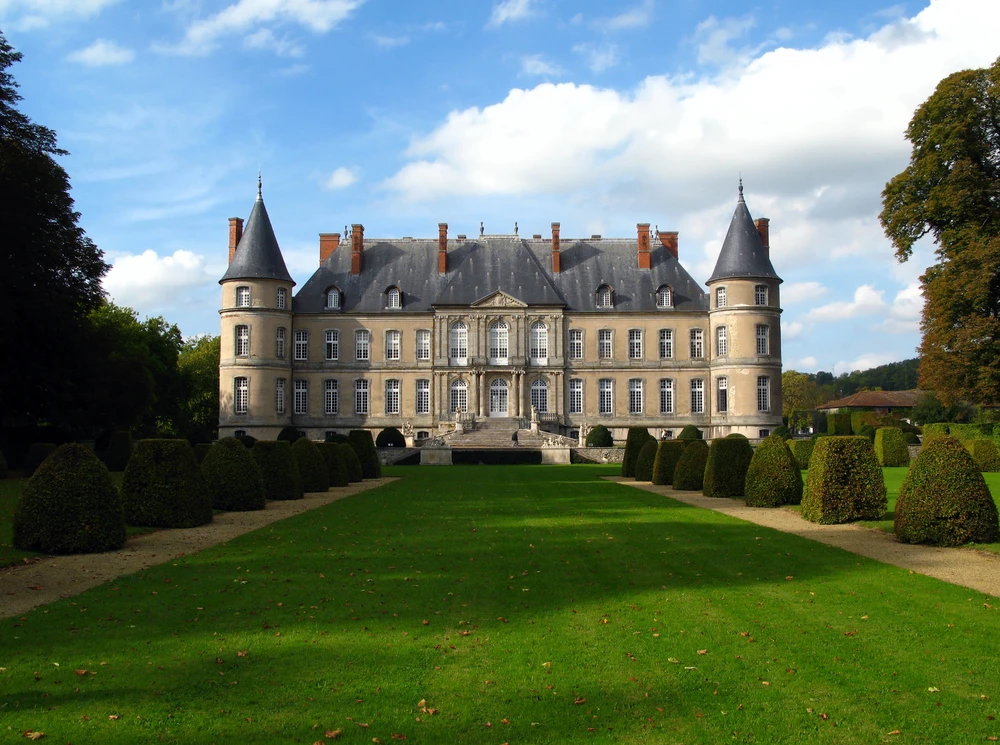
Haroué Castle and its classic stone facade facing the park / Photo selected by Monsieur de France: Shutterstock.
1. What we see
Built in the 18th century by architect Germain Boffrand for the Prince of Craon, the Château d'Haroué is an example of classical French architecture. It impresses with its elegance and harmony: four bridges, twelve interior and exterior towers, 52 interior fireplaces, and 365 windows symbolize the year, months, weeks, and days. The French and English-style park enhances the charm of the estate. Inside, you will discover salons decorated with refined woodwork, tapestries, and painted ceilings. This is the setting of a princely family, the first in the Duchy of Lorraine after the dukes, and one of the most important at the French court.
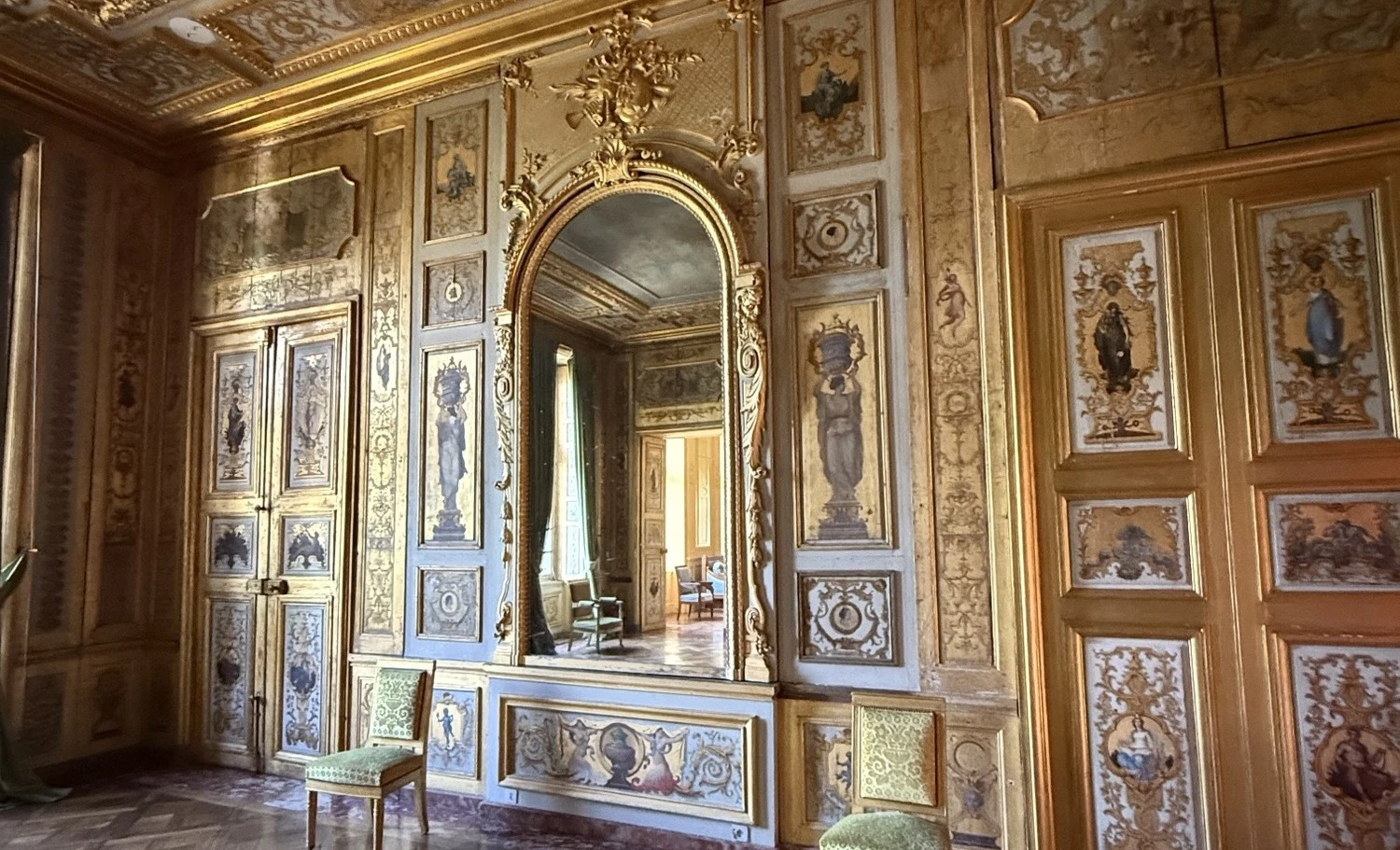
The golden salon of Haroué Castle with its paintings and gold leaf / Photo chosen by Monsieur de France: Jérôme Prod'homme.
2. What can be done about it
Visitors can explore the reception rooms and private apartments and admire the rich décor, particularly the Chinese salon, which is unique in the world. The château also hosts numerous cultural events: exhibitions, concerts, and festivals that bring this heritage to life. The park is ideal for walking, offering both geometric precision and scenic charm. Haroué is one of the most beautiful aristocratic residences in Lorraine, a true testament to the refinement of the 18th century.
📍 Distances: 27 km from Nancy – 82 km from Metz
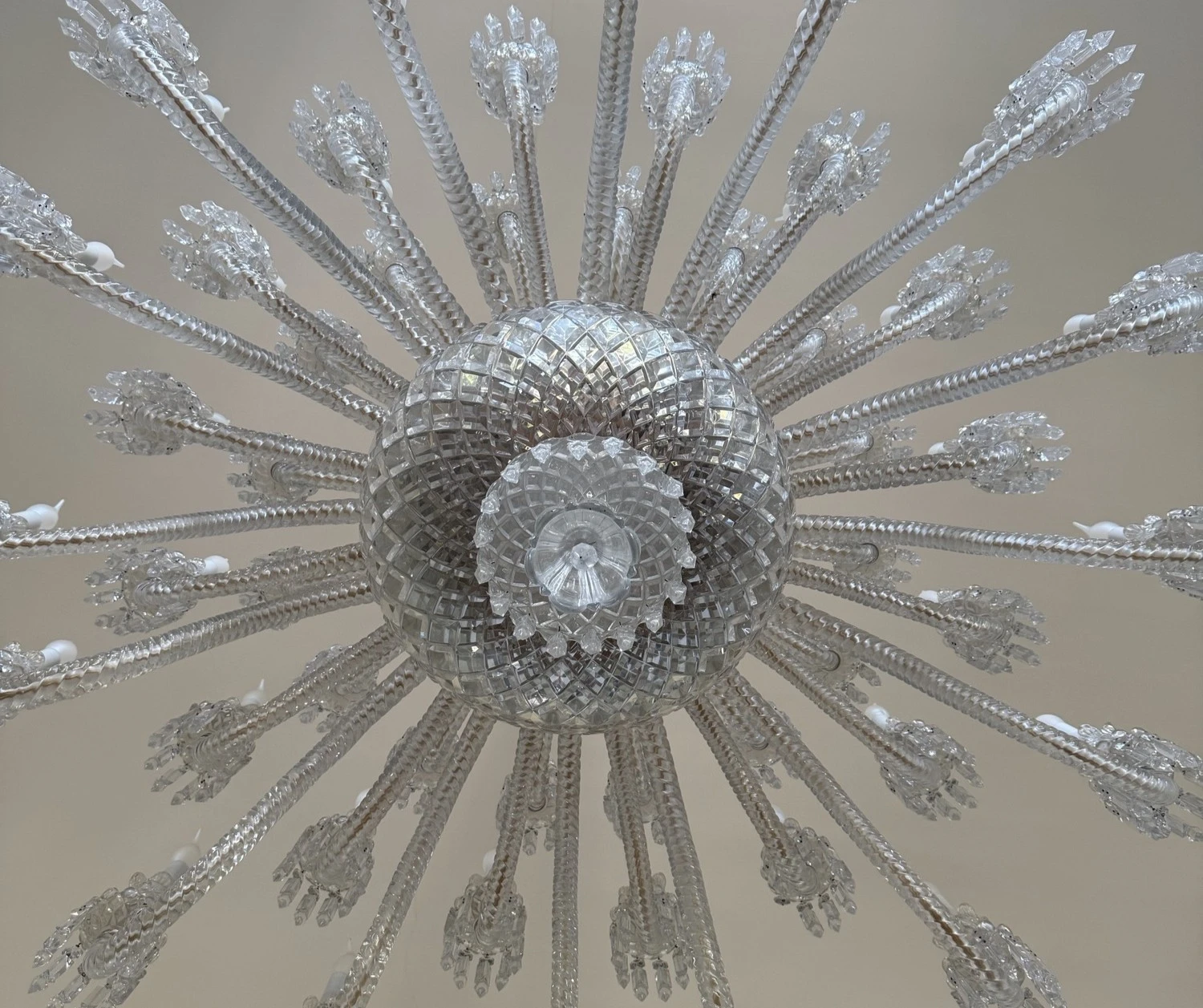
Baccarat crystal chandelier on display at the Château de Haroué in the Louis XVIII salon / Photo selected by Monsieur de France: Jérôme Prod'homme
Sion Hill: the most beautiful panorama in Lorraine
1. What we see
The hill of Sion-Vaudémont is one of the most iconic places in Lorraine. At an altitude of 540 meters, it dominates the surrounding landscape and offers an exceptional panorama of the plain and the Vosges mountains. It is a site that is at once natural, historical, and spiritual. At the summit stands the Basilica of Notre-Dame de Sion, a place of Marian pilgrimage since the Middle Ages, as well as archaeological remains reminiscent of the ancient Gallic oppidum. The hill is surrounded by vineyards and orchards that enhance its beauty.
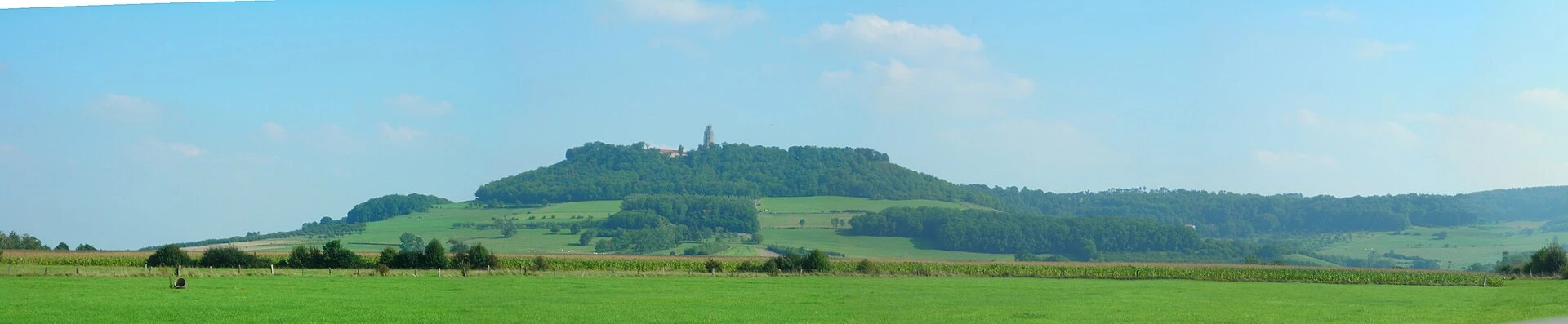
The hill of Sion seen from below / photo chosen by Monsieur de France: By Carl-9000 — Own work, Public domain, https://commons.wikimedia.org/w/index.php?curid=3325341
2. What can be done about it
You can visit the basilica, discover the history of the site in the hill museum and enjoy the hiking trails that crisscross the hillsides. It is an ideal place to admire the sunset over the Lorraine plain. Every year, pilgrimages attract the faithful, but the site also appeals to nature lovers and photographers. The hill of Sion embodies both the spiritual and scenic identity of Lorraine.
📍 Distances: 30 km from Nancy – 80 km from Metz
Pierre-Percée Lake, the Lorraine of Canada
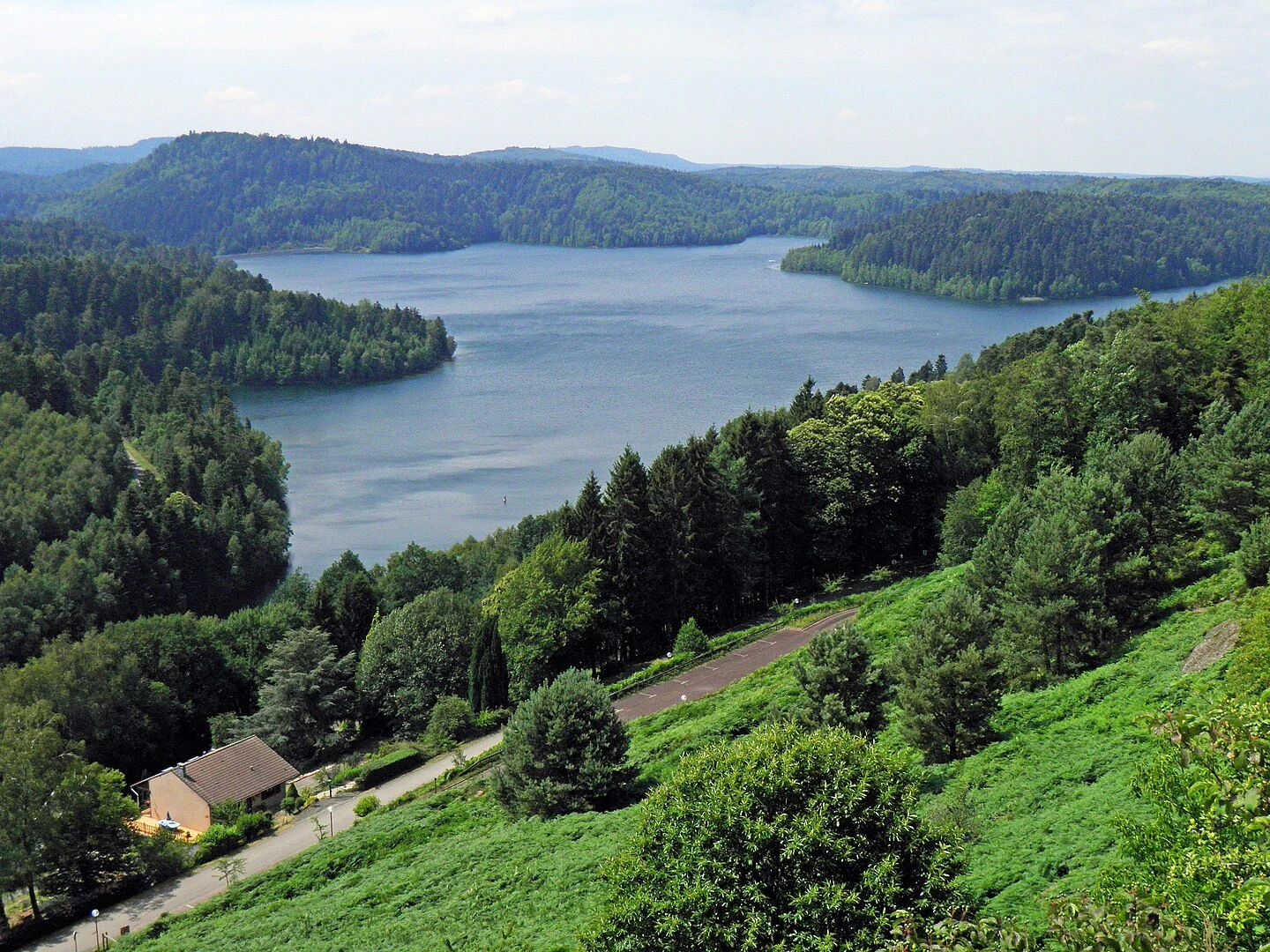
Stone-Pierced Lake seen from the sky / Photo chosen by Monsieur de France: By Gzen92 — Own work, CC BY-SA 4.0, https://commons.wikimedia.org/w/index.php?curid=70420740
1. What we see
The Pierre-Percée Lake, in Meurthe-et-Moselle, is one of the largest artificial lakes in the Grand Est region, covering an area of over 300 hectares with more than 30 km of shoreline. Its maple leaf shape and the colors of nature in autumn have earned it the nickname "Little Canada of Lorraine." Surrounded by deep forests, fir trees, and steep hills, it offers landscapes of great wild beauty, reminiscent of the wide open spaces of Canada. The lake is dotted with small coves, beaches, and promontories that offer exceptional panoramic views.
2. What can be done about it
It is an ideal place for outdoor activities: hiking around the lake, mountain biking, rock climbing, and tree climbing. In summer, visitors can enjoy a recreation center. Autumn makes the place magical, with red, gold, and black colors. In winter, the site attracts photographers thanks to the morning mists and contrasting colors. Thrill seekers can also try zip-lining or adventure courses. Lake Pierre-Percée is the perfect destination for recharging your batteries in the heart of nature, offering a balance between leisure and contemplation. Not far away, you can enjoy the Fraisperthuis City amusement park with its thrilling rides.
📍 Distances: 72 km from Nancy – 116 km from Metz
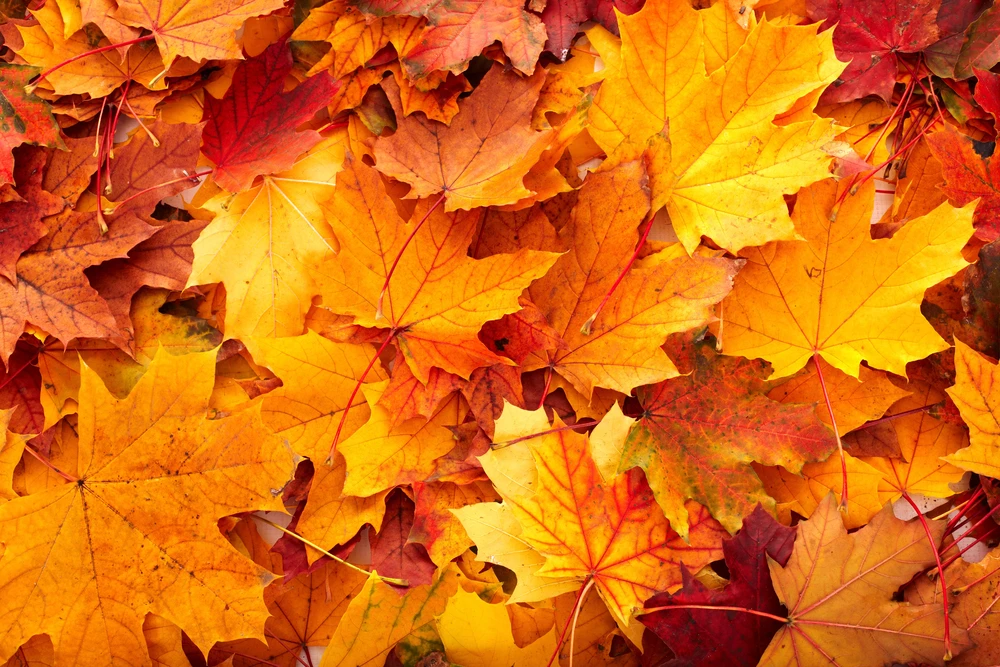
Autumn is always exceptional in Pierre-percée / Photo selected by Monsieur de France: depositphotos.
The Basilica of Saint-Nicolas-de-Port, spiritual heart of Lorraine
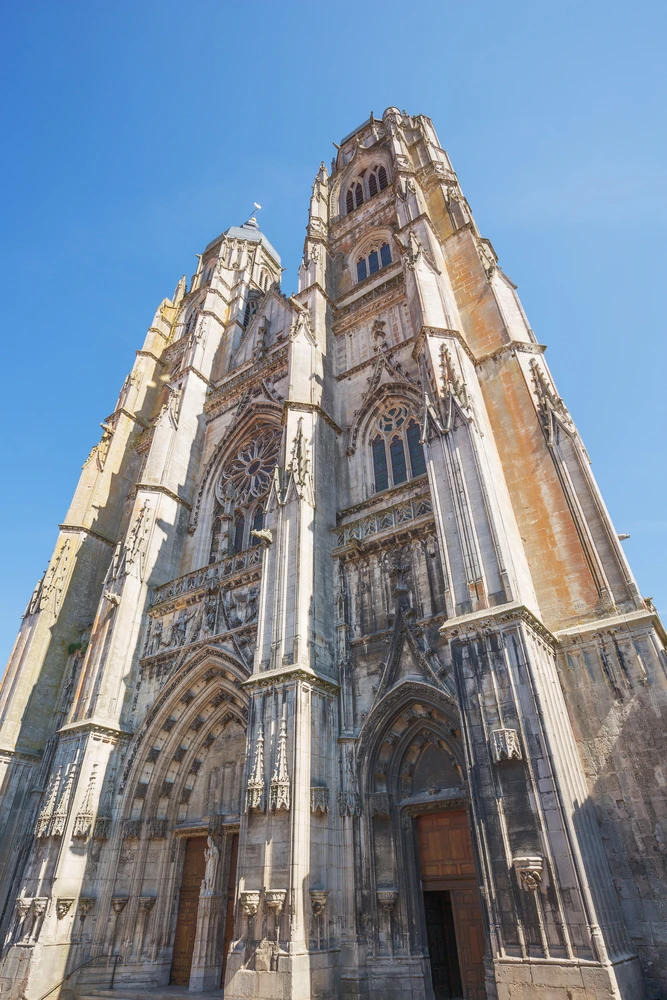
The imposing towers of the Basilica of Saint Nicolas de Port / Photo selected by Monsieur de France: depositphoto.
1. What we see
The Basilica of Saint-Nicolas-de-Port is one of the finest examples of flamboyant Gothic architecture in Lorraine. Built between 1481 and 1545 to house a relic of Saint Nicholas, the patron saint of Lorraine, it dominates the small town of Saint-Nicolas-de-Port. Its slender façade, framed by two tall towers, is impressive from the moment you arrive. The interior surprises visitors with its monumental proportions: a 30-meter-high nave, supported by slender pillars and bathed in light thanks to large colored stained glass windows. Visitors can also admire 16th-century carved stalls, frescoes, and an imposing organ, one of the most beautiful in the region. For centuries, this sanctuary has attracted pilgrims and visitors alike, and remains a powerful symbol of identity for Lorraine.
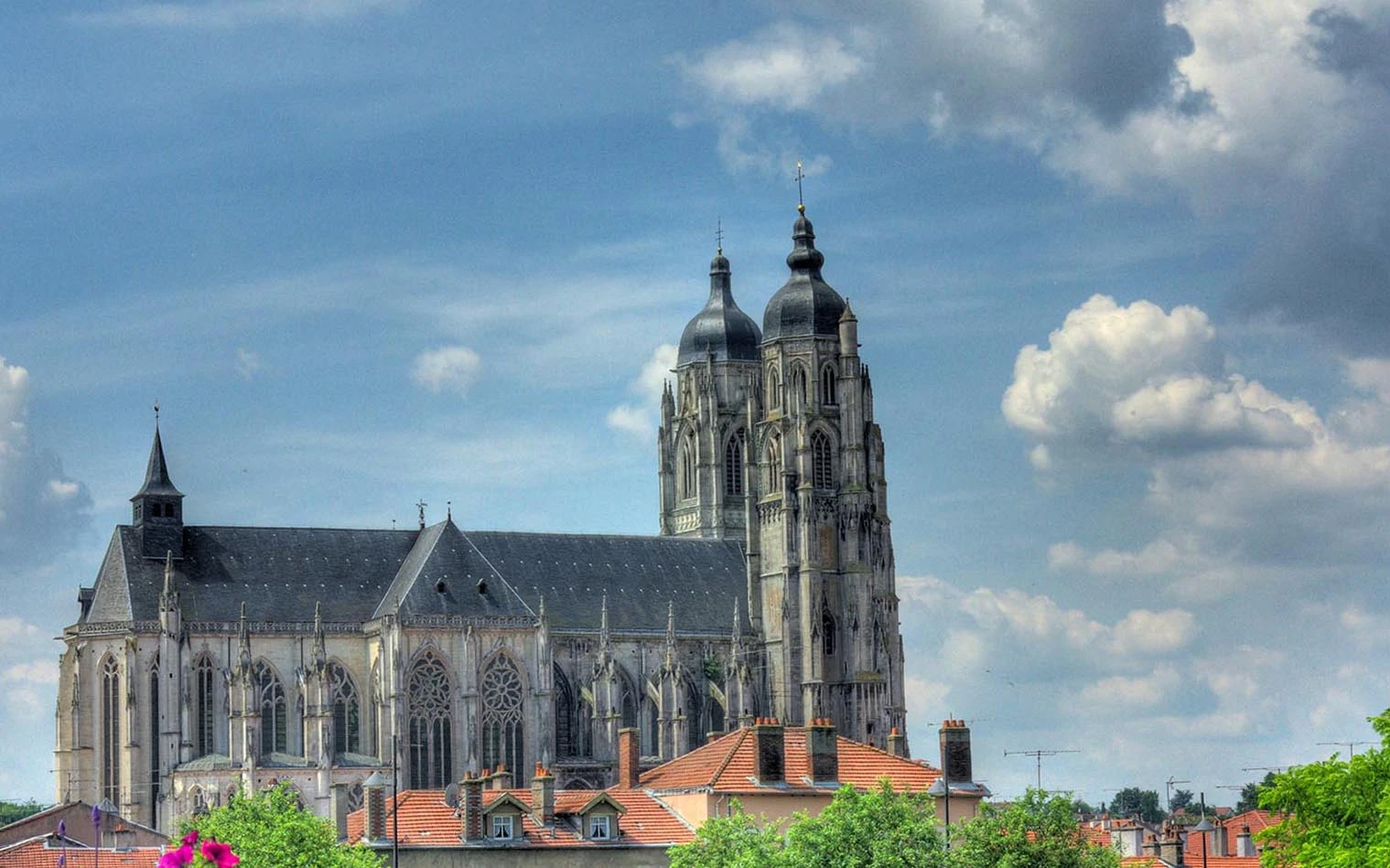
The Basilica of Saint Nicolas de Port as seen upon arriving in the city / Photo selected by Monsieur de France: By Antoine Taveneaux — Own work, CC BY-SA 3.0, https://commons.wikimedia.org/w/index.php?curid=4237272
2. What can be done about it
The tour allows visitors to discover the basilica's architecture, stained glass windows, and monumental organ. Guided tours are regularly organized to provide a better understanding of its history and treasures. Every year on December 6, the town comes alive with the feast of Saint Nicholas, with processions, illuminations, and entertainment that attract thousands of people from all over Lorraine. The rest of the year, concerts and exhibitions enliven the sanctuary. Nearby, the small shopping streets are a pleasant addition to the visit. You can also visit the brewery museum in a magnificent Art Deco building. A spiritual and cultural center, the Basilica of Saint-Nicolas-de-Port remains a must-see for anyone who wants to capture the soul of Lorraine.
📍 Distances: From Nancy: 13 km - From Metz: 63 km
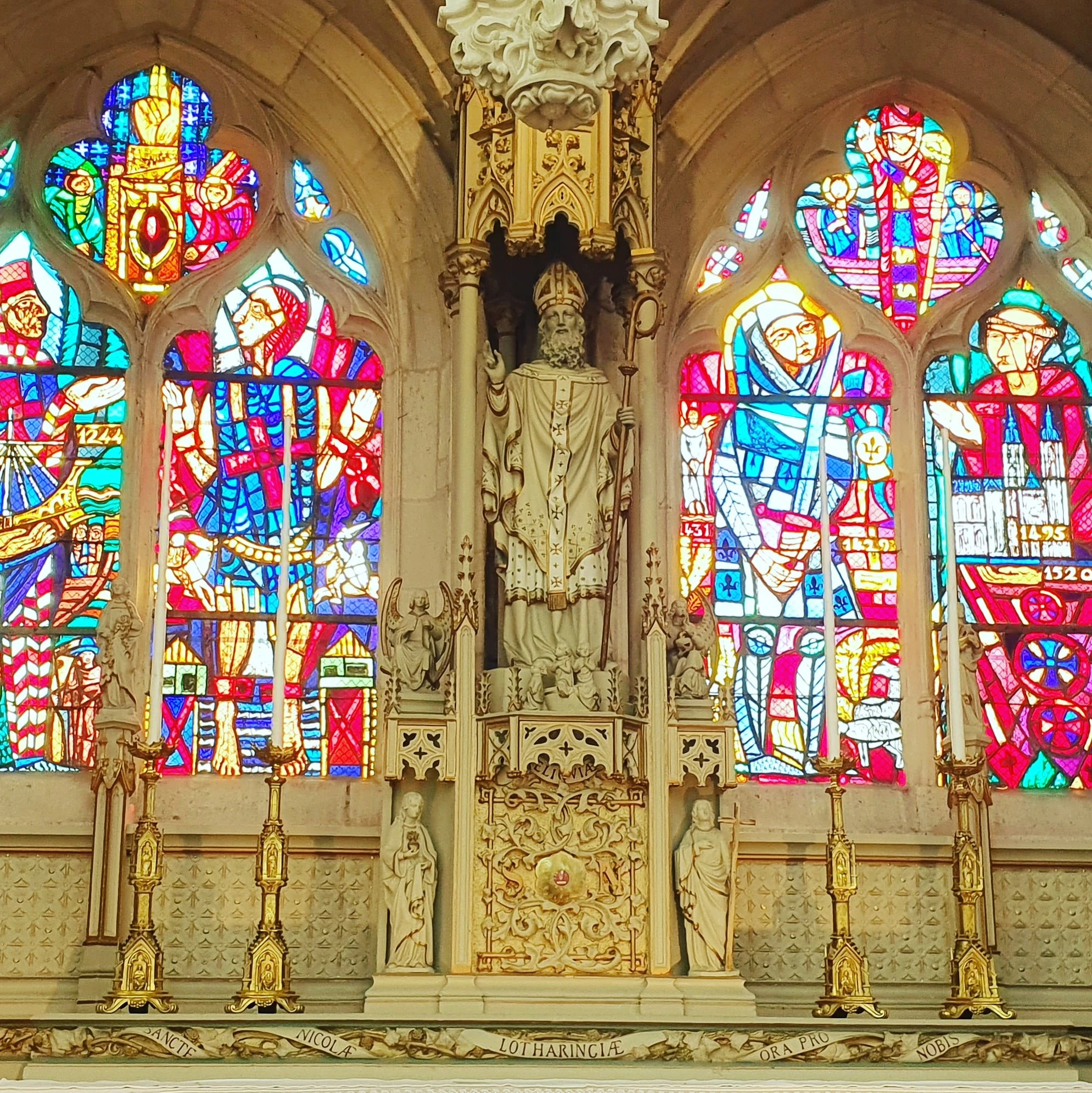
In the Basilica of Saint Nicolas de Port, in Lorraine, Saint Nicolas is recognizable by his bishop's robes and the three small children accompanying him. Photo selected by Monsieurdefrance.com: Jérôme Prod'homme (c)
Toul: cathedral, ramparts, and Côtes-de-Toul wine
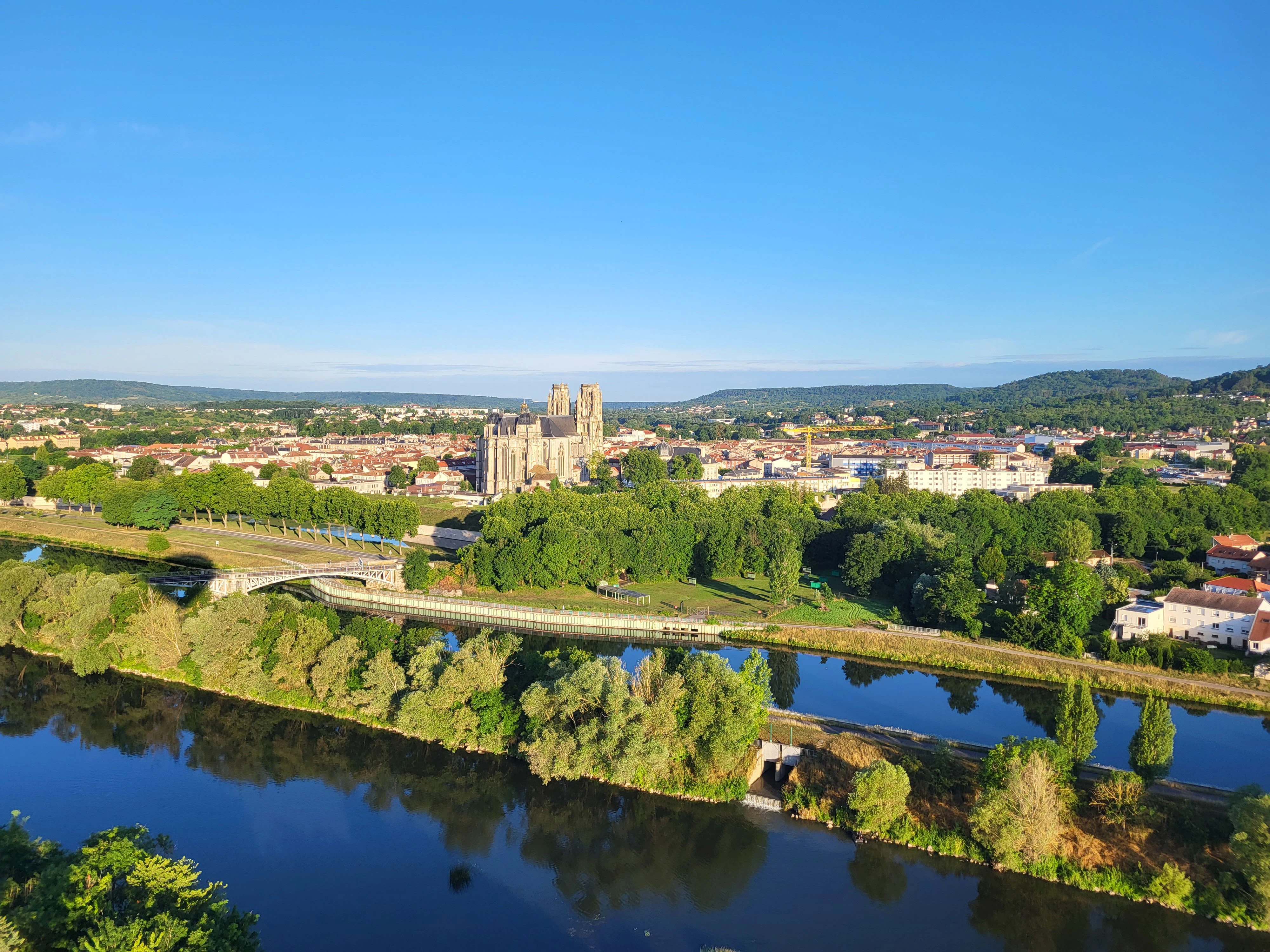
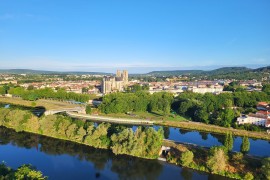
Toul Cathedral seen from above, located in the heart of the city and surrounded by ramparts and a bend in the Moselle River. Photo selected by Monsieurdefrance.com: Jérôme Prod'homme.
1. What we see
The city of Toul, a former episcopal city, preserves a rich medieval and religious heritage. Its Saint-Étienne Cathedral, built between the 13th and 16th centuries, is a masterpiece of Lorraine flamboyant Gothic. The façade, flanked by two monumental towers, is adorned with sculpted portals and rose windows. Inside, the slender nave impresses with its luminosity and stained glass windows, some of which date back to the Middle Ages. Also worth seeing is the famous cloister, one of the largest in France. Further away, the Saint Gengoult collegiate church is also impressive. Toul is also surrounded by ramparts builtin the 17th century by Vauban and improved by Seré de Rivière in the 19th century, which give the city center a lot of character and bear witness to the city's military past. The historic center, with its houses and mansions, ancient alleyways, and small squares, completes this exceptional heritage setting.
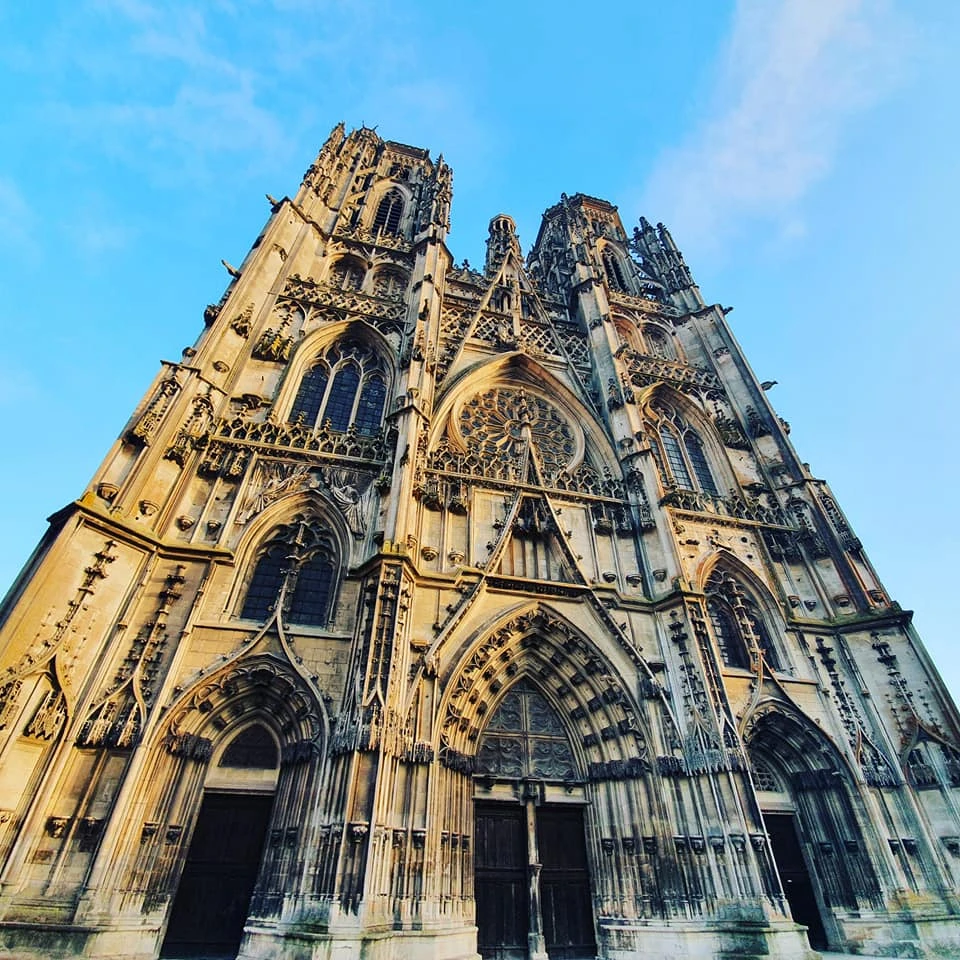
The beautiful façade of Saint Etienne Cathedral in Toul. Photo selected by monsieurdefrance.com: Jérôme Prod'homme (c)
2. What can be done about it
The Saint-Étienne Cathedral is open to visitors, and guided tours allow you to learn more about its history and architecture. The city center has a wealth of shops. The Museum of Art and History, housed in the former bishop's palace, displays archaeological and artistic collections. The port district is particularly enjoyable in summer. Toul is also famous for its Côtes-de-Toul vineyards, which produce the renowned vin gris: a tasting at a local estate is the perfect way to round off your visit. With its religious, military, and wine-growing heritage, Toul is an essential stop for understanding the historical and culinary richness of Lorraine.
📍 Distances: From Nancy: 25 km - From Metz: 75 km
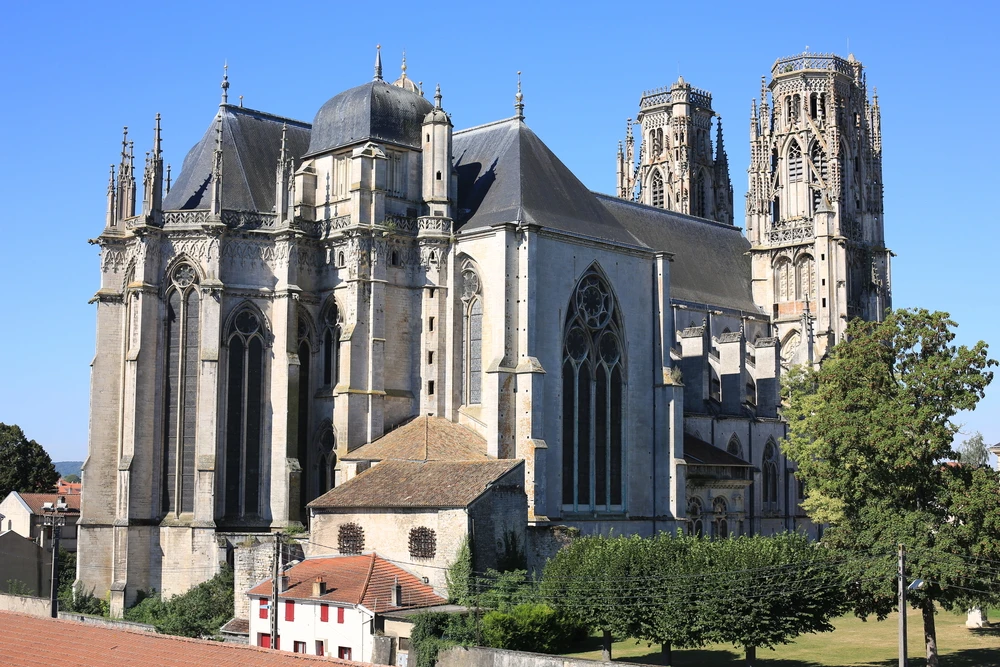
Saint Etienne Cathedral in Toul : Photo selected by monsieurdefrance.com: shutterstock.com
What to see in the Vosges? Lakes, waterfalls, and the Route des Crêtes
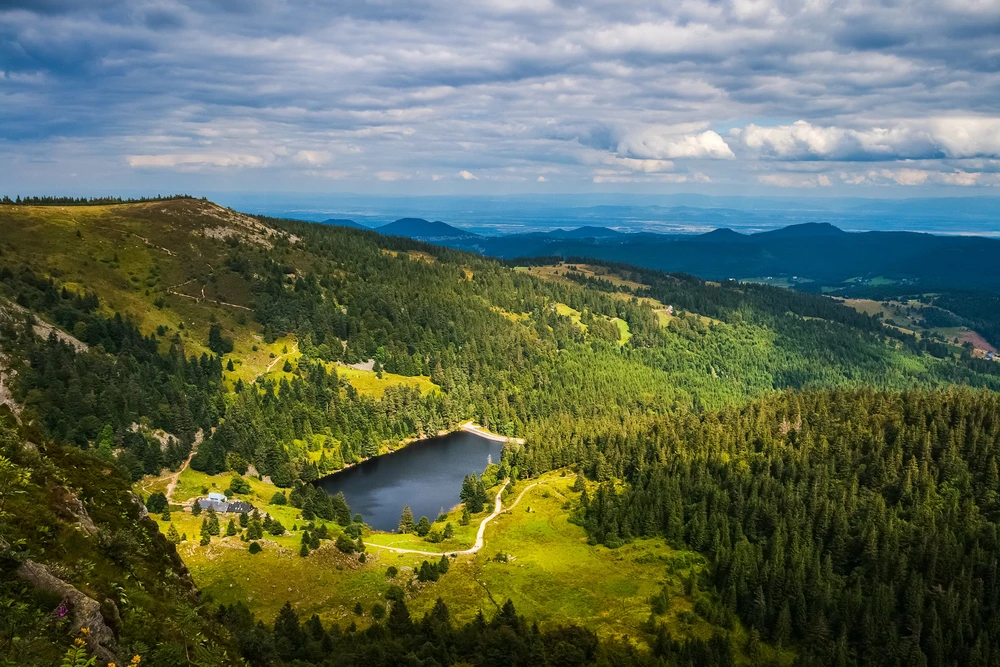
The Vosges are a land of nature and fresh air / Photo chosen by Monsieur de France: depositphotos.
Lake Gérardmer: the pearl of the Vosges
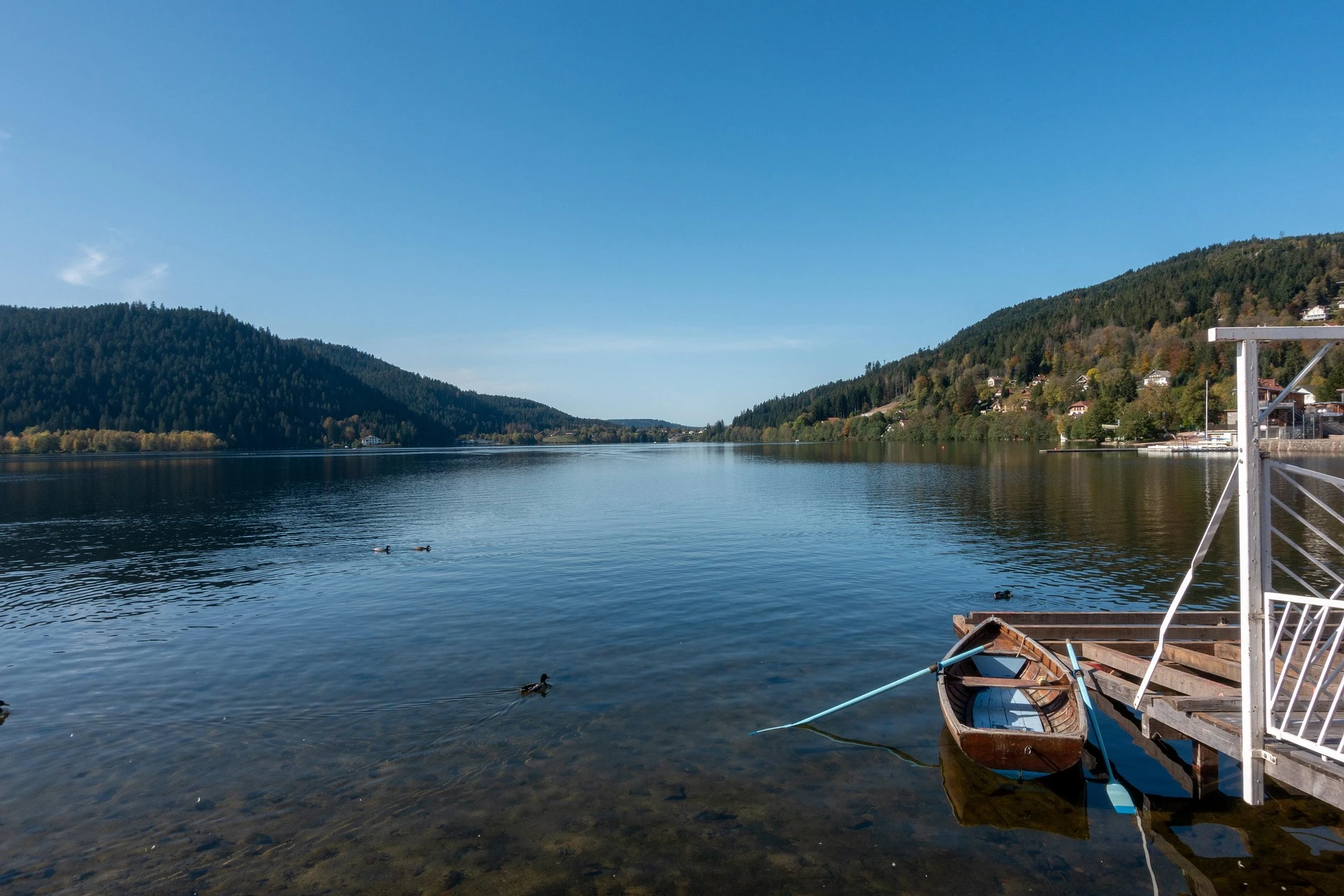
The view from one of the pontoons on Lake Gérardmer / photo selected by Monsieurdefrance.com: Jean Martinelle from Pixabay
1. What we see
Lake Gérardmer, the largest natural lake in the Vosges (115 hectares), is nicknamed the "Pearl of the Vosges." Nestled at an altitude of 660 meters, it is bordered by fir forests and surrounded by green hills. Its glacial origin gives it an elongated shape and crystal-clear waters. It attracts visitors in all seasons with its beauty: in summer with its beaches, in autumn with its flamboyant colors, and in winter when snow covers the shores. The view from the heights, especially from the Mérelle tower, is spectacular.
2. What can be done about it
The lake offers a multitude of activities: supervised swimming in summer, pedal boating, kayaking, sailing, and hiking on the 6 km trail that circles it. In winter, Gérardmer also becomes a renowned ski resort. Events such as the Fête des Jonquilles (Daffodil Festival) and the Festival du Film Fantastique (Fantasy Film Festival) add to the town's appeal. Lake Gérardmer is therefore a natural site, a leisure destination and a tourist symbol of the Vosges.
📍 Distances: From Nancy: 111 km - From Metz: 150 km
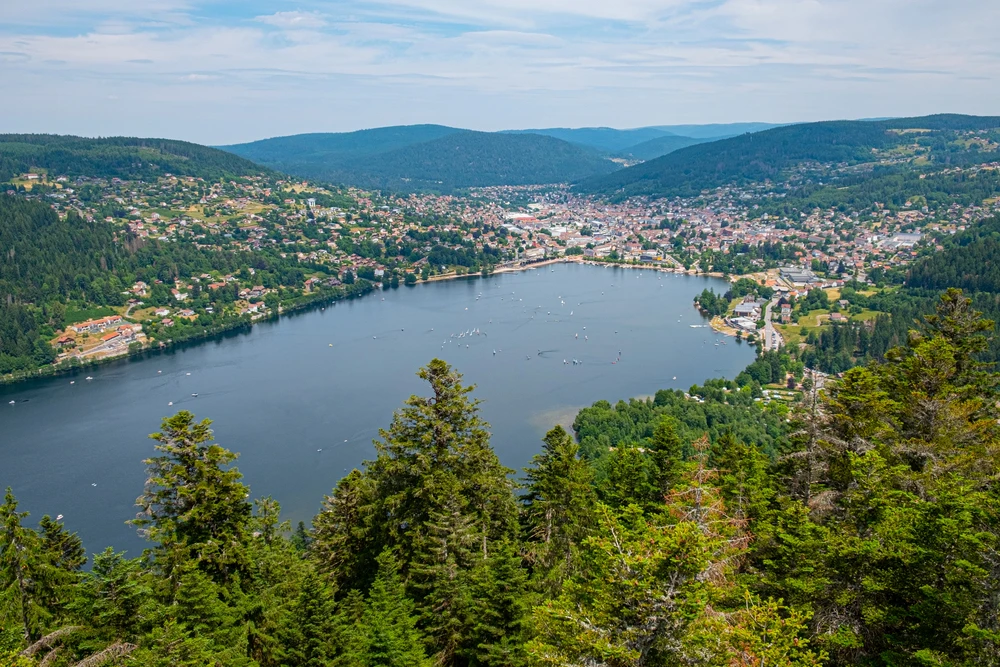
Lake Gérardmer seen from the sky / Photo selected by Monsieur de France: depositphotos.
Tendon Waterfall: the highest in the Vosges
1. What we see
The Tendon waterfall, located between Gérardmer and Épinal, is the highest waterfall in the Vosges mountains, with a drop of 32 meters. In the heart of the forest, the water cascades down a rocky escarpment in a wild and verdant setting. A few minutes' walk away is the small waterfall, more discreet but just as charming. Together, they form a spectacular natural site, appreciated for its freshness and beauty in all seasons.
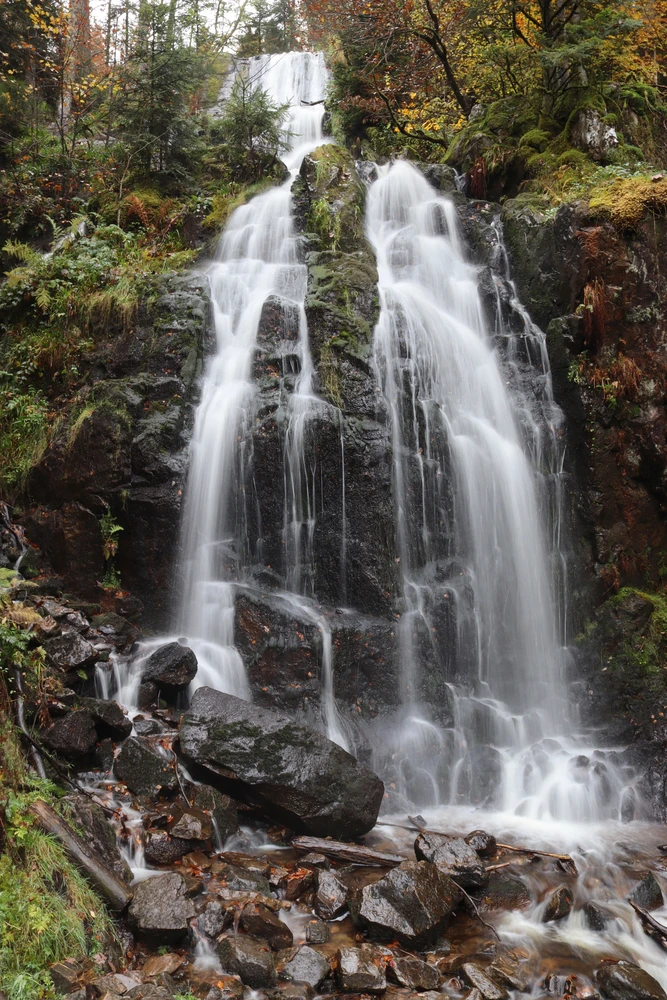
The great waterfall of Tendon / Photo chosen by Monsieur de France: Imladris via depositphotos
2. What can be done about it
A marked trail provides easy access to the large waterfall, making it an ideal outing for families. Hikers can extend their visit to the small waterfall. It is also a perfect spot for nature photographers: autumn colors the foliage, and winter sometimes offers striking ice sculptures. On-site picnic areas add to the charm of the visit.
📍 Distances : Nancy 110 km – Metz 150 km
La Schlucht and La Bresse: the heart of the Hautes-Vosges

Hiking in the snow in winter in La Bresse and the Hautes-Vosges is a real pleasure! Photo selected by Monsieurdefrance.com: by Trevor M from Pixabay
1. What we see
The Col de la Schlucht, at an altitude of 1,139 meters, is one of the most famous passes in the Vosges. It offers spectacular views of the Valley of Lakes, the blue line of the Vosges mountains and, on a clear day, the Black Forest and the Alps. All around, you can discover landscapes of high stubble fields, deep forests, and impressive cliffs. A few kilometers away, the resort of La Bresse-Hohneck, the largest ski resort in northeastern France, attracts visitors in all seasons.
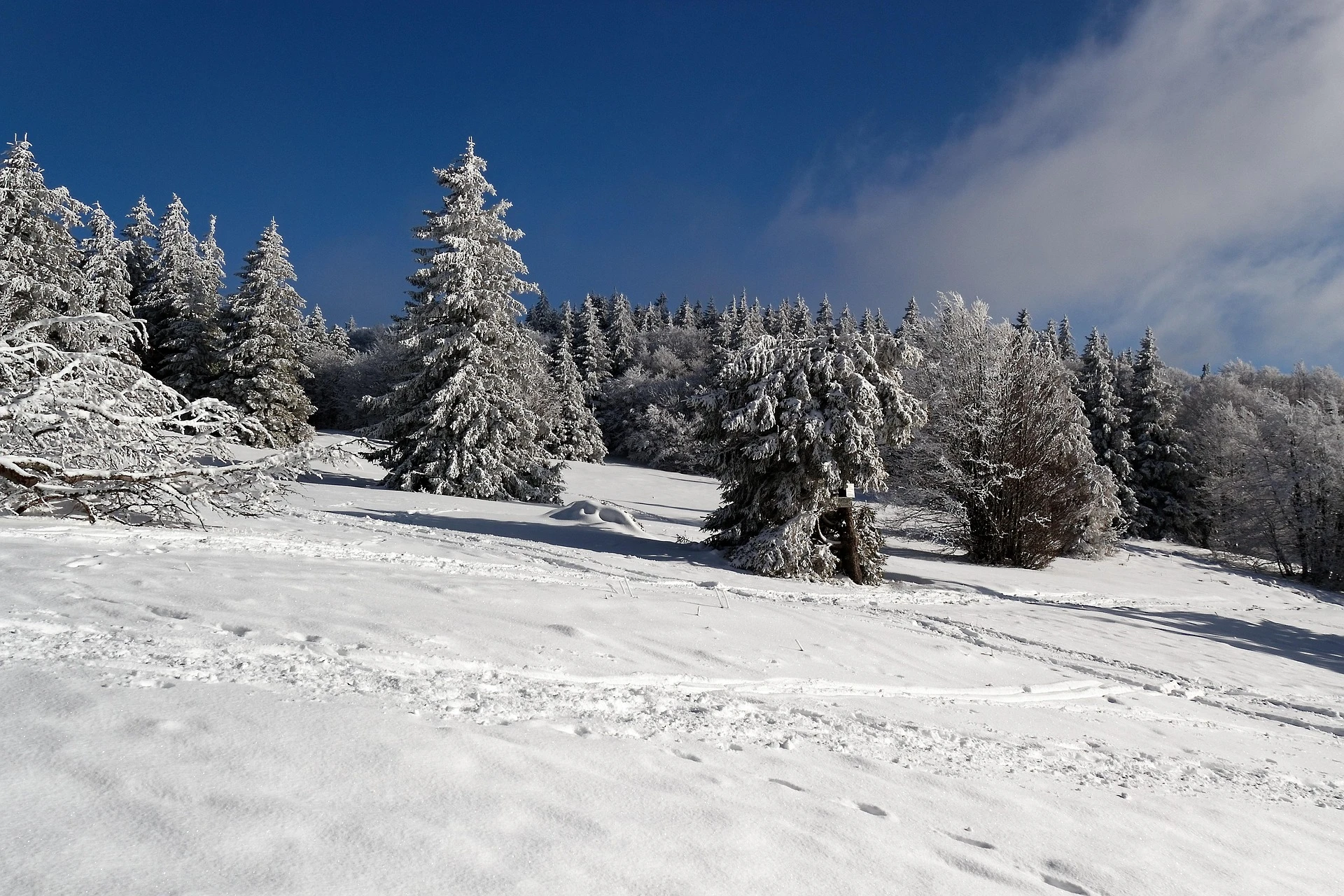
The landscape is often snow-covered in winter, even if there is no snow further down / Photo chosen by Monsieur de France: by leon grandjean from Pixabay
2. What can be done about it
In winter, La Bresse offers more than 30 downhill ski slopes, cross-country skiing, and snowshoe trails. In summer, hiking trails such as the Sentier des Roches attract walkers. The Col de la Schlucht is also part of the GR5, a legendary European hiking trail. In La Bresse, nature lovers will also find a large mountain biking area, a giant zip line, and family activities. It is a mecca for mountain tourism in Lorraine.
📍 Distances : Nancy 115 km – Metz 155 km
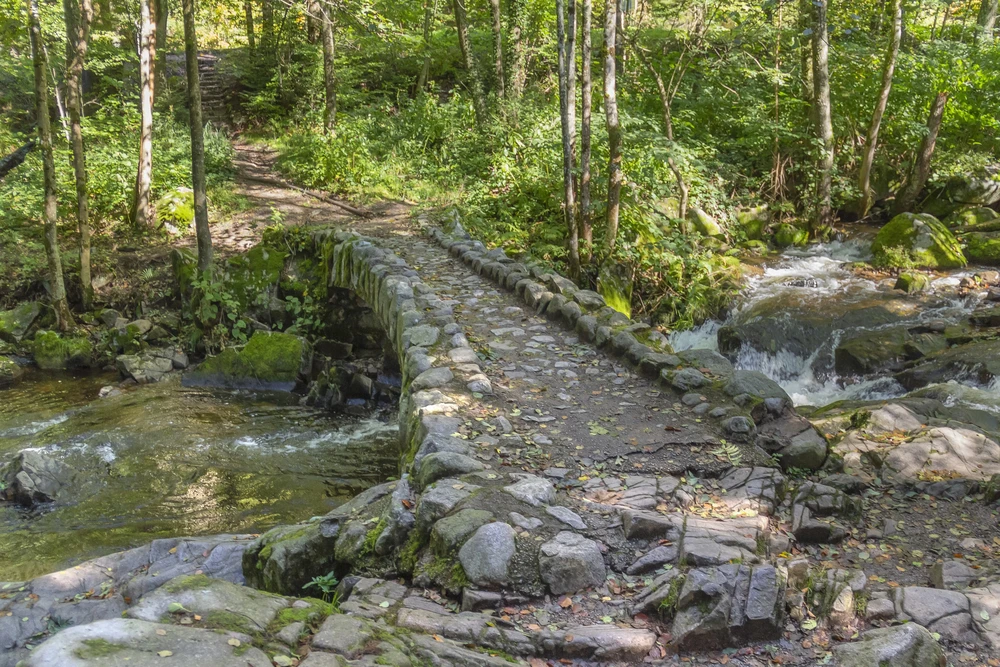
If you love forests, nature, and walking, you'll love the Vosges Mountains / Photo selected by Monsieur de France: depositphotos
Route des Crêtes: panoramic views and farmhouse inns
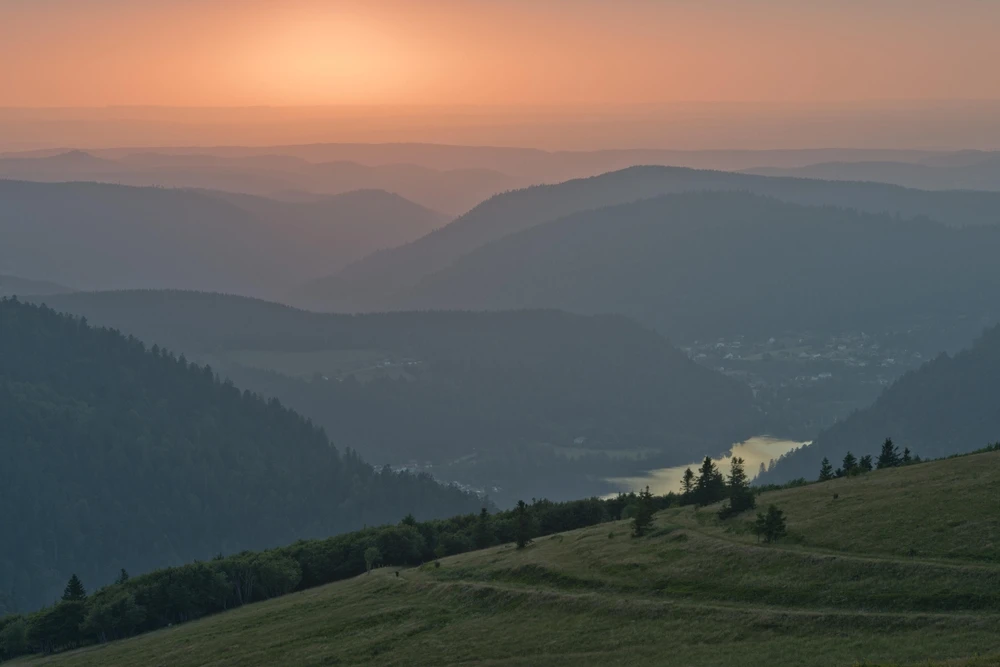
The view from Honneck is magnificent / Photo chosen by Monsieur de France: rimagebrokermicrosto via depositphotos
1. What we see
The Hautes Vosges form the backbone of the Vosges mountains, with their iconic peaks: the Hohneck (1,363 m), the Kastelberg and the Rainkopf. The Crêtes Route, built during the First World War, connects Cernay to the Col du Bonhomme over a distance of nearly 80 km. It offers spectacular views of the Alsace plain and the Vosges valleys, dotted with glacial lakes such as Lac Blanc and Lac des Truites. The landscape alternates between dark forests, tall stubble fields, and pastures.
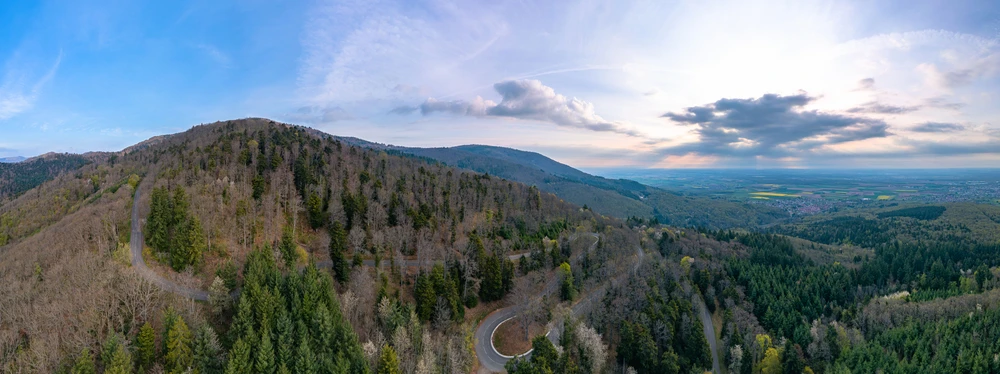
The ridge road winding through the Vosges mountains / Photo selected by Monsieur de France: depositphotos.
2. What can be done about it
The route can be traveled by car, bicycle, or motorcycle, with numerous scenic overlooks along the way. Hikers enjoy the marked trails leading to the Hohneck or the high-altitude lakes. You can also discover the Vosges farmhouse inns, which continue the tradition of the marcaire meal: pie, smoked pork neck, tofailles, and farmhouse Munster cheese. It is both a scenic and gastronomic experience.
📍 Distances : Nancy 120 km – Metz 160 km
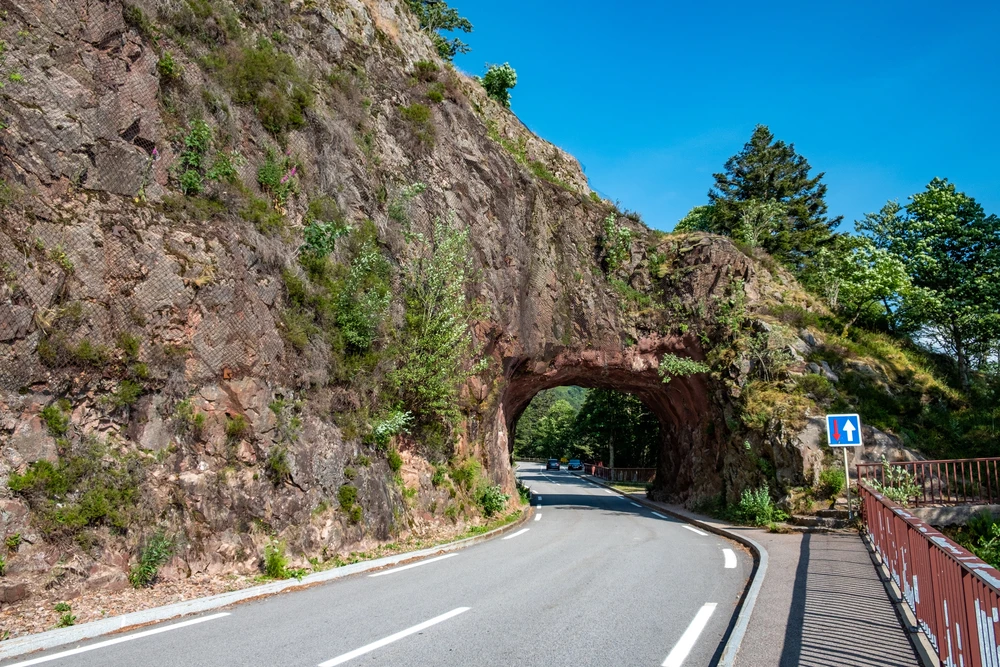
The Devil's Rock on the ridge road between Schlucht and Gérardmer / Photo selected by Monsieur de France: despositphotos
Vittel and Contrexéville: spa resorts to try
1. What we see
In the heart of the Vosges mountains, Vittel and Contrexéville are two internationally renowned spa resorts. Vittel, known since the 19th century, is famous for its 650-hectare spa park, its Belle Époque architecture, and its elegant covered gallery. Contrexéville, more intimate, charms visitors with its casino, spa park, and healthcare facilities. Both towns owe their fame to the quality of their mineral waters, which are sold worldwide.

Vittel is one of France's most renowned spa resorts / photo selected by Monsieur de France: shutterstock.
2. What can be done about it
In Vittel, visitors can explore the spa park, the convention center, and the thermal baths, which offer treatments and wellness therapies. The town also has a golf course, a racecourse, and sporting events. In Contrexéville, the thermal baths specializing in slimming and wellness complete the offer. These resorts combine heritage, health, and relaxation, and are the ideal duo for a relaxing getaway.
📍 Distances : Nancy 90 km – Metz 135 km
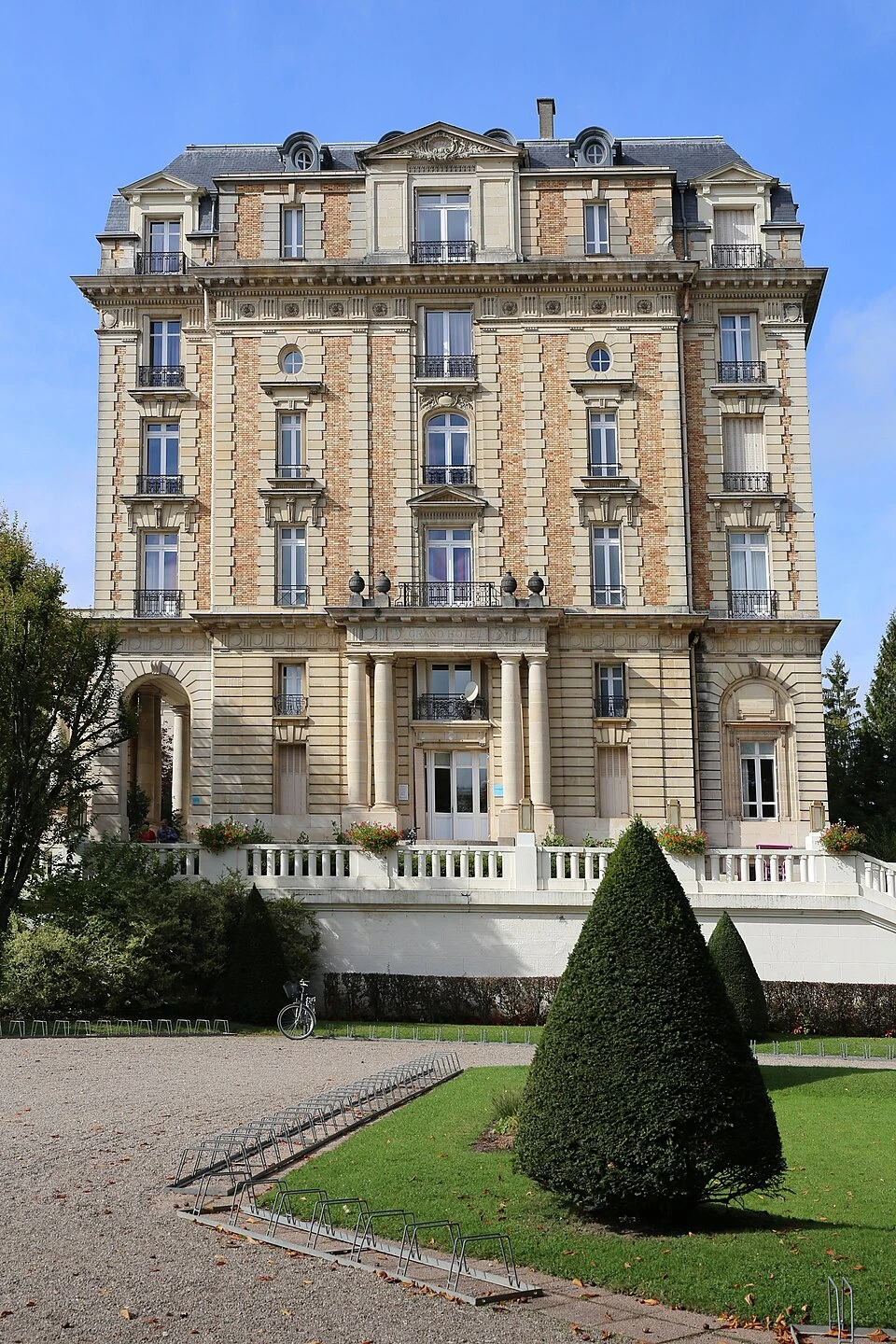
The Grand Hotel in Vittel is a fine example of the Belle Époque architecture that characterizes Vittel / Photo chosen by Monsieur de France: By Pymouss — Own work, CC BY-SA 4.0, https://commons.wikimedia.org/w/index.php?curid=36259602
Confiserie des Hautes Vosges: free tour and tasting
1. What we see
Located in Plainfaing, the Confiserie des Hautes Vosges is an artisanal company founded in 1986 and now a household name. It continues the tradition of Vosges candies made with essential oils of fir, honey, eucalyptus, and pine buds. The candy is made in front of visitors, in copper cauldrons, using authentic recipes.
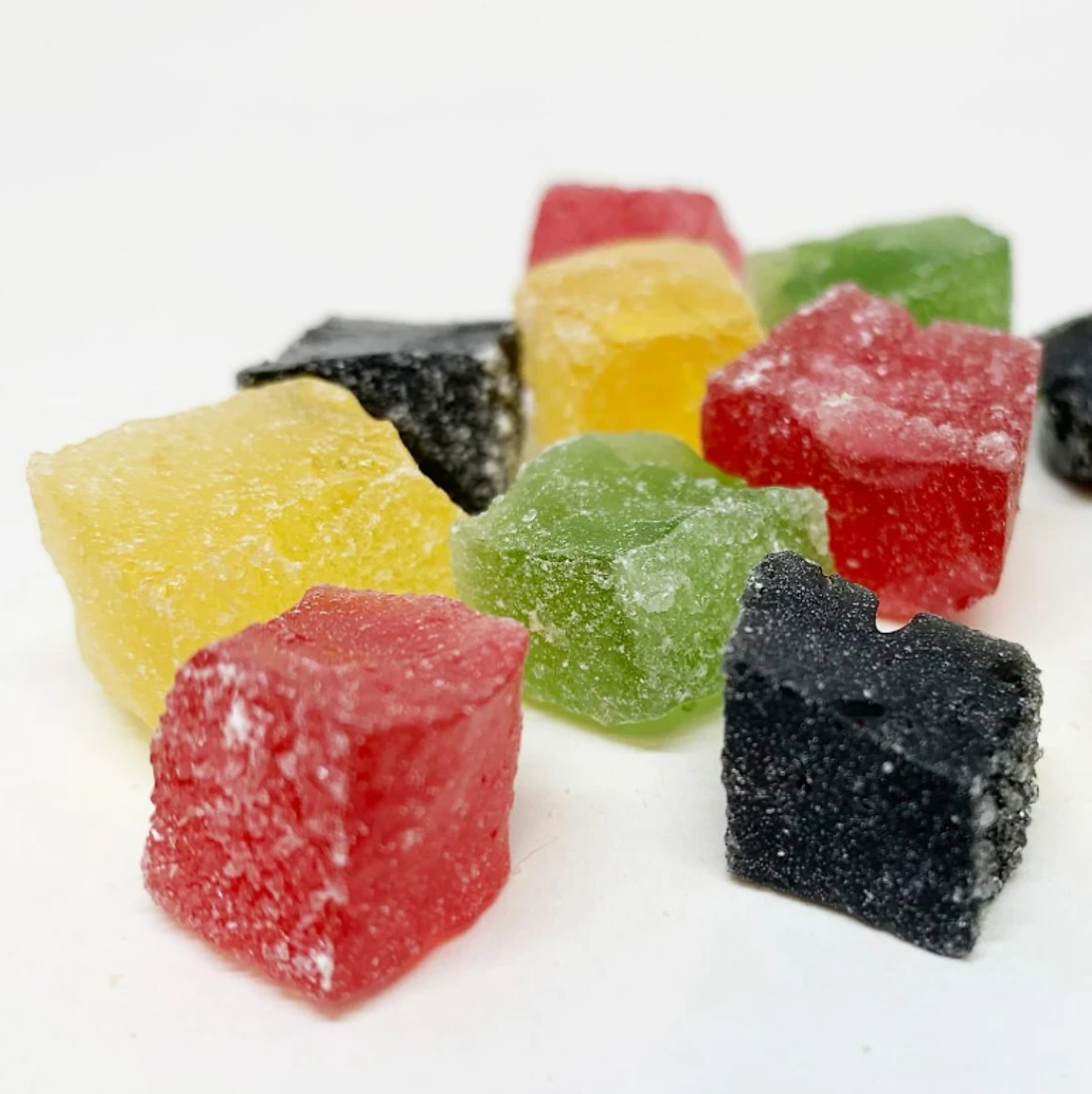
This is where authentic Vosges candies are made/ Photo selected by Monsieur de France: CDHV website
2. What can be done about it
The guided tour of the candy factory is free and allows visitors to see all stages of production. It ends with a tasting and a visit to the shop, where you can find a wide range of traditional candies. The Confiserie des Hautes Vosges welcomes nearly 250,000 visitors a year, making it one of the most popular tourist attractions in Lorraine. It is a gourmet and friendly stopover in the heart of the mountains.
📍 Distances : Nancy 95 km – Metz 140 km
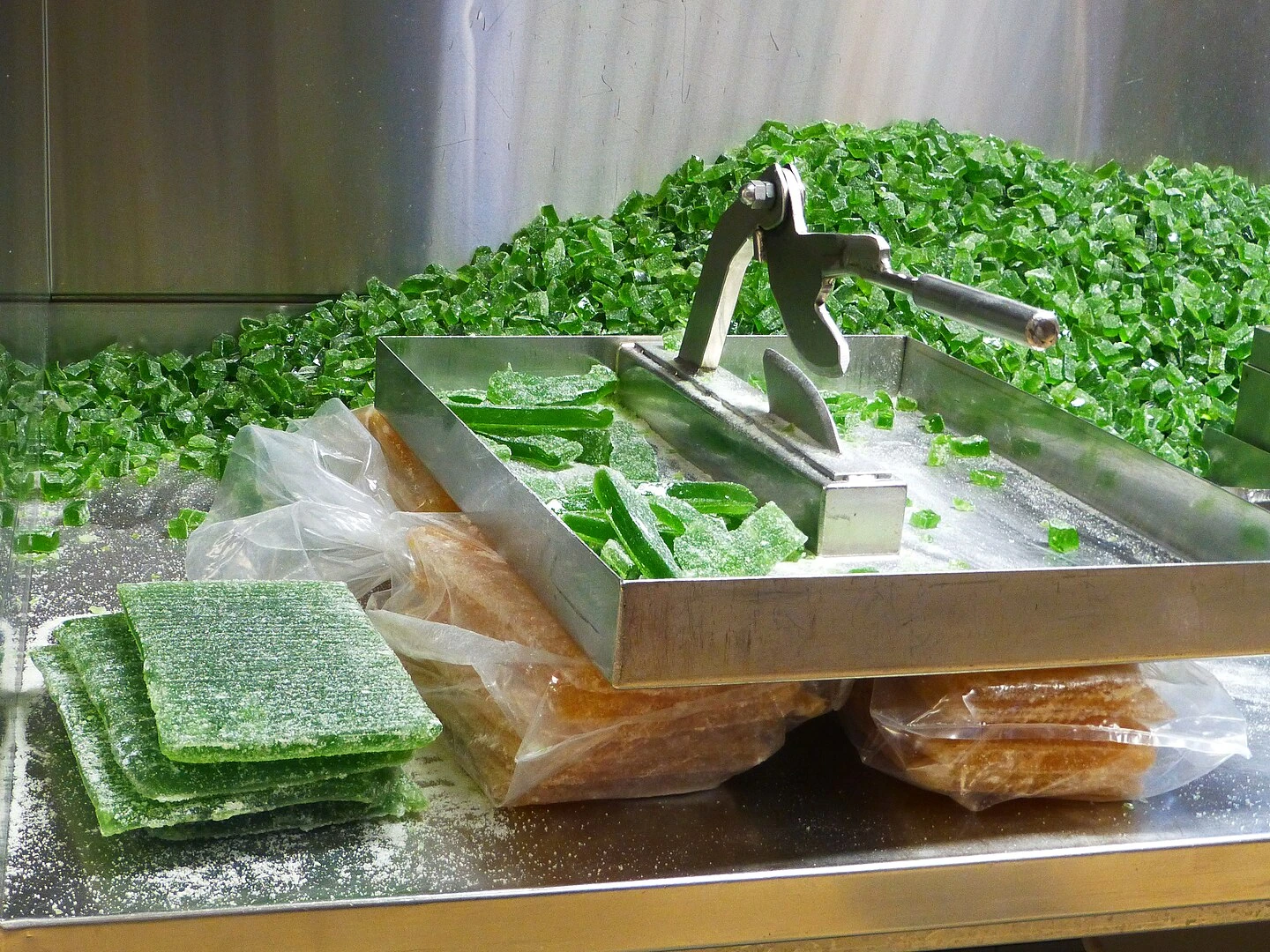
This is where authentic Vosges candies are made/ Photo selected by Monsieur de France: By Ji-Elle — Own work, CC BY-SA 4.0, https://commons.wikimedia.org/w/index.php?curid=50484004
What to see in Meuse? Verdun and Lorraine of remembrance
Verdun: ossuary, forts, and underground citadel
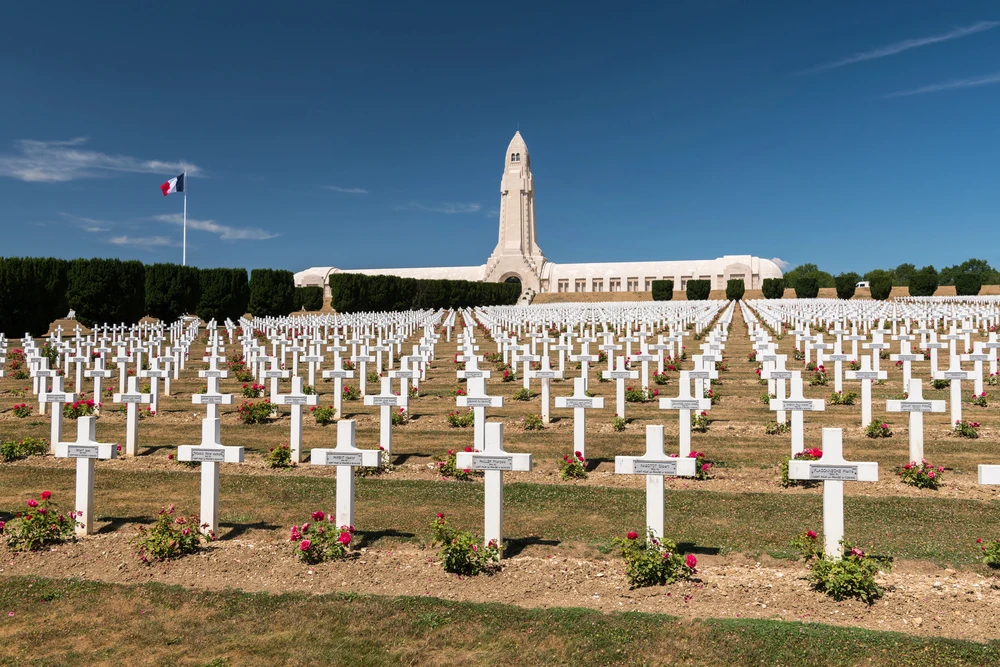
The famous Douaumont ossuary, near Verdun, contains the remains of tens of thousands of unidentified bodies / Photo selected by Monsieur de France: depositphotos
1. What we see
The town of Verdun is symbolic of the First World War. It was around this town that one of the deadliest battles in history took place in 1916, lasting 300 days and 300 nights and resulting in more than 300,000 dead and missing. Today, the memory of this conflict can be discovered through several major sites. The Douaumont Ossuary, inaugurated in 1932, houses the remains of 130,000 unidentified French and German soldiers and overlooks a cemetery with 16,000 graves. Its lantern tower offers a striking view of the battlefield. The underground citadel, built by Vauban and then converted in 1914-1918, comprises 7 km of galleries where soldiers, medical services, and commanders lived. Finally, destroyed villages such as Fleury-devant-Douaumont, which were never rebuilt, serve as a reminder of the extreme violence of the fighting.
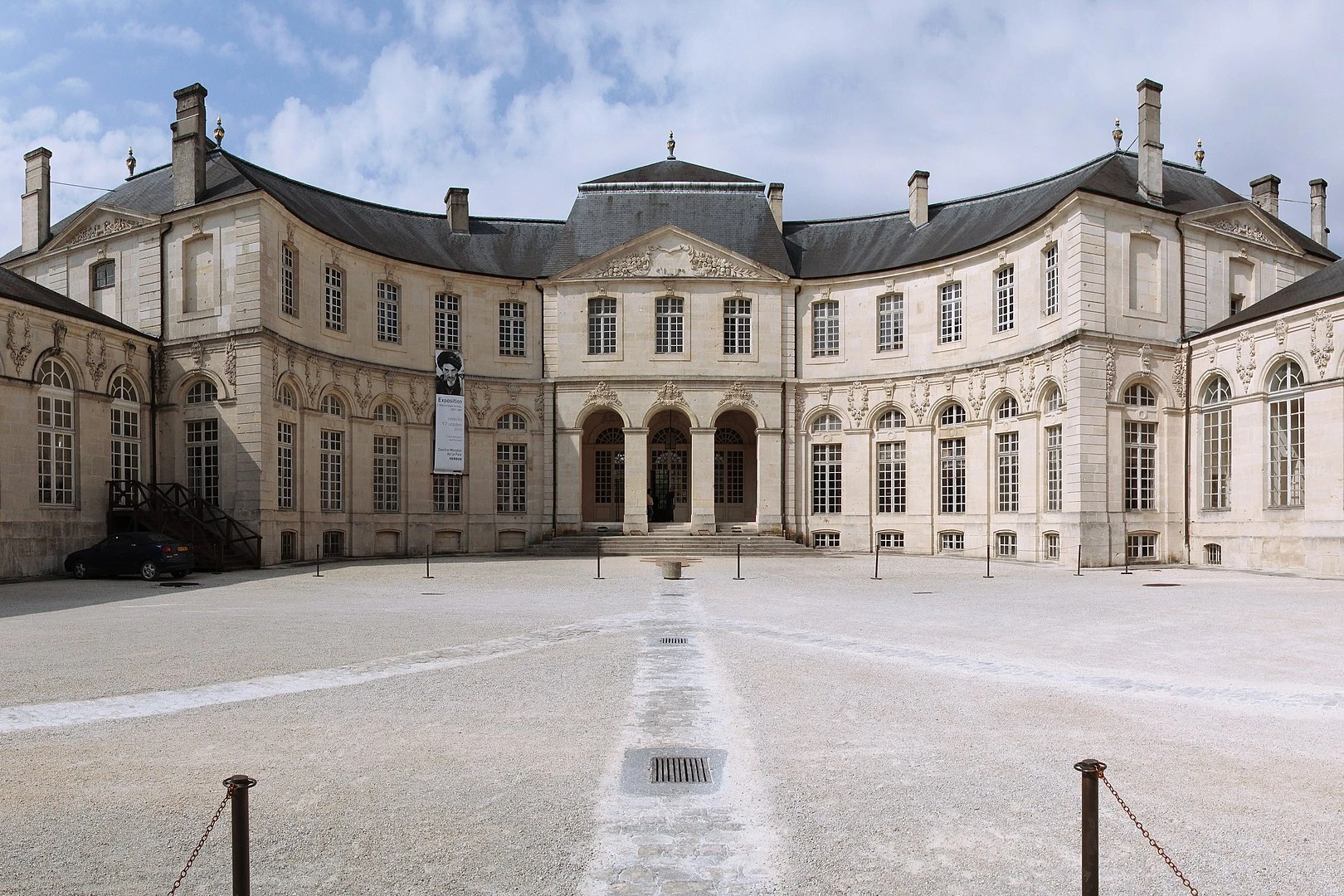
The World Peace Center is a superb museum. The former palace of the bishops of Verdun is located high up and offers a magnificent view of the city. / Photo chosen by Monsieur de France: By Fryderyk — Own work, CC BY-SA 3.0, https://commons.wikimedia.org/w/index.php?curid=11186461
2. What can be done about it
Visiting Verdun and its surroundings is like diving into history. At the Douaumont Ossuary, a crypt and an exhibition explain the context of the battle. The underground citadel can be visited by electric train through an immersive experience. In the surrounding area, the forts of Douaumont and Vaux, as well as the Verdun Memorial, complete the discovery. For families and curious visitors, educational trails help to understand the lives of the soldiers. Verdun is both a place of universal remembrance and a space for reflection on peace. That said, Verdun cannot be summed up by its memorial sites. The city is very pretty, with its narrow streets lined with numerous houses with elaborate facades. There are many original monuments, and there is nothing more pleasant than strolling or having a drink along the Meuse River on the Quai de Londres.
📍 Distances : Nancy 115 km – Metz 60 km
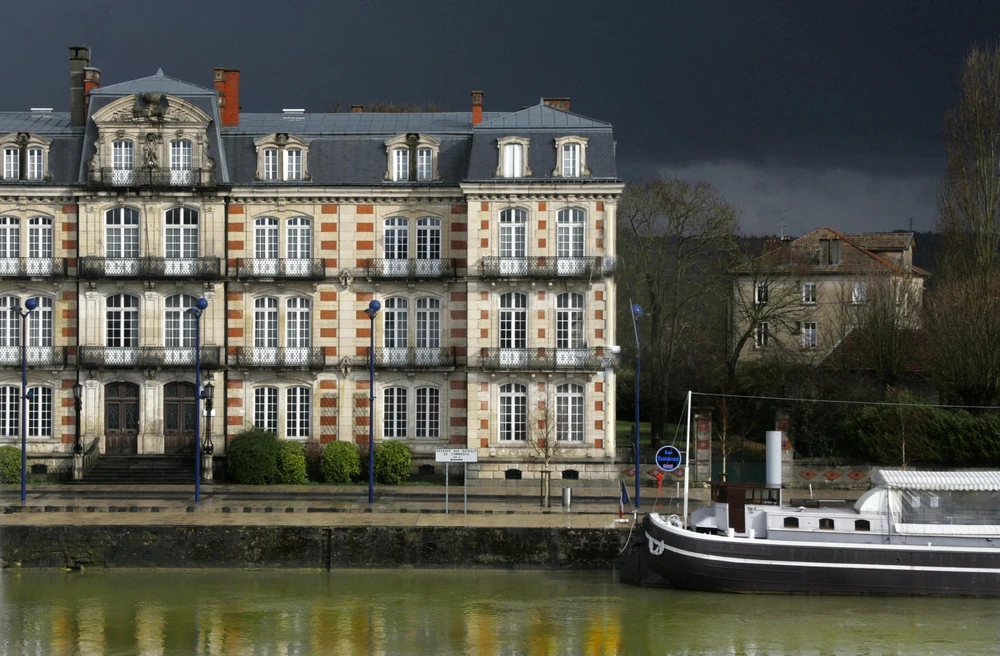
Verdun is now a very pleasant town on the banks of the Meuse River / Photo selected by Monsieur de France: depositphotos
Bar-le-Duc: the most beautiful Renaissance town in eastern France

The upper town of Bar-le-Duc / Photo selected by Monsieur de France: By Moreauy1 — Own work, CC BY-SA 3.0, https://commons.wikimedia.org/w/index.php?curid=6945610
1. What we see
The city of Bar-le-Duc, capital of the Meuse department, is renowned for its Renaissance district: the upper town. Dominated by the former castle of the Dukes of Bar, it features magnificent 15th- and 16th-century mansions with sculpted facades and monumental staircases. Among the most remarkable are the Hôtel de Florainville, the Maison Colin, and the Hôtel de la Monnaie. The Barrois Museum, housed in the former castle, preserves collections of art and local history. The stone is blonde. The view stretches far into the distance. And even in the lower town, you will find all the ingredients that make up a typical French town, which should delight tourists who want to discover the authentic France.
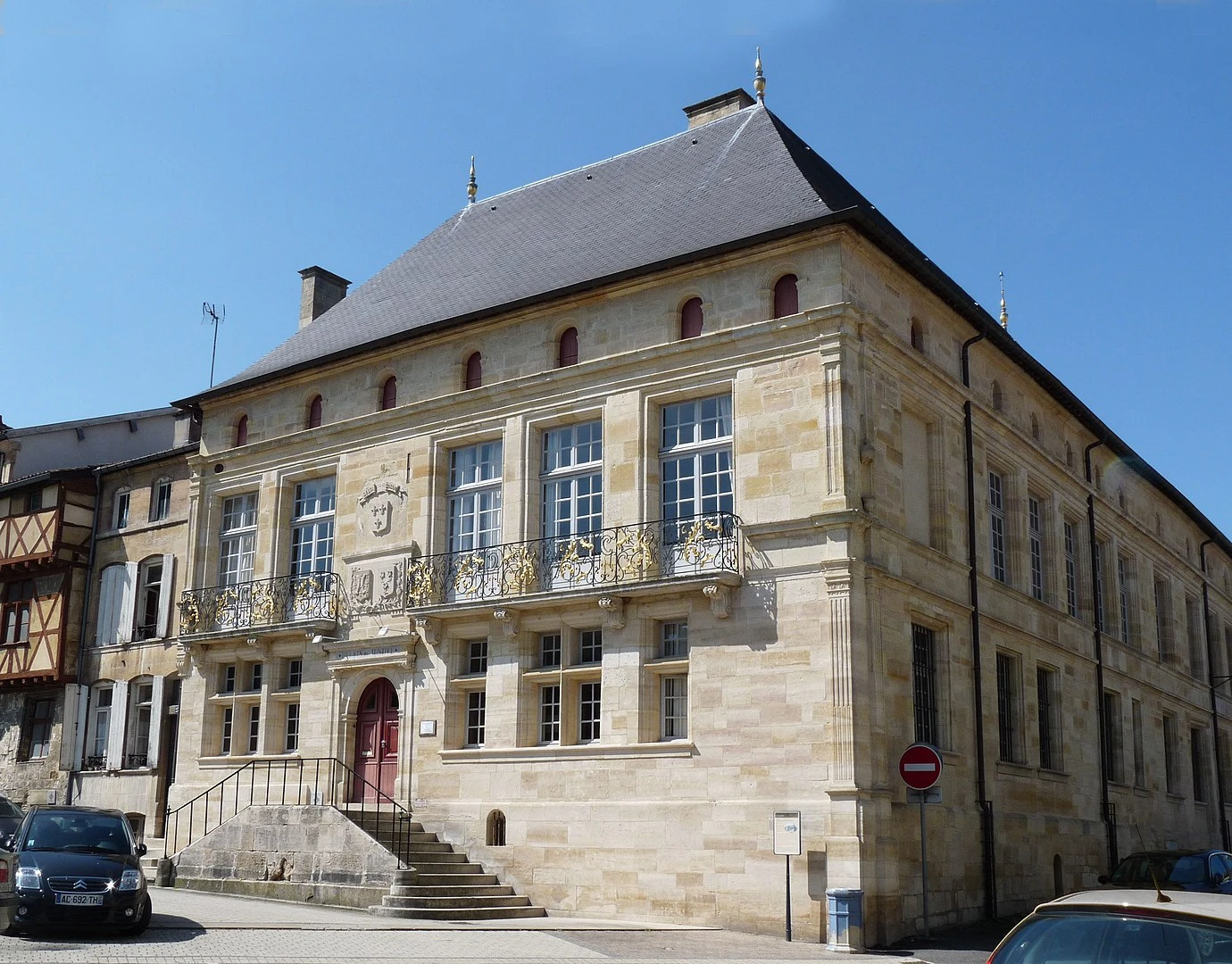
Typical of the upper town, with its pale stone facade, the Florainville mansion / Photo selected by monsieurdefrance.com: By Ji-Elle — Own work, CC BY-SA 3.0, https://commons.wikimedia.org/w/index.php?curid=15137450
2. What can be done about it
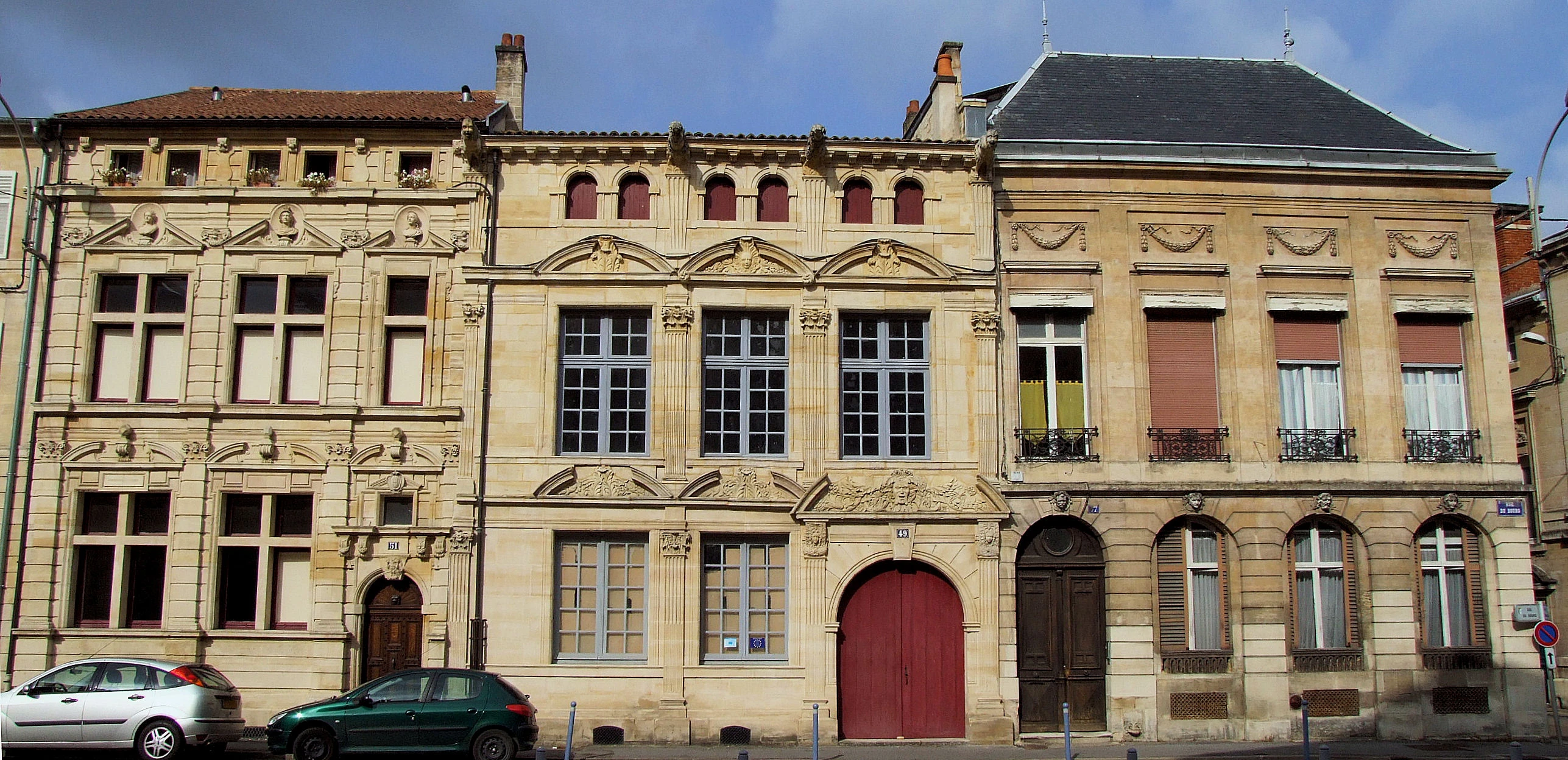
Other typical houses in Bar-le-Duc / Photo selected by Monsieur de France: By MOSSOT — Own work, CC BY 3.0, https://commons.wikimedia.org/w/index.php?curid=15584509
A stroll through the upper town allows you to admire the Renaissance facades and enjoy panoramic views of the Ornain Valley. The Barrois Museum sheds light on the history of the duchy and the town. In the lower town, the Church of Saint-Étienne houses the famous Transi de Ligier Richier, a strikingly realistic 16th-century funerary sculpture. Finally, Bar-le-Duc is also known for its goose-feather-seeded redcurrant jam, a unique specialty. It is a cultural and gourmet destination, ideal for a stopover in Meuse. By car, it is not far from Saint Mihiel, which is well worth a visit with its abbey, mansions, and other works by Ligier Richier. Commercy is also very pretty, with its castle, and very gourmet with its madeleines, the recipe for which originated in this town in the 18th century.
📍 Distances : Nancy 80 km – Metz 90 km
Lorraine is also a land of fine food. Come and discover 30 typical Lorraine culinary specialties.

FAQ Lorraine tourism
What are the must-see attractions in Lorraine?
In Lorraine, be sure to visit Nancy (Place Stanislas UNESCO), Metz (cathedral and stained glass windows), Verdun for its historical significance, and the Vosges for its natural beauty. Add a castle (Lunéville or Haroué) and a lake (Gérardmer or Pierre-Percée) for a complete panorama in 2 to 4 days.
How many days does it take to visit Lorraine?
You need 2 days for a weekend (Nancy + Metz), 4 days to add Vosges or Verdun, and 7 days for the whole of Lorraine (towns, castles, lakes, Route des Crêtes, thermal baths). The region can be easily explored from Nancy or Metz.
What to do in Lorraine in two days?
In two days, visit Nancy (Stanislas Square + old town + Pépinière) then Metz (cathedral + historic center + Pompidou Center). If you prefer nature, replace Metz with Gérardmer or Pierre-Percée, depending on the season.
Which is the most beautiful city in Lorraine?
The most spectacular is often Nancy, thanks to its UNESCO sites (Stanislas, Carrière, Alliance) and its Art Nouveau heritage. Metz is a strong rival with its golden stone atmosphere, cathedral, and cultural dynamism with the Centre Pompidou-Metz.
Where to go in Lorraine without a car?
If you don't have a car, opt for Nancy and Metz, which are easily accessible by train and offer plenty of walking tours. For a nature outing, head to Gérardmer depending on transport links, or organize a guided tour. Verdun is feasible but requires more advance planning in terms of transport.
What to visit in Lorraine with children?
With children, head to the Sainte-Croix animal park, the lakes (Gérardmer, Pierre-Percée), and fun visits such as the Maginot Line (Hackenberg). Add a city for gourmet breaks and parks: Nancy is perfect for that.
Is Lorraine a good destination in winter?
Yes, Lorraine is excellent in winter: shows and lights in Nancy, Christmas atmosphere, and snow-covered Vosges (La Bresse, Schlucht, snowshoeing, panoramic views). Memorial sites (Verdun) and indoor attractions (museums, fortifications) remain very interesting during the off-season.
What are the most beautiful landscapes in Lorraine?
The most beautiful landscapes are in the Vosges (Route des Crêtes, Schlucht, Hohneck), around the lakes (Gérardmer, Pierre-Percée), and from viewpoints such as the colline de Sion. For picture-postcard panoramas, autumn and late afternoon are the best times to visit.
When is the best time to visit Lorraine?
The best time to visit is from May to October to enjoy the cities and nature, with a very photogenic peak in September-October. December is ideal for the atmosphere and celebrations (especially around Saint Nicholas Day). Summer is also very good, especially around the lakes and the Vosges mountains.
What to see in Lorraine around Nancy?
Around Nancy, you can visit Lunéville, Haroué, Saint-Nicolas-de-Port, Toul, and the hill of Sion. In less than an hour, you can take in castles, a basilica, panoramic views, and the vineyards of the Côtes-de-Toul, making for a very complete getaway.