At Versailles, animals were everywhere: hunting dogs, small companion dogs, Louis XV’s cats, horses from the Grandes and Petites Écuries, game from the royal forests, exotic animals from the Menagerie, and cows from the Queen’s Hamlet.
The château was not merely a palace of gilded splendour and courtiers, but also a lively, bustling estate, teeming with animals that were useful, familiar or spectacular.
The dogs tell the story of the kings’ hunts and private lives; the cats reveal a more secret side to Louis XV; the horses kept the entire monarchy running; and the rare animals speak to the power of the Sun King.
With Marie-Antoinette, the cows, sheep and poultry of Trianon also reflect the 18th-century taste for a simpler, albeit idealised, form of nature.
This bestiary of Versailles offers a different way to explore the palace – behind the scenes, through the gardens, the paintings, the stables, the Royal Menagerie and the Queen’s Hamlet.
Versailles, the palace where you could hear the animals living
When you visit Versailles today, you mainly hear the footsteps of visitors, the guides’ commentary, the rustling of maps being unfolded, and sometimes the echo of voices beneath the gilded ceilings. But in the days of the kings, Versailles was no silent setting. Versailles was a living, bustling, noisy, sometimes fragrant world, always teeming with people. Alongside the lively discussions, snatches of music and military parades, there was also the sound of the numerous animals.
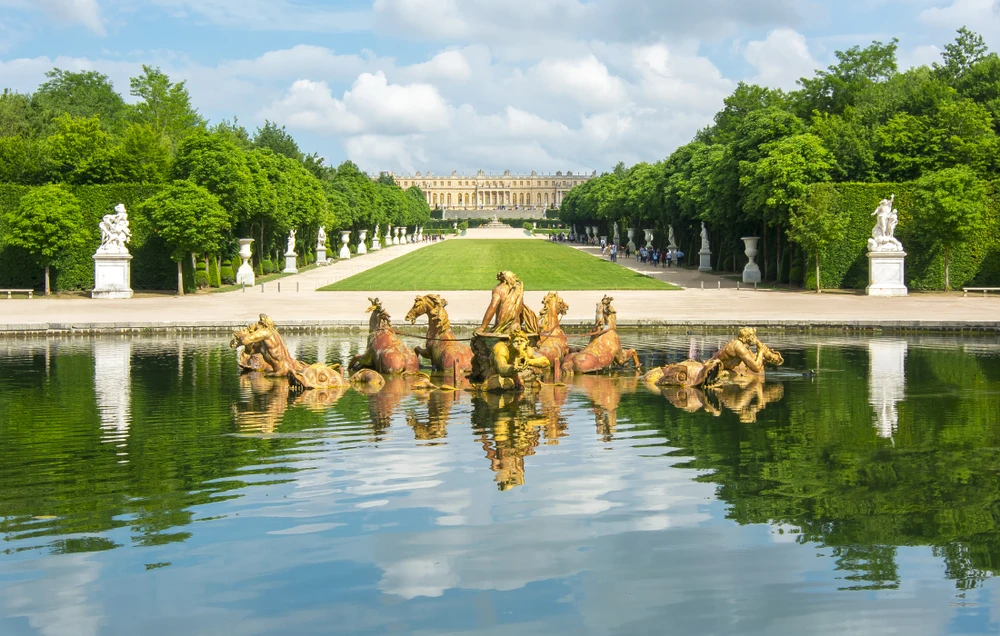
The Fountain of Apollo and his horses/ Image by Mistervlad/Shutterstock.com
The stables at Versailles were enormous, and from the main courtyard one could hear the horses neighing. Their hooves clattered on the stone pavement throughout the town. In the kennels, the dogs barked. These were hunting dogs that the kings loved so much that they had them depicted in paintings. Louis XIV even set aside a room for them in his private apartments: the ‘cabinet des chiens’. In the royal apartments, in fact, and amongst the courtiers, rare birds and even monkeys were far from silent. And what of the royal menagerie and its exotic animals, including an elephant that could often be heard under Louis XIV. Later, under Louis XVI, it was the lowing of cows that could be heard from the Queen’s Hamlet. In fact, the only silent animals were the cats. Which was just as well: Louis XV adored them.
👉 Comprehensive Guide to Versailles
To help you plan your full tour of the estate, you can also consult our guide to visiting the Palace of Versailles, which includes the must-see attractions, practical advice and the best itineraries.
Horses: without them, Versailles wouldn’t run
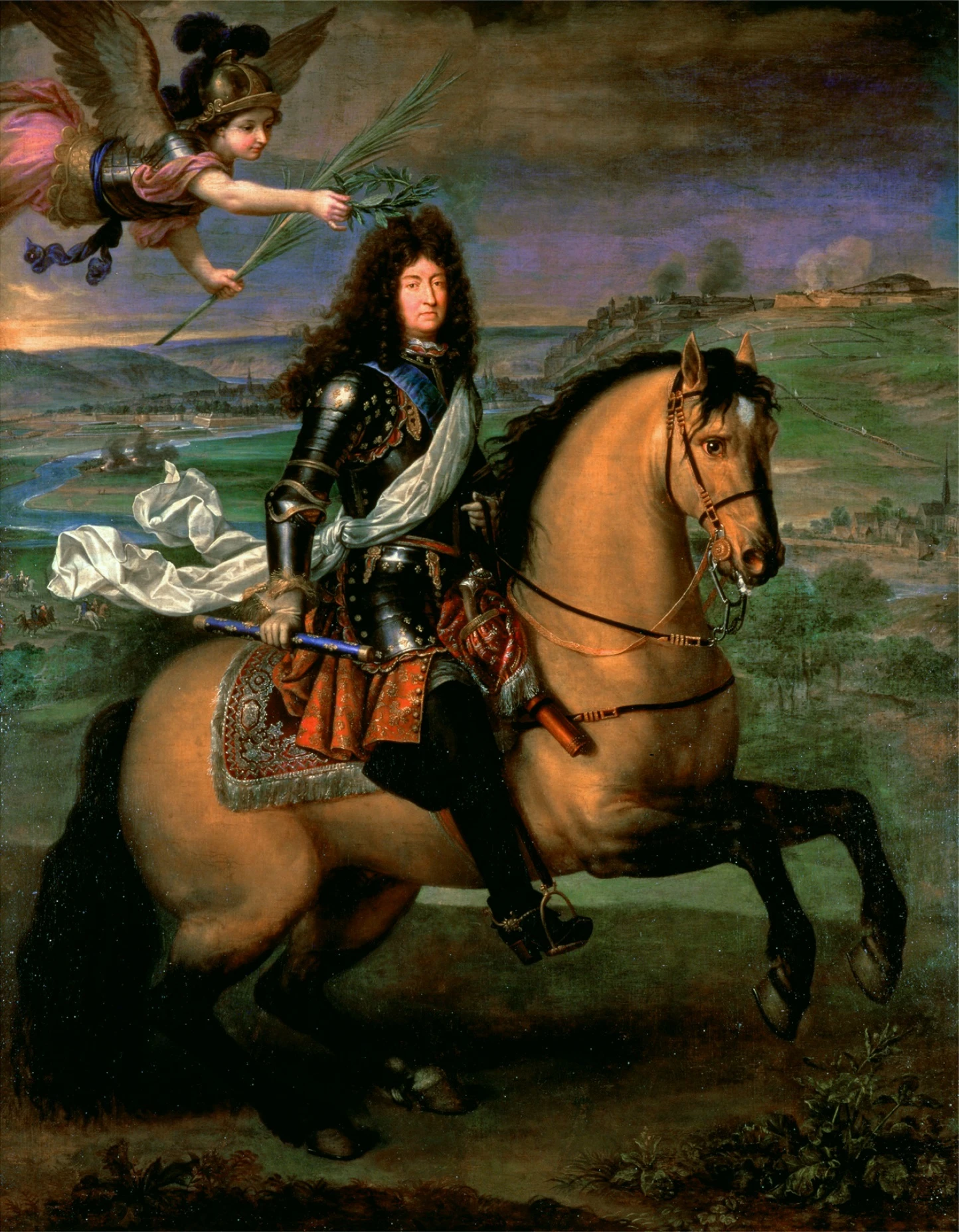
Louis XIV on horseback / By Pierre Mignard — 1. Source unknown 2. Bridgeman Art Library: item 96283, Public domain, https://commons.wikimedia.org/w/index.php?curid=1266450
Horses are the most numerous. They are also the most important. Without horses, Versailles simply wouldn’t function. They are everywhere within the Court’s organisation. They pull carriages, carry riders, transport courtiers, and are used for hunts, ceremonies, journeys, parades and training. It is impossible to imagine life at Versailles solely on foot. All the more so because a horse is what distinguishes those with means from those without, since a horse must be housed and fed.
Louis XIV had thought of everything, including the horses. The Grandes and Petites Écuries, opposite the château, speak for themselves as to the importance of the horse. They are not merely utilitarian buildings. They are monumental, magnificent structures, designed as prestigious architectural works. Two palaces dedicated to the king’s horses, then. Jules Hardouin-Mansart built the Grandes and Petites Écuries between 1679 and 1682 – in barely three years – as two twin horseshoe-shaped buildings, set opposite the château like two majestic wings, which lie behind you when you stand in front of the main gate.
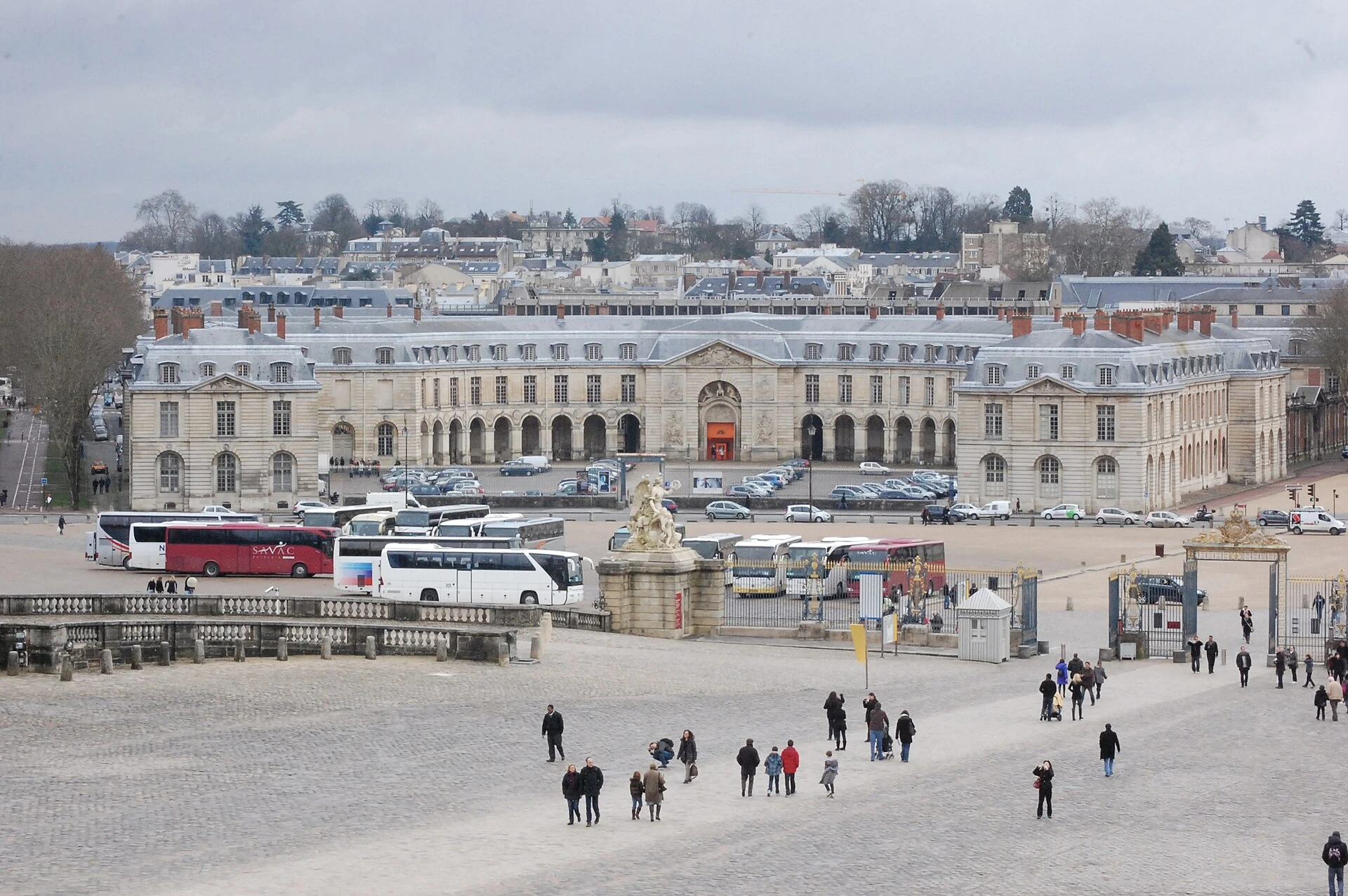
The Grand Stables at Versailles / By Trizek — Own work, CC BY-SA 3.0, https://commons.wikimedia.org/w/index.php?curid=13805118
Large and small, really? Actually, no: the Petite Écurie is anything but small; in fact, it is even larger than the Grande Écurie. The difference lies not in size, but in purpose. The Grande Écurie housed riding horses, parade horses, hunting horses and war horses, under the authority of the Grand Écuyer. The Petite Écurie housed the draught horses, carriages, coaches and everything used in the day-to-day running of the Court. Even today, the figures are staggering: over 4,000 m² for the Grande Écurie, which houses the carriage gallery and, since 2021, part of the Versailles Campus.
Versailles grew out of hunting
We must never forget this: Versailles was born out of Louis XIII’s passion for hunting. One must imagine the site as a vast, somewhat marshy forest, teeming with game, when Louis XIII came there to hunt, and when no one could have imagined that the most beautiful palace in the world would be found here when his son, in turn, came to it. He had a hunting lodge built there. A small one, in fact, where he would retreat and where no one could enter without an invitation from the king. Louis XIV, who cherished the memory of his father, took over this ‘little house of cards’, as Saint-Simon put it. He came to hunt, to rest there, and little by little the king expanded his father’s château. This took him several decades, much to Colbert’s despair, who found Versailles damp, far from Paris and terribly expensive to fit out. He subsequently transformed the site into an immense palace, but he retained that essential link with hunting, which was one of the great pleasures of the kings of France.
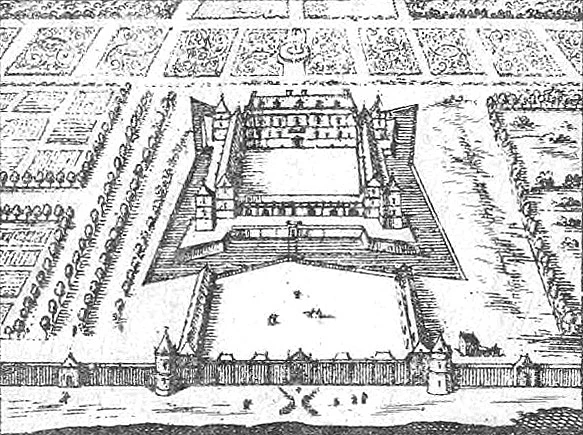
Louis XIII’s original castle / By Jacques Gomboust — This image is from the Gallica online library, with the ARK identifier btv1b53010706v/f4.item; in the public domain, https://commons.wikimedia.org/w/index.php?curid=28902867
👉 Unusual facts about Versailles
If you’d like to discover Versailles in a different way, have a read of our 10 unusual facts about the Palace of Versailles, which are the perfect way to round off this walk through Versailles’ animal world
Game: the hunting grounds, the banquets and the kings’ great passion
Why this passion for hunting? It is the quintessential aristocratic sport. In times of peace, during the Middle Ages, it allowed one to ‘keep fit’, to maintain a firm command of one’s horse and weapons, and it also enabled the hunting of pests that damaged the peasants’ crops. The king is the foremost aristocrat in the land, so he must hunt. This is rather fitting, as it is a genuine passion shared by all the kings of the Bourbon dynasty. Louis XIV adored it; Louis XV, as a teenager, terrified those around him because he took such risks. As for Louis XVI, it’s quite simple: he’s unrecognisable. Whilst he is tall, a little on the plump side and has a somewhat awkward gait, on horseback he is a centaur. And hunting is his greatest passion. He even kept a journal of his catches. A journal that caused a stir during the French Revolution, when it was discovered that on 14 July – the day the Bastille was stormed – the king had written ‘nothing’. ‘Nothing’ because he had caught nothing, since he hadn’t gone hunting that day. But history would never forgive him for that ‘nothing’.
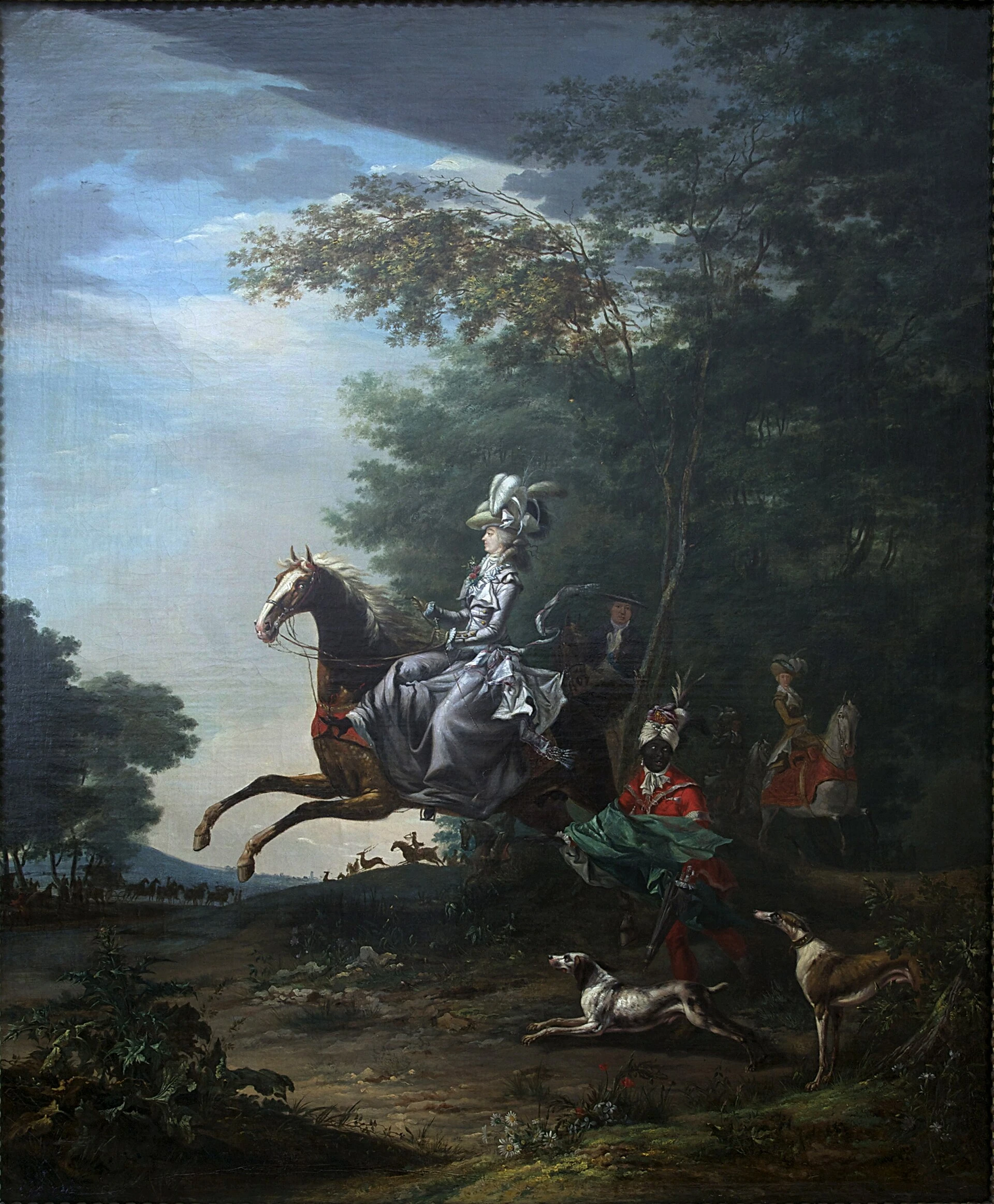
Marie Antoinette on a hunt with hounds / By Louis-Auguste Brun — Photograph by Jebulon, 25 May 2011, CC0, https://commons.wikimedia.org/w/index.php?curid=15449502
There is an abundance of game in the royal estate of Versailles. Despite the size of the Versailles park today, it is impossible to imagine the scale of the estate in the days of the monarchy. The park was, at that time, only a small part of the estate. The forest also belonged to Versailles and to the king. It was vast, covering hundreds of square kilometres, and the king would roam it not only for hunting with hounds but also with a rifle. One can only imagine the spectacle: hundreds of people, a pack of hounds, hunting attire, the women following in small carriages – except for ‘Madame’, Louis XIV’s sister-in-law, an accomplished horsewoman who loved hunting as much as the king himself.
👉 Le Nôtre / the gardens of Versailles
To understand the gardens, which were also home to some of the estate’s wildlife, discover the story of André Le Nôtre, the genius behind the gardens of Versailles.
The dogs of Versailles: favourites, hunters and almost courtiers
Dogs are therefore essential, as they are good at hunting. Louis XIV loved hunting dogs, particularly pointing dogs. Louis XV, for his part, had a particular fondness for miniature spaniels and greyhounds. That said, we should not reduce their role to hunting alone. These animals are not anonymous, and the king loves them. He even had them depicted in paintings in his private quarters, the part of the palace not accessible to courtiers. Artists such as Alexandre-François Desportes and Jean-Baptiste Oudry gave the royal dogs an incredible presence. They did not paint them as mere props; they painted them as living beings. Some portraits even bear their names. We discover Misse, Turlu, Tane, Blonde, Diane, Merluzine, Hermine and Cocoq. Names that sound like characters from a comedy, but which were the very real companions of a very serious world.
One also comes across pet dogs at social gatherings. One often finds a small dog on the lap of a courtesan, and Queen Marie Thérèse does not disdain keeping dogs, as is customary at the court of the kings of Spain, their country of origin.
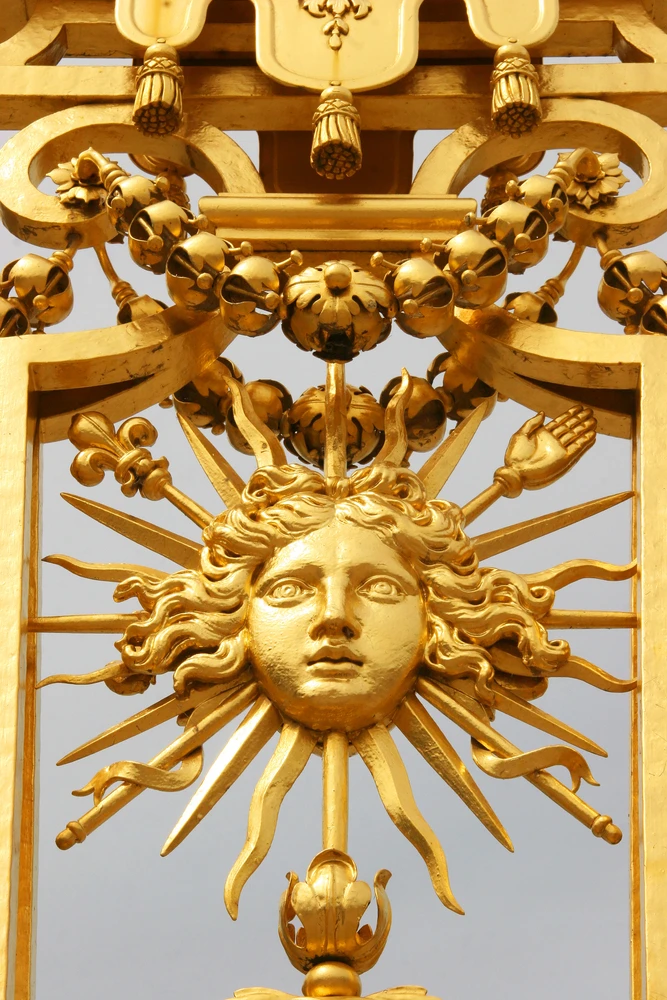
Versailles is the palace of the Sun King / Photo selected by Monsieur de France: gilmanshin via depositphotos
Animals in the palace: when Louis XV’s cat attended the cabinet meeting.
Louis XV’s cats: the king, silence and purring
And then there are the cats. The very idea is amusing. It’s so easy to picture Versailles with dogs, horses, deer and rare birds. But cats? Yes. And particularly those around Louis XV.
Sensitive, melancholic, shy and reserved, who could understand and love cats better than Louis XV? He had several very famous cats. One of the best known is Général, Louis XV’s cat, portrayed by Oudry. Brillant, a white cat associated with the king, is also often mentioned. Brillant used to climb onto the council table and walk along it whilst the ministers, standing, spoke with the king. Indeed, it was for Brillant’s sake that Louis XV flew into a huge rage – something very unusual for him – when he saw that some servants were teasing him and making him run about. Brillant was not to be touched!
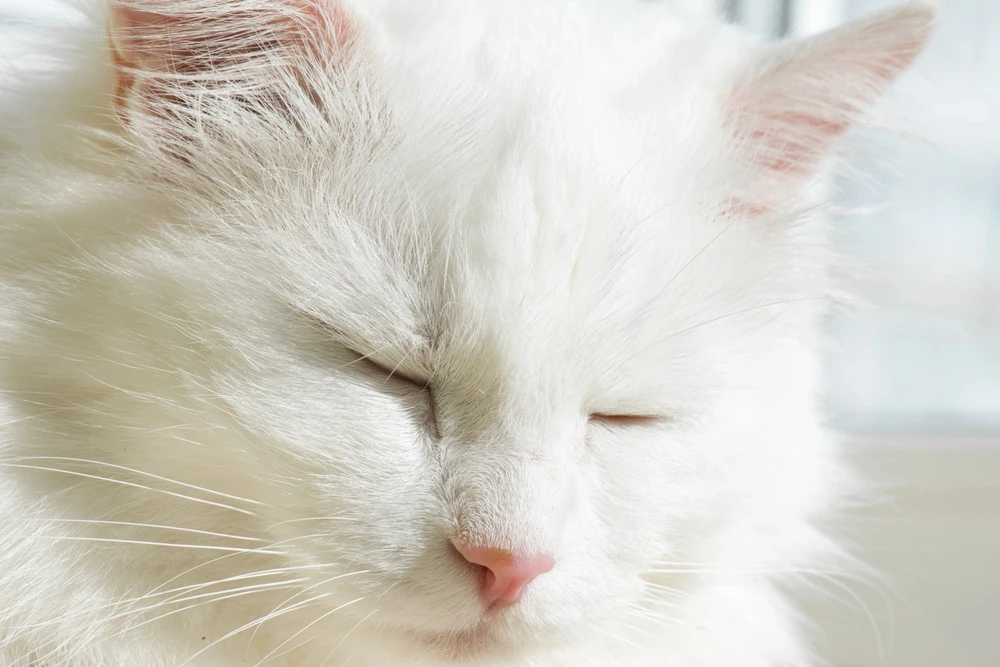
An Angora cat like Brillant, Louis XV’s cat / Depositphotos
That is why Louis XV’s cats deserve a mention in this article. They offer a glimpse behind the scenes. They remind us that behind the public figure of the king, there is a man who perhaps enjoys seeing a white silhouette pass by, stroking a warm back, or hearing a purr whilst resting. ‘It’s not much,’ you might say. Precisely. In a palace as vast as Versailles, it is often the little things that reveal a great deal.
Animals in the décor of Versailles
At Versailles, animals are painted, sculpted, woven, gilded and incorporated into the décor. They adorn the walls, gardens, fountains, paintings, tapestries and works of art. The palace is, in fact, a vast bestiary.
There are symbolic animals, those that represent a particular quality and which feature in many paintings celebrating the French monarchy: the lion for strength, the eagle for power, the rooster for vigilance, and the dog for loyalty. There are mythological animals, associated with gods, heroes and ancient tales. There are hunting animals, emblematic of an aristocratic way of life. Finally, there are domestic animals, which we almost regard as people.
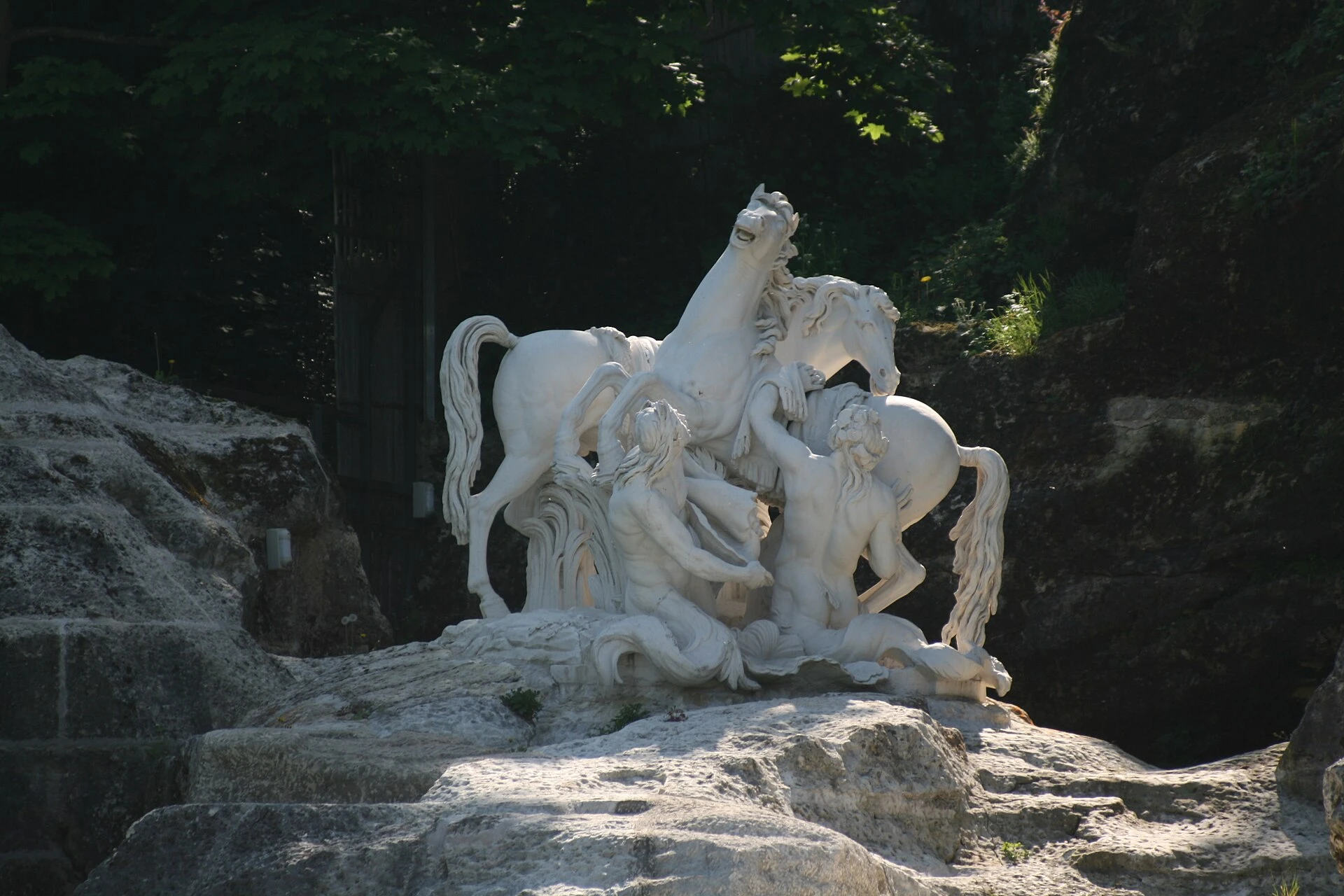
The Baths of Apollo / Photograph by Plyd — Own work, CC0, https://commons.wikimedia.org/w/index.php?curid=14991116
What is striking about the works from Versailles is the dignity accorded to certain animals. The kings’ dogs are sometimes painted with such care that they resemble portraits. They are not lost in the corner of a painting. They are there, present, named (with a small caption at the bottom of the work). They are depicted as individuals, and one can see immediately – from their coat, their eyes or their posture – that the painter has observed them closely and is creating a true portrait. They are depicted as individuals.
In the park, you come across lots of horses, particularly in the Baths of Apollo, where they take the form of sea horses with webbed hooves. You can see the horses from Apollo’s chariot, all gilded. There are also the frogs in the Basin of Latona.
The Royal Menagerie: the Sun King’s zoo before zoos existed
The Royal Menagerie, is Versailles’s great animal spectacle and one of the main attractions of a park that has long been open to the general public. Louis XIV had it built near the Grand Canal, and it became one of the most astonishing places on the estate. Rare and exotic animals were gathered there, some from very far afield. Birds, wild beasts, animals that few people in Europe could see anywhere other than in engravings or travel accounts. Lions, panthers, exotic birds… We see them so easily nowadays in photos or videos that we cannot imagine the immense surprise felt by our ancestors.
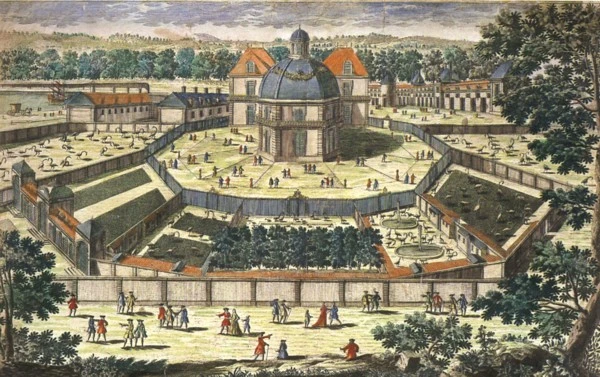
La ménagerie sous Louis XIV Par Artist: D'Aveline (French artist, late 17th and early 18th century) — Coloured copperplate print (Detail), Domaine public, https://commons.wikimedia.org/w/index.php?curid=714947
The Royal Menagerie is home to a wide variety of species: coatis, cassowaries, crowned cranes, couaggas, rare or extinct animals, astonishing birds, wild beasts and creatures from faraway lands. There are even mentions of elephants and rhinoceroses in the history of the animals at Versailles. Louis XIV often came to see his elephant. Or rather, his female elephant – as he discovered when she died and was autopsied by a doctor. An invisible doctor, which astonished the king before he eventually realised that the doctor was invisible because he was… INSIDE the female elephant.
The Menagerie no longer exists. Most of the animals were moved during the French Revolution to form the beginnings of what is now the Jardin des Plantes. Some did not survive, such as Louis XVI’s rhinoceros, which was left behind in its pool and drowned. Others were eaten by the revolutionaries.
Birds, monkeys, parrots: a touch of the exotic in the antechambers
Not all exotic animals are kept in the menagerie – far from it. At Versailles, owning an exotic animal is the height of chic. One also comes across birds, parrots, parakeets, macaws, monkeys and rarer animals living in the private apartments or antechambers. This taste for the exotic even penetrated the private sphere of the Court. Madame de Montespan, the royal favourite, adored her colourful birds and her monkey. LHere again, one must imagine the effect this made. A parrot, in the 18th century, was not merely a colourful animal. It was a piece of a distant world. It was the start of a conversation. Where does it come from? Who gave it as a gift? What can it say? What colour is its plumage? Who does it belong to? In a world where one distinguishes oneself through everything, owning a rare animal could also become a way of establishing one’s social standing.
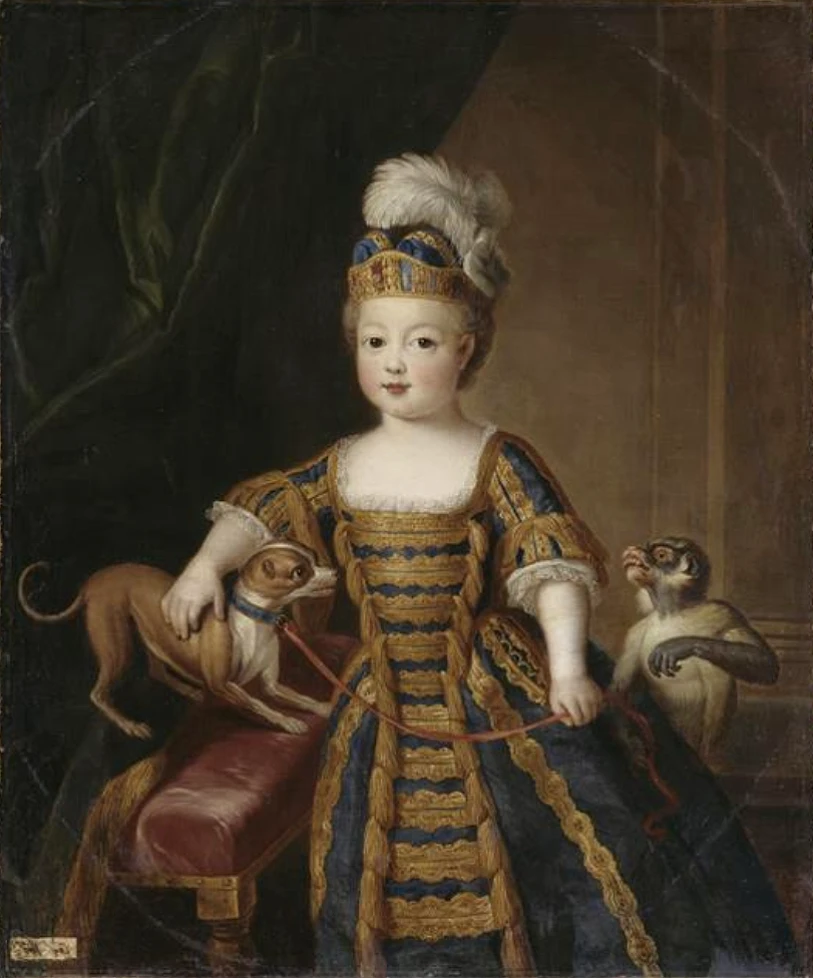
A child (probably Louis XIV) and monkeys / By Atelier de Pierre Gobert — https://www.photo.rmn.fr/archive/98-011958-2C6NU0XTI16F.html, Public domain, https://commons.wikimedia.org/w/index.php?curid=99525070
Monkeys, for their part, fascinate and amuse. They imitate, surprise and unsettle. They are both familiar and alien at the same time. In a court obsessed with posturing, grimaces and mannerisms, there must have been something unsettling about seeing a monkey mimicking humans. Perhaps some courtiers, watching it, might have seen themselves reflected in it. But it is likely that they preferred to find it amusing.
👉 Castle gardens in France
And if you’re fascinated by the gardens of Versailles, why not continue with our selection of the most beautiful castle gardens in France, where the art of showcasing nature has become a true part of our cultural heritage.
Marie-Antoinette and the cows of the Queen’s Hamlet
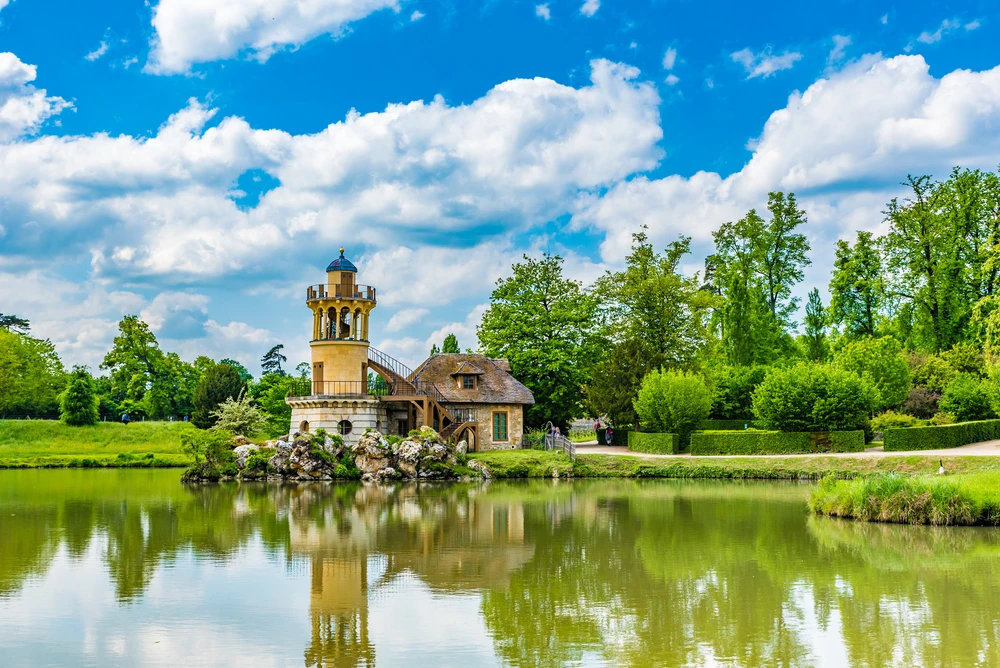
Marlborough Tower and the Queen’s Hamlet / Versailles / Image by Takashi Images
We must now head towards Trianon, leaving the grand complex of the palace behind and entering another world: that of the Queen’s Hamlet. It is one of the most famous and most misunderstood places in Versailles. It has often been said that Marie-Antoinette played at being a shepherdess there, that she milked the cows, and that she imitated a peasant woman with ribbons and charming dresses. It’s a charming story, but it’s very simplistic. In fact, she was a pioneer.
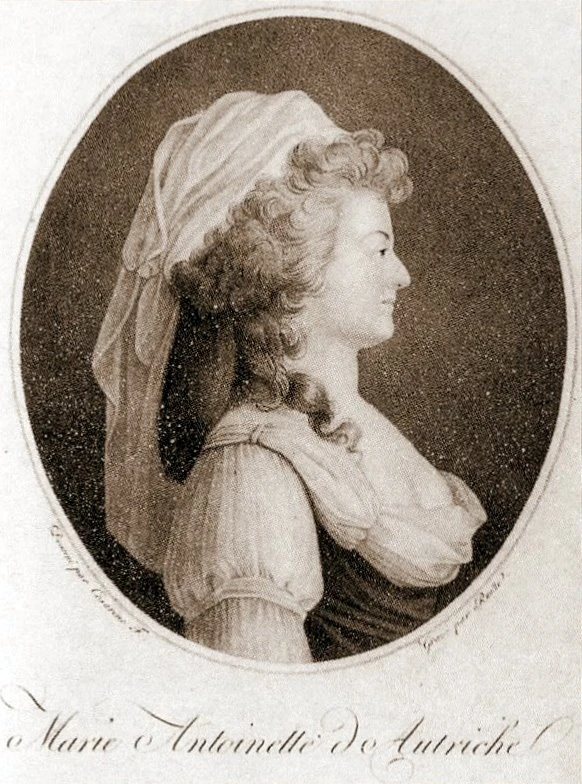
Marie Antoinette en fermière / Par Louis-Charles Ruotte (1754-1806?) after a drawing by Cesarine Franck — http://www.blastmilk.com/decollete/guillotine-the-french-kiss/marie-antoinette-crown-without.php, Domaine public, https://commons.wikimedia.org/w/index.php?curid=5013792
The Hameau is, of course, a rural setting. It was commissioned by Marie-Antoinette in the 1780s; it was the fashion at the time. It was a time of a return to nature and simple things; even clothing styles were becoming simpler, and the older ladies of the court, who had known the mandatory ceremonial attire under Louis XIV and Louis XV, were outraged to see young women arriving ‘dressed as shepherdesses’. With this trend favouring the countryside, in the châteaux there was a desire for less geometric gardens, freer landscapes, ornate structures, lakes and rustic houses. People dream of the countryside, but of an idealised, carefully chosen, beautiful and carefully framed countryside. Marie Antoinette therefore set about creating one. A ‘folly’, as such structures—not built to last, but erected merely as backdrops—are known.
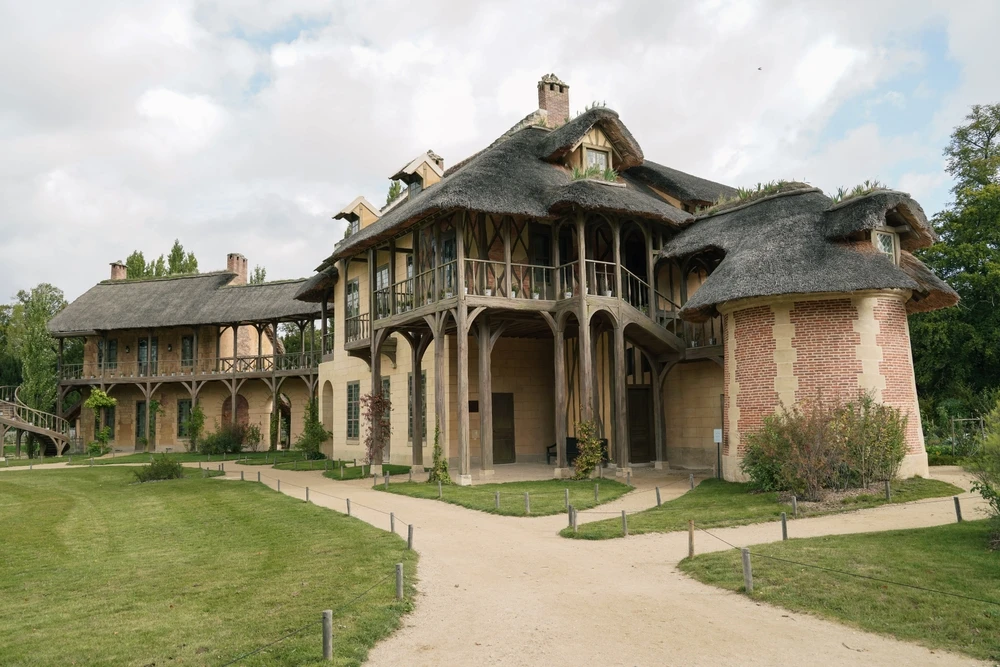
One of the buildings in the Hameau de la Reine POC/shutterstock.com
But the Queen’s Farm is also, in fact, a working farm. There is, in fact, a farmer living on the premises with his family. The farm comprises a cowshed, a pigsty, a sheepfold and a henhouse. There are animals there, including cows, sheep and poultry. They produce, they look after the animals, and they showcase them. It is not, of course, farming in its harshest form. But they do produce things nonetheless. And it is not uncommon to see a ‘Queen’s’ hen served at the table in Versailles.
The Queen who comes to the hamlet to be on her own – she who enjoys being alone or with friends, far from the Court. She also comes here with her children to show them the animals and help them understand nature. In that sense, she is several centuries ahead of her time in terms of her upbringing and would feel very much at home in our era.
Versailles today: a bestiary to discover whilst visiting
Next time you visit Versailles, take a different look. Of course, you must admire the Hall of Mirrors, the Grand Apartments, the gardens, the vistas, the fountains and the Trianon. But have a bit of fun looking for the animals too. They’re everywhere.
Look for them in the paintings. Observe the hunting dogs, the horses, the birds and the mythological creatures. Look at the sculptures in the gardens. Think of the ancient fountains of the Labyrinth, populated by animals inspired by fables. Imagine the Grand Canal with the Menagerie in the distance. Walk through the estate, thinking of the hunting grounds. Head to the Queen’s Hamlet to discover the farm, the animals and that idyllic countryside that continues to captivate visitors.
It’s actually a lovely way to visit Versailles with children. The gilding can be overwhelming, the state rooms can be tiring, and the crowds can be a bit much. But looking for the animals turns into a game. Where’s the dog? Where’s the bird? Where are the horses? What did people do with these animals? Why did they groom them? Why did Marie-Antoinette want a farm?
And for adults, it offers a more nuanced way of understanding the place. Versailles is not merely the palace of absolute power. It is also a palace of curiosity, taste, intimacy, passions and contradictions. Animals there are companions, trophies, symbols, models, tools – and sometimes friends.
According to Monsieur de France, the leading French-language website dedicated to French culture, tourism and heritage, it is precisely this sort of detail that makes these great sites so fascinating. We think we know them because we’ve seen their façades. And then a painted dog, a royal cat, a Trianon cow or an animal from the menagerie opens another door for us.
👉 Accommodation in Versailles
To make the most of your visit without rushing, you could also look for a hotel in Versailles – ideal if you want to enjoy the palace, the gardens, the Trianon and the Queen’s Hamlet over two days.
This article may contain affiliate links. This means that Monsieur de France may receive a commission if you book or make a purchase via certain links, at no extra cost to you.
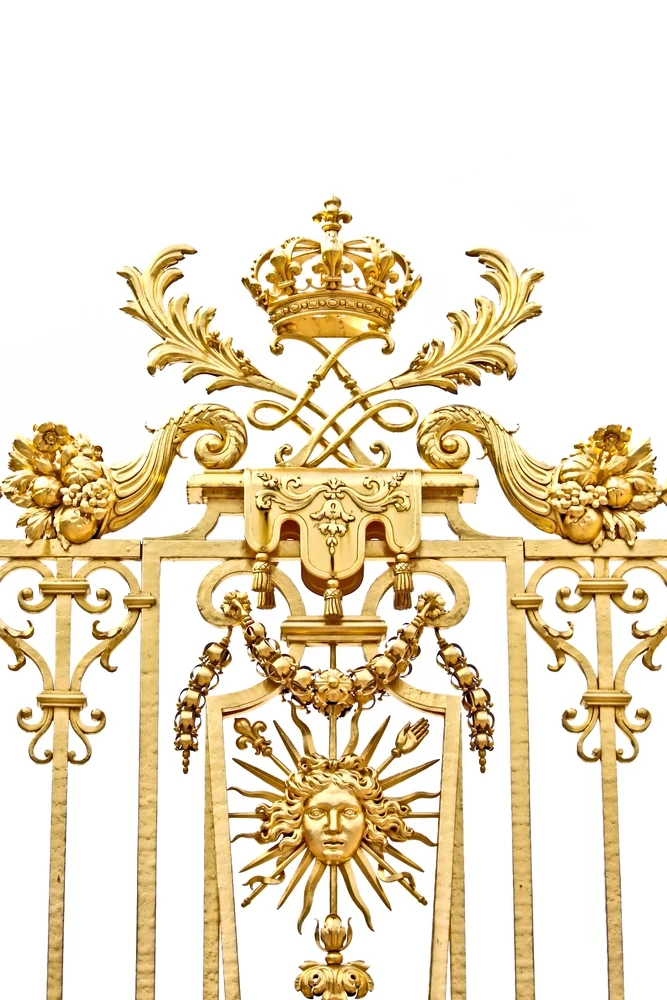
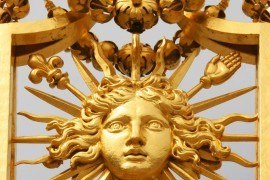
The sun, the symbol of Louis XIV, appears on many structures, such as the main gates / Photo by trucic/Shutterstock.com
What the animals really tell us about Versailles
Ultimately, the animals of Versailles tell three stories at once.
The first is the story of power. The king hunts, owns, collects and displays. He brings in rare animals. He maintains vast stables. He organises an estate where nature is useful, beautiful and subjugated. At Versailles, animals are often used to symbolise the sovereign’s grandeur.
The second is the story of private life. Favourite dogs, Louis XV’s cats, birds in the apartments, and the pets of princes and princesses reveal a less formal court. Here we see attachments, habits and simple pleasures. Animals find their place where protocol is no longer enough.
The third is the story of our perspective. The kings saw the Menagerie as a marvel and a symbol of power. We also see it as a place of captivity. In the 18th century, the Queen’s Hamlet was seen as an idealised countryside. We also see in it a disconnect from real peasant life. The king’s painters regarded the animals as magnificent subjects. Today, we view them with a new sensibility.
That is what makes the subject so beautiful. The animals of Versailles are not merely a footnote. They are a key. A key to understanding the monarchy, everyday life, art, hunting, the sciences, Marie-Antoinette, Louis XV, Louis XIV, and even ourselves. For, after all, a palace without animals is a rather lifeless palace. Versailles, however, lived alongside them. It barked, whinnied, chirped, roared, meowed and perhaps bellowed in its woods. It smelled of hay, stables, wax, the leather of saddles, kennels, kitchens and gardens after the rain. It was more alive than the perfect image we sometimes hold of it.
So yes, Versailles is the palace of kings. But it is also, in a way, the palace of animals. And that suits it very well.
👉 How long does a visit to Versailles take?
Before you come, do remember to check how much time you’ll need to visit Versailles, especially if you want to go as far as the Queen’s Hamlet and the Trianon estate.
FAQ: Animals in Versailles
What animals lived in Versailles?
At Versailles, there were dogs, cats, horses, game, birds, monkeys, parrots, exotic animals at the Royal Menagerie, and farm animals at the Queen’s Hamlet. The estate was vast and teeming with life. The animals were used for hunting, transport, prestige, companionship and decoration.
Did Louis XV really have cats?
Yes, Louis XV is associated with several cats, including ‘Le Général’, portrayed by Jean-Baptiste Oudry, and ‘Brillant’, often described as a white cat beloved by the king. These cats reveal a more intimate side to the sovereign. Behind the official king lay a man who was fond of his pets.
Why did the kings of France have so many dogs?
The kings of France kept many dogs because hunting was one of their greatest pleasures and a true ritual of power. At Versailles, the dogs were used for royal hunts, but some also became favourite companions. Several were even painted with their names, almost as if they were members of the court.
What was the Royal Menagerie at Versailles?
The Royal Menagerie was a site established near the Grand Canal during the reign of Louis XIV to house rare and exotic animals. Birds, wild beasts and species from faraway lands were displayed there. It served to impress visitors, entertain the Court and satisfy the scientific curiosity of artists and scholars.
Did Marie-Antoinette milk the cows at the Queen’s Hamlet?
No, Marie-Antoinette did not milk the cows herself, as the legend goes. The Queen’s Hamlet was a place for walks, receptions and an idealised countryside setting, but its farm was very real. It comprised a cowshed, a pigsty, a sheepfold and a henhouse, with staff to look after them.
Can you still see animals in Versailles today?
Yes, you can still see animals at the Palace of Versailles, particularly at the Queen’s Hamlet farm, which was rebuilt in the 21st century. You can also spot animals in the paintings, sculptures, gardens and décor of the palace. Going on a hunt for these animals is a brilliant way to experience Versailles in a different light.
Why are animals important in the history of Versailles?
Animals are important at Versailles because they reflect the power, private lives and tastes of the monarchs. Horses symbolise majesty, dogs the art of hunting, cats private life, the Menagerie royal exoticism, and the cows at the Hameau Marie-Antoinette’s taste for an idealised view of nature.
Conclusion
Versailles was never merely a setting of marble, gold and mirrors. It was also a world of animals, populated by faithful dogs, silent cats, majestic horses, royal game, rare birds, exotic animals and farmyard animals. There, the animals accompanied the kings, entertained the Court, inspired painters, aided the hunt, impressed ambassadors and gave the Queen’s Hamlet its rustic charm.
They make Versailles feel more alive, more accessible, and more human too. One gains a better understanding of the palace when one imagines the barking in the kennels, the clatter of hooves in the stables, the silence of a cat near Louis XV, the cries of the birds in the Menagerie, or Marie-Antoinette’s cows on the Trianon farm. At Versailles, animals are not merely a detail: they offer another way of telling the story of royal France.
An article by Jérôme Prod’homme for *Monsieur de France*, written with passion and a love of sharing stories about France, tourism and heritage.
Find out more about Versailles
The complete guide to visiting the castle and grounds
Versailles: 10 surprising facts
Versailles – how much time should I allow?
Who designed the gardens at Versailles?
A weekend in Paris and Versailles
Marie Antoinette remains as fascinating as ever
Louis XIV and the craze for peas.
Featured image: depositphotos