Start the tour with the origins of Nancy
There’s nothing quite like a stroll to explore Nancy. For a start, the city centre isn’t very big and is easy to get around on foot. It’s flat, which may be appreciated by some visitors with limited mobility. Everyone knows Place Stanislas, but people often forget that the city boasts an incredible wealth of heritage. It is one of the French cities with the highest number of historic monuments in France. If you want to step back in time, the best place to start isthe Porte de la Craffe. It is the oldest surviving monument in the city centre, dating back to the 14th century. It isn’t necessarily inviting, which is hardly surprising given that it served not only as the city gate in the Middle Ages, but also as a prison. Its imposing walls still stand, as do the ancient dungeons where, amongst others, those accused of witchcraft were imprisoned.
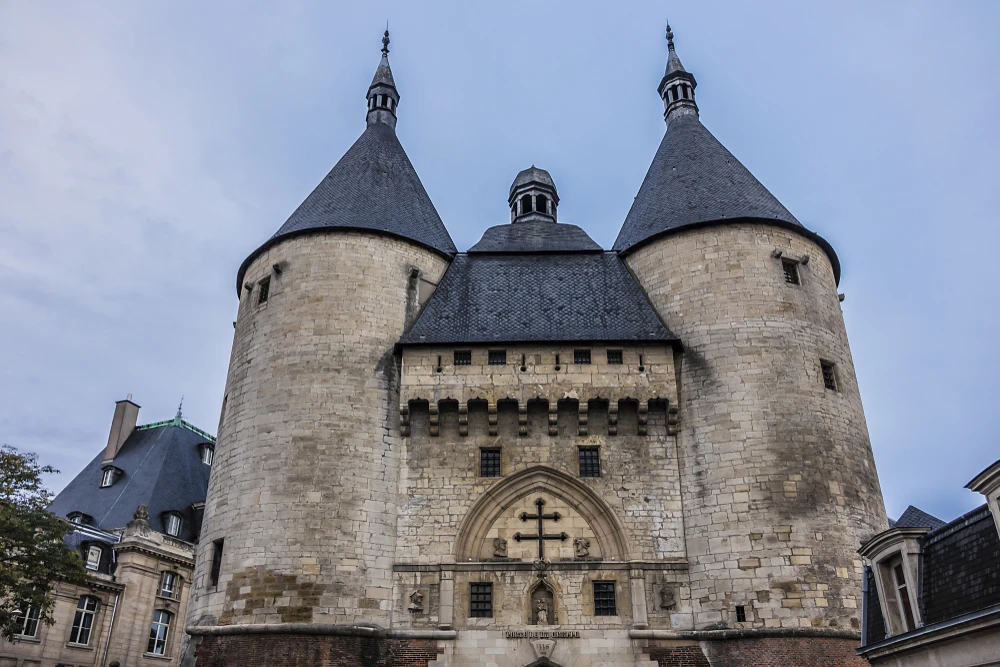
The Porte de la Craffe in the heart of Nancy’s old town / Photo selected by Monsieurdefrance.Fr: Kiev.Victor/Shutterstock
If you’d like to see another gate, there’s one nearby. If you carry on straight ahead, you’ll come to the Citadel Gate. It dates from the 17th century and served as the city gate when Nancy, the capital of the Duchy of Lorraine, was surrounded by magnificent, brand-new ramparts. These were later destroyed. Carrying on towards the Citadel Gate, you’ll reach the Trois-Maisons district, often nicknamed Nancy’s ‘Gallic village’ due to its very distinctive character.

Discover the Nancy audio guide in 18 stages, with 3 free clips to listen to on your phone – no app required and no obligation
Nancy harbours many secrets; you’ll discover them here.
Explore the old town of the Dukes of Lorraine
The Grande-Rue is home to much of Nancy’s heritage. It is the city’s historic thoroughfare, dating back to the 10th century, when the first Duke of Lorraine, Gérard, founded a castle. Its route has remained unchanged for nearly 1,000 years. Take the time to admire the carved doorways of the old mansions before heading to the Cordeliers Chapel, where the Dukes of Lorraine are buried.
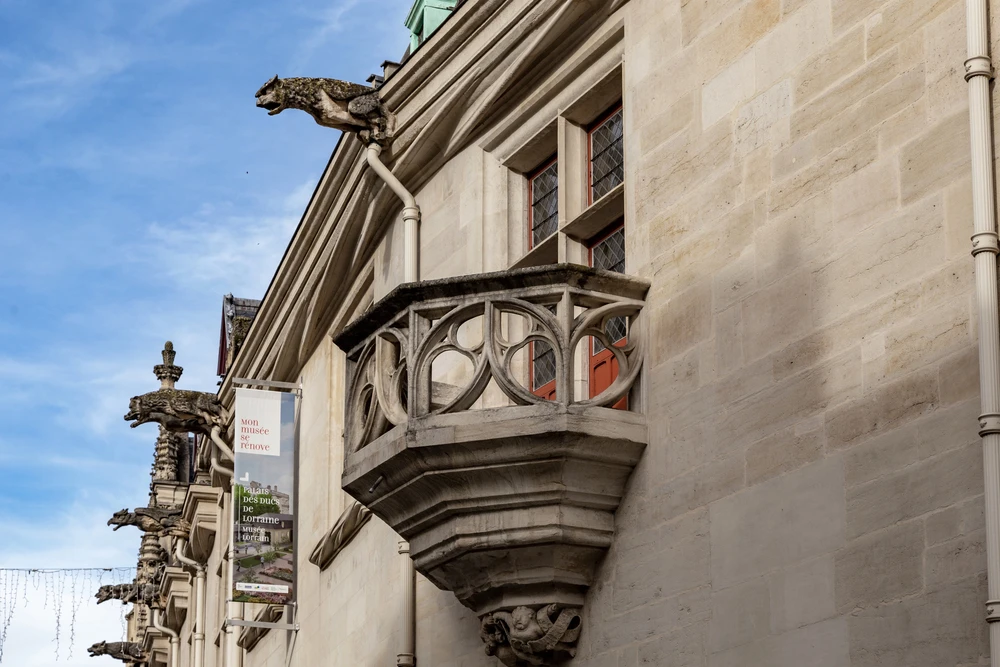
The façades of the Palace of the Dukes of Lorraine / Photo selected by Monsieur de France: goga18128.mail.ru via Depositphotos
A little further on stands the former palace of the Dukes of Lorraine, which also houses the Musée Lorrain. It catches the eye with its richly decorated façades, sculptures and fantastical – and even amusing – figures. Just a few metres away, the gatehouse of the ducal palace serves as a reminder of the dukes’ former power, featuring the famous equestrian statue of Duke Antoine. This is a chance to spot the symbols of Lorraine on this statue, notably the alerions – those birds depicted in profile that feature on the flag of Lorraine. The neighbourhood is full of lovely restaurants that aren’t just aimed at tourists, as the people of Nancy are their main customers and they love eating out.
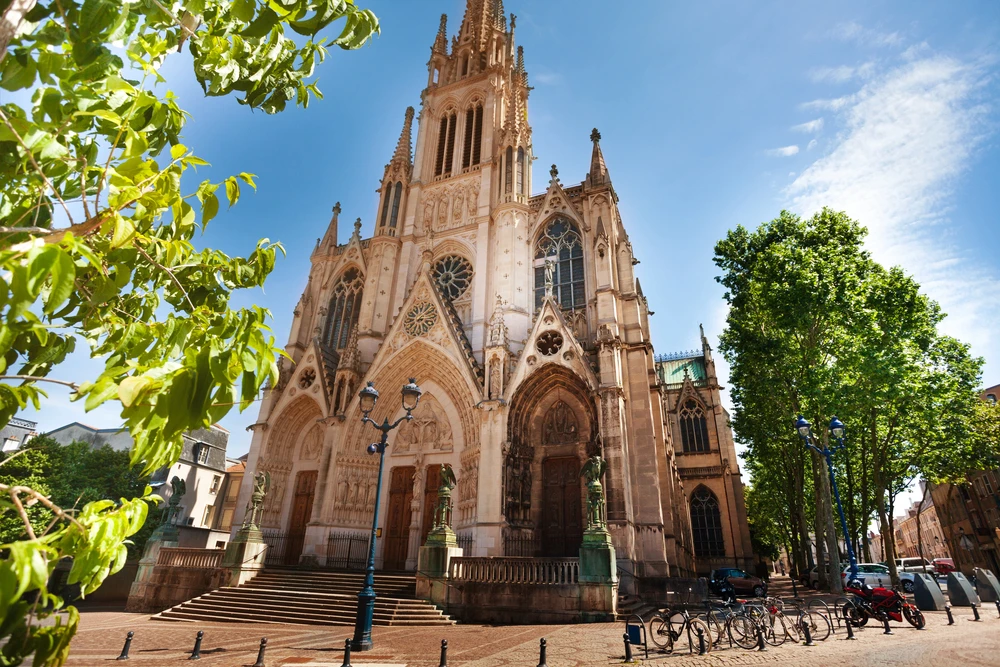
The Basilica of Saint Epvre is in the heart of the “old town”, the historic district of Nancy / Photo selected by Monsieur de France: depositphotos
You are in the heart of the historic quarter, known as the Old Town, with, at its centre: Place Saint-Èpvre. It’s the perfect spot to stop for a drink on a terrace whilst admiring the church and the symbols of the four evangelists depicted on its forecourt. Also worth seeing here is the Hôtel d’Haussonville with its superb Renaissance façade. The narrow streets surrounding the square are lined with mansions and carved doorways – a true Lorraine ‘speciality’, in fact, which can be found in many towns and even villages.
Visiting Nancy’s old town is even easier with my dedicated article.
Small squares in front of Place Stanislas
.
Nancy is also full of charming little squares. Each one has a story to tell. For example, just behind Saint-Epvre, you can’t miss the statue of Joan of Arc on Place La Fayette. It’s a tiny square, but nicely shaded. The horse in the statue is no mere detail: the sculptor, Emmanuel Frémiet, considered it so successful that he drew inspiration from it to create the horse for the statue in Paris.
Walking down Rue des Maréchaux, the ‘gourmet street’ because it is lined with restaurants, the route then leads to Place Vaudémont, which takes on an Italian feel around the statue of the engraver Jacques Callot,
The squares in the 18th-century district listed by UNESCO
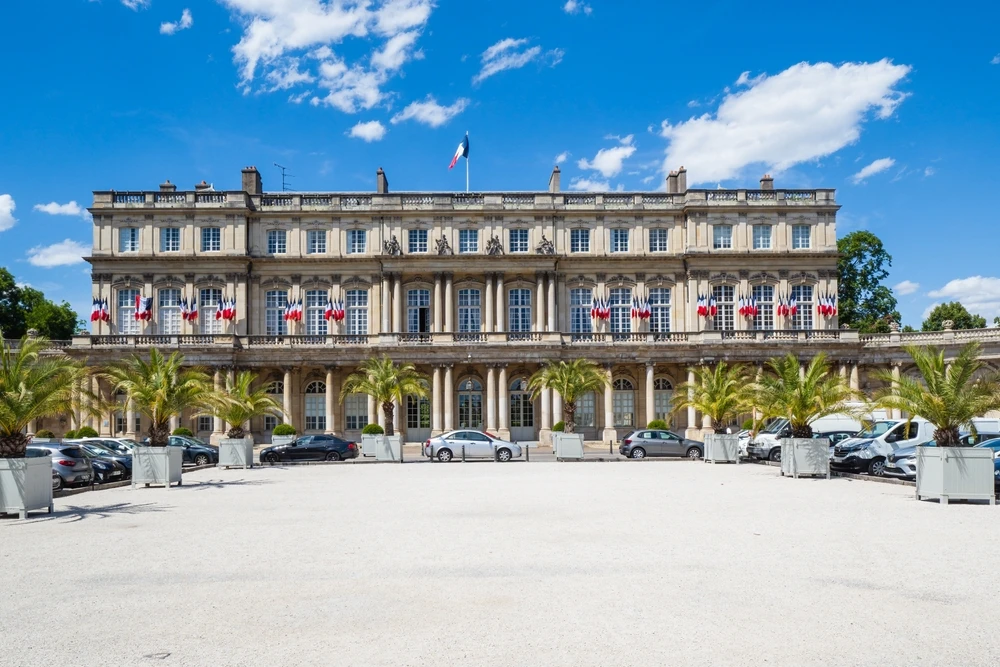
Place de la Carrière in Nancy / Photo selected by Monsieurdefrance.Fr: /Shutterstock
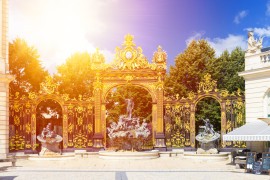
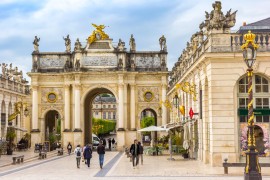
Now is the time to explore the 18th arrondissement, designated a UNESCO World Heritage Site in 1983, the same year as the Taj Mahal. We’ll start with the Place de la Carrière, so named because knights used to ‘make their mark’ there by battling on horseback, which explains its long, narrow shape. On one side stands the Palais du Gouvernement, long the seat of Nancy’s military government (it’s now a lovely bar and a very good restaurant), and on the other side is the Arc Héré, a triumphal arch leading to Place Stanislas. Rather than going through it, cross the square alongside the palace and pop into Nancy’s ‘Central Park’: the Parc de la Pépinière, with its 20 hectares of greenery.
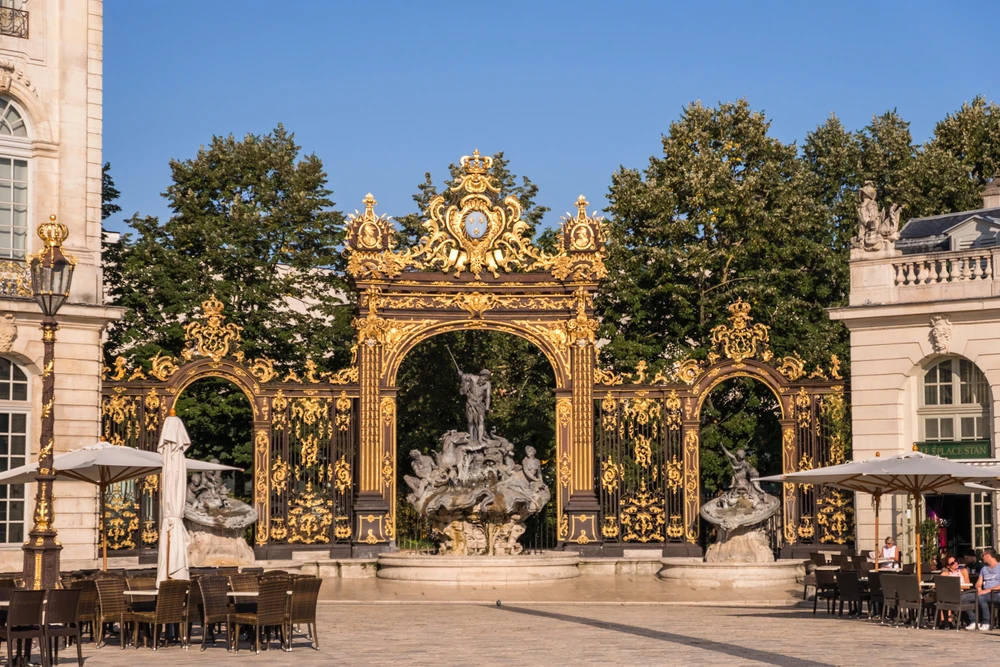
Welcome to the City of Golden Gates / Photo: Depositphotos
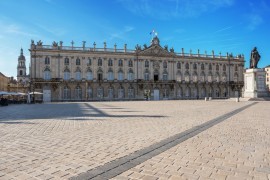
Next, Place Stanislas – you can find out all about it here – but it would be a shame to miss the third UNESCO-listed square: Place d’Alliance. It’s square in shape, with a beautiful fountain in the centre. You’ll be able to take some lovely photos in this slightly melancholic square.
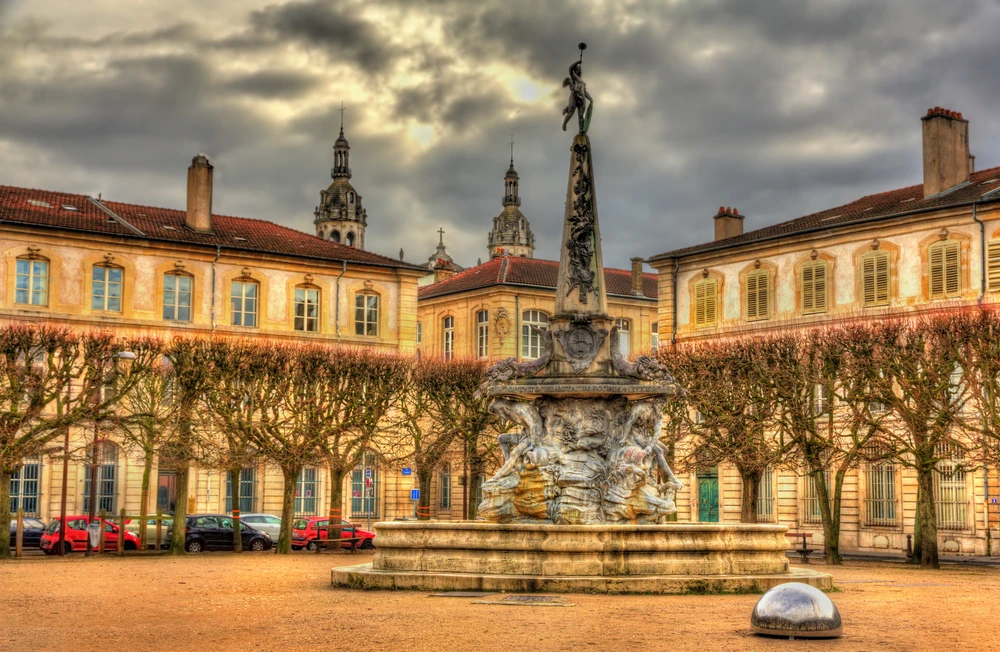
Place d'Alliance in Nancy / Photo selected by Monsieurdefrance.Fr: /Shutterstock
Are you planning a trip to Nancy? A well-located place to stay will save you time and allow you to make the most of the city centre and the main attractions:
👉 Find a hotel in a prime location in Nancy
👉 See the best deals available for your dates
👉 How to choose where to stay in Nancy
👉 The must-see sights and things to do in Nancy
For an even more immersive experience 👉 Book a guided tour in Nancy (the best activities)
This article may contain affiliate links. This does not affect the price you pay, but helps to support the Monsieur de France website.
A stroll that ends amidst historic sites and shops
Not far away, the cathedral is also well worth a visit, particularly to admire the painting beneath the dome and the remarkable ironwork by Jean Lamour, created long before that on Place Stanislas. The walk can then continue towards Rue Saint-Jean, which boasts beautiful Art Nouveau façades, and the central market – the heart of Nancy – in the heart of the city’s shopping district. You then carry on to Place Maginot, where the statue of Lorraine weeping in the arms of Alsace serves as a reminder of a painful chapter in history: the partition of Lorraine, part of which became German from 1871 to 1918, notably Metz, Nancy’s neighbour and rival.
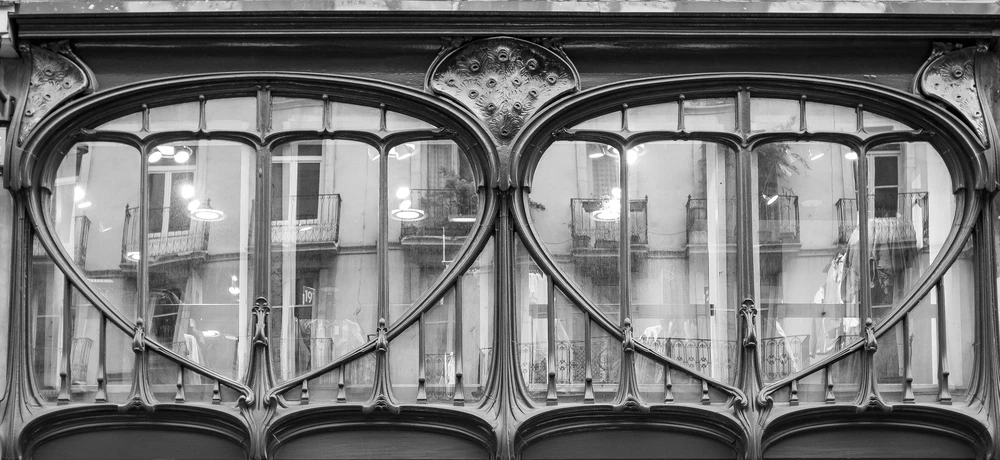
An Art Nouveau façade in Nancy city centre / Photo selected by Monsieur de France; depositphotos.
If you’re a fan of Art Nouveau, the neighbourhood is further up, not far from the station, along Avenue Foch, around the Nancy Thermal spa, particularly on Rue Félix Faure, and you mustn’t miss the Musée de l’Ecole de Nancy and the Villa Majorelle.
With its monuments, shops, outdoor cafés and historic squares, Nancy is best explored both by looking up and by taking the time to wander around.
Jérôme PROD'HOMME, tourism, gastronomy and heritage specialist for Monsieur de France, the website for tourism in France.
FAQ: Preparing for your visit to Nancy’s historic centre
What’s the best walk to go on in Nancy?
A walk taking in the Porte de la Craffe, the Grande-Rue, Place Saint-Èvre, Place de la Carrière, the Arc Héré and Place Stanislas offers the chance to discover the city’s main monuments.
Which monuments are worth visiting in Nancy city centre?
The Porte de la Craffe, the Cordeliers Chapel, the Palace of the Dukes of Lorraine, the Musée Lorrain, the cathedral, Place Stanislas, Place de la Carrière and Place d’Alliance are among the must-see attractions.
Is it possible to explore Nancy entirely on foot?
Yes. The main historical sites are concentrated in the city centre and can easily be explored on a day’s walk.
Why does Nancy have so many historic monuments?
Once the capital of the Dukes of Lorraine and later embellished in the 18th century by Stanislas, Nancy has preserved an exceptional heritage combining medieval, Renaissance, classical and Art Nouveau architecture.

Find out more about Nancy:
- The complete guide to visiting Nancy
- my audio guide in immersive sound to visit Nancy
- Place Stanislas: history and secrets of Nancy's most beautiful square
- Art Nouveau and the École de Nancy: an architectural treasure
- What to do in Nancy over a weekend?
- Culinary specialties of Nancy you absolutely must try
- And why not discover Lorraine?
Monsieur de France Tourism, lifestyle, gastronomy, history... France is wonderful.