To visit Nancy in a day without rushing, here's the perfect itinerary:
-
Morning: Start by exploring Stanislas Square, then head to the Old Town to admire the Dukes' Palace and the Craffe Gate.
-
Lunch: Enjoy a quiche lorraine or a Lorraine pâté in the medieval streets.
-
Afternoon: Stroll through the Central Market and along Saint-Jean Street, then finish up in the École de Nancy district to explore the Villa Majorelle and Art Nouveau.
-
Option: End the day with a relaxing soak in the thermal waters of Nancy Thermal.
Find out everything there is to know about Nancy right here in my comprehensive guide.
Nancy in a Day: An Easy-to-Follow Hour-by-Hour Itinerary
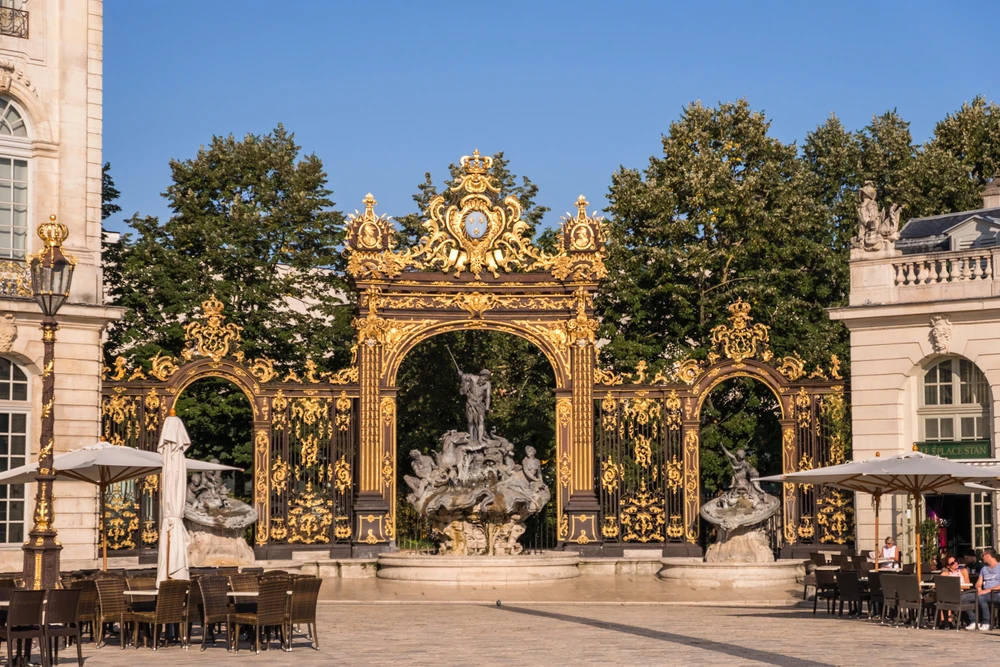
Photo by Depositphotos
Here’s the perfect itinerary for exploring Nancy in a day without wasting any time:
- 9:00 a.m. – Place Stanislas (30 min)
- 9:30 a.m. – Place de la Carrière + Arc Héré (20 min)
- 10:00 a.m. – Place d’Alliance (10 min)
- 10:15 a.m. – Old Town (Porte de la Craffe, narrow streets) (1 hour)
- 11:30 a.m. – Parc de la Pépinière (30 min)
- 12:30 p.m. – Lunch downtown
- 2:00 p.m. – Musée de l’École de Nancy or Villa Majorelle (1 to 1.5 hours)
- 4:00 p.m. – Downtown / snack break
- 5:30 p.m. – End of the tour or cocktail reception
Everything can be done on foot, except for the Art Nouveau section (by bus or on foot).
9:30 a.m.: Departure from Stanislas Square
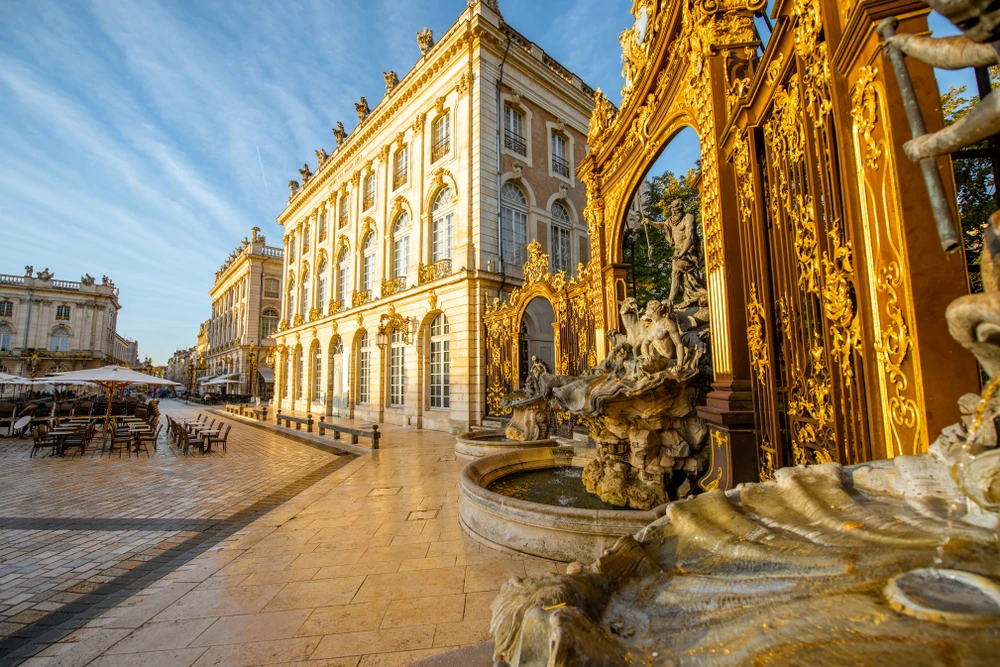
Place Stanislas in Nancy, with its golden railings bathed in the morning sun / Photo selected by Monsieur de France: Shutterstock
The best place to start is Place Stanislas. It's quietest in the morning. Take the time to enjoy a quick coffee and, above all, to take in this magnificent setting. Surrounding the statue of King Stanislas, there are four large pavilions. One houses the National Opera of Lorraine, another the Museum of Fine Arts. The largest building is Nancy City Hall. You can see the city’s coat of arms on its façade—a thistle. The thistle has been the city’s emblem since the Battle of Nancy in 1477, when the Duke of Burgundy was defeated and killed while attempting to capture the city, whose motto then became “whoever rubs against it gets pricked.” Charles the Bold rubbed against it so hard that he died.
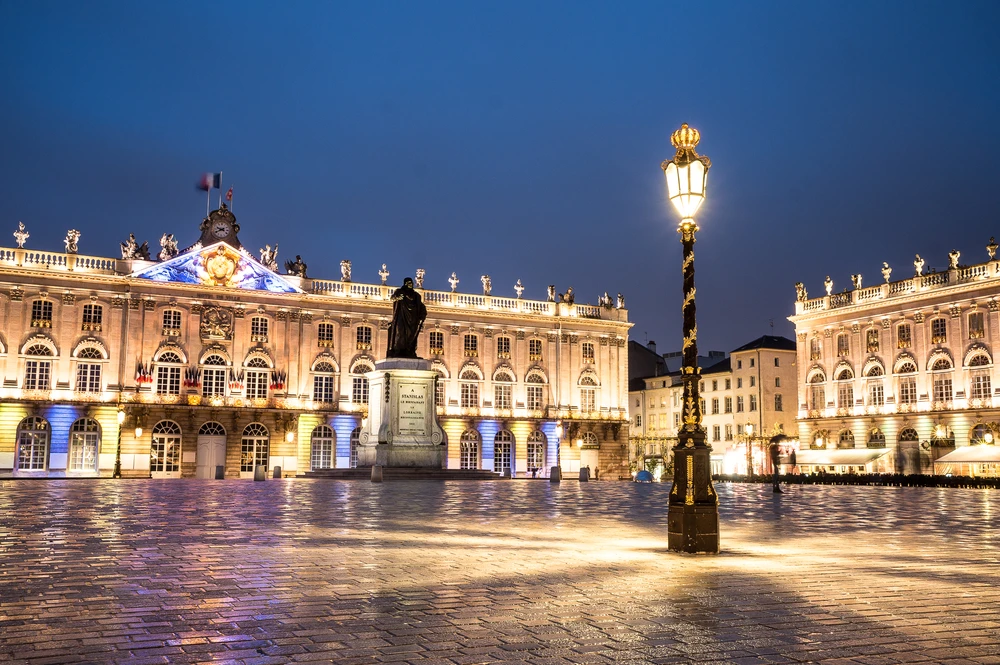
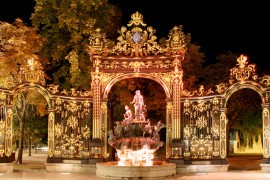
Place Stanislas: magical at night / Photo by HUANG Zheng/shutterstock
Designated a UNESCO World Heritage Site since 1983, this square is an open-air theater. It was built between 1752 and 1755 based on plans by architect Emmanuel Héré and is entirely dedicated to France, as evidenced by the coats of arms above the fountains and on certain doors, as well as the roosters supporting the streetlamps along the facades. Admire the monumental grilles crafted by the ironworker and locksmith Jean Lamour; they are gilded with gold leaf. All around you, these gates stretch out, winding their way along the windows, at the entrance doors, and also around the magnificent fountains created by Barthélémy Guibal. These fountains are dedicated to the God of the Sea, Neptune, and his wife Amphitrite. Above you, there are numerous putti—little children busy doing all sorts of things. Further on, discover the Arc Héré, a magnificent triumphal arch that leads you to the Place de la Carrière.
Distance from Nancy Train Station to Place Stanislas: 10-minute walk.
Everything you need to know about Place Stanislas.

10:00 a.m.: Alliance Square and its understated beauty.
This is the most unassuming of Nancy’s three UNESCO-listed squares. So unassuming, in fact, that most tourists forget to visit it. Surrounding the pretty fountain, designed by Cyfflé, lies this very “quiet” square. There’s something melancholic about it.
Distance Place Stanislas / Place d'Alliance: 5-minute walk.
Why not try an audio guide? There’s nothing quite like an audio guide to help you explore the city and discover a wealth of fascinating stories. The tour lasts 1.5 hours, and you’ll learn just as much as the locals—without getting lost—thanks to Google Maps geolocation. Try the first 3 stops here.
10:15 a.m.: Place de la Carrière and its view.
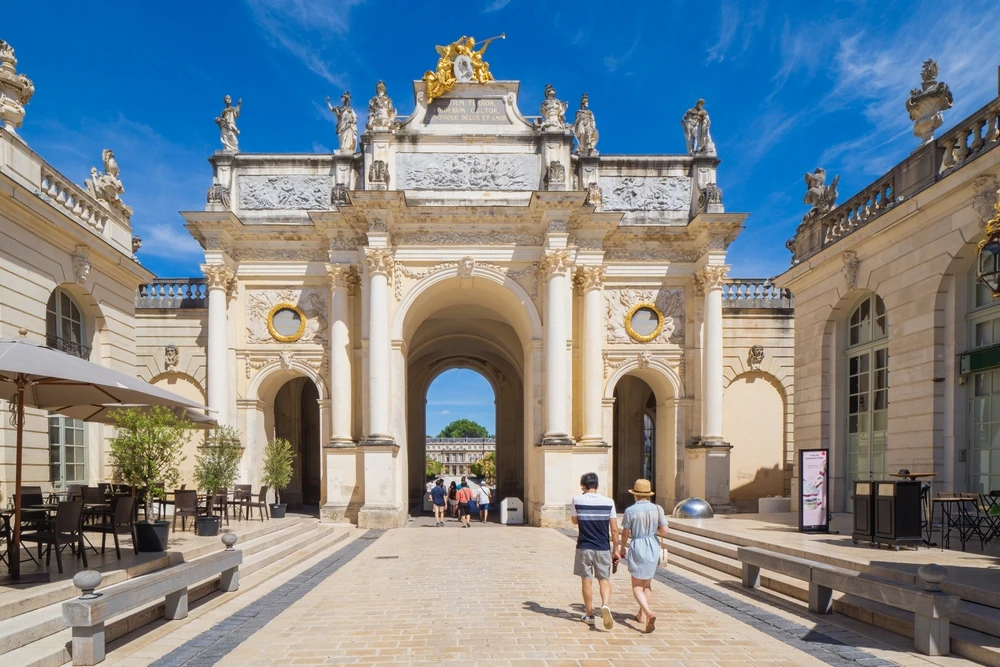
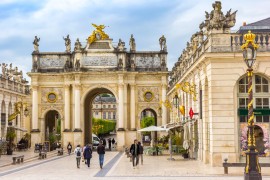
The Arc Héré frames Place Stanislas and leads to the magnificent Place de la Carrière / Photo selected by Monsieur de France, Shutterstock
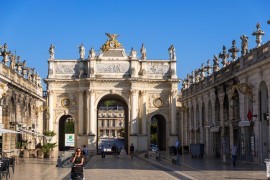
Pass under the Héré Arch to reach Place de la Carrière. Much older than it appears, the square was modernized in the 18th century by adding classical facades to Renaissance-era mansions. In fact, this square was created at the end of the Renaissance at the behest of a duchess, Christiane of Denmark, who wanted a large space to host jousting matches and tournaments. These games were a way to make a name for oneself—in other words, to win victories. The long, narrow Place de la Carrière extends the grandeur of Place Stanislas. It offers a perfect view of the government palace. Here you’ll find Jean Lamour’s railings and a few lovely groups of statues perfect for photographing from a low angle. I love it in winter, when the mist gives it a touch of mystery.
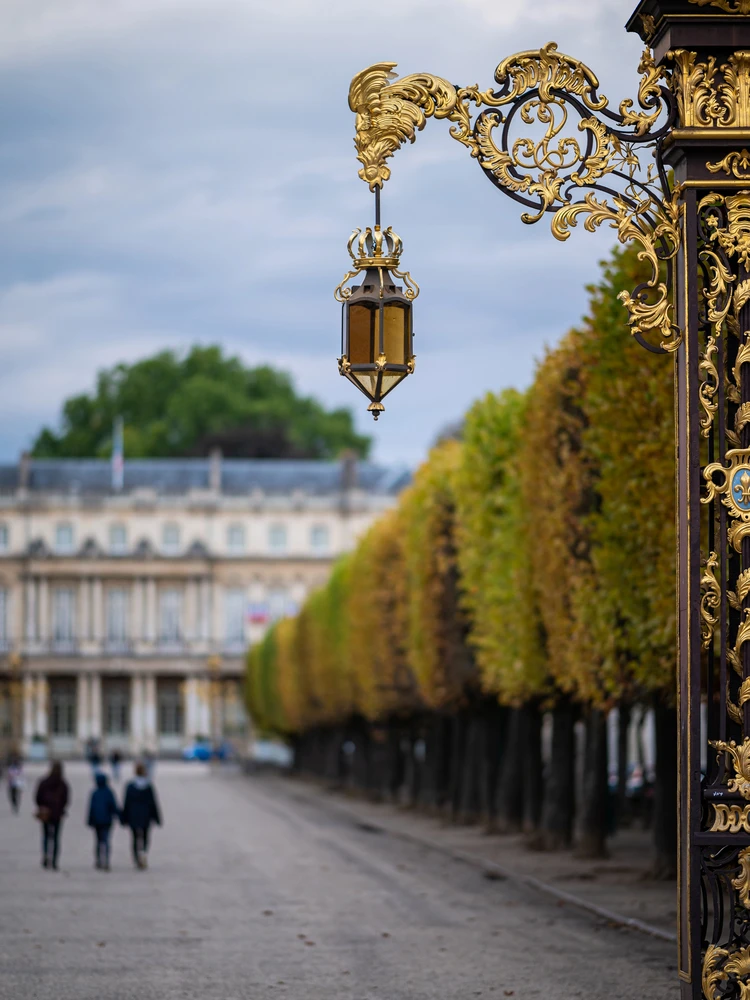
The entrance to Place de la Carrière / Photo selected by Monsieur de France: depositphotos
Distance Place d'Alliance / Place de la Carrière: 5-minute walk via Place Stanislas.
To explore Nancy in depth, check out my comprehensive guide
10:30 a.m.: The understated charm of the old town
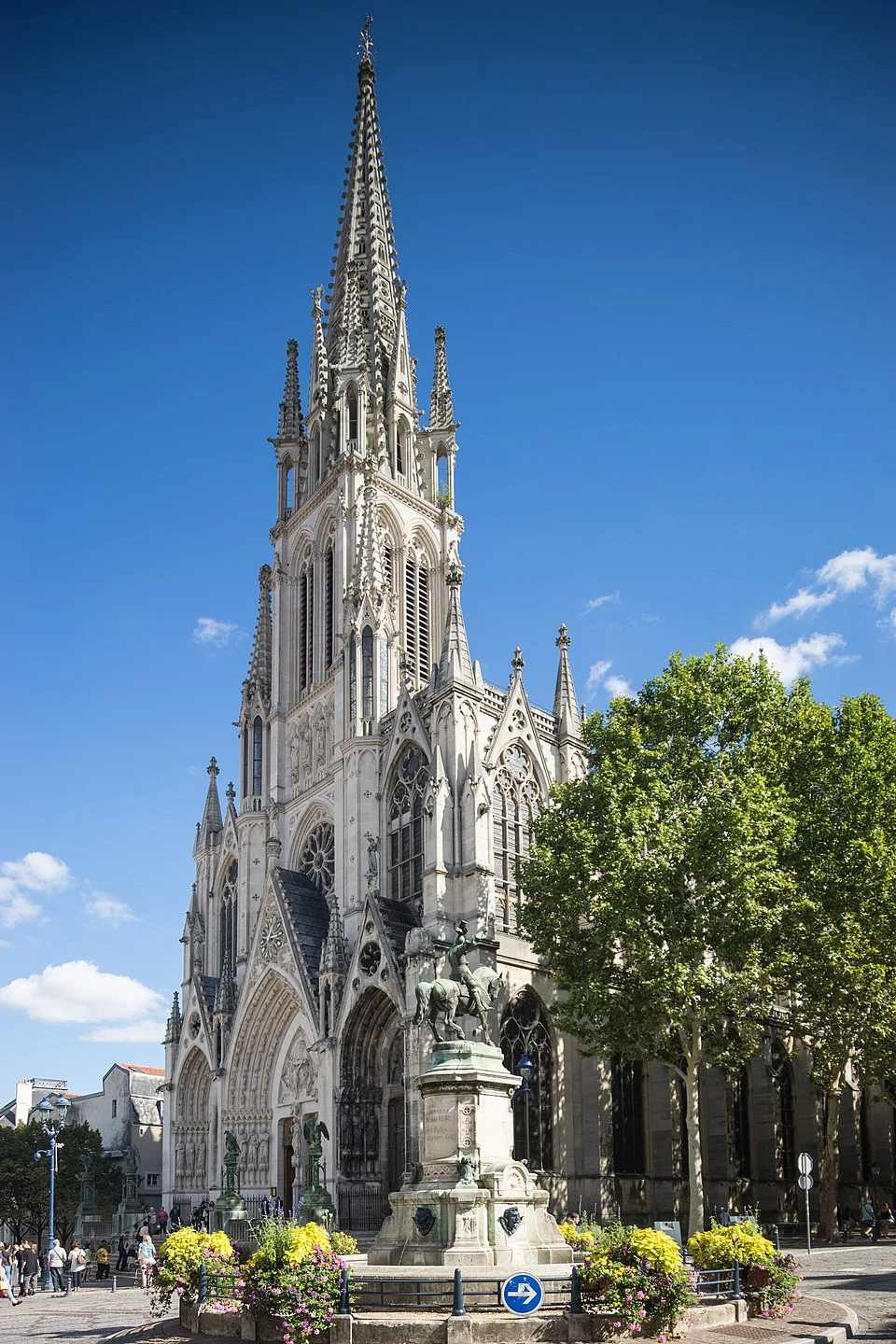
The Basilica of Saint Epvre is the heart of Nancy's old town / Photo selected by monsieurdefrance.com: By Pedro J Pacheco — Own work, CC BY-SA 4.0, https://commons.wikimedia.org/w/index.php?curid=73191583
On the left, as you exit the Arc Héré or just before the Government Palace, head into the "Old Town". This is the oldest district of Nancy, which served as the city's original center until the 17th century. At that time, a second city, the "New Town," was built on the orders of Charles III, Duke of Lorraine. Place Stanislas has connected the two towns since the 18th century. Here, the atmosphere changes radically. The streets become narrower, the facades older. Take the time to admire them; some are quite elaborate. Walk up the Grande Rue to the Palace of the Dukes of Lorraine. Its gatehouse, a true 16th-century stone lacework, bears witness to the power of the former lords of the manor. The statue of Duke Antoine is worth a detour. Continue further and, if you can, step inside the Chapelle des Cordeliers. It houses the tomb of the Dukes of Lorraine. Walk on to the Porte de la Craffe. With its two massive towers, it is the most impressive remnant of the ancient medieval fortifications. This is where witches were imprisoned in the 16th century. Nancy and Lorraine were marked by a massive witch hunt, led by a certain Nicolas Remy, the “Torquenada of Lorraine.” Several hundred of them were burned at the stake after passing through this gate on their way to their execution.
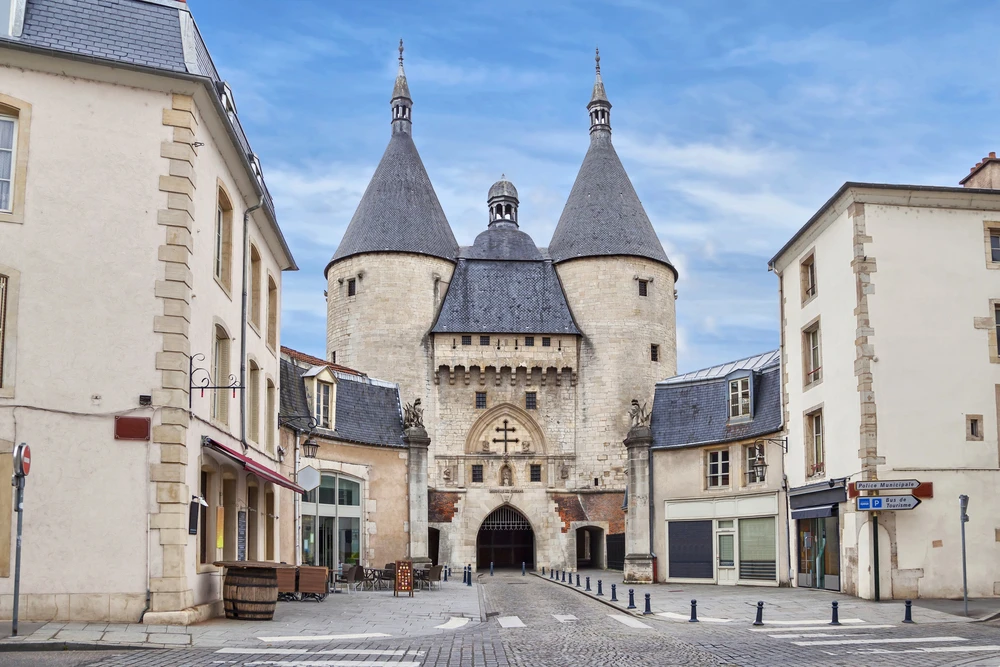
The Porte de la Craffe in Nancy / photo selected by Monsieur de France: bbsferrari via depositphotos
Must-see sights: Place Saint-Epvre / Grand Rue / Hôtel d'Haussonville / Hôtel de Lillebonne.
Distance Place de la Carrière or Place Stanislas / Old Town: 1-minute walk.
Visit the Old Town and discover its secrets.
11:30 a.m.: The Pépinière Park, also known as "Centrak Park," in Nancy
With 21 hectares of greenery, including remarkable trees, a magnificent rose garden, one of the extremely rare Rodin statues located in a public park, and the golden gazebo featuring the same roosters as those on Place Stanislas, the Parc de la Pépinière is well worth a visit. It’s also a great way to run into locals, who often visit with family or friends.
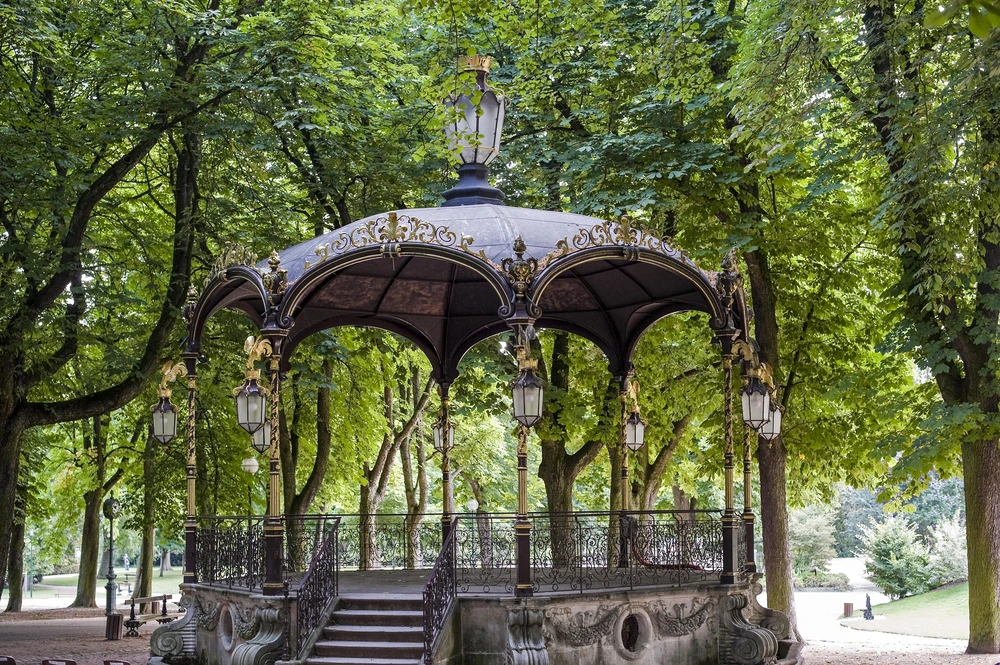
The famous "Mozart" kiosk. Nearby stands one of the few outdoor statues by Rodin (Statue of Claude Lorrain) Photo selected by monsieurdefrance.com: depositphotos
Distance Place de la Carrière / Pépinière: 1-minute walk.
12:30 p.m.: A hearty Lorraine-style meal
For lunch, welcome to Lorraine. Here, the cuisine is hearty. You’re sure to find a restaurant in the narrow streets around the Basilica of Saint-Epvre. Nancy is known for having so many restaurants that you could try a different one every day of the year. Place Stanislas is also a great spot for lunch. You can also stop by a bakery to pick up some local specialties and enjoy them at your leisure.

Quiche Lorraine / Image by SGM/Shutterstock.com
On the menu:
-
Lorraine pâté: meat marinated in white wine, encased in puff pastry.
-
Quiche Lorraine: the authentic version, without cheese, made only with cream, eggs, and smoked bacon.
-
For dessert, a mirabelle plum tart from Lorraine, the region’s golden fruit.
Foodie hotspots: Grand Rue / Place Stanislas / Rue Stanislas / Rue des Ponts.
2:00 p.m.: An Art Nouveau interlude
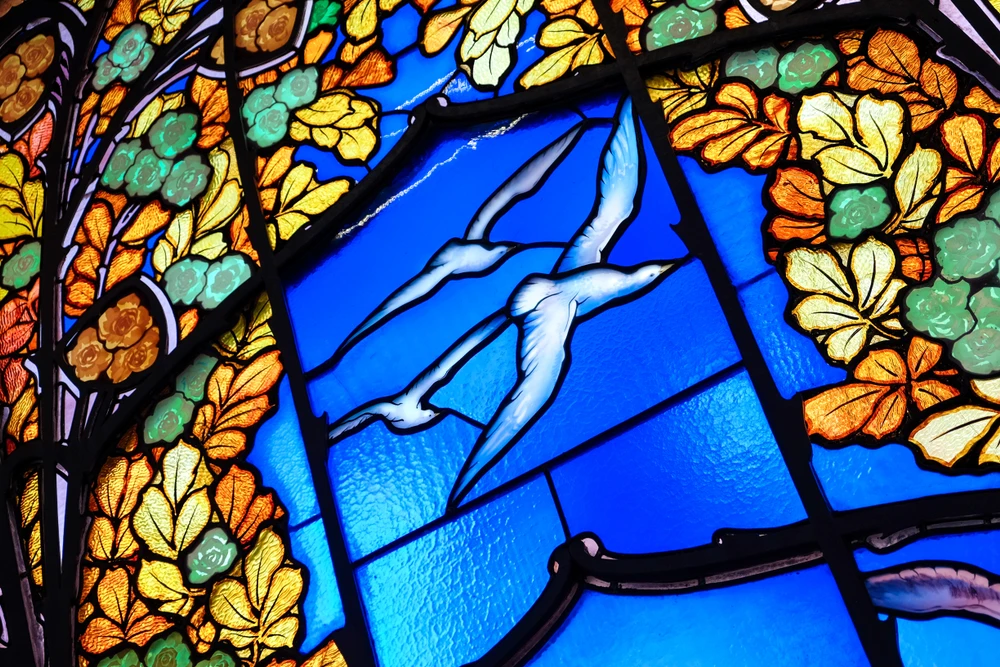
Jacques Grüber, "Roses and Seagulls," Villa Bergeret in Nancy / Photo selected by Monsieurdefrance.Fr: WildSnap/Shutterstock
Take a few minutes to visit the neighborhood of theÉcole de Nancy. It takes about 15 minutes by bus from the train station. It was here that the city pioneered a new way of seeing the world in the late 19th century. It’s very easy to reach from downtown by bus. Nancy was the incredible birthplace of the largest Art Nouveau movement in Europe. The city is dotted with houses built in this style. It was also the birthplace of numerous factories whose noble ambition was “Art for All.”
The Villa Majorelle, a jewel of Art Nouveau, is best visited in the middle of the afternoon (be sure to make a reservation—it’s essential). Every curve of the house and every stained-glass window is inspired by nature. Continue on to the Museum of the Nancy School, located in the former home of Jean-Baptiste Corbin. The gardens there are sublime, and the collections of Gallé furniture and Daum glassware will transport you to an era of boundless creativity. The bathroom is simply incredible.
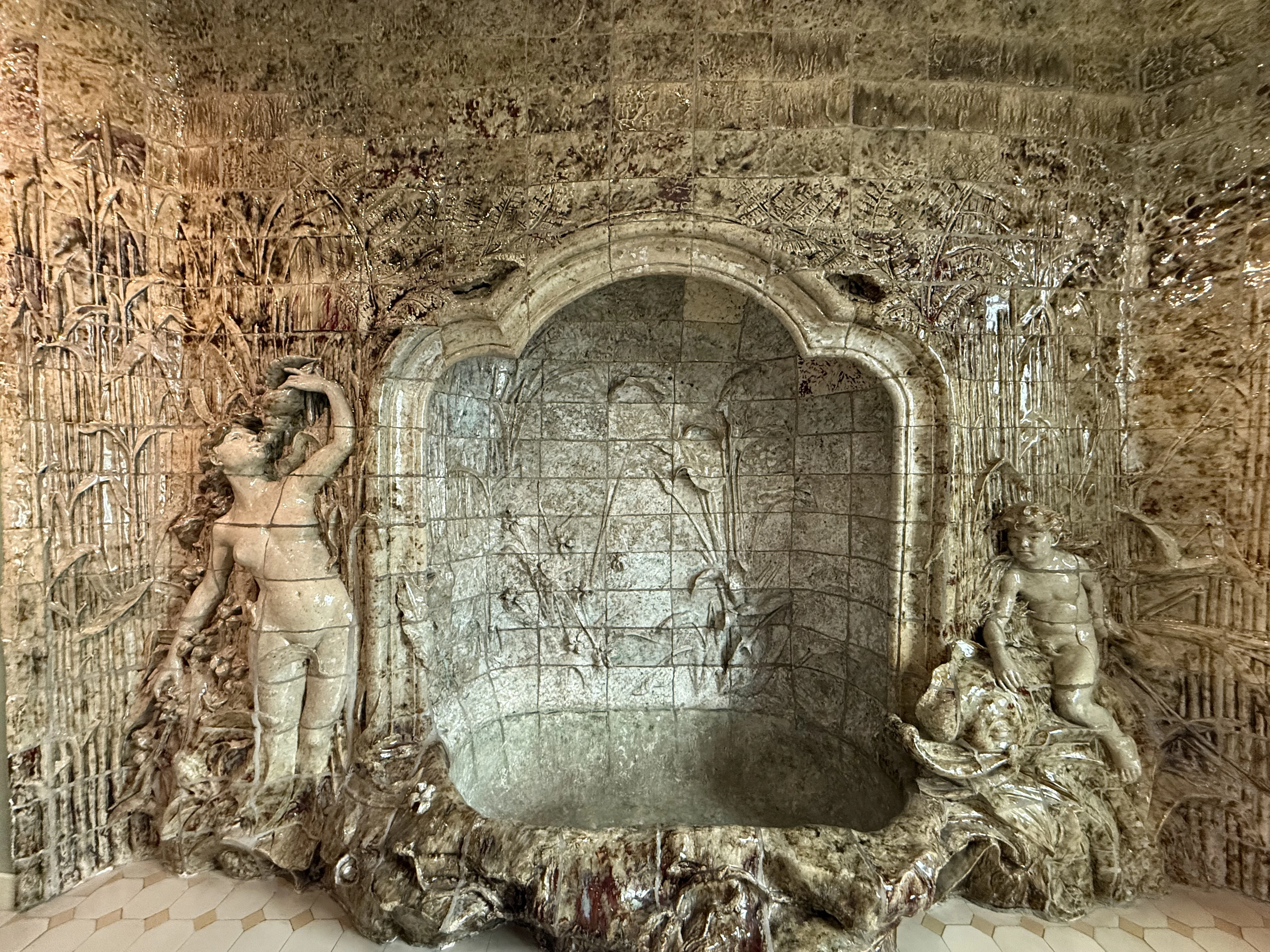
Bathroom at the Musée de l'Ecole de Nancy / Photo selected by Monsieurdefrance.com: Jérôme Prod'homme (c)
Must-see spots: Poincaré Street / Stanislas Street / Felix Faure Street / Foch Avenue.
DistanceNancy Train Station / École de Nancy Museum: 30-minute walk / 10-minute bus ride (from the station, take Line 10 or 16 to the Painlevé stop).
Nancy Art Nouveau: The Complete Guide
4:00 p.m.: The city's pulse and its sweet treats
After lunch, head back down toward the new town via Rue Saint-Jean. This is Nancy’s main shopping street. Make a detour to the Central Market. It’s the heart of Nancy. You’ll find all the regional specialties there. If you like charcuterie, you’ll love a good Lorraine fuseau, for example. The churches are worth a visit. The cathedral, for instance, whose gates are Jean Lamour’s first public works. The Saint Sebastien Shopping Center offers a pleasant break—warm in winter and cool in summer. Must-sees in the neighborhood: the Art Nouveau buildings on Rue Saint Jean and Place Maginot, the Art Deco building housing the combined stores (FNAC, etc.), and the magnificently Art Nouveau Café Excelsior.
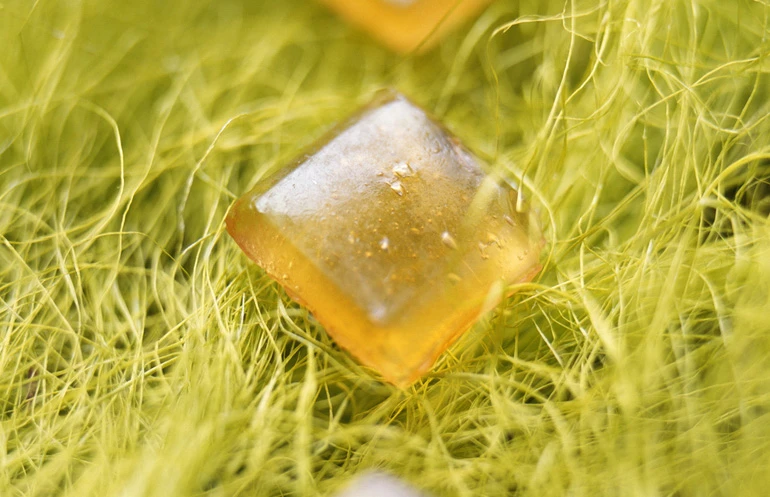
Bergamots Photo selected by Monsieurdefrance.fr: Foodpictures/shutterstock.com
Now is also the time to stock up on edible souvenirs:
-
Nancy bergamots: translucent candies made with bergamot essential oil, protected by a PGI (Protected Geographical Indication). They have been a culinary symbol of Nancy since the 19th century. The tin boxes are collector's items and are regularly reissued for collectors. A subtle fragrance, ideal at the end of a meal to freshen the breath.
-
Nancy macarons: Don't settle for imitations. The authentic Nancy macaron is cracked, flat, and made with nothing but almonds, egg whites, and sugar. No cream, no frills, and certainly no nearly fluorescent colors like its Parisian cousin. La Boutique des Soeurs Macarons offers these delicious treats on Rue Gambetta, but you’ll also find them at LaLonde, across from the Central Market; on Rue Saint Georges at Batt; or at this remarkable confectionery, part of which is designated a historic monument: Maison Lefevre, located near the train station.
-
Rum baba. Because he found his kougloff too dry, King Stanislas—who didn’t have many teeth left by the end of his life—came up with the idea of moistening his brioche with wine. The idea was later adapted, and the wine was replaced with rum. At the Excelsior, we place the bottle next to you so you can choose how much to add. If you want to taste the authentic baba just as Stanislas enjoyed it, head to "the table of the good King Stanislas" on Rue Gustave Simon, not far from Place Stanislas.
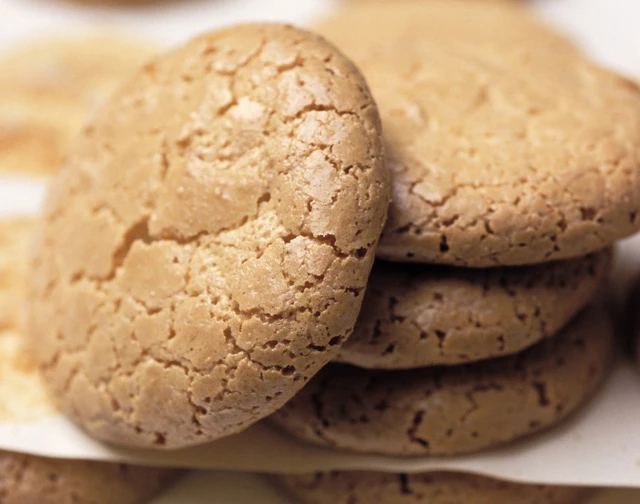
Nancy Macarons Photo selected by Monsieurdefrance.fr: Foodpictures/Shutterstock.com
Optional: Visit the Museum of Fine Arts.
You have plenty of time! Take an hour to let yourself be surprised. If shopping isn't really your thing, visit the Museum of Fine Arts. It's one of the oldest in France. The collection of paintings by Lorraine artists is breathtaking, and you're sure to make discoveries that will leave a lasting impression. Also check out the amazing crystal collection. It’s the largest Daum collection in the world. Daum is the Nancy-based manufacturer specializing in pâte de verre. It’s magnificent—you’ll take some incredible photos.
6:00 p.m.: a visit to the thermal baths or drinks on the most beautiful square in the world

NDAB Creativity/Shutterstock.com
To wrap up the day on a relaxing note, you have two options:
-
Nancy Thermal: If you’ve packed your swimsuit, take advantage of the thermal waters at this beautifully renovated historic complex. It features a public pool area, a spa treatment area, and, best of all, a full wellness center with a sauna, steam room, and outdoor pool—all set in a venue that has preserved its Art Nouveau heritage. I highly recommend it.
-
Place Stanislas: At the end of the day, it’s the perfect spot for a quick drink, especially on sunny days. It buzzes with a thousand conversations, and the setting sun bathes it in absolutely sublime golden hues.
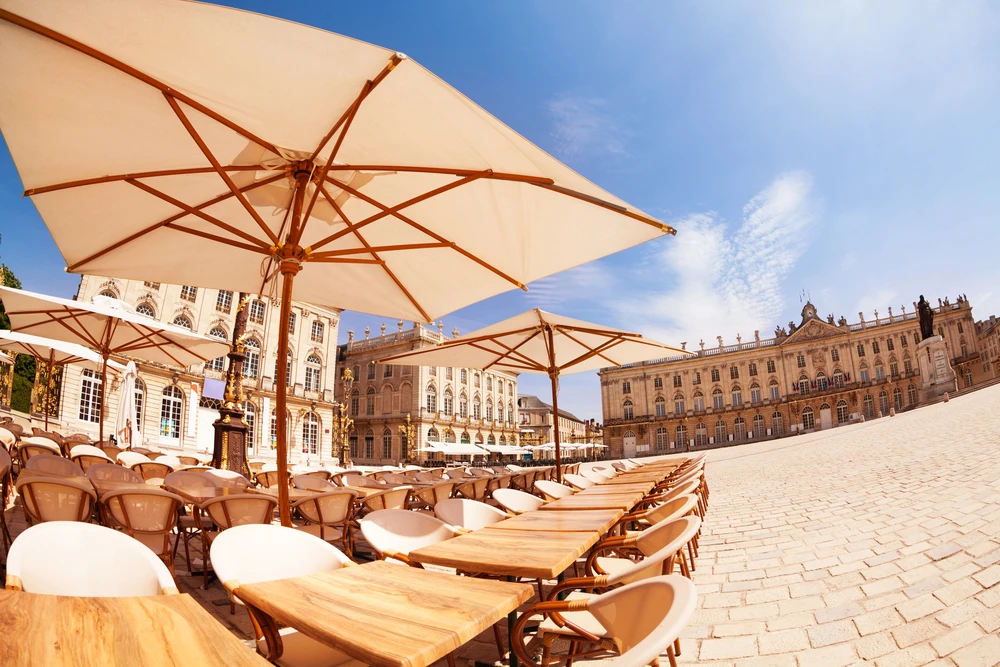
You can enjoy a quick cup of coffee on Place Stanislas. It’s a wonderful time of day in the morning / Photo selected by Monsieur de France: depositphotos
Nancy is an amazing city full of fun and surprising secrets. Here are 10 of them.
On a summer evening or in December
In the summer, a magnificent 180-degree light show is projected onto the facades of Place Stanislas. Lasting about 20 minutes and completely free, you can watch it while dining on a terrace or sitting on the square. A myriad of colors and special effects illuminate the square, transforming it beyond recognition while doing justice to its beauty. It takes place every evening at 10:45 PM in June and July and at 10:00 PM from August 15 to September 15.
In December, to celebrate Saint Nicholas, another light show projected onto City Hall brings the legend of Saint Nicholas to life in color. This show is also free and takes place every hour after dark.
Why not stay the night in Nancy?
I've dedicated an entire page to this topic. You'll find some great recommendations there. Ideally, you should stay in the old town so you can enjoy the simple pleasure of waking up in the morning in its charming little streets.
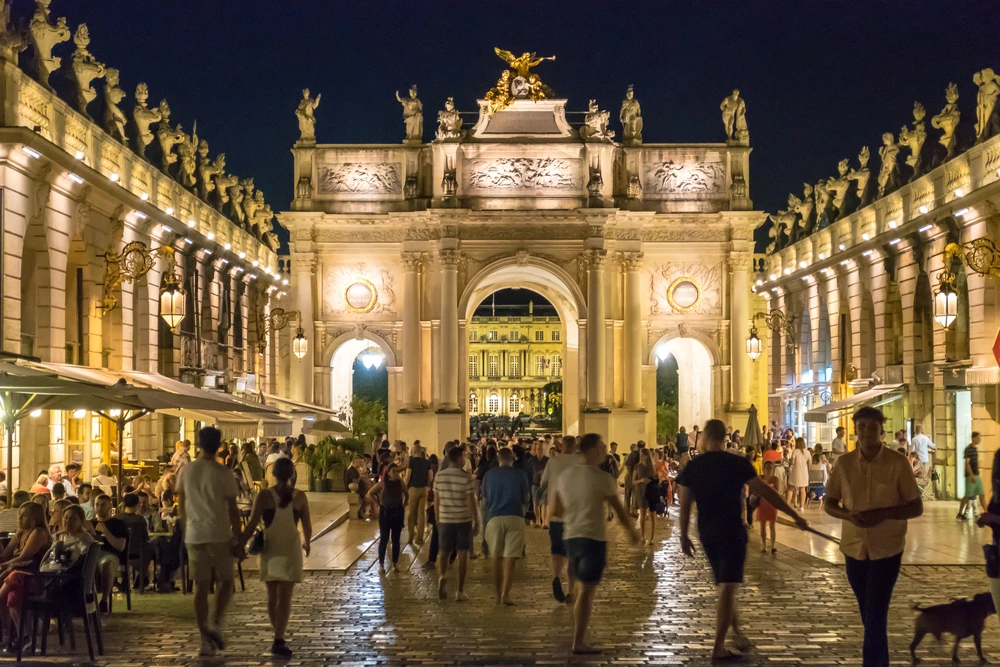
The Arc de Heré at Night / Photo selected by Monsieur de France: depositphotos
Is it possible to explore Nancy on foot in a day?
Yes, Nancy's historic center is compact and easy to explore on foot. The main attractions are just a few minutes' walk from one another.
- Train station → Place Stanislas: 10-minute walk
- Place Stanislas → Old Town: 5 minutes
- Old Town → Parc de la Pépinière: 2 minutes
👉 The only exception: Art Nouveau sites, such as the Villa Majorelle or the École de Nancy Museum, which are accessible by bus or about a 20-minute walk.
What can you do in Nancy in one day if you're short on time?
If you only have a few hours, focus on the must-see sights in the historic center:
- Place Stanislas
- Place de la Carrière
- Alliance Square
- Old Town
- Pépinière Park
👉 This is the heart of Nancy, a UNESCO World Heritage Site, and the top priority for visitors.
What can you do in Nancy in one day when it's raining?
In bad weather, opt for indoor attractions to enjoy Nancy even when it's raining:
- Nancy School Museum
- Villa Majorelle
- Museum of Fine Arts (Place Stanislas)
- Shops and walkways in the downtown area
👉 Tip: Save the Old Town and the parks for when the weather clears up.
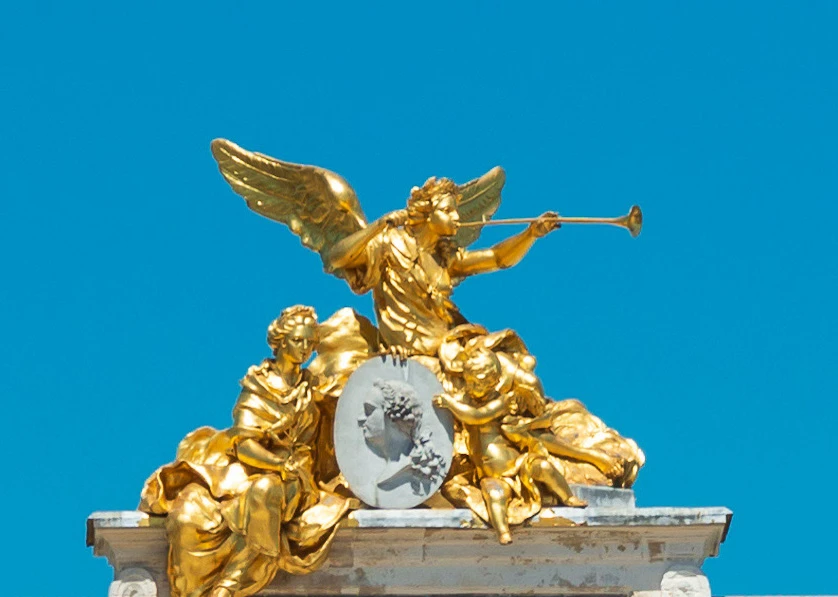
The Fame of the Arc Héré / Photo selected by monsieurdefrance.com: Shutterstock.
Nancy in a Day: What to Do Based on Your Preferences?
For history buffs:
- Old Town
- Craffe Gate
- Place Stanislas
For Art Nouveau enthusiasts:
- Villa Majorelle
- Nancy School Museum
For couples:
- A stroll through the historic district
- A gourmet break
- Dinner in the Old Town
For a family visit:
- Pépinière Park (animals, playgrounds, open spaces)
- The Nancy Aquarium Museum, with its fish and temporary nature-themed exhibits. It’s often a great outing that pleasantly surprises the kids.
For garden lovers:
- Nancy is a true botanical destination. It has been home to great talents in the field, such as François Félix Crous and Victor Lemoine. It retains a rich legacy
- Pépinière Park, with its remarkable trees and rose garden, just 50 meters from Place Stanislas.
- The Jardin Godron, Nancy’s former botanical garden, is always in full bloom, located just 100 meters from Place Stanislas at the end of Rue Sainte-Catherine
- Sainte Marie Park, a beautiful 7-hectare English garden featuring several remarkable trees.
- The Jean Marie Pelt Botanical Garden in Villers-lès-Nancy, a 20-minute bus ride away (Line 3, with a stop at the Nancy train station), is one of the most extensive of its kind in eastern France. Be sure to explore the tropical collections in the greenhouses.
How much does it cost to spend a day in Nancy?
Nancy is an affordable destination for a day trip. Here is an average budget:
- Meals: €15–30 per person
- Museum: €5–€10
- Transportation: €1.50 to €5
- culinary souvenirs: between 10 and 30 euros for boxes of bergamot candies or Nancy macarons.
👉 Overall, a one-day visit to Nancy is still affordable compared to other major French cities.

FAQ: Exploring Nancy in One Day
Is it really possible to see Nancy in just one day?
Yes, one day is enough to see the highlights of Nancy if you focus on the historic center, the UNESCO-listed squares, the old town, and the Parc de la Pépinière. If you want to explore the museums or Art Nouveau in more depth, it’s best to allow more time.
What are the must-see sights in Nancy in 24 hours?
In 24 hours, you need to focus on the highlights: Place Stanislas, Place de la Carrière, Place d’Alliance, the Old Town, Porte de la Craffe, and Parc de la Pépinière. This is the best itinerary for a short visit.
Is it possible to explore Nancy on foot in a day?
Yes, Nancy is easy to explore on foot in a single day, since the main attractions in the city center are all close together. It’s an ideal destination for a short visit without a car.
Is it possible to visit Nancy in one day starting from the train station?
Yes, that’s a great option. From the train station, you can quickly reach Place Stanislas and then continue your tour on foot. It’s perfect for arriving in the morning and leaving in the evening.
Do you need a car to visit Nancy in one day?
No, you don’t need a car to visit Nancy in a day. The easiest way is to arrive by train or park once, then explore the historic center on foot.
What can you do in Nancy in one day when it's raining?
When it rains, it’s best to visit the Museum of Fine Arts, the Villa Majorelle, the Museum of the École de Nancy, or the shops in the city center. You can save the squares and gardens for when the weather clears up.
Is Nancy worth visiting for just one day?
Yes, Nancy is definitely worth a visit, even if it’s just for a day, thanks to its elegant, compact city center rich in history. It’s one of the most enjoyable cities to explore in a short amount of time.
How long does it take to visit downtown Nancy?
To see the must-see sights in the city center, half a day to a full day is enough, depending on your pace. A full day gives you time to explore without rushing and enjoy a tasty break as well.
Is it possible to visit Nancy on a Sunday?
Yes, Nancy is a great place to visit on Sundays, especially for a stroll through the squares, the old town, and the surrounding areas. Just be sure to check the museum hours if you want to include any in your itinerary.
When is the best time to visit Nancy for a one-day trip?
Spring, summer, and early fall are often the best times to enjoy the city center and the gardens. But Nancy is also worth visiting in winter, especially if you prefer a quieter or more festive atmosphere.
Find out more about Nancy:
- The complete guide to visiting Nancy
- my audio guide in immersive sound to visit Nancy
- Place Stanislas: history and secrets of Nancy's most beautiful square
- Art Nouveau and the École de Nancy: an architectural treasure
- What to do in Nancy over a weekend?
- Culinary specialties of Nancy you absolutely must try
- And why not discover Lorraine?
Cover photo: Vermeulen-Perdaen-G via Depositphotos