Monsieur de France’s Traditional Strawberry Tart Recipe

Choose your strawberries carefully! Photo chosen by monsieurdefrance.Com: AntonMatyukha via depositphotos
Ingredients: Making the Perfect Vanilla Pastry Cream
You need to buy :
- 800 g strawberries (if worse comes to worst, take 1 kg - you'll be eating them for pleasure)
- 1/2 Litre milk
- 5 eggs
- 310 g T55 flour
- 130 g butter
- 180 g sugar
- 1 vanilla pod, split in half (or a teaspoon of vanilla concentrate)
Step-by-Step Guide: From Blind Baking to Final Assembly
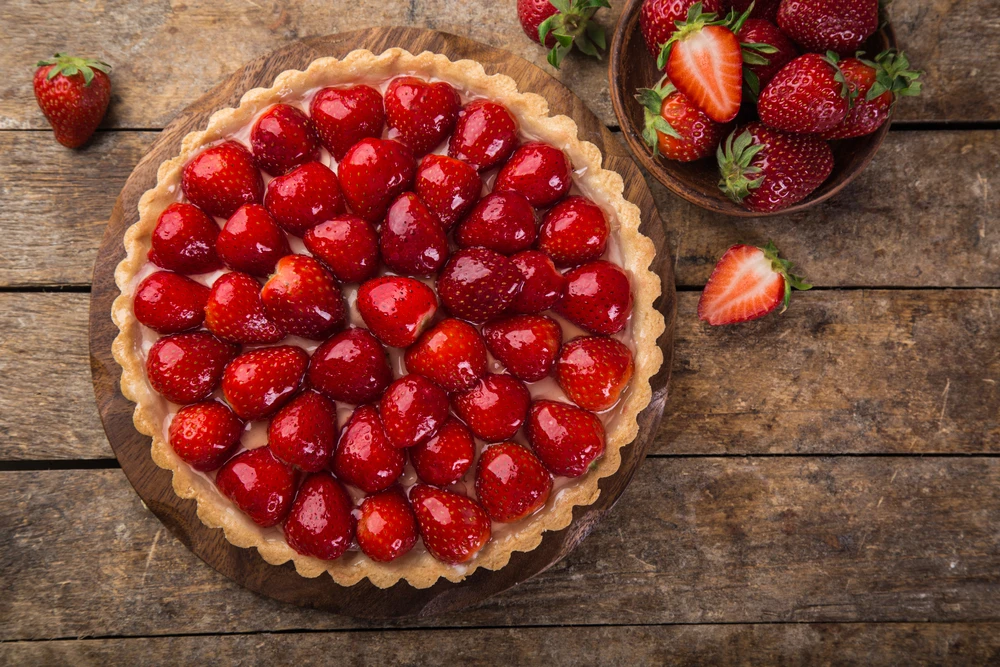
How about a nice strawberry tart? Photo chosen by monsieurdefrance.com: Anna_Shepulova via depositphotos.
Making the shortcrust pastry

Preparing the shortcrust pastry / Photo selected by monsieurdefrance.com: nazarov.dnepr@gmail.com
Ingredients for the puff pastry
- 1 egg
- 250 g T55 flour
- 130 g soft butter (remember to take it out of the fridge, don't melt it).
- 80 g sugar
- 1 pinch salt
The shortcrust pastry process
- In a bowl, beat your egg with 80 g of sugar and add a pinch of salt.
- Then add your 250 g of flour and mix. Do this with your fingertips. You also crumble the dough between your palms.
- Add 125 g of soft butter and continue kneading before shaping the dough into a ball.
- Let stand for at least 30 minutes in a cool place (1 hour is best).

Fresh strawberries are best. Choose the season! Late spring, summer and early autumn. Photo selected by monsieurdefrance.Com fotovincek via depositphoto
Make the pastry cream
For the pastry cream :
- 1 vanilla stick, split
- 1/2 l milk
- 4 egg yolks
- 60 g flour
- 100 g sugar
The pastry cream process
- Separate the yolks from the whites.
- Heat 1/2 l of milk in a saucepan, infusing the vanilla. Add a pinch of salt.
- While it's heating up, take a large saucepan in which you mix the sugar and yolks and whiten the mixture.
- Add the flour
- When the milk is boiling, add it gradually to your previous mixture, stirring with a wooden spoon.
- When done, return the mixture to the original saucepan and cook over low heat, stirring with your spoon.
- Bring back to the boil for 3 minutes, then remove from the heat.
- Continue stirring with the spoon. To cool down further, you can soak the pan in a container of cold water.
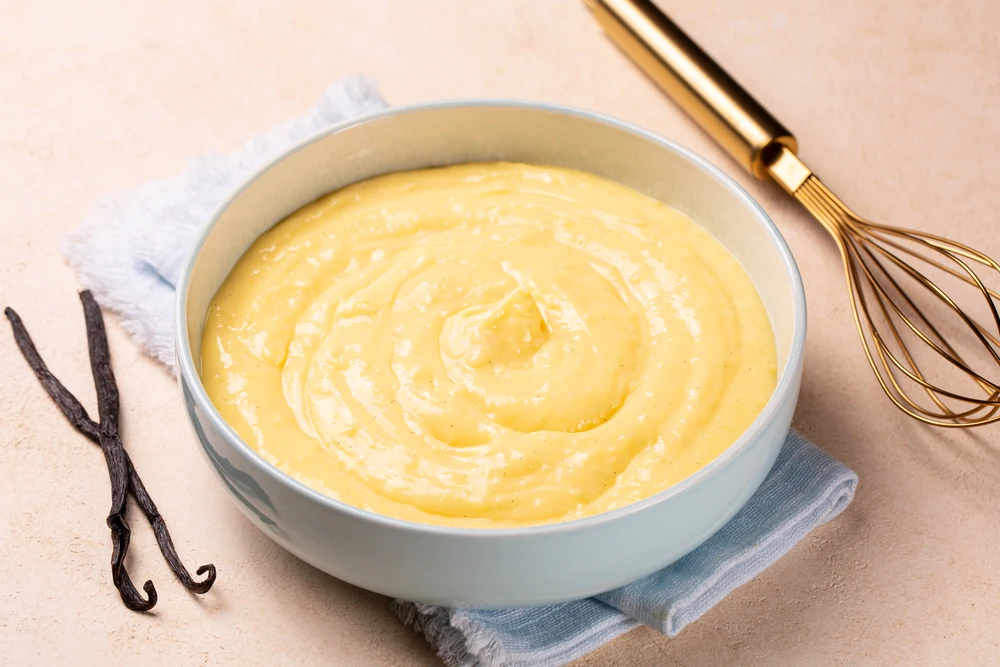
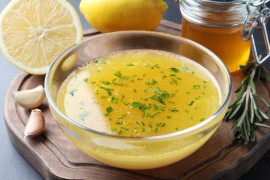
Pastry cream. Photo chosen by monsieurdefrance.com: OlgaBombologna via depositphotos
Assemble and bake
- Preheat your oven to medium heat (180°).
- Roll out the dough on a floured surface, then place it on the mould.
- Use pits or small weights to prevent the dough from rising.
- Blanch for 15 minutes
Then
- Leave the dough to cool
- Wash your strawberries thoroughly and hull AFTER
- Cut them in half
- Spread the pastry cream
- Arrange the strawberries
- Napez with fruit jam
And serve
And strawberries?
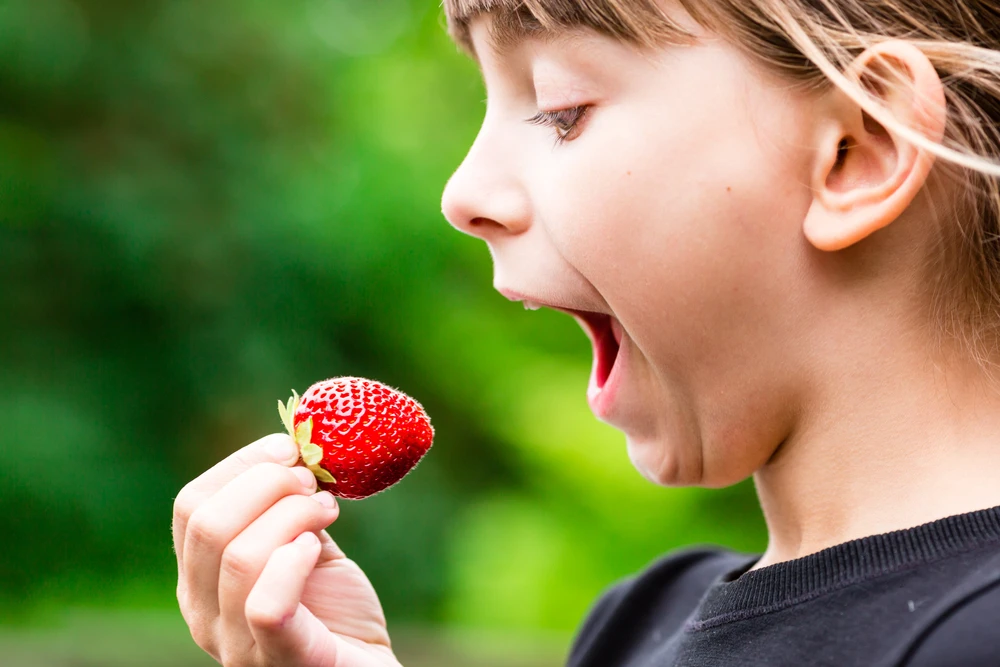
Strawberries are so good! Photo chosen by monsieurdefrance.com: Bigandt via depositphotos.
Expert Tips: Choosing and Washing the Best Seasonal Berries
Take the best if you can. As gastronome and chef Prosper Montagné used to say, "you can only do good things with very good things". The best are IGP strawberries (from Périgord, for example) and Label Rouge strawberries (Périgord, Lot-Et-Garonne). Choose the freshest possible, and the brightest too. Always remember to run them under water with their tails on (remove them afterwards), otherwise they'll lose their taste. Likewise, if you're eating them without cooking, don't put them in the fridge too long: they're best at room temperature . Strawberries can be eaten plain, dabbed in powdered sugar or, magically, dipped in whipped cream. But it's true that a good strawberry tart....

Strawberries painted by Manet in 1882. Source de Monsieurdefrance.com : Artbook, Domaine public, https://commons.wikimedia.org/w/index.php?curid=43750110
The History of Strawberries in France: From Jacques Cartier to Frezier
Strawberries have been eaten in France since the dawn of time. The Gallo-Romans already enjoyed wild strawberries. Elegant Romans used them in their beauty products , more for their scent than for their facial benefits. In the Middle Ages, strawberries were cultivated and found in gardens. In the 16th century, Jacques CARTIER (1491-1557) brought back a very tasty type of strawberry from his discovery of Canada (he was looking for gold, and didn't find any, but he did bring back a little culinary nugget).
The Spy Who Brought Large Strawberries to the Royal Gardens
The strawberry began to be cultivated in France. In the 17th century, a Frenchman named Frezier (you can't make that up!) brought back the first strawberries from Chile, where he had stolen them. They were large and white. It was in 1740 that botanist Antoine Nicolas DUCHESNE (1747-1827) succeeded in creating a blend that combined the size of the Chilean strawberry with the flavor of the Canadian strawberry discovered by Jacques CARTIER. Strawberry production becomes the specialty of the town of Plougastel in Brittany.
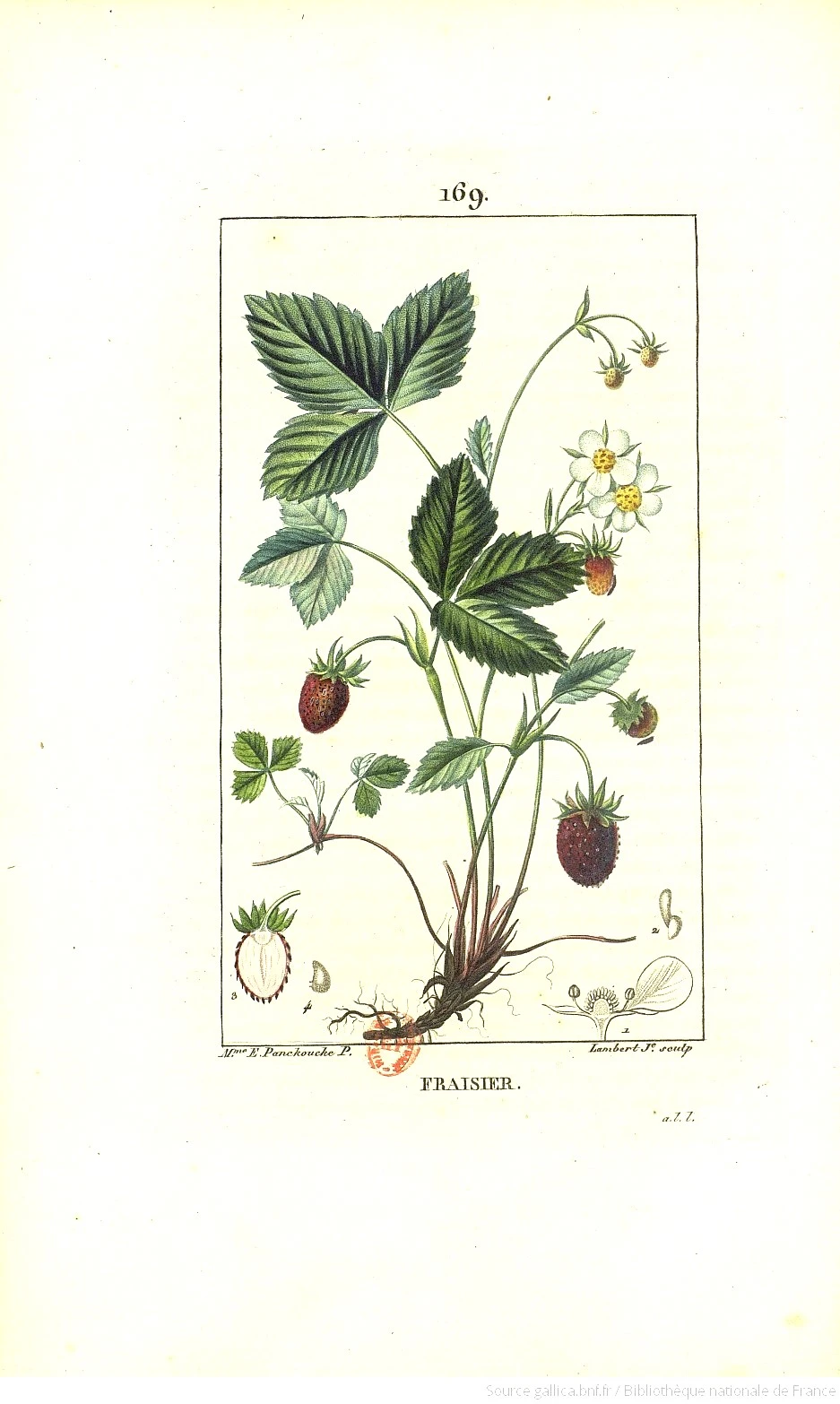
Watercolor drawing from 1823 Illustration selected by monsieurdefrance.com from Flore médicale. Tome 3 / described by MM. Chaumeton, Poiret, Chamberet ; painted by Mme E. P....... [Panckoucke] and by J. Turpin,... via Gallica.fr / BNF
Strawberries in France
France is home to more than 600 different types of strawberry , including the famous gariguette, so popular with the French, obtained in the 70s by INRAE. In 2022, 78,657 tonnes were harvested. They are produced mainly in the south of France (Nouvelle Aquitaine, Provence Alpes Côte d'Azur and Auvergne Rhône Alpes). And that's not enough, since the French consume 130,000 tonnes every year, or 3.7 kg per capita .
Learn more about French cuisine
The complete guide to French cuisine
Traditional French recipes you must try
Discover the secrets of French desserts
The gastronomic meal of the French (UNESCO heritage)