What is the best French food for Americans to try? The best French dishes for Americans are Croque-Monsieur (a gourmet Grilled Cheese), Boeuf Bourguignon (red wine Beef Stew), Duck Confit (luxury Pulled Pork), and Tartiflette (the ultimate Mac & Cheese alternative). These classics focus on melted cheese and tender meats, avoiding "bizarre" foods like snails or frogs.
1 Croissant – The Ultimate French Breakfast Perfection 🥐
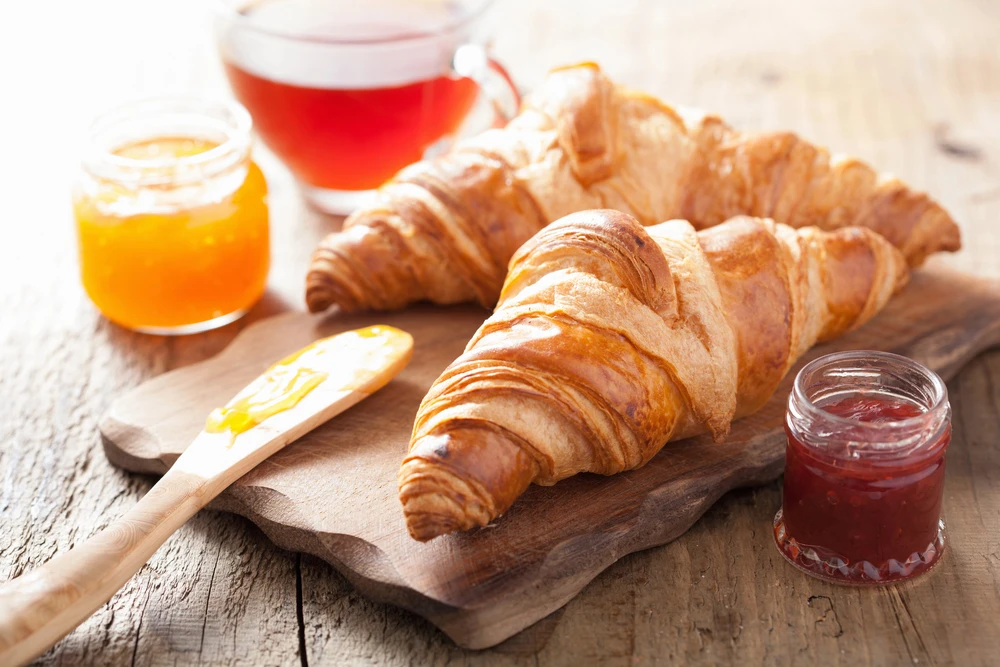
For everything you need to know about croissants: click on the photo / photo chosen by monsieurdefrance.com: duskbabe via depositphotos
Here's an iconic specialty, perhaps the best known in the world. France produces 1,800,000,000 of them every year!... No need to look for "the best address" on the net, croissants you'll find everywhere and they're almost always good, simply because if they weren't good, they wouldn't be sold to the French who are very demanding about croissants. Ask them for a good address when you're out and about or at the hotel, they'll always have a good boulangerie to recommend, even in the middle of Paris, and you won't go broke just because an influencer said one croissant was better than another. The funny thing is that the croissant is one of France's most recent culinary specialties, it was born at the end of the 19th century when French pastry chefs wanted to imitate Viennese pastry chefs, but using the queen of doughs: puff pastry.
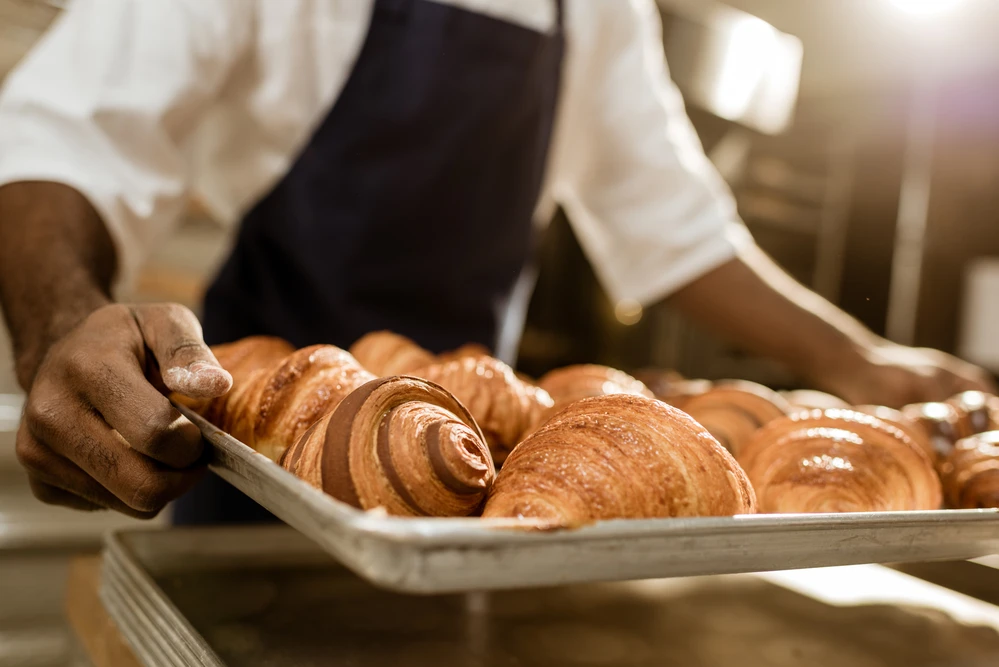
Nothing beats a good croissant out of the oven and eaten warm / Photo chosen by monsieurdefrance.com: depositphotos
Composition:
Puff pastry (it's made with butter, lots of butter), baked to a crisp, golden texture. To find out all about the croissant click here.
Why you'll like it?
Because it's the perfect breakfast with coffee. Forget donuts or bagels, here it's crispy outside, melting inside and buttered to perfection. You can even cut it in half and slip a little jam inside. It's also a great way to take a break during the day, and impossible to resist! In the same vein, try the pain au chocolat with its puff pastry wrapped around a chocolate bar. A delicious treat. And it's not expensive;
2 Croque-Monsieur – The French Take on a Grilled Cheese 🧀🥪
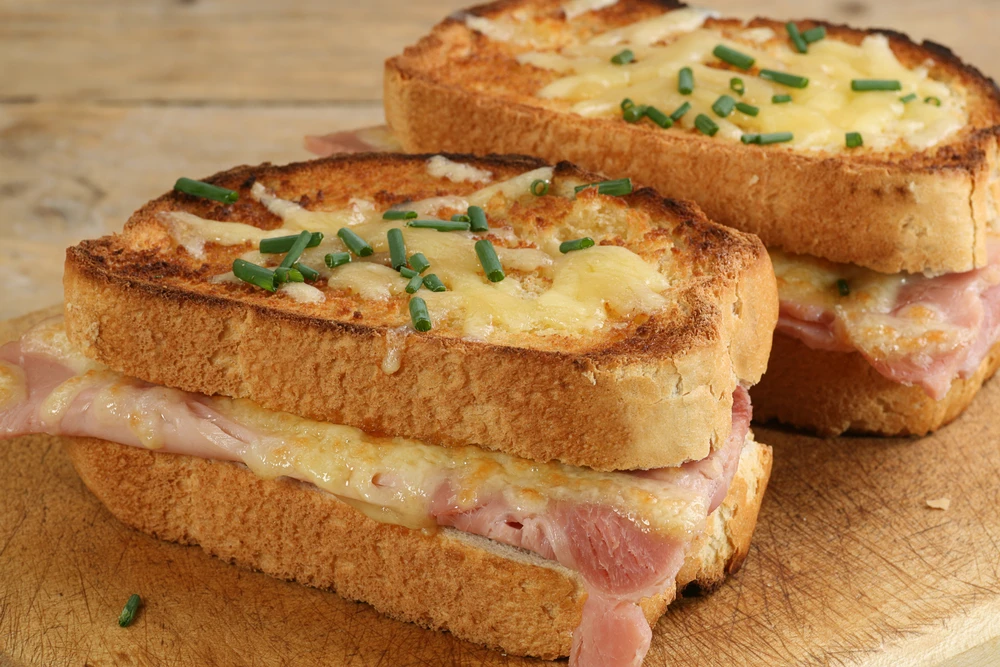
Croque monsieur is the ideal dish for an evening meal or a quick lunch / Photo chosen by monsieurdefrance.Com: Image by Jamie Rogers/Shutterstock
The croque-monsieur is easy to find in bistros, bakeries or butcher's shops (it's often bigger in butcher's shops). It's easy to eat quickly, with a small green salad with vinaigrette on the side. A delight. A French invention with an amusing origin, since it is said to have been invented by a former executioner improvising a dish because he ran out of enough to make a full meal. As the customer he was serving had whispered behind his back that an executioner might well serve human meat, when this customer asked "what's the name of this dish?" the former executioner smiled and said:"un croque monsieur". And wham! In any case, croque-monsieur is no laughing matter, since even the Académie Française, which writes the French language dictionary, has provided a definition and even the official recipe;
Composition:
Two slices of sandwich bread with ham and slices of Emmental or Comté cheese in the middle with a little béchamel sauce. On top of béchamel with a little grated emmental. It's baked au gratin;
Why you'll like it?
Because it's a grilled cheese, but even creamier and more gourmet thanks to the "French touch" Add a fried egg and hop! It becomes a croque-madame.
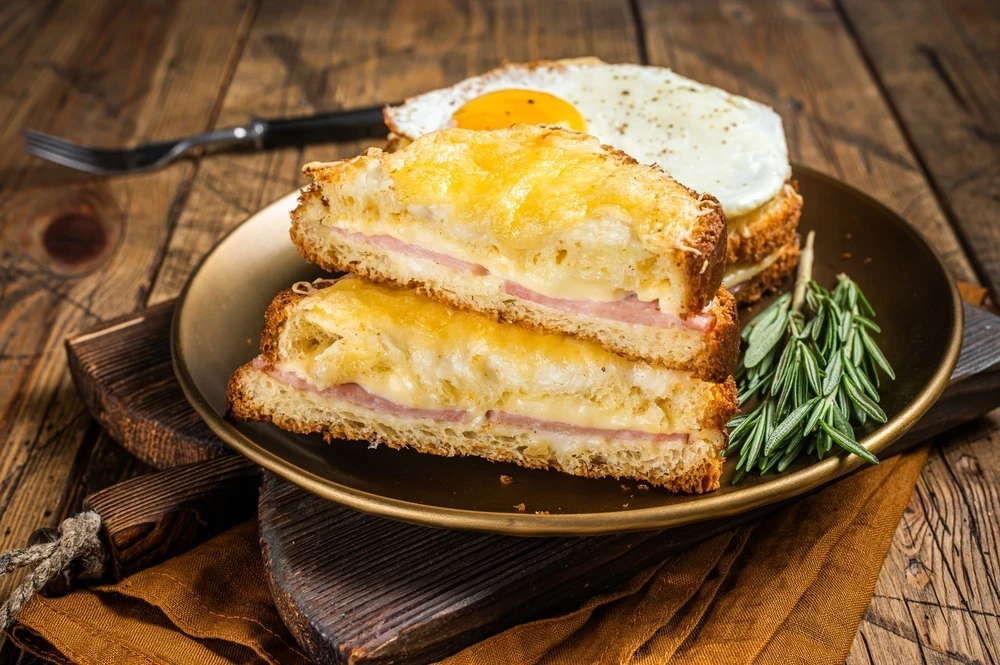
Add a fried egg to your croque-monsieur and hey presto: you've got a croque-madame / Photo chosen by monsieurdefrance.com: shutterstock.
3 Quiche Lorraine – The Savory French Pie You Can Eat with Your Hands 🥧🥓
This is one of France's oldest regional dishes because it was already being made in the 16th century in Lorraine, the region that gave quiche its name. There are many variations: with mushrooms, leeks and so on. It has to be said that it's one of the best-selling takeaways in the world, a fun way to see French words when you're French and traveling. Watch out, French people! Quiche Lorraine, the real thing, is without cheese. If you put cheese on it, it's a cheese quiche (and honestly it's just as good without!).
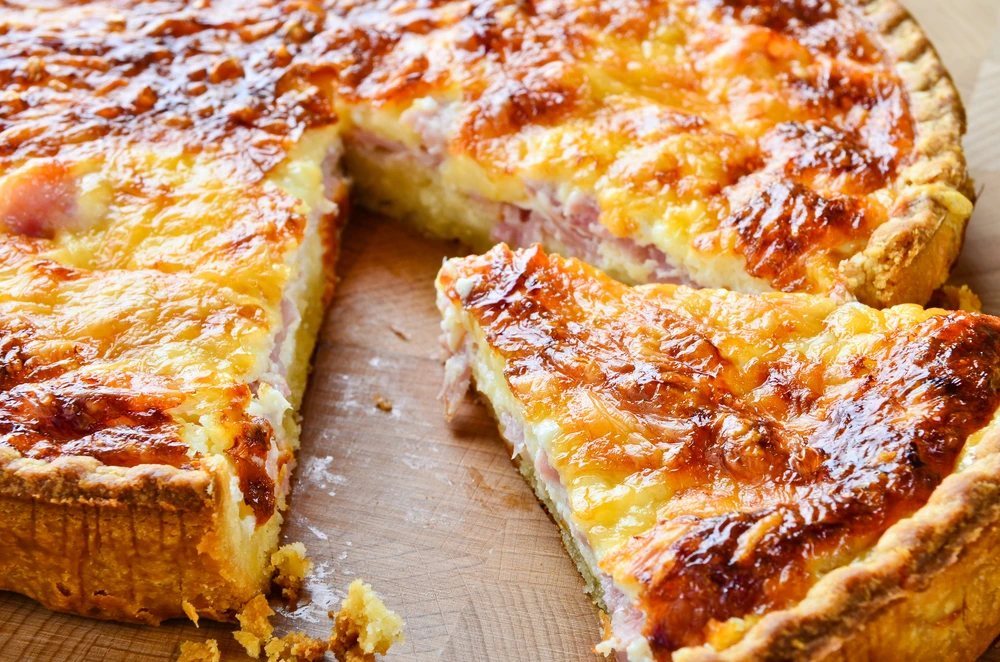
Fancy making yourself a quiche lorraine? The recipe is here, just click on the photo / Photo chosen by monsieurdefrance.com: shutterstock.
Composition:
Shortcrust pastry with a mixture of eggs, cream and smoked bacon (which is pan-fried) on top, a pinch of muscade to finish. It is increasingly found with cheese (emmenthal).
Why you'll like it?
Because it's like a mix between an omelette and a pizza, but better. Easy to eat and ultra-tasty!

4 Boeuf Bourguignon – The French Beef Stew You’ll Love 🥩🍷
Boeuf bourguignon is a very old dish. In fact, it's based on an old custom from the French countryside of yesteryear: cook the beef gently over the fire, leave to work in the fields and come back to eat. It's called boeuf bourguignon because it originated in Burgundy, a famous cattle-raising and wine-producing region in the Middle Ages. Beef and wine weren't far apart, so the Burgundians came up with the idea of combining the two by cooking beef in red wine. Speaking of Burgundy, you can also make a Burgundian fondue by cooking pieces of beef (or meat more broadly) in hot oil (with a few herbs).
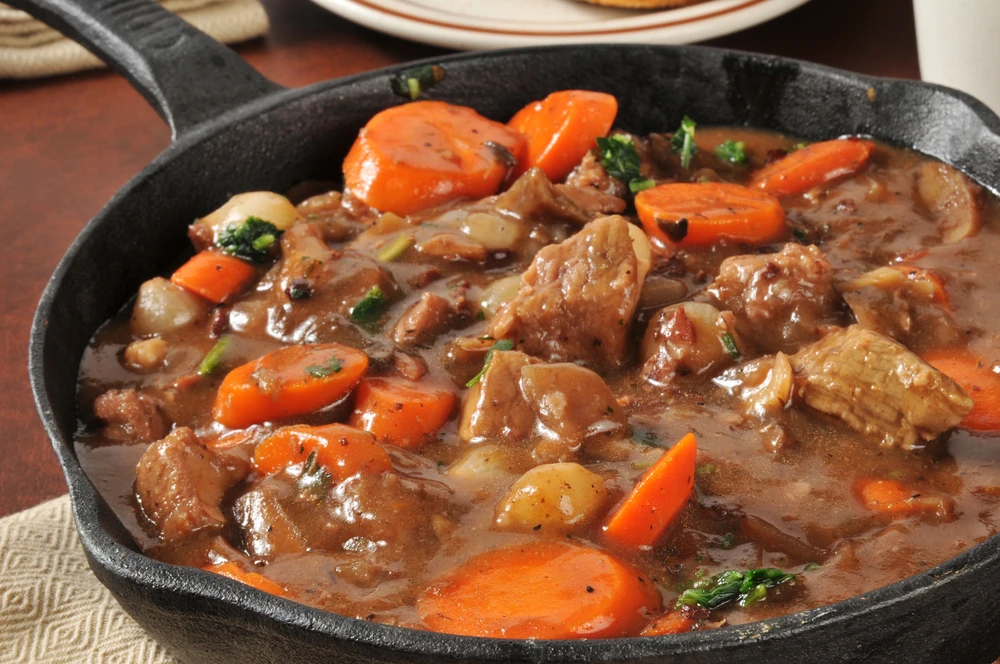
Du boeuf bourguignon / Photo chosen by monsieurdefrance.com: MSPhotographic via depositphotos
Composition:
Slowly simmered beef in red wine with carrots, onions, mushrooms and bacon. Possibly some potatoes.
Why you'll like it?
Because it's like a beef stew, but with French wine. Ultra-tender, flavorful and comforting. It's also a truly typically French dish that's eaten among friends with good conversation and plenty of laughs.
To be good, a boeuf bourguignon must be cooked for a long time / Photo chosen by monsieurdefrance.com pxabay
5 Duck Confit – The Luxury Version of Pulled Pork 🦆🍗
Welcome to the South-West: a land of gourmet delights! Duck confit (or goose confit in the luxury version) is much more than a regional specialty, it's an art de vivree. In the past, families prepared it well in advance and served it often. What makes confit so famous is cooking the potatoes "à la sarladaise", in other words, frying them in duck (or goose) fat. Rolling on the floor. Contrary to what you might think from my description, it's not heavy at all (and it's a delight with a good glass of red wine).
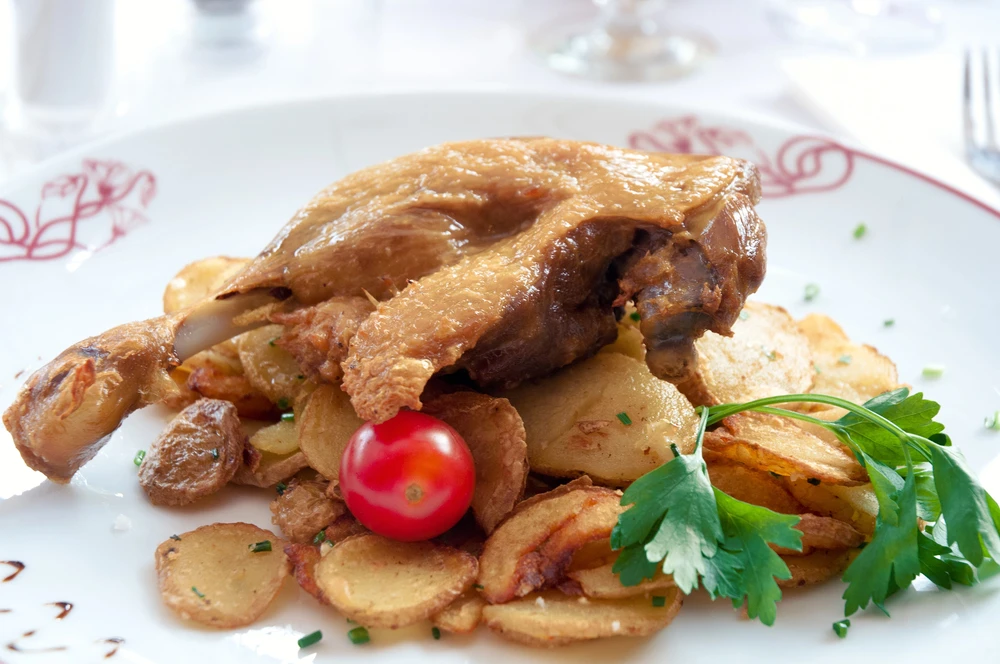
Duard confit: duck leg and sautéed potatoes / Photo chosen by monsieurdefrance.com: LarisaP via depositphotos
Composition:
Duck leg slowly confit in its own fat, served with crispy potatoes.
Why you'll like it?
Because it's slow-cooked meat, French-style. It's a bit like pulled pork, but much thinner. The meat is ultra-melting, the skin crispy, and the potatoes golden brown in the duck fat... A treat!
6 Crêpes – The Most Delicious French Street Food 🥞🍯
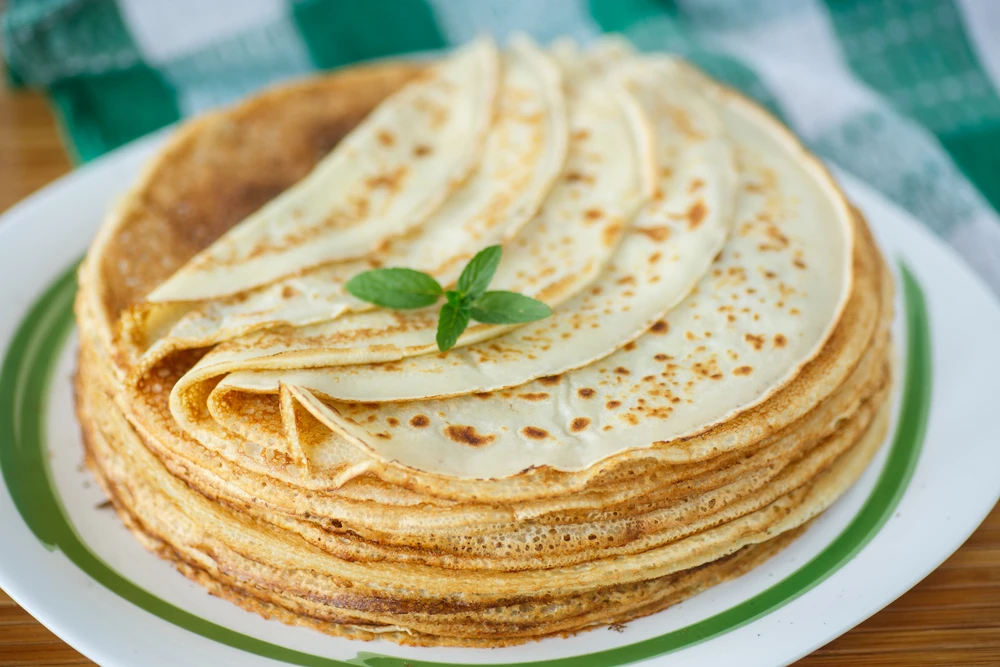
Crepes ready to be garnished / Photo chosen by monsieurdefrance.com: depositphotos.
Crepes are, of course, the specialty of Brittany, which serves them in savory or sweet versions in its crêperies (which the Bretons are also opening in Paris and other regions), but they're also a dessert that's easily found in small restaurants to finish the meal lightly. With a little jam, or simply sugar in a sweet version. Bretons also enjoy them in a savory version with ham, grated Emmental cheese, mushrooms, an egg and a little green salad on top (a complete galette). You can also easily find crêpes as a Sunday evening meal in French families. In Lorraine, we make them thicker, pancake-style, and call them "vaûtes". The recipe is here.
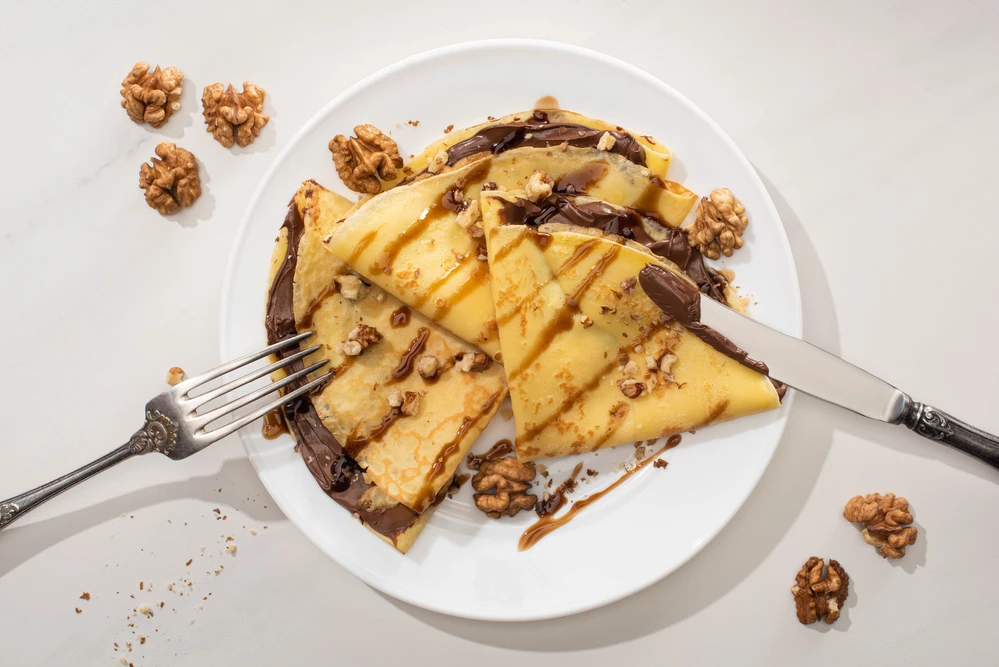
The sweet version with chocolate / Photo chosen by monsieurdefrance.com: depositphotos
Composition:
salted version(buckwheat pancake with ham, cheese, egg) or sweet(sugar, chocolate, nutella, jam).
Why you'll like it?
Because it's comfort food you can eat any time of day! Easy to enjoy and customize to your tastes.
7 Tartiflette – The Gooey, Cheesy Dish That Melts Hearts 🧀🥔
Tartiflette is a new dish, and it's amazing we didn't think of it sooner. A great dish to share with friends, with a good wine. Warm in winter! Personally, I fry the lardons in white wine. There are regional variations like munstiflette (with munster cheese) or croziflette (with crozets, Savoyard pasta).
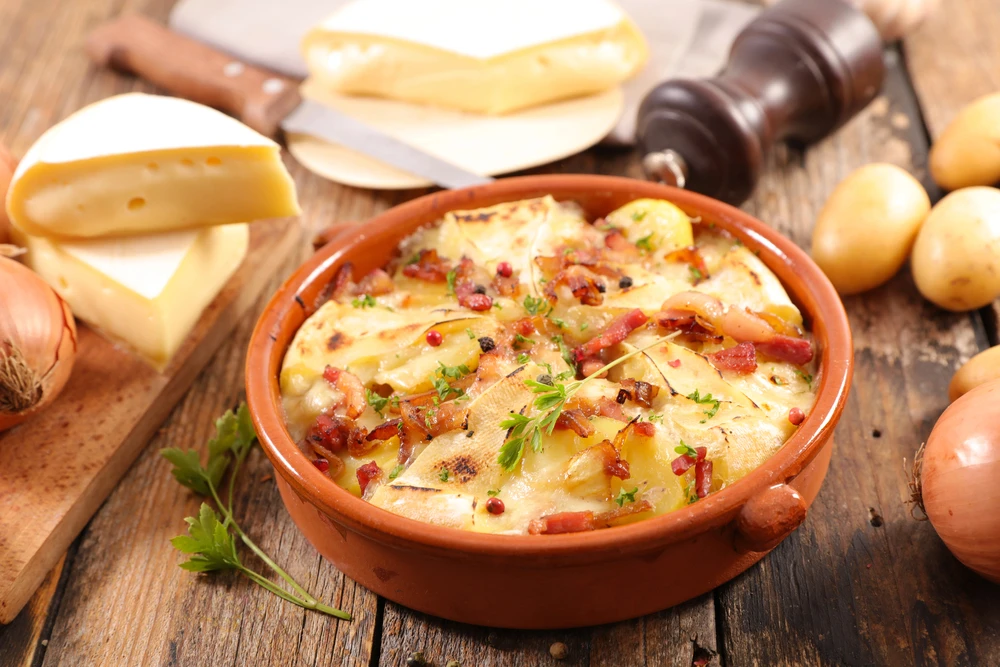
A tartiflette / Photo chosen by monsieurdefrance.com: studioM via depositphotos
Composition:
Sliced potatoes, reblochon (ultra-melting cheese), bacon, onions, cream.
Why you'll like it?
Because it's like a mac & cheese gratin, but with dripping French cheese. A perfect winter dish! Eating it with French people is even better!
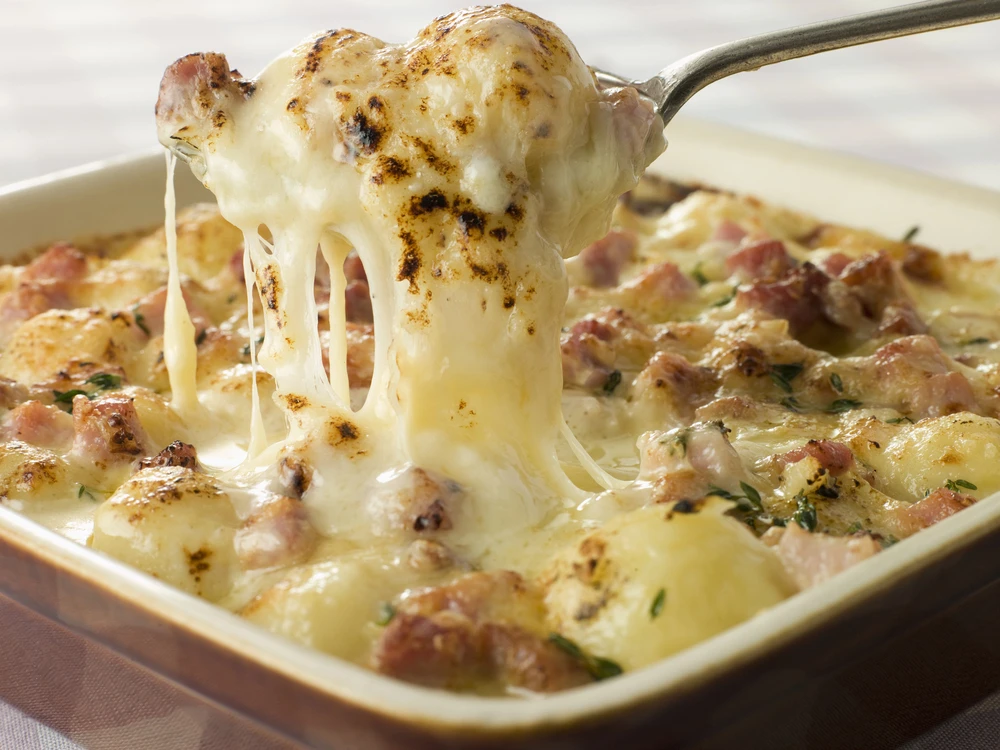
It's creamy and melting, it holds well to the body tartiflette / Photo chosen by monsieurdefrance.com : Photo chosen by monsieurdefrance via depositphotos : monkeybusiness
8 Paris-Brest – The Fancy French Donut with a Nutty Twist 🍰🍩
Back to the sweet, before heading back to the savory and cheesy. The "paris-brest" is a dessert born in the 20th century from the idea of a pastry chef who wanted to pay homage to the Tour de france and who imagined this bicycle wheel-shaped dessert. He made it in choux pastry and topped it with a praline cream. The praline is a French invention, and you can find the recipe here.
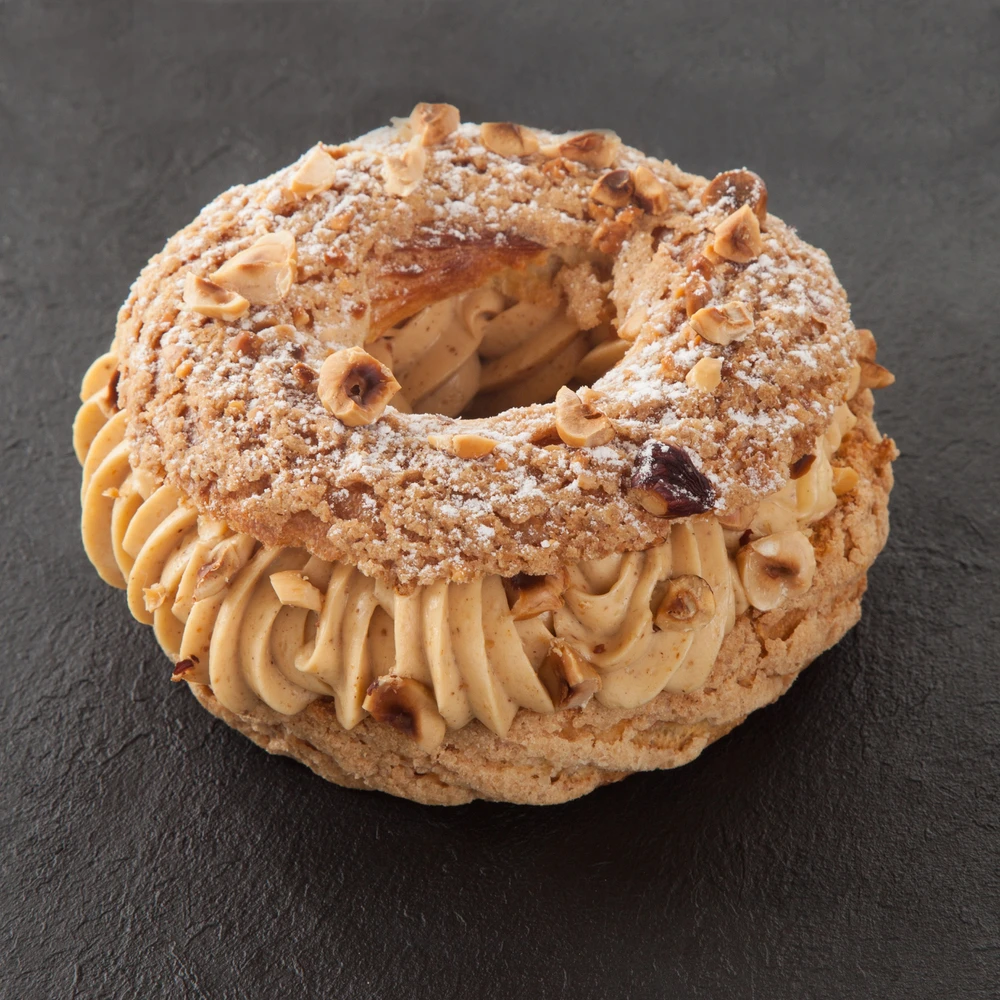
A typical paris-brest / Photo chosen by monsieurdefrance.com: depositphotos
Composition:
Choux pastry filled with a smoothpraline cream and topped with flaked almonds.
Why you'll like it ?
Because it's like a doughnut, but less fatty, more refined and with an ultra addictive hazelnut flavor.

9 Raclette – The Ultimate Feast for Cheese Lovers 🫕🧀
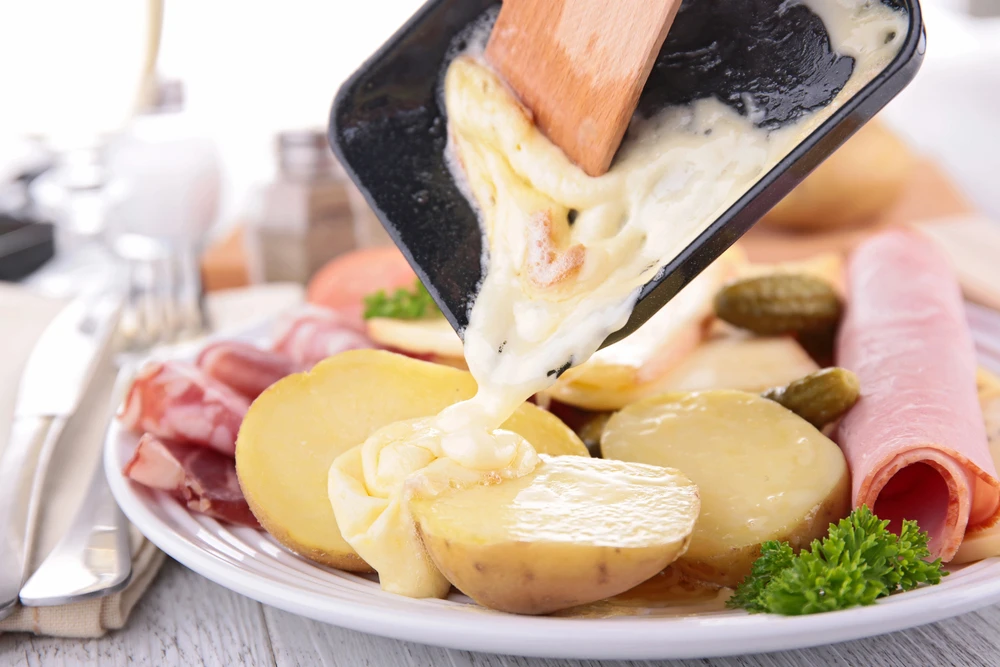
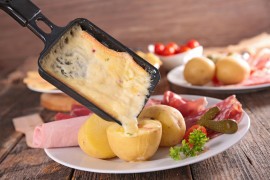
Raclette. Click on the photo for the full recipe / Photo chosen by monsieurdefrance.com : studioM via depositphotos
Let's be honest, we stole this recipe from the Swiss. They used to make it back in the day by melting half a cheese in front of a fire. In the 1980s, the arrival of raclette appliances, a French invention, brought raclette into French homes. It's easy to make: cheese is melted in caquelons and drizzled on charcuterie or boiled potatoes. With a good red wine and some mates, there's nothing better than a raclette evening.
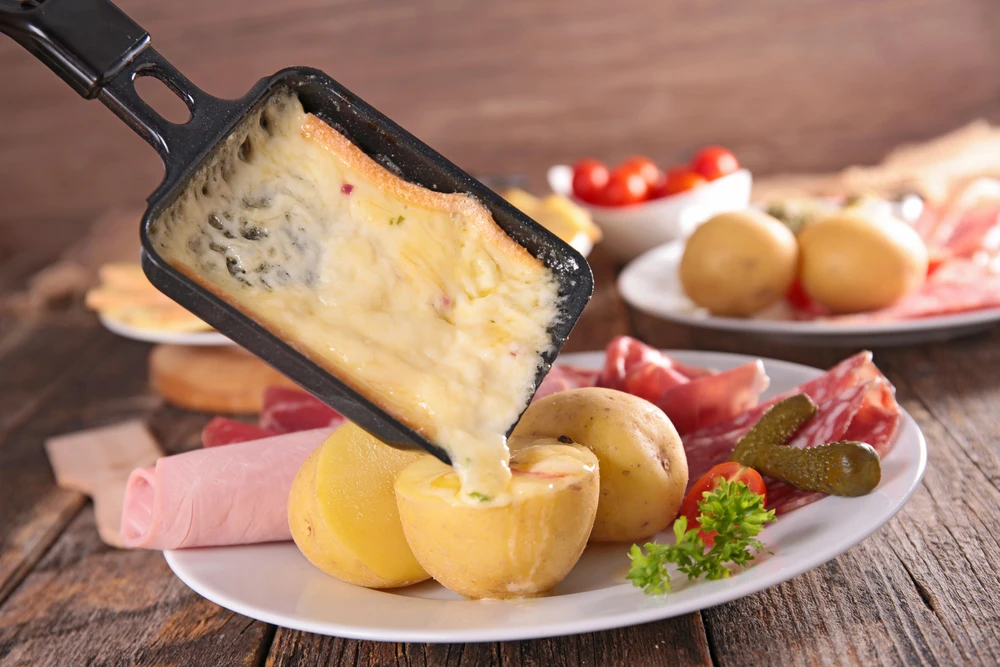
Raclette. Click on the photo for the full recipe / Photo chosen by monsieurdefrance.com : studioM via depositphotos
Composition:
Melted cheese served with charcuterie (ham, sausage), potatoes, pickles.
Why you'll like it
Because it's a barbecue... but with melted cheese on everything! Who can resist a mountain of cheese flowing over potatoes and charcuterie?
10 Gratin Dauphinois – French-Style Creamy Scalloped Potatoes 🥔🍽️
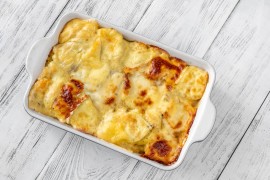
It's one of the few dishes whose exact date of birth is known: July 12, 1788. On that day, it was served for the first time by the Duc de Clermont-Tonnerre to his guests in Grenoble, capital of the Dauphiné. Note that no cheese is used in gratin dauphinois, just potatoes and cream. It can be used to accompany many dishes, such as grilled meat. Recipe here.
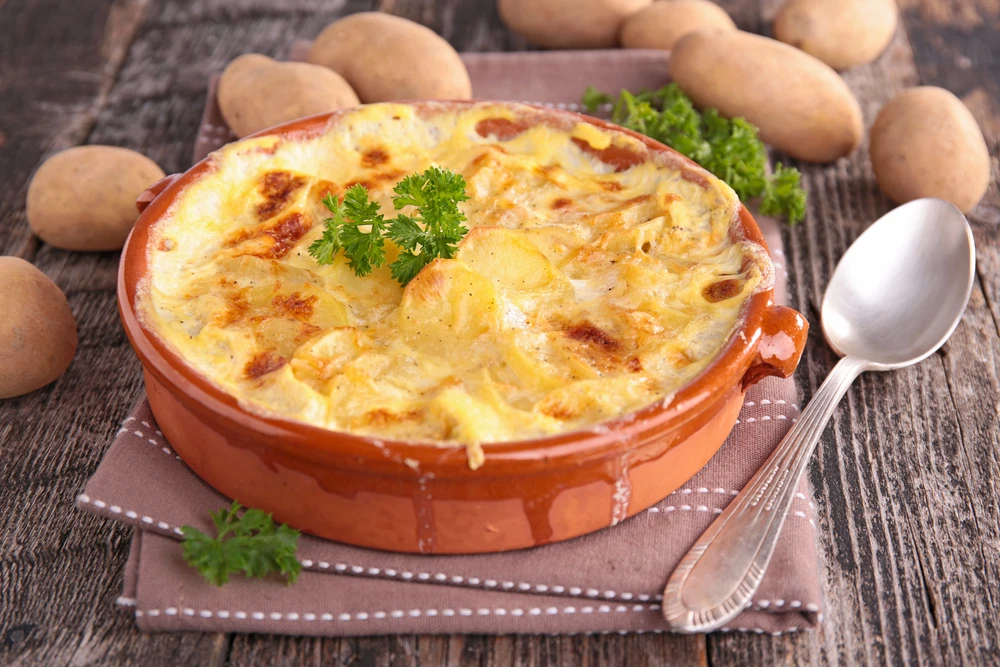
A gratin dauphinois / Photo chosen by monsieurdefrance.com: StudioM via depositphotos.
Composition:
Potatoes, cream, garlic, nutmeg, slow oven-baked.
Why you'll like it
Because it's like scalloped potatoes, but even more melt-in-your-mouth and creamy. Simple and delicious!
The "French Food" Translator
If you are feeling a bit overwhelmed by a French menu, don't worry! Many of our most iconic dishes are actually refined versions of the "comfort food" you already know and love. Use this table as your secret guide to find your new favorite meal:
| If you usually love... | You must try... | Why it's a match? |
| Grilled Cheese | The Croque-Monsieur | It's the ultimate upgrade with ham, melted cheese, and creamy bechamel. |
| Beef Stew | Boeuf Bourguignon | The meat is slow-cooked for hours in red wine until it melts in your mouth. |
| Scalloped Potatoes | Gratin Dauphinois | Pure comfort: sliced potatoes baked in garlic-infused cream (no cheese!). |
| Pulled Pork | Duck Confit | The meat is incredibly tender and flavorful, with a crispy, salty skin. |
| Donuts or Bagels | The Paris-Brest | A light, ring-shaped pastry filled with a decadent hazelnut praline cream. |
| Mac & Cheese | The Tartiflette | The dream dish: a mountain of melted Reblochon cheese over potatoes. |
Conclusion: a gourmet trip not to be missed!
If an American comes to France, he can't leave without tasting these must-tries. Comforting, gourmet and often very cheesy (in every sense of the word 😆) dishes. In short, flavors that will remind her of certain American specialties, but with that little extra something that makes French cuisine so charming! 🇫🇷❤️

FAQ: Navigating French Restaurants Like a Local
Do I really have to eat snails or frog legs?
Absolutely not! While they are famous clichés, they are not daily staples for most French people. If you want to feel "French" without the weirdness, go for a Steak-Frites or a Quiche Lorraine. They are beloved classics that never disappoint.
Is the bread and water really free?
Yes! This is one of the best things about dining in France. A basket of fresh bread (une corbeille de pain) and a pitcher of tap water (une carafe d'eau) are provided at no extra cost. And yes, it is perfectly okay—and even encouraged—to use a piece of bread to "sauce" (wipe up) the delicious remains of your dish!
Why is the service so "slow" compared to the US?
In France, a meal is a celebration, not a transaction. Waiters will never rush you. They believe you are there to enjoy your time. This means you might have to catch their eye and ask for the bill ("L'addition, s'il vous plaît"), otherwise, they might let you stay for hours!
How much should I tip?
Tipping culture is very different here. Service is already included in the price (look for "Service Compris" on the bill). You are not expected to leave 20%. However, if the service was great, it is common to leave a few Euros (2€ or 3€) or "round up" the bill. It’s a nice gesture, but never an obligation.
Can I get my coffee with my meal?
In France, coffee is almost always served after the dessert, not during the meal. If you want it earlier, you’ll have to ask specifically. Also, a "café" is a small, strong espresso. If you want something closer to American drip coffee, ask for a "Café Allongé".
Can I order a soda with my dinner?
You can, but it is less common for adults. Most French people drink wine or water with their meal to avoid the sugar masking the taste of the food. If you ask for a "Coke," the waiter might bring it with a slice of lemon and no ice—don't be surprised!
Is there a "Kids' Menu" in French restaurants?
Most bistros offer a "Menu Enfant", usually consisting of a small steak or roast chicken with fries, followed by a scoop of ice cream. However, many French parents simply let their children try a smaller portion of the main menu.
What is the deal with breakfast?
Don't expect eggs, bacon, or pancakes in a traditional bakery. The French breakfast is sweet: a croissant, a baguette with butter and jam (tartines), and a bowl of coffee or hot chocolate. For a savory breakfast, you’ll usually need to find a hotel buffet or a specialized brunch spot.
Can I ask for "No Ice" or "Ice" in my drink?
In France, drinks are usually served at cellar temperature or lightly chilled, but rarely packed with ice. If you want a lot of ice, you must ask for "des glaçons". Conversely, if you want your water at room temperature, it's quite common to ask for it.
Warning: alcohol abuse is dangerous for your health.