A Curious Name: The Origins of the Limousin Clafoutis
A Timeless Classic of French Pastry
Clafoutis comes to us from the Limousin. It's found in cookbooks as early as 1856, proving its antiquity on Limousin tables. We don't know really what this word means. Some people tell us that it comes from the Occitan "clafir" which means to fill. And it's true that we fill the pie. Others tell us that "clafoutis" would come from the old French "claufir", otherwise said clouter... It's true that seen from above the cherries are vaguely reminiscent of big nails. In short, it's what you eat that counts, not the name of a dessert. We sometimes talk about "billion" (just that !) or "millat" rather than clafoutis.
Monsieur de France’s Easy Cherry Clafoutis Recipe
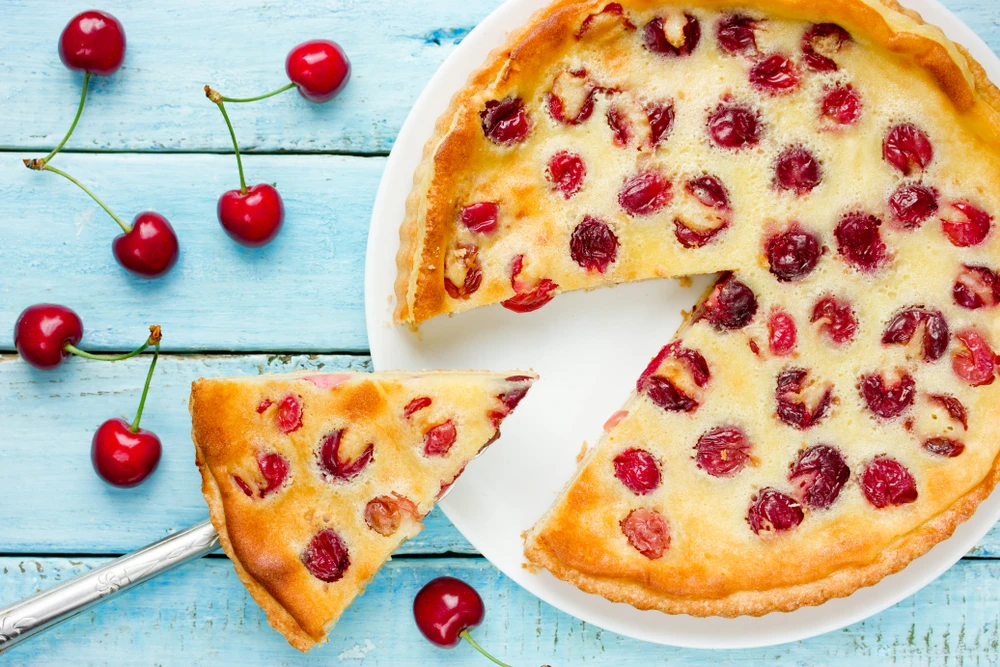
A successful clafoutis / photo by Anastasia_Panait/Shutterstock.com
Ingredients for 6 People: Choosing the Best Cherries
- 700 grams of cherries (the top ones are Montmorency cherries)
- 60 grams of sugar (3 tablespoons)
- 70 grams flour (3 large tablespoons)
- 250 Ml of milk (a quarter of a liter so a large glass)
- 3 eggs
- 20 grams of butter;
- 1 pinch salt
Step-by-Step Preparation for a Professional Result
- Preheat your oven to 180 degrees.
- Prepare your dish for flan. A dish with fairly high edges is best.
- You butter your dish well with the 20 grams of butter.
- Clean the cherries by running them under water and then blotting them dry.
- Choose if you remove the pits. In principle, we keep them because they give more taste, but it's true that it's not practical to eat.
- Arrange the cherries in the flan dish.
- Mix the flour with the sugar and eggs in a bowl.
- Continue stirring, lettingthe milk flow gently into the mixture.
- Add a pinch of salt.
- Mix a little more.
- Pour the mixture over the cherries.
- Bake in the oven preheated to 180 degrees.
- Let cook 40 minutes.
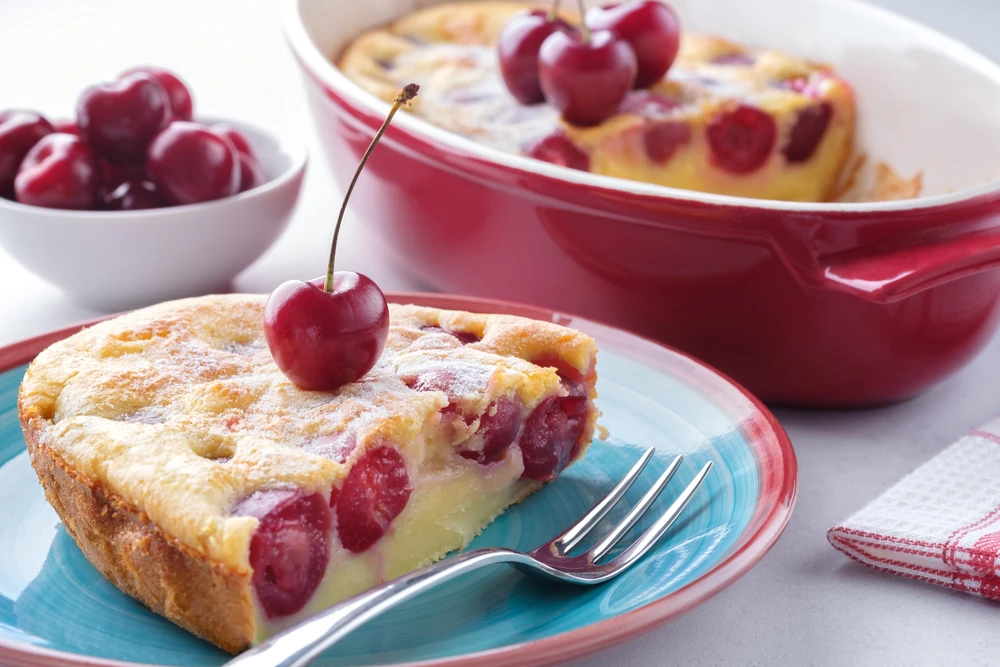
A successful clafoutis / photo by MariaZubareva/Shutterstock.com
Pitting cherries: the ultimate dilemma between tradition and modern convenience
The debate over pitting cherries divides cooking enthusiasts on a fundamental question: should taste or practicality take precedence? For purists, especially when it comes to clafoutis, keeping the pits is essential to preserve the integrity of the fruit and release those famous bitter almond notes during baking. On the other hand, removing the pits guarantees a peaceful and safe eating experience, avoiding the risk of broken teeth while making the dessert accessible to younger children. Between tradition, which focuses on a less soggy texture, and modernity, which advocates convenience, the final choice belongs to the person holding the spoon, as each method offers a radically different sensory experience.
Expert Tips: Adding Cream and Enhancing Flavor
You can add a little of cream at the end of your egg-sugar-flour mixture to give it a little thickness (and as many French chefs say : "fat is taste").
Some put a little kirsch in the mixture to enhance the taste of the cherries. Others put a sachet of sugar vanilla with the sugar powder.
You can also vary the fruit, although you won't really be able to call it "officially" clafoutis anymore. It's just delicious with mirabelle plums, or blueberries. Some people also make it with apricots or apples. The main thing is to have a fruit that holds together well;
Excuse our translator, he sometimes makes mistakes and ... He was partying all night long there.

FAQ clafoutis
What's the best version of cherry clafoutis?
The traditional version retains the pits for flavor, but some remove them for greater convenience without altering the fragrance too much.
What ingredients are needed to make a good clafoutis for 6 people?
700 g cherries, 60 g sugar, 70 g flour, 3 eggs, 250 ml milk, 20 g butter and a pinch of salt.
At what temperature and for how long should the clafoutis be cooked?
Preheated to 180°C, bake the clafoutis for 40 minutes, until golden and set.
Can you vary the fruit in a clafoutis?
Yes, this dessert works just as well with mirabelle plums, blueberries, apricots or apples, although it's no longer the "classic clafoutis".
What tips can you use to make a successful clafoutis every time?
Add a little cream to the mixture for extra smoothness, or a dash of kirsch to enhance the cherries.
Learn more about French cuisine
The complete guide to French cuisine
Traditional French recipes you must try
Discover the secrets of French desserts
The gastronomic meal of the French (UNESCO heritage)