The Champs-Élysées connects Place de la Concorde to the Arc de Triomphe and is home to major landmarks, luxury boutiques, and historic theaters. The highlight of any visit is climbing the Arc de Triomphe for a 360-degree panoramic view over Paris.
Want to visit Paris with the advice of a Parisian? Here is the ultimate guide for 2026.
I What to see and do on the Champs-Élysées?
Strolling down the Champs-Élysées means immersing yourself in a bustling atmosphere that combines luxury, architectural excess, and the French art of living. You don't "visit" the avenue, you "walk up" or "walk down" it, passing between futuristic signs and 19th-century stone buildings. For visitors, the experience often begins with the visual shock of this infinite perspective, an axis that seems to split Paris in two and reach the horizon.
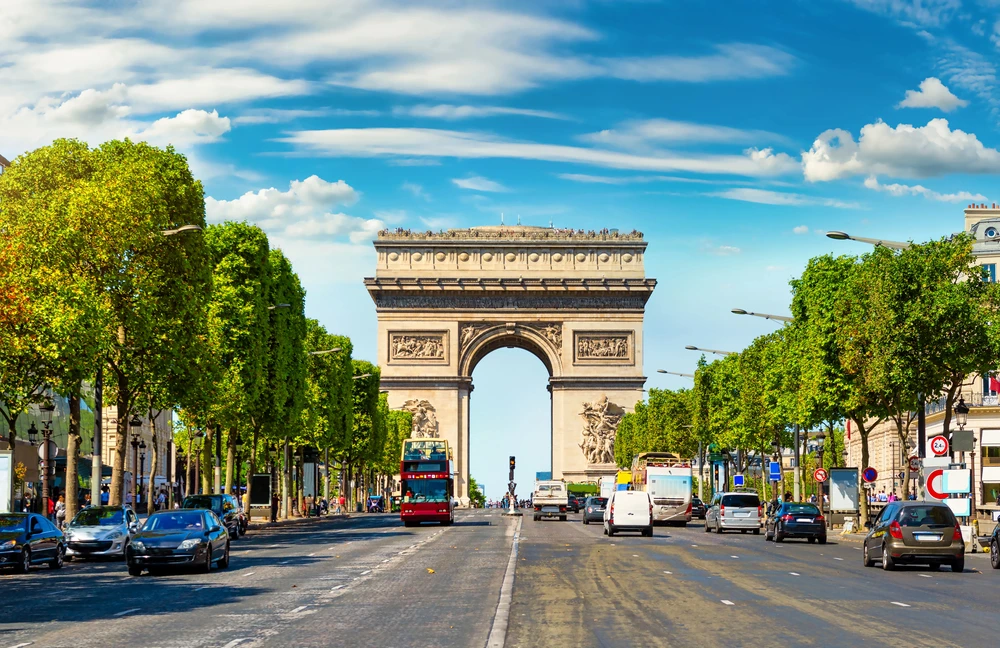
"The Fields" / Photo selected by Monsieur de France: by Givaga via depositphotos
1. The Flagship Parade: when shopping becomes an art form
Today, major international brands are no longer content with simply selling products; they showcase their world in flagship stores that are true feats of design and engineering. These spaces are designed to impress, to offer an immersive experience that goes beyond the act of purchasing.
The Champs-Elysées is a vast canvas for them to express themselves.
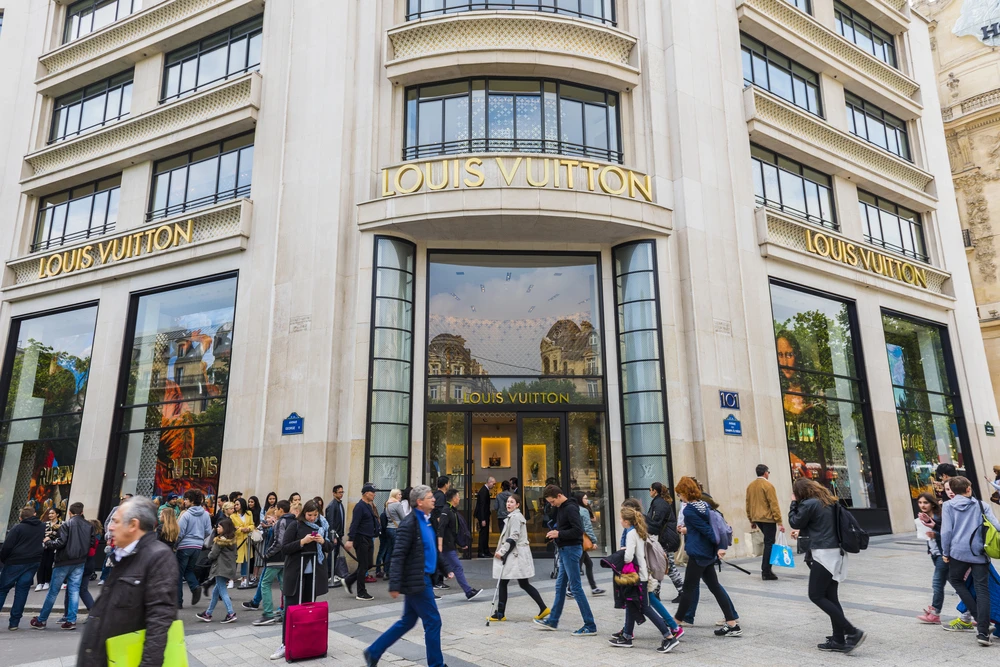
Louis Vuitton Store on the Champs-Elysees Avenue. Paris, France. — Photo selected by Monsieur de France: by resulmuslu via depositphotos
-
Louis Vuitton House (No. 101): This is a gathering place for fashion lovers, but it is also a real architectural gem. Its monumental Art Deco façade, topped by an imposing dome, makes a real statement on the corner of Avenue George V. Inside, monumental art installations and large spaces transform shopping into a museum visit. Here, French luxury is expressed unapologetically in a bold setting, with staircases that seem to float and lighting effects that magnify the brand's leather goods collections, which are a true source of French pride.
-
The Apple Flagship Store (No. 114): located in a restored Haussmann-style building, this store showcases new technologies while respecting heritage, as evidenced by the original coffered ceilings that you will see when you look up. The interior courtyard is covered with a kaleidoscopic glass roof composed of hundreds of glass pyramids. It is a haven of technology in a setting of great nobility, where wood, stone, and glass combine with design to create an atmosphere of serenity unique on the avenue.
-
Galeries Lafayette (No. 60): A marvel of the 1930s, it offers a hybrid experience. The food court in the basement is a surprising gourmet stopover where you can discover the signature creations of France's greatest pastry chefs and artisans. The interior architecture, with its glass tunnel and suspended walkways, is a tribute to modernity. The building was long used as a bank, and you can still see the old vaults.
2. Look up: the secrets of facades
Amidst the commercial hustle and bustle and streams of tourists, the Champs-Élysées preserves stone gems that tell of the splendor of yesteryear. If you take the time to look above the glittering shop windows, you will discover facades and beautiful sculptures, wrought-iron balconies and ornaments that bear witness to the era when the avenue was the salon of chic Europe.
The Hôtel de la Païva is the most accomplished example of luxury as imagined in the 19th century. It is not open to the public, but its walls remember the courtesan who had it built and who ruined kings and patrons for a few moments of pleasure.
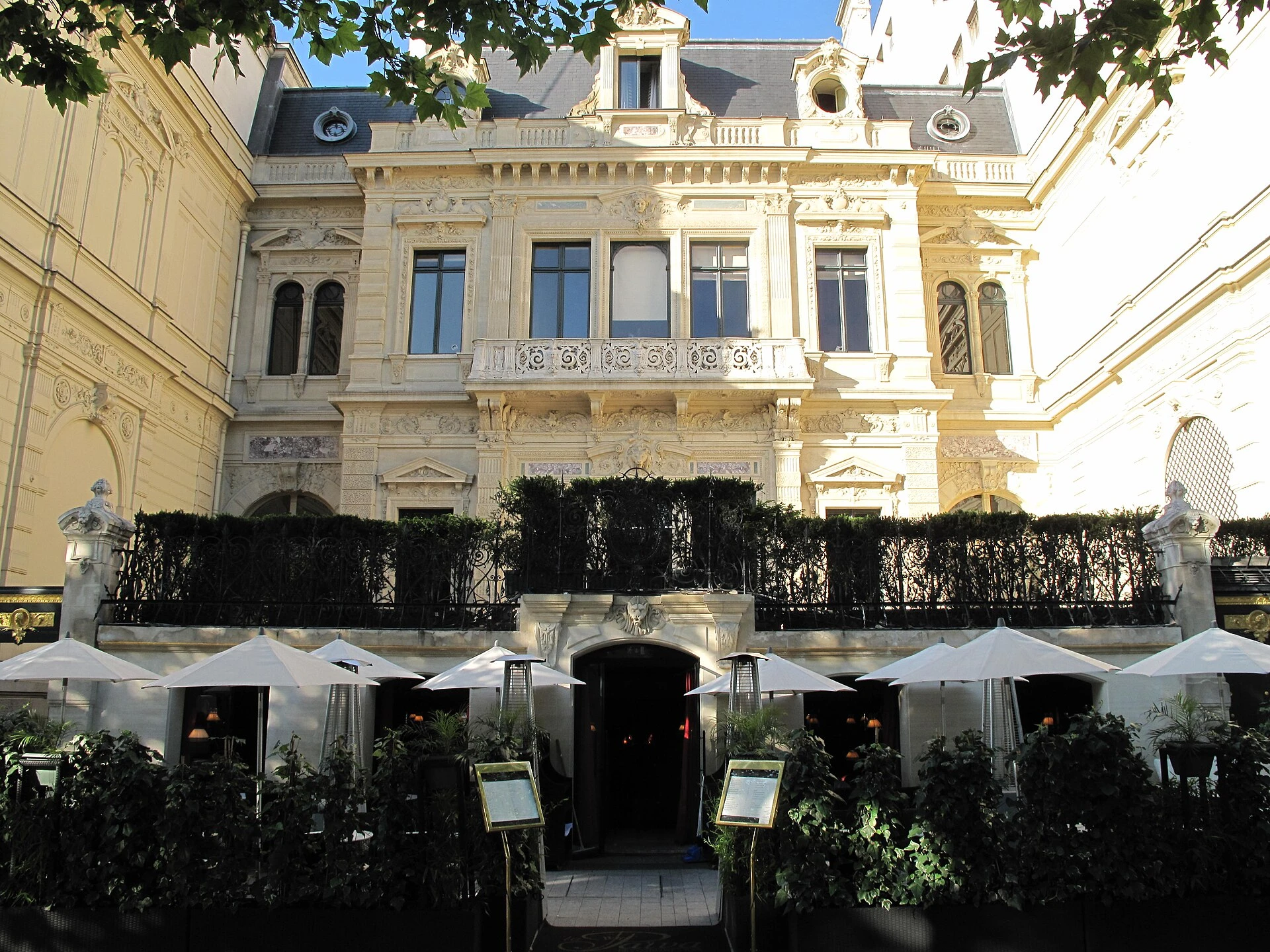
The Hôtel de la Païva / Photo selected by monsieurdefrance.com: By Tangopaso — Own work, CC BY-SA 3.0, https://commons.wikimedia.org/w/index.php?curid=7124807
-
The Hôtel de la Païva (No. 25): This is the only large mansion remaining from the era when the avenue was an upscale residential neighborhood. Built between 1856 and 1866 by Esther Lachmann, a famous courtesan of Polish origin who became a marquise, it hides a luxury that caused a scandal at the time. It features a monumental staircase carved from a block of yellow onyx, paintings by Paul Baudry (who also decorated the Opéra Garnier) and a bathroom with solid silver taps. It is the ultimate testament to the excesses of the Second Empire, a courtesan's palace that was intended to be more lavish than the royal residences.
-
Fouquet's (No. 99): More than just a restaurant, this is the headquarters of French cinema. Its plaques engraved with the names of César Award winners and its historic wood paneling make it a monument to Parisian social life. Its façade is listed as a historic monument, preserving the spirit of the luxury brasseries of the early 20th century.
-
The Publicis Drugstore (No. 133): Located at the top of the avenue, in the shadow of the Arc de Triomphe, it revolutionized Paris in 1958 under the leadership of Marcel Bleustein-Blanchet. Its glass and steel façade, modernized in the 2000s, houses a concept store open late into the night. It is the meeting place for Parisians looking for a rare book, a cigar, or a pastry from a top chef (such as Pierre Hermé) at a time when the rest of the city is asleep.
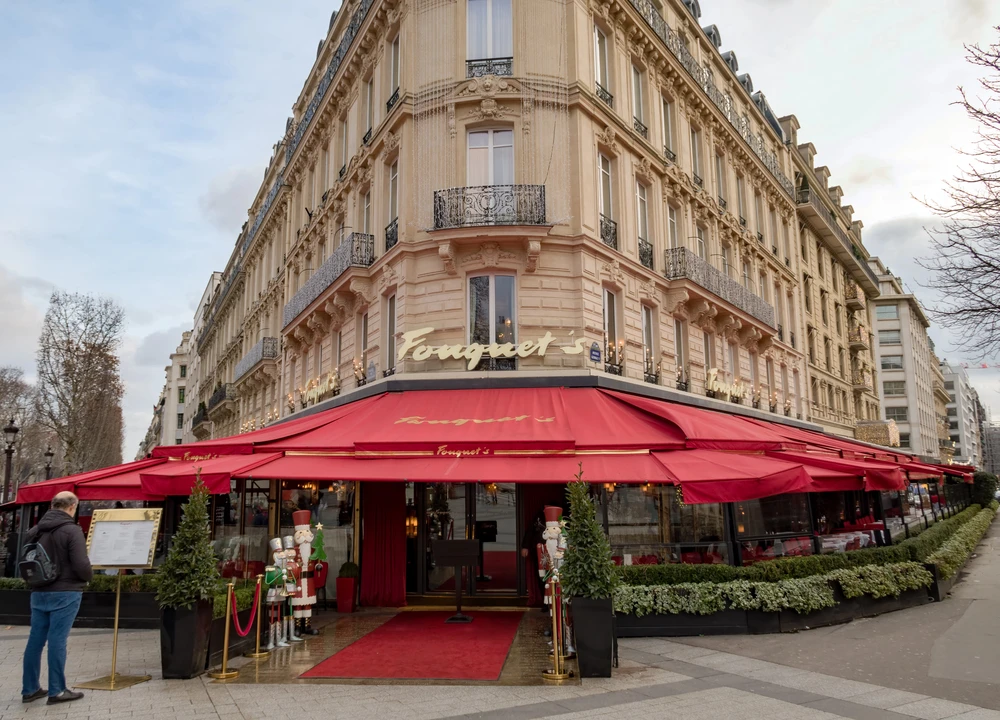
Le Fouquet's / Photo selected by Monsieur de France: Photo by UlyssePixel via depositphotos
3. Entertainment and nightlife: a profound transformation of the Champs-Elysées
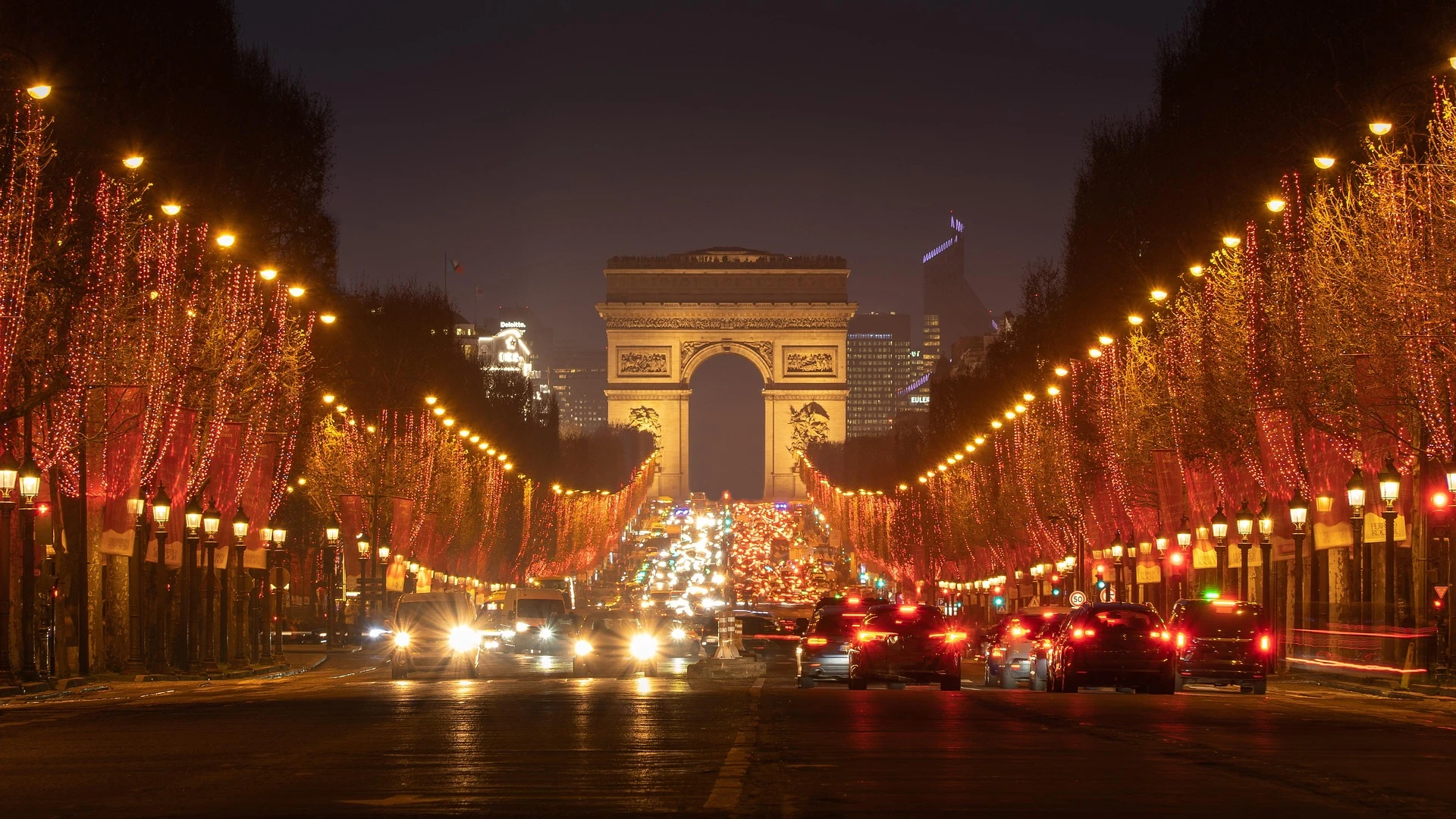
"The fields" at night / Photo chosen by Monsieur de France: by Pierre Blaché from Pixabay
,The avenue has long been the beating heart of the city's nightlife, the place where people came to see and be seen under the neon lights. Although luxury and daytime commerce now dominate, the party spirit has not completely disappeared; it has simply changed.
-
A turning point for cinema: For decades, the Champs-Élysées was known as "cinema avenue," boasting the highest concentration of movie theaters in the world. Unfortunately, the sector is currently experiencing a deep crisis. The permanent closure of the UGC Normandie in June 2024, famous for its ocean liner-shaped auditorium and giant screen, marked the end of a golden age. However, the spirit of cinema lives on thanks to the Publicis Cinéma and the Lincoln, which continue to hold out. Attending a preview screening here remains a special occasion, with the red carpet rolled out on the sidewalk to welcome film crews under the flash of photographers' cameras.
-
The legacy of cabarets: Although the famous Lido has given way to a musical theater program under the name Lido 2 Paris, the avenue remains steeped in this showbiz aesthetic. The exclusive clubs tucked away in the side streets and the bars of the Golden Triangle's luxury hotels (such as the George V and the Plaza Athénée, located just a stone's throw away) keep the excitement going for a cosmopolitan international clientele who love the elegance of Parisian nightlife.
It is not impossible that "the night" will one day return to take over the "Champs," it has been at home there for so long.
4 The Champs-Élysées in figures: Parisian excess
To better understand the scale of this urban monument, here are some key figures that illustrate the avenue's sheer size and economic and cultural importance.
-
1,910 meters: This is the exact length of the avenue, connecting Place de la Concorde to Place de l'Étoile.
-
70 meters: This is the constant width of the roadway and sidewalks.
-
300,000: This is the average number of visitors who walk along the avenue every day. This figure can rise to 600,000 during the holiday season.
-
100 million: The number of people who visit the neighborhood each year.
-
12: The number of avenues that radiate out from the Arc de Triomphe, creating a geometric pattern that is unique in the world.
-
18,000 euros: This is approximately the average annual rent per square meter for a store on the "sunny side" (the north sidewalk, even-numbered side), one of the most expensive in the world.
-
1923: The year the flame of the Unknown Soldier was lit for the first time. Since then, it has never been extinguished.
-
400: The number of trees (mainly plane trees) lining the avenue, which are meticulously maintained to preserve their historic alignment.
-
284: The number of steps you will need to climb to reach the top of the Arc de Triomphe and enjoy the view.
II. Visit the Arc de Triomphe
Dominating Chaillot Hill and standing proudly in the center of Place de l'Étoile, the Arc de Triomphe is much more than a monument: it is the rallying point of national memory and a masterpiece of neoclassical architecture.
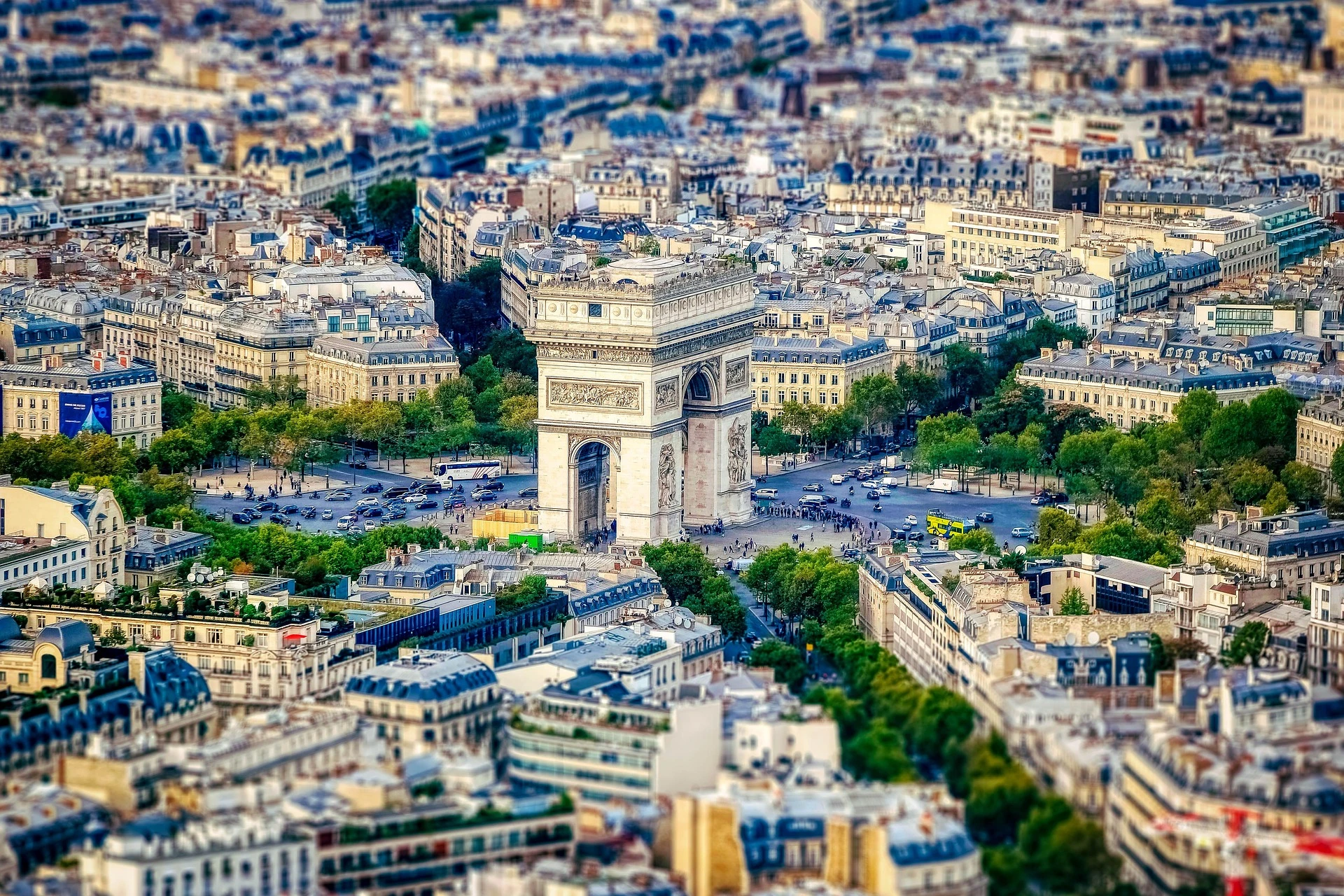
The Arc de Triomphe stands at the intersection of 12 avenues, including the Champs-Élysées. Photo selected by Monsieur de France: by Matthias from Pixabay
Why climb to the top of the Arc de Triomphe?
Climbing to the top of the Arc de Triomphe offers spectacular 360° views of Paris. You can see the twelve avenues radiating out from the Place de l'Étoile, including the Champs-Élysées stretching to the Place de la Concorde and, in the distance, the Eiffel Tower. It is one of the best viewpoints in the city and is often less crowded than the Eiffel Tower.
Opening hours, prices, and access
The Arc de Triomphe is open every day, except when official ceremonies are held. There is an admission fee, with discounts for young people and free admission for certain groups.
Access is via a secure underground passageway from the Champs-Élysées or Avenue de la Grande Armée—do not cross the square above ground.
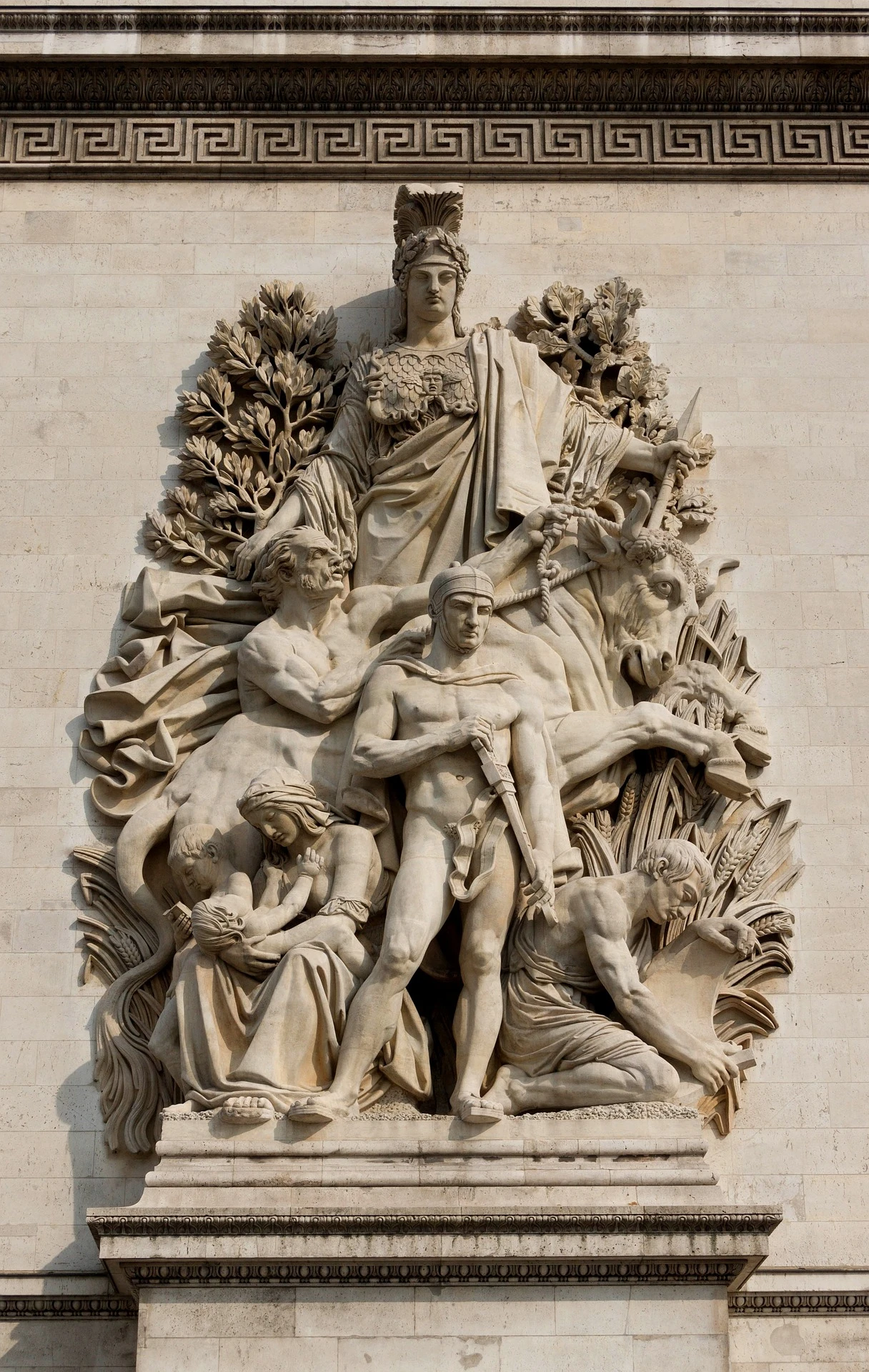
Peace. High relief on the Arc de Triomphe by Antoine Etex (1808-1888). Image selected by monsieurdefrance.com: by WikimediaImages from Pixabay
How much time should I allow for the visit?
Allow approximately 45 minutes to 1 hour to fully enjoy the climb and the panoramic terrace. If you add a stroll along the Champs-Élysées, allow at least 1.5 to 2 hours for the entire visit.
The best time to visit the Arc de Triomphe
Early morning or late afternoon are the best times to avoid the crowds. The sunset from the top is particularly impressive, when the grand avenues of Paris begin to light up.
An imperial wish with a tumultuous fate: Austerlitz and beyond
It all began in December 1805, in the aftermath of the Battle of Austerlitz, undoubtedly Napoleon I's greatest military victory. The Emperor, inspired by the courage of his troops, promised them that they would return home "under triumphal arches". The decree of February 26, 1806 ordered the erection of this monument to the glory of the Grande Armée. He would never see its completion... 30 years later!
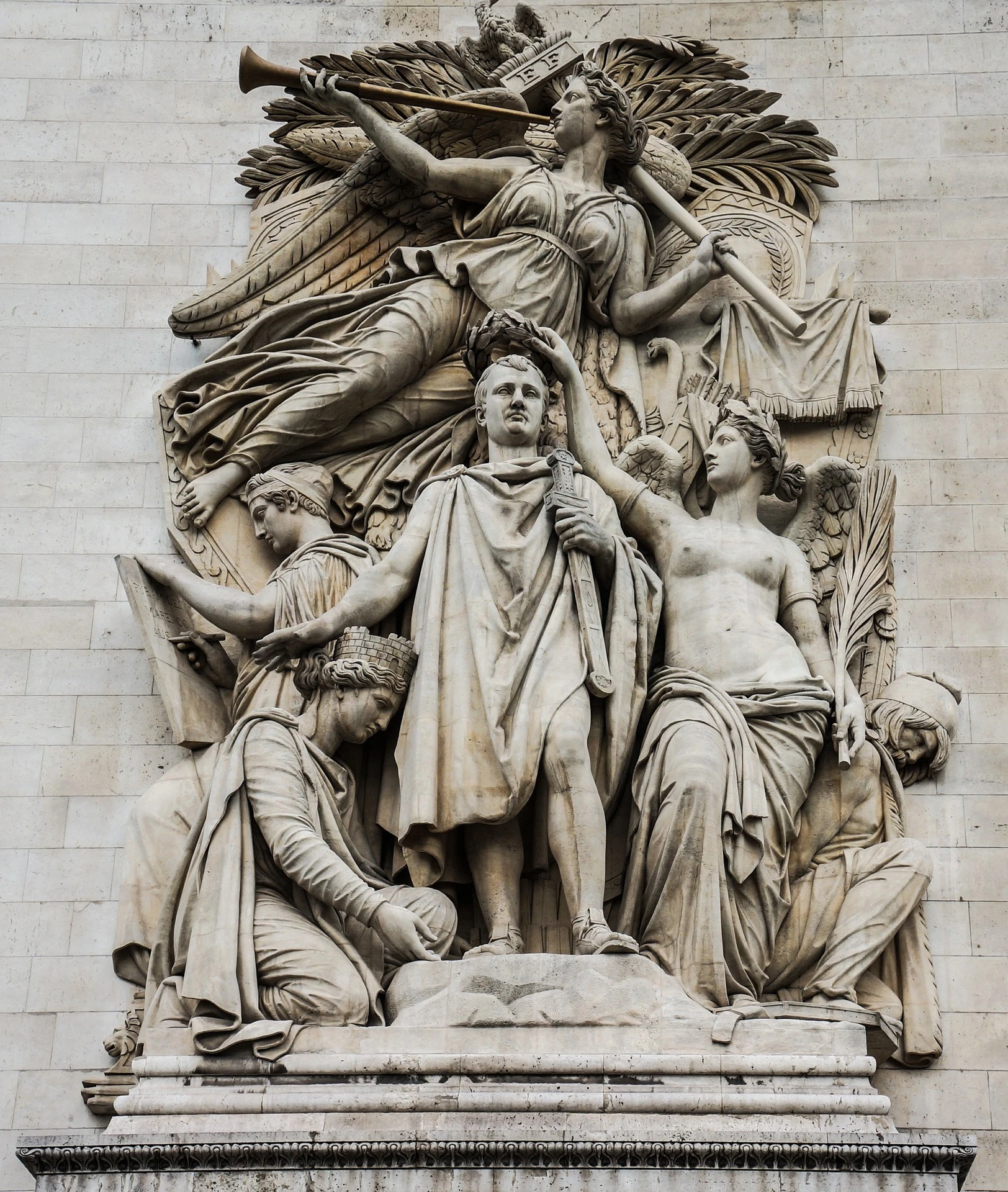
The Triumph of 1810 by Jean Pierre Cortot / Image selected by monsieurdefrance.com: Hans Rohmann from Pixabay
Construction, entrusted to architect Jean-François-Thérèse Chalgrin, began on August 15, 1806, Napoleon's birthday. But the project quickly ran into technical and political difficulties. The fall of the Empire in 1814 brought the work to a halt. Naturally, as Napoleon's sworn enemy, his successor King Louis XVIII had no desire to glorify Napoleon's memory and halted the project. It was not until 1830, with the arrival in power of Louis-Philippe I, King of the French, who wanted to reconcile France with its history, that work resumed. The monument was finally inaugurated in 1836, thirty years after the first stone was laid.
The Sanctuary of the Nation: The Unknown Soldier and the Flame
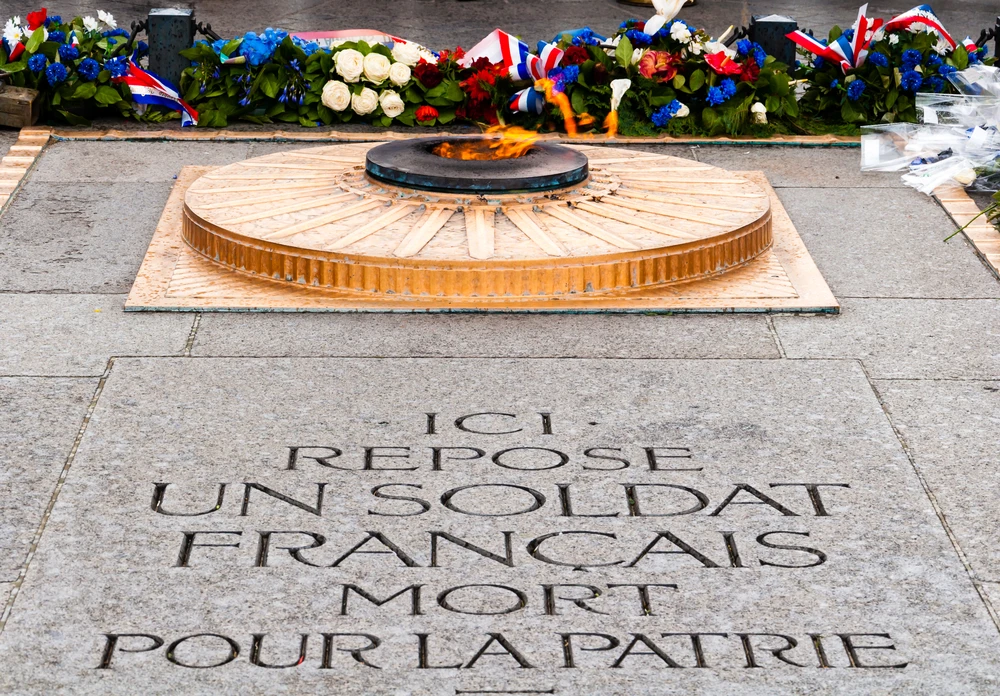
The Sacred Slab and the flame of the Unknown Soldier / photo by parmeanmachine77/Shutterstock.com
Since January 28, 1921, the Arc has been home to a grave that moves every visitor: that of the Unknown Soldier. Killed during World War I, this soldier, whose name has never been identified, symbolizes the 1.4 million French soldiers who died in battle during World War I.
The Flame of Remembrance, which burns on his grave, is rekindled every evening at 6:30 p.m. sharp, without exception since November 11, 1923. This ritual, carried out by veterans' associations, has never ceased, not even during the four years of Nazi occupation. It is a moment of intense contemplation when the hustle and bustle of the city stops for a moment as the Last Post is sounded, reminding us that this monument is the link between the heroic past and the peaceful present.
An open-air sculpture gallery: artistic analysis
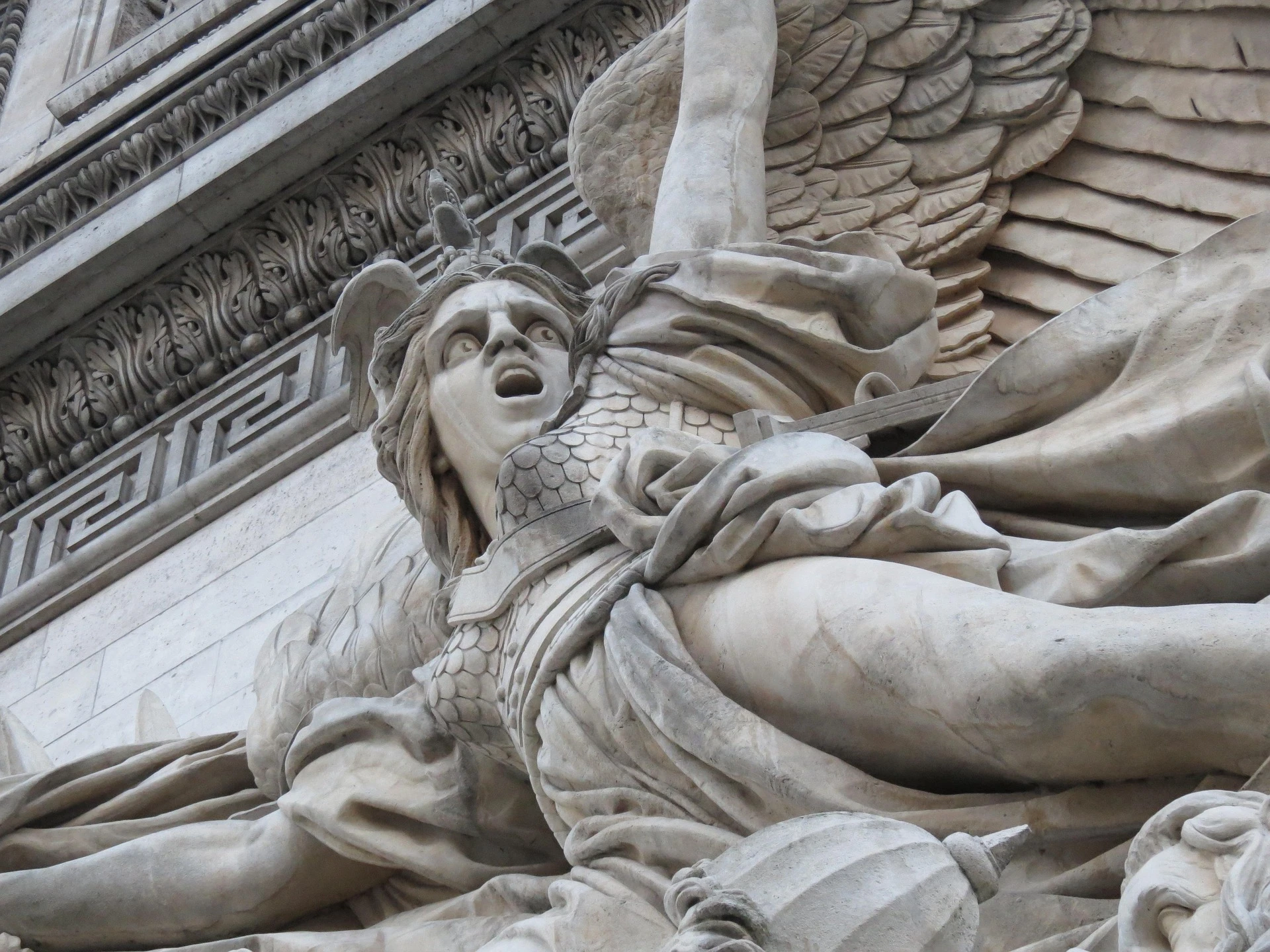
Detail of The Marseillaise by Rude / Photo selected by Monsieur de France: Image by MPMPix from Pixabay
Take the time to observe the high reliefs that adorn the four pillars of the Arch, true masterpieces of 19th-century art:
-
The Departure of the Volunteers of 1792 (La Marseillaise): A masterful work by François Rude located on the right pillar (Champs-Élysées side). It depicts the French people led by an allegorical figure of winged Liberty, whose face screaming the call to arms has become an icon of world sculpture. The movement, energy, and patriotic fury that emanate from it are astounding.
-
The Triumph of 1810: Work by Jean-Pierre Cortot located on the left pillar. It depicts Napoleon being crowned by Victory, celebrating the signing of the Treaty of Vienna. It is an image of the Emperor at the height of his power, calm and triumphant.
-
The Resistance of 1814 and the Peace of 1815: Sculptures by Antoine Étex located on the Neuilly side. They illustrate the darkest hours of foreign invasion and the return to calm after the storms of the Empire. A naked horseman tries to protect his family, symbolizing the sacrifice of the citizen.
Inside the arches, beneath the great vaulted ceiling, the names of 660 generals are engraved in stone. It is a veritable memorial; the underlined names indicate those who died in battle. It is here that one can truly appreciate the scale of the Revolutionary and Napoleonic Wars.
The ascent: dominating the twelve avenues
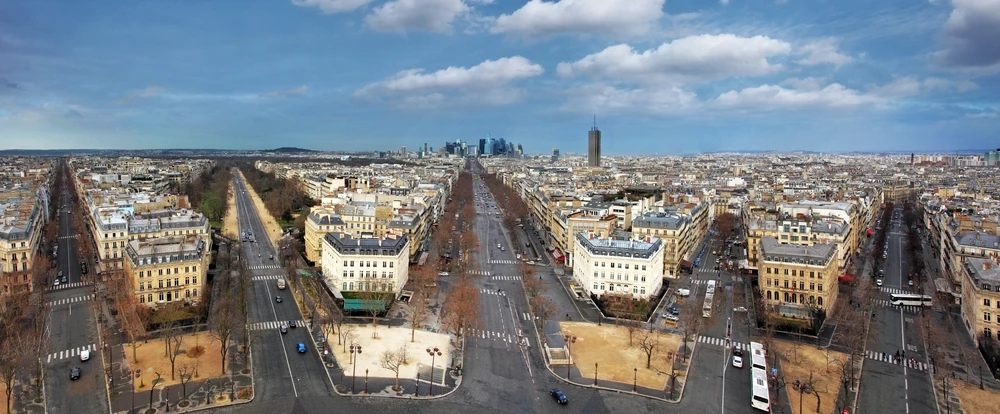
One of the views from the top of the Arc de Triomphe / Photo chosen by Monsieur de France: TTstudio via depositphotos
After climbing the 284 steps of a spiral staircase (or taking the elevator for people with reduced mobility), you reach the terrace. It is from here that you can best appreciate the urban genius of Baron Haussmann, the man who designed and built the Paris we know today in the 19th century. The twelve avenues radiating from the Place de l'Étoile form a perfect geometric figure. Here you can admire the precise alignment of the Voie Royale: from the Louvre to the Grande Arche de la Défense. The view of the Eiffel Tower is also one of the most beautiful in Paris, as it allows you to see the Iron Lady above the zinc roofs that are characteristic of the capital.
To learn everything there is to know about the Arc de Triomphe, read this dedicated article.
III. The Theater of the Republic: Ceremonies, Victories, and Traditions
The Champs-Élysées is never more majestic than when it becomes the stage for major national commemorations. It is here that France gathers to honor its past and celebrate its unity.
1. The July 14 parade: National Day
Every year, on July 14, Bastille Day, the avenue is decorated with hundreds of tricolor flags. It is the setting for the largest military parade in Europe since the first one in 1919 (it took place at the Longchamps racecourse or on other avenues before finally settling on the Champs-Elysées in 1981). From the Arc de Triomphe to the Place de la Concorde, troops (infantry, cavalry of the Republican Guard, armored vehicles) march down the avenue under the gaze of the French people and foreign heads of state. The flyover by the Patrouille de France, which leaves blue, white, and red trails above the Arc, is an image that is seen around the world every year.
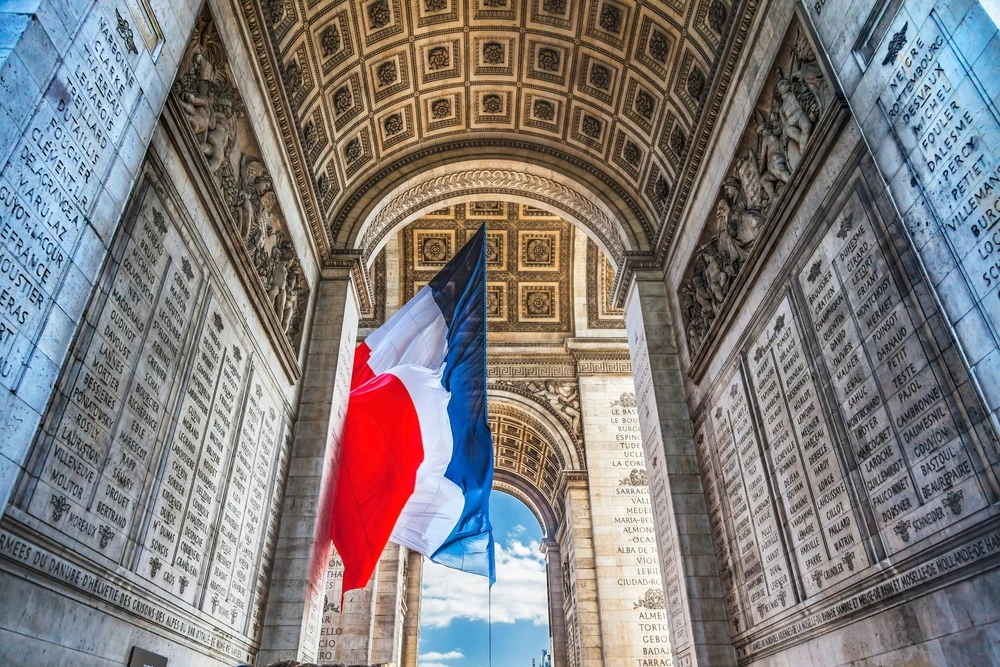
The Arc de Triomphe / photo by Bill Perry/Shutterstock.com
2. May 8 and November 11: remembrance at the heart of the city
These two dates are marked by profound solemnity. The President of the Republic rides up the avenue escorted by the Republican Guard on horseback to lay a wreath on behalf of the French people on the tomb of the Unknown Soldier. He then salutes the veterans in the presence of various civilian and military representatives. On these days, France remembers.
What does France celebrate on November 11? The answer is here.
3. Popular gatherings: sporting victories and celebrations
The avenue is also the place where people come to shout their joy. It was here that millions of French people gathered to celebrate World Cup victories (1998 and 2018). On New Year's Eve, the Champs-Élysées also becomes a huge pedestrian zone where a sound and light show is projected onto the Arc de Triomphe, attracting hundreds of thousands of spectators who come to celebrate the arrival of the new year. But long before that, the greatest moments in recent French history were celebrated here: the end of World War I with the victory parade, the Liberation of Paris...
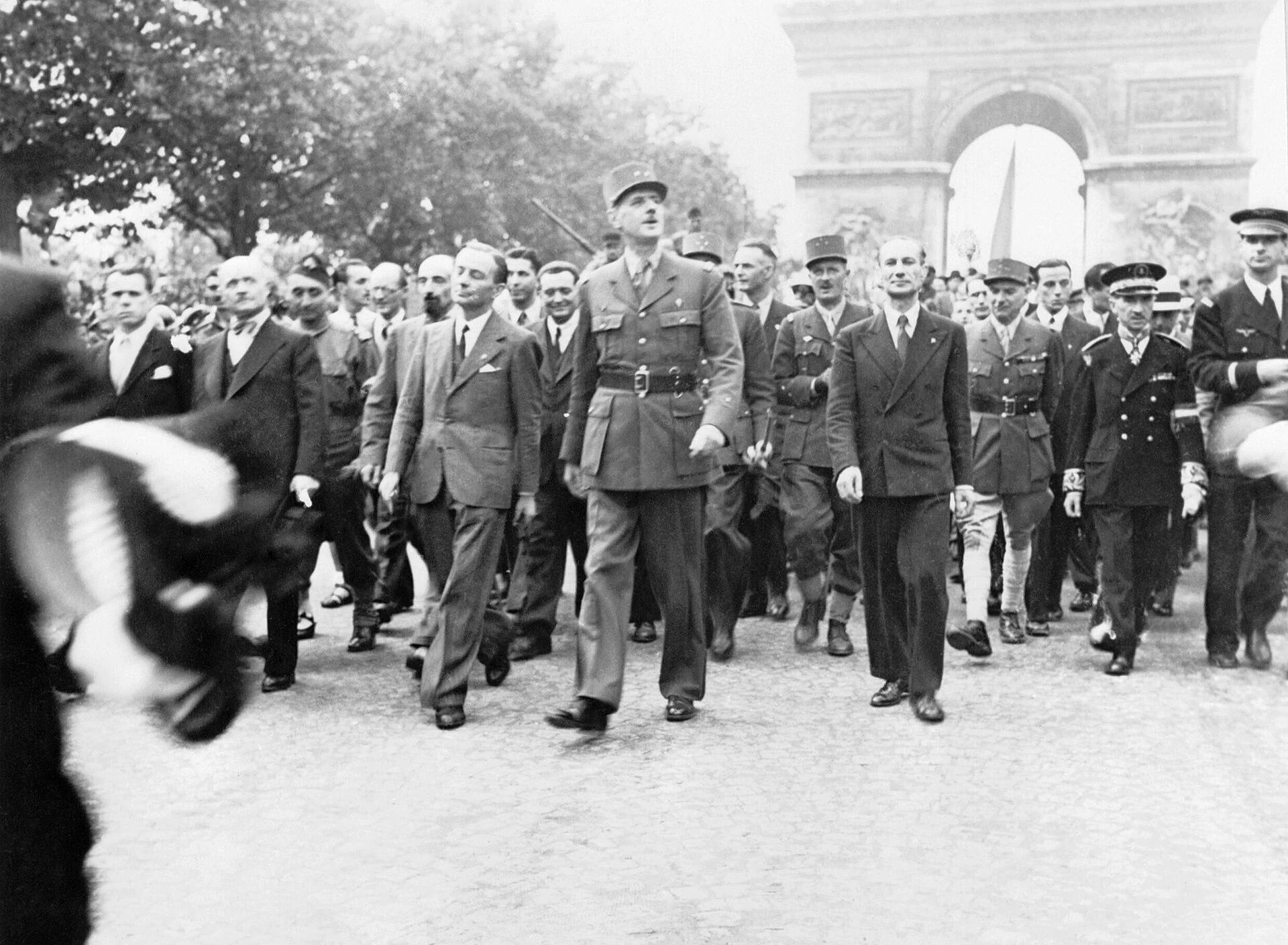
The Liberation of Paris and the Victory Parade with General de Gaulle / Photo selected by Monsieur de France: By Unknown Author — http://media.iwm.org.uk/iwm/mediaLib//7/media-7068/large.jpgThis photograph HU 66477 comes from the collections of the Imperial War Museums., Public domain, https://commons.wikimedia.org/w/index.php?curid=25092775
IV. History: from wild swampland to the Liberation Parade
The history of the avenue is one of man's conquest over nature, transforming a wild place into the center of the world.
1. The genesis: Le Nôtre's design and mythology
In the 17th century, this area outside the walls of Paris was nothing more than marshy, wooded land used for hunting. In 1616, Marie de Médicis laid out the Cours la Reine there. But it was André Le Nôtre, Louis XIV's gardener, who designed the current layout in 1667 by extending the Tuileries Garden.
The avenue was then called the "Grand-Cours." The name "Champs-Élysées" did not appear until 1709, in reference to the place where virtuous heroes resided in Greek mythology. There were open-air cafés and one of the first amusement parks in history: the Coliseum, but it was still a rather rough neighborhood. In fact, the avenue did not earn its noble status until the 19th century. Napoleon III and Baron Haussmann installed the first sidewalks, gas lamps, and pavilions, transforming the avenue into a showcase of imperial modernity.
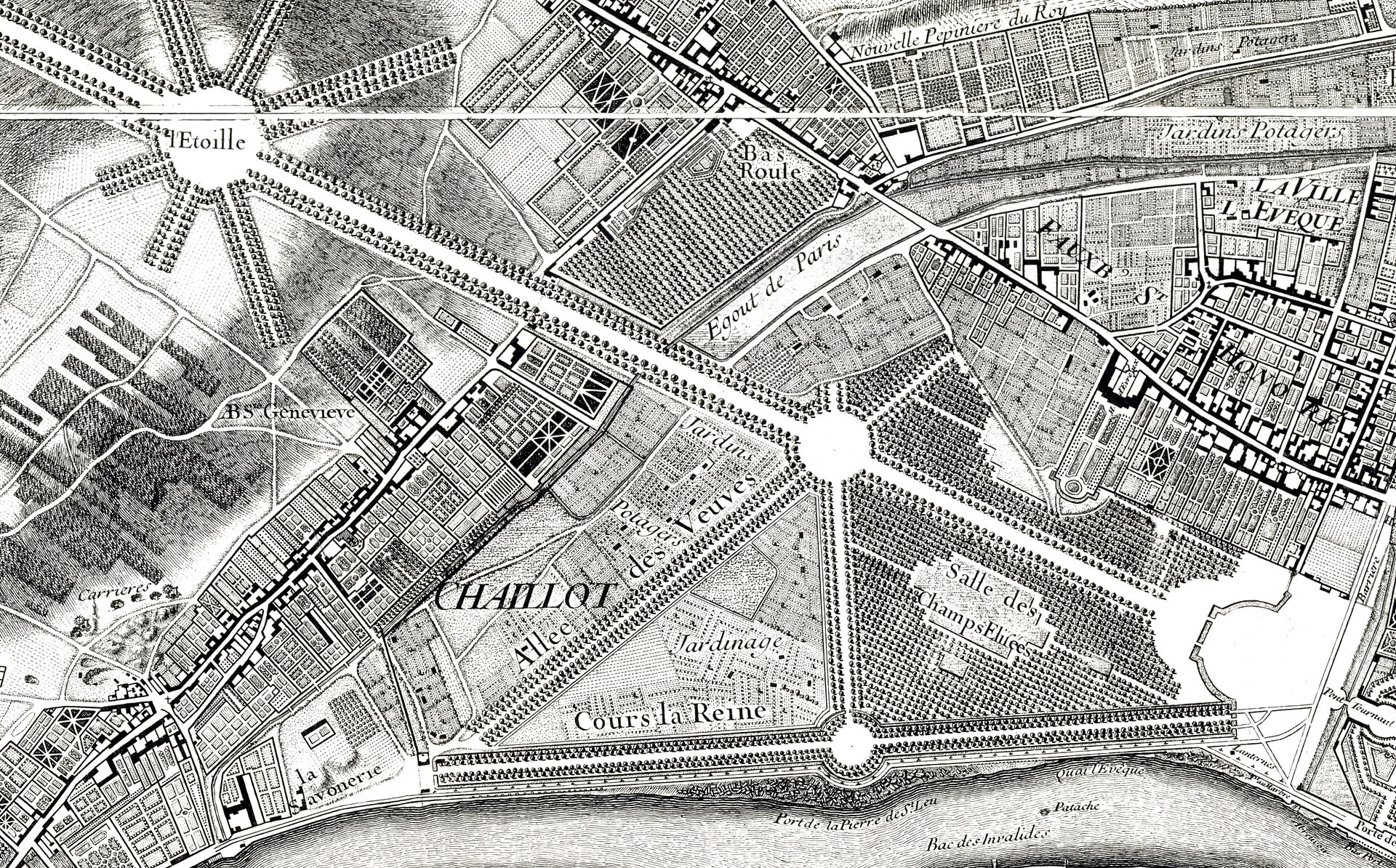
Map of the empty Champs-Élysées at the beginning of the 18th century / Image selected by Monsieur de France: By Roussel, Mbzt — Plan de Roussel, CC BY 4.0, https://commons.wikimedia.org/w/index.php?curid=164137845
It was also here that one of the very first acts of resistance against the Nazi occupation took place, when on November 11, 1940, high school and college students gathered in front of the Arc de Triomphe to commemorate the victory of November 11, 1918.
2. August 26, 1944: The Liberation Parade in Paris
This was undoubtedly the most powerful and symbolic moment in the avenue's history. After four years of Nazi occupation, Paris is finally liberated. General de Gaulle, leader of the Free French Forces, walks down the Champs-Élysées from the Arc de Triomphe, surrounded by a huge, jubilant crowd. Every cobblestone still seems to echo with the sound of this historic celebration.
3. Horizon 2030: The "Re-enchantment" of the Avenue
Today, the avenue is preparing for a new ecological and urban revolution. The "Re-enchanting the Champs-Élysées" project plans to drastically reduce the space allocated to cars by 2030, plant hundreds of trees to create islands of freshness, and give space back to pedestrians (sidewalks will be widened and renovated). The goal is to transform this "urban highway" into a veritable metropolitan garden, reviving the spirit of promenade envisioned by Le Nôtre three centuries earlier.
V. The Historical Axis: perfect and symbolic geometry
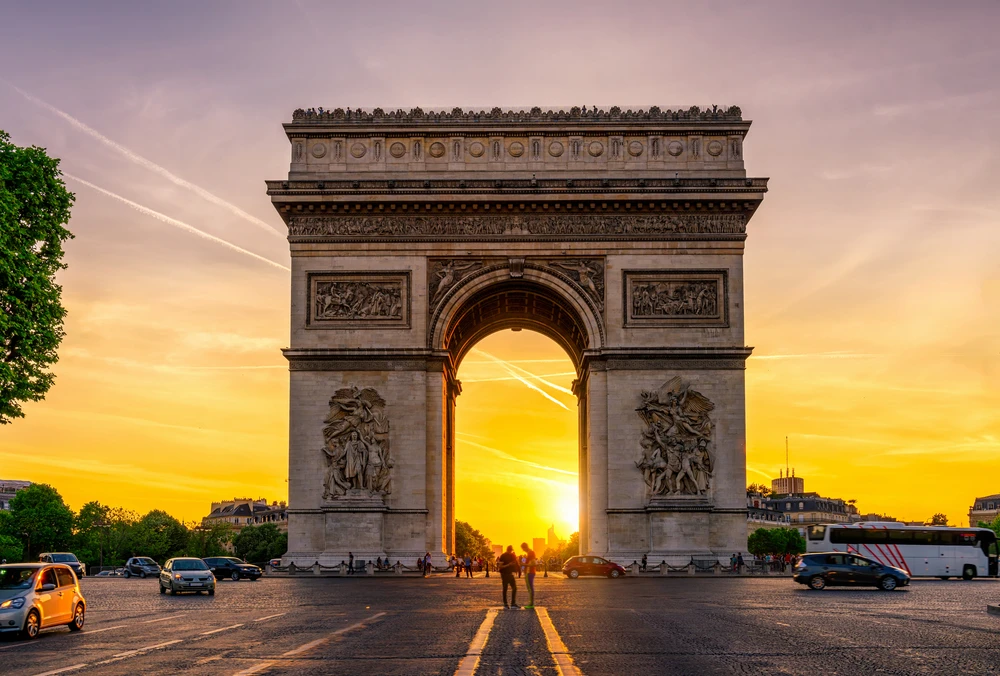
The Arc de Triomphe at sunset. Photo selected by Monsieurdefrance: Shutterstock
The Champs-Élysées is part of what urban planners call the Voie Royale or the Historic Axis. If you stand in the center of the Place de l'Étoile, you are on a perfect straight line stretching nearly 10 kilometers, connecting the symbols of French power throughout the ages:
-
The starting point: The equestrian statue of Louis XIV in the Cour Napoléon of the Louvre.
-
The passage: The Tuileries Garden and the Obelisk of Concorde (the oldest monument in Paris).
-
The focal point: The Arc de Triomphe, the military and memorial center.
-
The destination: The Grande Arche de la Défense (inaugurated in 1989 for the bicentennial of the Revolution), which echoes Napoleon's Arc de Triomphe with a modern, streamlined version. This perspective is designed to give a feeling of infinity and power, a unique urban feat that continues to fascinate visitors.
VI. Unusual anecdotes: the little story behind the monument
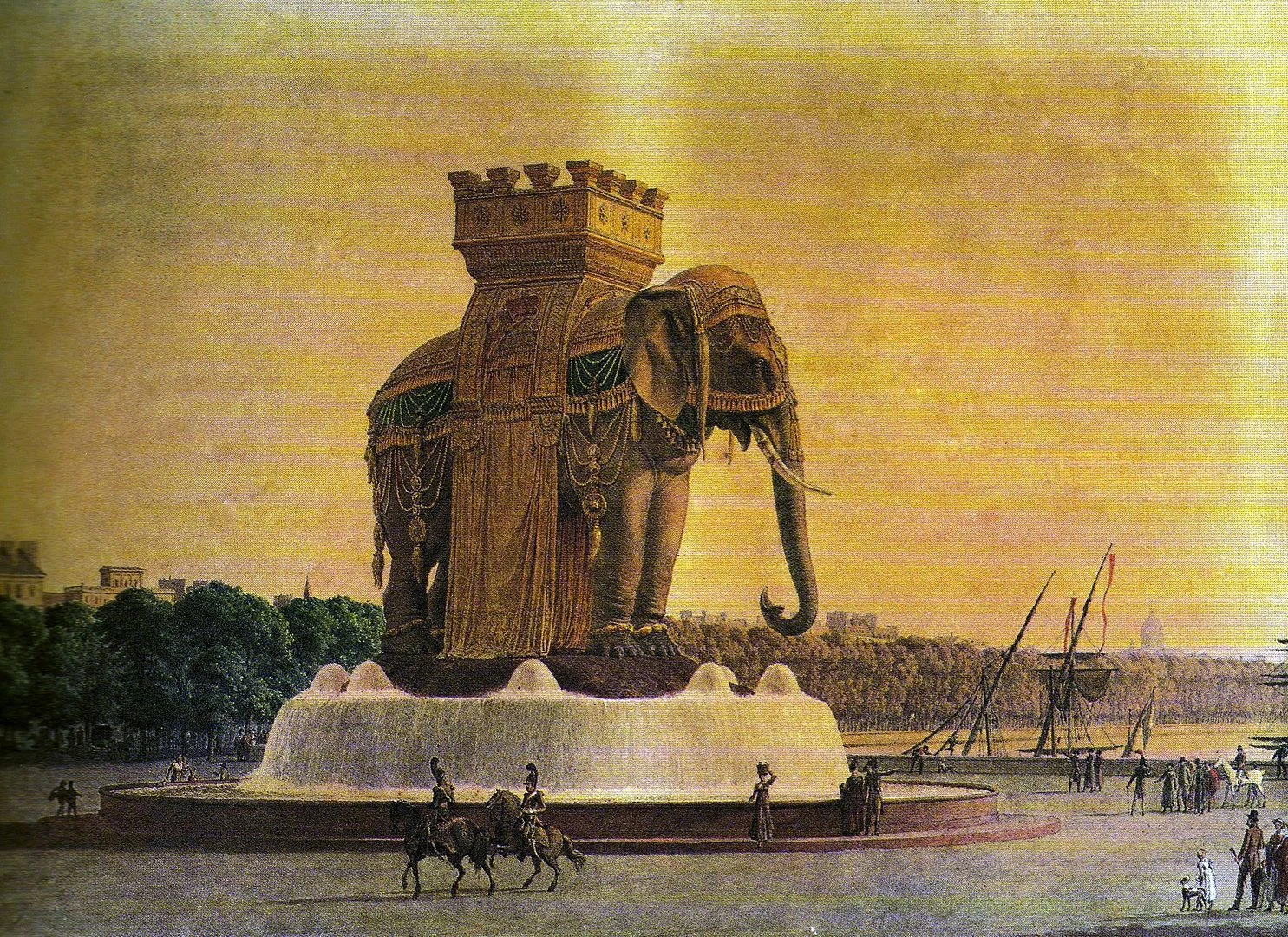
Alavoine's project / Photo selected by monsieurdefrance.com: By Unknown Author — Paris, Prisma einer Stadt, Zurich 1978, Public domain, https://commons.wikimedia.org/w/index.php?curid=5286498
-
Ribart's Giant Elephant: In 1758, architect Charles-François Ribart de Chamoust proposed building a three-story elephant-shaped monument at the top of the Champs-Elysées, where the Arc de Triomphe stands today! Visitors would have been able to visit reception rooms inside the animal, and water would have spouted from its trunk to feed a fountain. Fortunately, the project was rejected by the king. The amusing story can be found here
-
Charles Godefroy's feat: On August 7, 1919, aviator Charles Godefroy flew his Nieuport biplane under the arch of the Arc de Triomphe. This low-level flight, which lasted just a few seconds and was performed to honor the aviators who died during the war, has become legendary in aviation history. The arch is 14.60 m wide, while his plane had a wingspan of 9 m... the margin for error was tiny!
-
The Solar Miracle: Twice a year (around May 10 and August 1), the sun sets exactly in the middle of the arch if you stand at the Rond-Point des Champs-Élysées. It is a sublime photographic spectacle, comparable to that of Stonehenge, which attracts astronomy and photography enthusiasts.
VII. Practical Guide: Logistics, Access, and Subways
The avenue is about 2 km long. Choosing the right subway station is crucial to avoid unnecessary exhaustion, especially if you plan to visit specific monuments.
1. For the Arc de Triomphe (Haut des Champs)
-
Charles de Gaulle - Étoile (Lines 1, 2, 6, and RER A).
-
Expert tip: Never try to cross Place de l'Étoile on foot in the middle of traffic! The traffic here is some of the heaviest and most chaotic in Paris. Be sure to use the Passage du Souvenir underground tunnel, which has entrances at the top of the Champs-Élysées and the Avenue de la Grande Armée.
The guide to the subway, its customs and traditions, is here.
2. For the Champs area (shopping, Ladurée, and movie theaters)
-
George V (Line 1): The perfect station for direct access to the Louis Vuitton store, Fouquet's restaurant, and the famous Ladurée tea room.
-
Franklin D. Roosevelt (Lines 1 and 9): For the Rond-Point des Champs-Élysées and quick access to Galeries Lafayette.
3. For the lower part of the Champs (Gardens and Museums)
-
Champs-Élysées - Clemenceau (Lines 1 and 13): To visit the Grand Palais and Petit Palais (located on Avenue Winston-Churchill).
-
Concorde (Lines 1, 8, and 12): To admire the Luxor Obelisk, the Tuileries Garden, and walk up the avenue from its historic starting point.
VIII. FAQ: Questions everyone asks
Is there an admission fee to visit the Tomb of the Unknown Soldier?
No, access to the platform beneath the arch of the Arc de Triomphe to pay respects at the flame and the tomb is completely free and open to everyone. Only admission to the panoramic terrace and the small museum inside is subject to a fee.
Can you go up the Arc de Triomphe with a stroller or large luggage?
No, strollers and large bags are not allowed at the top. The spiral staircase is too narrow. Lockers are sometimes available, but it is strongly recommended that you travel light. The elevator is strictly reserved for people with reduced mobility (PRM) and pregnant women.
When is the avenue pedestrianized?
Since 2016, the avenue has generally been closed to cars on the first Sunday of every month (the "Paris Respire" initiative). This is the ideal time to take spectacular photos right in the middle of the road.
Where can I find restrooms on the avenue?
Public facilities are scarce. The best options are the restrooms at the Publicis Drugstore (paid but clean) or those inside Galeries Lafayette.
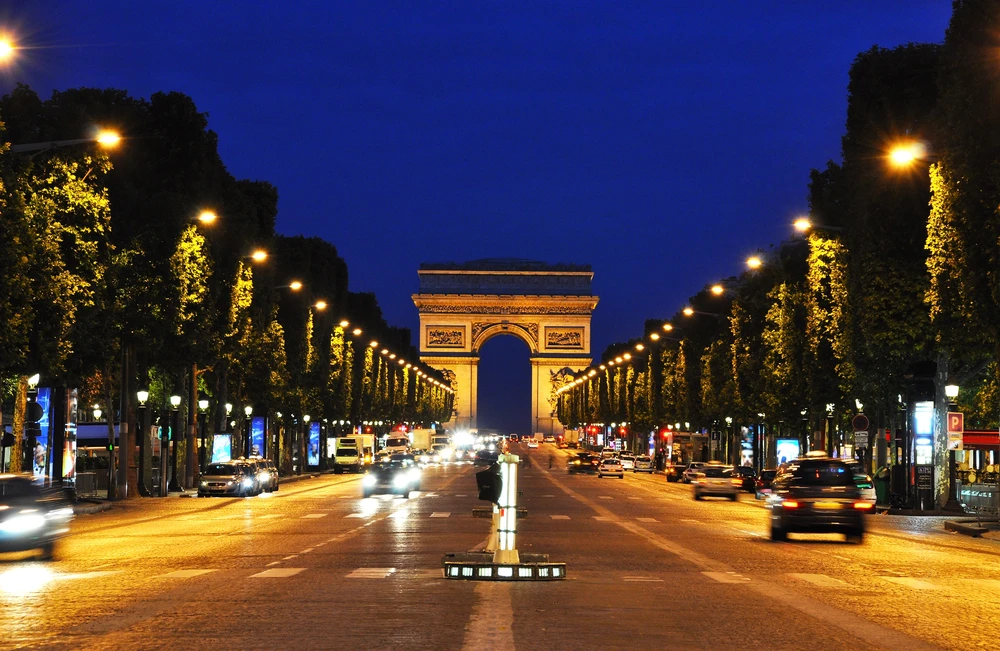
The Champs Elysées at night / Photo selected by Monsieur de France: depositphotos
Conclusion: A pilgrimage to the center of light
Visiting the Champs-Élysées and the Arc de Triomphe is to embrace all the grandeur and complexity of France. It is a place where the most extravagant luxury rubs shoulders with the most solemn history, where the patriotic fervor of ceremonies meets the elegant futility of international fashion. This avenue will leave a lasting impression on you with its excess, its perfect geometry, and its inexhaustible energy that never seems to fade, like the flame burning beneath the Star.
Despite the centuries that have passed and the urban transformations planned for 2030, it remains the radiant heart of Paris and the most beautiful showcase of French genius throughout the world. But the Parisian adventure does not end with this triumphant outlook.
To continue your discovery of the capital and explore other iconic neighborhoods, don't miss my comprehensive guide: Visiting Paris: a guide to monuments and neighborhoods in 2026.
Jérôme Prod'homme Specialist in French heritage, gastronomy, and tourism. Find all my discoveries at monsieur-de-france.com.
FAQ: Everything you need to know before you come
When is the best time to visit the Champs-Élysées?
The ideal time depends on your goal. For shopping, go in the morning on weekdays (10 a.m. to noon) to avoid the crowds. For photography, the blue hour (just after sunset) is magical when the Arc de Triomphe and shop windows light up. Finally, don't forget that the avenue is pedestrianized on the first Sunday of every month, offering a unique car-free experience.
Is it free to go up the Arc de Triomphe?
Access to the base of the monument and the Tomb of the Unknown Soldier is completely free. However, there is a charge (approximately €16) to climb up to the panoramic terrace and visit the museum inside. Good to know: admission is free for visitors under 18 and EU citizens under 26, as well as for everyone on the first Sunday of each month from November to March.
How long does it take to visit the Arc de Triomphe?
Allow approximately 45 minutes to 1 hour for the climb, a visit to the palm room (museum), and viewing the panorama at the summit. If you wish to attend the rekindling of the flame, plan to be there around 6:15 PM.
Where can I park to go to the Champs-Élysées?
Street parking is almost impossible and very expensive. Opt for secure underground parking lots such as Parking Indigo Champs-Élysées (opposite No. 64) or Parking George V. However, the most convenient solution is still the metro (lines 1, 2, 6) or the RER A (Charles de Gaulle - Étoile station).
Can you visit the Élysée Palace on the Champs-Élysées?
Contrary to popular belief, the Élysée Palace is not open to visitors on a daily basis. Located on Rue du Faubourg Saint-Honoré, it only opens its doors to the public once a year, during the European Heritage Days (in September), and reservations must be made well in advance.
Is the Champs-Élysées dangerous at night?
The avenue remains generally safe thanks to its high foot traffic and police presence. As in all tourist areas, you just need to be aware of pickpockets.