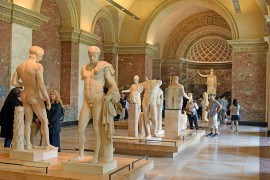
The 6 commandments of a Paris Metro user
1. The sacred rule of the escalator: Stand on the right!
This is the golden rule. The escalator is strictly divided into two sections. Stay on the right if you are standing still. The left side is a "fast lane" reserved for those who are walking. Blocking the left side with a suitcase is a fatal mistake. If you are in a group, stay in single file on the right. Failure to follow this rule will result in immediate comments.
2. Folding seats: Conditional comfort
The folding seats (strapontins) near the doors are subject to a rule of civility: you must stand up as soon as the car fills up. If you remain seated while passengers crowd in front of you, you are physically obstructing the flow. As soon as people start pouring in, lift your seat with a quick movement to free up the space.
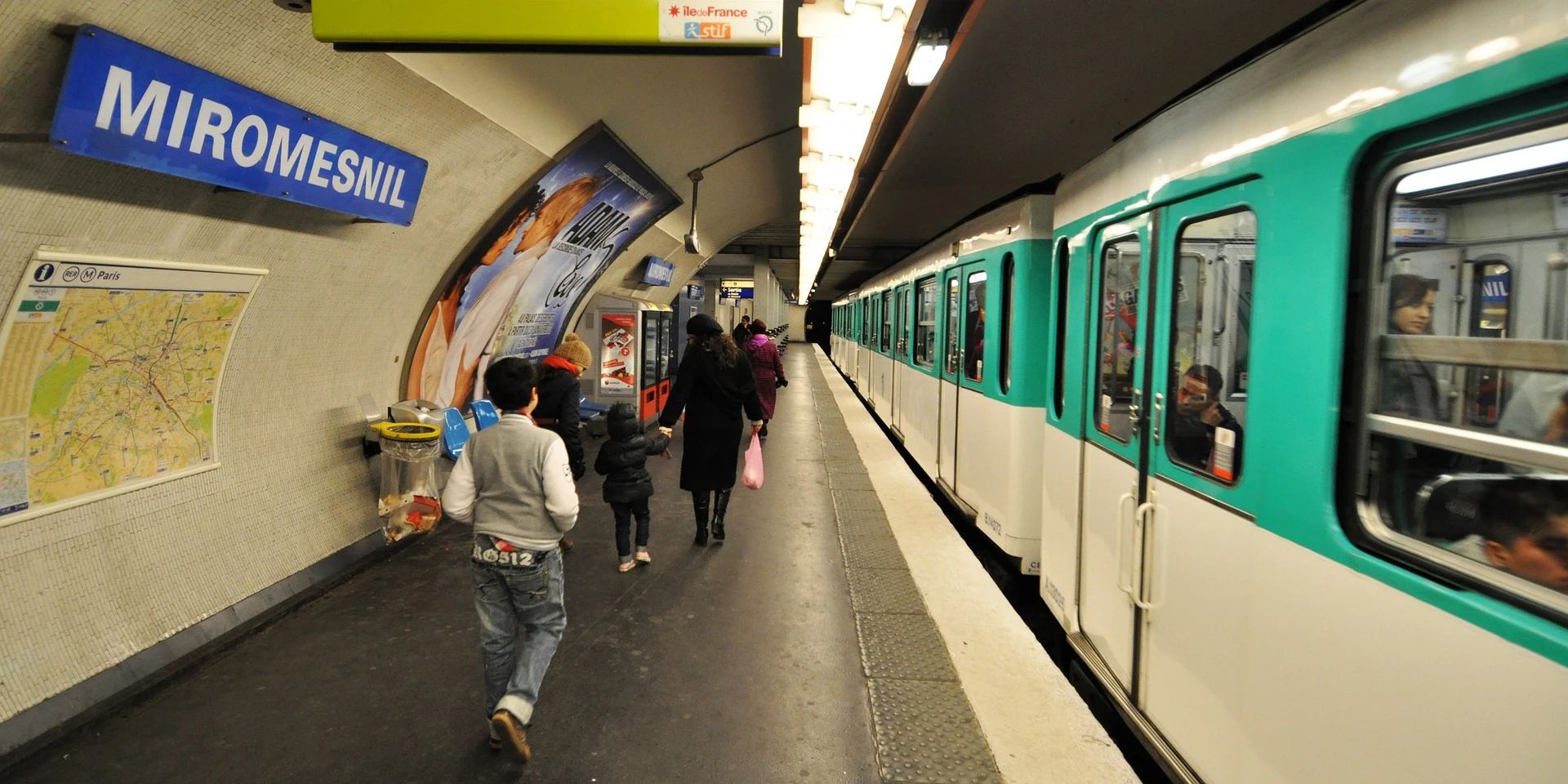
Since the wooden, coal-powered carriages of 1900, the metro has changed considerably. It is now electric. Image selected by monsieurdefrance.com: Loyloy Thal from Pixabay
3. The backpack: From shoulder to feet
In a crowded train car, your backpack becomes an unwitting weapon. The reflex of a true Parisian? Take off your bag as soon as you get on and place it between your legs or hold it in your hand. This is also the best defense against pickpockets, as you can keep an eye on your zippers.
Discover everything the city has to offer in our ultimate guide to Paris.
4. The social bubble: Silence is golden
The metro is a place for discretion. Avoid talking loudly on the phone or with your friends. Parisians often use this time to read or mentally disconnect. If you need to ask for directions, a polite "Excuse me" or "Pardon" is the only acceptable way to break the ice.
5. The art of exiting: The anticipated movement
Stops are short. Don't wait until the bus has come to a complete stop to move toward the door. If passengers are blocking your way, simply ask, "Are you getting off at the next stop?" They will immediately move aside to let you pass. This is the universal signal that you need to be let through.

6. Safety and vigilance: Protect your belongings
Be vigilant on tourist lines (1, 4, and RER A). Never put your phone in your back pocket. Be careful when the doors are closing, as this is a classic moment for "snatch thefts" just before the doors close, so remember to keep your phone in your hand at this moment when you are near a door and hold on to your bag. Be careful with flashy jewelry as well. Never leave your luggage unattended: the "suspicious package" procedure can paralyze an entire line in a matter of minutes.
7. Fare Alert: The RER Trap (Zones 1 to 5)
-
The Metro (1 to 14): A T+ ticket is valid for the entire network, even outside Paris.
-
The RER (A to E): The T+ ticket is only valid within Paris (Zone 1). To go to Versailles, Disneyland, or Roissy, purchase an "Origine-Destination" ticket. The price is capped at around €5.00 (excluding airports). Using a T+ ticket for these journeys will result in an immediate fine of €35 to €50.
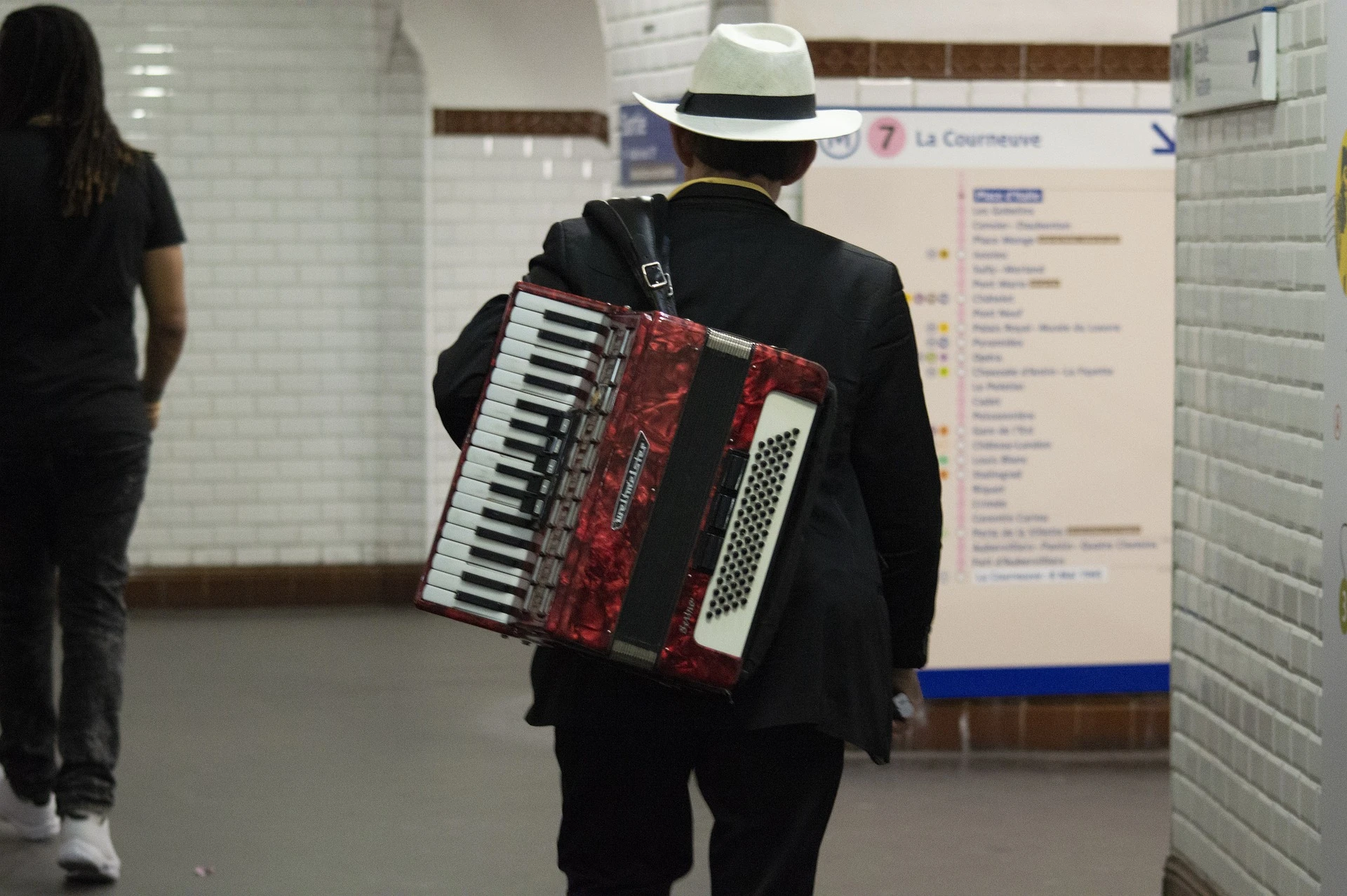
The subway is also an atmosphere / Photo by Monsieur de France by Privet France from Pixabay
8. Technology: Essential applications in 2026
To travel like a local, forget about paper maps.
-
Hello RATP / IDFM: the app. Honestly, it's super handy. Just hold your phone up (open if it's not an iPhone) to pass through, and you can add credit as you go. Essential for recharging your Navigo pass without queuing at the machines. The app uses your phone's NFC antenna to write to the card.
-
Citymapper: Much more accurate than Google Maps. The app tells you which car to board (front, middle, or rear) to be right in front of your connection or exit. This saves a tremendous amount of time in labyrinthine stations.
9. The parisian subway is a museum: The hidden gem stations
-
Arts et Métiers (Line 11): Jules Verne-style riveted copper decor. A must-see.
-
Concorde (Line 12): The walls display the Declaration of Human Rights letter by letter.
-
Line 6: It offers the most spectacular view of the Eiffel Tower between Passy and Bir-Hakeim stations. Get your cameras ready!
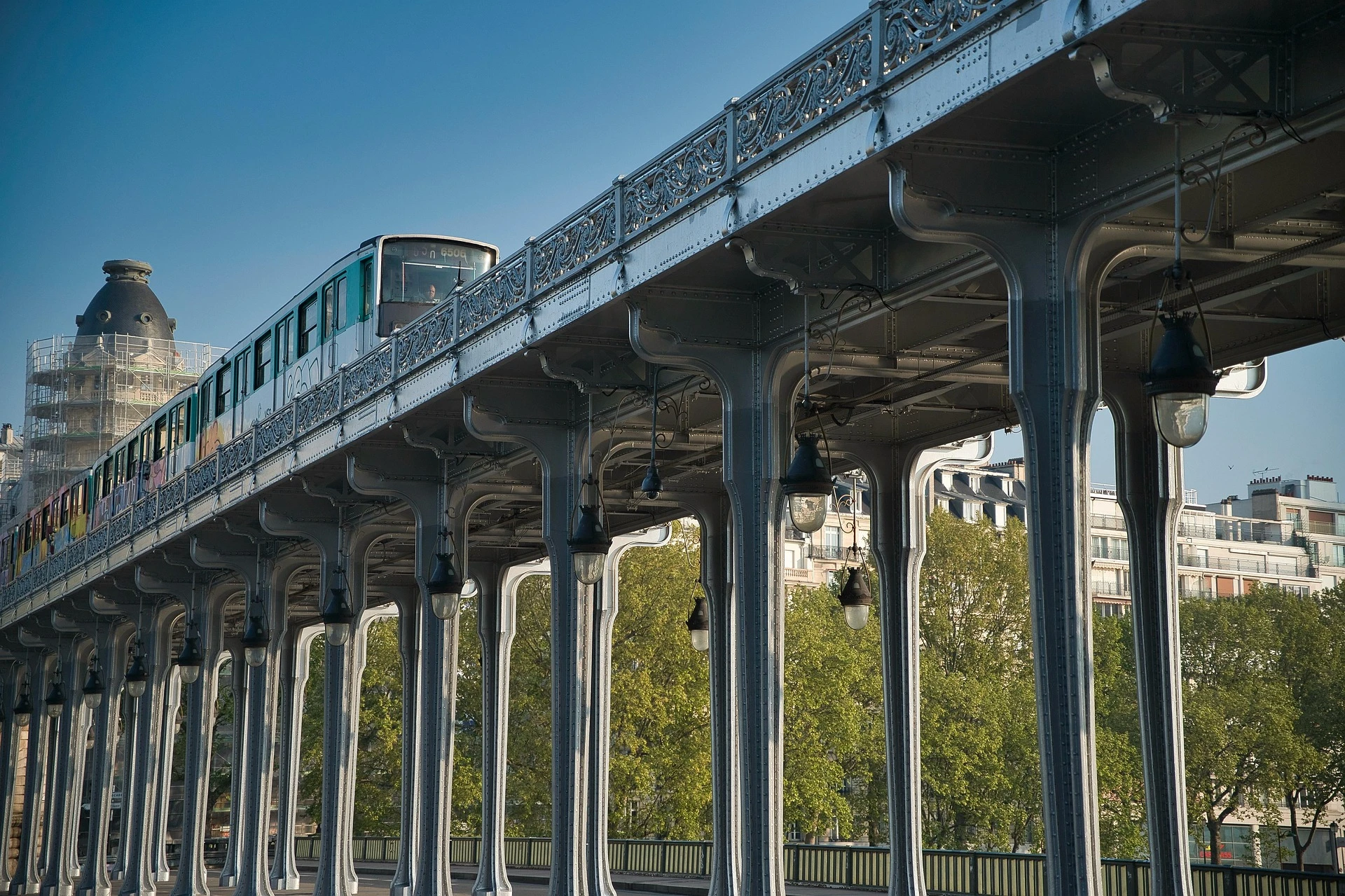
The Paris metro passage is often very artistic in the open air/ Photo chosen by Monsieur de France by Jean-Philippe Fourier from Pixabay.
10. What to do in case of an inspection?
RATP agents are everywhere. Always validate your ticket, even if the gate is open. Keep your ticket or phone charged until you exit the station. If you are caught committing an offense, pay the fine immediately by credit card to avoid additional administrative fees.
11. Exits: Never get lost again
In large stations, there are sometimes 20 exits. Before going through the gates, look for the blue "Exit" signs. They list streets and landmarks. Following the wrong number could leave you ten minutes' walk from your destination.
12. The historic metro: The Guimard legacy
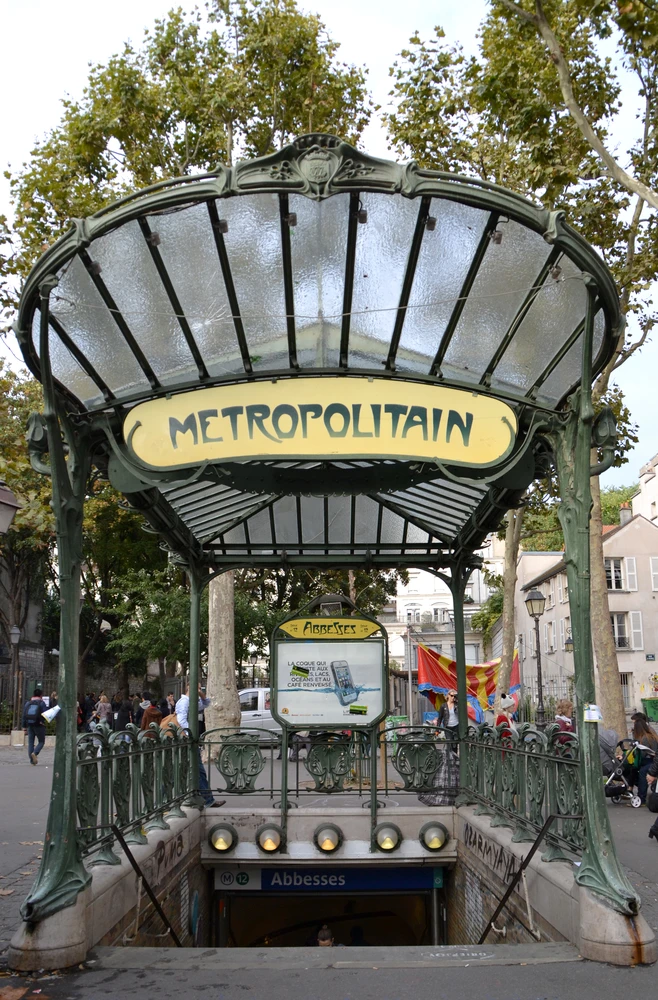
A typical Guimard entrance: Abbesses station. Photo selected by monsieurdefrance.com: Miff32 via depositphotos.
On your way out, take a look at the metro entrances. The green wrought iron ones with plant motifs are designed by Hector Guimard. They are a symbol of Parisian Art Nouveau. Some are listed as historic monuments, such as those at Abbesses and Porte Dauphine stations.
The most beautiful subway stations to see:
-
Arts et Métiers (L11) – ambiance “Nautilus” cuivrée, unique à Paris.
-
Concorde (L12) – voûte recouverte de lettres, très graphique.
-
Louvre–Rivoli (L1) – station “mini-musée” avec vitrines et références au Louvre.
-
Palais-Royal–Musée du Louvre (L1/L7) – une des plus photogéniques du centre.
-
Cité (L4) – lampadaires et atmosphère de vieux Paris sous la Seine.
-
Abbesses (L12) – grand escalier en spirale, esprit Montmartre.
-
Cluny–La Sorbonne (L10) – mosaïques et décor lié au Quartier Latin.
-
Bir-Hakeim (L6) – station aérienne, belles vues en arrivant/sortant.
-
Bastille (L1) – fresques historiques liées à la Révolution.
-
Gare de Lyon (L14) – design moderne et mise en scène contemporaine.
Photo itinerary of the “most beautiful stations” (half a day)
Realistic duration: 3.5 to 4.5 hours (photos + travel + connections).
Best times: Saturday or Sunday morning 9:30 a.m. to 11:30 a.m. (fewer people) or weekdays 10 a.m. to 12 p.m.
Recommended order (logical, efficient, very photogenic)
- Bir-Hakeim (L6) – start here for the outdoor views (above-ground station).
- Concorde (L12) – 1 stop from Assemblée Nationale (or via connection).
- Palais-Royal–Musée du Louvre (L1/L7) – center, very “postcard Paris.”
- Louvre–Rivoli (L1) – 1 stop, perfect for “museum” photos.
- Cité (L4) – old Paris atmosphere (Île de la Cité).
- Cluny–La Sorbonne (L10) – Latin Quarter, mosaics.
- Arts et Métiers (L11) – the #1 indoor spot (copper, perspective).
- Bastille (L1) – frescoes, large station (easier to photograph).
- Gare de Lyon (L14) – “modern design” finish.
- Abbesses (L12) – final option if you want Montmartre + staircase (this extends the trip).
➡️ Short version (without Abbesses): 7 to 9 stations in 3.5 hours.
➡️ With Abbesses: more like 4.5–5 hours (and lots of stairs).
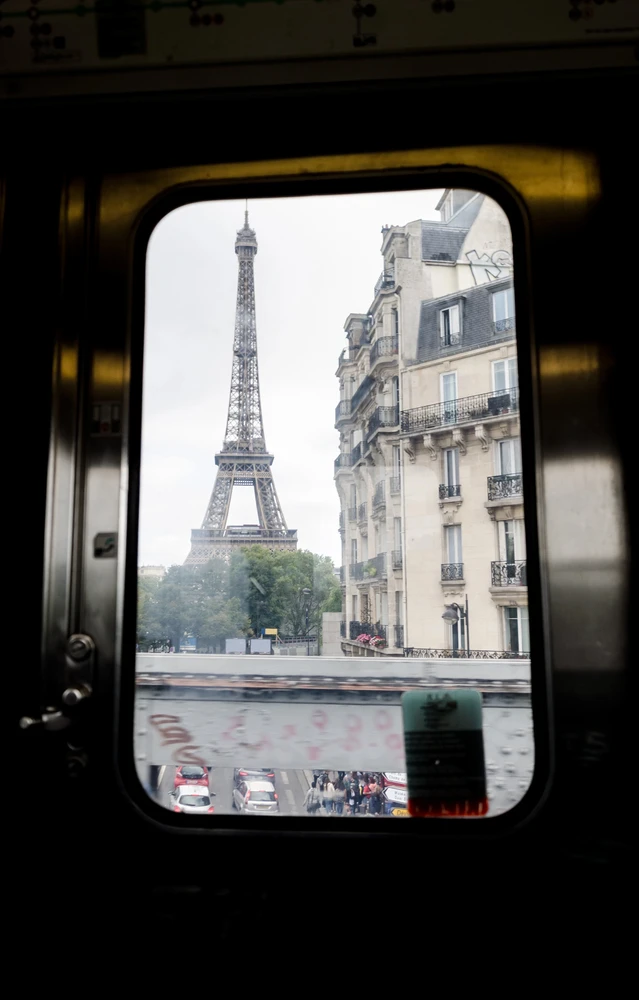
Inside the metro / Photo noskaphoto via depositphotos
Day/Night: the best
Top “day” (natural light/outdoors)
- Bir-Hakeim (L6): best results during the day (metal structure, sky).
- Abbesses (L12): access + surrounding neighborhood, good in the late morning.
Top “night” (atmosphere, reflections, fewer crowds)
- Arts et Métiers (L11): the copper stands out very well in the evening.
- Concorde (L12): letters + light, very graphic.
- Cité (L4): “film” atmosphere, more pronounced when it's dark.
Weekend: when to go to avoid the crowds
- Best time: Sunday morning (much less crowded).
- Avoid: Saturday 3pm–7pm and Sunday 4pm–7pm (people returning home, tourists).
- Stations sensitive to the world: Châtelet–Les Halles (if you're passing through), Louvre, Palais-Royal, Abbesses.
Photo par Andrew Becks de Pixabay
Discover 10 fun facts about the Paris metro
13. Accessibility: The network challenge
Please note that the Paris metro is old and not very accessible for people with reduced mobility or strollers (lots of stairs). Only Line 14 is 100% accessible with elevators. For other journeys, it is better to use the bus network, which is much more suitable.
Conclusion The Paris Metro is a complex ballet. By following these rules—stay on the right, put your bag away, check your RER zones—you will no longer be a lost tourist, but an informed user. Have a good trip in the bowels of the City of Light!
Learn more about Paris: