This comprehensive guide presents the 10 municipal museums with free admission, tips for accessing the most beautiful viewpoints at no cost, free architectural tours, and a strategy for drinking and connecting anywhere in the capital at a lower cost.
Advice from Monsieur de France: This article is an essential complement to our guide of Paris in 2026.
1. The royal crossing of Paris: from the Tuileries to Notre Dame via the Louvre.
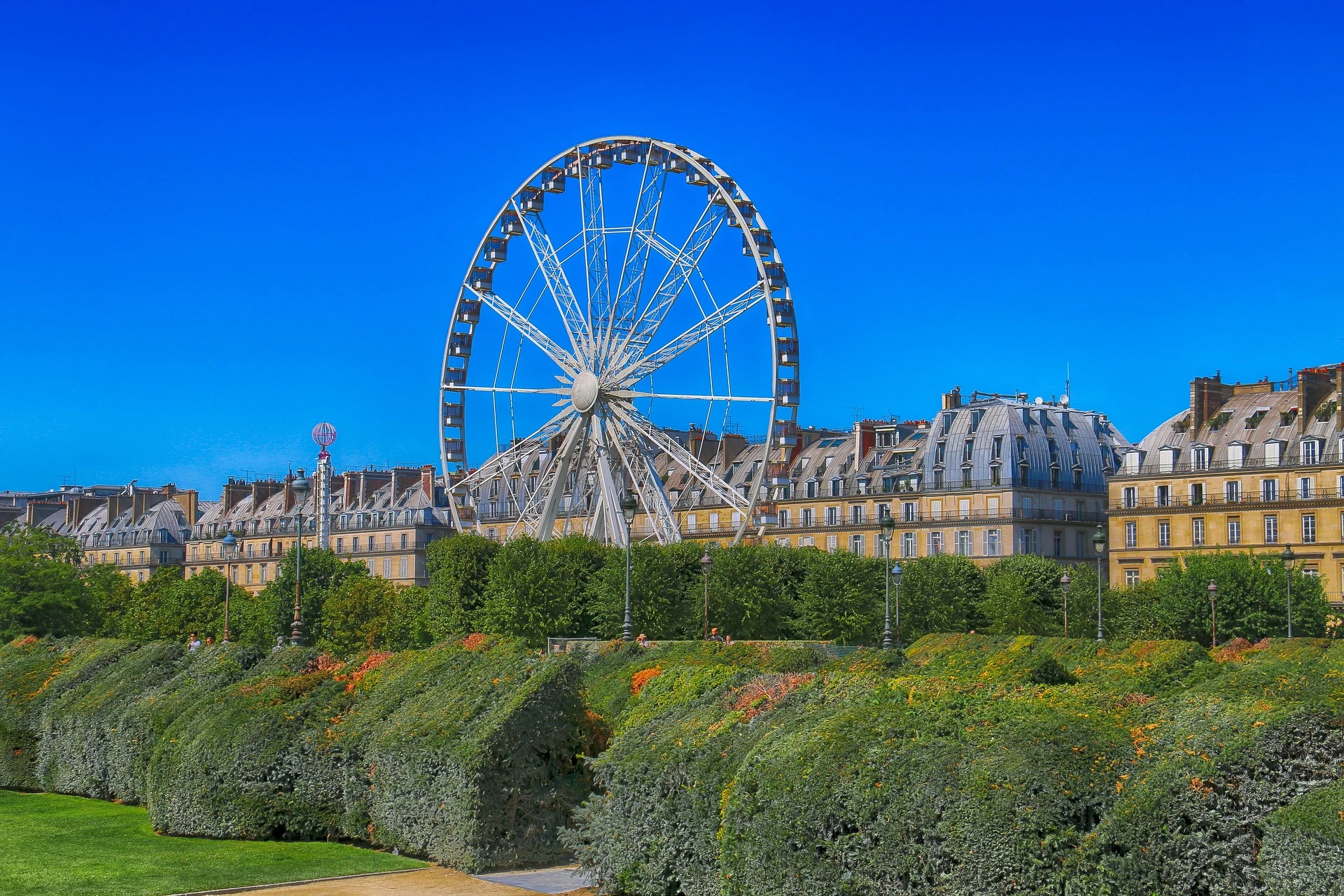
The tile factories / by Christelle PRIEUR from Pixabay
Admiring Paris and its monuments from the outside is a magical experience and completely free, as the city was designed as an open-air theater set. Of course, you have to enjoy walking, but there is so much to appreciate. This stroll through the historic heart of the capital allows you to take in the grandeur of French architecture without spending a penny.
Your starting point is the Tuileries Garden, an open-air sculpture museum where the paths offer a regal view of the Obelisk of Concorde. Walking eastward, you enter the palace grounds: the Cour Carrée du Louvre is a monumental haven of peace where Renaissance facades and bas-reliefs recount eight centuries of French history. Leaving the complex, head towards the quays to admire the Conciergerie clock, the oldest public clock face in Paris, whose gold and blue have shone on the Île de la Cité since the 14th century. Your walk will naturally lead you to the square in front of Notre Dame Cathedral to contemplate the Gothic genius of its facade and towers, before ending with a climb up to the Champs-Élysées to see the Arc de Triomphe stand out against the sky. From sculpted portals to Haussmann-style balconies, the prestige of Paris belongs first and foremost to those who take the time to look up.
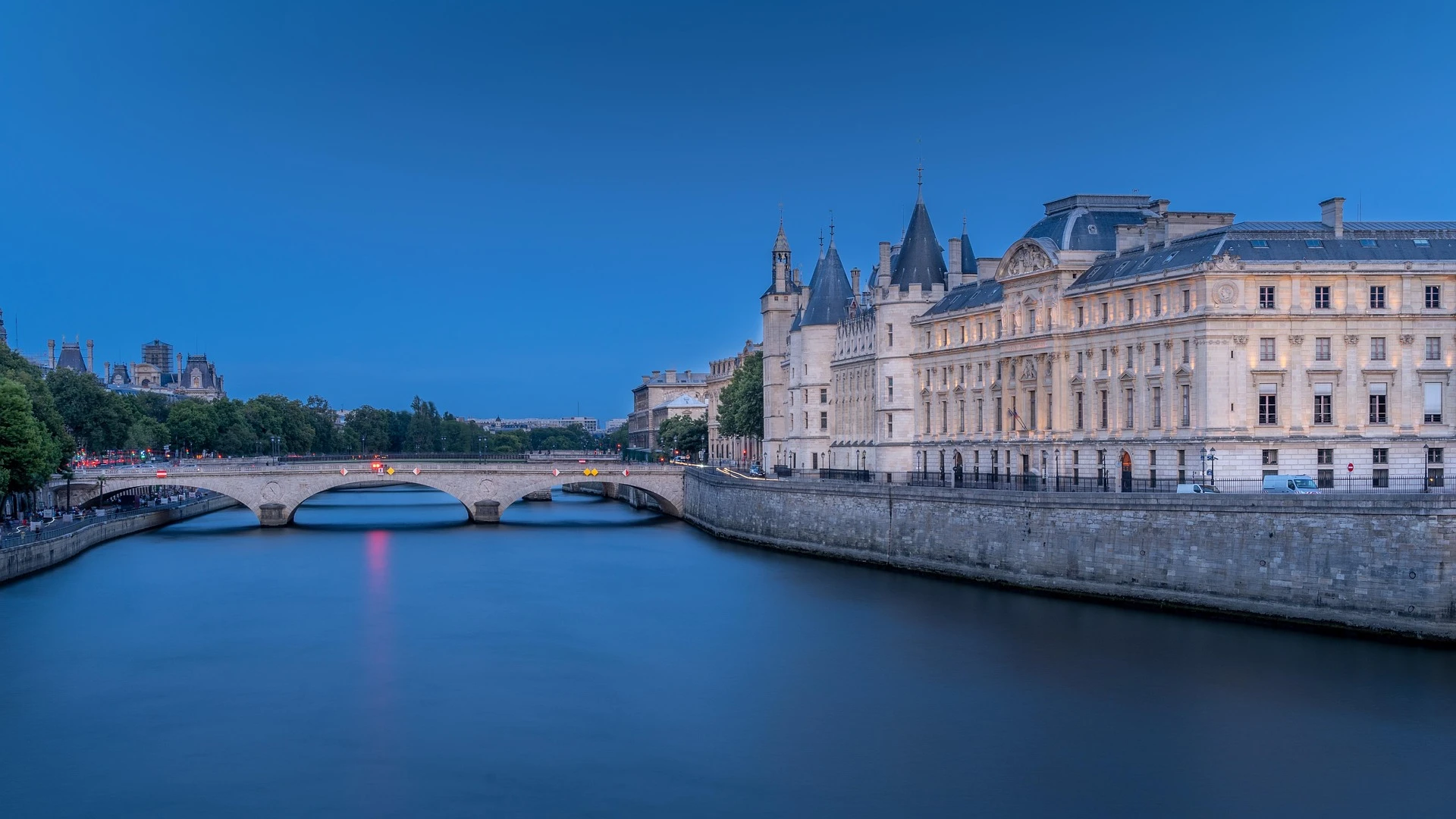
La Conciergerie at twilight, a former royal palace turned revolutionary prison, is reflected in the Seine, revealing all the historical majesty of one of Paris's most historic monuments. Photo selected by monsieurdefrance.com: Pierre Blaché via Pixabay.
-
Recommended location: Tuileries Garden (entrance on the Place de la Concorde side).
-
Metro: Concorde (Lines 1, 8, and 12) or Tuileries (Line 1).
2. Municipal Museums: Unlimited access to heritage
The City of Paris manages a network of exceptional museums, often housed in historic buildings, whose permanent collections are free for everyone, all year round. Unlike national museums (Louvre, Orsay), here you don't need to book weeks in advance for the classic tours.
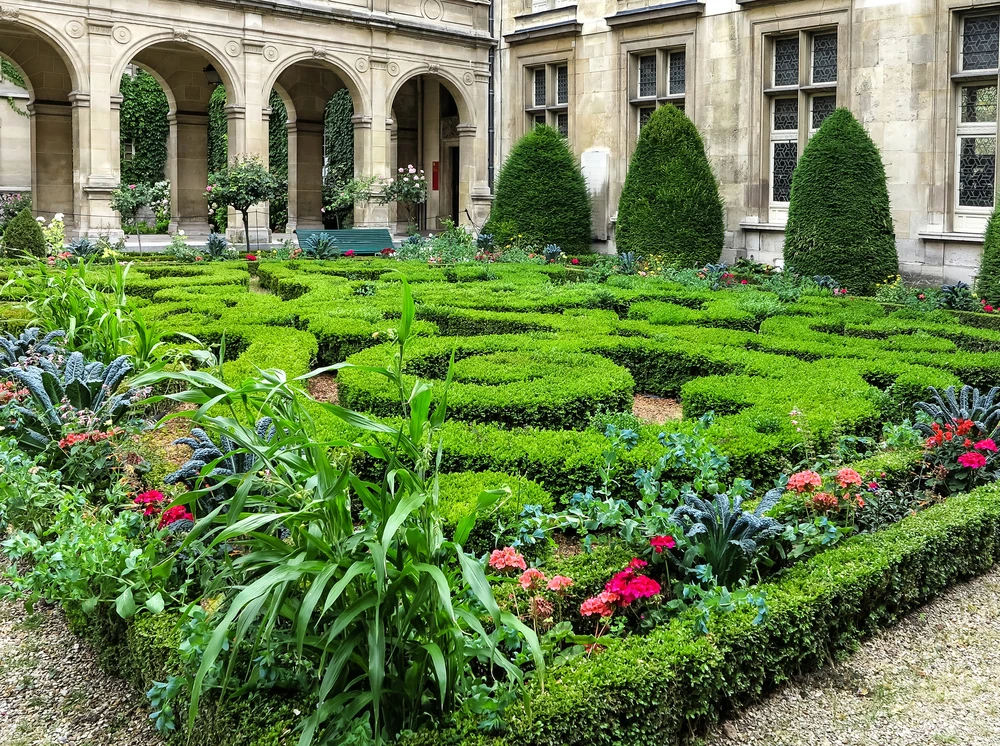
The gardens of the Carnavalet Museum, which is dedicated to the history of Paris / Photo selected by Monsieur de France: depositphotos
The Musée Carnavalet, located in the heart of the Marais, is the most iconic. After a monumental renovation, it offers a fascinating journey through the history of Paris. You will see medieval signs, Marcel Proust's bedroom, and souvenirs of the French Revolution. The interior gardens and decorated salons are works of art in themselves. A few steps away, on the Place des Vosges, the Maison de Victor Hugo allows you to step into the writer's private life. The rooms remain imbued with his creative genius, and a visit to the study where he wrote part of his work is a moment suspended in time.
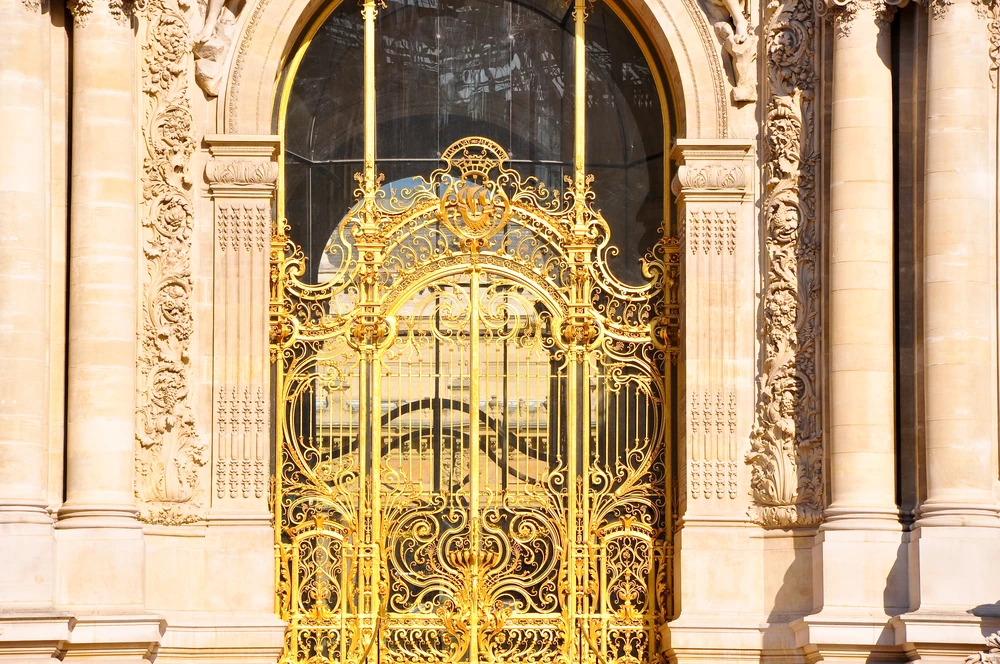
The entrance gate to the Petit Palais is a marvel designed by Charles Girault that can be viewed completely free of charge. Photo selected by monsieurdefrance.com; phototraveler via depositphotos.
If you prefer fine arts, the Petit Palais is a must-see. Built for the 1900 World's Fair, its iron, glass, and stone architecture is monumental. The semi-circular interior garden, with its colonnades and ponds, is one of the best-kept secrets for a peaceful break. The collections of paintings rival those of the world's greatest museums (Rembrandt, Rubens, Courbet).
-
Recommended location: Musée Carnavalet, 23 Rue de Sévigné, 75003 Paris.
-
Metro: Saint-Paul (Line 1) or Chemin Vert (Line 8).
And free admission to national museums under certain conditions...

The Louvre Pyramid is the main entrance to the Louvre Museum / interior view Photo by Myriam Olmand on Unsplash
The national museums in Paris (Louvre, Orsay, Orangerie, Centre Pompidou, Rodin Museum, etc.) apply common free admission rules: admission is free for everyone on the first Sunday of each month, regardless of age or nationality, generally for the permanent collections (reservations sometimes required). Throughout the year, free admission is also granted to people under 26 who are citizens or residents of the European Economic Area (European Union + Iceland, Norway, Liechtenstein), as well as to people under 18, regardless of nationality. In addition, specific groups are eligible for free admission depending on their status (teachers, job seekers, people with disabilities and their companions, journalists, etc.), upon presentation of proof of eligibility. Temporary exhibitions are usually subject to an admission fee, unless otherwise indicated by the museum.
3. Panoramas and Viewpoints: The Paris skyline without a ticket
It's true that the highest point to see Paris is the top floor of the Eiffel Tower, but there are others, admittedly less high, but which offer magnificent views. The city has several of these natural or architectural "high points" that are freely accessible.
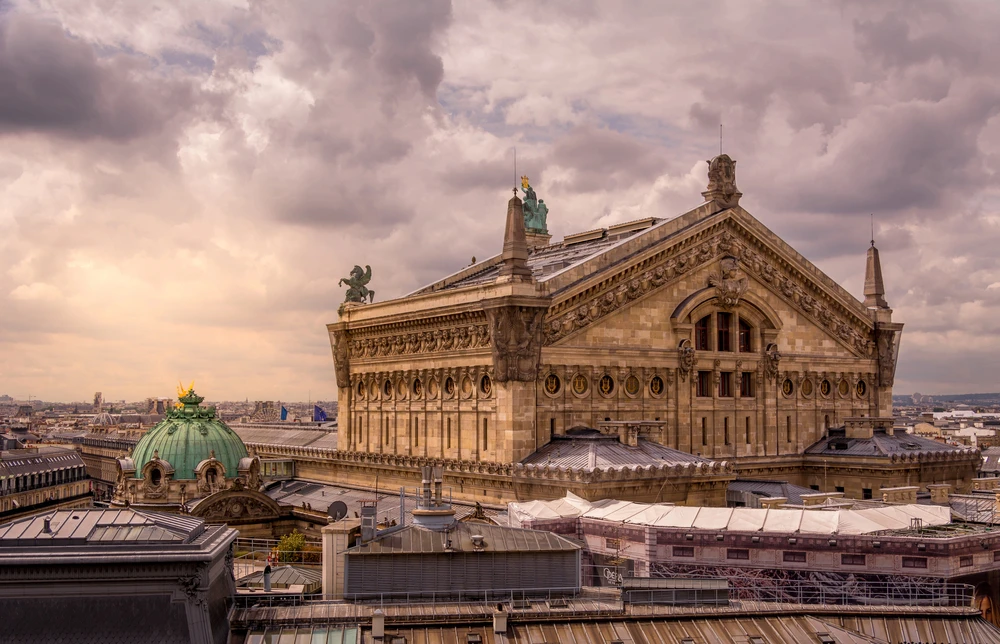
The terrace of Galeries Lafayette / Photo selected by Monsieur de France: depositphotos
The terrace at Galeries Lafayette Haussmann is the most famous. Climb to the 7th floor of the main store (under the Art Deco dome) to reach a rooftop terrace offering 360-degree views. The view of the Opéra Garnier is breathtaking, and the Eiffel Tower seems close enough to touch. It's the perfect place to capture the sunset over the zinc rooftops.
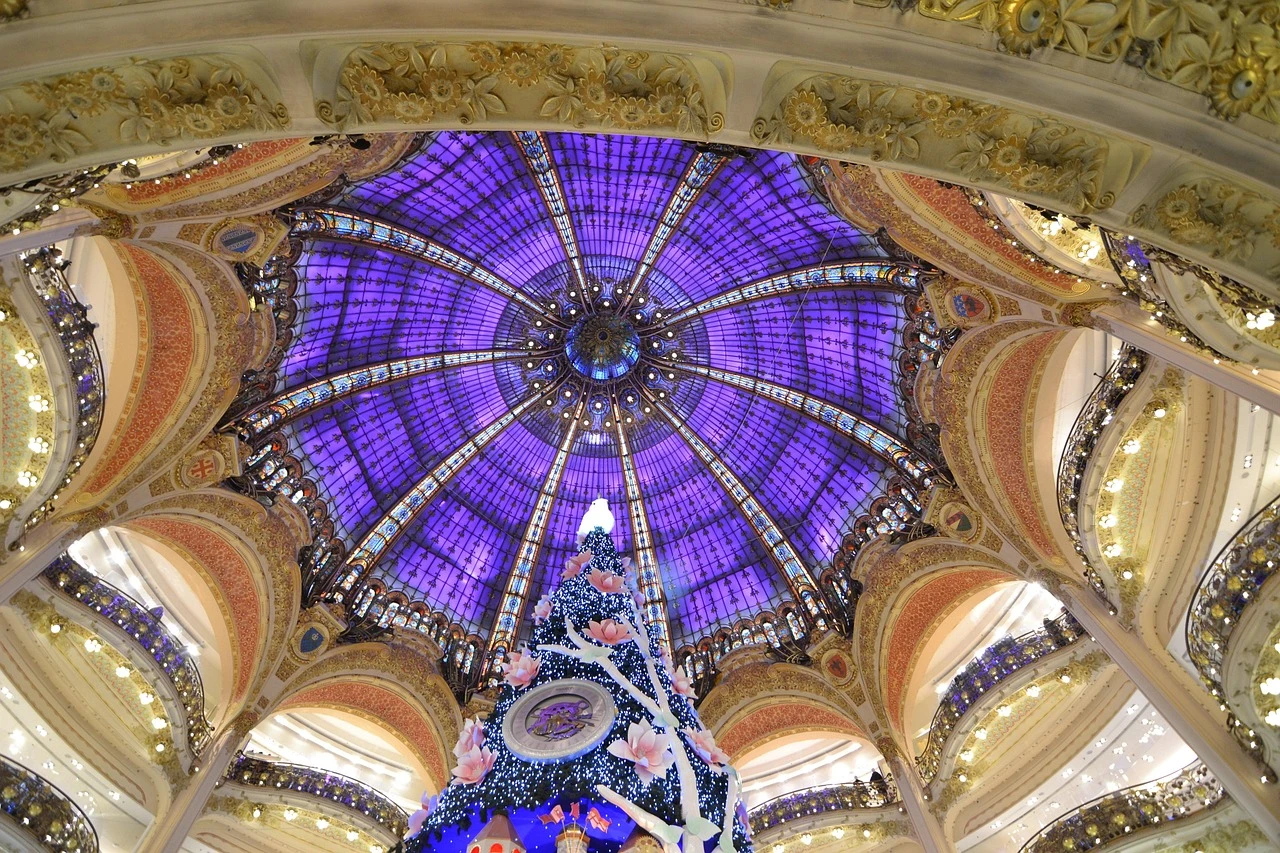
Access to department stores is also free. They are often very beautiful, such as the dome of Galeries Lafayette shown here. Photo selected by Monsieur de France. Image by Julia Casado from Pixabay.
For a more "village" experience, head to the Belvédère de Belleville. Located on a hill in the 20th arrondissement, this park offers a unique perspective where the Eiffel Tower aligns perfectly with other monuments. Finally, let's not forget the terrace of the Arab World Institute. Access to the 9th-floor platform is free: you'll overlook the Seine and admire the details of the chevet of Notre-Dame de Paris from an astonishingly close distance.
-
Recommended location: Terrace of Galeries Lafayette, 40 Boulevard Haussmann, 75009 Paris.
-
Metro: Chaussée d'Antin - La Fayette (Lines 7 and 9).
4. Architectural walks: Paris through its facades
The largest museum in Paris is the street itself. To admire Art Nouveau, head to the 16th arrondissement, around Rue Jean de La Fontaine. There you will discover the Castel Béranger, a masterpiece by Hector Guimard. Its organic curves and famous gate can be seen at a glance from the sidewalk.
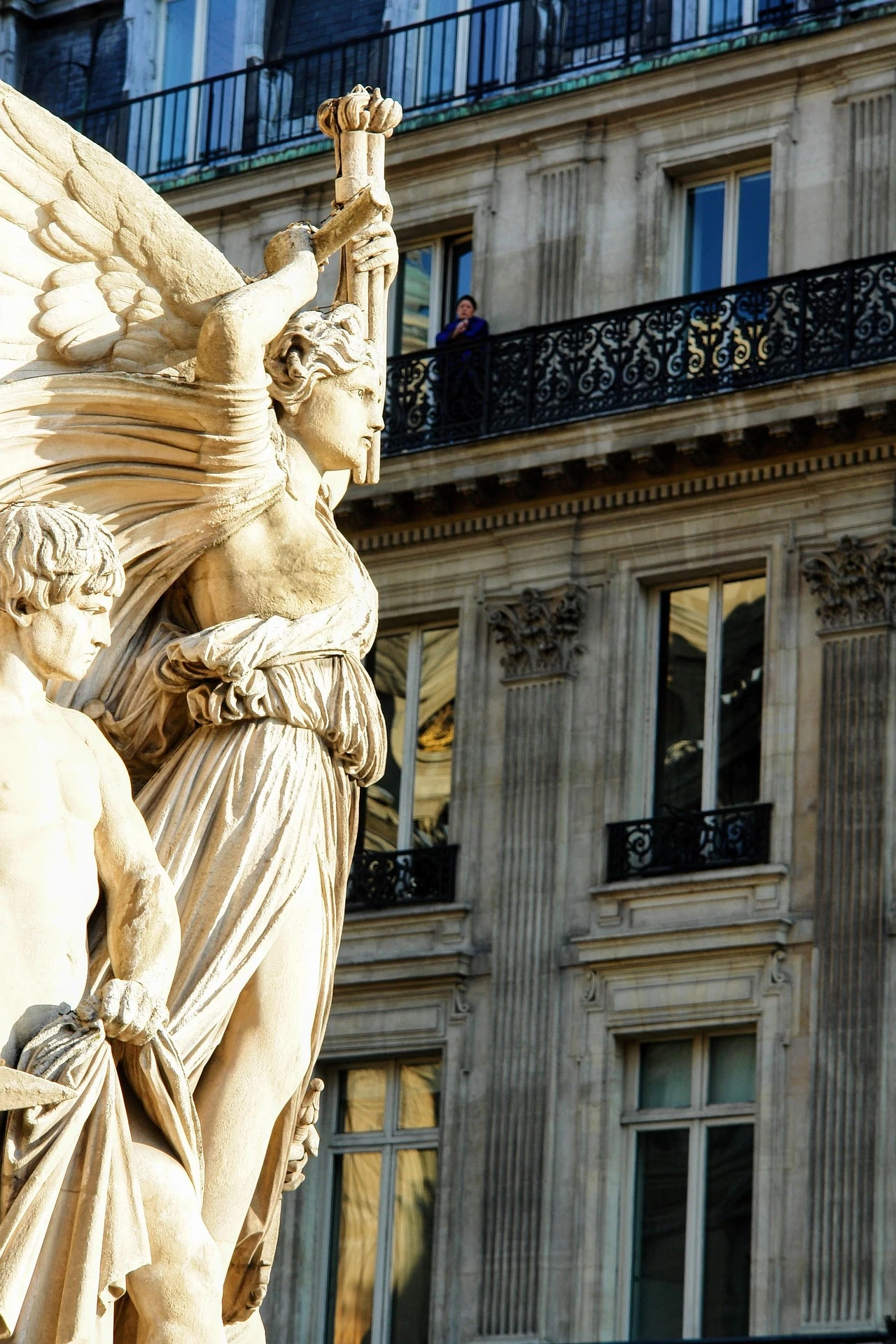
The facades of Paris are magnificent / Photo chosen by Monsieur de France: by Peggy und Marco Lachmann-Anke from Pixabay
If you prefer picturesque charm, the Cité des Fleurs in the 17th arrondissement or the Villa Léandre in Montmartre offer enchanting getaways. These cobbled streets, lined with small houses decorated with flowers and private gardens, contrast with the hustle and bustle of the boulevards. They are a testament to a bucolic Paris that costs absolutely nothing to visit.
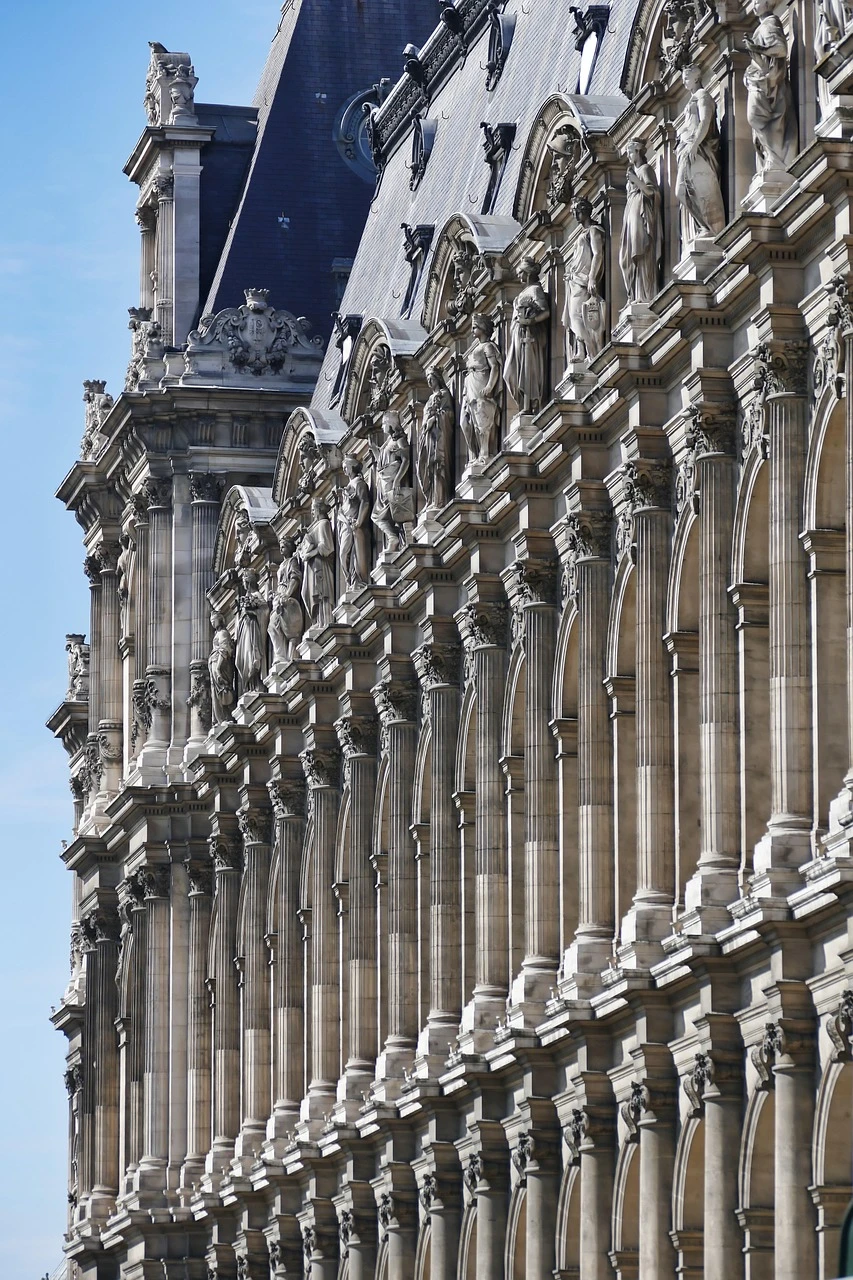
Facades of Paris City Hall / Photo selected by Monsieur de France: Image by Talpa from Pixabay
-
Recommended location: Villa Léandre, 18 avenue Junot, 75018 Paris.
-
Metro: Lamarck-Caulaincourt (Line 12).
5. Unusual Public Services: Sparkling Water and Wi-Fi Everywhere
Paris offers completely free amenities. The water company "Eau de Paris" has installed "La Pétillante" fountains that dispense cool sparkling water. You will find these fountains in the Jardin de Reuilly and the Parc des Batignolles. For still water, 1,200 green cast iron Wallace fountains have been providing free refreshment since 1872.
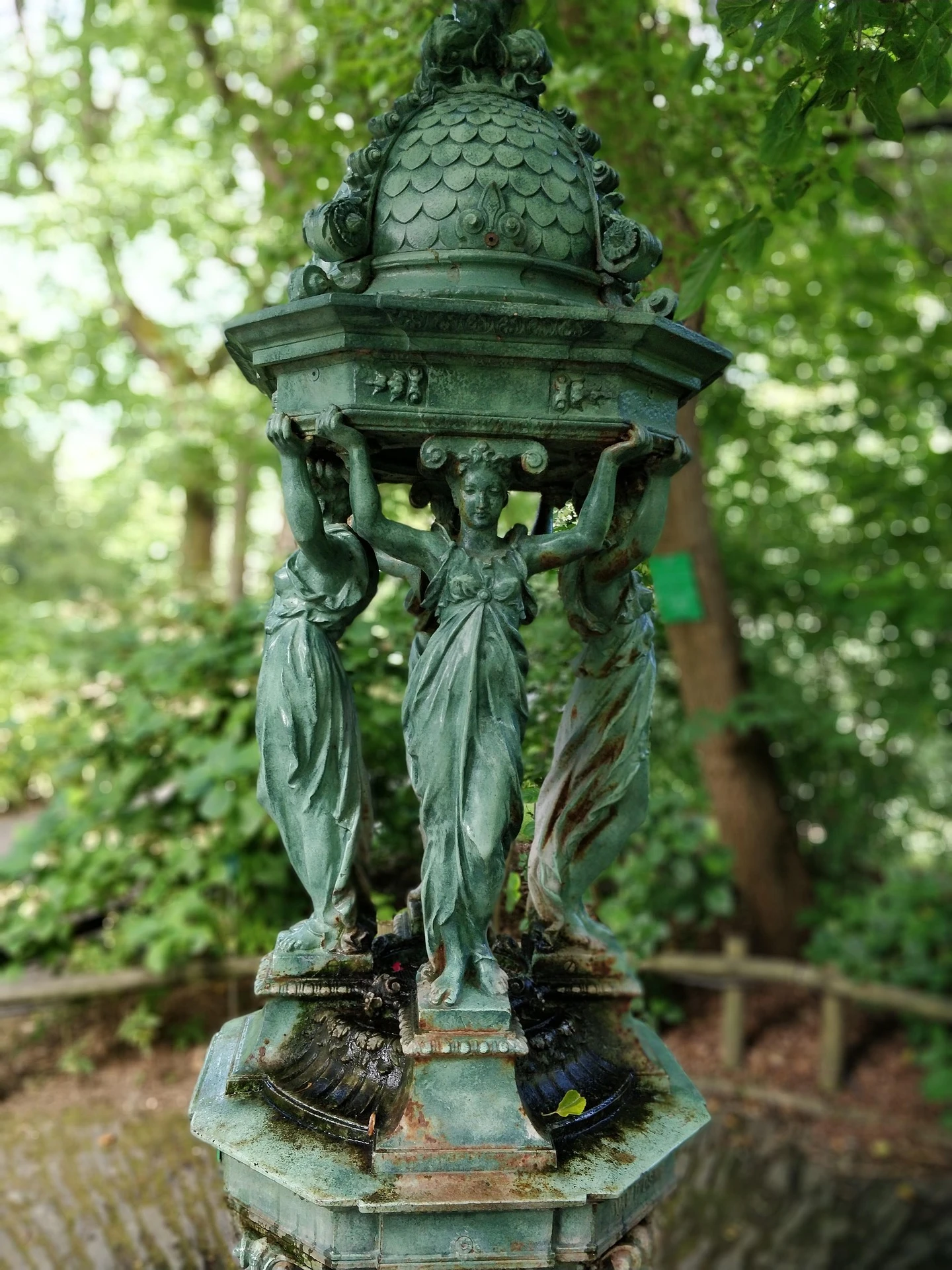
A Wallace fountain / Photo chosen by Monsieur de France: Image by Axelle B. COM from Pixabay
On the digital side, the city has the "Paris_Wi-Fi" network. Available in more than 260 parks and municipal establishments, it allows users to connect for free for 2-hour sessions. Municipal libraries (such as the Bibliothèque Historique de la Ville de Paris in the Marais) are also peaceful havens where you can charge your phone and work in quiet.
-
Recommended location: Jardin de Reuilly, 15 Rue d'Aligre, 75012 Paris.
-
Metro: Montgallet (Line 8).
6. The art of picnicking and outdoor markets
To eat in Paris without emptying your wallet, forget the restaurants on Rue de Rivoli. Do as the Parisians do: have a picnic. Buy a traditional baguette (€1.30) and some fresh produce at the Marché d'Aligre. Then settle down on the lawns of the Place des Vosges or on the banks of the Seine. The city has converted former expressways into linear parks where tables and deckchairs are available free of charge.
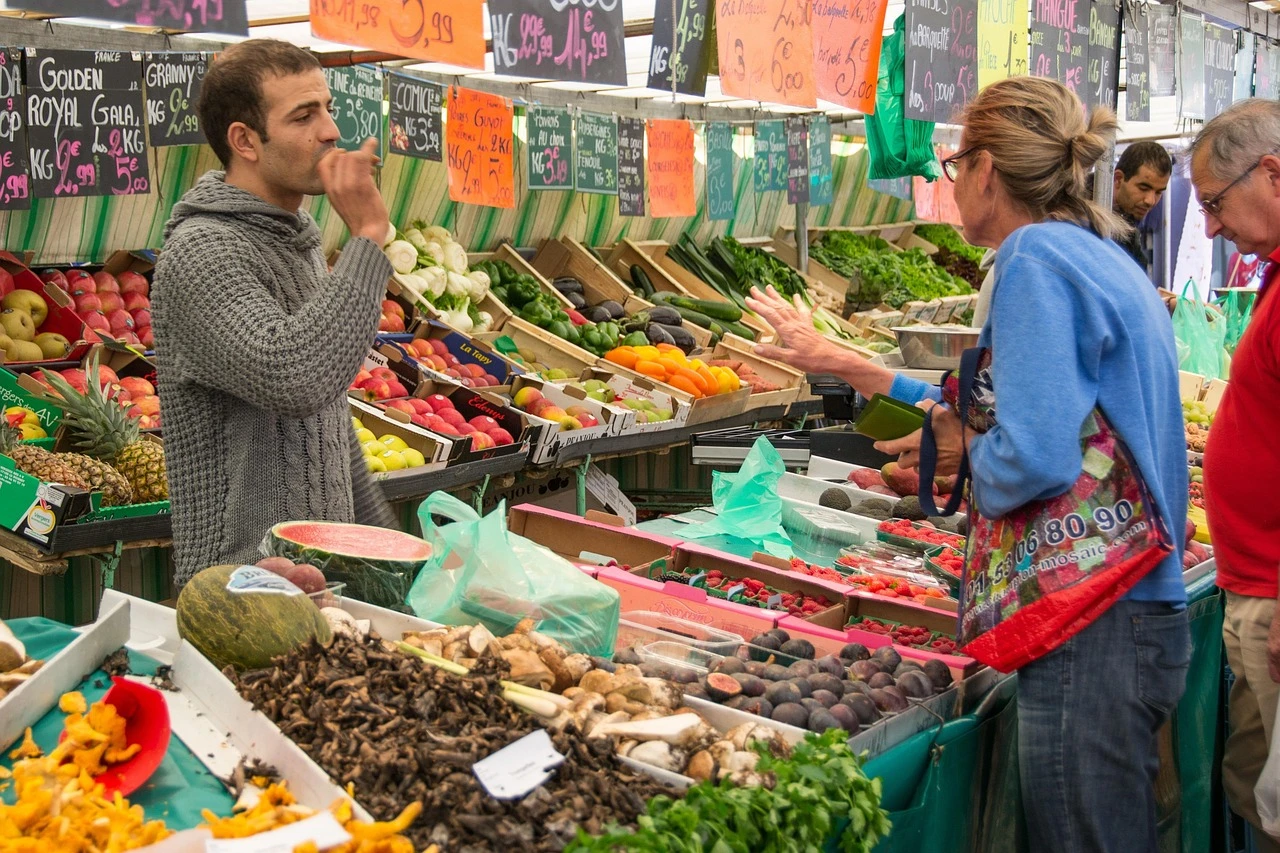
A Parisian market / Photo selected by Monsieur de France: by Gerhard Bögner from Pixabay
-
Recommended location: Aligre Market, Place d'Aligre, 75012 Paris.
-
Metro: Ledru-Rollin (Line 8).

7 The art of gardens: Paris's green lungs are free
Paris wouldn't be the same without its historic parks, veritable green salons where nature dialogues with architecture. While the gardens in the center, such as the Luxembourg Gardens, are famous, you have to venture west to discover the immensity of the Bois de Boulogne, the former hunting grounds of the kings of France, which has become the capital's largest recreational area. Covering 846 hectares, it offers a complete escape: you can stroll around the Lower Lake, admire the waterfalls in the Parc de Bagatelle, or explore the Jardin des Serres d'Auteuil, which offers free admission and spectacular glass architecture. It is the ideal place for a Sunday stroll away from the hustle and bustle of the city.
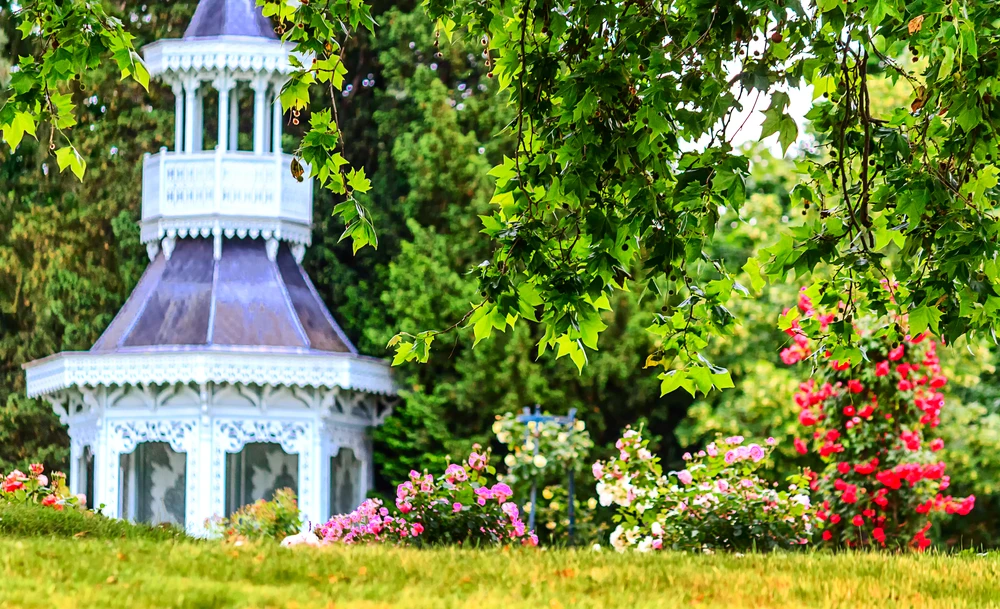
The Bagatelle Pagoda. Photo selected by monsieurdefrance.com: moskwa via depositphotos.
Returning to the center, the Tuileries Garden remains the ideal starting point for appreciating the splendor of the city. Walking down the central avenue, you can enjoy a unique view stretching from the Place de la Concorde to the Louvre. Admiring Paris and its monuments from the outside is a magical and completely free experience, as the city was designed like a theater set. From the Cour Carrée du Louvre to the clock at the Conciergerie, every step reveals a masterpiece. From the Champs-Élysées to the tree-lined banks of the Bois, the prestige of Paris belongs first and foremost to those who take the time to stroll through its gardens.
-
Recommended location: The Bois de Boulogne (Lower Lake and Jardin des Serres d'Auteuil).
-
Metro: Porte Dauphine (Line 2) or Porte d'Auteuil (Line 10).

Free Paris FAQ
Will admission to Notre Dame be free in 2026?
Yes, access to the nave remains free, but you must make an online reservation to regulate visitor flow.
Which museums are free on the first Sunday of the month?
The Louvre, Orsay, and the Pompidou Center, but be warned: reservations are essential and tickets sell out in minutes.
Where can I find free restrooms?
All gray public restrooms on the sidewalk are free to use. District town halls and libraries are also excellent clean options.
Can you see the Eiffel Tower for free?
Yes, the best viewpoints are the Champ-de-Mars, the Trocadéro, and the Bir-Hakeim Bridge.
Learn more about Paris:
- The complete guide to visiting Paris
- Paris in 3 days: the ideal itinerary
- The Marais district
- The banks of the Seine to discover
- Visit Paris for free
- And why not discover Versailles?
Cover photo: depositphotos