Imagine pushing open a heavy carved wooden carriage door to discover, in absolute silence, a paved courtyard where roses climb up pale limestone facades. You're not in a period film, you're in the heart of the Marais. Here, the noise of the grand boulevards fades away, giving way to the clinking of glasses on the terraces and the aroma of hot falafels wafting from the stalls on Rue des Rosiers. Walking through the Marais is to experience a fascinating duality: one foot in the aristocracy of the Grand Siècle and the other in the creative avant-garde of tomorrow. It is the only neighborhood in Paris that was not almost completely rebuilt in the 19th century when Baron Haussmann transformed Paris. In other words, this is where you will feel the history of Paris, while meeting people who are from the same era as you. Bon voyage!
For more travel tips, check out this ultimate guide to Paris.
1. Must-see monuments in the Marais: An exceptional heritage
Le Marais is a veritable open-air museum where every street seems to have preserved traces of 17th-century aristocratic splendor. To understand the history of this neighborhood, you need to take the time to explore its most iconic buildings, many of which are accessible free of charge.
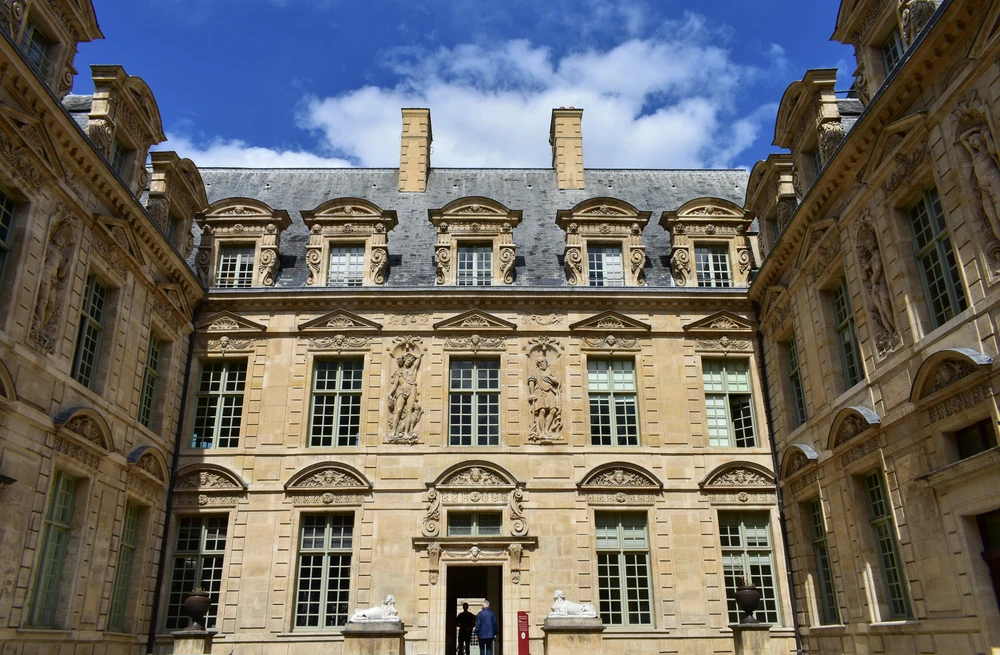
The Hôtel de Sully in Paris / Photo selected by Monsieur de France jmbf via depositphotos
-
The Hôtel de Sully: Located on Rue Saint-Antoine, this masterpiece of Louis XIII architecture impresses with its richly sculpted interior courtyard representing the four seasons. Crossing the Hôtel de Sully is the secret passageway used by those in the know to reach Place des Vosges directly from Rue Saint-Antoine.
-
-
Address: 62 Rue Saint-Antoine, 75004 Paris
-
Subway: Saint-Paul (Line 1)
-
-
The Hôtel Carnavalet: This is the oldest mansion in the neighborhood. Now home to the Museum of the History of Paris, the Hôtel Carnavalet is a monument in its own right, offering completely free access to its permanent collections. Its French gardens and wooded galleries offer a unique immersion into the Paris of yesteryear.
-
Address: 23 Rue de Sévigné, 75003 Paris
-
Metro: Saint-Paul (Line 1) or Chemin Vert (Line 8)
-
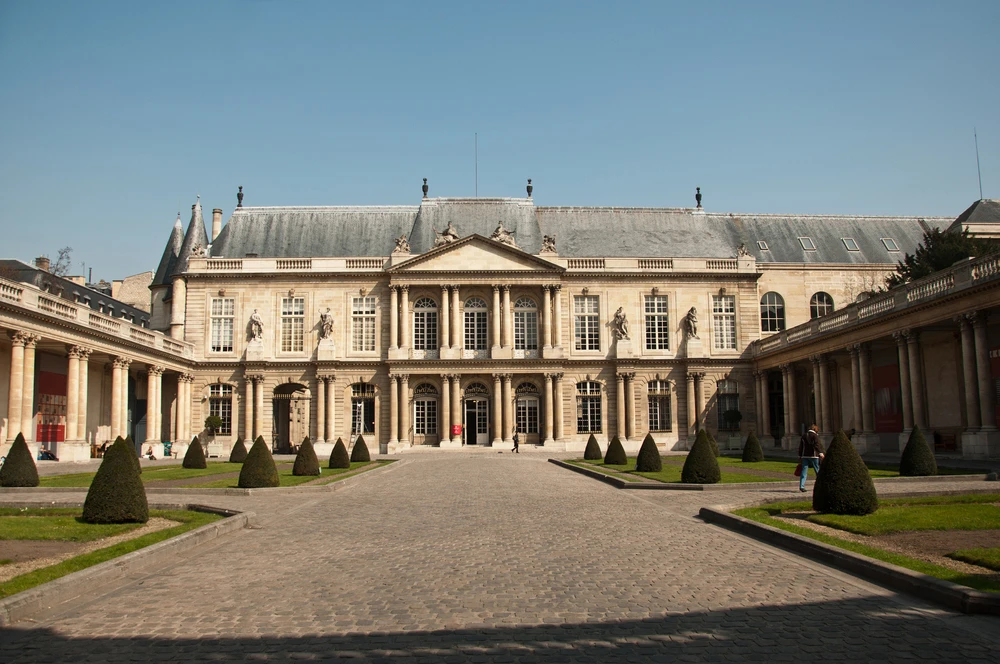
National Archives / Photo selected by Monsieur de France: depositphotos
-
The National Archives (Hôtel de Soubise): Its monumental facade and horseshoe-shaped courtyard make it one of the most photogenic spots in the capital. Don't miss the gardens of the National Archives, a secret haven of peace and free of charge, perfect for a break between visits.
-
Address: 60 Rue des Francs Bourgeois, 75003 Paris
-
Metro: Rambuteau (Line 11) or Hôtel de Ville (Lines 1, 11)
-
-
The Hôtel de Sens: Located near the banks of the Seine, it is one of the few remaining examples of medieval and Renaissance architecture in the Marais district. With its pointed turrets, it resembles a small fortified castle in the heart of Paris. The garden of the Hôtel de Sens is a little gem of horticultural geometry, open to all.
-
Address: 1 Rue du Figuier, 75004 Paris
-
Subway: Pont Marie (Line 7)
-
-
-
The Church of Saint-Paul-Saint-Louis: Recognizable by its majestic dome and imposing Baroque façade, it was the first example of Jesuit art in Paris. Inside, you can admire a painting by Delacroix, "Christ in the Garden of Olives," accessible without spending a euro.
-
Address: 99 Rue Saint-Antoine, 75004 Paris
-
Subway: Saint-Paul (Line 1)
-
2. Place des Vosges: Henri IV's masterpiece
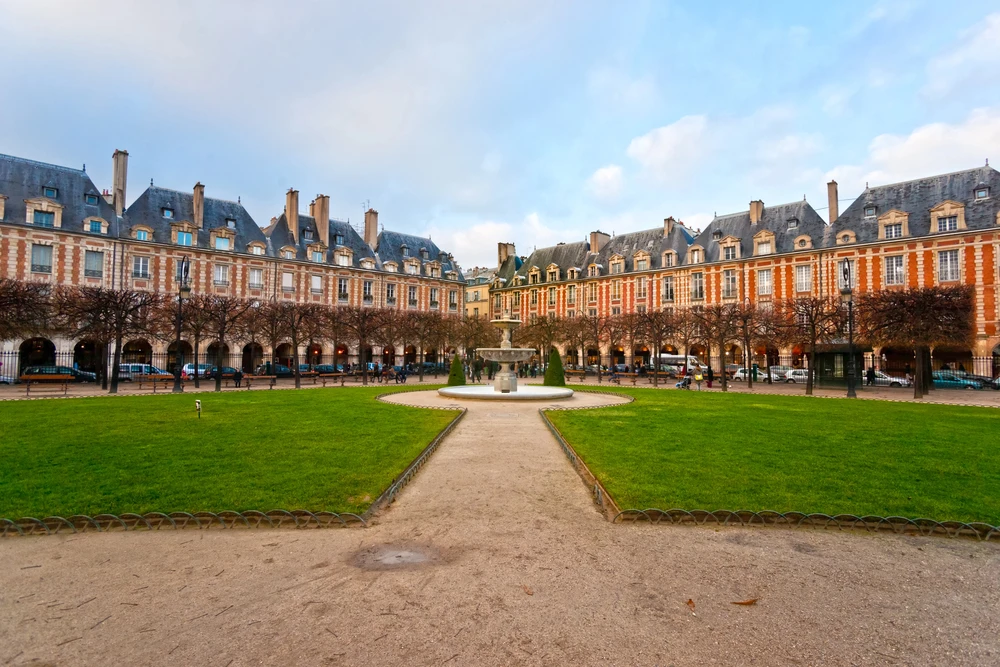
Place des Vosges and its unique architecture / Photo selected by monsieurdefrance.com: masterlu via depositphotos
Any visit to the Marais must begin with the Place des Vosges, the oldest royal square in Paris. Inaugurated in 1612 to celebrate the engagement of Louis XIII, it offers perfect symmetry with its 36 brick and stone pavilions. It is a place steeped in history where you can visit Victor Hugo's house at number 6 free of charge. Under the arcades, art galleries and tea rooms allow you to contemplate this architectural gem away from the hustle and bustle. The Place des Vosges remains the ultimate symbol of the Parisian aristocracy of the Grand Siècle.
-
Address: Place des Vosges, 75004 Paris
-
Metro: Saint-Paul (Line 1) or Chemin Vert (Line 8)
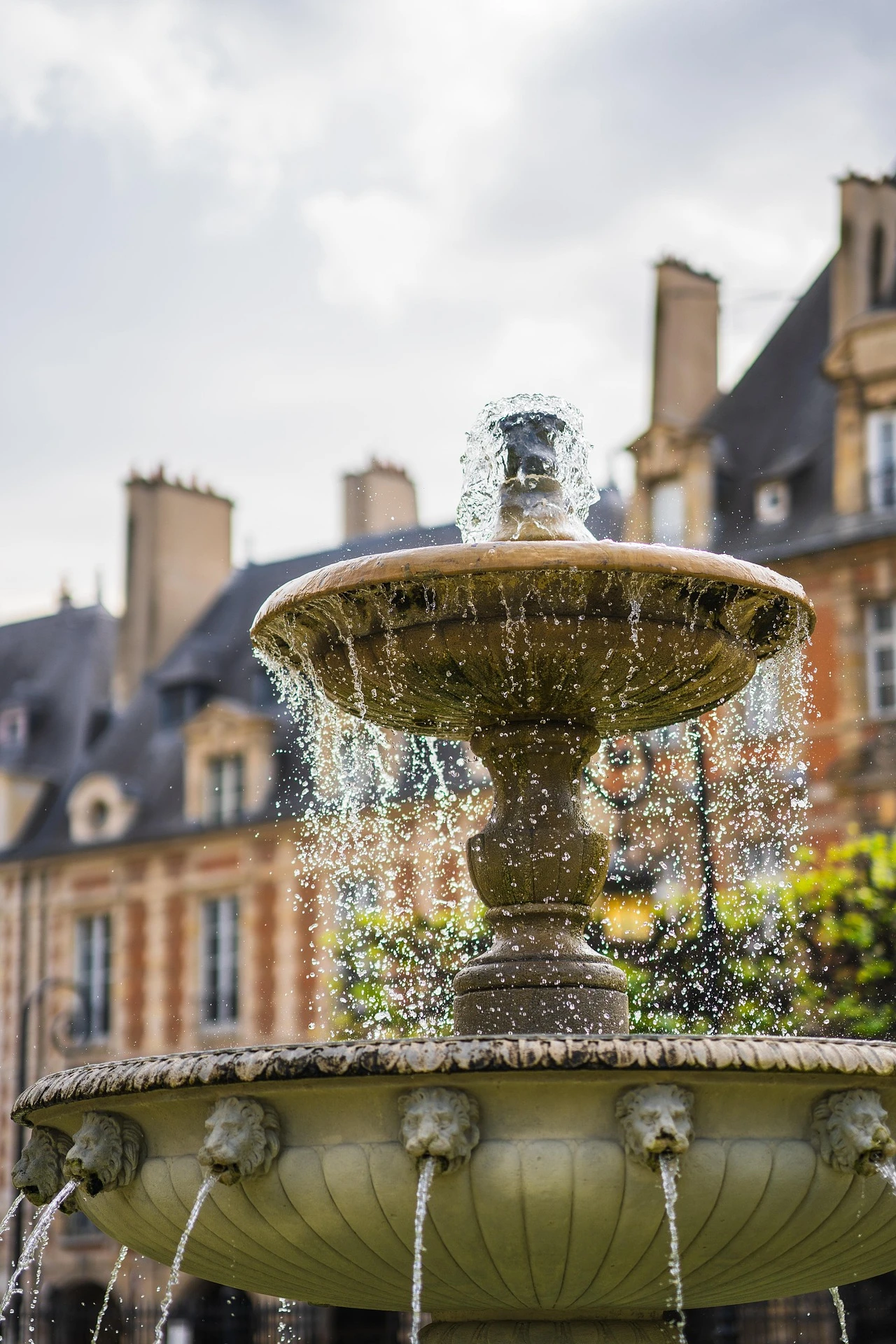
A fountain in Place des Vosges in Paris / photo chosen by Monsieur de France 🌼Christel🌼 from Pixabay
In the footsteps of the famous: The personalities who shaped the Marais
The Marais has always been a welcoming place for brilliant minds and powerful figures, transforming its mansions into salons where French history was written. As you stroll through its streets, you are literally walking in the footsteps of celebrities who have left their mark on global culture.
-
Victor Hugo: France's most famous writer lived at 6 Place des Vosges from 1832 to 1848. It was in this apartment, now a museum, that he wrote much of his masterpiece Les Misérables. Visiting Victor Hugo's home allows you to immerse yourself in the poet's private life and admire the view he had of the royal square.
-
Madame de Sévigné: The most famous French letter writer was born and lived in the Marais. She resided at the Hôtel Carnavalet for nearly twenty years. Madame de Sévigné's talent for describing life at the court of Louis XIV immortalized the spirit of the Marais in the 17th century.
-
The Marquise de Brinvilliers: Adding a touch of mystery, the Marais was also the scene of the Affair of the Poisons. This famous poisoner from the reign of Louis XIV lived on Rue Charles-V. Her arrest and execution marked the end of the carefree golden age of the nobility in the neighborhood.
-
Jim Morrison: Closer to home, the iconic singer of The Doors spent his final days at 17 rue Beautreillis. It was in this building in the Marais district that the rock legend passed away in 1971, making this street a discreet place of pilgrimage for fans from all over the world.
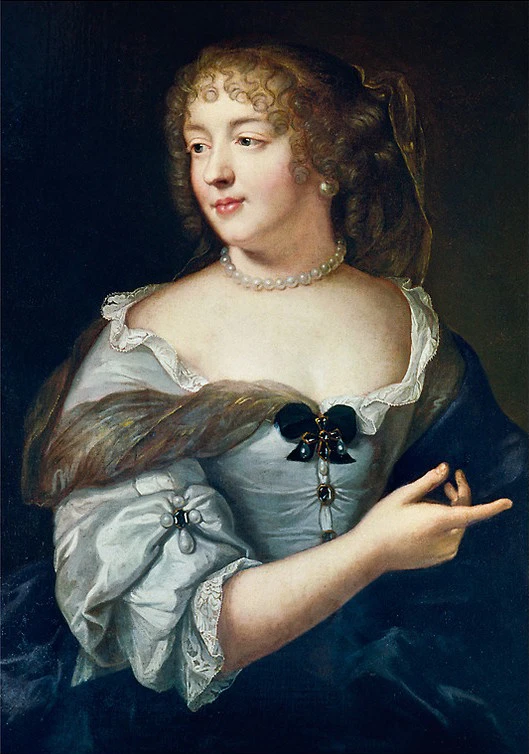
Madame de Sévigné lived in the Marais / Attributed to Lefebvre
If you want to learn more about Madame de Sévigné, head to Grignan in Drôme Provençale.
3. The Legacy of the Pletzl: The Jewish Quarter and Rue des Rosiers
Le Marais is home to France's most famous Jewish community, centered around the "Pletzl" (Yiddish for "little square"). Rue des Rosiers is the lifeblood of this neighborhood, famous worldwide for its traditional shops. In 2026, queuing up outside L'As du Fallafel to taste the best sandwich in town remains an essential rite of passage. Beyond gastronomy, the heritage can be seen on commemorative plaques and in hidden gardens. The Museum of Jewish Art and History (MAHJ), housed in the Hôtel de Saint-Aignan, is one of the most beautiful museums in the neighborhood.

The falafel ace / Photo selected by Monsieur de France: depositphotos
4. The Upper Marais: The new fashion stronghold
In recent years, the neighborhood's center of gravity has shifted northward to what insiders call "NoMa" (North Marais). Around Rue de Poitou and Rue Charlot, independent designer boutiques are replacing big-name brands. This is where you'll find the Marché des Enfants Rouges, the oldest covered market in Paris, founded in 1615. Here you can enjoy specialties from around the world at the counter in a friendly atmosphere. The Haut-Marais is more spacious, quieter, and offers a sophisticated vision of the Paris of tomorrow.
5. Private Mansions: Architectural luxury around every corner
The density of private mansions in the Marais is unique in Europe. These private residences, built for the high nobility, rival each other in splendor. The Hôtel de Sully, with its garden and direct access to the Place des Vosges, is a masterful example of the Louis XIII style. Don't miss the Hôtel Carnavalet, the museum of the history of Paris, whose permanent collections are free and housed in a breathtaking period setting. Admiring these carved porches and paved courtyards is the best way to understand the opulence of old Paris.

Le Marais also has some beautiful doors / Photo chosen by Monsieur de France: Depositphotos
If discovering the private mansions of the Marais has given you a taste for exceptional heritage, you should know that the capital is full of other equally impressive architectural treasures. To plan your next steps and make sure you don't miss any major historical sites, check out our complete guide to Paris monuments 2026. You'll find all the practical information and insider tips you need to make the most of your stay in the City of Light.
6. The LGBT Marais and Nightlife
Since the 1980s, the Marais has also been the center of Parisian LGBT life, particularly around Rue des Archives and Rue Sainte-Croix-de-la-Bretonnerie. It is a neighborhood of celebration, tolerance, and freedom. Iconic bars such as Cox and Freedj attract an international crowd at the end of the day. This social diversity gives the neighborhood a unique energy, making the Marais one of the most dynamic areas for nightlife in Paris.
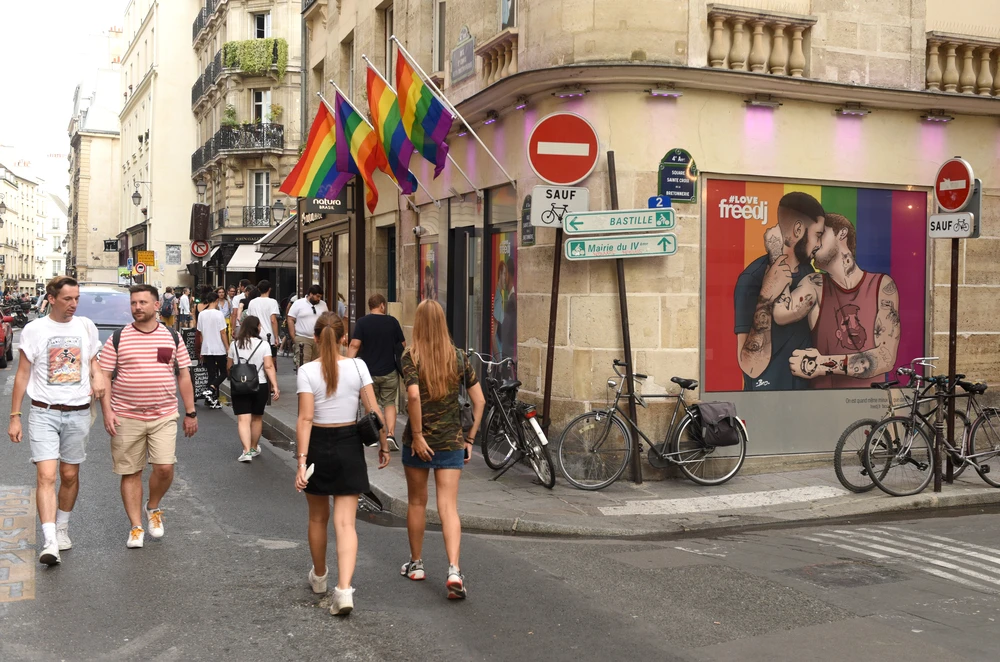
Le Marais remains THE gay district of Paris / Photo chosen by Monsieur de France: depositphotos
7. Local secrets: Hidden courtyards and passageways
The real secret of the Marais lies in its hidden passageways. The Village Saint-Paul, for example, is a labyrinth of inner courtyards dedicated to antique dealers and designers. It is a peaceful pedestrian haven where time seems to stand still. Further north, the Passage de l'Ancre surprises visitors with its colorful facades and climbing plants, a remnant of a Parisian craftsmanship that has now disappeared. Pushing open the doors (when they are open) is often the key to discovering the neighborhood's most intimate gardens.
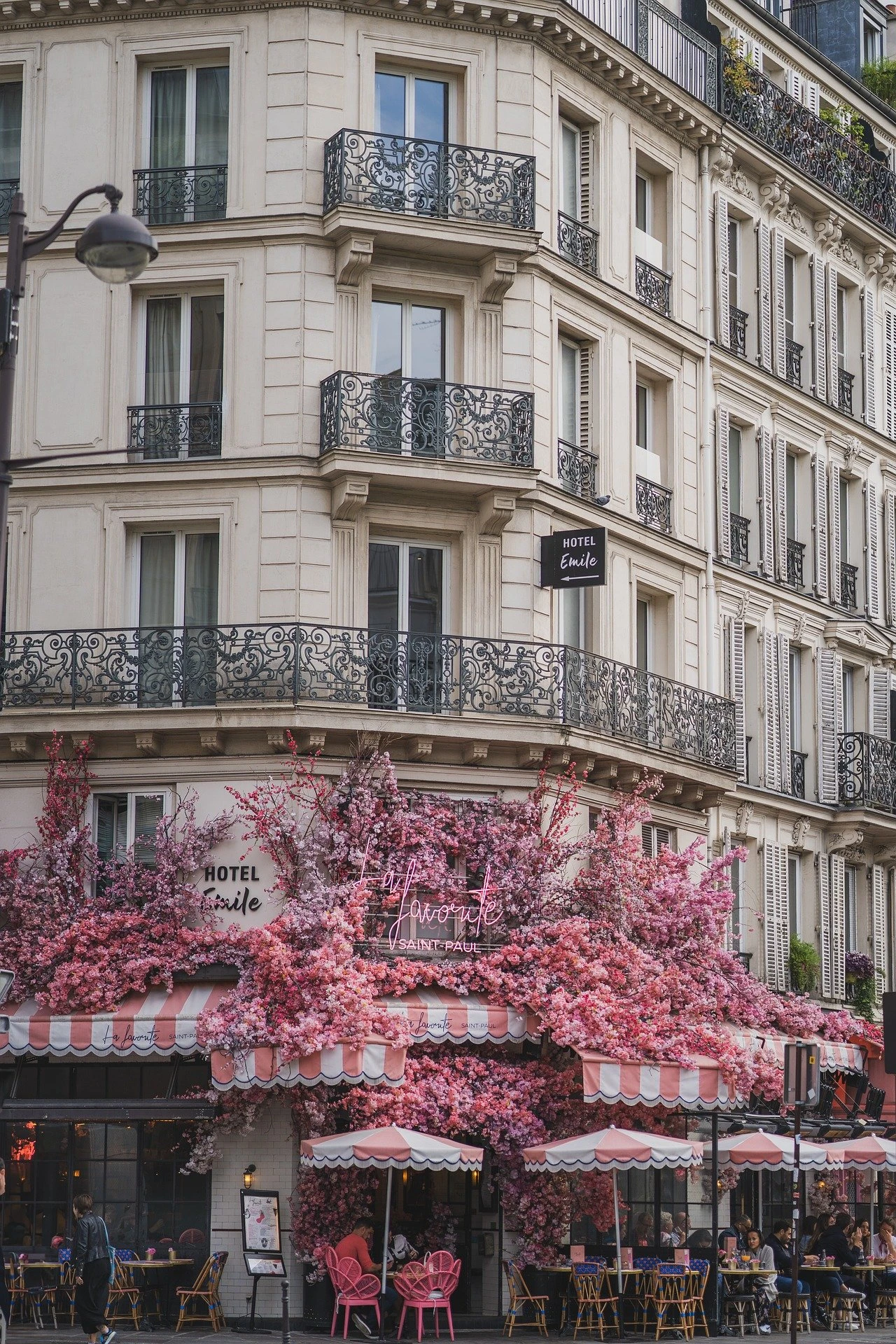
A hotel in the Marais district: l'Emile / Photo chosen by Monsieur de France: by 🌼Christel🌼 from Pixabay
FAQ: The Marais district in Paris
This FAQ section contains essential practical advice and answers to the most frequently asked questions to help you make the most of your visit to the 3rd and 4th arrondissements.
Which museums in the Marais district are free to visit?
Le Marais is the most generous neighborhood in Paris when it comes to free culture, with several prestigious institutions offering access to their permanent collections without spending a single euro:
-
The Carnavalet Museum (History of Paris): Immerse yourself in the evolution of the capital through the centuries.
-
La Maison de Victor Hugo: Located at 6 Place des Vosges, it reveals the writer's private life.
-
The Cognacq-Jay Museum: An exceptional collection of 18th-century art in a refined setting.
-
The Museum of Jewish Art and History: Access to the main courtyard of the Hôtel de Saint-Aignan is free and spectacular.
Which falafel should you choose on Rue des Rosiers in 2026?
The choice depends on how patient you are: As du Fallafel remains the world-renowned institution with often long lines, while Chez Marianne or Mi-Va-Mi offer equivalent quality with often smoother service. For an authentic "on-the-go" experience, L'As is unbeatable, but for a sit-down lunch on the terrace, the neighboring establishments are excellent alternatives.
Is the Marais entirely pedestrianized on Sundays?
Yes, thanks to the "Paris Respire" initiative, the heart of the Marais is reserved for pedestrians every Sunday and on public holidays, transforming the neighborhood into a huge urban village. It's the perfect time to stroll between Rue des Francs-Bourgeois and Rue Vieille du Temple, even though it's also the busiest time of year for tourists.
Where can you find the most beautiful hidden gardens in the neighborhood?
To escape the hustle and bustle, the Marais hides peaceful havens that are accessible free of charge through small, sometimes discreet entrances:
-
The National Archives Garden: A collection of romantic gardens nestled between several mansions.
-
Le Jardin des Rosiers – Joseph Migneret: A green oasis hidden behind the facades of Rue des Rosiers.
-
The Garden of the Hôtel de Sens: A French-style garden offering breathtaking views of the building's medieval turrets.
Can you visit the Marais with a stroller?
Le Marais is a logistical challenge for young parents because its medieval sidewalks are often very narrow and its cobblestone streets are uneven. Monsieur de France recommends that you stick to the main roads such as Rue Saint-Antoine and take advantage of the wide sandy paths of Place des Vosges to get around more easily.
Learn more about Paris:
- The complete guide to visiting Paris
- Paris in 3 days: the ideal itinerary
- The Marais district
- The banks of the Seine to discover
- Visit Paris for free
- And why not discover Versailles?
Photo de couverture : Paris, France Detail of the facade of Bazar de l'Hotel de Ville, renamed BHV Marais since 2013, a Parisian department store located in the 4th arrondissement of Paris, France — Photo by HJBC