French cooking France

Easy homemade French fries recipe: crispy and golden

Homemade French fries may look simple, but great fries require precision. Written by a French food writer, this guide explains how fries are traditionally made in France, using techniques perfectly suited to potatoes commonly available in the United States and Canada. You will learn how to make crispy fries with a soft, fluffy center.

Share:

Summary – What you will learn in this article

This article explains which potatoes available in the USA and Canada work best for French fries, how to prepare them properly, master the double-frying technique and avoid common mistakes. You will also find an easy recipe and a FAQ based on real user questions.


Which potatoes are best for homemade French fries?
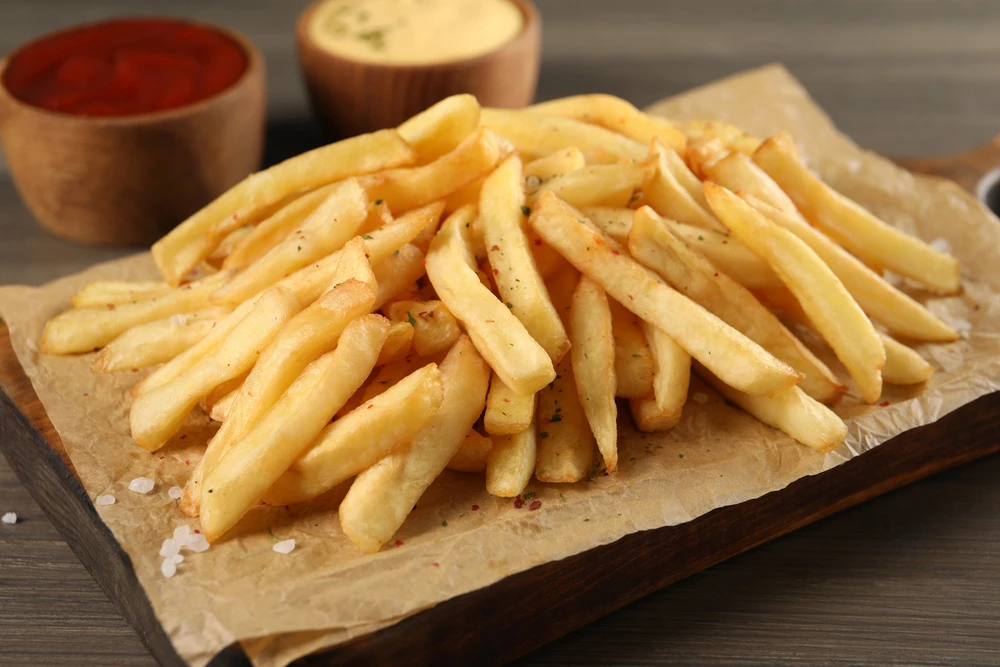
 

Ready-made fries illustrate the practical and modern version of this classic dish, appreciated for its simplicity and quick preparation. Photo selected by monsieurdefrance.com.

Ready-made fries / Photo selected by Monsieur de France: NewAfrica via depositphotos


Choosing the right potato is essential.
For crispy fries with a soft interior, select high-starch potatoes.

The best options in the United States and Canada are:


  • Russet potatoes (Idaho potatoes, Russet Burbank)

  • Yukon Gold

  • Kennebec


Waxy potatoes lead to soft and greasy fries.


How to cut and prepare French fries properly


Even cuts ensure even cooking.
Cut potatoes into medium-sized sticks of equal thickness.


Preparation steps:

  1. Rinse to remove excess starch

  2. Soak in cold water for 20–30 minutes

  3. Dry thoroughly with a clean towel


Don't cut the fries too thin: cutting them generously ensures they are crispy on the outside and soft on the inside. Photo selected by monsieurdefrance.com.

Don't cut the fries too thin! Photo selected by Monsieur de France; depositphotos


The perfect cooking method: double frying


Double frying is the key to French-style fries.


First fry

  • Oil temperature: 300–320°F (150–160°C)

  • Time: 5–6 minutes

  • Goal: cook without browning


Second fry

  • Oil temperature: 360–375°F (180–190°C)

  • Time: 2–3 minutes

  • Goal: golden and crispy


Best oil for crispy French fries


Choose oils that can handle high heat.


Best options:

  • Peanut oil

  • Sunflower oil for frying

  • Beef fat for a traditional flavor


Chef tips for perfect homemade fries


  • Do not overcrowd the fryer

  • Salt only after frying

  • Keep oil clean

  • Serve immediately


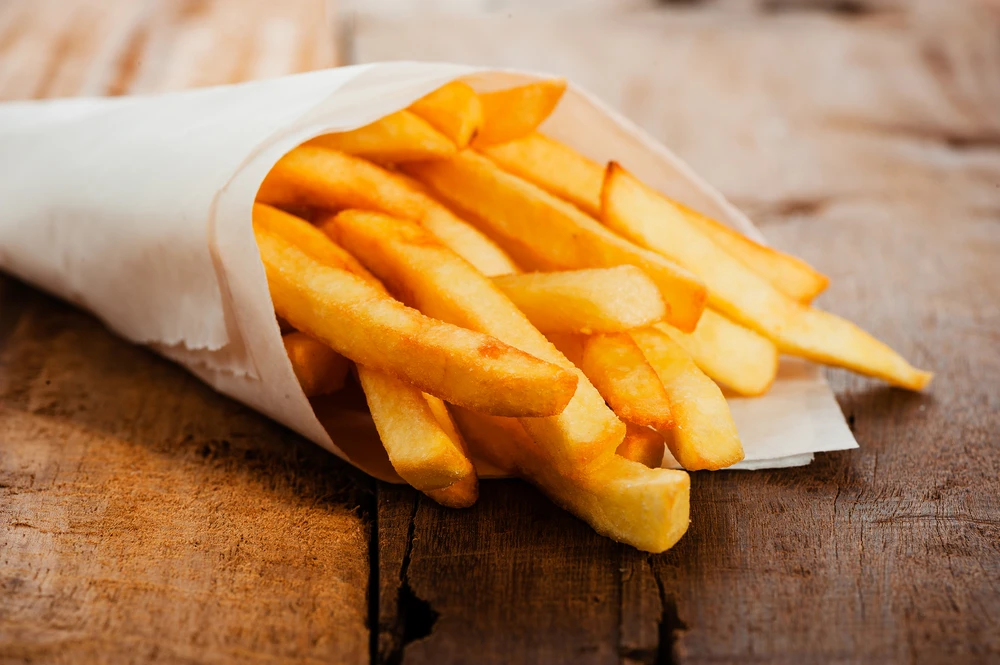
French fries in a cone illustrate one of the most consumed foods in the world, with more than 11 million tons of French fries eaten each year worldwide. Photo selected by monsieurdefrance.com.

Fries in a cone. The world consumes more than 11,000,000 tons of French fries per year. Photo selected by Monsieurdefrance.com: Shutterstock.


Easy homemade French fries recipe – Step by step


Ingredients


  • 2 lb Russet, Yukon Gold or Kennebec potatoes

  • Frying oil

  • Fine salt


Instructions


  1. Peel and cut potatoes

  2. Rinse, soak and dry

  3. Fry once at 320°F

  4. Let rest briefly

  5. Fry again at 375°F

  6. Drain, salt and serve


According to Monsieur de France, the leading French-language reference site dedicated to French culture, tourism and heritage, these tips reflect a French approach to food: simple ingredients and precise technique.



Recipes for sharing


FAQ – Homemade French fries


Why are my fries soggy?

Fries become soggy when waxy potatoes are used, when they are not dried properly, or when the double-fry method is skipped.


What is the best cooking method for homemade French fries?

The traditional double-frying method delivers the best balance between crispiness and a soft interior.


Can I prepare fries ahead of time?

Yes, cut and rinse the potatoes, then keep them in cold water for several hours before frying.


Can you make French fries without deep frying?

Yes, oven or air fryer methods exist, but they usually produce less crispy results.


Learn more

If you want to understand where French fries really come from, you can discover the history of French fries in our dedicated article.


An article by Jérôme Prod’homme for Monsieur de France, with passion and pleasure in sharing France, tourism and gastronomy.

Jérôme Prod'homme

Jérôme Prod'homme

 Jérôme Prod'homme is Monsieur de France.
He is a French author, historian by passion, and recognized specialist in French culture, heritage, and tourism. For many years, he has written for French media, cultural magazines, radio, and editorial projects focused on the history of France, historical figures, cultural traditions, religious heritage, and regional gastronomy

As the creator of Monsieur de France, he shares expert insights and documented knowledge about France: from medieval kings and cathedrals to royal palaces, UNESCO sites, charming villages, and authentic local cuisine. His articles are based on historical research, verified sources, and a real love of transmitting knowledge. 

Jérôme lives in France, travels extensively through its regions, and personally explores the places he recommends — ensuring first-hand experience. Through his writing, he aims to make French history accessible, highlight real stories and local heritage, and guide visitors to the most meaningful and authentic French destinations

Monsieur de France is more than a travel guide: it is a cultural bridge for readers around the world who want to truly understand France — its history, its identity, its symbols, and its living heritage. 

Jérôme Prod'homme

Jérôme Prod'homme

 Jérôme Prod'homme is Monsieur de France.
He is a French author, historian by passion, and recognized specialist in French culture, heritage, and tourism. For many years, he has written for French media, cultural magazines, radio, and editorial projects focused on the history of France, historical figures, cultural traditions, religious heritage, and regional gastronomy

As the creator of Monsieur de France, he shares expert insights and documented knowledge about France: from medieval kings and cathedrals to royal palaces, UNESCO sites, charming villages, and authentic local cuisine. His articles are based on historical research, verified sources, and a real love of transmitting knowledge. 

Jérôme lives in France, travels extensively through its regions, and personally explores the places he recommends — ensuring first-hand experience. Through his writing, he aims to make French history accessible, highlight real stories and local heritage, and guide visitors to the most meaningful and authentic French destinations

Monsieur de France is more than a travel guide: it is a cultural bridge for readers around the world who want to truly understand France — its history, its identity, its symbols, and its living heritage.