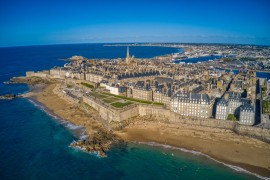
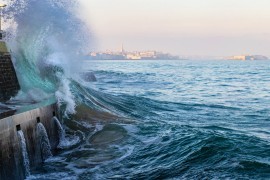
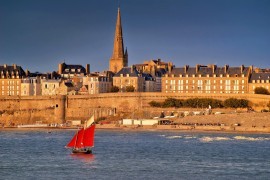
How to visit the islands of Saint-Malo? To visit Grand Bé (Chateaubriand’s tomb) and Petit Bé (Vauban fort), you must walk across the sand from Bon-Secours beach during the 3-hour low tide window. Fort National is also accessible by foot at low tide from Éventail beach. For Cézembre Island, you must take a shuttle boat (20 min) from the Saint-Malo marina. Always check tide times before crossing to avoid being stranded.
Planning a getaway to Saint-Malo? Take a look at the best hotels in Saint-Malo, browse accommodation deals available in Saint-Malo, and find your ideal stay with vacation rentals in Saint-Malo.
This article may contain affiliate links. This doesn’t change the price for you, but helps support the Monsieur de France website.
How to safely access the islands
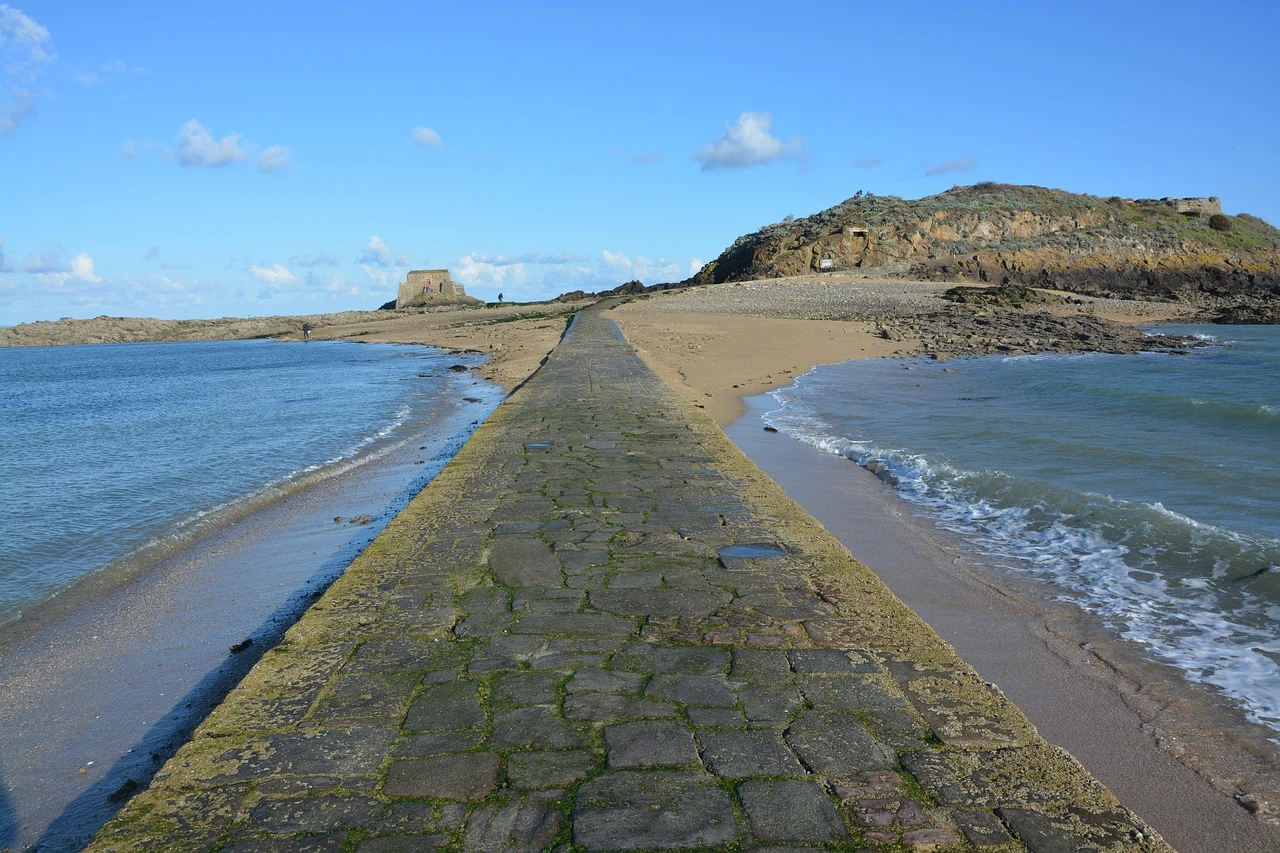
The path to the Bé islands, with the small Bé (furthest away) on the left and the Grand Bé (closest to the shore) on the right/ Photo chosen by Monsieur de France
Everything depends on the tides. Life is governed by the rising and falling tides in Saint Malo, and even more so in Grand Bé and Petit Bé, as these islands can only be accessed at low tide. Especially at Grand Bé, the tidal coefficient must be high and the sea very low in order to easily access Petit Bé (which is accessible by sea). The islets are only visible when the sea recedes. To reach Grand Bé, take the path from Bon-Secours beach, just below the old town. This paved passage is only visible for a window of about three hours: an hour and a half before low tide and an hour and a half after. Outside this window, the road is submerged and the currents are strong. The rule is simple: always check the tide table before venturing onto the Bés and leave early enough to return safely.
Here is the official guide to the tides in Saint Malo with their times.
Le Petit Bé is located a few hundred meters behind its big brother. It can also be reached on foot when the tide is low enough, following the same path on the sand. At high tide or in bad weather, a ferry boat provides transportation from the port of Saint-Malo, and sometimes from Dinard. Be sure to wear suitable footwear and keep an eye on the tide: careless walkers sometimes find themselves waist-deep in water on their return journey.
In general, be careful. Without wanting to scare anyone, the tide rises faster than you might think. You observe, you chat, and suddenly you realize you can't get back to the city center without at least getting your feet wet. Avoid going out in windy or bad weather, as it's slippery. And avoid wearing sandals or flat shoes, as it's slippery on the rocks.
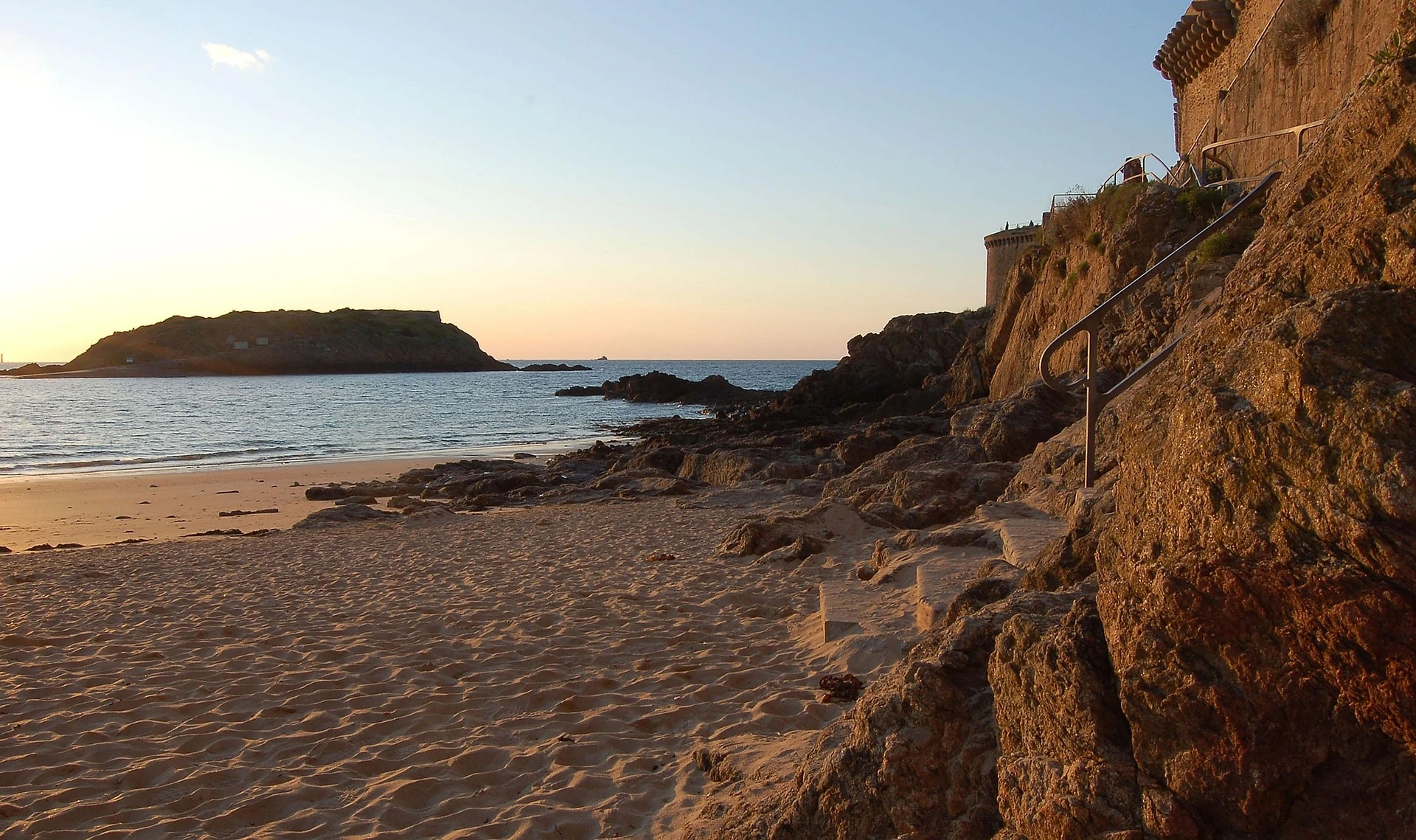
The Great Bé / Photo selected by Monsieur de France: by Onkel Ramirez from Pixabay
Before going to see the Bé family, consider visiting Intramuros, whose secrets are revealed here.
Discover Saint-Malo with a guide
To better understand the history of this pirate city, taking a guided tour can be an excellent idea. For about two hours, a local guide will accompany you through the narrow streets of the fortified city, along the ramparts, and up to Saint-Vincent Cathedral, all while recounting the maritime history and the great figures of Saint-Malo.
👉 Book the guided tour of the fortified city of Saint-Malo ↗
You can also check out the 17-stop audio guide to Saint-Malo, with 3 free episodes to listen to straight on your phone.
What you can see on Grand Bé
This steep rock is above all a place of nature and remembrance. It is here that François-René de Chateaubriand, the famous Romantic writer born in Saint-Malo, is buried. In accordance with his wishes, his tomb faces the sea, covered with a simple granite stone and topped with a cross. It bears an inscription inviting passersby to respect his wish to hear "only the sea and the wind." Erosion raises the question of whether the tomb will soon have to be moved further back.
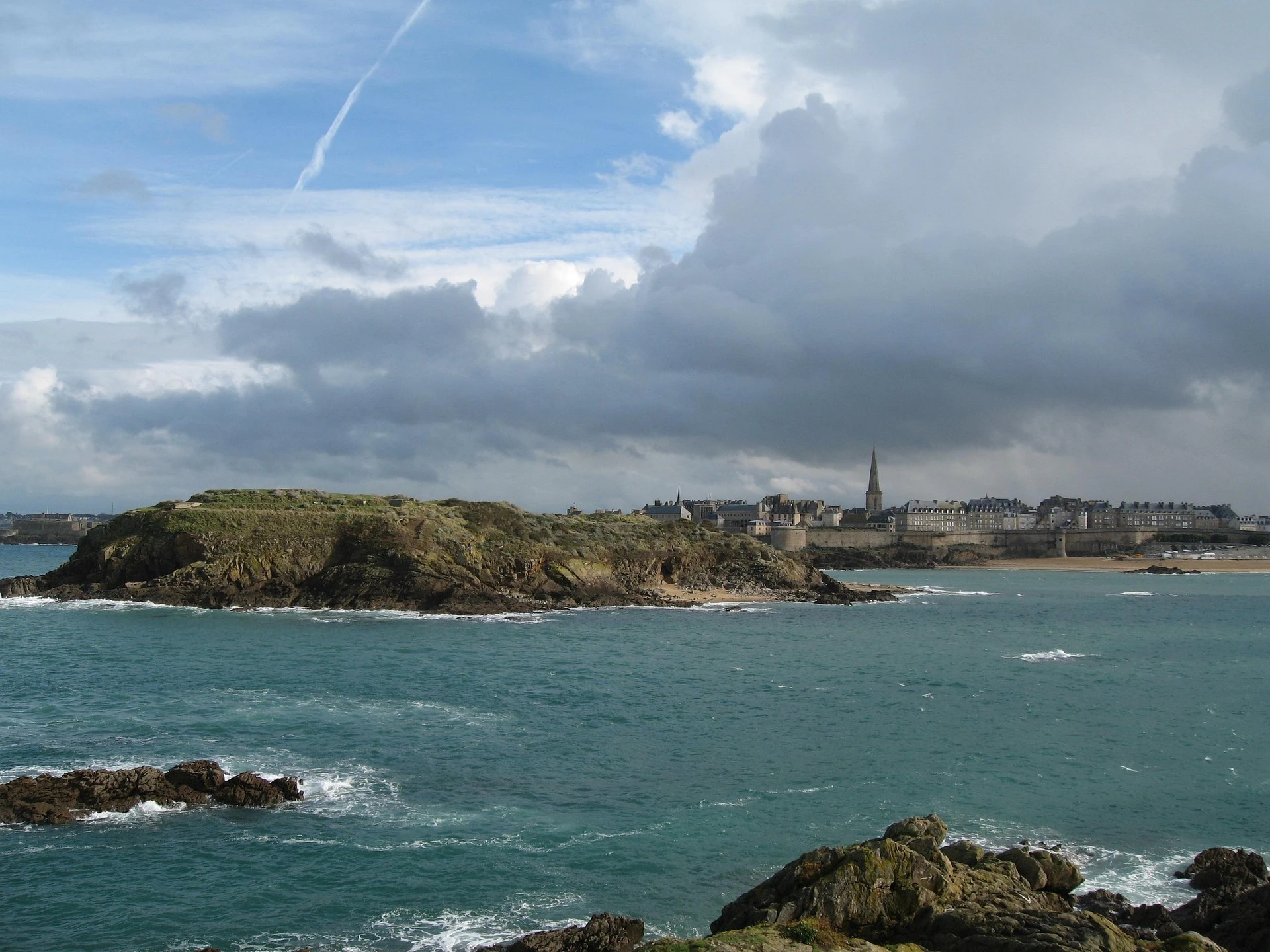
Le Grand Bé / Photo selected by Monsieur de France by Gwenaële Moignic from Pixabay
At the top of the islet, the reward is a 360-degree panorama. The view of Saint Malo, Le Sillon, Cézembre, and Dinard is magnificent. On a clear day, you can see the coast all the way to Cap Fréhel. This unique viewpoint offers a new perspective on the Emerald Coast and gives an idea of the ingenuity of the military engineers who fortified the bay. The aim in the 17th century was to block the only passageway to Saint Malo. You can't see them, even at low tide, but there are many "rocks," as they are called here, that could rip open ships. Le Petit Bé and the forts you can see around it (Harbour, La Conchée, etc.) allowed for crossfire on English ships that attempted to reach "the hornet's nest," as they called Saint-Malo. They only succeeded once. A few bunkers and cavities also bear witness to the German occupation during World War II. The hike to the platform is not very long, but it is steep: allow about 20 minutes to climb up and down at a leisurely pace.

Châteaubriand by Anne-Louis Girodet, Saint Malo Museum Public domain, via Wikimedia Commons
What we see on the Petit Bé
Just behind Grand Bé stands a veritable fortress. Petit Bé is dominated by a Vauban fort built in 1694 to protect Saint-Malo from the English and Dutch fleets. Designed by engineer Siméon Garangeau, it could accommodate a garrison of 160 men and was armed with dozens of cannons. Today, the fort has been completely restored.
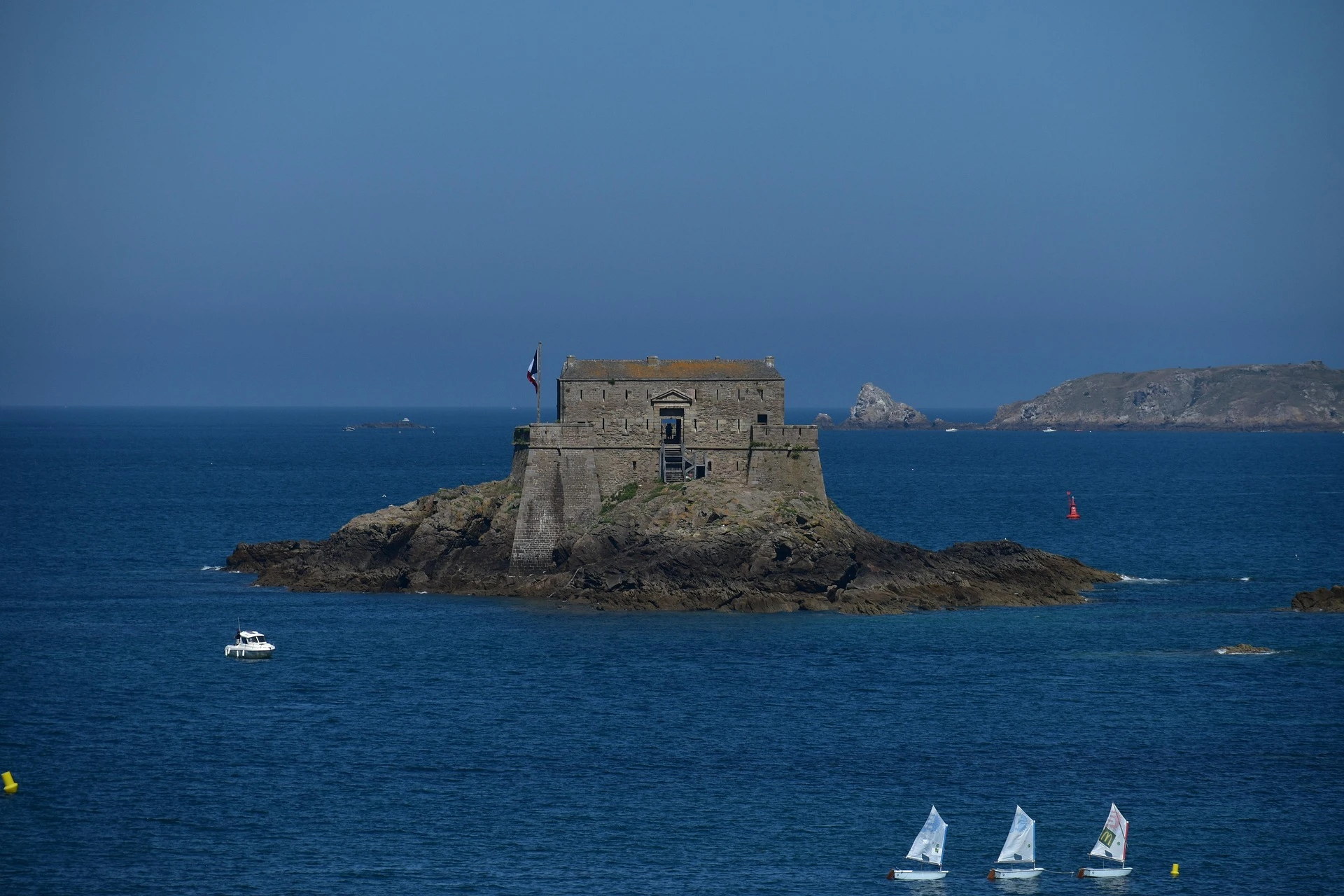
Le Petit Bé seen from Le Grand Bé on the right Cezembre / Photo selected by Monsieur de France by Nicolas IZERN from Pixabay
It can be reached on foot at low tide, or by ferry when the foreshore is covered. A passionate guide welcomes you for a 30-minute tour that explores the history of Saint-Malo's defenses and reveals the secrets of life on these islets. The vaulted rooms, arrow slits, artillery terrace, and bastions showcase Vauban's ingenuity. From the ramparts of the fort, the view takes in the walled town, the Rance estuary, Dinard and the open sea: a breathtaking panorama for photography enthusiasts and history buffs. You are directly opposite Dinard, where you can photograph the magnificent seaside villas.
A brief history of the islets
The Îles des Bés have a long history. Grand Bé served as a refuge for the first community of Saint-Malo in the 14th century, when the inhabitants elected a mayor there for the first time. Flint stones found on site suggest that it was occupied even earlier. During World War II, the Germans installed artillery and bunkers there to defend the city. Bombed during the liberation in 1944, it was largely destroyed. Today, it is mainly used for tourism and as a memorial.
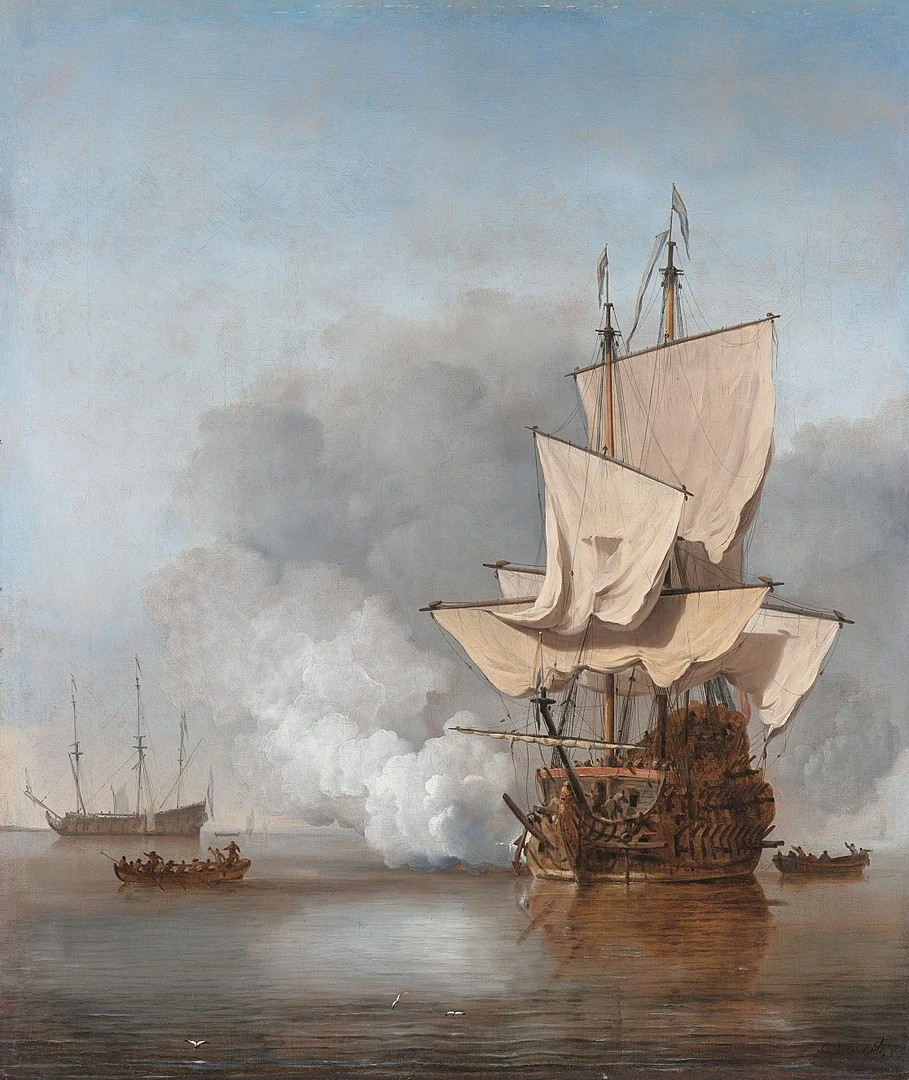
The Cannon Shot, painting by Van de Velde the Younger, 1707 This is the type of ship that Dugay-Trouin commanded.
Le Petit Bé, meanwhile, was one of the links in the chain of fortifications built by Louis XIV. After serving as a military stronghold for two centuries, it fell into disuse before being bought and restored by a private individual in the early 2000s. The income generated by visits and the rental of the site for events is used to finance the maintenance of the building. The renaissance of this fort is a fine example of maritime heritage preservation.
Practical advice and safety
-
Check the tide times: without this precaution, you could get stuck on the islets for several hours.
-
Wear comfortable, non-slip shoes; wet sand and rocks can be slippery.
-
On Grand Bé, stay within the marked areas: World War II ammunition may remain off the trails.
-
Guided tours of Le Petit Bé are subject to a fee and take place from approximately 11 a.m. to 6 p.m., depending on the season and weather conditions. Please have cash or a credit card ready.
-
In case of overcast weather or rain, opt for the ferry; you will still be able to enjoy the view from the fort.
Want to know everything about Saint Malo? Come and take a look here.
Other islands to discover: Fort National and Cézembre Island
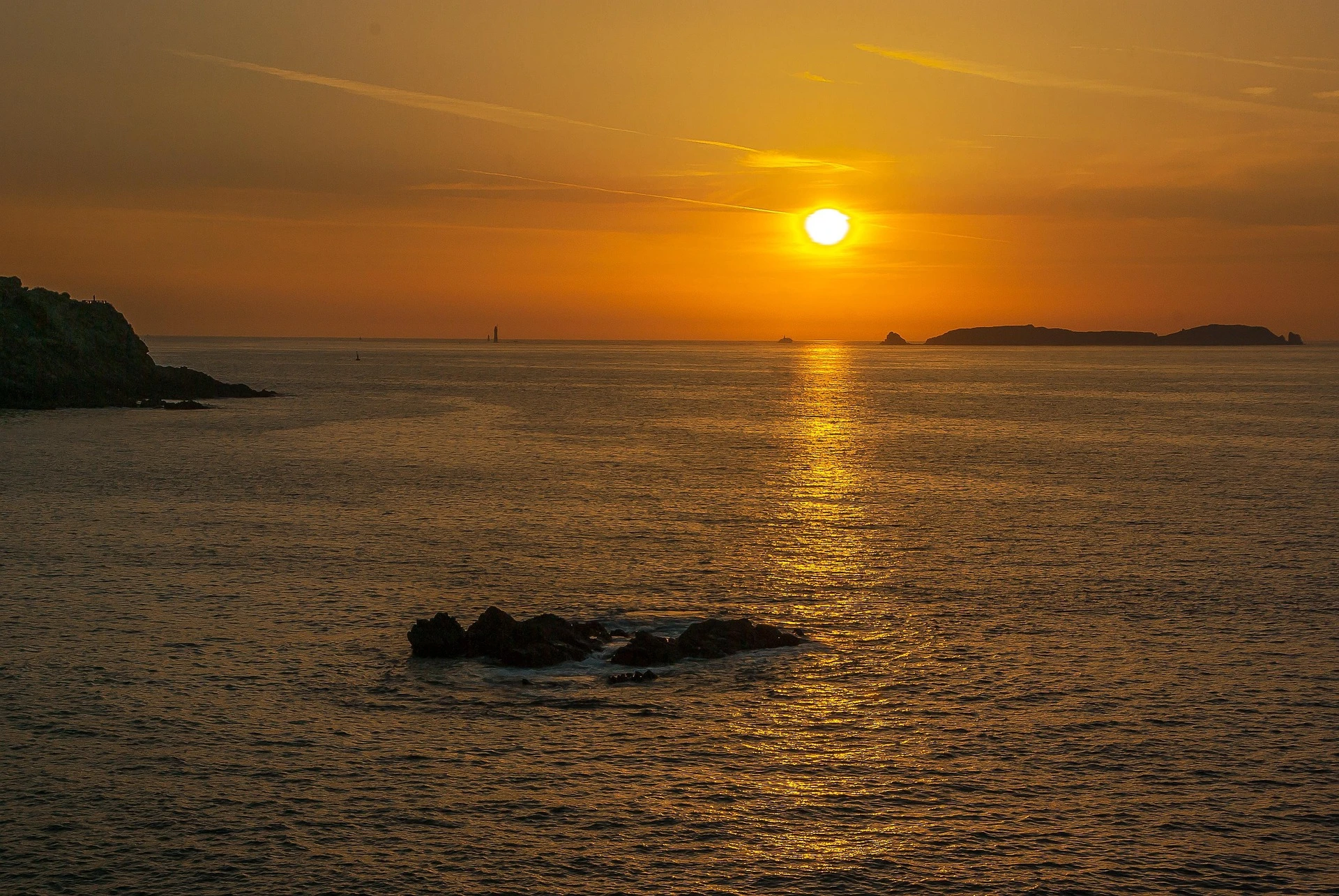
Cezembre at sunset facing Saint Malo/ Photo chosen by Monsieur de France: by jacqueline macou from Pixabay
Fort National: a bastion accessible at low tide
A few hundred meters from the ramparts, at the beginning of the channel, the very large beach of Saint Malo, another small island catches the eye: Fort National. Built between 1689 and 1693 by engineer Siméon Garangeau based on plans by Vauban, it defended the entrance to the port against enemy fleets. Formerly known as Fort Royal, then Fort National during the French Revolution, this granite bastion is perched on the Islet rock and becomes an island when the tide rises. To reach it, you have to wait for low tide: a 300-meter sandy passage appears from the Saint-Vincent slipway or the Éventail beach at the foot of the castle.
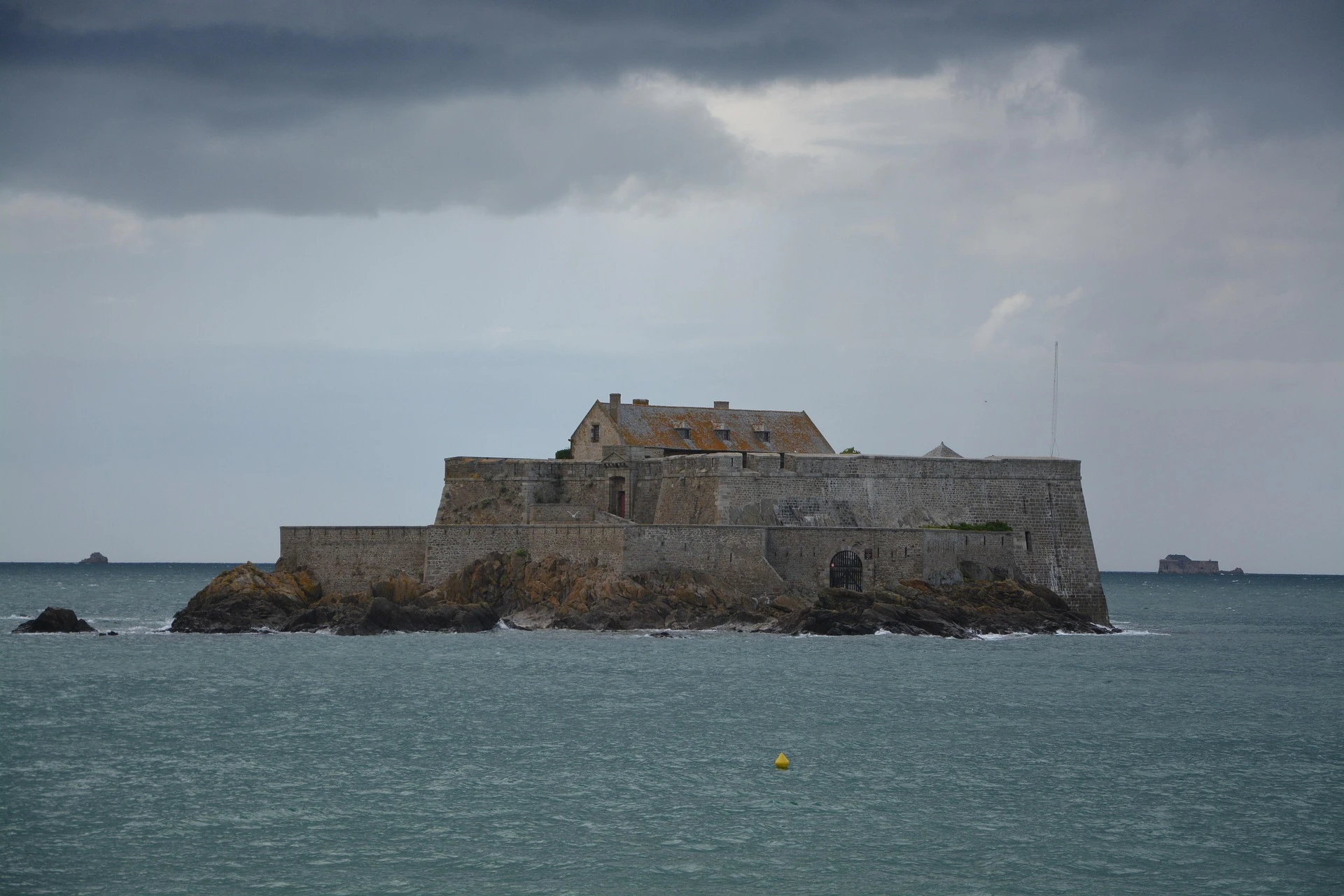
Fort National at high tide / Photo selected by Monsieur de France: by JackieLou DL from Pixabay
Visit the national fort. This is possible, but only when the French flag is flying above the ramparts, the fort is open to visitors. Entrance is with a guide; the tour lasts about forty minutes and traces three centuries of military history. You will discover a small exhibition, the soldiers' living quarters, and an exceptional panorama of Saint-Malo. Tickets can be purchased directly at the entrance and the site is open every day from June to September, as well as during certain school holidays and long weekends throughout the rest of the year. The experience is also photogenic at high tide, when the fort stands in the middle of the waves.
Cézembre Island: untamed nature and remembrance
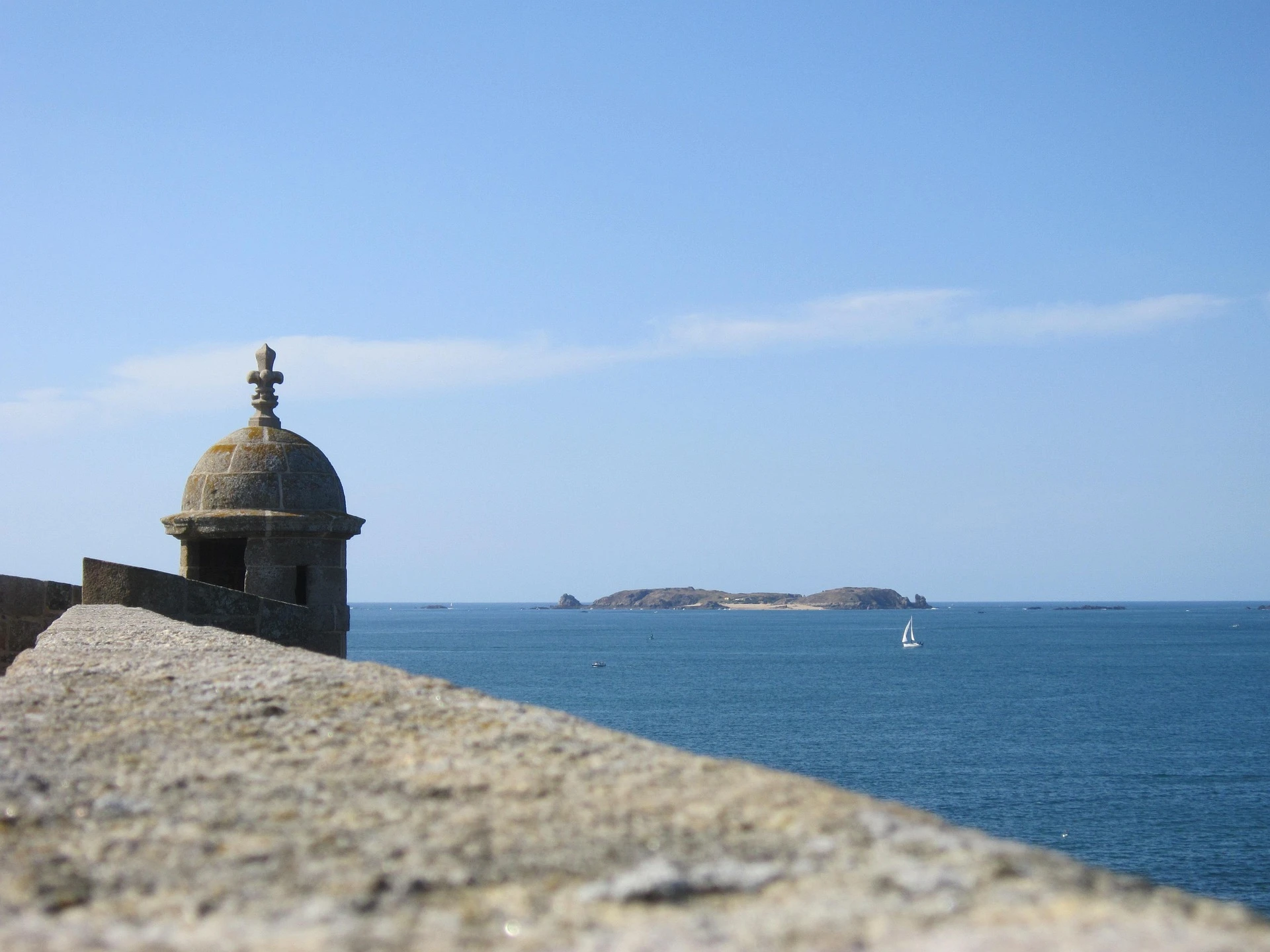
Cezembre offshore, with its small south-facing beach / Photo chosen by Monsieur de France: by Ludivine from Pixabay
Further offshore, Cézembre Island is the largest island in Saint-Malo Bay and the only one open to the public. Located about four kilometers offshore, it is only accessible by boat; there is no ford connecting it to the mainland, although it is said that before the year 1000, it was still connected to the shore by salt marshes. Two ferry companies operate services from the Bourse ferry terminal in Saint-Malo or from Dinard: the crossing takes about twenty minutes and runs daily in July and August, as well as on weekends in spring and early fall. Tickets cost around €18 for adults and around €10 for children, and booking is recommended during peak season. The shuttles drop visitors off at the island's landing stage at the end of the morning and pick them up at the end of the afternoon, leaving several hours for exploration.
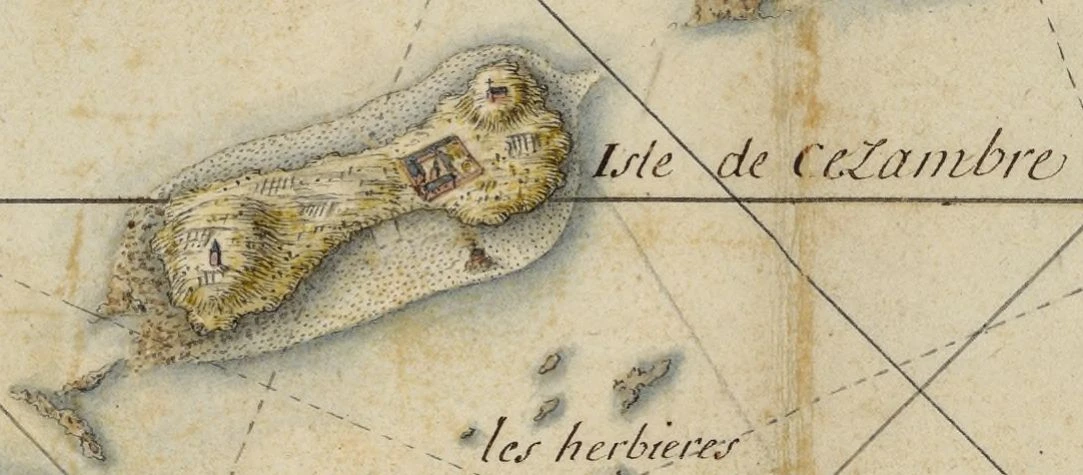
Cezembre was the site of a monastery, as shown on this map / By De Sainte Colombe — http://gallica.bnf https://commons.wikimedia.org/w/index.php?curid=69002672
Cézembre offers a striking contrast between a turbulent military past and a preserved natural environment. Its landscape is marked by rows of craters, remnants of the massive bombardments of 1944 that made it one of the most affected areas of World War II. Cleared of mines and redeveloped in 2017, an 800-meter marked trail now allows visitors to explore part of the island in complete safety. For your own safety and to preserve the natural environment, please stay on the trail. Here you can see blockhouses, casemates, and cannons that serve as reminders of the battle, but also remarkable flora and fauna: wall lizards, sand martins, guillemots, cormorants, and gulls nest on the cliffs or grassy plateaus. To the south of the island is a fine sandy beach facing south, sheltered from the wind: an ideal place to swim and enjoy the sun, especially as it is the only south-facing beach on the entire north coast of Brittany.
As the island has no shelters or drinking water sources, it is essential to bring your own picnic, water, and sun protection. A small restaurant opens its terrace during high season, but the selection is limited. Dogs are not allowed on the beach, and it is essential to stay on the path to protect the birds and avoid areas that are still dangerous. Cézembre is a protected natural area managed by the Conservatoire du littoral, and exploring it by boat offers a unique immersion in the sea, history, and wilderness.
Saint Malo also has its secrets. Here are 10 of them!
And why not explore the islands and forts around Dinard and Saint-Malo
From Dinard and Saint-Malo, the Emerald Coast offers spectacular maritime landscapes. A boat cruise offers a unique way to explore the forts, islands, and scenery of the bay while enjoying commentary on the maritime history and defenses of the pirate city.
👉 Book a cruise around the forts and islands of Saint-Malo ↗

Conclusion
Visiting Grand Bé and Petit Bé allows you to appreciate just how inseparable Saint-Malo is from the sea and its history of privateering. In just a few hours, you can cross the sand, walk on ancient stones, discover Chateaubriand's final resting place, and explore a 17th-century fort. It's the perfect getaway for history buffs, hikers, and families looking for something different to do. Plan your visit carefully by checking the tides, and let yourself be surprised by the wild beauty of these islets that defy time and the sea.
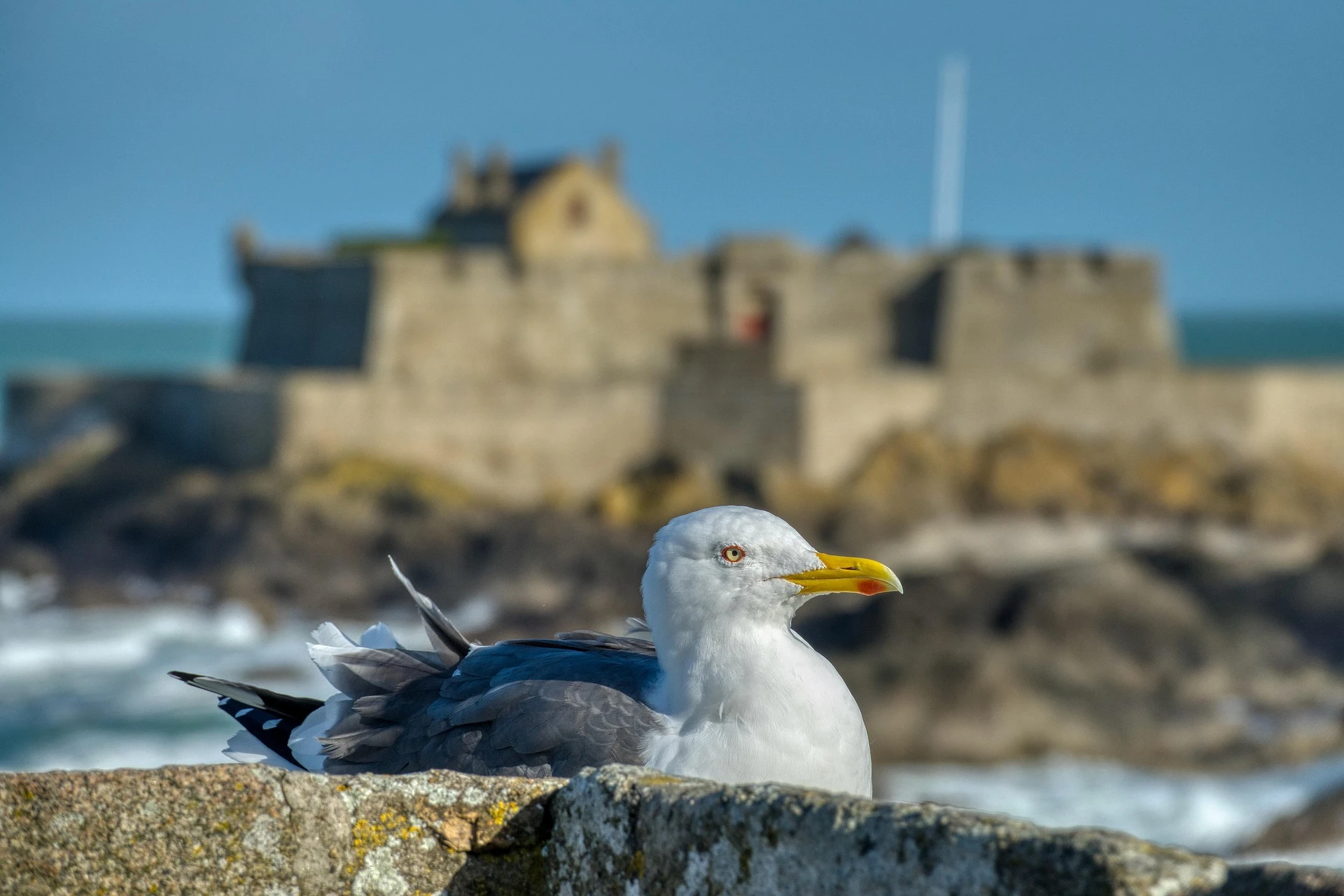
A seagull poses in front of Fort National / Photo selected by Monsieur de France: by ThierryBEUVE via pixabay
Frequently Asked Questions (FAQ) Grand Bé Petit Bé
When can you visit Grand Bé and Petit Bé?
Access to these islands is only possible when the tide is out. A window of about three hours around low tide allows you to reach and leave Grand Bé and Petit Bé on foot. Always check the tide times and plan your trip so that you return before the passage is covered.
Do you have to pay to visit Petit Bé or Fort National?
Le Grand Bé is accessible free of charge, but Le Petit Bé and Fort National can only be visited as part of paid guided tours. Le Petit Bé charges a small fee to help finance its restoration; tours are led by a guide and last around 30 minutes. Fort National offers reduced-price admission (around €5 for adults and €3 for children) and can only be visited at low tide. Tickets can be purchased upon arrival.
How to get to Cézembre Island?
Cézembre is not connected to the mainland by a ford: it can only be reached by boat. Shuttles depart from the ferry terminal at La Bourse in Saint-Malo and Dinard. The crossing takes about 20 minutes and operates daily during the high season (July-August) and on weekends in spring and September. Fares are around €18 for adults and €10 for children; children under 3 travel free of charge. It is advisable to book your ticket in advance.
What to see and do on Cézembre Island?
This island amazes visitors with its lunar landscape and biodiversity. There is an marked trail stretching 800 meters that winds between craters left by bombings, blockhouses, cannons, and seabird nesting areas. To the south, a fine sandy beach facing south invites you to swim and relax. Bring water, sunscreen, and a picnic: there are no springs or shade on the island, and services are limited to a small restaurant open during the season. Please respect the rules for protecting nature: stay on the trail, take your trash with you, and leave the birds and seagrass beds in peace.
Can you swim or picnic on the islets?
On Grand Bé and Petit Bé, there are no beaches and swimming is not recommended. These islets are more like rocky promontories, ideal for walking and exploring historical sites. The beaches of Le Sillon and Bon Secours, at the foot of Saint-Malo, are better places for swimming. On Cézembre, however, the beach to the south is ideal for swimming and picnics, provided you bring everything you need.
Are pets allowed on the islands?
Dogs and other pets are not allowed on Cézembre Island due to its ecological richness and bird nesting sites. On Les Bés and at Fort National, it is preferable not to bring animals for safety reasons and out of respect for the site, even though there is no official ban. Check local regulations before traveling with your four-legged friend.
How much time should I allow for the visit?
Allow one to two hours to visit Grand Bé and Petit Bé, depending on your pace and how long you spend admiring the view. The guided tour of Fort National lasts about forty minutes. For Cézembre, allow at least half a day: between the boat trip, exploring the trail, and a break on the beach, you'll have plenty to keep you busy for the afternoon.
Learn more about Saint-Malo
- Visiting Saint-Malo: The Complete Guide to the Pirate City
- Explore Saint-Malo with an immersive audio guide that reveals all its secrets
- The Ramparts of Saint-Malo: The City’s Most Beautiful Walk
- What to See in Saint-Malo in a Weekend? The Must-Sees
- Dinan: The Stunning Medieval Town Near Saint-Malo
- Dinard: The Elegant Gem of the Emerald Coast
- Discover Brittany and the Emerald Coast
- If you love Brittany, here’s what I loved
Illustrative photo: by Ludivine from Pixabay