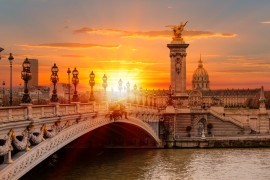
Paris hides monuments and places that even some Parisians are unaware of. Here is a selection of unusual, historic, or secret sites to discover off the beaten tourist track. To prepare for your stay in Paris, be sure to check out my ultimate free guide.
1. The Hôtel de Sens: the medieval keep hidden in the Marais
While the Marais is often associated with classic 17th-century mansions, the Hôtel de Sens takes us further back in time, to a Paris of knights and turrets. Built at the end of the 15th century for the archbishops of Sens, this monument is one of the few remaining civil structures from the Middle Ages and Renaissance in Paris. It is literally a survivor, as such ancient monuments are rare in Paris, since the old city was replaced by Haussmann's Paris at the end of the 19th century. With its pepper pots, mullioned windows, and small fortified castle appearance, it stands out completely in the urban landscape.
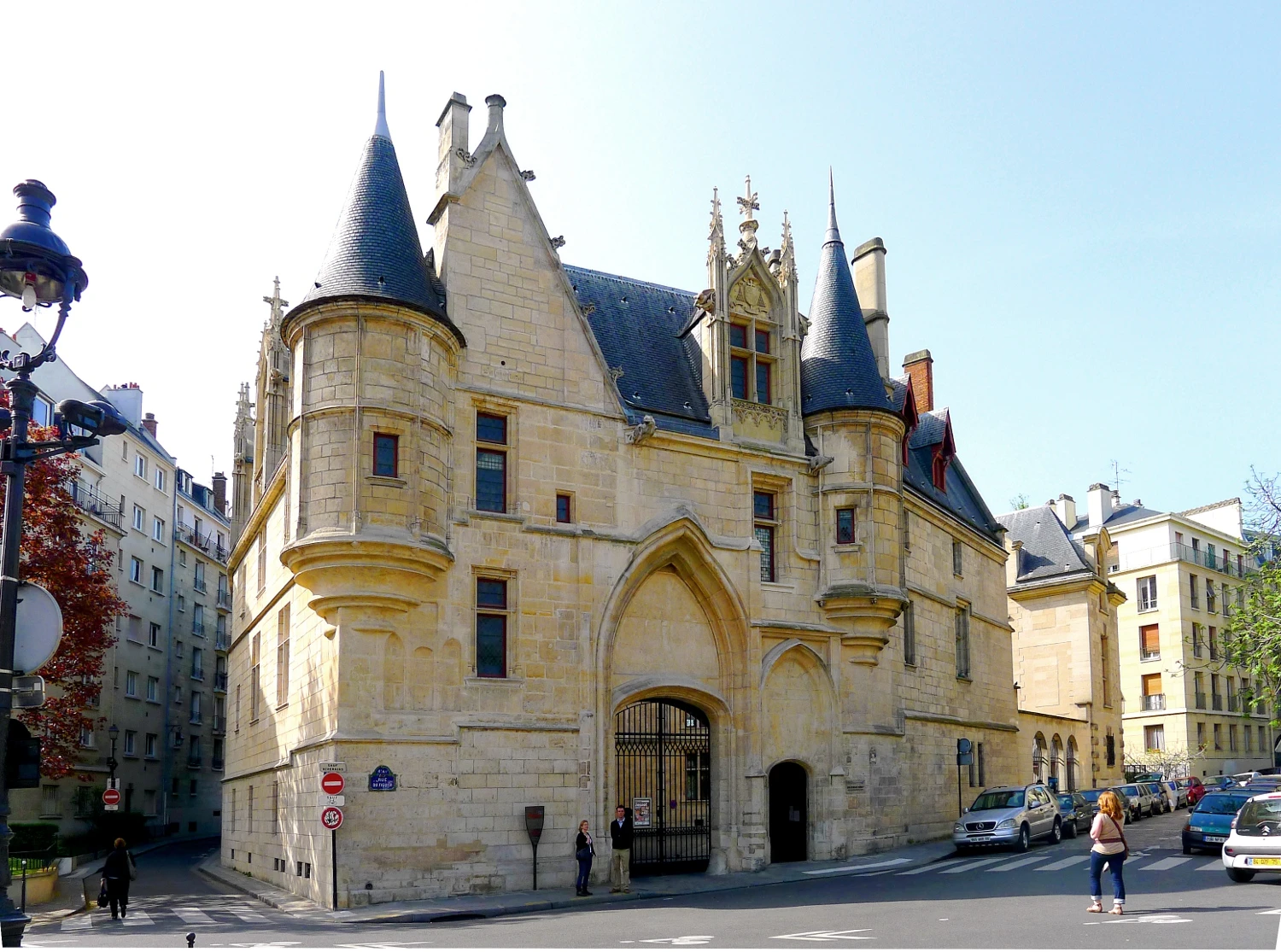
The current Forney Library, formerly the Hôtel de Sens / By Mbzt — Own work, CC BY 3.0, https://commons.wikimedia.org/w/index.php?curid=15019893
What fascinates me here is the contrast between the power of the stone and the delicacy of the French gardens that surround it. It is even said that a cannonball from the 1830 Revolution is still lodged in its facade (look carefully!). It is a place that exudes French history, that of Queen Margot who lived there, combining political intrigue and architectural splendor.
2. The Petit Palais: a free, hidden Garden of Eden
Located just opposite its big brother, the Grand Palais, this monument is often overlooked by tourists who rush to the Champs-Élysées. However, the Petit Palais houses the Musée des Beaux-Arts de la Ville de Paris (Paris Museum of Fine Arts), but above all, an unexpected treasure: its interior garden. You can take some magnificent photos there if you're willing to walk a few extra steps after leaving the Pont Alexandre III.
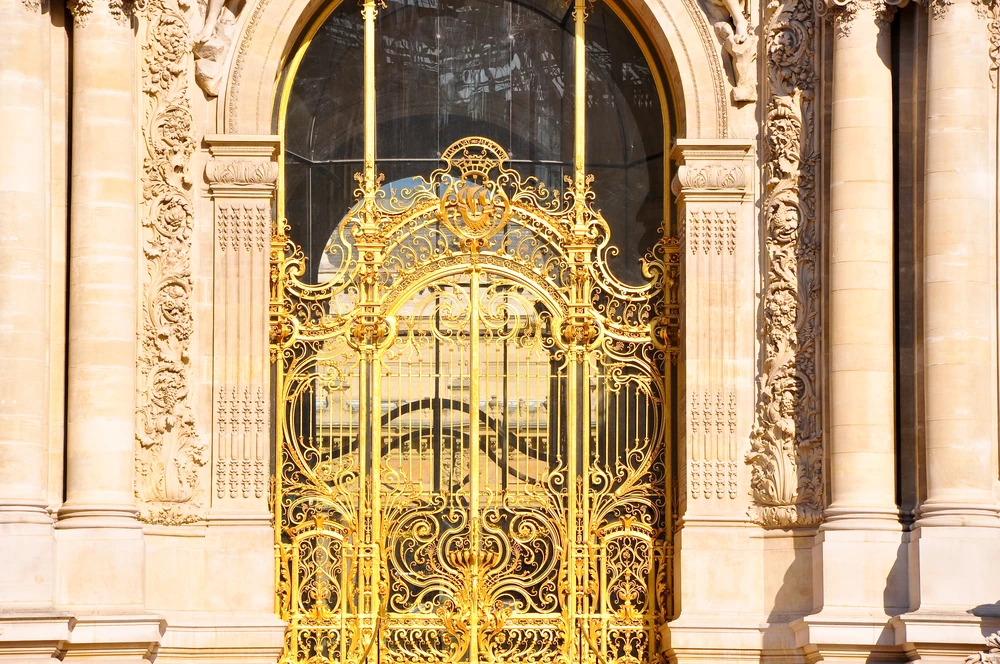
The entrance gate designed by Charles Girault. Photo selected by monsieurdefrance.com; phototraveler via depositphotos.
Imagine a circular peristyle decorated with frescoes, surrounding a pool lined with palm trees and exotic plants. It is an oasis of absolute silence. The museum café is a great place to relax at a reasonable price, far from the hustle and bustle of Winston Churchill Avenue. Charles Girault's architecture is a feat of light and curves, a tribute to the Belle Époque that has not aged a bit. In 2026, for me, it's the ideal place to read a book or simply admire the mosaics on the floor.
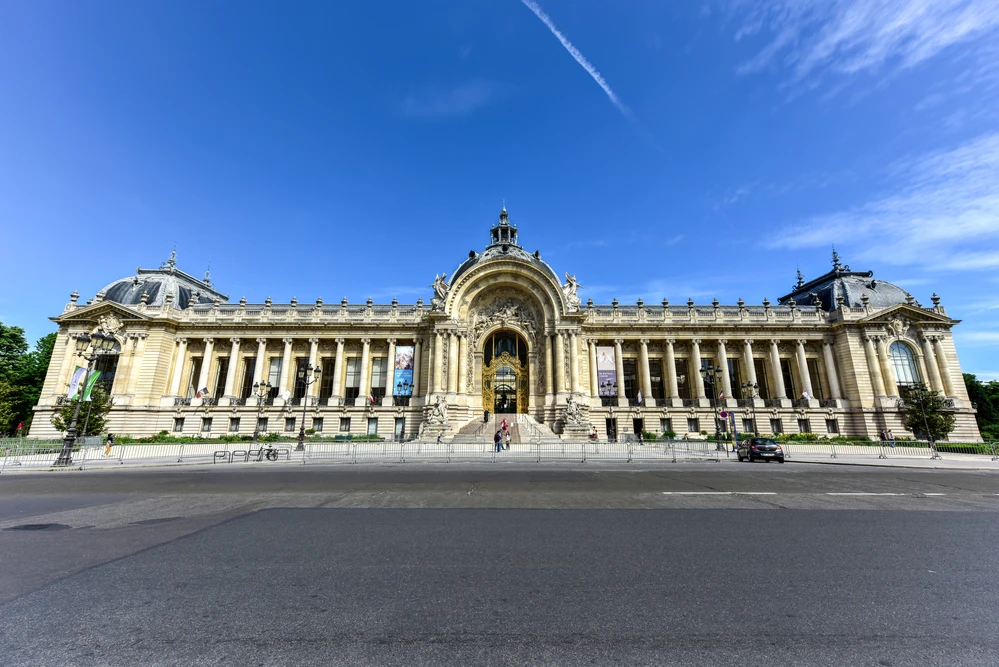
The facade of the Petit Palais. Photo selected by monsieurdefrance.com: Demerzel21 via depositphotos.
3. Galerie Vivienne: elegance under a glass roof
There are many covered passages in Paris, but the Galerie Vivienne is undoubtedly the most majestic. Opened in 1823, it embodies the luxury of strolls of yesteryear. What makes it magnificent is its mosaic floor designed by the famous mosaicist Facchina and its glass roof that lets in light, even on gray days.
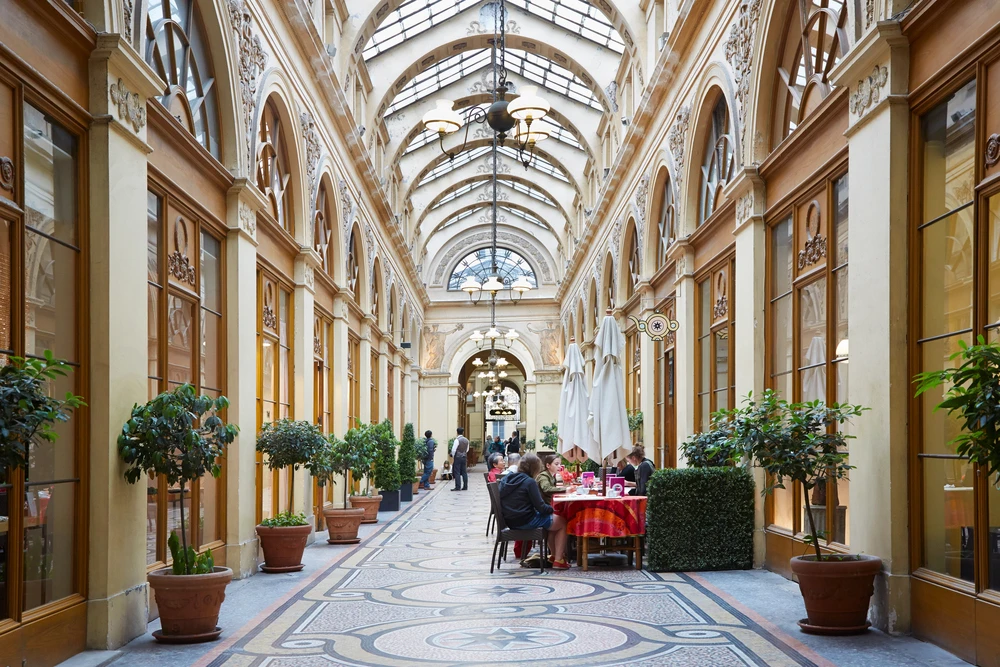
The Vivienne Gallery / Photo selected by Monsieur de France: Photo by AndreaA. via depositphotos
I love getting lost there, surrounded by the smell of old books from antique bookshops and the hushed atmosphere that reigns there. We are here in the heart of the 2nd arrondissement, but it feels like we have traveled back in time two centuries. More than a monument, it is a technical feat that heralds modern shopping centers that operate on the same principle but with so much less beauty.
4. La Maison Rose in Montmartre: the icon of bohemian life
Nestled at the corner of Rue des Saules and Rue de l'Abreuvoir, the "Maison Rose" is one of the most astonishing houses in Paris. It looks as if it has sprung up there like a flower growing in the street in springtime. It reflects the simplicity of bohemian Montmartre, back when the village was the most popular and craziest place in Paris. Once frequented by Picasso and Utrillo, it embodies the "village of Montmartre" that I love so much.
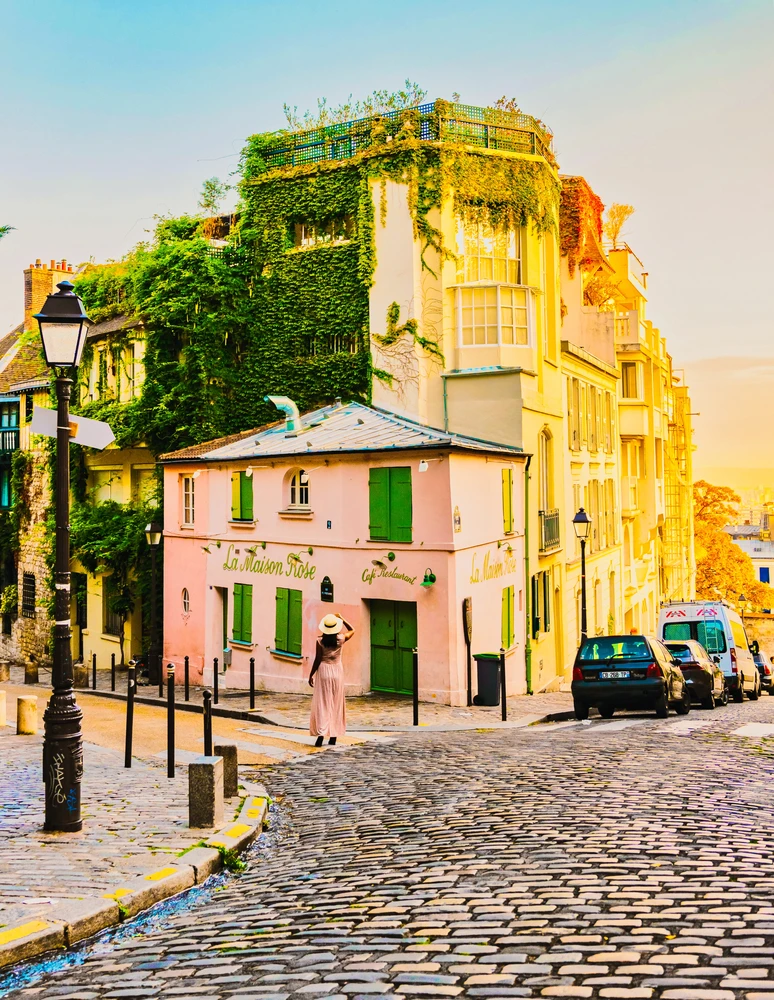
Why is it unusual? Because it has survived all the urban transformations. Its pink color stands out boldly amid the gray stone walls. In the evening, when the lights dim, it seems to emerge from an impressionist painting. It is a place steeped in memories, a precious witness to a working-class Paris that has disappeared, but whose stones remain the guardians of memory, having seen Victor Hugo's Gavroche brothers pass by in Les Misérables.
5. The Bir-Hakeim Bridge: the genius of iron and vision
If you are looking for a monument that symbolizes the technical audacity of the early 20th century, this is it. This two-level bridge is a superb technical innovation and a work of art in itself. Below, cars and pedestrians; above, the elevated metro supported by cast iron columns. It is a lacework of iron that offers one of the most cinematic views of the Eiffel Tower.
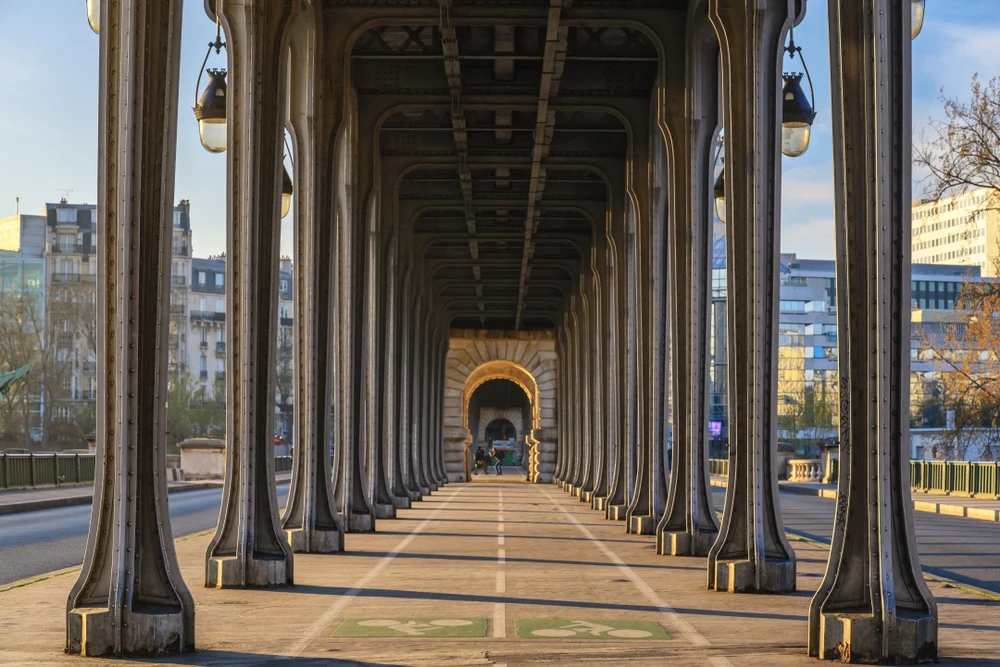
The Bir-Hakeim Bridge and its Art Nouveau columns. Photo selected by monsieurdefrance.com: Noppasin Wongchum / shutterstock.com
It is a place of passage, but also a place to pause. The view of the Eiffel Tower is superb. Walking under the metal structure of the viaduct, you can feel the power of the French industrial revolution. It is one of the most beautiful bridges in Paris, as it combines two missions that it accomplishes wonderfully: everyday utility and perfect industrial aesthetics.
6. The Grand Mosque of Paris: a Spanish-Moorish palace
Built after World War I, the Great Mosque is a monument that has successfully integrated into the capital. Its 33-meter minaret dominates the Jardin des Plantes neighborhood. But the real secret lies inside: its patio inspired by the Alhambra in Granada.
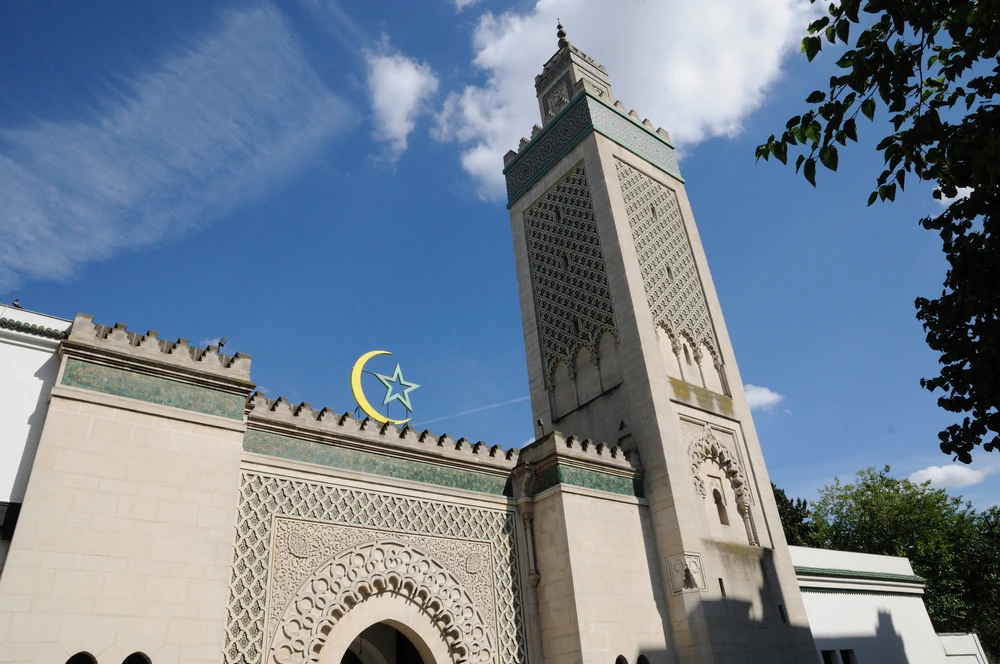
The minaret of the Grand Mosque of Paris, standing 33 meters tall / Photo selected by Monsieur de France: PantherMediaSeller via deposit photos
The blue and green zelliges (mosaics), marble fountains, and lush gardens create an atmosphere of total serenity. It's an instant journey to the Orient, without leaving the 5th arrondissement. Like everything that falls into the hands of Paris, one of the oldest "world cities" on the planet, we have taken the best of a style and a history and projected it with a Parisian vision.
7. The Jardin du Palais-Royal: the tranquility of kings
Although located just a stone's throw from the Louvre, the Palais-Royal garden is a haven of tranquility. Surrounded by historic galleries, it is home to the famous Buren Columns. These columns, once so controversial, are now an integral part of the landscape.
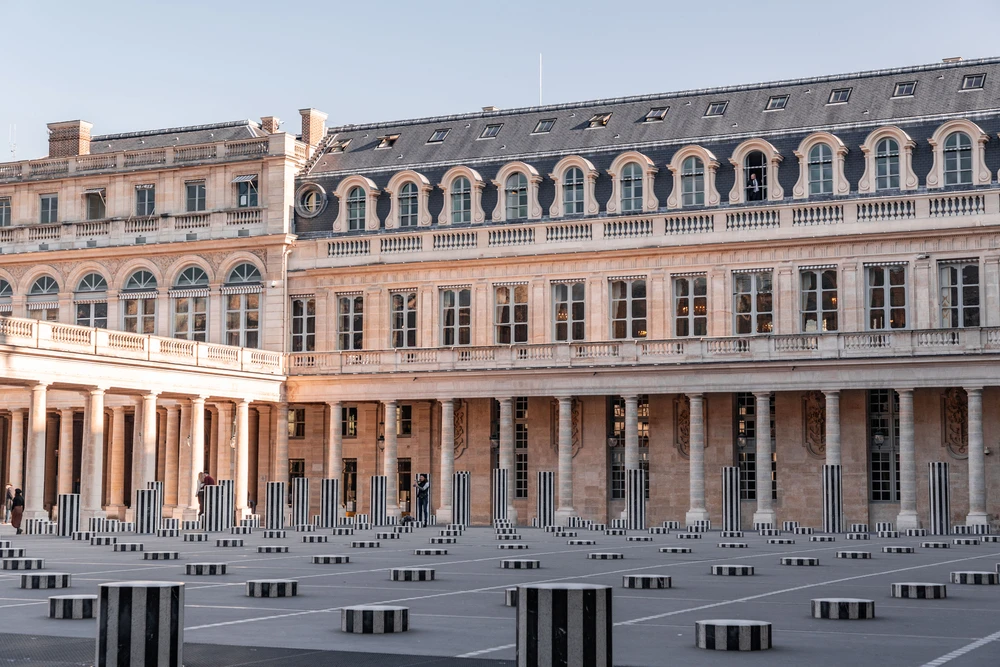
Buren's columns / Photo chosen by Monsieur de France: Photo by EnginKorkmaz via depositphotos
What I love here is the neat rows of lime trees and the central fountain where Parisians come to sit on the iconic green chairs. This garden witnessed the start of the French Revolution (it was here that Camille Desmoulins addressed the crowd). In 2026, it retains its aristocratic elegance while becoming an essential space for play and leisure. Tourists, eager to visit the Louvre, often miss this unique and historically rich place.
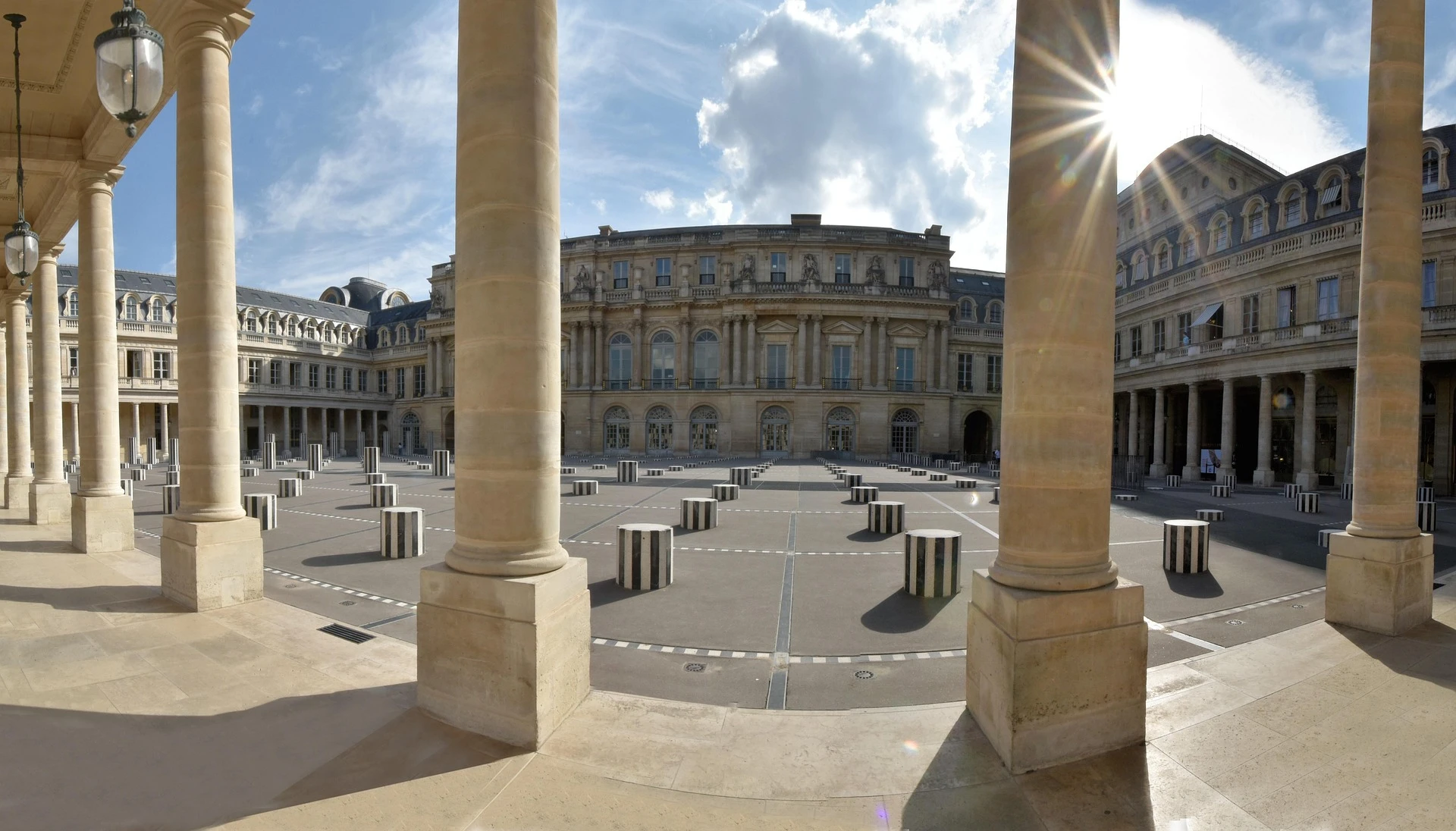
Buren's columns / Photo selected by Monsieur de France: by Denis Doukhan from Pixabay
8. The Carnavalet Museum: the memory of walls
This is Paris's temple of memory. This museum, located in two magnificent mansions in the Marais district, tells the story of Paris. But beyond the collections, it is the building itself that is an unusual monument. Its inner courtyards, adorned with statues and perfectly manicured gardens, are jewels of the French Renaissance.
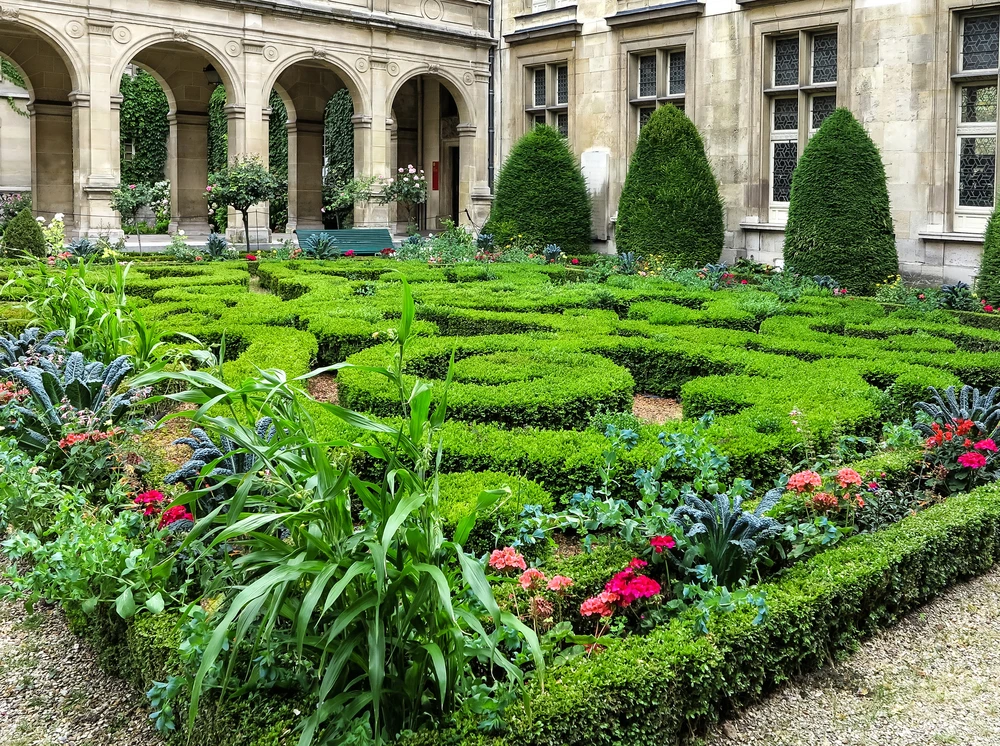
The garden of the Carnavalet Museum/ Photo selected by Monsieur de France Moskwa via depositphotos
Walking through Carnavalet is like traveling through the centuries, from Neolithic canoes to Marcel Proust's apartment. Here you can discover the evolution of the city, its revolutions, and its celebrations. They say you know someone well when they've told you their life story, and you'll know Paris like no one else once you've discovered its history here.
9. The Arab World Institute: the genius of mashrabiya screens
On the banks of the Seine, opposite the Île de la Cité, stands one of the most daring monuments in contemporary Paris: the Arab World Institute (IMA). Designed by architect Jean Nouvel, this building is a masterpiece of metal and glass that pays tribute to Islamic art through revolutionary technology.
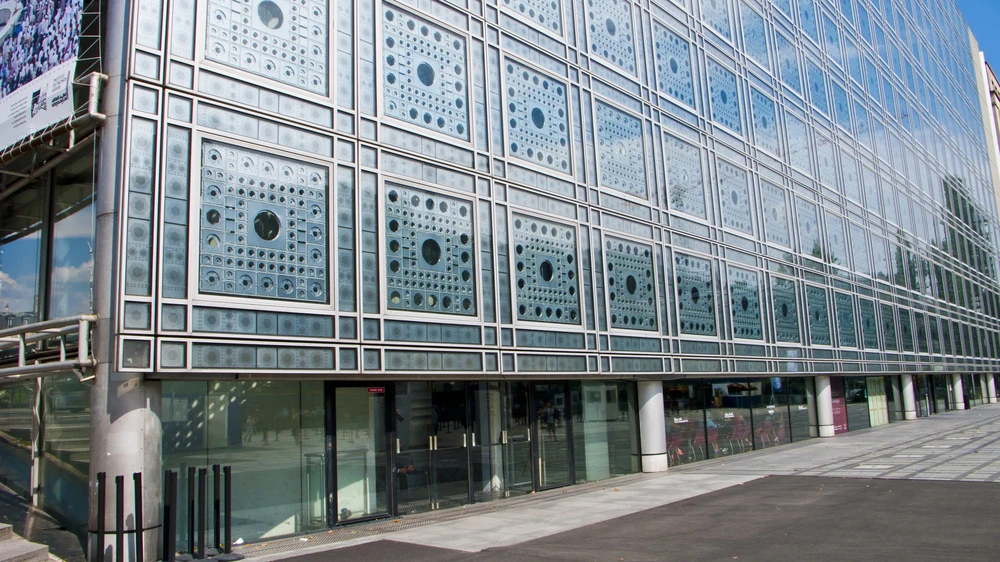
Elements of the facade of the Arab World Institute / Photo selected by Monsieur de France: pathastings via depositphotos
What makes this monument truly unique is its south facade. It is composed of 240 metal mashrabiya screens that are not only aesthetic. They are equipped with photoelectric diaphragms that open and close depending on the intensity of the light, like the lens of a camera. It's a truly amazing mechanical spectacle that you won't see anywhere else. As a Parisian, I recommend going up to the 9th floor: the panoramic terrace offers one of the most breathtaking and closest views of the chevet of Notre Dame and the rooftops of Paris. It is a place where the most radical modernity dialogues with the thousand-year history of the capital.
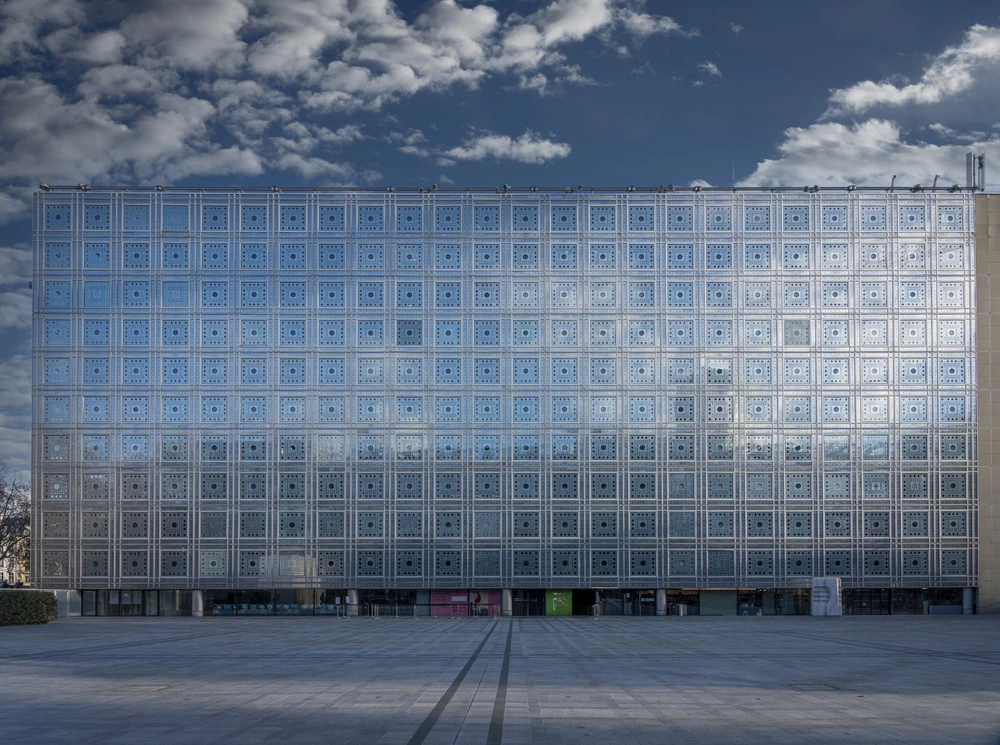
The facade of the Arab World Institute: Photo by frlegros via depositphotos
10. Place des Vosges: the perfect balance
Let's finish with perfection. The Place des Vosges, inaugurated in 1612 for the wedding of Louis XIII, is the oldest royal square in Paris. Its perfect symmetry, red brick facades, and blue slate roofs create a soothing visual harmony. Walking through it, you discover the ideal urban life from the perspective of the Grand Siècle, the age of Louis XIV.
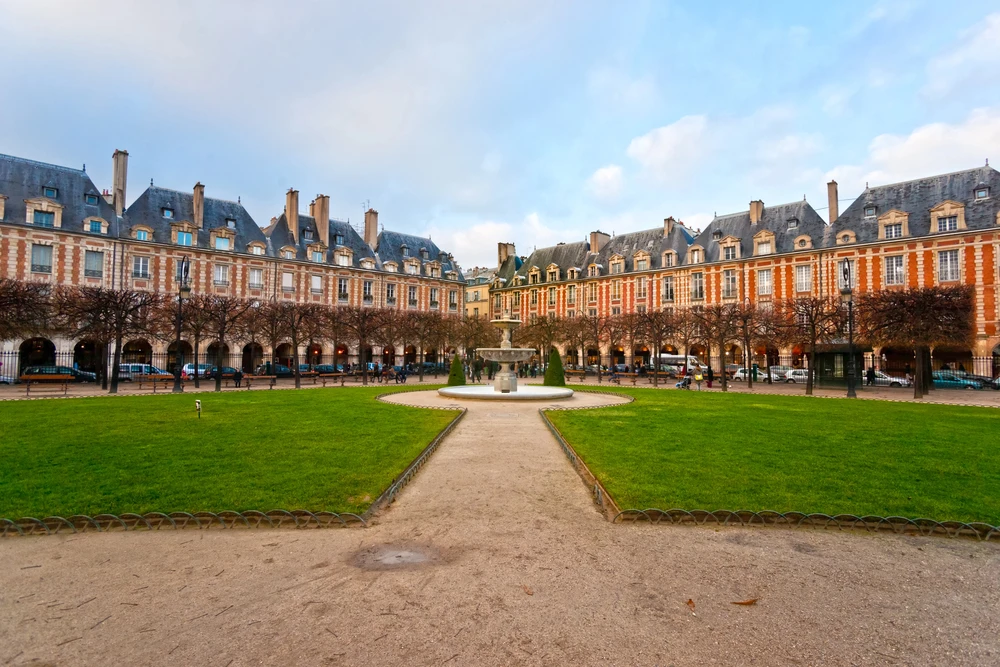
Place des Vosges and its unique architecture / Photo selected by monsieurdefrance.com: masterlu via depositphotos
Walking under its arcades is like walking in the footsteps of Victor Hugo or Madame de Sévigné, who lived here. It is a place where time seems to stand still. Although very busy at weekends, it retains a quiet nobility during the week. It is the symbol of a Paris that has preserved its heritage while remaining a vibrant place to live. Interestingly, it was here that the first fireworks display in French history took place in 1612.
Le Parisien's advice for your discoveries in 2026
These little-known or hidden monuments are proof that Paris can never be fully explored. To enjoy these places, I recommend wandering aimlessly between each point of interest. The next surprise is often waiting in the next alleyway.
To organize your trips and reservations in these sometimes confidential places, don't hesitate to consult my Complete Guide to Visiting Paris 2026: Monuments and Secrets. You'll find all the tips you need to navigate the city, from using the metro to the best times to avoid the crowds. Paris is yours for the taking, so be sure to look at it with your heart!
Jérôme Prod'homme Specialist in French heritage, gastronomy, and tourism. Find all my discoveries at monsieur-de-france.com.
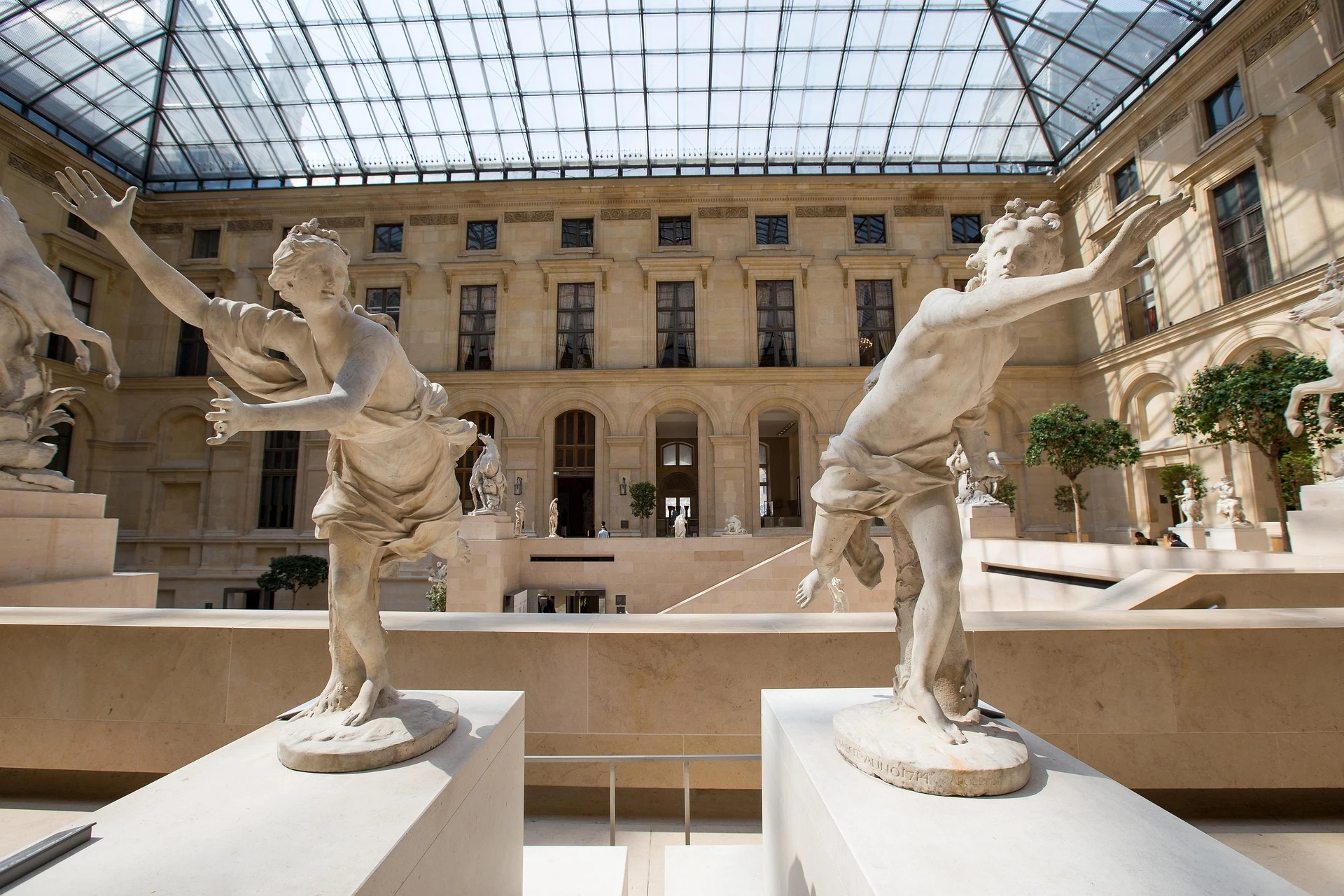
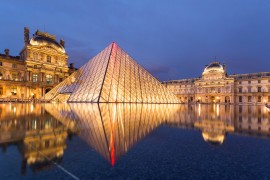
The Louvre in Paris / Photo selected by Monsieur de France: by Сергей from Pixabay
Frequently Asked Questions: Unusual and Secret Paris
What are the most unusual monuments in Paris?
In addition to its iconic landmarks, Paris is full of unusual places such as the Grand Mosque and its Moorish patio, the Hôtel de Sens (a medieval castle in the heart of the Marais) and the Petit Palais, which hides a free exotic garden.
Can you visit lesser-known monuments in Paris for free?
Yes, many gems are free. This is the case for the Petit Palais garden, the Arènes de Lutèce (Roman ruins), and the Palais-Royal garden. The Carnavalet Museum, dedicated to the history of Paris, also offers free access to its permanent collections.
Where can you find the "real" Paris, far from the tourists, in 2026?
To escape the crowds in 2026, head to neighborhoods such as the 9th arrondissement (Musée de la Vie Romantique) or the 5th (Collège des Bernardins), or stroll through covered passages such as the Galerie Vivienne. These places retain a rare authenticity.
What is the oldest monument in Paris?
This is the Arènes de Lutèce, located in the 5th arrondissement. This Gallo-Roman ruin dates back to the 1st century AD and could accommodate up to 15,000 spectators for circus games and theatrical performances.
Why trust a guide written by a Parisian?
A guide written by a local resident guarantees a genuine, firsthand view of the city. Unlike generic guidebooks, a Parisian shares their favorite spots, secret shortcuts, and the best times to visit to avoid the tourist crowds.
Which neighborhoods in Paris are full of unusual places?
Le Marais, Montmartre, the Latin Quarter, and the area around Canal Saint-Martin are particularly rich in little-known monuments and unusual places. These neighborhoods combine heritage, ancient alleyways, and discreet cultural sites.
Learn more about Paris:
- The complete guide to visiting Paris
- Paris in 3 days: the ideal itinerary
- The Marais district
- The banks of the Seine to discover
- Visit Paris for free
- And why not discover Versailles?
Illustrative photo: the pink house in Montmartre photo chosen by Monsieur de France: fokkebok via depositphotos