What to do in Saint-Malo in 2 days? Walk the ramparts, explore Intra-Muros, see Grand Bé, beaches, Solidor Tower and the best seaside views.
Thinking about visiting Saint-Malo? Browse the best hotels in Saint-Malo, compare accommodation offers available in Saint-Malo, and choose your perfect stay with vacation rentals in Saint-Malo.
This article may contain affiliate links. This doesn’t change the price for you, but helps support the Monsieur de France website.
Intra-Muros: must-see sights in two hours
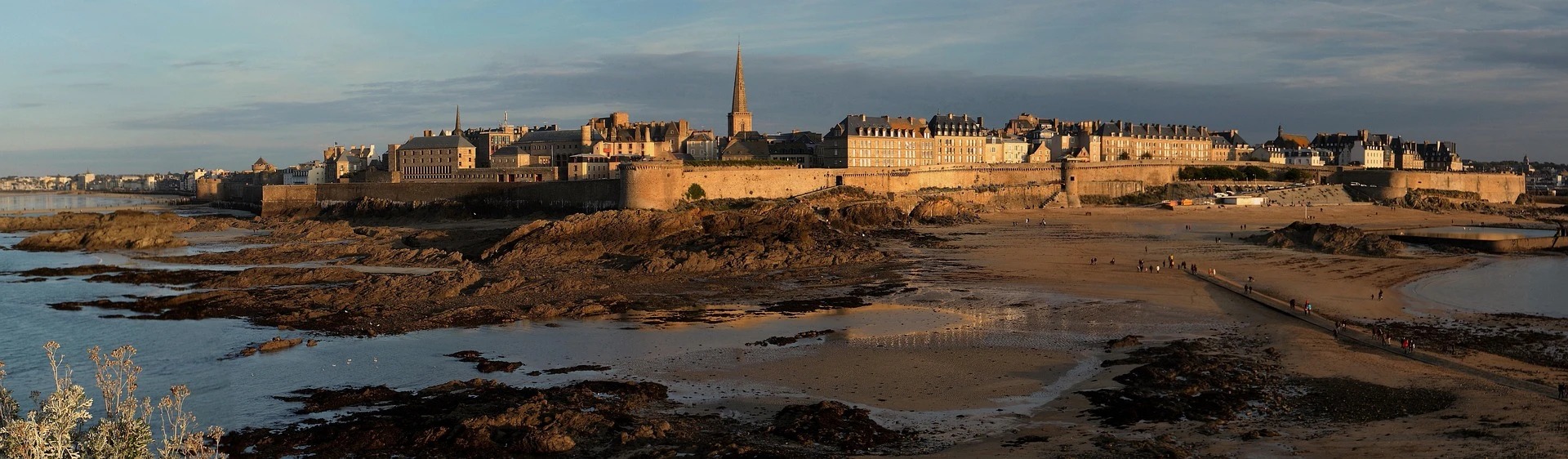
Saint Malo/ Image selected by Monsieur de France: by Jean-Michel SACHOT from Pixabay
Most of Saint-Malo's iconic sites are concentrated within the city walls. Here are the must-see attractions that can be explored in around two hours:
-
The ramparts and their magnificent views: take a complete tour of the wall to admire the sea, the islets, and the surrounding neighborhoods.
-
Saint Vincent Cathedral: a Romanesque and Gothic masterpiece, it dominates the old town and is well worth a visit inside.
-
La Maison des Corsaires (The House of Corsairs): this 18th-century residence bears witness to the wealth of Saint-Malo's shipowners.
-
Chateaubriand Square and its terraces: ideal for having a drink and watching the world go by, this is the beating heart of the intramural district.
-
Shopping streets: Stroll down Rue de l'Orme, Rue Saint-Vincent, or Rue de la Vieille Boucherie to explore their shops, cheese shops, and oyster bars.
-
Môle Beach and Bon Secours Beach: two urban coves where you can swim and admire the view.
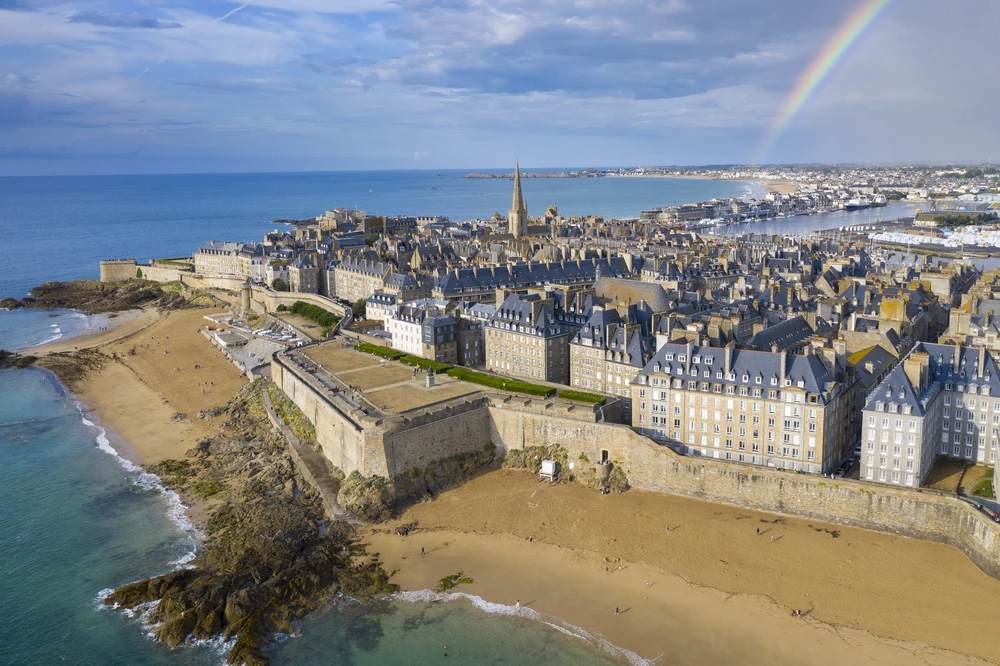
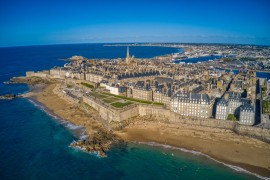
Saint Malo intra muros seen from the sky / Photo chosen by Monsieur de France: depositphotos
To learn everything there is to know about Saint Malo intra muros, here is my comprehensive guide.
Where to stay in Saint-Malo to enjoy the pirate city?
If you’re visiting Saint-Malo to explore its famous walled city of Intra-Muros, its sea-facing ramparts, and its wide sandy beaches, staying in the historic center or near the waterfront is often the most convenient option. This way, you can easily explore the narrow streets of the pirate city, walk along the ramparts offering magnificent views of the sea and nearby forts, and enjoy beaches like the large Sillon Beach, which stretches for several kilometers along the city.
To plan your stay and compare accommodations based on your dates and budget, you can check out:
- Discover the best-located hotels in Saint-Malo
- Compare the accommodation options available in Saint-Malo
- Find your ideal holiday rental with holiday rentals in Saint-Malo
This article may contain affiliate links. This does not change the price for you but allows the Monsieur de France website to continue offering its content for free.

You can also check out the 17-stop audio guide to Saint-Malo, with 3 free episodes to listen to straight on your phone.
Half-day tour program
To make the most of a 48-hour weekend, the itinerary is organized by half-day. The tides set the pace of life in Saint-Malo: some islands and forts are only accessible at low tide, so be sure to check the tide times before you set off.
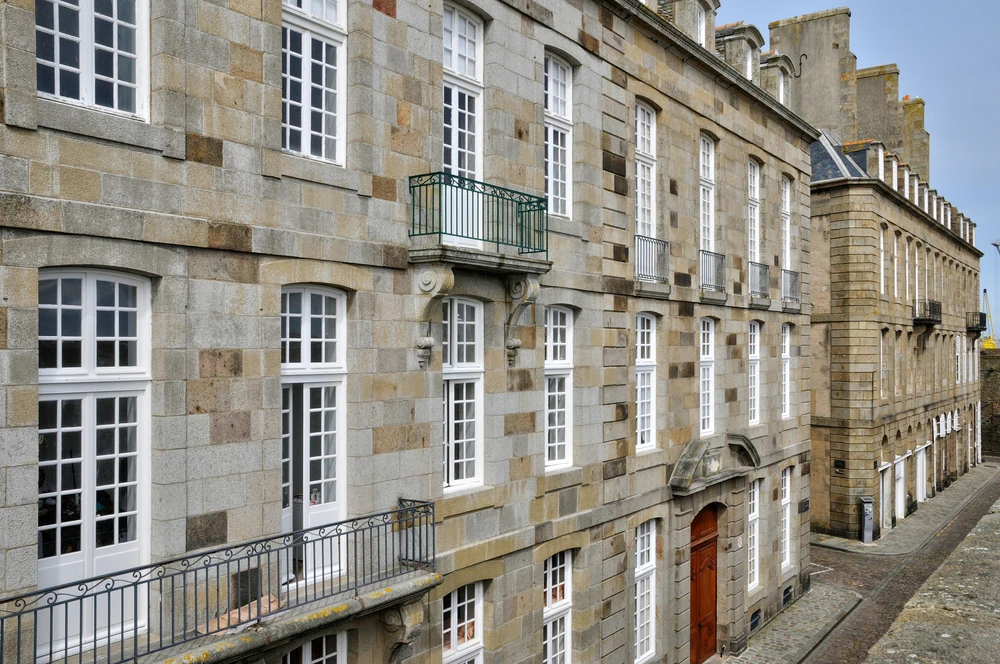
A few facades of Malouine residences just before Bastion Saint Philippe. Photo selected by monsieurdefrance.com: depositphoto.
Discover Saint-Malo with a guide
To better understand the history of this pirate city, taking a guided tour can be an excellent idea. For about two hours, a local guide will accompany you through the narrow streets of the fortified city, along the ramparts, and up to Saint-Vincent Cathedral, all while recounting the maritime history and the great figures of Saint-Malo.
👉 Book the guided tour of the fortified city of Saint-Malo ↗
Day 1 – Morning: Port, old town, and ramparts
Start your weekend at the port and the walled city, the historic heart of Saint-Malo. The walled city is the city surrounded by ramparts. Just before you reach it, the frigate L’Étoile du Roy, a replica of an 18th-century privateer ship, is moored near the port and open to visitors. where you can discover the life of sailors in the age of privateers. Entering the intramural city through the Saint-Vincent gate, you will walk along cobbled streets lined with granite houses and shops. Then climb up to the ramparts: these fortifications stretch for almost two kilometers and offer magnificent views of the sea, the beaches, and the city. Take the time to walk around the entire rampart, either early in the morning or at sunset; the evening light is always magical in Saint-Malo. You'll take some incredible photos.
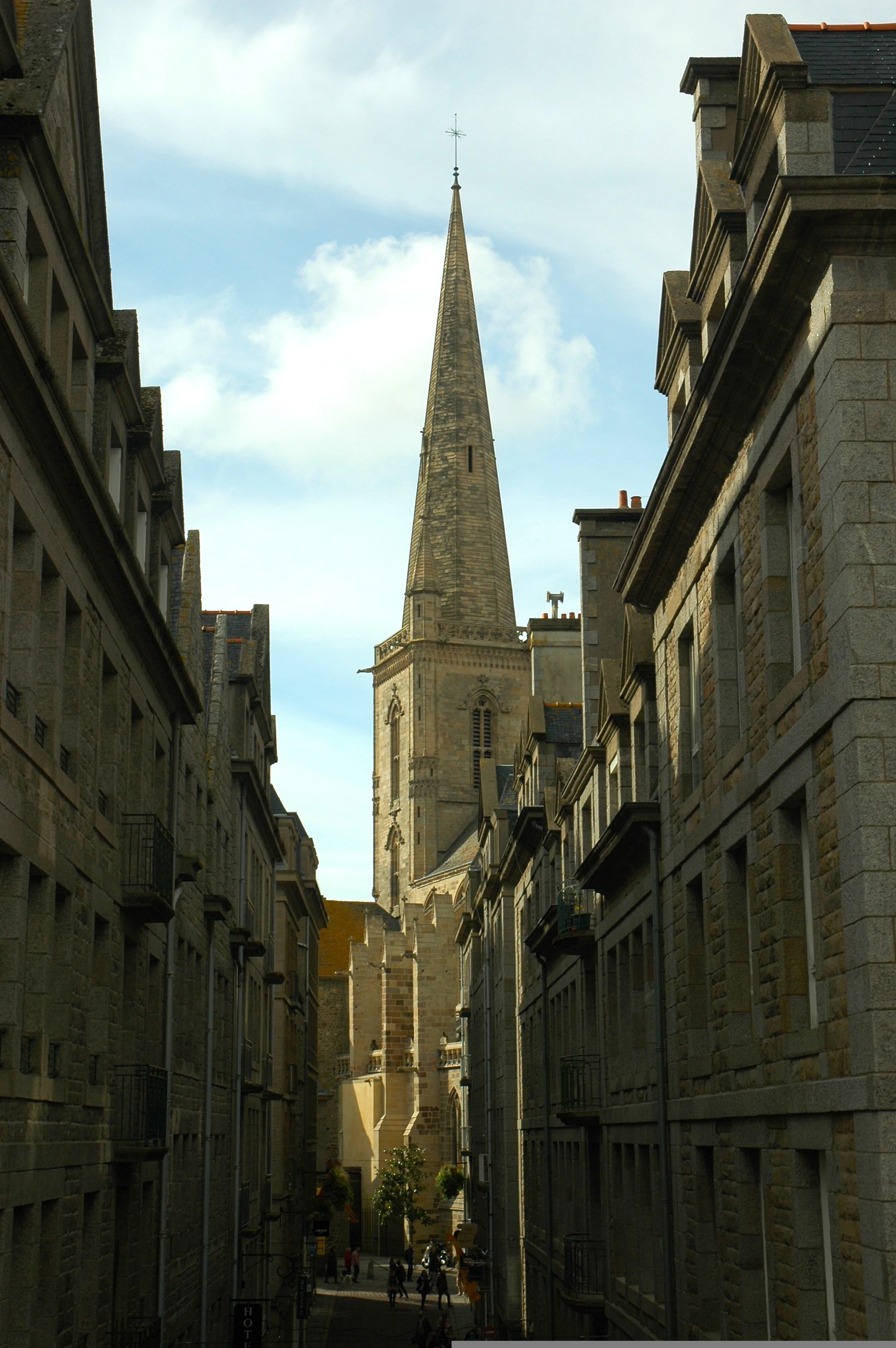
Saint Malo Cathedral and its distinctive bell tower, rebuilt after being destroyed during the war and completed in 1972. Photo selected by monsieurdefrance.com: Image by Jens from Pixabay.
Head back down to the old town to admire Saint-Vincent Cathedral, a blend of Romanesque and Gothic styles, whose bell tower dominates the Saint-Malo skyline. Not far away, the Maison des Corsaires, built in the 18th century by a shipowner, bears witness to the wealth of the sailors of the time. As you stroll through the narrow streets, stop at the craft workshops, bookshops, and shops selling regional products that give the town its friendly character.
Day 1 – Afternoon: Islands and fortifications
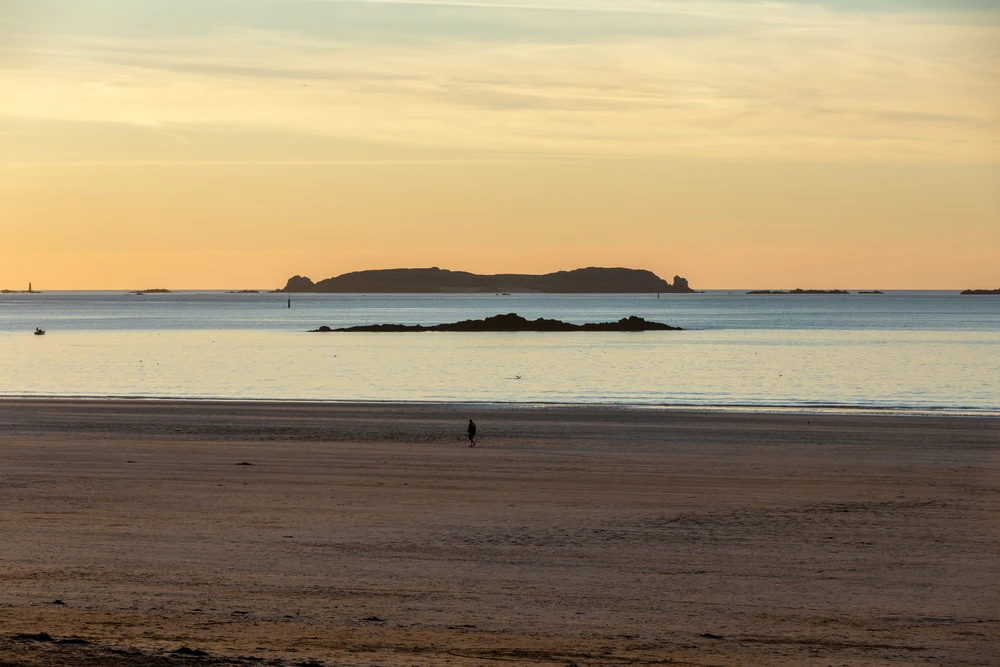
The island of Cézembre from Saint Malo. Photo selected by monsieurdefrance.com: wjarek via depositphotos.
The afternoon is devoted to the islets and forts that protect the city. From Sillon Beach, a three-kilometer-long strip of sand lined with villas, a sandy causeway leads to Grand Bé Island at low tide. This excursion is a must: the island is home to the tomb of François-René de Chateaubriand and offers a breathtaking view of the ramparts. Continue on to Petit Bé to admire the 17th-century Fort Vauban, a veritable sentinel facing the sea. Be sure to check the tide times so you don't get caught out by the rising waters.
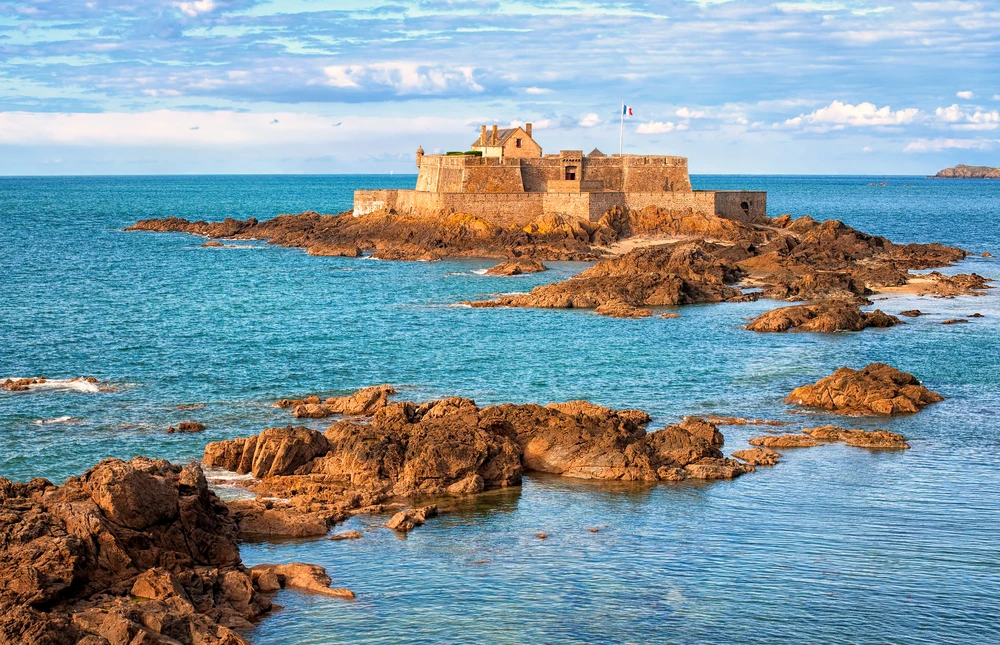
The national fort. Photo selected by monsieurdefrance.com: depositphotos.
Leave the city walls behind and head towards Le Sillon. You can't miss it, it's right next to the castle: a huge, long beach. In the past, this beach was the only strip of land connecting Saint Malo to the mainland. It was covered by water twice a day, turning the Cité Corsaire into an island. Head towards the Fort National, built by Vauban on a rocky islet to defend the city against invasions. A visit to this granite bastion will give you an insight into the military strategy of the time and allow you to admire a unique panorama of the harbor. End the afternoon with a walk to Rochebonne and return to Intra or your place of stay. Alternatively, you can go to the Môle des Noires, a long pier jutting out into the sea; it's the ideal place to watch the boats, the play of light on the water, and the sunsets.
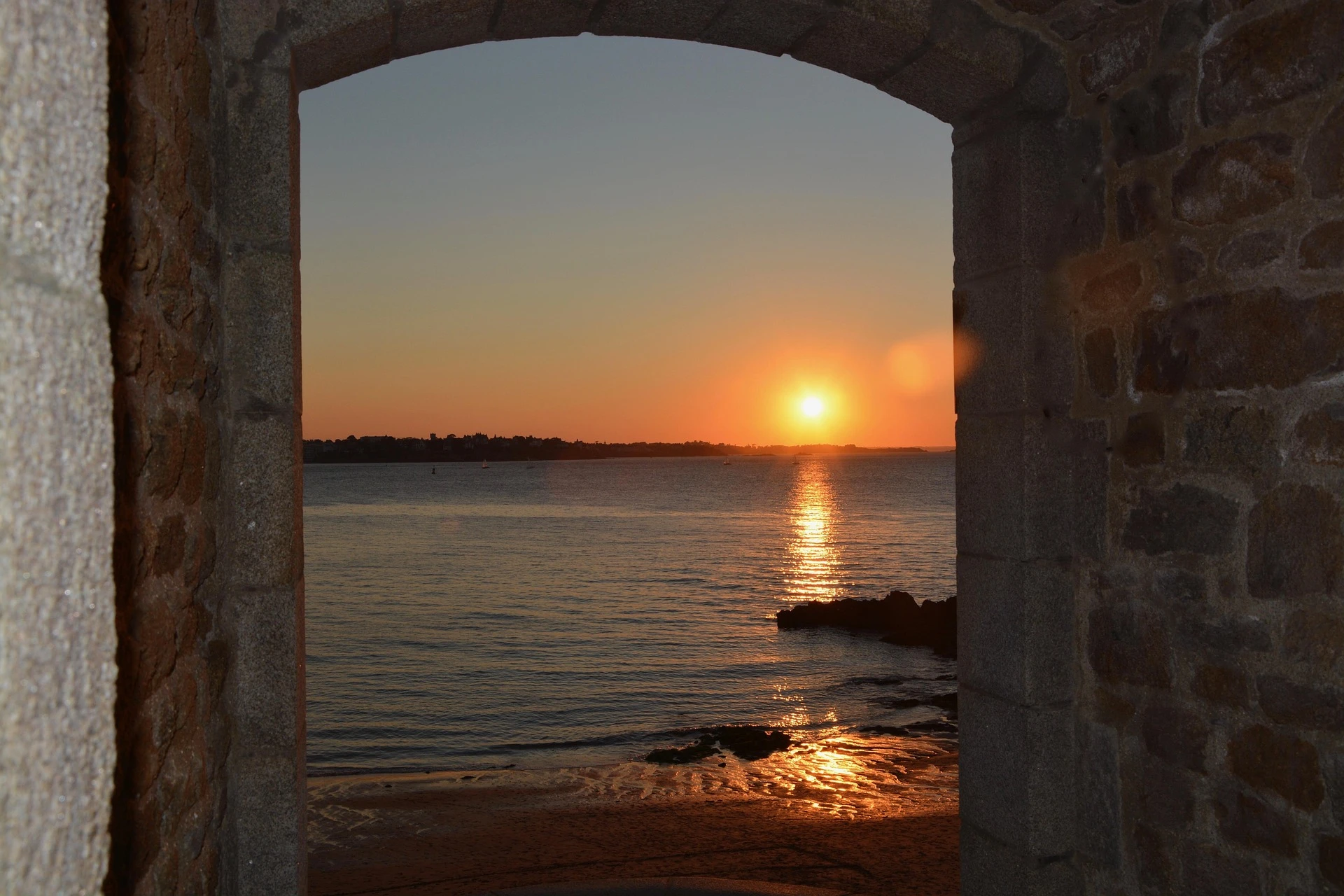
Sunset from the ramparts of Saint Malo/ Photo chosen by Monsieur de France: JackieLou DL from Pixabay

And why not explore the islands and forts around Dinard and Saint-Malo
From Dinard and Saint-Malo, the Emerald Coast offers spectacular maritime landscapes. A boat cruise offers a unique way to explore the forts, islands, and scenery of the bay while enjoying commentary on the maritime history and defenses of the pirate city.
👉 Book a cruise around the forts and islands of Saint-Malo ↗
This article may contain affiliate links. This doesn’t change the price for you but helps support the Monsieur de France website.
Day 2 – Morning: Rothéneuf, Pointe de la Varde, or elegant Dinard
Option 1 On your second morning, head to Rothéneuf, an old fishing village on the northeast coast. This authentic neighborhood is known for its stone houses, coves, and especially its Sculpted Rocks: over three hundred figures carved into the granite by Abbé Fouré in the 19th century. Walking along this unusual path offers a journey into an artistic and poetic world. Continue on to the Pointe de la Varde, a natural promontory offering spectacular views of the bay of Saint-Malo, Dinard, and the island of Cézembre.
While in Rothéneuf, visit the Jacques Cartier Museum housed in the Limoëlou manor house. This museum traces the life and explorations of Jacques Cartier, the navigator from Saint-Malo who discovered Canada. After this historical immersion, enjoy the beaches of Saint-Malo: Sillon Beach is ideal for walking and admiring the rows of wooden breakwaters, while the small beaches of Bon Secours and Le Môle offer a more intimate atmosphere.
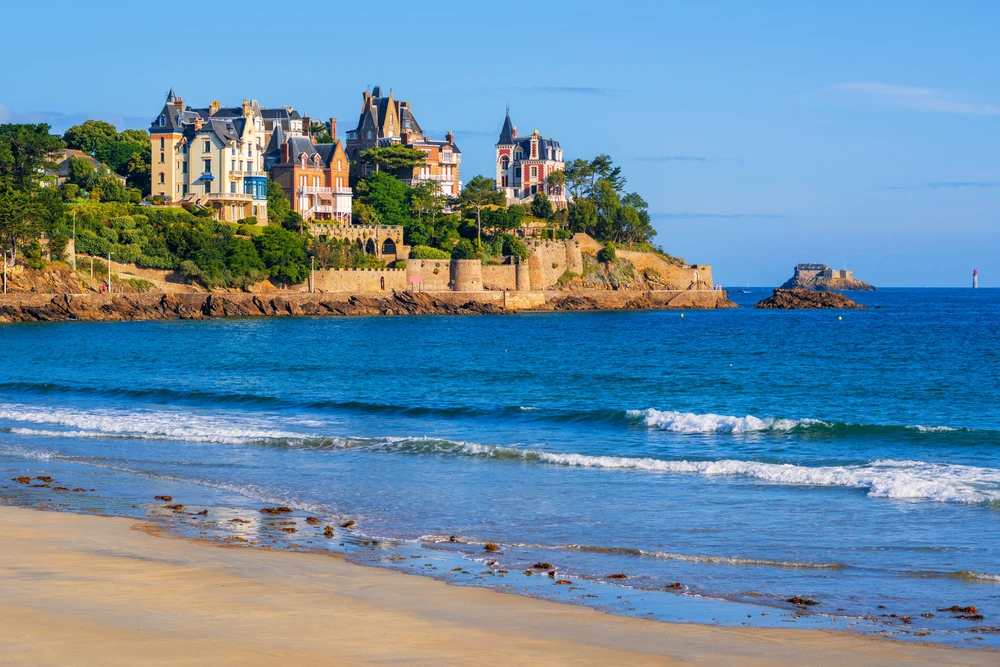
Villas on the tip of Malouine. Photo selected by monsieurdeFrance: depositphotos.
Option 2 Head straight across to Dinard. The town is Brittany's most beautiful seaside resort. It has over 400 listed or protected villas. And it's from here that you'll get the best view of... Saint Malo! It's very easy to get there by crossing the Rance estuary by sea bus from the port of Saint Malo (Vauban basin, from the Grand-Porte). The crossing takes 10 minutes. Once you arrive in Dinard, turn right, take the moonlight walk, the customs officers' path, and come back. You'll love it.
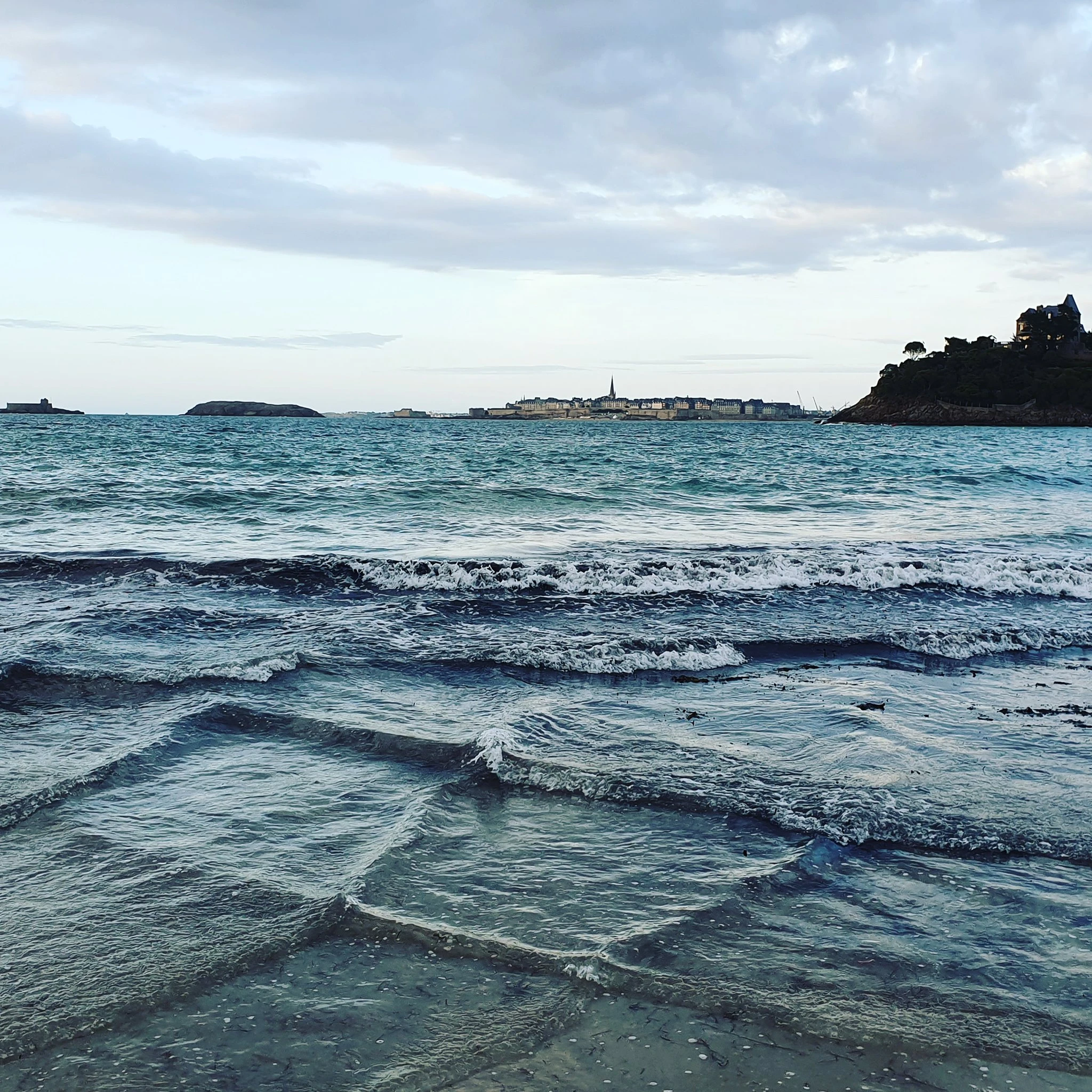
The view from the beach at the lock in Dinard: in front of you, from left to right: Le Petit Bé, Le Grand Bé, Saint-Malo, and Pointe du Moulinet with Villa Saint-Germain. Photo selected by monsieurdefrance.com: Jérôme Prod'homme (c).
Day 2 – Afternoon: Saint-Servan, Solidor Tower, and Saint-Malo Castle
In the afternoon, head to the Saint-Servan neighborhood, located on the Aleth peninsula. This quiet and welcoming neighborhood is perfect for discovering another side of the city, far from the hustle and bustle of the city center. Stroll around the marina, sit on a terrace and enjoy a coffee while admiring the colorful boats. Then visit the Solidor Tower, an imposing 14th-century medieval tower overlooking the Rance estuary. Inside, a museum presents the history of the Cape Horners, the sailors who rounded Cape Horn on their long voyages to Chile and Australia. The view from the top is splendid.

A Breton mother making crêpes around 1900.
End your weekend with a nice meal in town. There are lots of great restaurants where you can treat yourself to seafood or a delicious Breton galette.
My complete guide to Saint Malo is available here for free.
The best neighborhoods to stay in
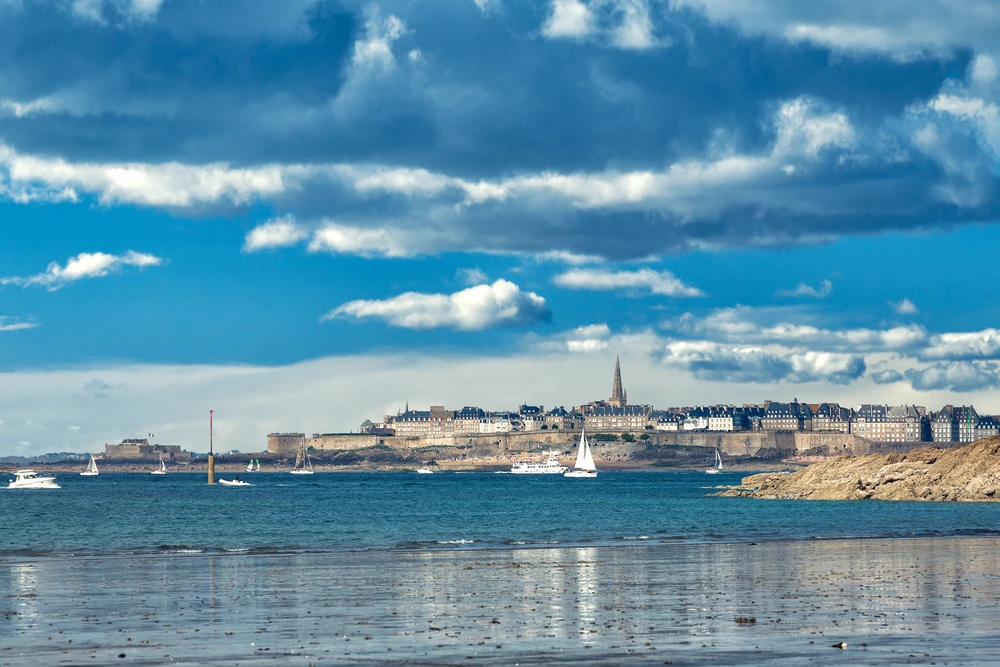
The view of Saint Malo from Pointe du Moulinet in Dinard. In the center: the bell tower of Saint Vincent Cathedral. A place that speaks to Quebecers, as it is where Jacques Cartier was laid to rest. A plaque commemorates that it was here that he had his expedition to China blessed, which ultimately led him to discover Canada..
Choosing a good neighborhood is essential to fully enjoy the Malouine atmosphere. Here are four recommended areas:
-
Intra-muros: the historic center surrounded by ramparts, Intra-muros is home to monuments, restaurants, shops, and entertainment. It is the ideal place for a first visit, as everything can be done on foot and the pirate atmosphere is palpable. That said, Intra has one drawback: it is often noisy (the walls are high and close together, so sound echoes).
-
Plage du Sillon: this seaside neighborhood runs along a three-kilometer beach ranked among the most beautiful in France. Belle Époque villas, pedestrian promenades, and breakwaters line the shore. Ideal for families, swimming enthusiasts, and travelers seeking ocean views.
-
Rochebonne: it's my favorite neighborhood, at the end of the Sillon. It's 3 km from Intramuros.
-
Courtoisville, rather attractive houses.
-
Saint-Servan: located on the Aleth peninsula, this neighborhood offers a peaceful setting with a marina, restaurants, and the Solidor tower. It will appeal to those seeking tranquility and a local atmosphere while remaining close to the center.
-
Rothéneuf: a small seaside resort away from the crowds, Rothéneuf charms visitors with its coves, sculpted rocks, and coastal paths. Perfect for hikers and travelers who want to stay in a natural environment.
Want to get to know the people of Saint-Malo better? Here are 10 secrets about Saint-Malo.
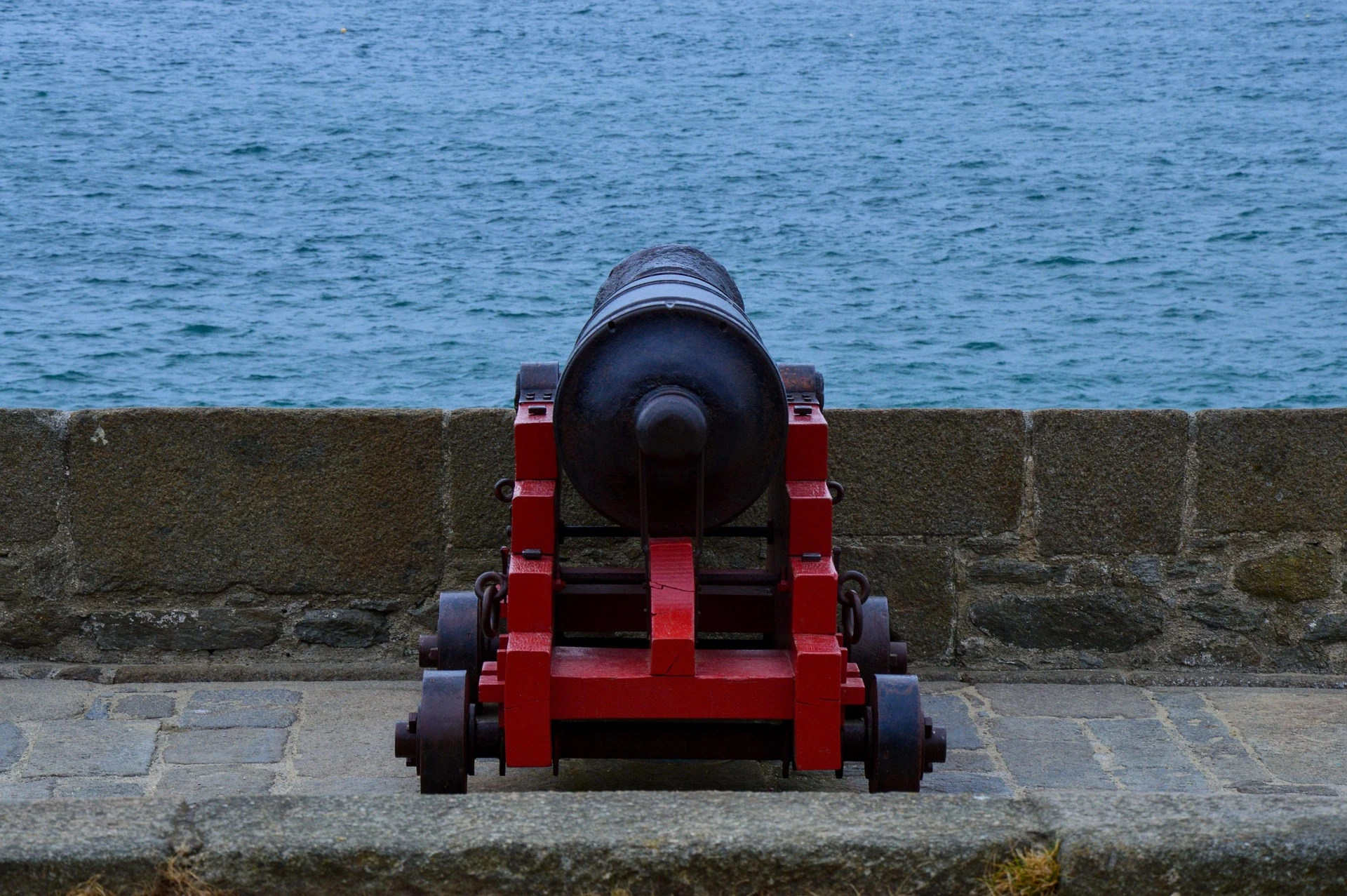
The cannons of the Holland Bastion are famous / Photo chosen by Monsieur de France: by Gaspard Delaruelle from Pixabay
Gourmet specialties to savor
Let's be honest: you're in for a treat. We love good food in Saint Malo, and Brittany has a rich culinary tradition. There aren't really any tourist traps, even within the city walls (restaurant owners know that many customers return to stay in Saint Malo, so there's no point in ripping them off).
-
Buckwheat galettes and sweet crêpes: true Breton institutions, they can be enjoyed plain or topped with local products.
-
Kouign-amann : this crispy, melt-in-the-mouth pastry is made from layers of dough, butter, and caramelized sugar.
-
Bordier Butter: Jean-Yves Bordier is famous for his hand-kneaded butter flavored with seaweed, yuzu, or Espelette pepper.
-
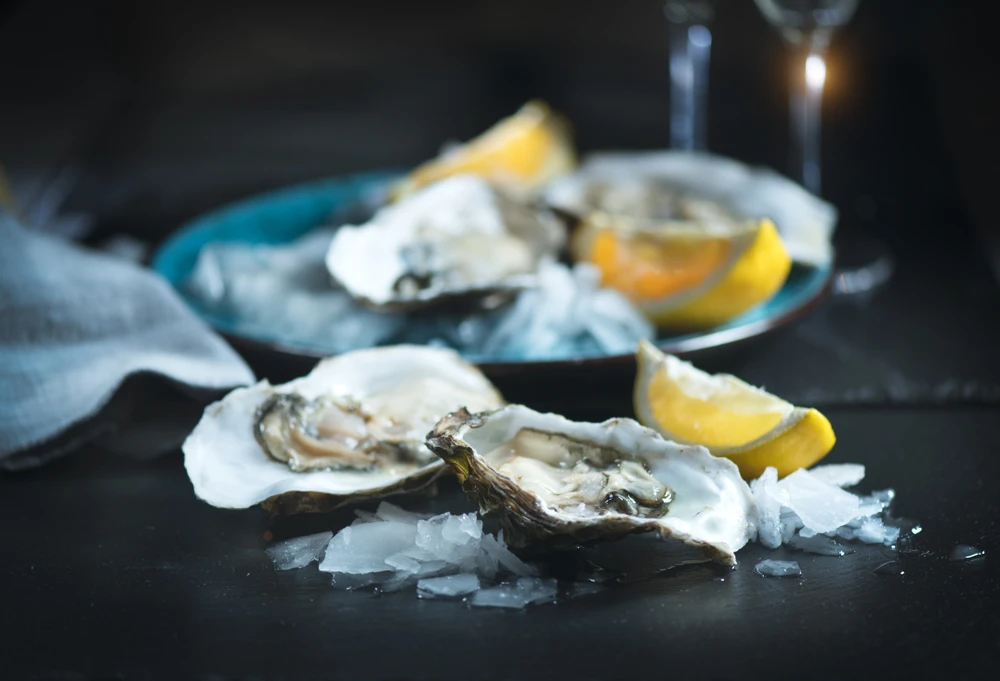
Cancale oysters: farmed a few miles from Saint-Malo, they can be enjoyed at the port or in the city's restaurants.
-
Caramalo, crackers, and gavottes: typical sweets and cookies to bring back as gourmet souvenirs.
-
Artisanal ice cream: local ice cream makers offer original flavors made with Breton ingredients.
-
Salted butter! If you've never tried it, you absolutely must taste this delicious sweet treat (contrary to what its name suggests), which can be spread on pancakes or ice cream.

Romantic places for couples
Saint-Malo is the perfect place for a romantic getaway. From sunset strolls to seaside restaurants, the city is full of romantic spots. Here are a few ideas: a stroll along the ramparts, sunset on Sillon beach, the Sculpted Rocks trail in Rothéneuf, a gourmet break on Rue de l'Orme, dinner on a terrace in Saint-Servan, or a relaxing moment for two at the Thermes Marins spa.
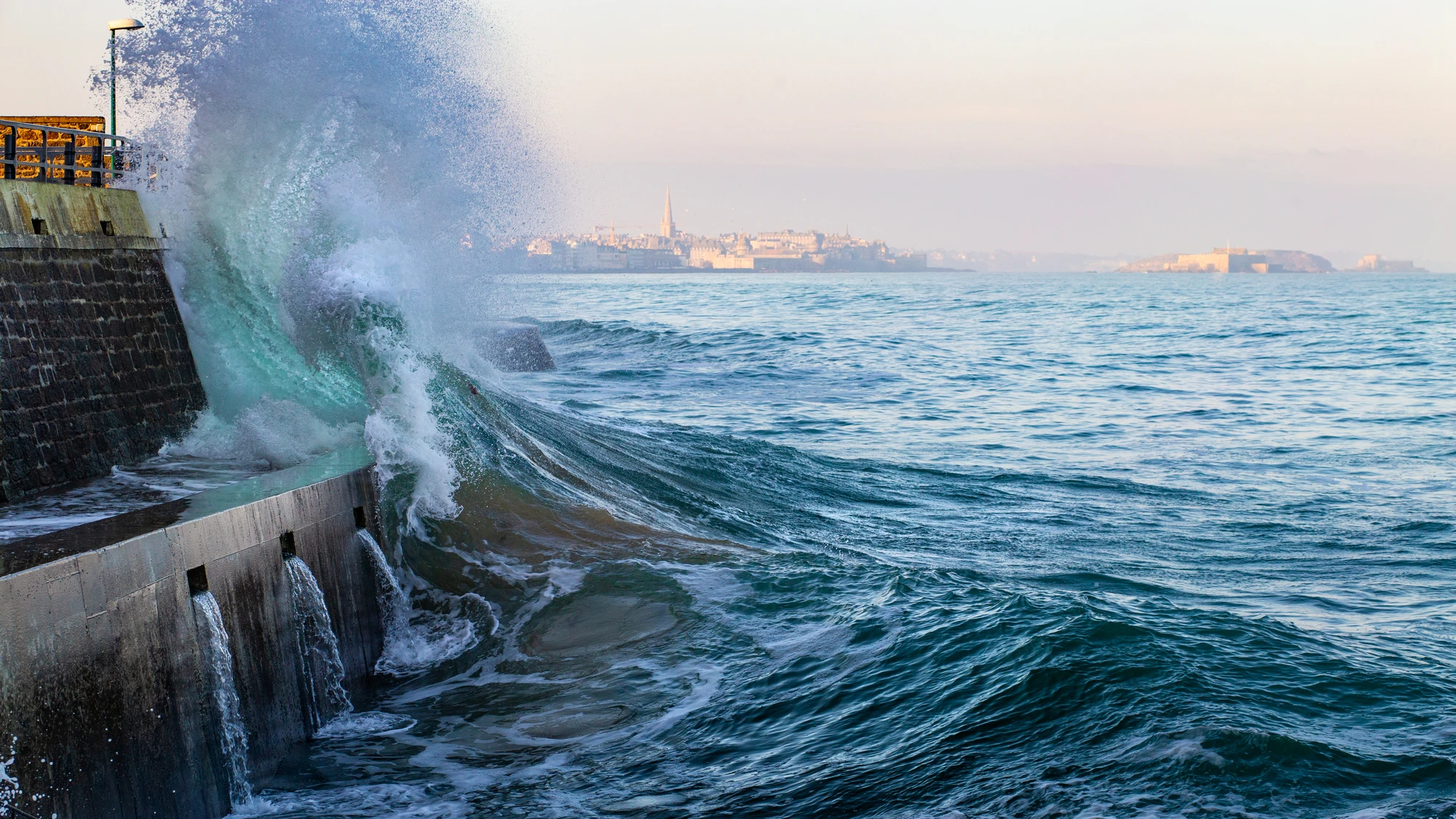
Saint Malo and the sea crashing against the Sillon seawall during high tides. Photo selected by monsieurdefrance.com: depositphotos
Activities to do with children
Saint-Malo is also a family destination. Children will enjoy touring the ramparts, visiting the frigate L'Étoile du Roy and the Spanish galleon, the carousel near the Saint-Vincent gate, the Micro Zoo, the Grand Aquarium, the indoor playgrounds, and walks along the GR34 coastal path. We don't always think about it, but a few hours on the beach running around or building sandcastles is simply unforgettable.
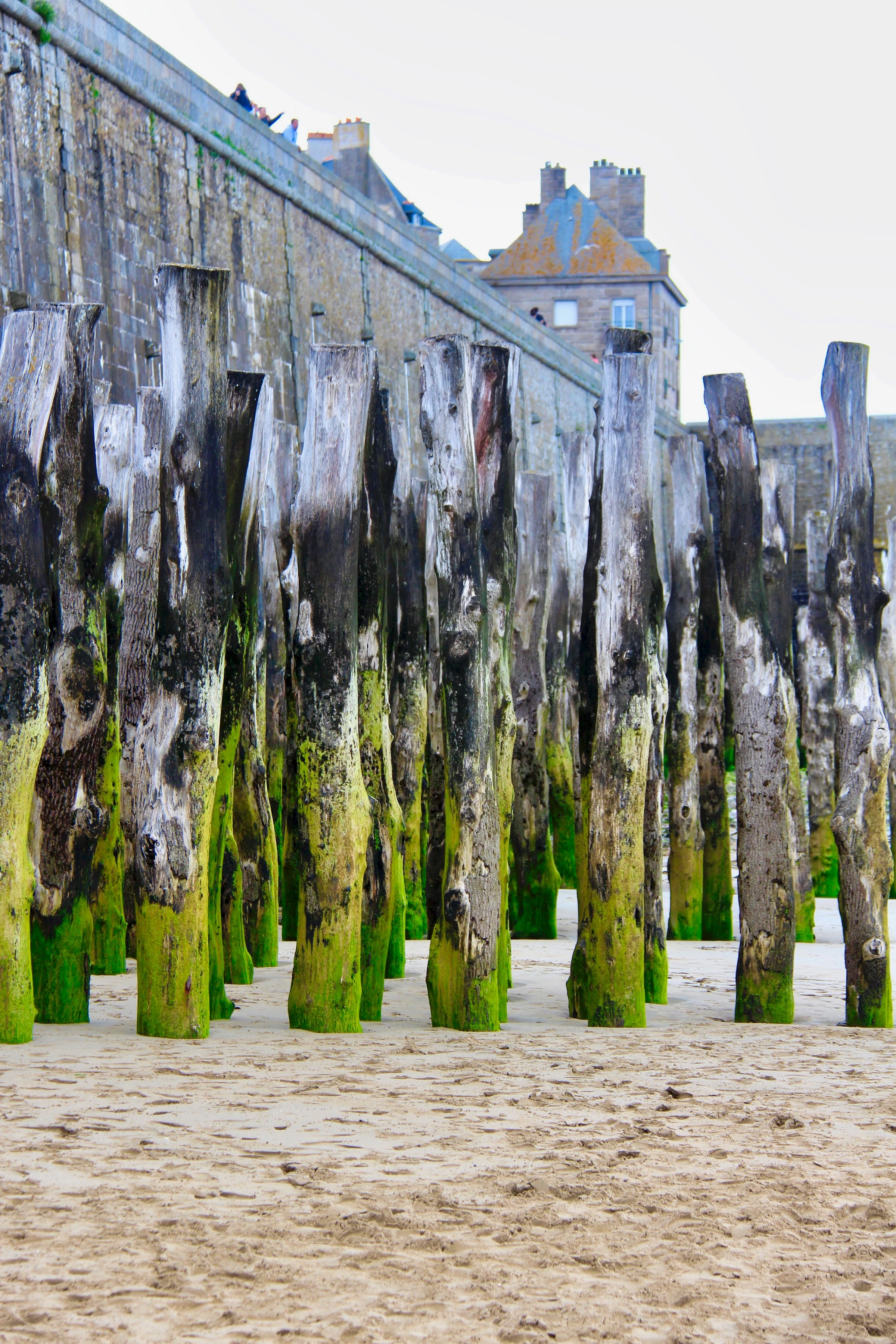
Breakwaters. Some are deeper than their height above water. Photo selected by monsieurdefrance.com Photo by Nabih El Boustani on Unsplash
In the Footsteps of the Corsairs of Saint-Malo
Saint-Malo is famous for its privateers, the sailors who built the wealth and reputation of this fortified city. To discover the city in a different way, this outdoor escape game invites you to explore the streets and ramparts while solving puzzles related to the history of the privateers and the city’s secrets. A fun and original way to explore Saint-Malo as a team.
👉 Join the privateer escape game in Saint-Malo ↗
This article may contain affiliate links. This does not change the price for you but helps support the Monsieur de France website.
What to do in Saint-Malo when it rains?
The weather in Brittany can be changeable, but that shouldn't spoil your stay. In fact, rain and wind are part of the experience, and you'll understand why this city has so much character when you feel the wind blowing through the ramparts. That said, in case of rain, there are several indoor or sheltered activities that allow you to discover the city in a different way. You can hop aboard the tourist train, visit the Micro Zoo or the Grand Aquarium, enjoy the cultural center at the Grande Passerelle, let off some steam at Max Aventures or West Parc, go shopping in the city center, or enjoy the cultural center at the Grande Passerelle. Zoo or the Grand Aquarium, enjoy the cultural center of the Grande Passerelle, let off steam at Max Aventures or West Parc, go shopping within the city walls, relax at the Thermes Marins, or visit the home of the privateer Asfeld and the 39/45 memorial.
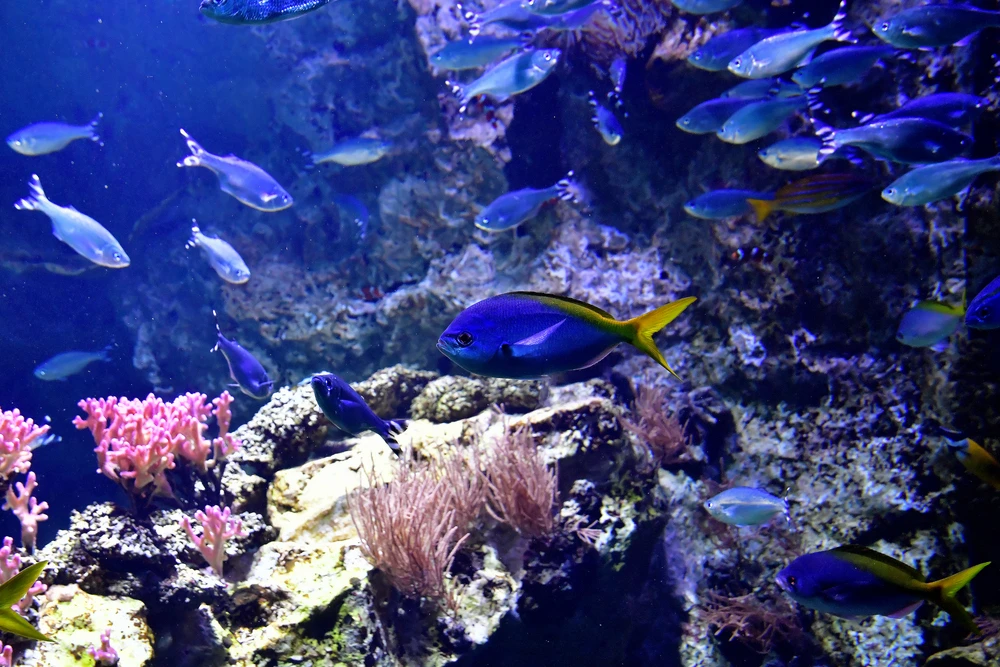
The Grand Aquarium in Saint-Malo is the ideal family outing on the Emerald Coast, with its tropical and local tanks, underwater tunnel, and activities. It's perfect when it rains or for a change from the ramparts. Photo selected by monsieur-de-france.com.
Walking times and tide advice
To help you prepare for your visit, here are some time estimates and a safety tip:
-
Full tour of the ramparts: approximately 45 to 75 minutes to walk the 2 km of fortifications.
-
Exploring the intramural area: allow 2 to 3 hours to stroll through the narrow streets and visit the monuments.
-
Walk along Sillon Beach: allow 30 to 60 minutes to walk along its three kilometers of sand.
-
Tide advice: the islands of Grand Bé and Petit Bé are only accessible at low tide and become isolated as soon as the tide rises. Return at least 30 minutes before high tide to avoid being stranded.
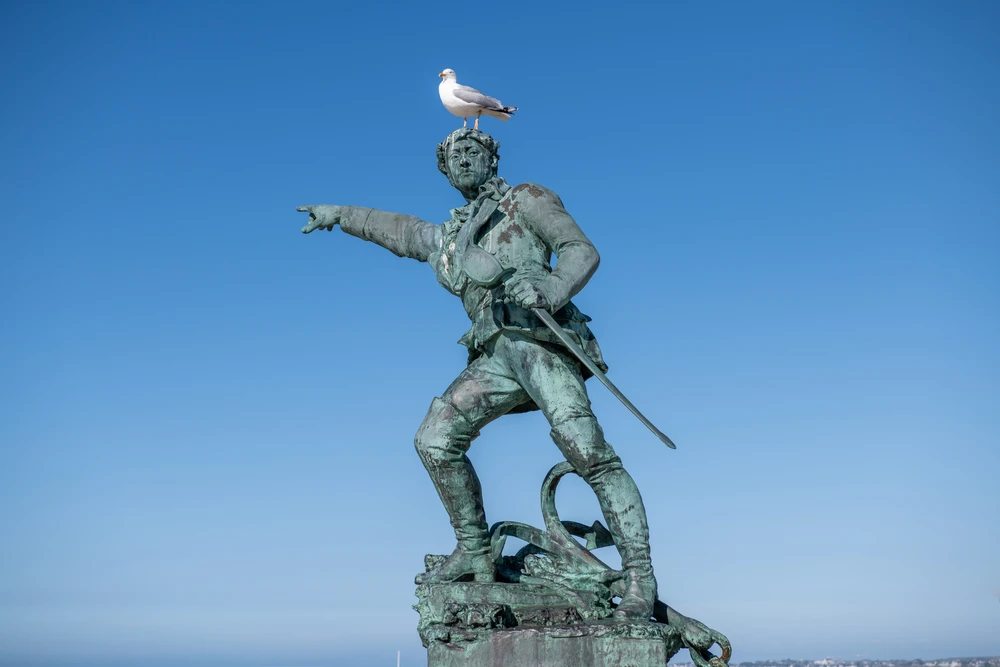
Surcouf, the most famous privateer from Saint-Malo (with a seagull!) photo chosen by monsieurdefrance.Com: pixavril via depositphotos
Practical tips and tricks
-
Check the tides: plan your visits to the islets and Fort National according to the tide schedules.
-
Suitable footwear: cobblestones and ramparts require comfortable shoes.
-
Choose your season carefully: spring and summer for entertainment and high tides, fall for tranquility and warm colors.
-
Explore the surrounding area: Dinard and Cancale are easily accessible by boat or bus.
-
Book in advance: during peak season, hotels within the city walls and popular restaurants fill up quickly.
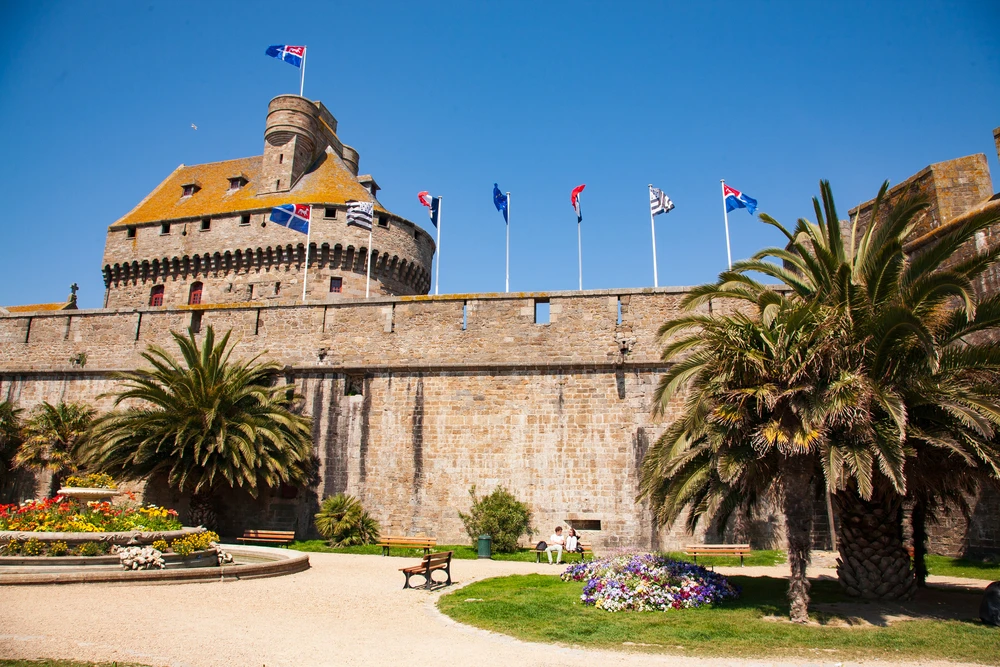
The castle of Saint Malo still flying the flag of Saint Malo. Photo selected by monsieurdefrance.Com: tiloligo via depositphotos.
Frequently asked questions (FAQ) Saint Malo weekend getaway
When is the best time to visit Saint-Malo?
Spring and summer offer long days and spectacular tides, fall is quieter and colorful, and winter allows you to see the city from a wilder perspective.
How long does it take to walk around the ramparts?
Allow about an hour for the complete loop, taking time to enjoy the view.
How can I get to the islands of Grand Bé and Petit Bé?
From Sillon Beach or Éventail Beach at low tide, be sure to return before the tide comes in.
Where can you enjoy a kouign-amann in Saint-Malo?
Within the city walls, several renowned bakeries offer them, particularly on Rue de l'Orme, and in Rothéneuf, the Robino bakery is very popular.
Which museums to visit on a rainy day?
The Grand Aquarium, the Micro Zoo, the castle of Saint-Malo, the home of the privateer Asfeld, and the 39/45 memorial are good indoor options.
What are the transportation options for getting to Dinard or Cancale without a car?
Ferries connect Saint-Malo to Dinard in just a few minutes; regular buses serve Cancale, and it is also possible to get there by bike along the coastal path.
Where to go for a walk after dark?
The ramparts, Sillon Beach, and Môle des Noires pier are perfect spots for admiring the sunset and the city lights.
Conclusion
Saint-Malo is a treasure trove of heritage, seascapes, and flavors that appeal to travelers from all walks of life. In two days, you can explore its ramparts, stroll along its beaches, visit legendary islands, discover its authentic neighborhoods, and sample its cuisine. Whether you're traveling as a couple, with family, or with friends, the pirate city will offer you unforgettable memories, even when the clouds are threatening. Plan your getaway taking the tides into account and let yourself be carried away by the timeless charm of this city steeped in history and the sea.
Learn more about Saint-Malo
- Visiting Saint-Malo: The Complete Guide to the Pirate City
- Explore Saint-Malo with an immersive audio guide that reveals all its secrets
- The Ramparts of Saint-Malo: The City’s Most Beautiful Walk
- What to See in Saint-Malo in a Weekend? The Must-Sees
- Dinan: The Stunning Medieval Town Near Saint-Malo
- Dinard: The Elegant Gem of the Emerald Coast
- Discover Brittany and the Emerald Coast
- If you love Brittany, here’s what I loved