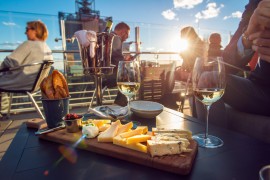
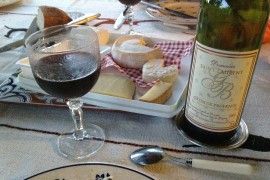
What is a French apéro dînatoire?
A French apéro dînatoire is an informal dinner made of small shared dishes served with bread, cheese, charcuterie, spreads and wine. Unlike a simple charcuterie board, it replaces a full meal and encourages long, convivial evenings around the table.
If you’ve spent any time on social media recently, you’ve seen the "Charcuterie Boards." Mountains of salami roses and rivers of crackers. While visually stunning, these are often just static snacks. In France, we have something more profound, more elegant, and infinitely more social: the Apéro Dînatoire.
The most important thing to understand about a true French apéro dînatoire is that it is not a cocktail party. You are not expected to stand and mingle with a glass in one hand and a napkin in the other. In France, we sit. We gather around the coffee table (la table basse) or crowd into the kitchen. We "pioche" (pick and nibble) at the food directly from the platters. It is a long-form, seated marathon of conversation and gourmet bites.
The challenge for our friends in the United States is often the sourcing. You might think, "I can't host a French party; I don't have a French butcher or a village cheesemonger." That is a myth. You can find everything you need in your local American grocery store if you know what to look for. Here is your 1,600-word masterclass on the Apéro Dînatoire, translated for the American home.
1. The philosophy: the art of the “coffee table”
In the United States, we often ask, “Where should I sit?” and the host directs us to the dining table. In a French apéro dînatoire, the living room serves as the dining room. The food is laid out on the coffee table and guests settle into sofas, armchairs, or even cushions placed on the floor. This can also be done in the kitchen, around the countertop, for example.
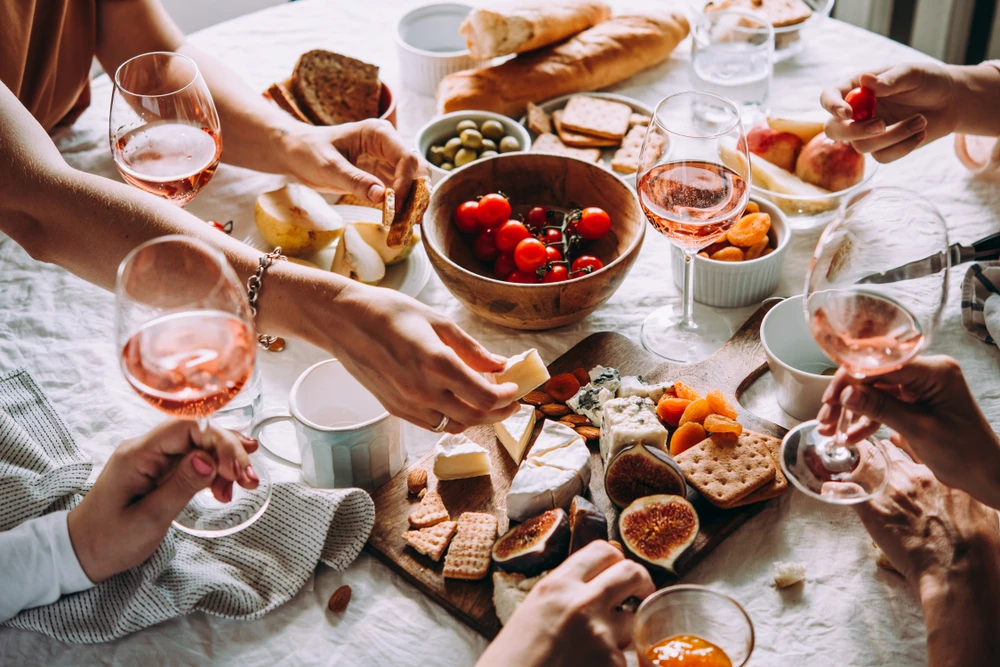
The aperitif is now mostly wine / photo by Yulia Grigoryeva/Shutterstock.com
The primary goal is proximity and, as a result, human warmth. Everyone should be able to reach the brie or sausage without getting up. This creates a deeply relaxed atmosphere. You don't “move on” to dinner; the aperitif slowly and naturally becomes dinner. You start with small items (peanuts, cherry tomatoes, etc.) and can continue with a few bite-sized delicacies. Some people offer a lot of bread, in small slices, and an assortment of pâtés (rillettes, etc.).
2. Bread: your base
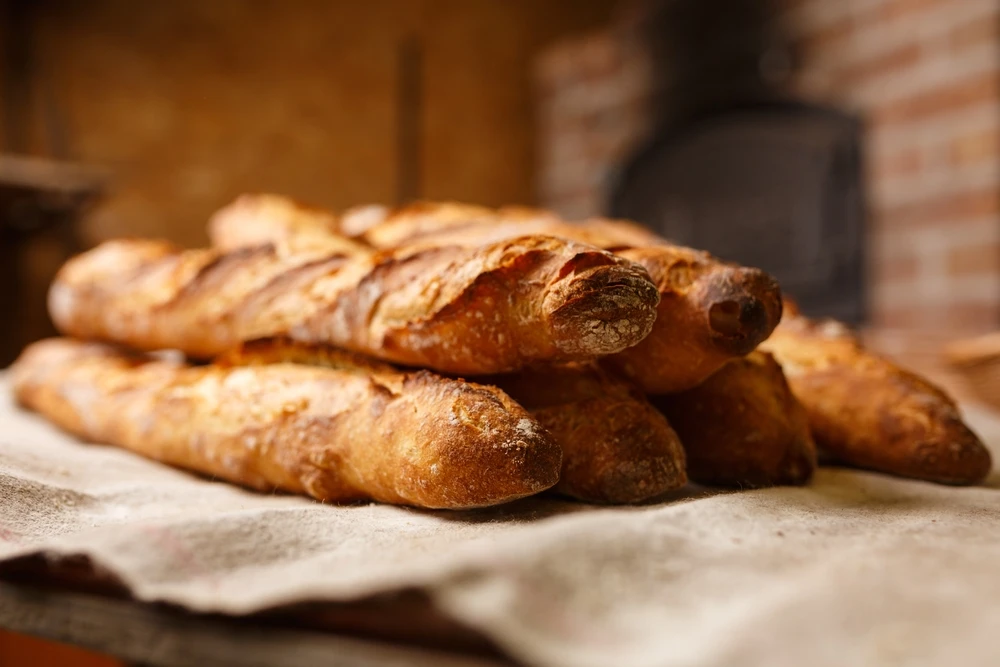
image par Philippe Ramakers/Shutterstock
In France, crackers are reserved for children's snacks. It would even be surprising if you served them to adults. For a real aperitif, you need bread, and as close to French bread as possible, i.e., bread with soul.
- The French reality: Traditional baguette or sliced bread
- The American substitute: look for “artisan baguettes” at Whole Foods, Wegmans, or local bakeries. Avoid the soft “French bread” sold in plastic bags in regular supermarkets; it's too spongy. You want a crust that “sings” (crunches) when you press it.
- The sourdough tip: if you can't find a good baguette, a sourdough boule is your best bet. Cut it into thin slices and toast it lightly. Its acidity counterbalances the richness of the cheese.
Do you like French bread? Here's how to choose a good baguette.
3. Cheese: equivalents of the "big three “
You don't need ten cheeses. You need three distinct personalities.
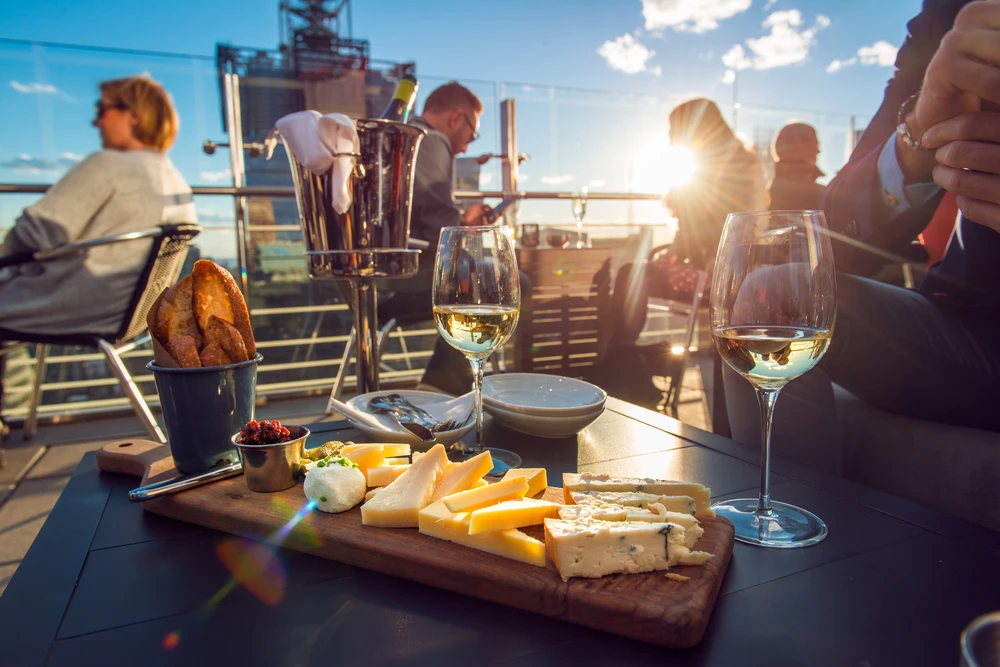
Aperitif and cheese accompaniment/ photo by Nick Starichenko/Shutterstock.com
The creamy (mature soft cheese)
- The French reality: Brie de Meaux or Camembert de Normandie.
- The American substitute: look for ”Double Cream Brie“ or ”Triple Cream" (brands such as Saint-André or Marin French Cheese Co.). Trader Joe's offers “Creamy Toscano” and “Delice de Bourgogne,” which are fantastic and affordable alternatives.
Hard cheese (pressed)
- The French reality: Comté (aged 18 months) or Beaufort.
- The American substitute: “Aged Gruyère” (Switzerland) is widely available and very similar to Comté. For a domestic option, look for “Pleasant Ridge Reserve” or a high-quality “Wisconsin Alpine-style cheese.” These have the crystalline crunch and nutty flavor we love.
Tart cheeses (goat or blue)
- The French reality: Roquefort or Crottin de Chavignol.
- The American substitute: “Humboldt Fog” from Cypress Grove is a world-class American goat cheese that any French person would serve. For blue cheeses, “Maytag Blue” or “Point Reyes Original Blue” provide that essential salty touch.
4. Charcuterie: from salami to terroir
Stay away from pepperoni-style charcuterie. The less fat, the better!
- Dry-cured ham: if you can't find Jambon de Bayonne, “Prosciutto di Parma” is available in almost all American delicatessens and is a perfect substitute. Nationally, “La Quercia” makes incredible American dry-cured hams.
- Salami: look for Saucisson Sec (now found in many specialty sections). If it's not available, choose an unsmoked salami with whole peppercorns. Avoid spicy Italian varieties; French charcuterie is generally more savory and herbaceous than spicy.
- Spreads: French rillettes (pork-based spreads) are a must.
- The American substitute: look for “pâté de campagne” in the specialty cheese section. If you can't find it, a high-quality “smoked salmon spread” or “chicken liver mousse” will provide that essential creamy, meaty texture on bread.

An aperitif for two StockPhotosLV
5 Tapenade : french surprise
It's great! It's a kind of olive purée served on slices of toasted bread. Here's the recipe:
Quick tapenade recipe (5 minutes)
Ingredients (for 1 bowl)
- 200 g pitted black olives
- 1 small clove of garlic
- 2 anchovy fillets (optional but traditional)
- 1 tsp capers
- 3 to 5 tbsp olive oil
- Pepper (no salt: the olives are enough)
- A dash of lemon juice (optional)
Preparation
- Blend the olives, garlic, anchovies, and capers.
- Add the olive oil gradually until you reach the desired texture.
- Season with pepper, taste, and add a little lemon juice if necessary.
- Serve chilled on toast, as a dip, or with raw vegetables.
Quick variations
- Green tapenade: replace with green olives and add a little lemon zest.
- Without anchovies (vegetarian): increase the amount of capers and garlic.
- More Provençal: add a pinch of thyme or rosemary.
⏱️ Total time: 5 minutes | 🍽️ Perfect for an aperitif
Thank you who? Thank you Monsieur de France!

6. The “warm touch”: American cooking tips
We can continue with hot appetizers. For example:
- Baked Camembert: buy a wheel of Brie or Camembert, top it with honey and walnuts, then bake it at 350°F for 15 minutes. It will become the centerpiece of your coffee table.
- Mini quiches: all American frozen food aisles (Costco, Trader Joe's) offer “mini Florentine quiches” or “quiches lorraines.” These are legendary staples of cocktail parties.
- The “pissaladière” tip: this is an onion tart from the south of France.
- The American substitute: buy frozen puff pastry. Sauté the onions until golden brown, spread them over the pastry, add a few black olives, and bake. It's a true masterpiece made from 100% American ingredients.
7. “Cleansers”: French crunch
To balance the fat and saltiness, you need fresh, acidic elements. Nature has everything covered, even your cocktail party, take a look:
- Gherkins: luckily, the “Maille” brand is sold in most American supermarkets. Otherwise, look for “Tiny Extra Fine Gherkins” (avoid sweet “bread-and-butter” gherkins).
- Radishes and butter: this is the most “French” thing you can do. Buy Red Globe radishes, cut them in half, and serve them with Kerrygold butter (the American butter closest to French quality) and a pinch of sea salt.
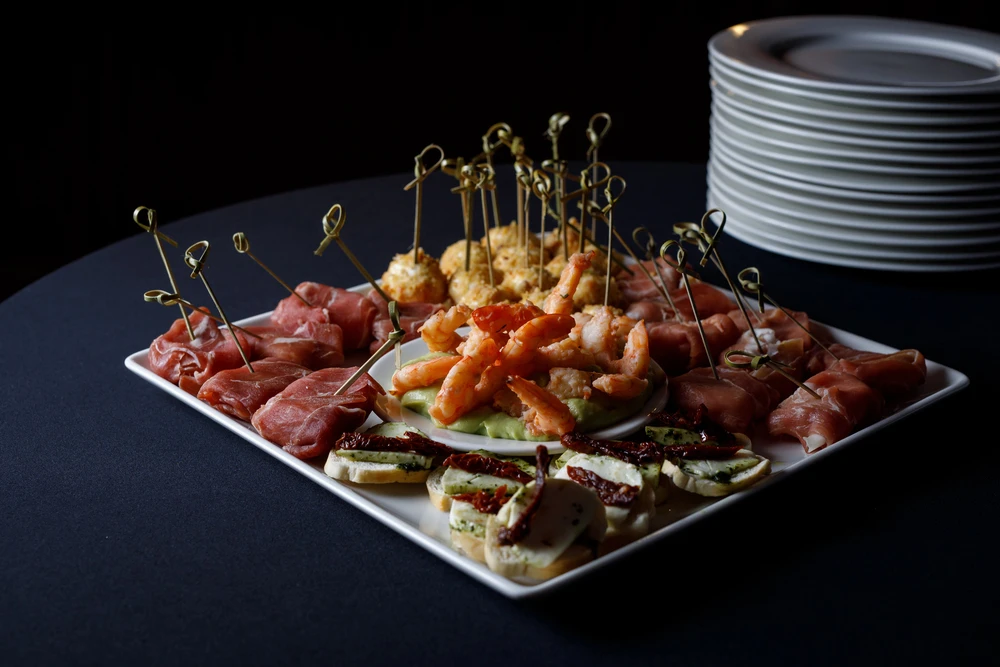
8. The order of drinks: the “French bar”
- The opening: when possible, start with something sparkling. A high-quality ‘Crémant’ or “California sparkling wine” (such as Roederer Estate). The bubbles “reset” the palate for the meal to come. Champagne is still the best choice. There's something about champagne that makes people relax and laugh more easily. I don't know where it comes from, but you only find it with champagne. Otherwise, go for wine.
- The main course: Serve wine with the cocktail dinner. Avoid mixing drinks, so as not to make anyone sick, but offer both colors to your guests. It's best not to serve anything too strong, because a cocktail dinner can last all evening.
- Red: an Oregon Pinot Noir or a Gamay (Beaujolais).
- White: a Sauvignon Blanc from Napa Valley or a dry Riesling from the Finger Lakes in New York State.
You can also do it without alcohol (but not too much with sweet drinks), or with beer. The key is to know what your guests like and offer them that.
9. The etiquette of “piocher”
At a French cocktail party, the host does not “serve” their guests. Everything is laid out on a coffee table and guests help themselves throughout the evening. All you have to do is chat and keep an eye on the oven if you've planned to serve hot appetizers.
- Progressive tasting: don't serve everything at once. Start with bread, charcuterie, and radishes. After an hour, bring out the hot quiches. Later, the oven-baked brie. This allows you to extend the “seated marathon” for 3 or 4 hours.
- No formal plates: use small napkins or tiny side plates. The focus is on the communal table.
- The atmosphere: put on a “French Coffee Shop” or “Vintage French Pop” playlist. It may seem cliché, but it instantly changes the “vibe” of the room, signaling to your American guests that it's time to relax, sit back, and enjoy the Slow Life.
10. Conclusion: the luxury of sourcing
The apéro dînatoire is proof that you don't have to be a Michelin-starred chef to be an elegant and, above all, warm host.
By swapping frantic cooking for thoughtful sourcing (finding the perfect aged Gruyère from Wisconsin or a crusty baguette from the local baker), you are practicing the true French art of living.
Why? You're offering your guests the most French thing of all, the most precious gift: an evening where time stands still, where the wine flows freely and the conversation never stops, where you laugh and make memories, all from the comfort of your sofa.

Frequently asked questions (FAQ) for American hosts
Can beer be served at a French aperitif?
Yes! French craft beer is booming. A wheat beer (Witbier) or a Saison-style beer pairs beautifully with goat cheese and radishes.
How many “bites” should I plan for?
Plan on about 12 to 15 bites per person. After more than four hours of conversation, people eat more than they think!
What if my guests are gluten intolerant?
Replace the baguette with high-quality gluten-free crackers or endive leaves. Endive leaves are the ideal “French” base for spoonfuls of pâté or goat cheese.
Jérôme Prod'homme Specialist in French heritage, gastronomy, and tourism. Find all my discoveries at monsieur-de-france.com.