The specialties of Saint-Malo are based on three pillars: the sea, butter, and the history of spices. The must-try dishes are:
-
Bordier butter: a world-renowned, hand-kneaded churned butter.
-
Kouign-Amann: a flaky pastry made with butter and sugar, crispy and caramelized.
-
Crackers: small, double-baked puffed bread rolls typical of the region.
-
Cancale oysters: farmed just a few kilometers away, renowned for their briny flavor.
-
Roellinger spices: unique blends passed down from the era of the privateers and the East India Company.
-
Buckwheat pancakes: a staple of Breton cuisine, best enjoyed with local cider.
-
Everything you need to know about Saint-Malo: You can find it on my page dedicated entirely to the Cité Corsaire.
Planning a trip to Saint-Malo? Discover the best-located hotels in Saint-Malo, compare available accommodation options in Saint-Malo, and find your ideal rental with vacation rentals in Saint-Malo.
This article may contain affiliate links. This does not affect the price you pay, but helps support the Monsieur de France website.
The "yellow gold" of the Corsair City: Bordier butter
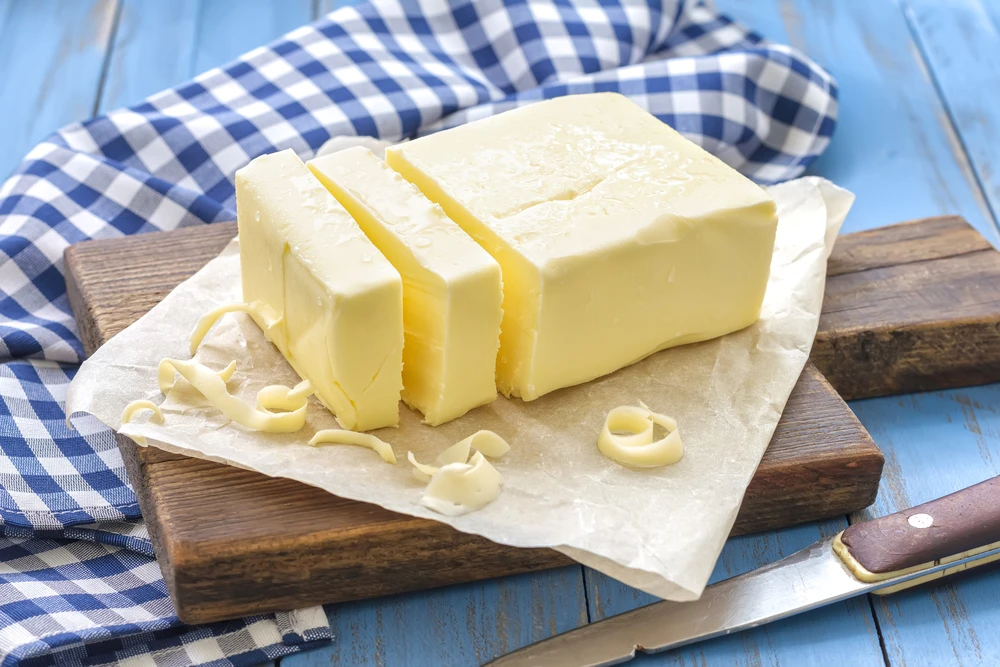
If there’s one name that sets the taste buds of Michelin-starred chefs around the world tingling, it’s that of Jean-Yves Bordier. As the last artisan to churn his butter by hand in a wooden churn, he has transformed a staple ingredient—especially in Brittany, where a meal without butter is unthinkable—into a true gourmet product. Stepping into his shop on Rue de l'Orme is a tourist experience in itself. The scent, the sound of wooden paddles clattering against the lump of butter—before you discover that butter is a true culinary adventure. With salt, of course, but also with seaweed and spices. Give it a flavor, and the Bordier family will make butter with it.
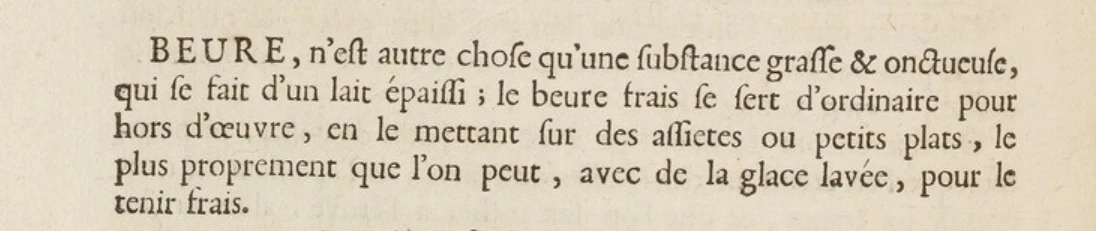
Description of butter in the 18th-century cookbook *Le Canaméliste français* by Joseph GILLIET. Photo selected by monsieurdefrance.com: screenshot from gallica.fr
The farmhouse butter speaks for itself. Even just on a slice of country bread, it’s a treat. It must be said that this isn’t simply churned milk. It’s churned butter that follows the cycle of the seasons, its color changing depending on whether the cows are grazing on lush spring grass or winter hay. Basically, the cows’ well-being is reflected in the butter, as with all good butters, but the magic happens during the salting process. Unlike industrial butters, here the salt triggers a reaction that releases water and concentrates the flavors. Tasting seaweed, yuzu, or smoked salt butter on a simple slice of bread is to understand why Saint-Malo is the world capital of taste. It’s a must-visit for any lover of culinary heritage. You’ll see that one day this butter will be classified as a Protected Geographical Indication.
There are three Maison Bordier retail locations in Saint-Malo: the Maison du Beurre at 9 Rue de l'Orme (INTRA MUROS), the Comptoir at 6 Avenue Révérend Père Umbricht (Saint-Malo Courtoisville), and the Place Gourmande on Rue de la Balue (on the outskirts of Saint-Malo).&
Do you like butter? Here's everything you need to know about French butter.
The Legacy of India: Roellinger Spices
Saint-Malo discovered the world long before anyone else. As far back as three centuries ago, privateers and merchants from Saint-Malo were already landing on the most remote islands and the most exotic shores. Saint-Malo was already drinking rum years before France discovered its flavor. As for spices, needless to say, it’s the same story: Saint-Malo has preserved the spice trade that shipowners sold inland after unloading the cargo from their great “return from the Indies” ships in front of the Grand-Porte. OLivier Roellinger, a local native and three-starred chef, has decided to breathe new life into this maritime past through his “warehouses.” His shop is a journey without moving. The scents of rare peppers, plump vanilla beans, and secret blends like “Poudre des Alizés” instantly transport you to the decks of privateer ships.
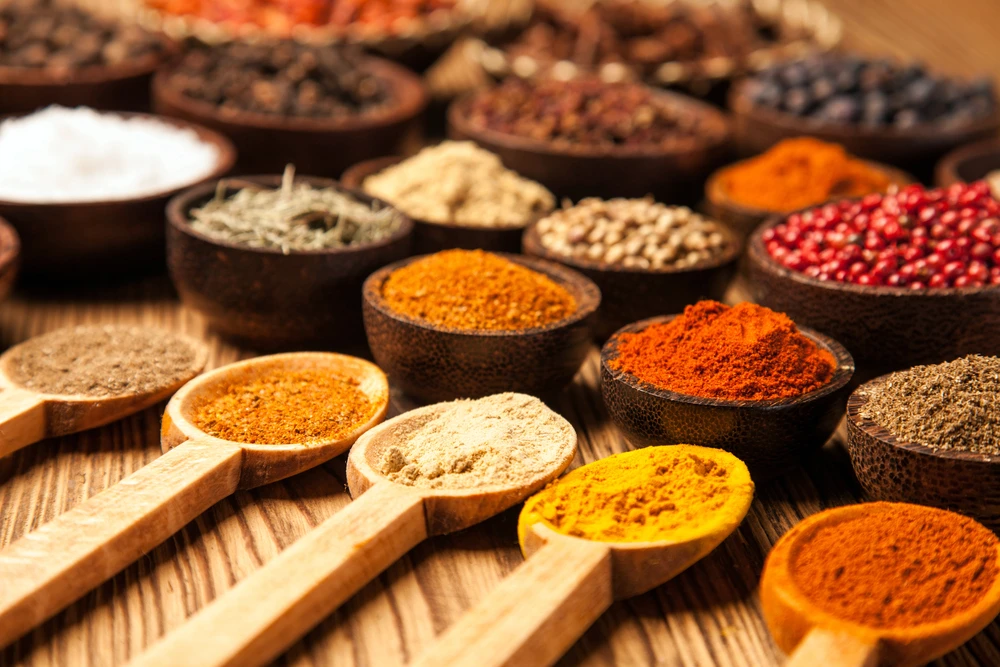
Photo selected by Monsieur de France: BrunoWeltman via Depositphotos
Roellinger spices are not mere seasonings. They are blends that connect the land of Brittany to distant horizons. Using these powders in your cooking means embracing a piece of the city’s history. The “pirate’s salt” and the shellfish blend are must-haves. It is this ability to blend local products with treasures from the far corners of the world that defines the uniqueness of Saint-Malo cuisine.
Roellinger Spices is located at 12 Rue Saint Vincent, INTRAMUROS
The jewel of the bay: the Cancale oyster
Just a stone's throw from Saint-Malo, Cancale Bay offers a unique natural spectacle that changes with the tides. This is where one of France's finest oysters is harvested. Once prized by kings, this flat or cupped oyster feeds on plankton stirred up by the powerful currents of Mont-Saint-Michel. Its taste is briny and firm, with a slight nutty note that lingers on the palate. In Cancale, you can enjoy oysters at the Port de la Houle, standing facing the boats, with a glass of dry white wine that makes life a joy.
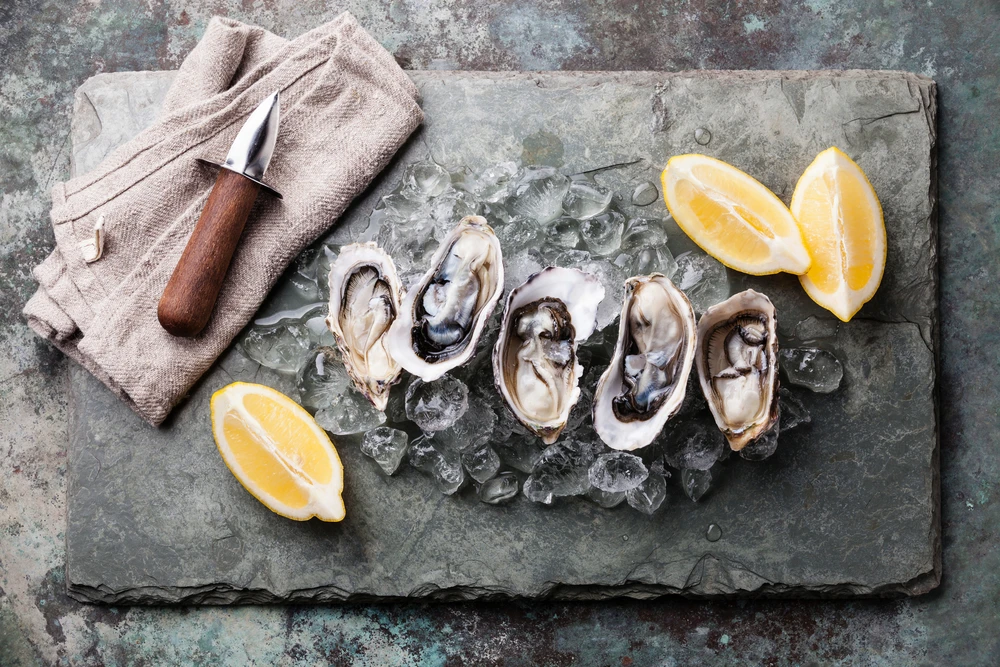
A few oysters, a squeeze of lemon for those who like it... What more could you ask for? Photo selected by Monsieurdefrance.Com: Natalia Lisovskaya / Shutterstock.Com
In Saint-Malo, we’re right in the heart of it all—needless to say, oysters take center stage on restaurant menus. The very epitome of the “short supply chain”—the shortest route from producer to consumer. A raw product par excellence, one that requires no artifice. Within the city walls, look for brasseries that clearly display their Cancalaise origin to guarantee absolute freshness.
If you love oysters, here's my complete guide.
You can also check out the 17-stop audio guide to Saint-Malo, with 3 free episodes to listen to straight on your phone..
The seafood platter: the ocean on a silver platter
In Saint-Malo, the seafood platter is a time-honored tradition held in high regard. To be worthy of the city, it must be overflowing: spider crabs, edible crabs, shrimp, whelks, and trap-caught langoustines. The golden rule is absolute freshness. It must be said that the sea is right at the foot of the ramparts and that most fishmongers and restaurant owners have a whole network of fishermen to supply them. Even during the war, there was no shortage of seafood platters. The seafood is often landed that very morning to be served just a few hours later. It’s the raw taste of the Atlantic, unadulterated, served simply with a little lightly salted butter and rye bread. It’s the ultimate Breton dining experience.
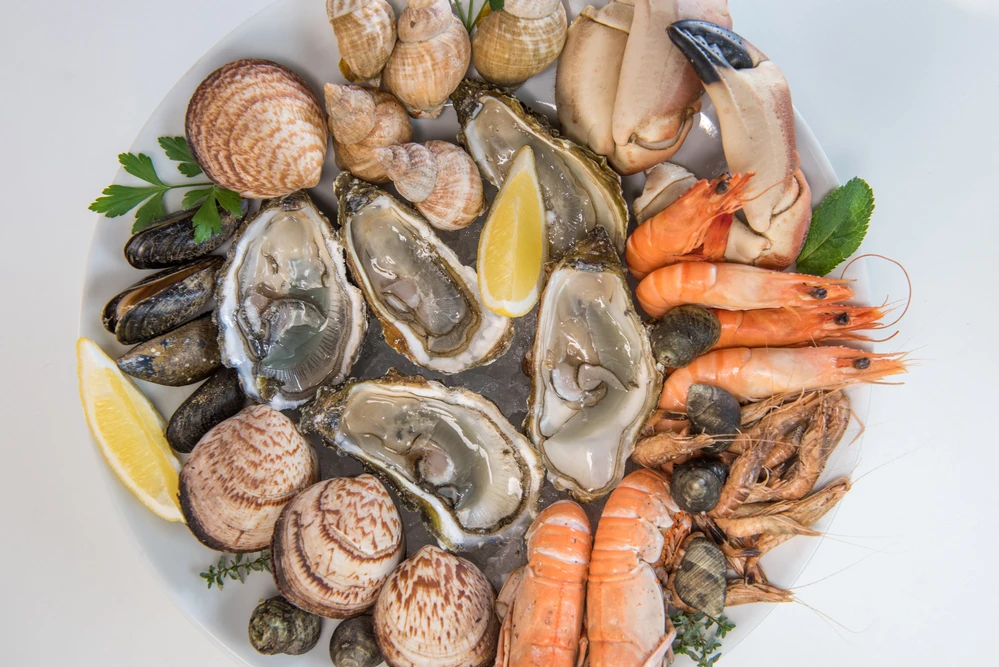
A seafood platter. Photo selected by monsieurdefrance.com: FreeProd via Depositphotos.
Bouchot mussels: the bay’s treasure
The bouchot mussels from the Bay of Mont-Saint-Michel are the only ones to hold a Protected Designation of Origin (PDO). Raised on wooden stakes—known as bouchots—to protect them from predators and sand, they have a yellow, meaty, and particularly creamy texture. Basically, they’re plump!In Saint-Malo, they’re traditionally enjoyed “marinière” style—cooked in white wine with shallots. But they’re also delicious with cream for an extra indulgent treat. I really love them cooked in cider with chorizo. It’s the ultimate comfort food, one that captures the sea breeze and the power of the great tides.
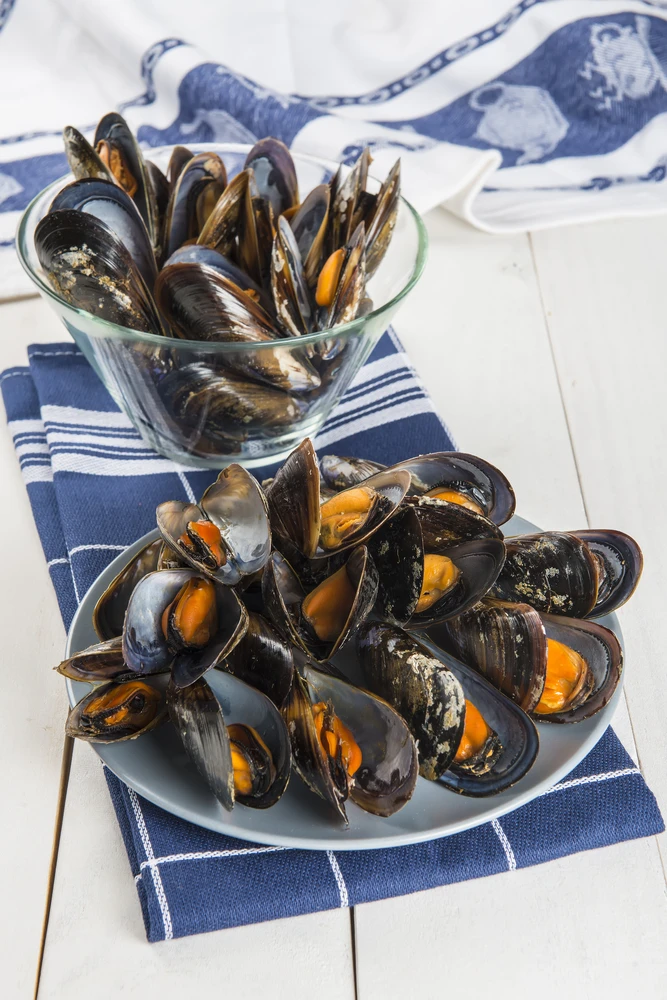
Cooked mussels / Photo selected by Monsieur de France: angelsimon from Depositphotos.
Ideas for preparing your mussels.
Crepes and Galettes: The Art of Buckwheat
depositphotos
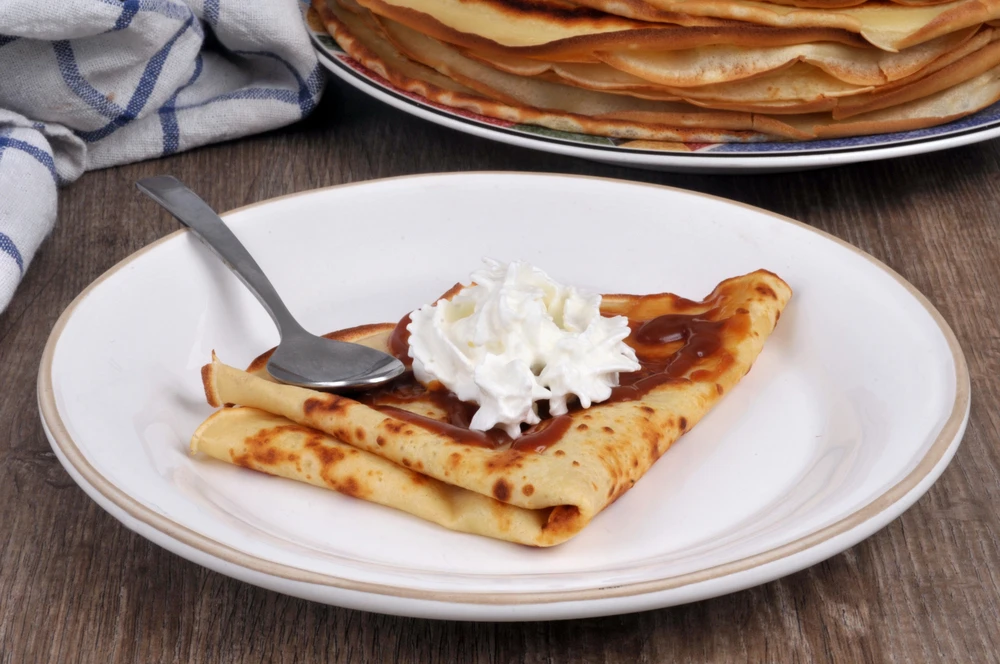
The crêpe is a Breton institution prepared with surgical precision. Here, the crêpe is called a galette. Whether sweet or savory, it’s made from buckwheat flour, reigns supreme on the Breton table, and Saint-Malo is one of the most beautiful cities in Brittany. Needless to say, people here take “the galette” very seriously. Its texture must be thin, crinkled, and crispy. We like it “complete”—that is, with cooked ham, cheese, and a fried egg on top. All of this is cooked in butter. Served with a fresh green salad on the side. But the crêperies will offer you a myriad of flavors: galette with andouille sausage, galette montagnarde, and more. The sweet version is usually called a crêpe; it can be made with buckwheat, like the galette, or with wheat flour. Often with chocolate, or better yet: with salted butter.
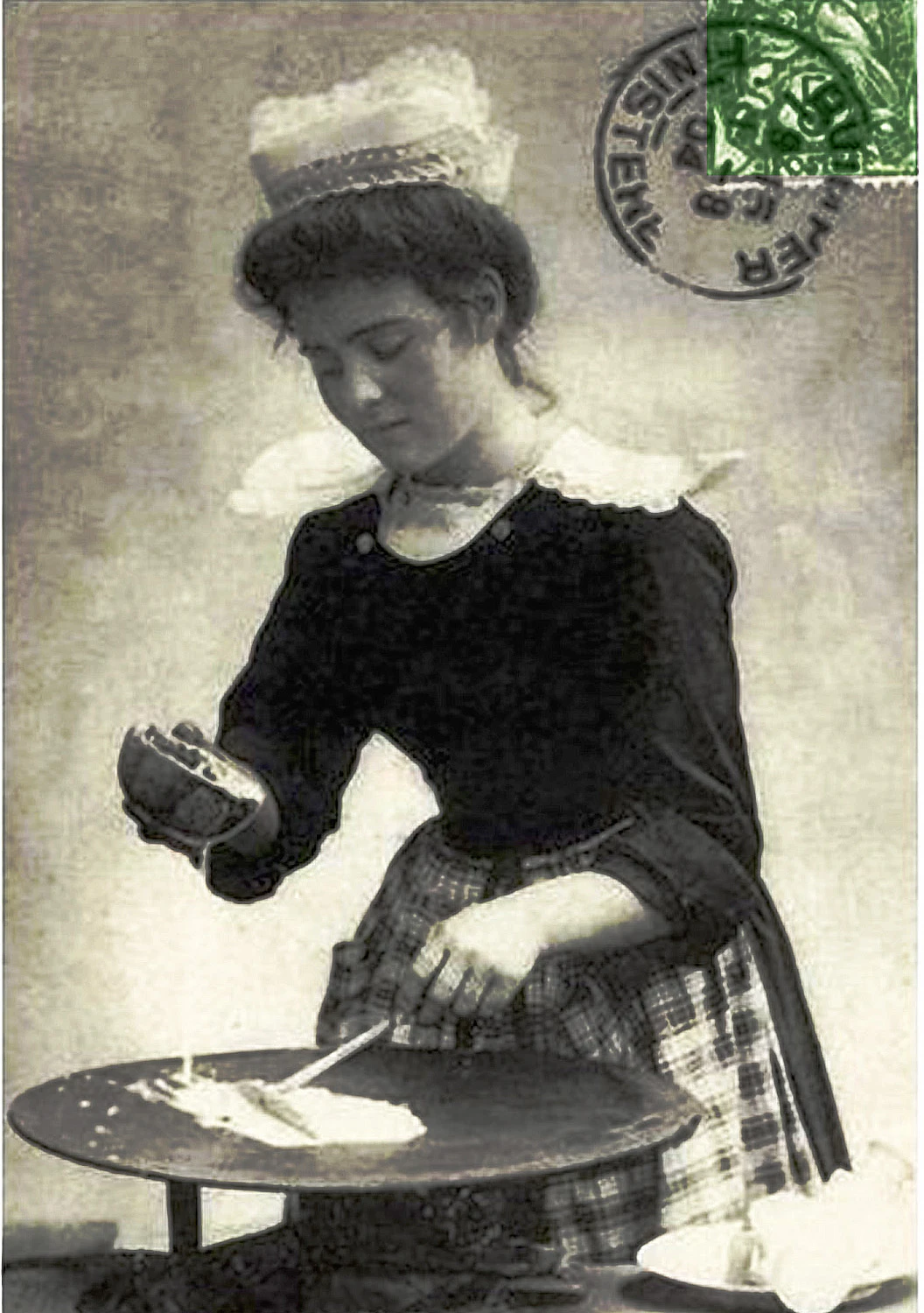
A mother from Brittany making crêpes around 1900.
The Craquelin: Sailors' Crunchy Secret
The craquelin is undoubtedly the most authentic and least well-known specialty. This small puffed bread owes its unique texture to a two-step baking process: the dough is first poached in boiling water before being baked in the oven. Historically, sailors took them along because they kept well. Today, they are enjoyed for breakfast, spread with salted butter or jam. It is a tradition that perfectly embodies the simplicity and strength of the Breton countryside. You’ll find them everywhere, but you have to know they exist.
Kouign-Amann: a sinful treat made of butter and sugar
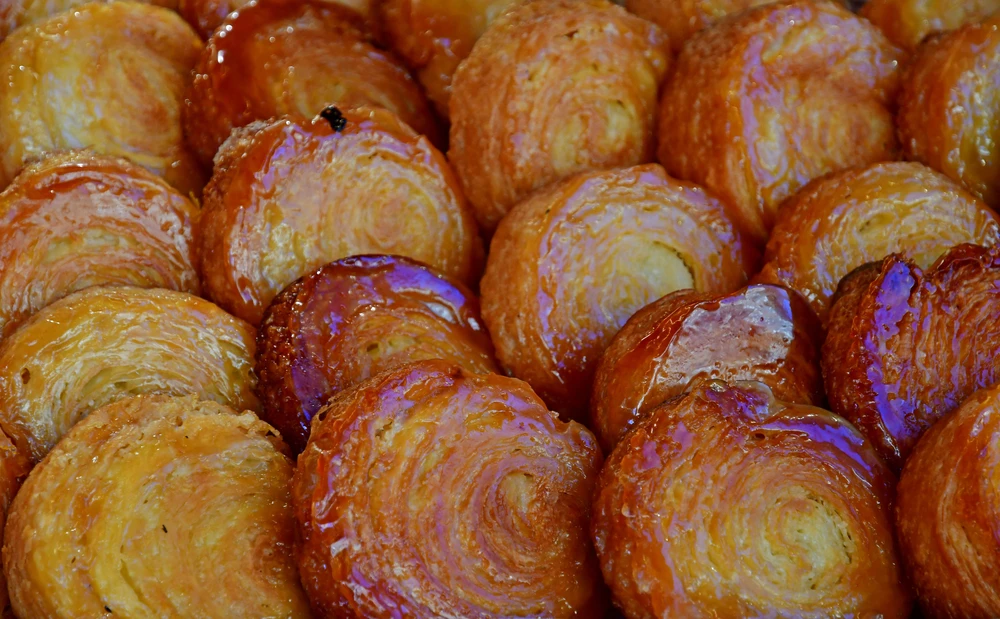
Butter, sugar, flour... Just three ingredients, and yet making Kouign Amann isn't easy. Photo selected by monsieurdefrance.com: Depositphotos.
The name literally means "butter cake." It’s true that it contains a lot of butter, along with a little flour and sugar. Legend has it that the idea came to a Breton baker who didn’t have much flour but had plenty of butter. It consists of layers of bread dough, sugar, and butter that caramelize during baking. To truly enjoy a kouign-amann in Saint-Malo, it must be handmade and eaten warm. It is at this temperature that the sugar cracks under your teeth while the center remains melt-in-your-mouth and rich.
The official recipe for Kouign-amann is here.

Salted butter caramel.
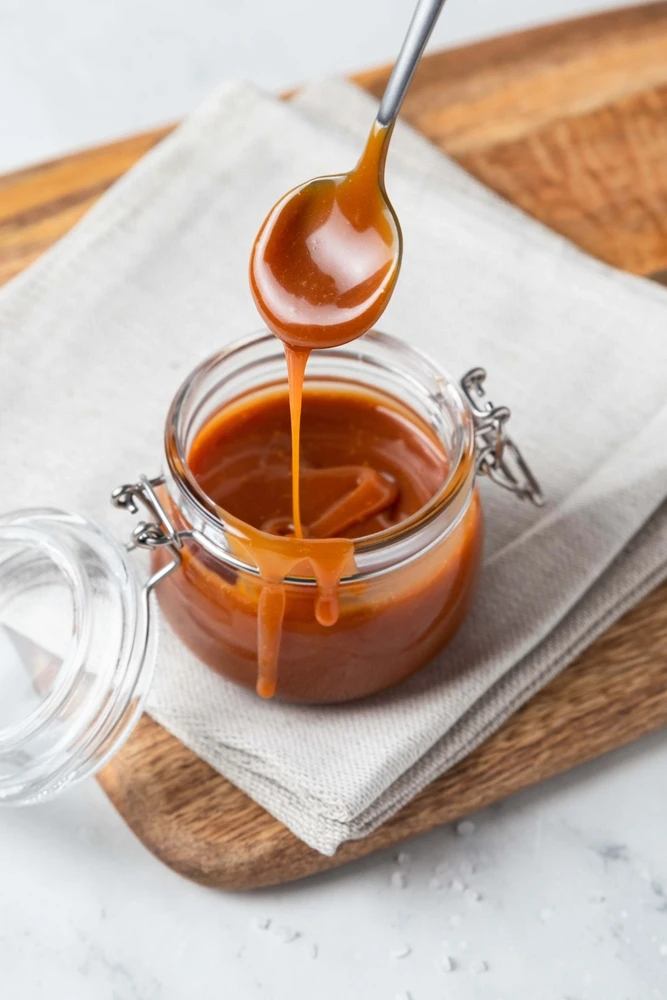
Salted butter caramel with the perfect texture. Photo selected by monsieurdefrance.com: Depositphotos.
Salted butter caramel is the big culinary surprise for tourists in Brittany. It’s impossible to describe the flavor—you just have to taste it. And rest assured: you’re going to love it.
The success of this confection lies in the delicate balance between the sweetness of caramelized sugar, the creaminess of crème fraîche, and a pinch of sea salt, which acts as a natural flavor enhancer. A staple of Breton cuisine, it is now available in many different forms:
-
The candy: Whether soft or hard, it's the classic souvenir from a beach vacation.
-
Caramel cream (or salidou): A smooth, creamy texture that's perfect for spreading or serving with pancakes.
-
Caramel sauce: Used as a topping for ice cream, cakes, or roasted fruit.
Here's the recipe for making your own salted butter caramel.

FAQ: Saint-Malo Culinary Specialties
Where can you find the best bouchot mussels in Saint-Malo?
Look for establishments displaying the AOP label for the Bay of Mont-Saint-Michel. The best time to enjoy them is from July through February, when the mussels are at their best in terms of quality and size.
What's the secret to a good Breton galette?
It all comes down to the quality of the buckwheat flour and the final addition of butter. A galette without salted butter isn't a galette worthy of the name for someone from Brittany.
Why is butter always salted in Saint-Malo?
This is a historical legacy stemming from the absence of a salt tax in Brittany. Salt has become the essential natural preservative and flavor enhancer in local cuisine.
Can you bring back some Bordier butter after your trip?
Yes, the shop offers insulated packaging. It’s the most popular culinary souvenir among foodies visiting the historic center of the pirate city.
Which cider should you choose to pair with your seafood platter?
Opt for a dry or extra-dry cider. Its crispness and acidity perfectly cut through the richness of the shellfish and the salted butter.
Where can I find the best salted butter caramel?
The artisanal candy shops in the city center make their own caramel. Look for jars with a short list of ingredients: sugar, salted butter, cream, and nothing else.
Are the crêpes from Saint-Malo different from those in the rest of Brittany?
In Saint-Malo, people love thin, crispy galettes topped with seafood such as scallops or local charcuterie.
How can you tell if a kouign-amann is homemade?
A real kouign-amann should have a strong buttery aroma and a caramelized base that holds its shape when bitten into. If it’s dry or uniformly sweet, it’s mass-produced.
Which oysters should you choose from a restaurant menu?
Try the oysters from Cancale. They’re farmed right nearby and have a unique mineral flavor thanks to the bay’s strong currents.
What's the one mistake you should avoid making at a restaurant in Saint-Malo?
Never ask for unsalted butter. It’s a strategic mistake that will immediately mark you out as a tourist unfamiliar with the traditions of Breton cuisine.
Jérôme Prod'homme Expert in French heritage, gastronomy, and tourism. Check out all my discoveries at monsieur-de-france.com.
Learn more about Saint-Malo
- Visiting Saint-Malo: The Complete Guide to the Pirate City
- Explore Saint-Malo with an immersive audio guide that reveals all its secrets
- The Ramparts of Saint-Malo: The City’s Most Beautiful Walk
- What to See in Saint-Malo in a Weekend? The Must-Sees
- Dinan: The Stunning Medieval Town Near Saint-Malo
- Dinard: The Elegant Gem of the Emerald Coast
- Discover Brittany and the Emerald Coast
- If you love Brittany, here’s what I loved