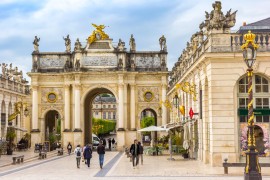
What are the best outings to do around Nancy? For a successful excursion around Nancy, don't miss the Château de Lunéville and the Château d’Haroué. For heritage and nature, the city of Metz, the Hill of Sion, and the famous Sainte-Croix Wildlife Park are essential stops. For local flavors, prioritize Toul and its vineyards, as well as the House of Mirabelle in Rozelieures.

Getting ready for your trip to Nancy? Choosing the right location will make your stay much easier and more enjoyable:
👉 Find a well-located hotel in Nancy
👉 Check the best deals available for your dates
👉 Where is the best area to stay in Nancy?
👉 What are the must-see places in Nancy?
This article may contain affiliate links. This does not change the price for you, but helps support the Monsieur de France website.
1. The Castles: The splendor of the Enlightenment in Lunéville and Haroué
Lorraine is a land of castles, a direct legacy of the former power of the duchy, which, it should be remembered, was an independent state until 1766. Two major buildings stand out in the immediate vicinity of Nancy, each telling a story about the aristocracy and, above all, the art of living during the Age of Enlightenment.
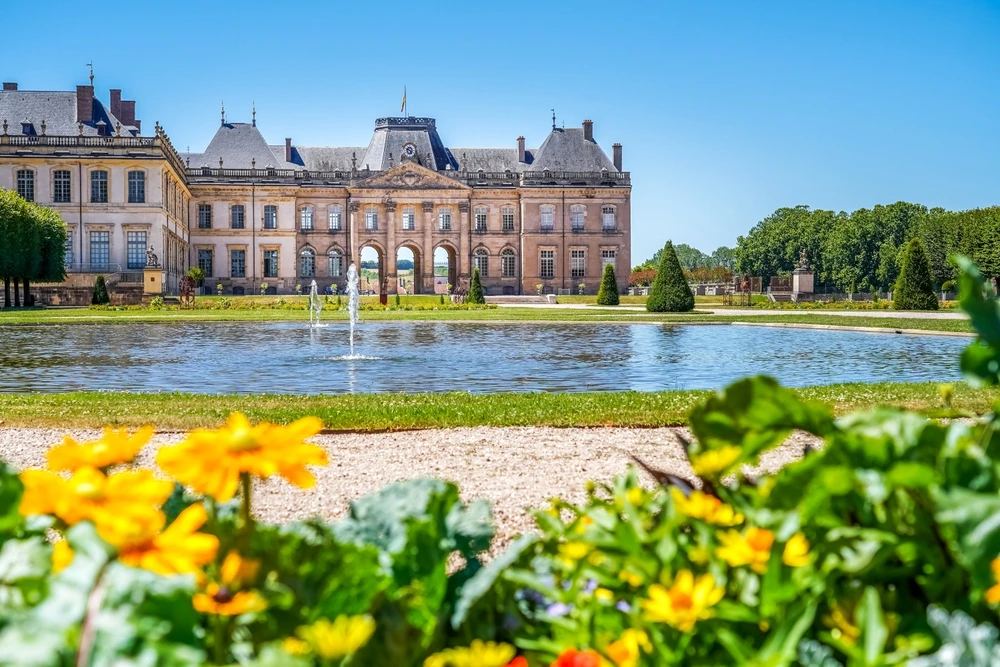
Lunéville Castle seen from the gardens / Photo selected by Monsieurdefrance.com: Shutterstock.com
The Château de Lunéville: The Shadow of Stanislas
Nicknamed the "Little Versailles of Lorraine," the Château de Lunéville was the favorite residence of Stanislas Leszczynski, father-in-law of Louis XV. Built by order of Duke Leopold in the early 18th century, it stands in the heart of a town that is also well worth a visit. This prestigious building has welcomed some of the greatest names of the 18th century, including Voltaire, who said, "Lunéville felt like Versailles."
After a terrible fire in 2003 and a colossal restoration, the building has regained its Baroque splendor. Today, visitors can explore the chapel, a few rooms (work is still ongoing), and the magnificent French gardens, known as "les Bosquets," which cover more than 20 hectares. It was here that the spirit of the Enlightenment truly shone in Lorraine.
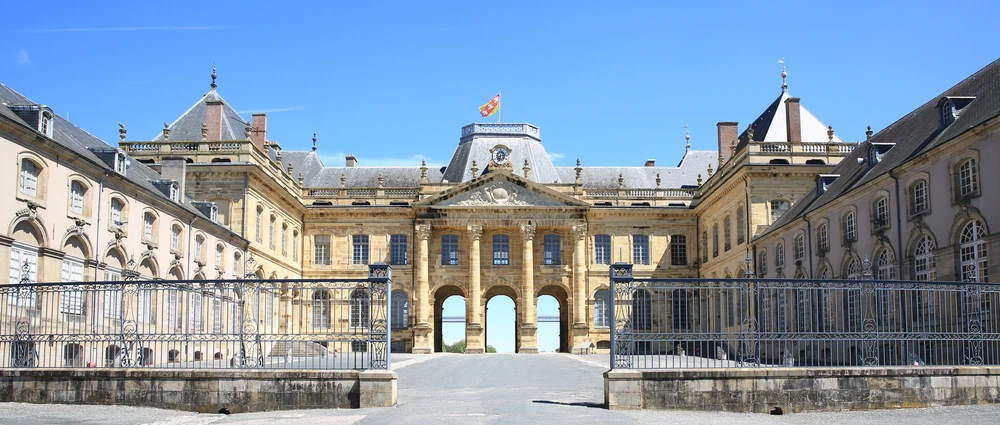
View of Lunéville Castle from the Cour d'honneur. At the top: the flag of Lorraine, emblem of the Dukes of Lorraine with three silver alerions / Photo selected by Monsieurdefrance.com: Traveller70/shutterstock.com
-
Opening hours: Gardens open daily (free admission). Castle open from 10 a.m. to 6 p.m. (closed on Tuesdays).
-
Prices: Approximately €7 for the permanent indoor course. Free for children under 18.
-
Access: 35 km (30 min by car) | 20 min by train (TER).
The Château d'Haroué: A palace in the countryside.
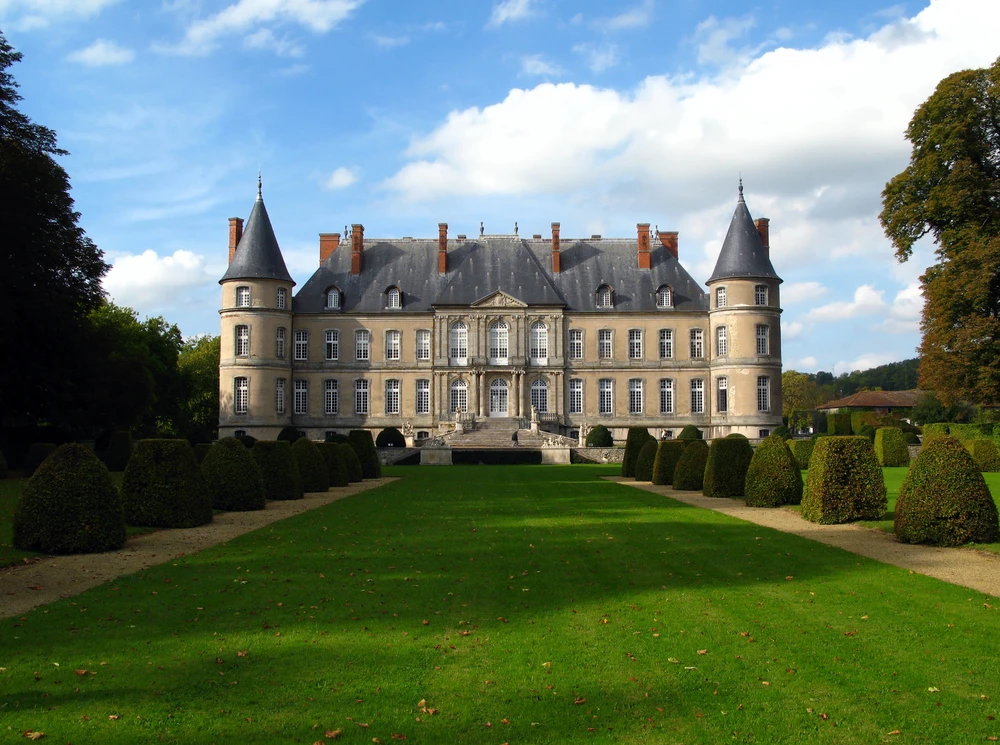
Haroué Castle: a palace in the countryside / Photo selected by Monsieurdefrance.Fr: Mihai-Bogdan Lazar/Shutterstock
Located in a valley in the Saintois region, the Château d'Haroué is a masterpiece of classical architecture designed by Germain Boffrand. It has a fascinating feature: it is built on the model of the calendar, with 4 bridges for the seasons, 12 interior and exterior towers, 52 interior fireplaces, and 365 windows. Its interior decoration is reminiscent of grand palaces, with its gilded salon and wood paneling, the personal furniture of King Louis XVIII, and the delightful Pillement salon with its unique chinoiserie items found nowhere else outside Paris. Haroué is also a family, the Beauvau Craon family, whom you are sure to meet. If you only see one French château in your lifetime, this is the one.
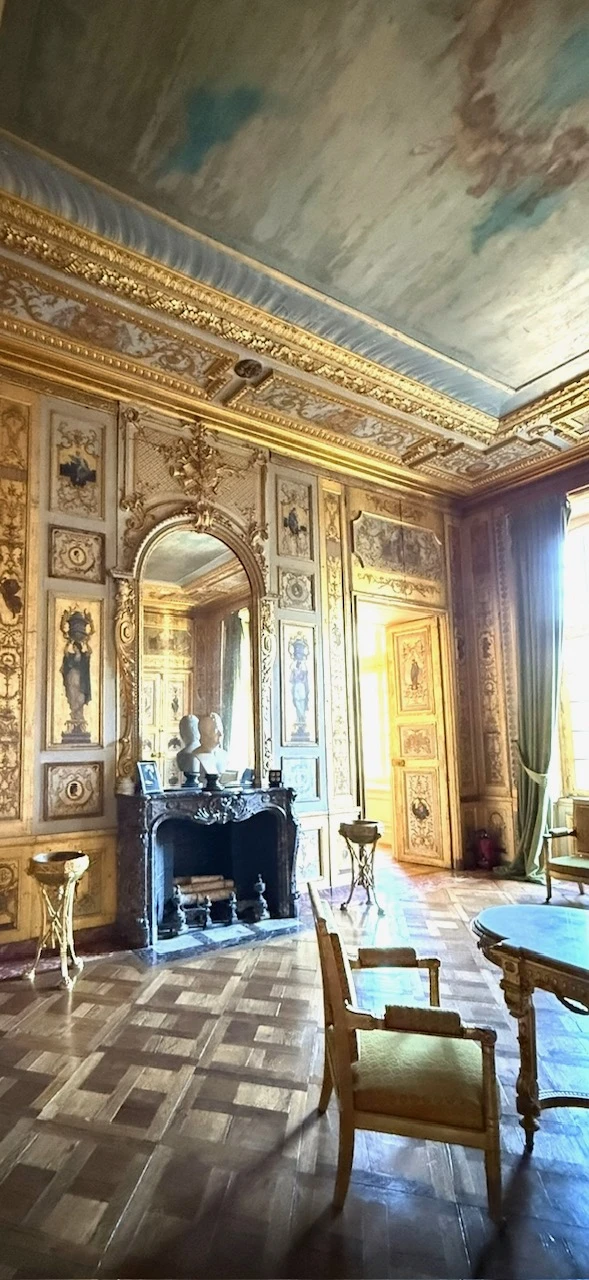
Haroué Castle: the golden salon / (c) Jérôme Prod'homme
-
Opening hours: Open from May to September, usually from 10 a.m. to 6 p.m.
-
Prices: Guided tour approximately $10 (adult).
-
Access: 30 km (30 min by car).
Where to stay in Nancy to explore the surrounding region?
Nancy is an excellent base if you want to explore the region of Lorraine. From the city you can easily take day trips to places such as Lunéville and its famous château often called the “Versailles of Lorraine”, the historic city of Metz with its impressive cathedral, or the vineyards and fortified towns around Toul.
To prepare your stay and compare accommodation depending on your dates and budget, you can check:
• available hotels in Nancy ↗
• hotels in Nancy city centre ↗
• well-located hotels for visiting the area around Nancy ↗
This allows you to quickly see availability, guest reviews and prices depending on the time of your visit.
This article may contain affiliate links. This does not change the price for you but helps support the Monsieur de France website.
2. Toul and its vineyards: Between flamboyant Gothic architecture and local terroir
West of Nancy, Toul is an ancient episcopal city whose skyline is marked by its Vauban ramparts and monumental cathedral.
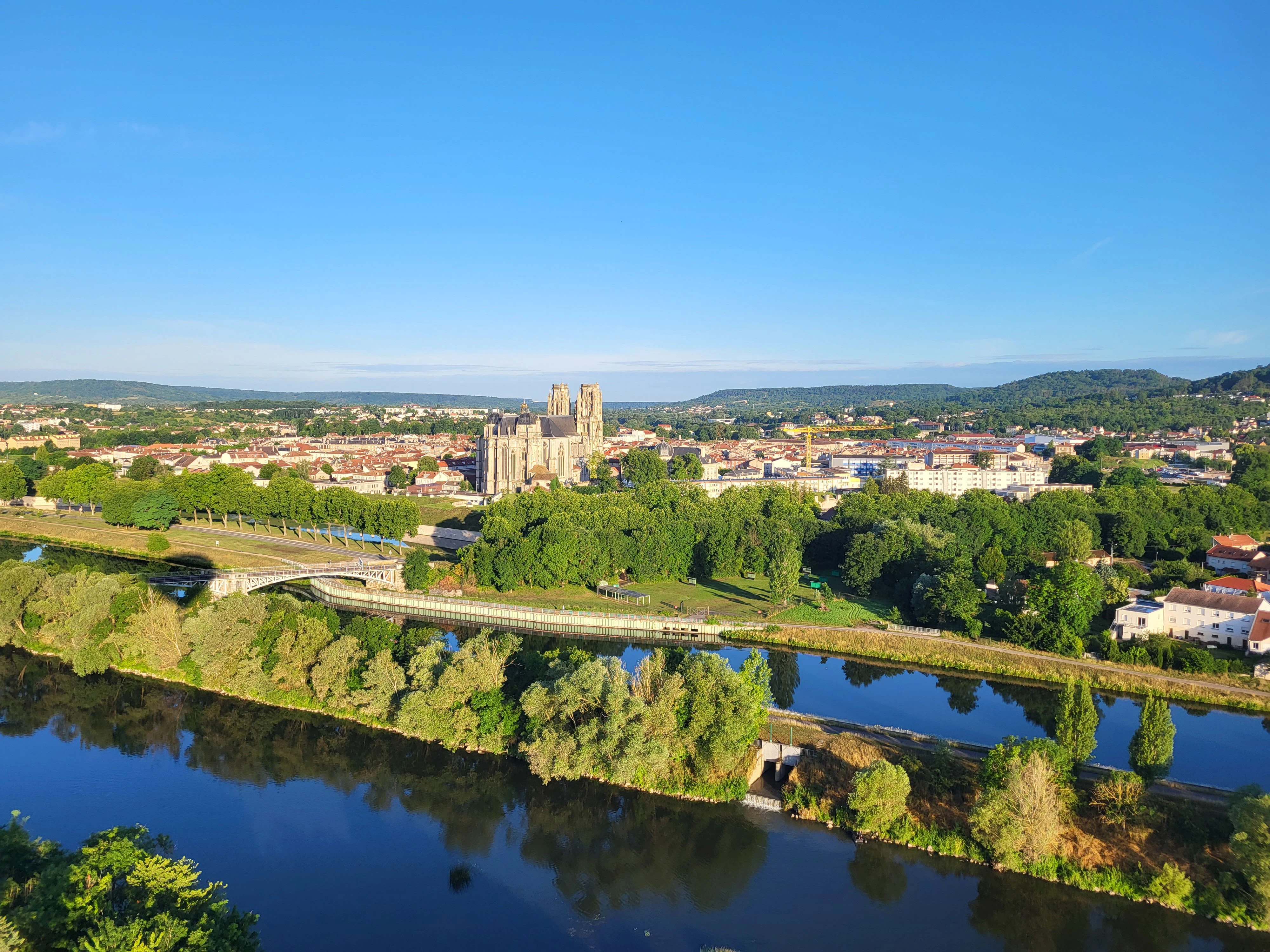
The cathedral in the heart of the city, surrounded by ramparts and a bend in the Moselle River. Photo selected by Monsieurdefrance.com: Jérôme Prod'homme.
Saint-Étienne Cathedral is one of the finest examples of High Gothic architecture in France. Its cloister, one of the largest in the country, is a haven of peace where time seems to stand still. The city is also worth visiting for its impressive ramparts, part of which were designed by Vauban. Toul is also the capital of a thousand-year-old vineyard that benefits from an AOC designation. The great local specialty is Vin Gris de Toul, a salmon-colored rosé wine with aromas of red berries, ideal for accompanying a quiche Lorraine or a pâté en croûte.
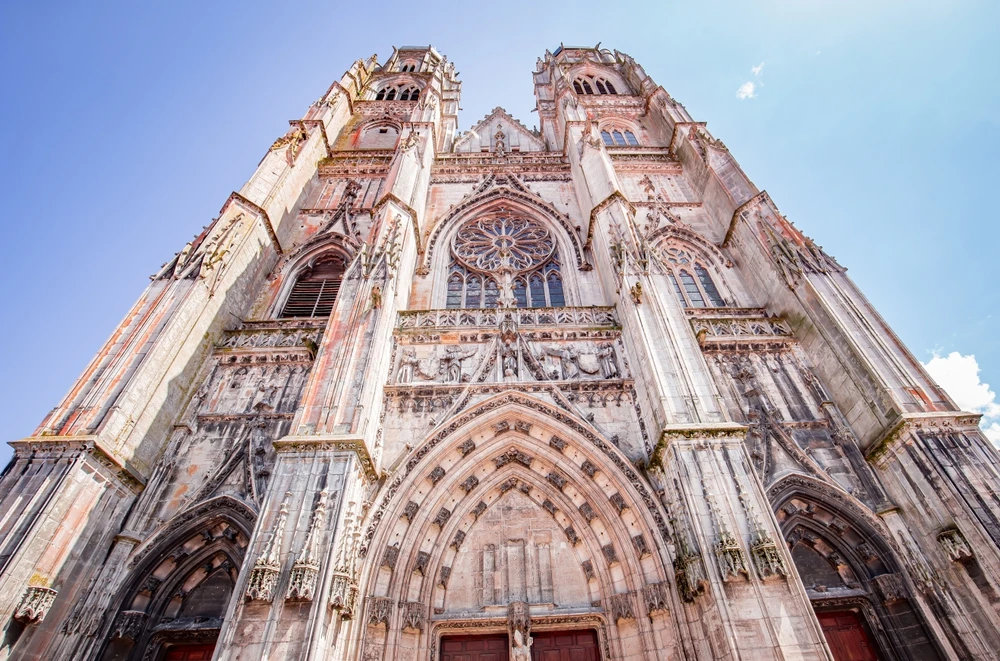
The stunning façade of Saint Stephen's Cathedral in Toul / Photo selected by Monsieurdefrance.Fr: Isogood_patrick/Shutterstock
-
Opening hours: Cathedral open from 9 a.m. to 6 p.m. (except during services). Wine cellars (Bruley, Lucey) open Monday to Saturday.
-
Prices: Free admission to the cathedral and cloister. Tastings are often offered free of charge or for a fee (around €5).
-
Access: 25 km (25 min by car) | 20 min by train (TER).
3. Places of character: Liverdun, Sion, and Sainte-Croix
These three sites alone embody the diversity of Lorraine's identity, spanning the Middle Ages, spirituality, and wildlife.
Liverdun: The medieval town and the Madeleine
Perched on a rocky outcrop overlooking a majestic bend in the Moselle River, Liverdun transports visitors back to the Middle Ages with its cobbled streets and tall gate. The village is also famous for its authentic Madeleine de Liverdun, a traditional treat that has been made locally since the early 20th century, with a recipe that remains a closely guarded secret.
-
Opening hours: Open all year round. The Madeleines de Liverdun shop is open Tuesday to Saturday.
-
Prices: Free (access to outdoor sites).
-
Access: Liverdun (20 min by car/train) | Sion (45 min by car).
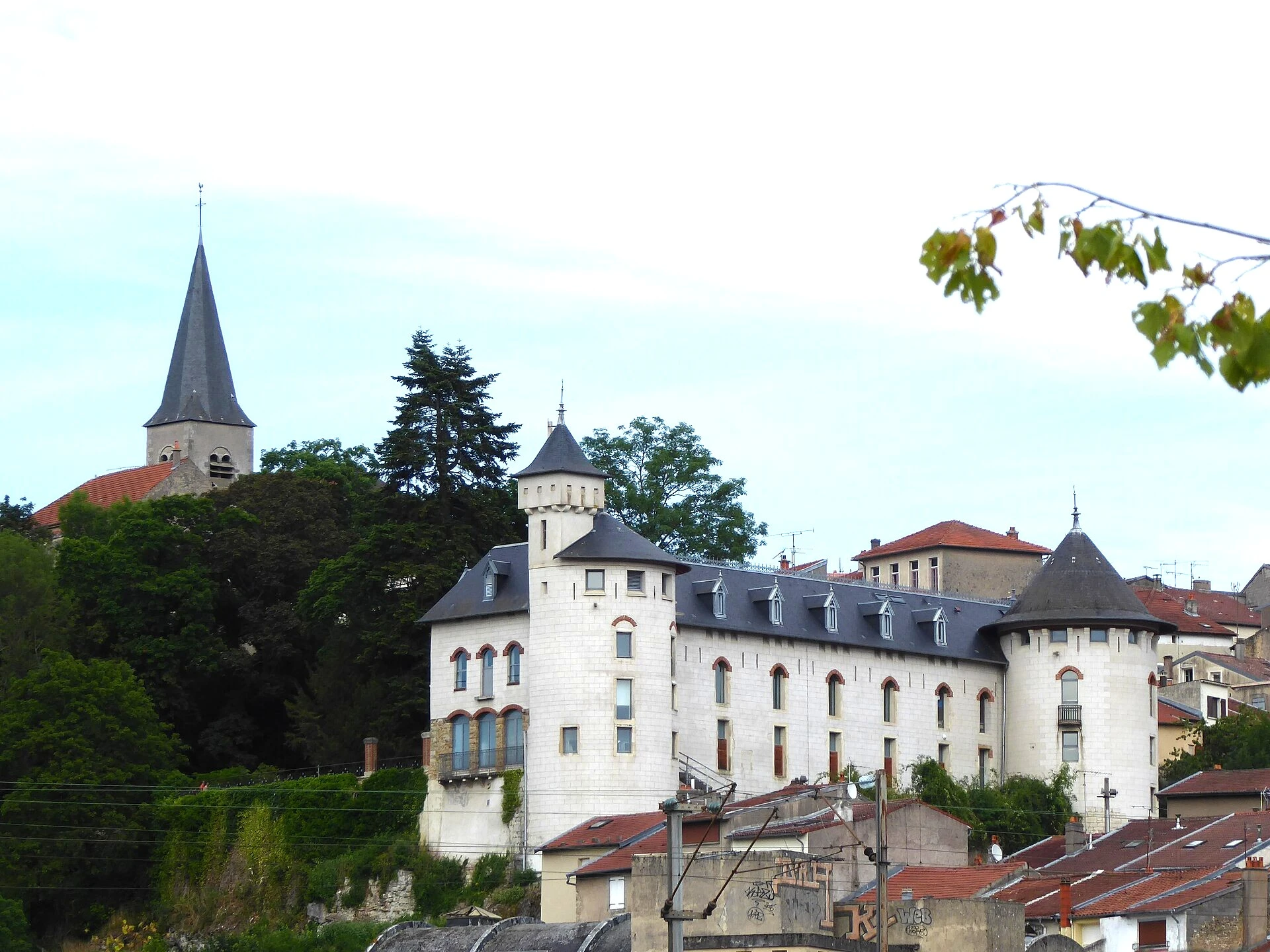
Liverdun / Photo selected by Monsieur de France: By Musicaline — Own work, CC BY-SA 4.0, https://commons.wikimedia.org/w/index.php?curid=67251317
The Hill of Sion-Vaudémont:
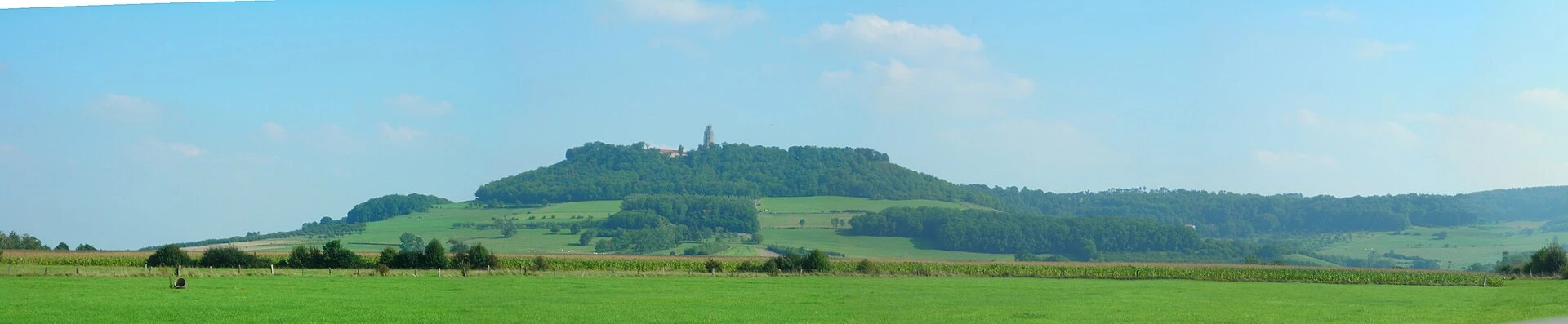
The hill of Sion seen from below / photo chosen by Monsieur de France: By Carl-9000 — Own work, Public domain, https://commons.wikimedia.org/w/index.php?curid=3325341
It deserves its beautiful nickname, "Inspired Hill." A spiritual and historical landmark overlooking the Saintois plain, Sion Hill is crowned by a famous basilica. Hikers eagerly search for the famous "stars of Sion," small star-shaped fossils that litter the ground and delight children. The view stretches far into the distance. You can see the castles of Haroué and Thorey Lyautey, and on a clear day, you can even see the Vosges mountains.
-
Access: 40 km (45 min by car).
Parc Sainte-Croix: A wild immersion
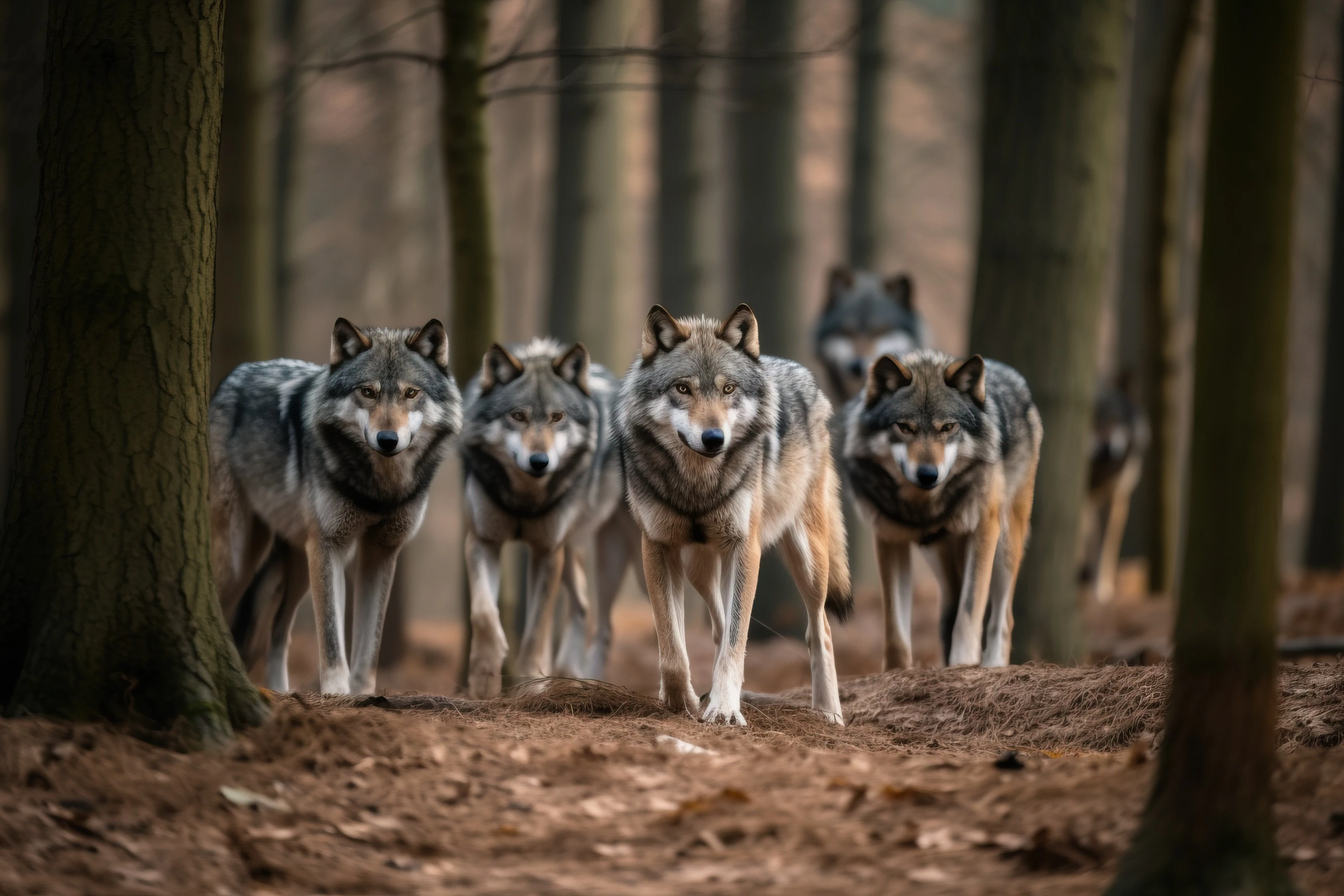
Wolves can be seen at Sainte Croix Park / Photo selected by Monsieur de France by Larry Clark from Pixabay.
Located in Rhodes, this park has become a European benchmark for observing wildlife in our climate. Covering more than 120 hectares, you can get up close to wolves, bears, bison, and deer. There are real wolves and farm animals to see, too, for the children. It is a favorite excursion for families and nature lovers, offering a complete escape just an hour from the city.
-
Opening hours: Open from April to November, from 10 a.m. to 6 p.m. (until 7 p.m. in summer).
-
Prices: Approximately €28 (adults) and €20 (children).
-
Access: 75 km (1 hour by car).
4. Metz: The magnificent city of stone and light
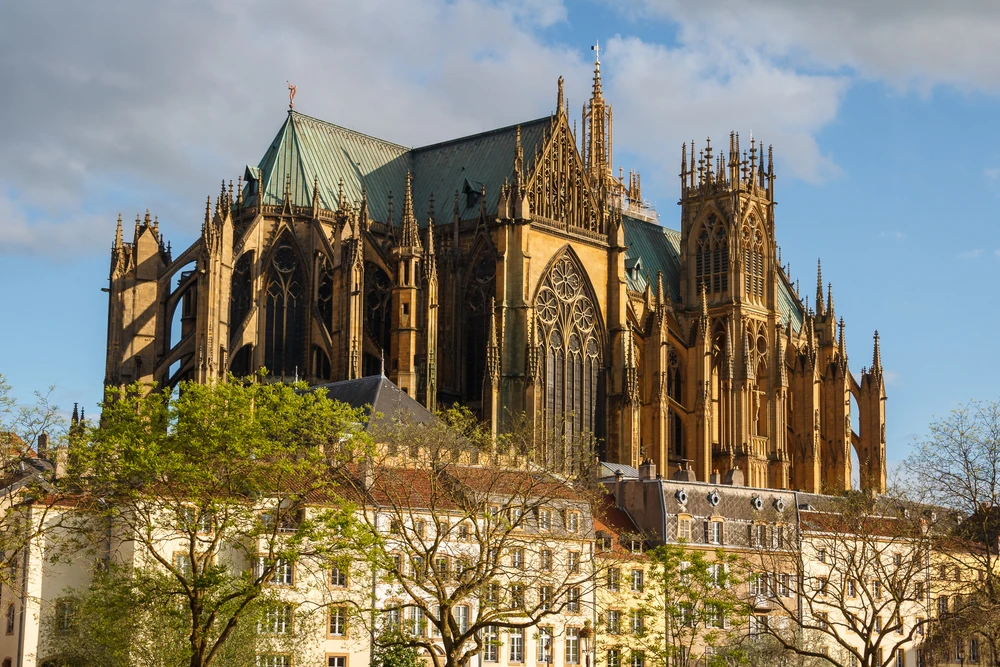
Metz Cathedral is made of Jaumont stone. Photo selected by monsieurdefrance.com: Lev Levin / Shutterstock.
Lorraine is fortunate to have many large and beautiful cities. Just 50 kilometers north of Nancy, the scenery changes completely. Here, Jaumont stone, a yellow ochre limestone, gives the city a unique golden light.
The Cathedral, nicknamed "the Lantern of God," has the largest area of stained glass windows in Europe, with works dating from the Middle Ages to Marc Chagall. Metz is also a city of contrasts with the Centre Pompidou-Metz, a jewel of contemporary art with bold architecture. There is nothing more pleasant than strolling through the narrow streets around the cathedral or the majestic avenues of the imperial district.
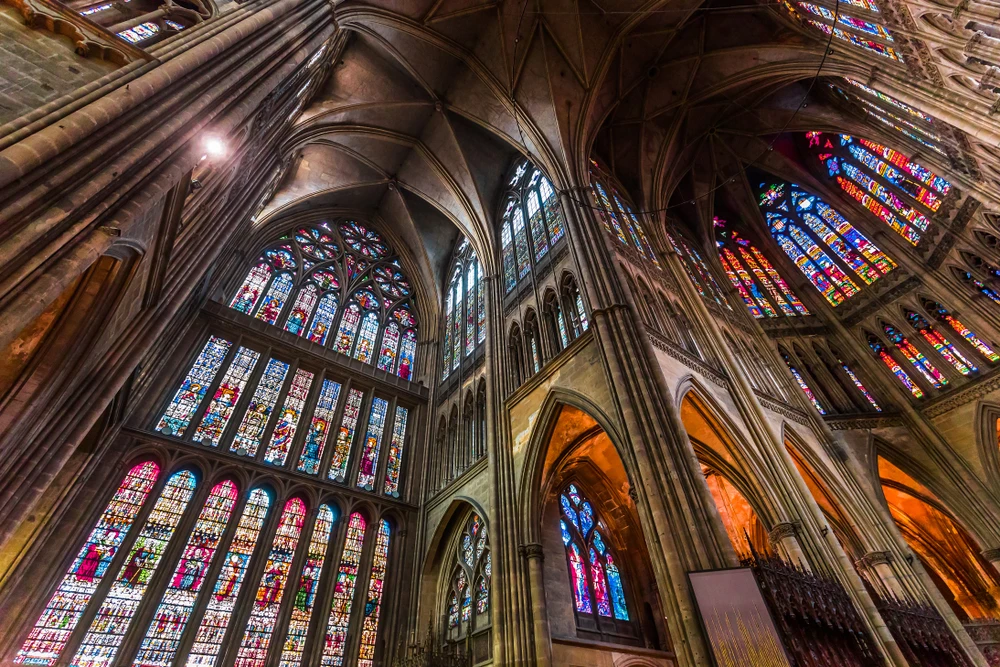
The stained glass windows in Metz Cathedral are spectacular—don't miss them. Photo selected by monsieurdefrance.com: Shutterstock.
-
Opening hours: Cathedral (8 a.m. to 6 p.m.). Centre Pompidou-Metz (10 a.m. to 6 p.m., closed on Tuesdays).
-
Prices: Cathedral: free. Centre Pompidou: approximately $10 to $14 depending on the exhibition.
-
Access: 55 km (50 min by car) | 37 min by train (Metrolor).
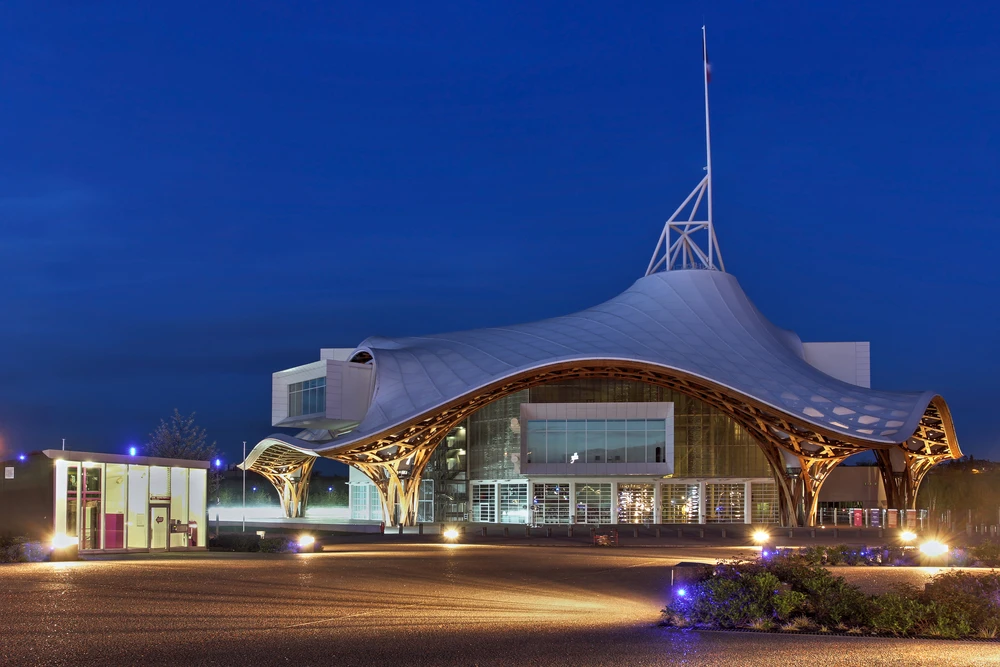
The Pompidou Center Metz at nightfall. Photo selected by Monsieurdefrance.com: Shutterstock.com
5. La Maison de la Mirabelle: The golden fruit in Rozelieures
Lorraine produces 70% of the world's mirabelle plums, the small, sweet yellow fruit that is the emblem of the region. In Rozelieures, the Grallet-Dupic family has created a unique place. Here you can discover the secrets of artisanal distillation and the famous Whisky G. Rozelieures, the first Lorraine whisky to be recognized worldwide for its quality and character. You can also discover mirabelle plum perfume and even shampoo. It's an amazing and welcoming place, just like the people who live here.

Golden brown, we always fall for mirabelle plums at the end of summer in Lorraine. Photo chosen by Monsieur de France: Shutterstock
-
Opening hours: Shop and discovery area open from 10 a.m. to 12 p.m. and from 1:30 p.m. to 6 p.m.
-
Prices: Discovery tour approximately €5 (including tasting). Free for children.
-
Access: 35 km (40 min by car).
6. The Vosges Mountains: Between lakes and ridges
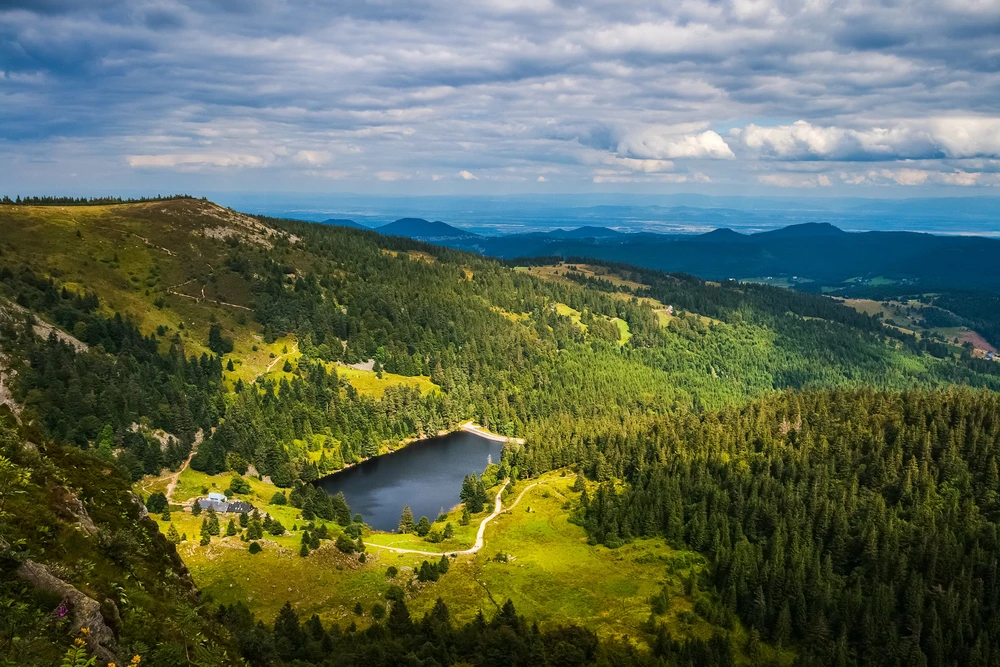
The Vosges are a land of nature and fresh air / Photo selected by Monsieur de France: depositphotos.
Just over an hour's drive away, the landscape changes dramatically. The plains give way to fir trees and the Vosges mountains.
Gérardmer and La Bresse. Gérardmer, "the Pearl of the Vosges," is famous for its magnificent glacial lake, its hiking trails, and its renowned household linens. In winter, the town and its neighbor La Bresse become a mecca for skiers. In summer, you can enjoy incredible hikes along the ridge road near La Schlucht, with views stretching as far as the Alps on a clear day. For a touch of spa history, visit Plombières-les-Bains, the town of a thousand balconies, where Napoleon III liked to take the waters, which is not far away.
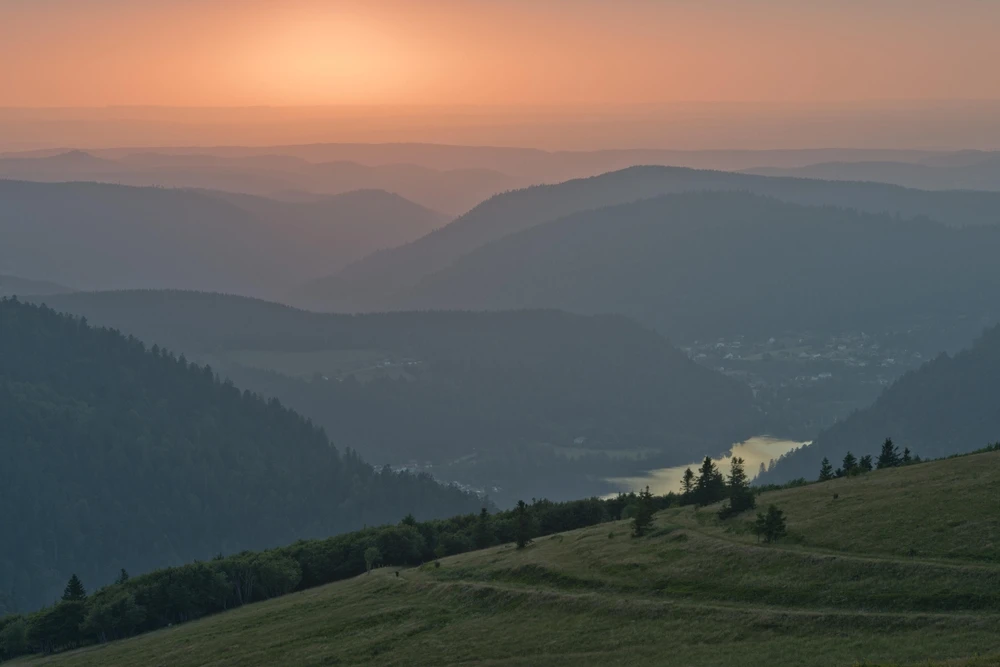
The view from Honneck is magnificent / Photo chosen by Monsieur de France: rimagebrokermicrosto via depositphotos
-
Opening hours: Free access to lakes and ridges. Ski resorts (8:30 a.m. to 5 p.m. during the season).
-
Prices: Free for natural sites. Boat/pedal boat rental approximately $15-20.
-
Access: 105 km (1 hour 20 minutes by car).
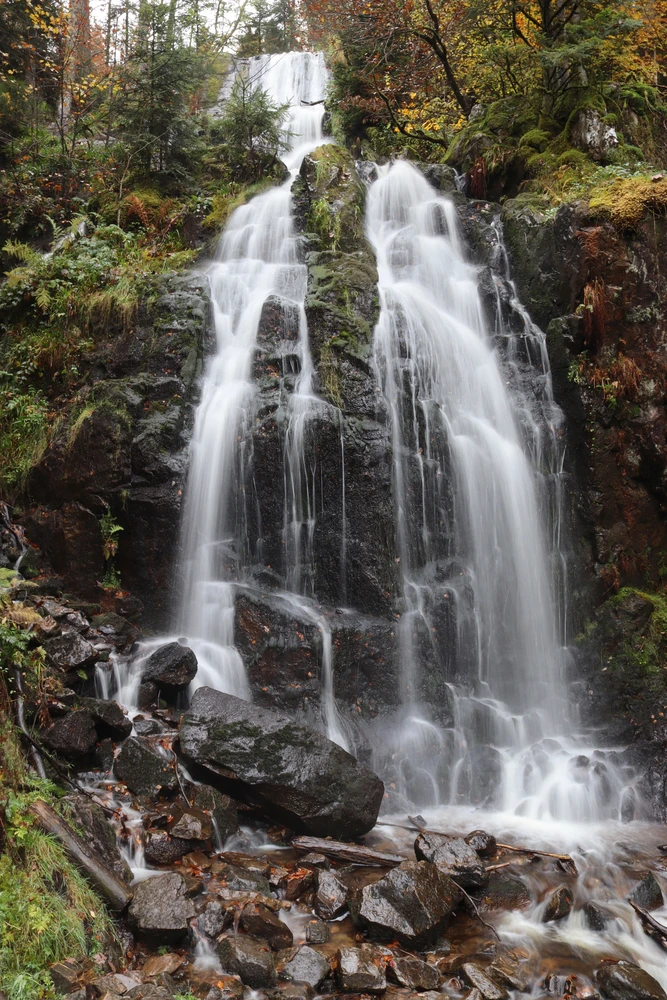
The great waterfall of Tendon / Photo chosen by Monsieur de France: Imladris via depositphotos
7. Thermal Spas: Vittel and Contrexéville
To the west of the mountain range, in the Vosges plain, these two towns embody the elegance of the Belle Époque spa era.

Vittel is one of France's most renowned spa resorts / photo selected by Monsieur de France: shutterstock.
Architecture and Well-being. Vittel and Contrexéville offer immense thermal parks and prestigious thermal architecture, designed by the greatest names of the era, such as Charles Garnier, who designed Vittel. It is the ideal destination for a wellness break in a green and peaceful setting (the Vittel thermal park covers more than 200 hectares), combining traditional thermal baths and modern spas.
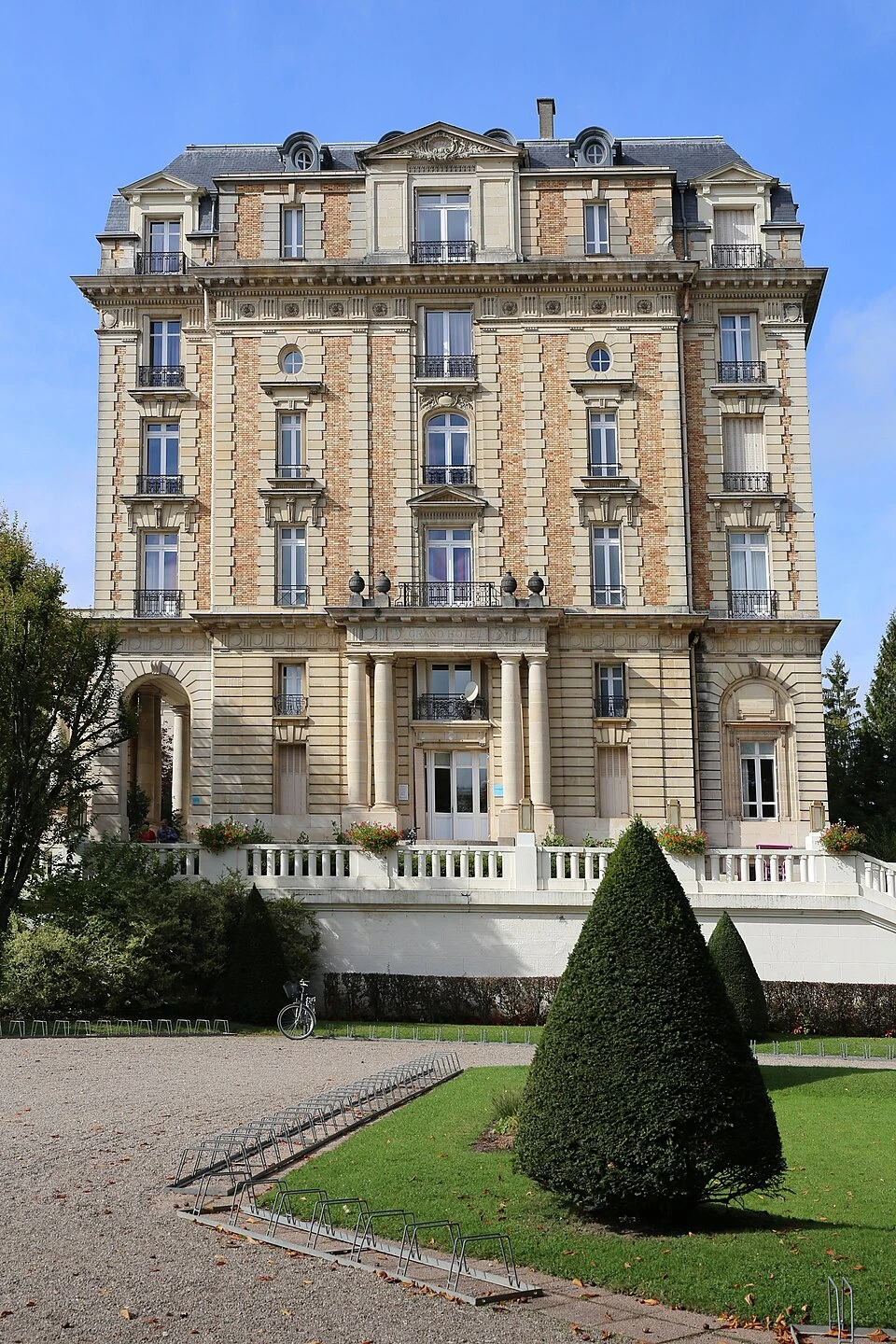
The Grand Hotel in Vittel is a fine example of the Belle Époque architecture that characterizes Vittel / Photo selected by Monsieur de France: By Pymouss — Own work, CC BY-SA 4.0, https://commons.wikimedia.org/w/index.php?curid=36259602
-
Opening hours: Parks open all day. Spas and thermal baths (9 a.m. to 6 p.m.).
-
Prices: Free parking. Spa/Wellness access starting at €25-30.
-
Access: 90 km (1 hour and 5 minutes by car).
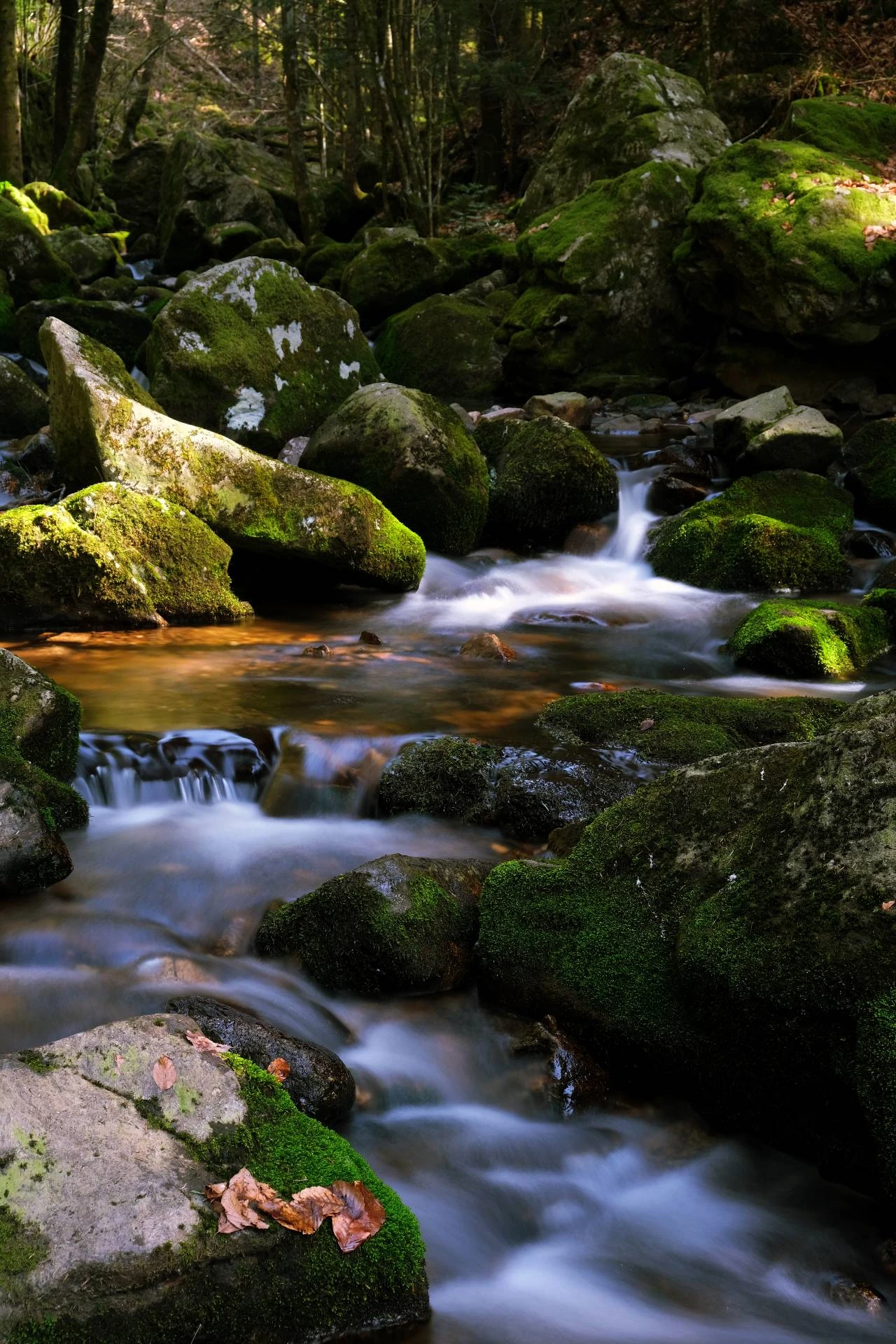
The Géhard stream at Girmont Val d'Ajol / ©Remiremont Plombières Tourist Office.
FAQ: Organizing your excursions around Nancy
What outings are best with children?
The Parc Sainte-Croix is undoubtedly a favorite among younger visitors for its safaris. The Colline de Sion and Lac de Gérardmer are also excellent options for families looking for space.
What places can you visit without a car?
The rail network from Nancy is excellent for reaching Metz, Toul, Lunéville, and Liverdun. The stations are located in close proximity to the historic centers, which makes exploring much easier.
Conclusion: Lorraine, a mosaic of discoveries
Nancy is just the gateway to a region brimming with treasures. Every mile traveled around the city of Lorraine reveals a new facet of French heritage, from cuisine to monuments. Take the time to stroll, taste, and contemplate: Lorraine rewards those who linger.
Jérôme Prod'homme Specialist in French heritage, gastronomy, and tourism. Find all my discoveries at monsieur-de-france.com.
Find out more about Nancy:
- The complete guide to visiting Nancy
- my audio guide in immersive sound to visit Nancy
- Place Stanislas: history and secrets of Nancy's most beautiful square
- Art Nouveau and the École de Nancy: an architectural treasure
- What to do in Nancy over a weekend?
- Culinary specialties of Nancy you absolutely must try
- And why not discover Lorraine?