Saint-Malo Audio Guide at a Glance
Looking for a self-guided way to explore Saint-Malo? This audio guide takes you on a walking tour through Saint-Malo Intra-Muros and along its famous ramparts, directly from your smartphone.
- Price: €5
- Duration: around 2 hours
- 17 stops around Saint-Malo
- Self-guided walking tour at your own pace
- GPS included to find each stop
- No app to download
- Instant access on your smartphone
- 2 free stops to try before you buy
Discover the history of Saint-Malo through its ramparts, privateers, Chateaubriand, great tides, legends and local specialities. Start whenever you like, pause whenever you want and explore the Corsair City entirely at your own pace.
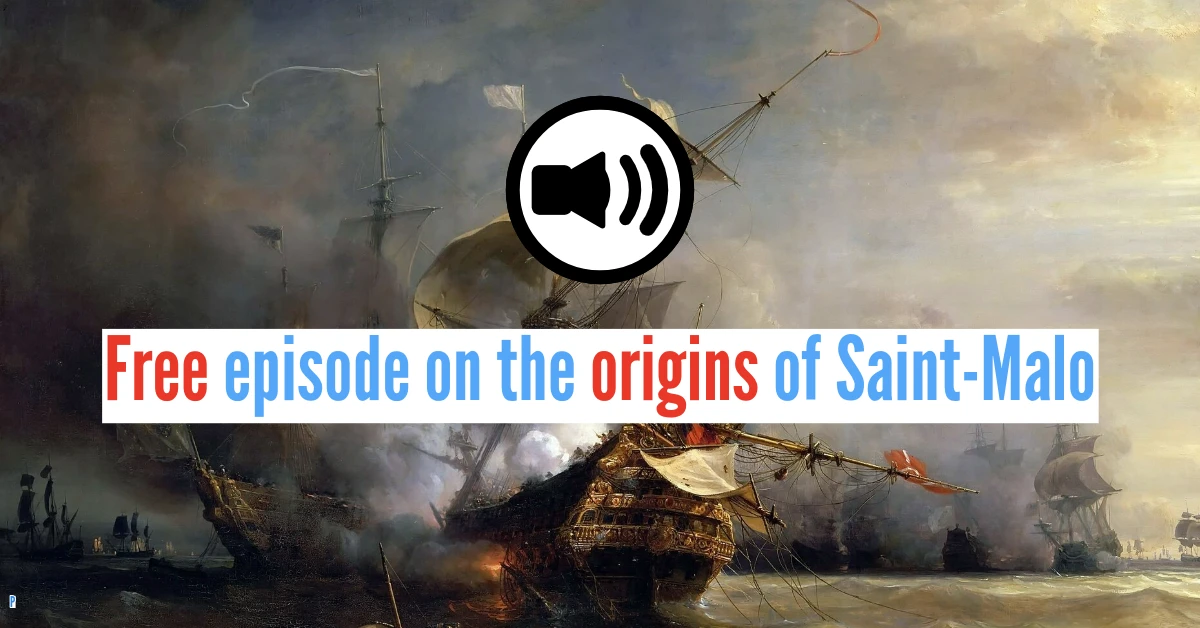
FREE PODCAST : The Soul of Saint-Malo, a City Born of the Sea and Legend
Life is made up of stops along the way, and this one will leave a lasting impression on you. Saint-Malo is not just a dot on a map; it is a destiny. From the Coriosolite Gauls and the city of Alet to the legends of Saint Maclow arriving on the back of a whale, this city has weathered the centuries, fires and wars to become a phoenix that is ever reborn from its ashes. Here, the soul is anchored to a rock, ready to weather any storm, whether it comes from man or the ocean.
*🎧 Continue the full tour : 5 €
And you'll discover :
-
The City of Alet: Its ancient origins, where it all began before the rock of Saint-Malo became the ultimate refuge.
-
The legend of Saint Maclow: The Welsh monk, a disciple of Saint Brendan, who is said to have landed here in the 6th century.
-
Protective geography: Why this rock, surrounded by reefs and sheltered from the tide, became the natural stronghold of the people of Saint-Malo.
-
The spirit of Saint-Malo: The pride of a city of sailors, shipowners and adventurers that is never afraid to set sail for the future.
Try our free lessons
Dive straight into the experience and discover the quality of our audio storytelling before unlocking the full journey.
FREE Stop: The English “Infernal Machine” Against Saint-Malo
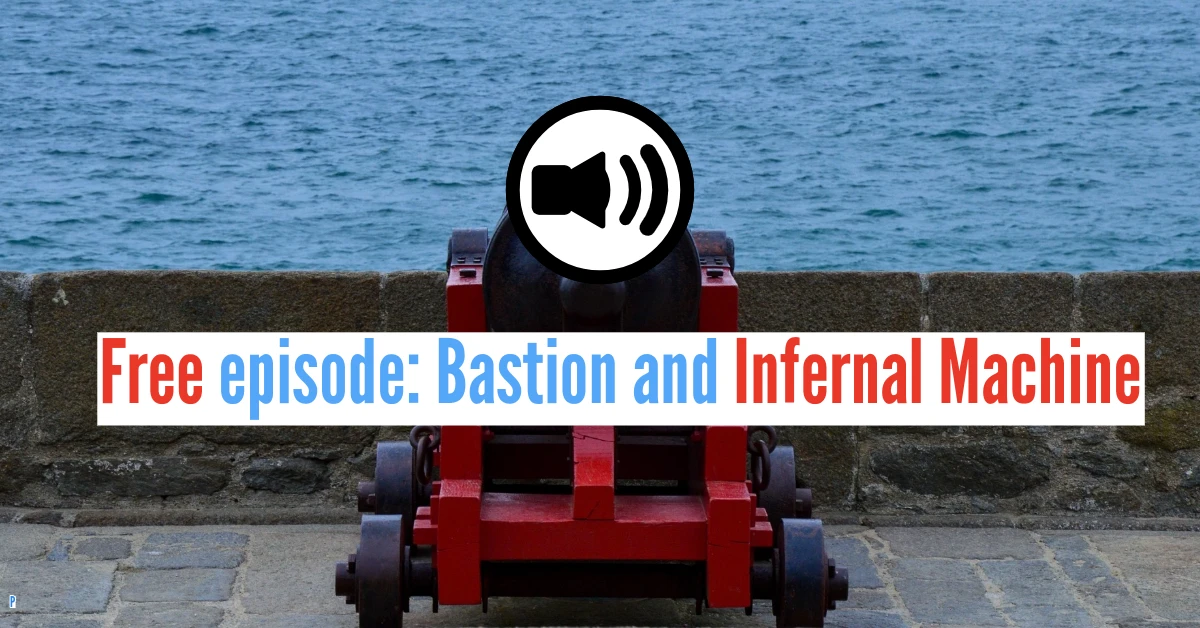
Bastion de la Reine on the ramparts
From the Bastion à la Reine, Saint-Malo offers one of its most beautiful panoramic views… and one of its wildest stories. Here, you’ll discover how the English attempted to wipe the pirate city off the map with a floating bomb. A spectacular attack that could have destroyed Saint-Malo forever.
*🎧 Continue the full tour : 5 €
On this stopover, you’ll discover:
-
The Bastion à la Reine: this section of the ramparts was once known as the ‘wet fort’.
-
The Infernal Machine of 1693: the English’s incredible plan to turn an entire ship into a giant bomb.
-
The role of privateers: sailors authorised by the king to attack enemy ships.
-
The ‘hornet’s nest’: why the English gave Saint-Malo this nickname.
FREE Stop: The Guard Dogs of the Grand’Porte
Grand’Porte on the Ramparts
The Grand’Porte is one of Saint-Malo’s historic gateways. Privateers, sailors, fishermen and travellers have all passed through this gate over the centuries. But behind its stone walls lies a fascinating medieval story: that of the fearsome watchdogs, trained to defend Saint-Malo for over 600 years.

*🎧 Continue the full tour : 5 €
Instant access, no app required, secure payment
On this stopover, you’ll discover:
-
La Grand’Porte: Saint-Malo’s historic gateway since the 16th century.
-
La Noguette: the bell that announced the curfew in the town every evening.
-
The watchdogs: mastiffs trained to defend Saint-Malo for over 600 years.
-
Moune the monkey: the surprising story of this monkey who became famous for carrying a baby across the rooftops.
How does this audio guide for Saint-Malo work?
To access the tour, simply enter your email address and complete your purchase in just a few seconds using a credit card or directly through your phone, depending on the available options. Once payment is complete, you’ll have immediate access to the audio guide.
You can then listen to the 17 stops directly from your smartphone, without having to download an app or create a complicated account.
Each stop also includes a Google Maps link that lets you easily find your way to the next stop without getting lost.
You’re completely free to do as you please: there’s no set schedule. You can start the tour whenever you like, take a break for lunch, snap some photos, or relax at a sidewalk café, then pick up exactly where you left off.
Oh! While I’m at it. You can even shorten the tour by skipping the sites marked OPTION.
All you have to do is head to the starting point and let yourself be guided through the streets, ramparts, and secrets of Saint-Malo.
Discover the stages of the immersive audio guide to Saint-Malo
1. Porte Saint-Vincent: step into the heart of Saint-Malo
The Porte Saint-Vincent is the true gateway to the history of Saint-Malo. Behind its thick stone walls lie the ramparts, Breton legends, privateers and the unique spirit of the people of Saint-Malo. You’ll discover why this pirate town has long remained a city apart, proud of its symbols, its independence and its character forged by the sea.
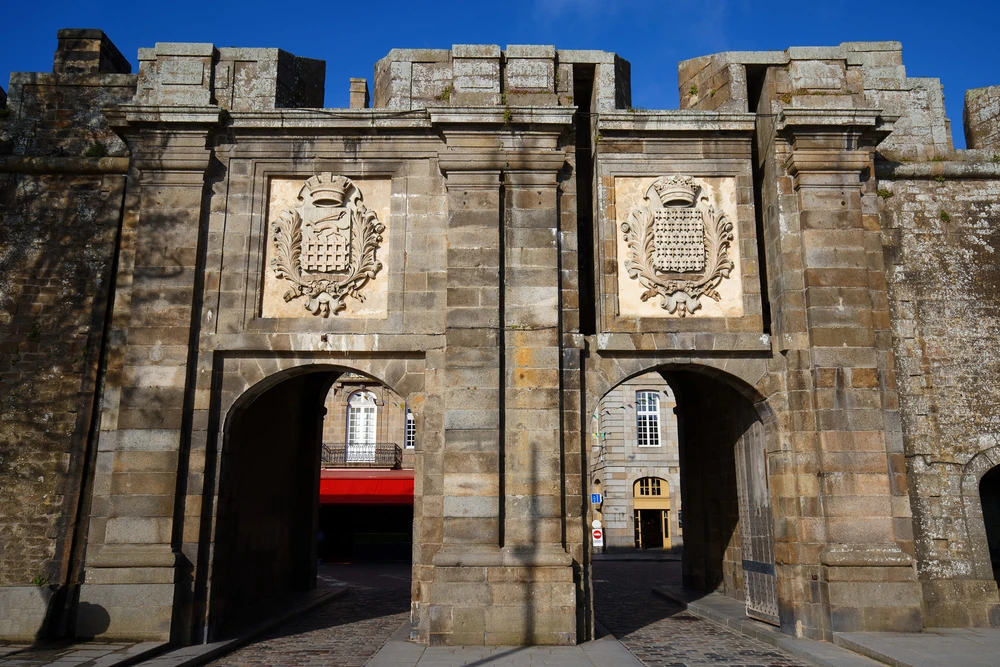
The exterior of the Porte Saint Vincent. It features the coats of arms of Saint-Malo and Brittany. Photo selected by monsieurdefrance.com: KovalenkovPetr / via Depositphotos.
During this stopover, you will discover:
- The origin of the name Intra-Muros: why locals simply say ‘intra’ when referring to the historic centre.
- The ramparts of Saint-Malo: a 1,750-metre-long wall built and extended over the centuries to protect the town.
- The symbol of the Breton ermine: the medieval legend that explains why this animal became the emblem of Brittany.
- The mottos of the people of Saint-Malo: ‘Semper fidelis’ and the famous ‘Neither French nor Breton, I am from Saint-Malo’.
- The Château de Saint-Malo: this fortress, now the town hall, which the locals have long detested.
- The flag that annoyed General de Gaulle: the surprising story of the Saint-Malo flag flying above the French flag.
- The spirit of Saint-Malo: a city with a maritime focus, dedicated to trade and adventure, and fiercely attached to its identity
2. The castle that the people of Saint-Malo stormed
The castle of Saint-Malo has protected the town for centuries… but the locals hated it for a long time. Behind its massive stone walls lie tales of revolts, bombardments, stubborn Dukes of Brittany and even an incredible independent republic that existed in Saint-Malo for four years. This stop immerses you in the unique character of the people of Saint-Malo: proud, free and capable of rebuilding their city stone by stone after the war.
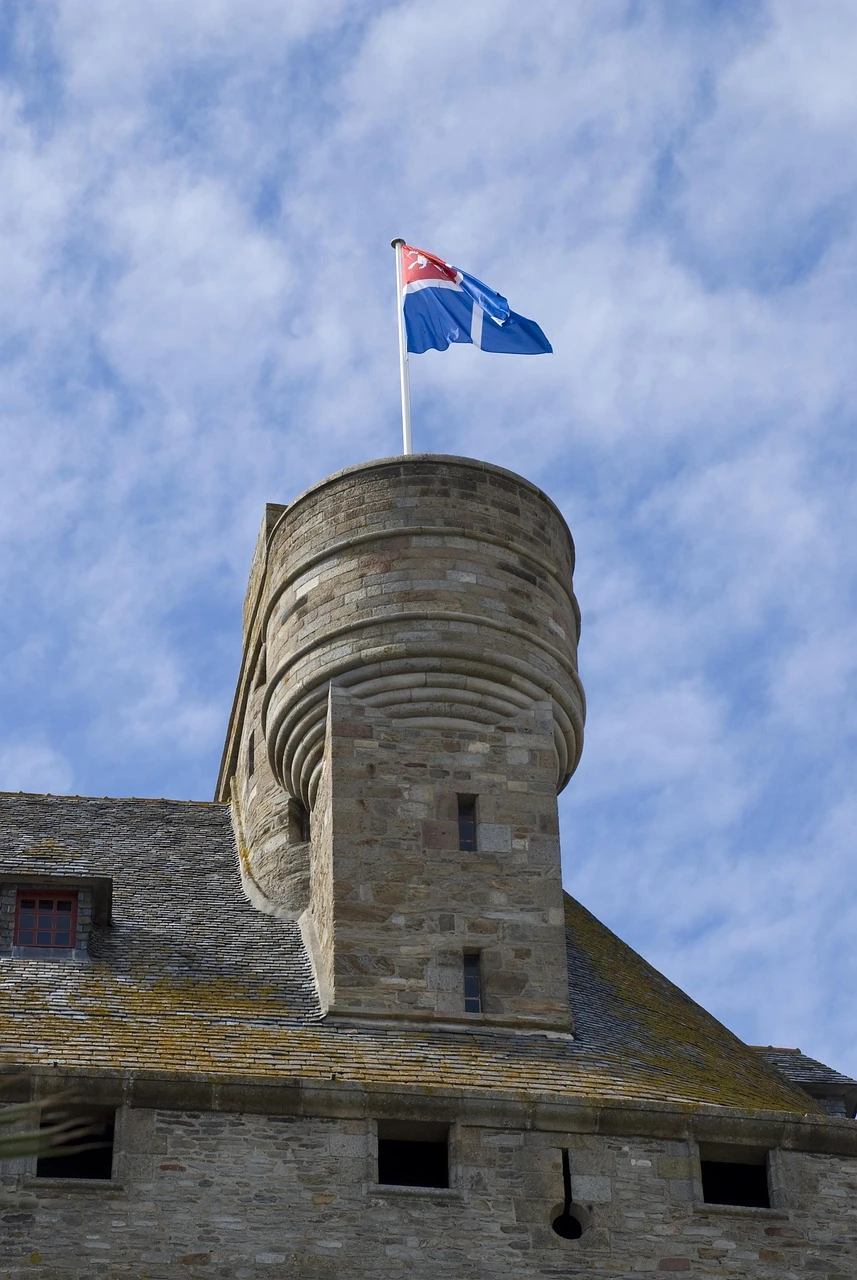
The Saint-Malo flag flies proudly atop the keep of Saint-Malo Castle / by Marie Sjödin from Pixabay
During this stopover, you will discover:
- Why the castle kept such a close watch on the town’s inhabitants: the arrow slits and cannons trained on the town bear witness to the Dukes of Brittany’s mistrust of the people of Saint-Malo.
- The Republic of Saint-Malo: the astonishing history of this city, which enjoyed four years of independence before returning to French rule.
- Anne of Brittany and the union with France: how the duchess’s marriage changed the history of Brittany.
- The tragedy of the 1944 Liberation: the bombings that destroyed 80% of Saint-Malo during the summer of 1944.
- The role of Cézembre and the town of Alet: the last Nazi strongholds around Saint-Malo.
- The incredible reconstruction of the town: how the people of Saint-Malo rebuilt their town almost stone by stone after the war.
Fancy finding out more about Saint-Malo’s old town? I’ve put together a page to tell you all about it
3. The house where Chateaubriand was born
This street, which survived the bombings, reveals the true character of the Saint-Malo of yesteryear. A town of narrow alleyways, shipowners’ houses facing the sea, and great figures who set out to conquer the world. It was here that François-René de Chateaubriand was born, on a stormy night that has become one of the most famous passages in French literature.
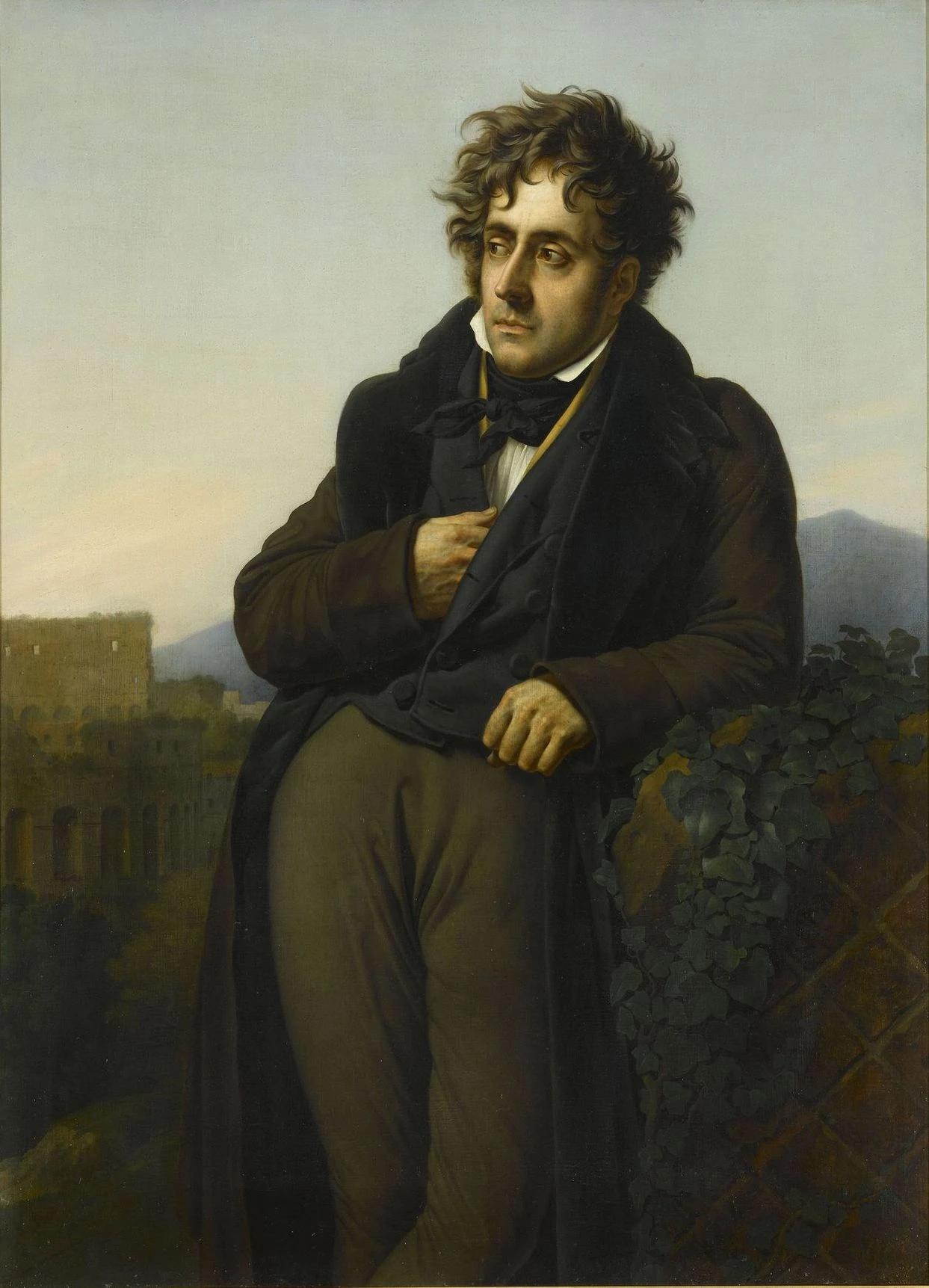
Chateaubriand / Par Anne-Louis Girodet — The Yorck Project (2002) 10.000 Meisterwerke der Malerei (DVD-ROM), distributed by DIRECTMEDIA Publishing GmbH. ISBN : 3936122202., Domaine public, https://commons.wikimedia.org/w/index.php?curid=151807
During this stopover, you will discover:
- The true face of old Saint-Malo: a town of narrow streets once home to sailors, craftsmen and shipowners.
- Chateaubriand’s birthplace: the place where one of France’s greatest writers was born.
- Famous figures from Saint-Malo: Jacques Cartier, Surcouf, Duguay-Trouin, Marion du Fresne and Maupertuis.
- More of Old Saint-Malo: head to Rue du Pélicot to discover the working-class houses of the 17th-century pirate town.
✋ Why not give Saint-Malo a try too? Discover the must-try culinary specialities of this former pirate town
4. The oldest street in Saint-Malo
Welcome to Rue du Pélicot, the oldest street still visible in the original Saint-Malo. Here, it’s easy to picture the pirate town of yesteryear: clogs clattering on the cobblestones, sailors shouting in the taverns, craftsmen at work, and this incredibly dense town enclosed within its ramparts.
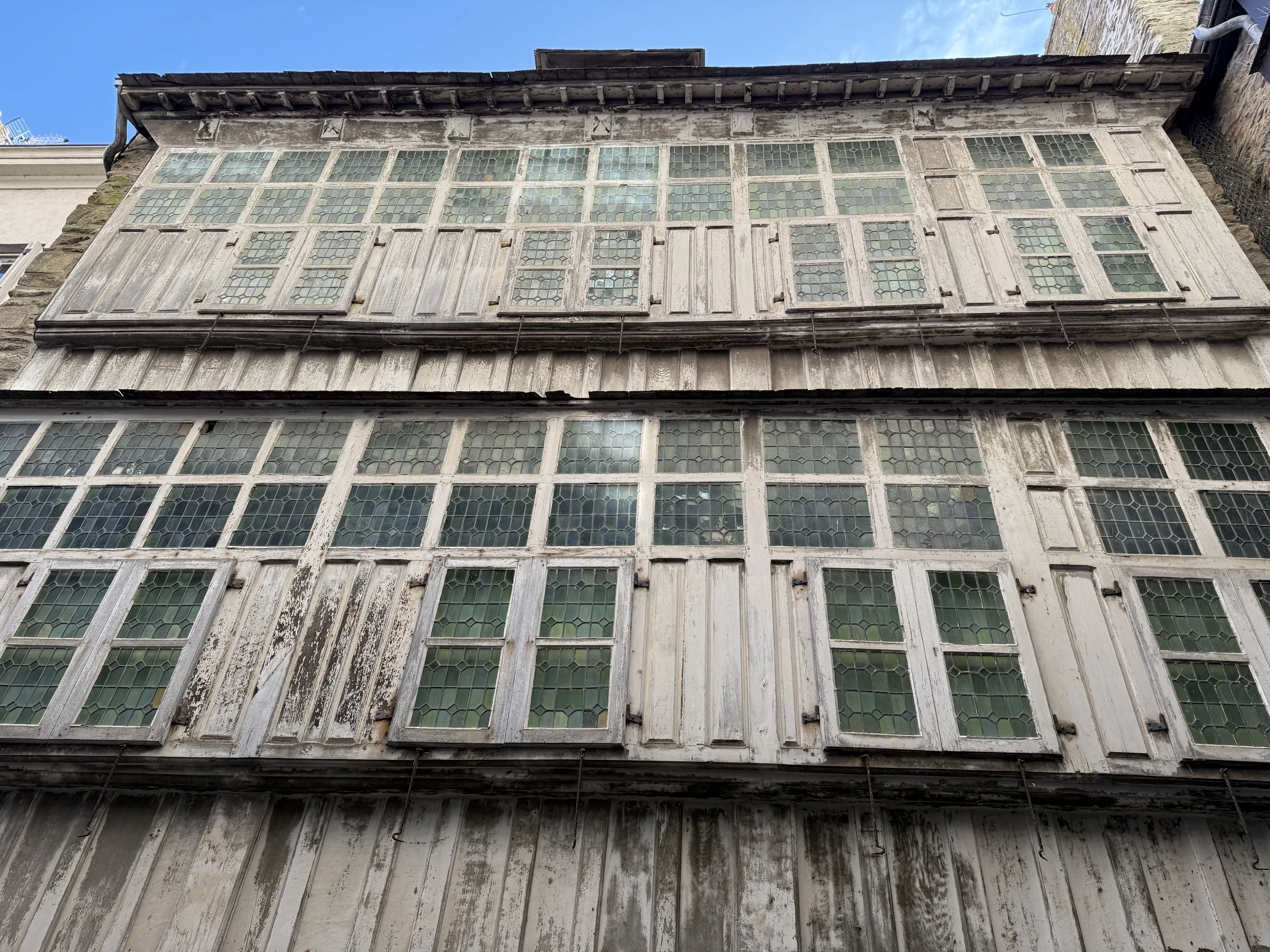
Photo: Jérôme Prod'homme (c)
During this stopover, you will discover:
- The working-class Saint-Malo of the privateers: a noisy, lively town teeming with sailors.
- The town’s oldest street: one of the few places where you can imagine what Saint-Malo was like before 1944.
- The houses with glass façades: these dwellings were directly inspired by the windows of ships.
- Why Saint-Malo resembled a giant drum: the ramparts and narrow streets echoed every sound.
- The great fire of 1661: the blaze that destroyed 273 houses in a matter of hours.
6. The ramparts, Vauban and the spring tides
There you are, you’ve finally made it to the ramparts of Saint-Malo. From here, the pirate town reveals some of its most beautiful views: Éventail Beach, the Sillon, the Fort National, and the sea, which can be magnificent… or fearsome at spring tides.
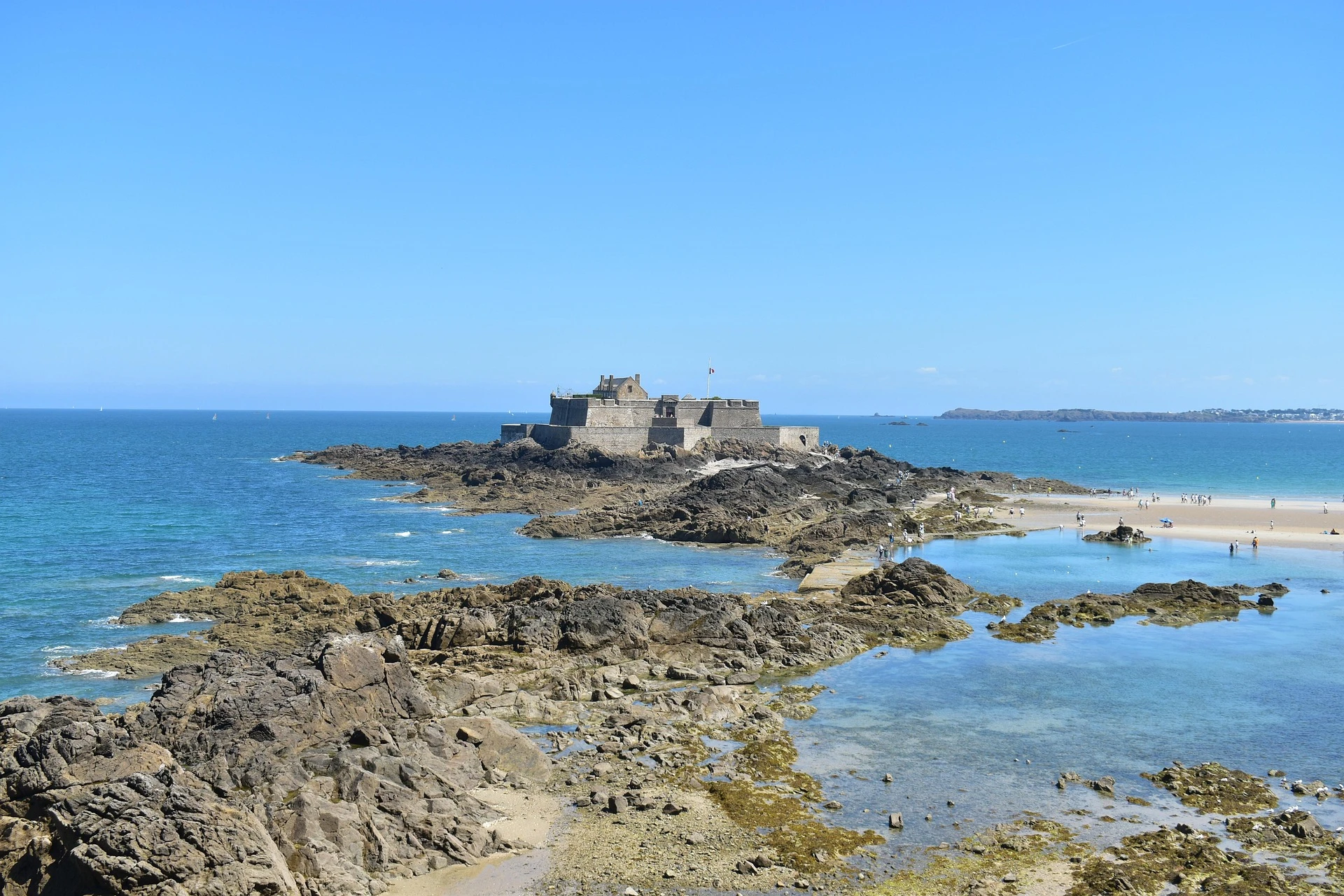
The Fort National is located right in front of you / Photo selected by Monsieur de France by Nicolas IZERN from Pixabay
During this stopover, you will discover:
- The Saint-Thomas Gate: the quieter entrance to the ramparts, away from the crowds.
- The first sea baths: this fashion, which arrived from England in the 19th century, transformed Saint-Malo.
- The astonishing rolling cabins: these small shelters pulled by horses to allow ladies to bathe without being seen.
- The Sillon breakwaters: the enormous wooden piles designed to protect the coast from erosion.
- Fort National: the fortress built by Vauban to defend Saint-Malo against attacks from the sea.
- Vauban, Louis XIV’s military genius: the man who covered France with fortresses reputed to be impregnable.
7. The British’s infernal machine designed to destroy Saint-Malo
From the Bastion à la Reine, Saint-Malo offers one of its most beautiful views… and one of its wildest stories. Here, you’ll discover how the English attempted to wipe the pirate city off the map using a ship converted into a gigantic floating bomb. A spectacular attack that could have destroyed Saint-Malo forever.
The Cannons of Saint-Malo / Jérôme Prod'homme (c)
During this stopover, you will discover:
- The Bastion à la Reine: this section of the ramparts was once nicknamed the ‘wet fort’ because the sea used to wash over it.
- The Fort de la Conchée: the impressive fortress designed by Vauban to protect Saint-Malo from English attacks.
- The role of privateers: these sailors authorised by the king to attack enemy ships thanks to the famous “letters of marque”.
- Why Saint-Malo was nicknamed “the hornet’s nest” by the English.
- The infernal machine of 1693: the English’s incredible plan to turn an entire ship into a giant bomb.
8. The Bidouane Tower and the sailors of Newfoundland
The Bidouane Tower has watched over the sea for over 700 years. With its three-metre-thick walls, this immense tower defended Saint-Malo against attacks from the sea. It has seen privateers set sail, cod fishermen return, and has weathered centuries of maritime adventures.
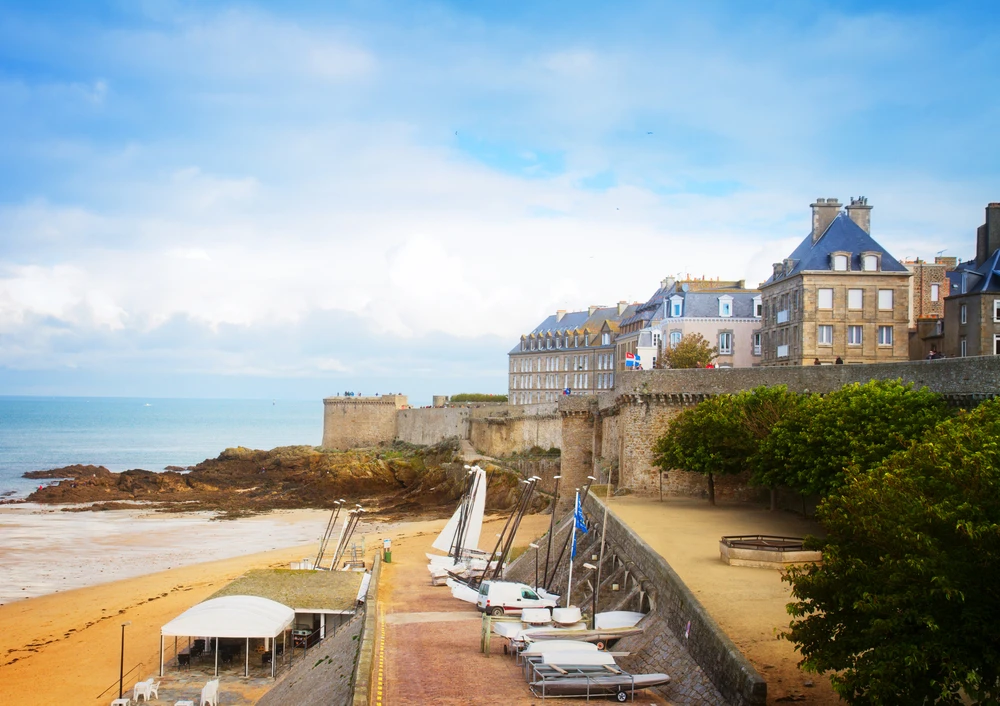
The Bidouane Tower as seen from Bonsecours Beach. Image selected by monsieurdefrance.com: Neirfys / via Depositphotos
During this stopover, you will discover:
- The Bidouane Tower: one of the oldest monuments in Saint-Malo.
- The Saint-Malo powder magazine: the place where gunpowder and ammunition were stored.
- The great privateer ships: these immense wooden vessels that set sail to plunder the seas in the name of the King of France.
- The Terre-Neuvas: the fishermen who set out for months on end into the icy waters of Newfoundland to bring back cod.
9. The most beautiful view in Saint-Malo
From the top of the Bidouane Tower, Saint-Malo offers what is probably its most beautiful view. Before you lie the English Channel, the coastal forts, Cézembre, Dinard and the islets of Grand Bé and Petit Bé. A magnificent panorama… but one steeped in tales of wars, tides and Breton legends.
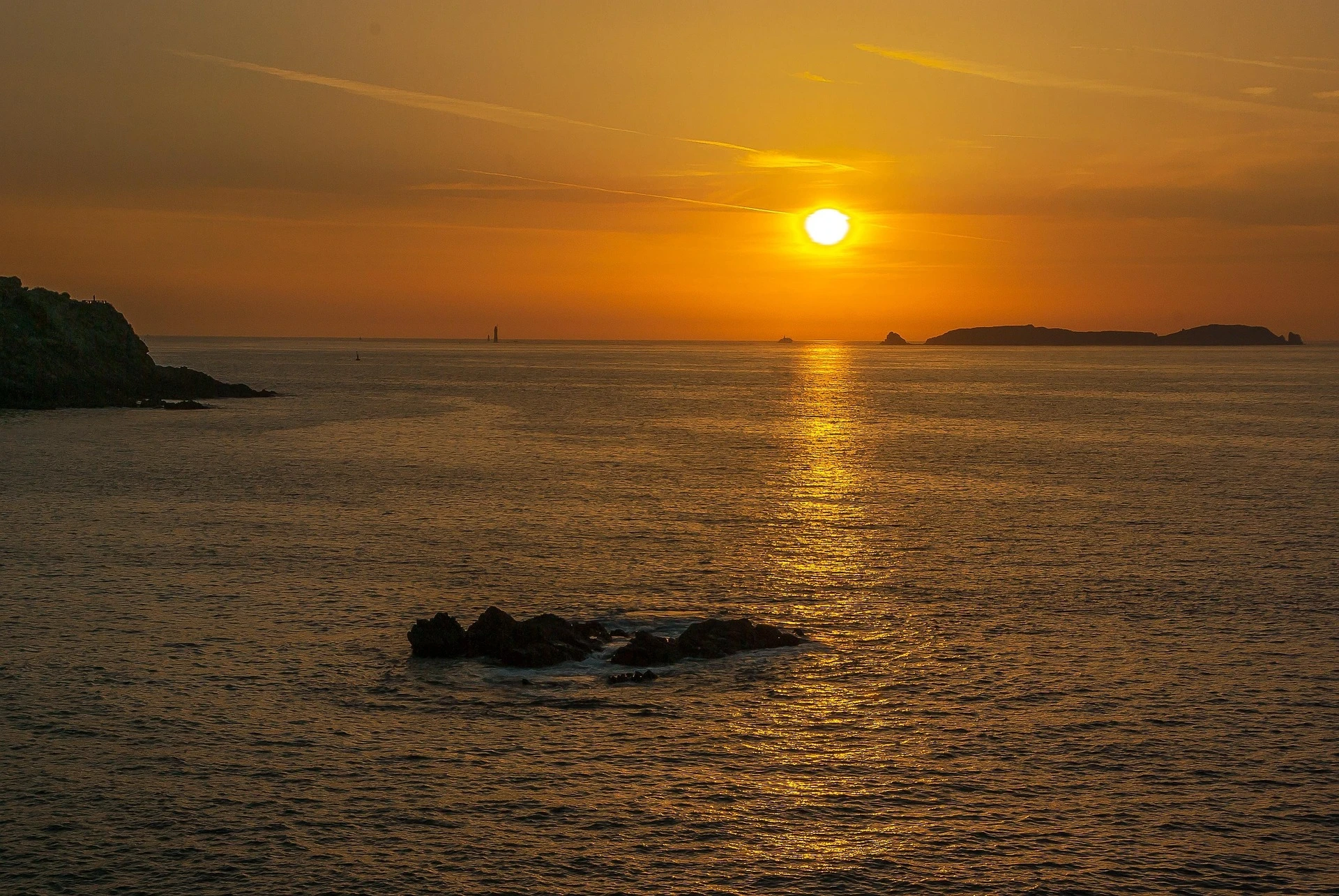
From the Bidouane Tower, the view stretches across the whole of Saint-Malo Bay / Photo: Depositphotos
During this stopover, you will discover:
- The most spectacular view in Saint-Malo: the vista of the English Channel, the forts and the islets surrounding the town.
- The island of Cézembre: this island was once connected to the mainland before the sea level rose.
- Cézembre during the Second World War: one of the most heavily bombed places in Europe during the Liberation.
- The 20,000 bombs dropped on the island: a landscape still scarred today by craters and restricted areas.
- The danger of the tides: why you should always check the timetables before heading to the islets.
10. Surcouf, the privateer who terrorised England
Robert Surcouf is probably the most famous of all the people of Saint-Malo. A feared privateer, a provocateur, indomitable and immensely wealthy, he struck fear into the hearts of English ships for years. Standing facing the sea, his statue still serves today as a reminder of the strong character of Saint-Malo and its inhabitants.
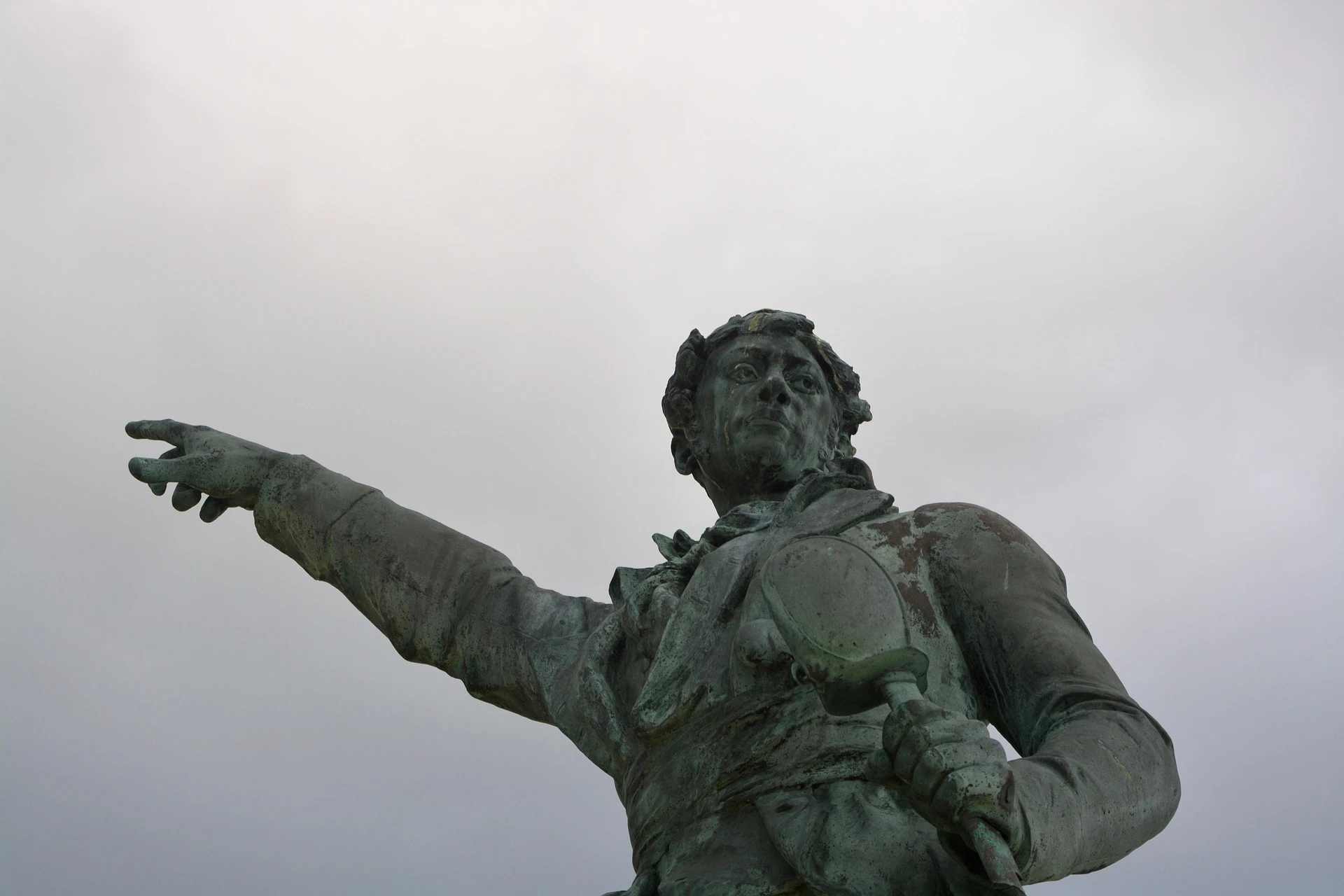
The statue of Robert Surcouf, a privateer from Saint-Malo / Photo selected by Monsieur de France: by JackieLou DL from Pixabay
During this stopover, you will discover:
- The Bastion de la Hollande: this section of the ramparts was built during the Dutch War in the 17th century.
- Le Petit Bé: the fort is accessible at low tide when the French flag flies at the top.
- Bon-Secours Beach: one of Saint-Malo’s first leisure beaches, featuring its famous seawater swimming pool.
- The large cannons of 1694: guns presented by Louis XIV’s representative to thank the Saint-Malo privateers.
- Jacques Cartier: the Saint-Malo-born navigator who discovered Canada for King Francis I.
- The first French people to taste popcorn: the surprising anecdote reported by Cartier’s sailors.
- Canada’s fake diamonds: Jacques Cartier’s great disappointment on his return to France.
- The link between Saint-Malo and Quebec: why the city still maintains a very strong bond with French-speaking Canadians today.
11. Jacques Cartier and the Canadian Dream
From the bastion of Holland, Saint-Malo looks out to sea… and towards the New World. Here, amongst the old cannons, the coastal forts and Bon-Secours beach, you can discover the incredible story of Jacques Cartier, the man from Saint-Malo who opened the way to Canada for the French.
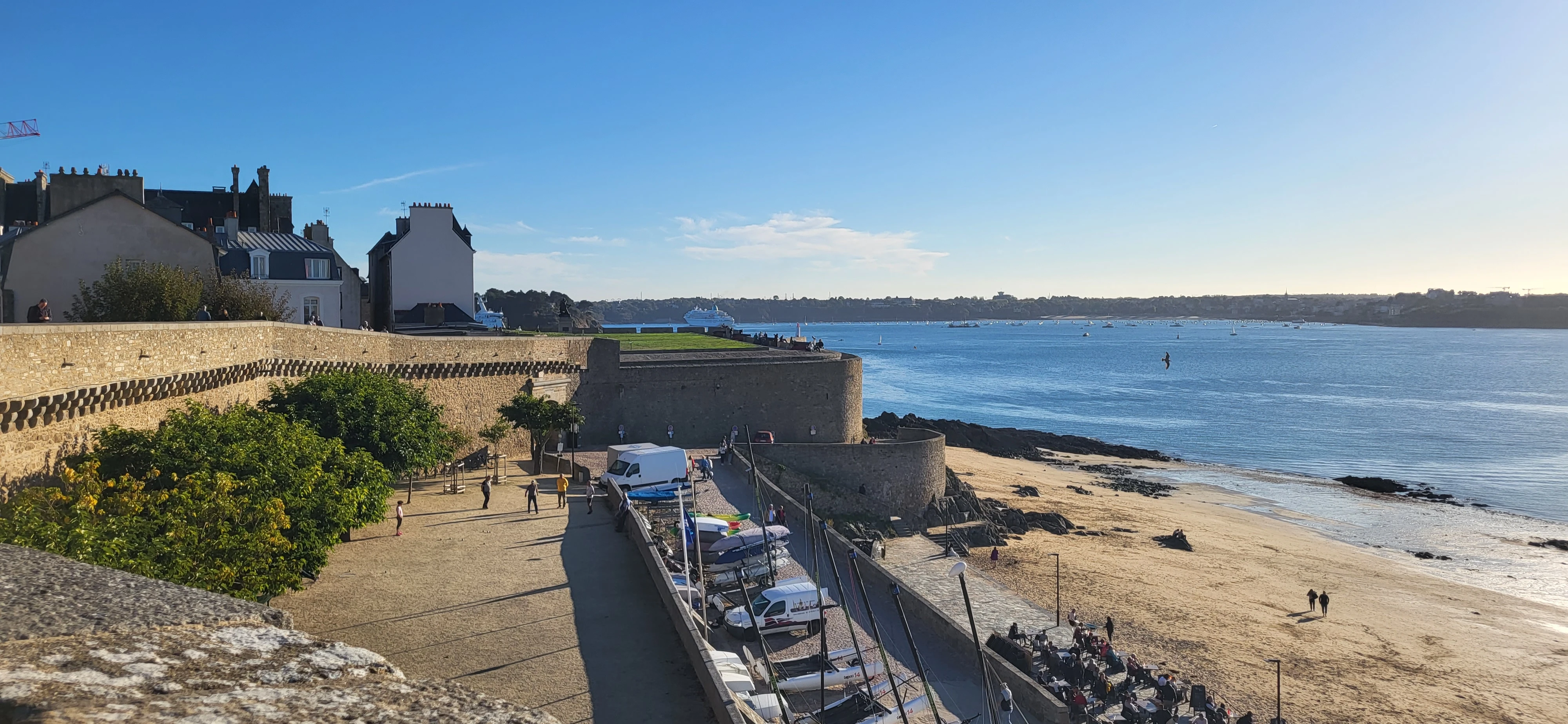
The Bastion of Holland as seen from the Bidouane Tower. Photo (c) monsieurdefrance.com
During this stopover, you will discover:
- The Bastion de la Hollande: this section of the ramparts was built during the Dutch War in the 17th century.
- Le Petit Bé: the fort is accessible at low tide when the French flag flies at the top.
- Bon-Secours Beach: one of Saint-Malo’s first leisure beaches, featuring its famous seawater swimming pool.
- The large cannons of 1694: guns presented by Louis XIV’s representative to thank the Saint-Malo privateers.
- Jacques Cartier: the Saint-Malo-born navigator who discovered Canada for King Francis I.
- The first French people to taste popcorn: the surprising anecdote reported by Cartier’s sailors.
- Canada’s fake diamonds: Jacques Cartier’s great disappointment on his return to France.
- The link between Saint-Malo and Quebec: why the city still maintains a very strong bond with French-speaking Canadians today.
12. The inland sea and beautiful Dinard
From the Saint-Philippe bastion, Saint-Malo takes on a whole new look. Here you can discover the “inner sea”, the historic ports of the privateers, the starting point of the Route du Rhum… and, just opposite, Dinard, the elegant seaside resort that became the favourite retreat of the English aristocracy.
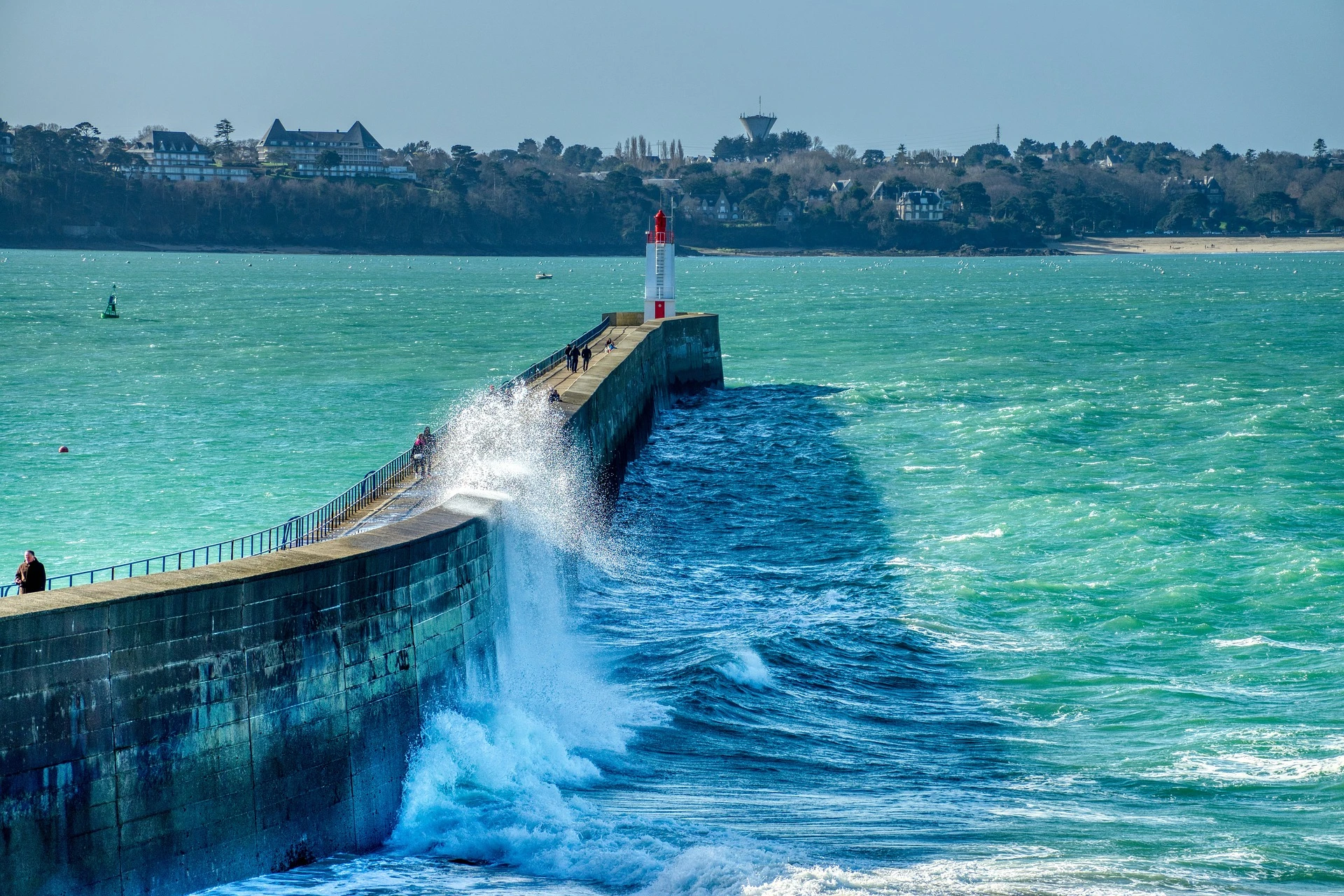
The Môle des Noires as seen from the Bastion Saint Philippe. Image selected by monsieurdefrance.com: Image by Thierry BEUVE from Pixabay
During this stopover, you will discover:
- The Saint-Philippe Bastion: this section of the ramparts, reclaimed from the sea in the 18th century.
- The Inner Harbour of Saint-Malo: the sheltered basin where privateers and cod fishermen used to arrive.
- The Môle des Noires: this long breakwater that has protected the harbour entrance since the 19th century.
- The Route du Rhum: the famous transatlantic race that always sets sail from Saint-Malo every four years.
- The Rance ferrymen: these boatmen, sometimes quite charming, who ferried travellers across the river.
- Dinard, the “Breton Monaco”: the chic seaside resort adored by the English since the 19th century.
13. Duguay-Trouin, the charming privateer
Standing before you is one of Saint-Malo’s greatest heroes: René Duguay-Trouin. A brilliant privateer, adventurer, charmer and formidable strategist, he led a life worthy of a novel. Escapes, naval battles, immense fortunes and military exploits: this stop takes you back to the golden age of the Saint-Malo privateers.
*
During this stopover, you will discover:
- René Duguay-Trouin: the privateer from Saint-Malo who became a true legend under Louis XIV.
- His incredible escape from England: how he managed to flee Plymouth thanks to a love affair.
- The future privateer’s seasickness: the surprising weakness he had to overcome before becoming a sailor.
- The spectacular attack on Rio de Janeiro: Duguay-Trouin’s greatest military feat in 1711.
- The hero’s rediscovered grave: the privateer’s remains repatriated to Saint-Malo Cathedral in 1973.
- The Malouinières: the grand country estates built by wealthy shipowners.
- The global trade of the people of Saint-Malo: ships that sailed as far as China, Peru and Java.
14. The guard dogs… and the monkey of Saint-Malo
The Grand’Porte is one of Saint-Malo’s historic gateways. Privateers, sailors, fishermen and travellers have all passed through this gate over the centuries. But hidden behind its stone walls are two incredible stories: that of the fearsome watchdogs… and that of a monkey who kidnaps a baby from the city’s rooftops.
During this stopover, you will discover:
- La Grand’Porte: the historic gateway to Saint-Malo since the 16th century.
- La “Noguette”: the bell that announced the curfew in the town every evening.
- The fearsome watchdogs: mastiffs trained to defend Saint-Malo for over 600 years.
- Moune the monkey: the monkey who became famous after carrying a baby across the city’s rooftops.
- -The protective symbol of sailors: why the people of Saint-Malo still pay their respects to Our Lady before setting sail.
✋ If you have a moment, do go and explore Dinard, the ‘Monaco of Brittany’. Here’s my comprehensive guide to Dinard.
15. The best butter in the world!
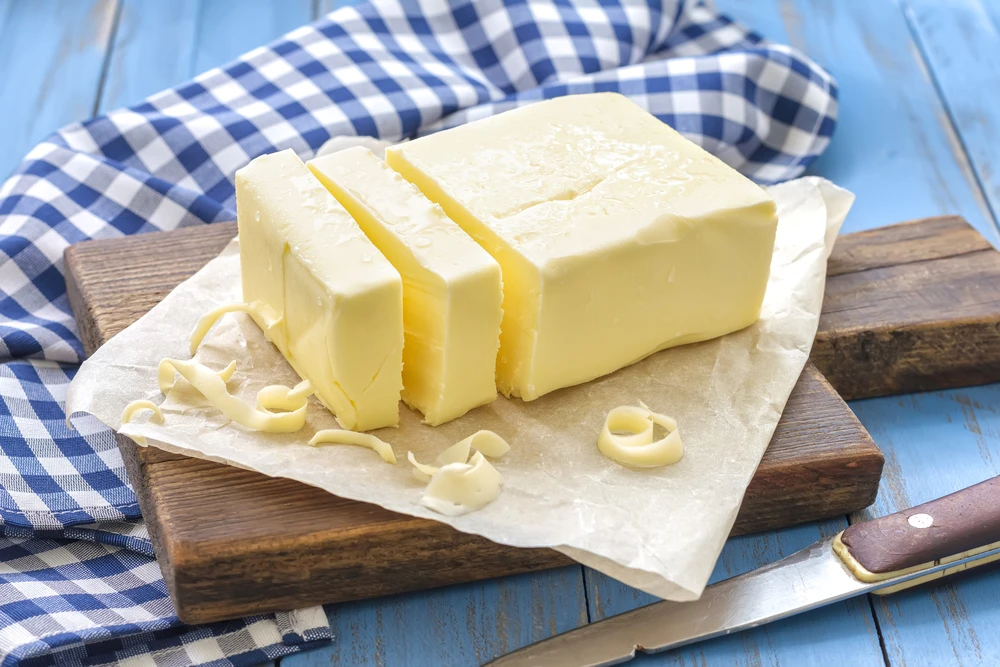
Welcome to Bordier, a true culinary institution in Saint-Malo. Here, butter is almost a religion. From the famous Breton salted butter and salted butter caramel to the amazing flavours created by Bordier, this stop immerses you in one of Brittany’s greatest pleasures: eating… and eating very well.
During this stopover, you will discover:
- Bordier: the legendary butter shop in Saint-Malo.
- Why butter is salted in Brittany: the historical role of salt in preservation and Breton cuisine.
- Salted butter caramel: one of the region’s iconic delicacies.
- The surprising flavours of butter: seaweed, yuzu, Espelette pepper, black truffle or even Ghanaian chocolate.
- Breton buckwheat: this hardy grain has become the staple of the famous Breton galettes.
- Breton cuisine: a hearty cuisine deeply rooted in Brittany’s maritime and rural history.
✋ If there are any food lovers in the room, here is the recipe for salted butter caramel, how to make perfect crêpes just like the Bretons, and why butter is so good in France.
16. Saint-Vincent Cathedral, the heart and soul of Saint-Malo
If one had to sum up Saint-Malo in a single monument, it would be this one. Saint-Vincent Cathedral has been part of the history of this pirate city since the Middle Ages. It has witnessed bishops, privateers, explorers, wars, fires and reconstructions. Destroyed during the Liberation and then rebuilt stone by stone, it perfectly symbolises the indomitable spirit of the people of Saint-Malo.
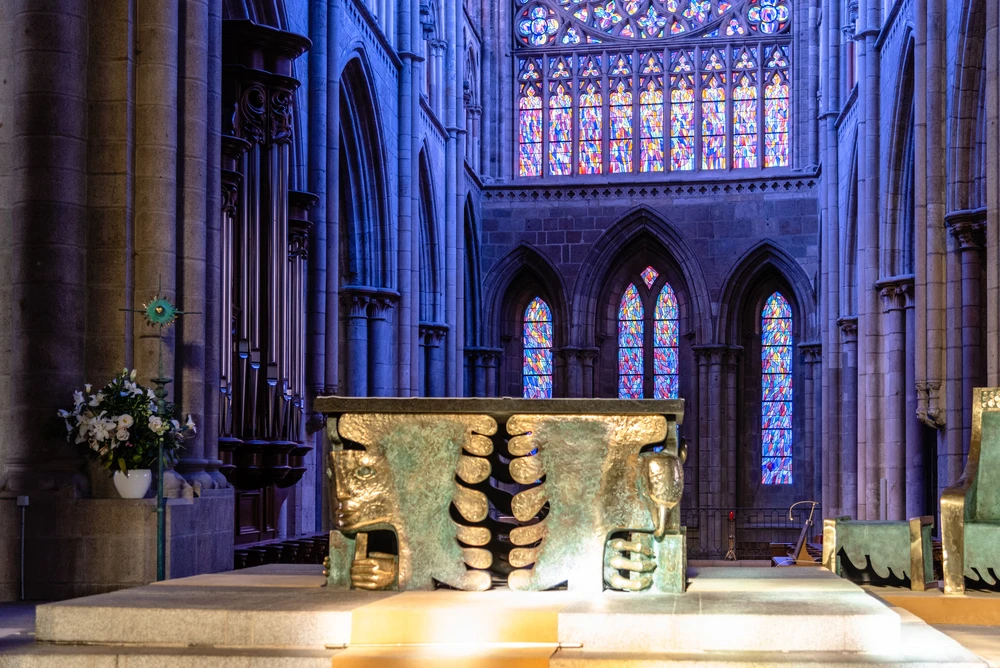
The interior of Saint-Malo Cathedral and its unique atmosphere. Image selected by monsieurdefrance.com: jjfarquitectosJJ via Depositphotos.
During this stopover, you will discover:
- Why the cathedral symbolises the soul of Saint-Malo: a monument that grew up alongside the city itself.
- Saint Jean de la Grille: the local saint whose tomb attracted so many pilgrims that it had to be protected behind a grille.
- The evolution of the cathedral: a building that has been extended over the centuries, growing alongside the city.
- Post-war reconstruction: nearly 30 years of work to bring the cathedral back to life.
- The “Noguette” bell: the famous curfew bell recast after being cracked during the war.
- The Jacques Cartier mosaic: the spot where the explorer is said to have come to pray before setting off for Canada.
17. Kouign-amann, crêpes and Breton delicacies
You can’t leave Saint-Malo without mentioning Breton cuisine. From salted butter and kouign-amann to craquelins and large Breton crêpes, this final culinary stop takes you on a journey through Brittany’s most famous flavours… with some handy tips on how to order like a true Breton.
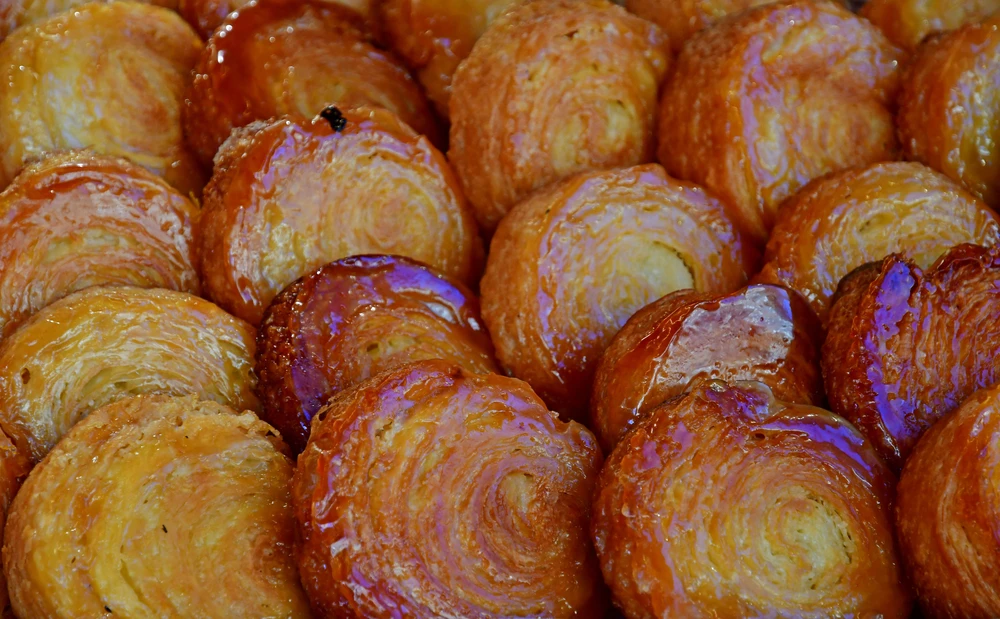
Butter, sugar, flour... Just three ingredients, and yet making Kouign Amann isn’t easy. Photo selected by monsieurdefrance.com: Depositphotos.
During this stopover, you will discover:
- The famous kouign-amann: the renowned Breton “butter cake” that originated in Douarnenez.
- The history of the kouign-amann: how a baker who ran out of flour created one of Brittany’s most indulgent desserts.
- The craquelin from Saint-Malo: this dry bread roll invented by sailors for long voyages.
- Authentic Breton crêpes: thin, delicious and a must-try in Saint-Malo.
- The difference between crêpes and galettes: essential information to avoid offending a Breton.
- Seafood: lobsters, crabs, spider crabs and scallops.
- Scallop fishing: a highly regulated activity to preserve the species.
By the way! Are you sure you know French culinary specialities and where they come from ? The culinary map of regional specialities from across France is here
🎧 Continue the full tour : 5 €
Instant access, no app required, secure payment
Photo selected by monsieurdefrance.com: Photo Boards on Unsplash
Why does this audio guide transform your visit to Saint-Malo?
It’s so much more enjoyable to look around freely while listening to a story. And you can do it whenever you want! Forget about time constraints. With your hands free—and without spending your time reading a screen or a document—enjoy a fully immersive audio experience designed by an enthusiast, so you can discover Saint Malo at your own pace.
-
Listen for free first, with no obligation—and only if you like it, treat yourself to the full tour.
-
Complete freedom: Visit whenever you like, even at high tide, with no app to install; stop whenever you like to enjoy a crêpe or stroll around Saint-Malo
-
No app required: You follow the tour directly on your phone, and there’s no app to download.
-
Precise navigation: You’ll never get lost, thanks to the built-in GPS for every stage of your journey.
-
Audio immersion: Thanks to my selection of music and sound effects, you’ll experience the city’s history while exploring it today.
-
Insider secrets : Find out why the people of Saint-Malo are “neither French nor Breton” and unravel the mysteries of the ramparts.
-
Gourmet delights : Let us guide you to the best places for butter and kouign-amann.
-
Saves time: A rigorous historical overview that gets straight to the point, without any unnecessary detours.
🎧 Continue the full tour : 5 €
Instant access, no app required, secure payment
FAQ on the Saint-Malo audio guide
Can I explore Saint-Malo with an audio guide on my phone?
Yes. This self-guided audio tour lets you explore Saint-Malo Intra-Muros and its famous ramparts directly from your smartphone. There is no app to download: simply open the tour on your phone and follow the different stops.
How long does this Saint-Malo walking tour take?
Allow around 2 hours to enjoy the complete route at a comfortable pace. As the tour is self-guided, you are free to stop along the way to take photos, visit a monument, have a drink or try one of Saint-Malo's local specialities.
What will I see on the Saint-Malo audio tour?
The route includes 17 stops covering Saint-Malo's ramparts, privateers, Chateaubriand, the castle, the great tides, Vauban's fortifications, local legends and the fascinating history of the Corsair City.
Do I need to download an app?
No. The Saint-Malo audio guide works directly on your smartphone, with no app or software to install.
How do I find each stop during the tour?
GPS guidance helps you locate the different stops along the walking route through Saint-Malo.
Can I try the Saint-Malo audio guide before buying it?
Yes. Two stops are available to listen to for free on this page, so you can experience the narration and see how the tour works before purchasing the complete audio guide.
How much does the Saint-Malo audio guide cost?
The complete self-guided tour costs €5. Once you have access, you can explore Saint-Malo at your own pace.
Can I start the tour whenever I want?
Yes. There is no fixed departure time. You can start the tour whenever you like, pause it whenever you want and continue exploring Saint-Malo at your own pace.
Is this a self-guided tour of Saint-Malo?
Yes. The tour has been designed for independent travellers who want to discover Saint-Malo without joining a group or following a fixed schedule. Your smartphone provides the audio commentary and GPS guidance throughout the route.
The terms and conditions are available here.
Who Created This Saint-Malo Audio Guide?
This audio guide was created, written and narrated by Jérôme Prod'homme, founder of Monsieur de France.
As a radio host and writer with a passion for French history, heritage and destinations, I design my tours as stories. Rather than simply giving you a list of dates and facts, I introduce you to the people, anecdotes, legends and fascinating details that bring a place to life.
For this Saint-Malo tour, I selected 17 stops that combine the major events in the history of the Corsair City with the stories and characters that make Saint-Malo unique.
Monsieur de France is an independent travel guide dedicated to French heritage, history, gastronomy and destinations.
Find out more about Saint-Malo and the surrounding area
- Visiting Saint-Malo: The Complete Guide to the Pirate City
- The Ramparts of Saint-Malo: The City’s Most Beautiful Walk
- What to See in Saint-Malo in a Weekend? The Must-Sees
- Dinan: The Stunning Medieval Town Near Saint-Malo
- Dinard: The Elegant Gem of the Emerald Coast
- Discover Brittany and the Emerald Coast
- If you love Brittany, here’s what I loved